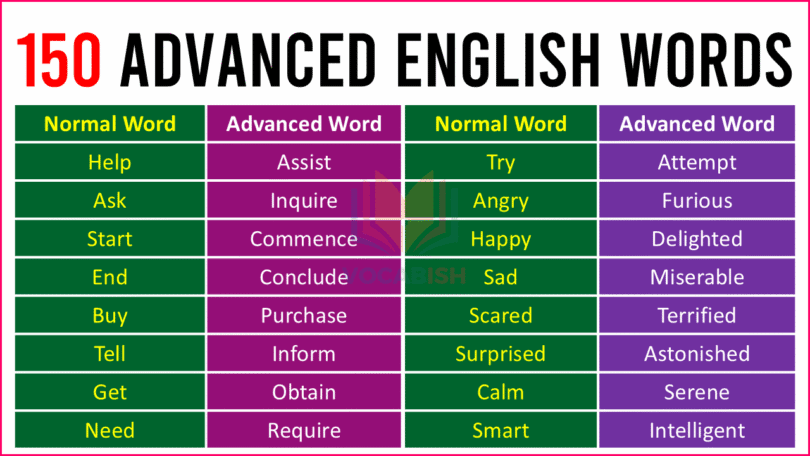

Normal and advanced English words and sentences help you understand the difference between basic English and more natural, fluent, and professional expressions. In this blog post, you will learn 150 normal vs advanced English words and sentences and understand how simple vocabulary and sentence patterns can be changed into more polished English. These examples are commonly used in conversations, writing, school, and daily communication. From everyday greetings to common expressions, each comparison helps you recognize better vocabulary choices and understand how advanced English is used in real-life situations.
What Are Normal and Advanced English Words?
Normal words are the basic vocabulary we learn first — the ones used in daily conversation.
Advanced words, on the other hand, are stronger, more formal, or more precise alternatives that help you express ideas clearly and professionally.
Example:
- Normal: He is very tired.
- Advanced: He is exhausted.
Using advanced words doesn’t mean using difficult or rare words, but choosing words that sound natural, powerful, and elegant.
Normal vs Advanced English Words With Sentences
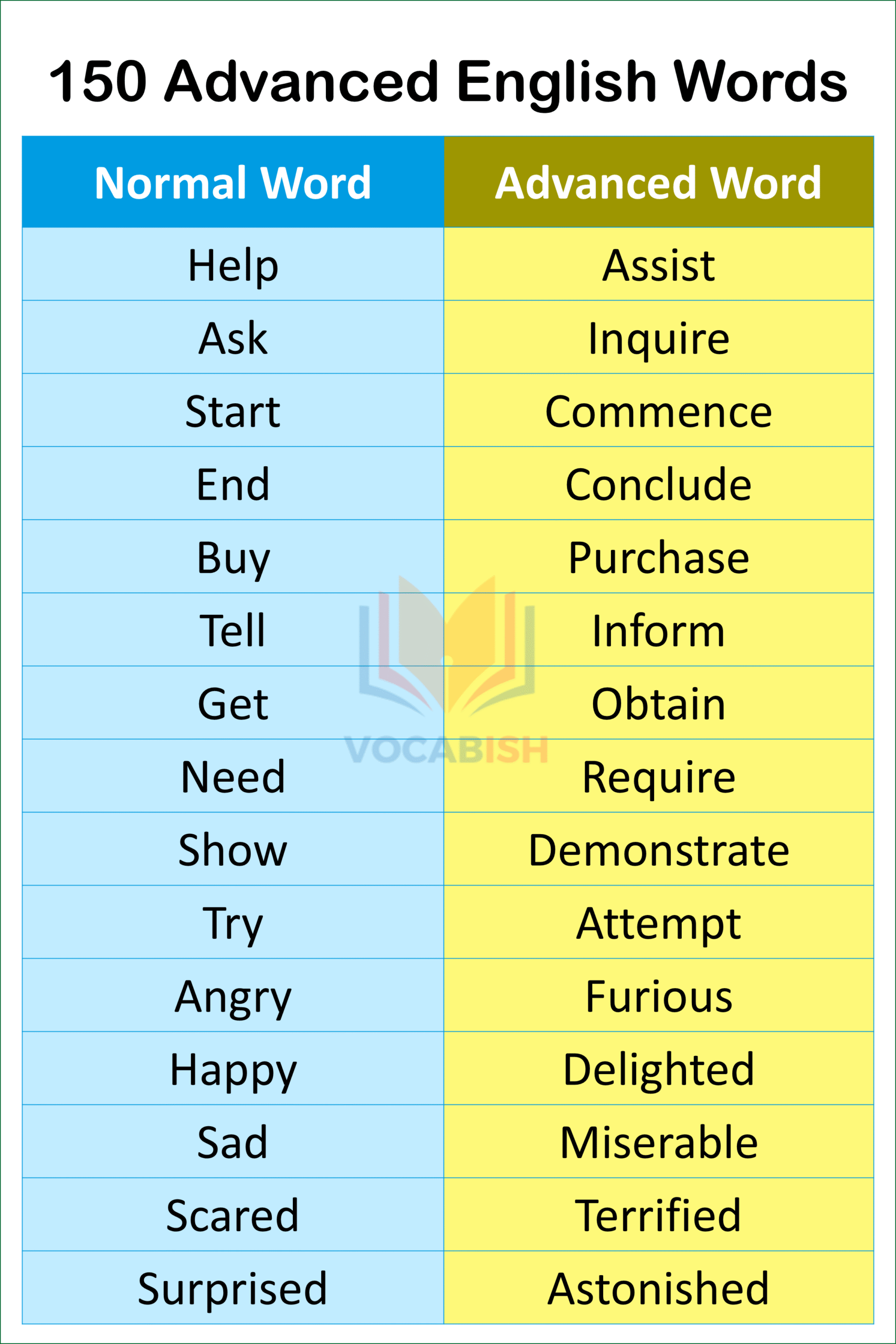
Here is a complete list of 150 normal and advanced English word pairs with example sentences to help you understand how to use them.
Normal Word | Advanced Word | Example Sentence |
|---|---|---|
Help | Assist | Can you assist me with this task? |
Ask | Inquire | I would like to inquire about your services. |
Start | Commence | The meeting will commence at 10 a.m. |
End | Conclude | Let’s conclude the discussion here. |
Buy | Purchase | I will purchase a new laptop soon. |
Tell | Inform | Please inform me about the changes. |
Get | Obtain | You must obtain permission before entering. |
Need | Require | You require a ticket to enter the event. |
Show | Demonstrate | He will demonstrate how the machine works. |
Try | Attempt | I will attempt to solve the problem. |
Advanced English Words for Emotions and Feelings
Normal Word | Advanced Word | Example Sentence |
|---|---|---|
Angry | Furious | She was furious when she heard the news. |
Happy | Delighted | I’m delighted to meet you. |
Sad | Miserable | He felt miserable after losing his job. |
Scared | Terrified | She was terrified of the dark. |
Surprised | Astonished | I was astonished by her results. |
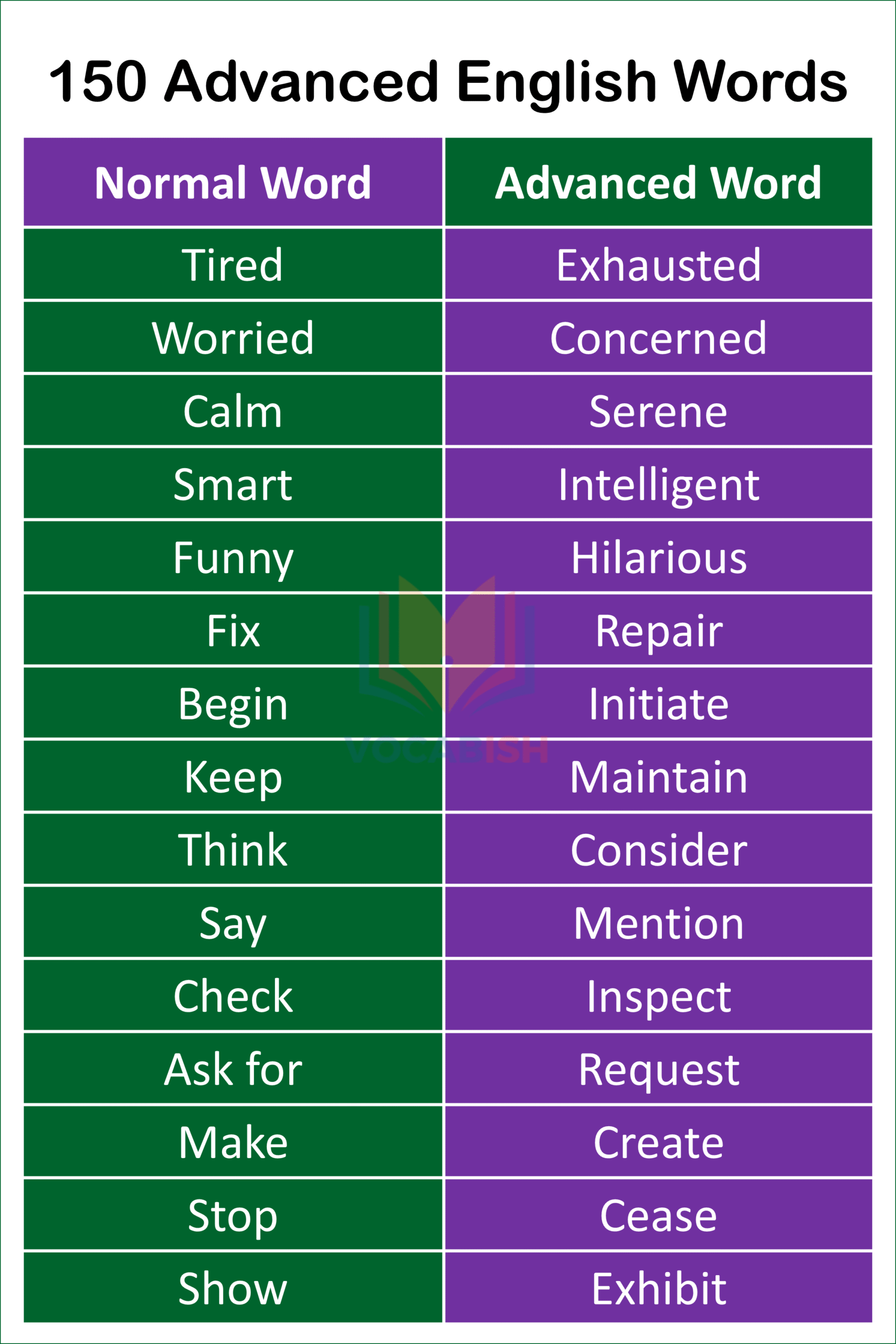
Tired | Exhausted | He was exhausted after running. |
Worried | Concerned | I am concerned about your safety. |
Calm | Serene | The lake looks serene in the morning. |
Smart | Intelligent | He is a very intelligent student. |
Funny | Hilarious | That movie was absolutely hilarious. |
Advanced English Words for Everyday Actions
Normal Word | Advanced Word | Example Sentence |
|---|---|---|
Fix | Repair | The mechanic will repair your car. |
Begin | Initiate | They initiated the project last week. |
Keep | Maintain | You should maintain a healthy diet. |
Think | Consider | Please consider my offer. |
Say | Mention | He didn’t mention that in his report. |
Check | Inspect | The officer inspected the documents carefully. |
Ask for | Request | I would like to request your help. |
Make | Create | They created a new design. |
Stop | Cease | The rain finally ceased after two hours. |
Show | Exhibit | The artist will exhibit his paintings tomorrow. |
Normal vs Advanced Sentences
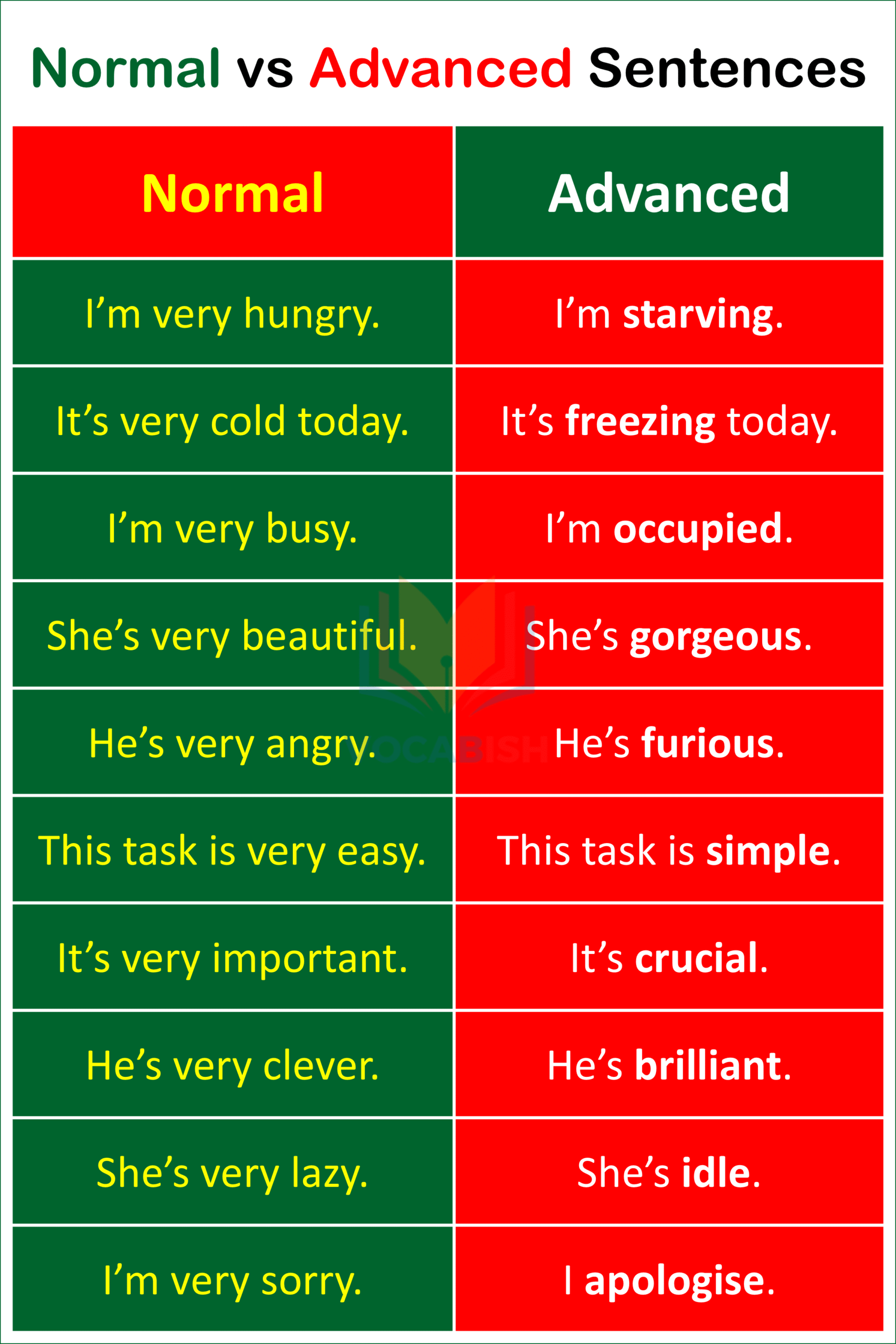
Here are more short and simple examples to help you practice:
Normal: I’m very hungry.
Advanced: I’m starving.
Normal: It’s very cold today.
Advanced: It’s freezing today.
Normal: I’m very busy.
Advanced: I’m occupied.
Normal: She’s very beautiful.
Advanced: She’s gorgeous.
Normal: He’s very angry.
Advanced: He’s furious.
Normal: This task is very easy.
Advanced: This task is simple.
Normal: It’s very important.
Advanced: It’s crucial.
Normal: He’s very clever.
Advanced: He’s brilliant.
Normal: She’s very lazy.
Advanced: She’s idle.
Normal: I’m very sorry.
Advanced: I apologise.
Why Use Advanced Words?
Using advanced words helps you:
- Sound more confident and fluent.
- Improve your spoken and written English.
- Build a stronger vocabulary.
- Communicate professionally in work or study environments.
Example:
- Normal: She said sorry.
- Advanced: She apologised.
Quick Tips to Remember
- Use advanced words in the right context — not to sound difficult, but to sound natural.
- Practice them in daily conversations or writing exercises.
- Keep a vocabulary notebook to write new words and their meanings.
- Review these words often to remember them better.
Learning Normal vs Advanced English Words and Sentences is one of the easiest ways to improve your English vocabulary. Using advanced words makes your English sound more expressive, fluent, and professional.
Keep practising these words and sentences daily — soon, your English will sound clearer, smarter, and more natural!
Frequently Asked Questions
What is the difference between normal and advanced English words?
Normal English words are basic and commonly used in daily life, while advanced English words are more formal, powerful, and help you sound fluent and confident.
How can I learn advanced English words easily?
You can learn advanced words by reading books, listening to English speakers, practising sentences daily, and replacing normal words with advanced ones in your speech and writing.
Why should I use advanced English words in conversation?
Using advanced English words helps you speak more clearly, express your thoughts better, and sound more professional in both personal and work situations.
What are some examples of normal vs advanced English words?
For example, instead of saying very tired, you can say exhausted; instead of buy, you can say purchase; and instead of angry, you can say furious.
Can beginners use advanced English words?
Yes, beginners can start using advanced English words by learning them step by step and practising through short sentences and daily conversations.
Read More