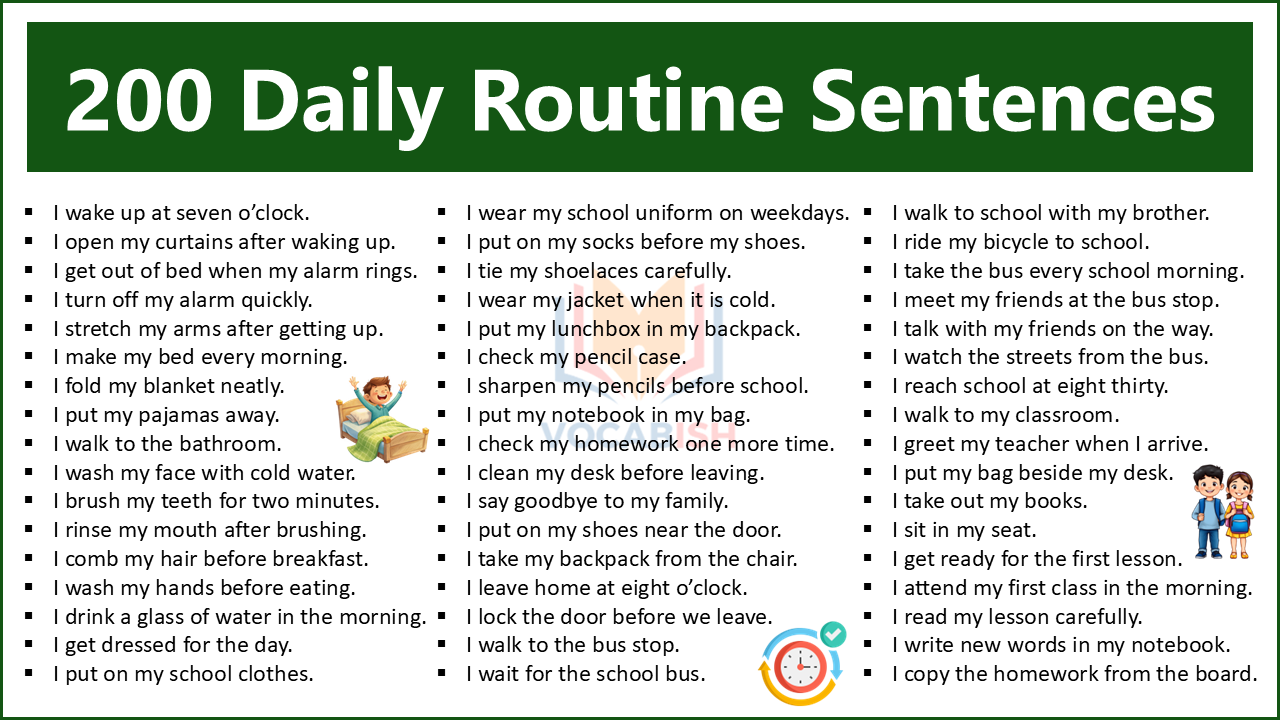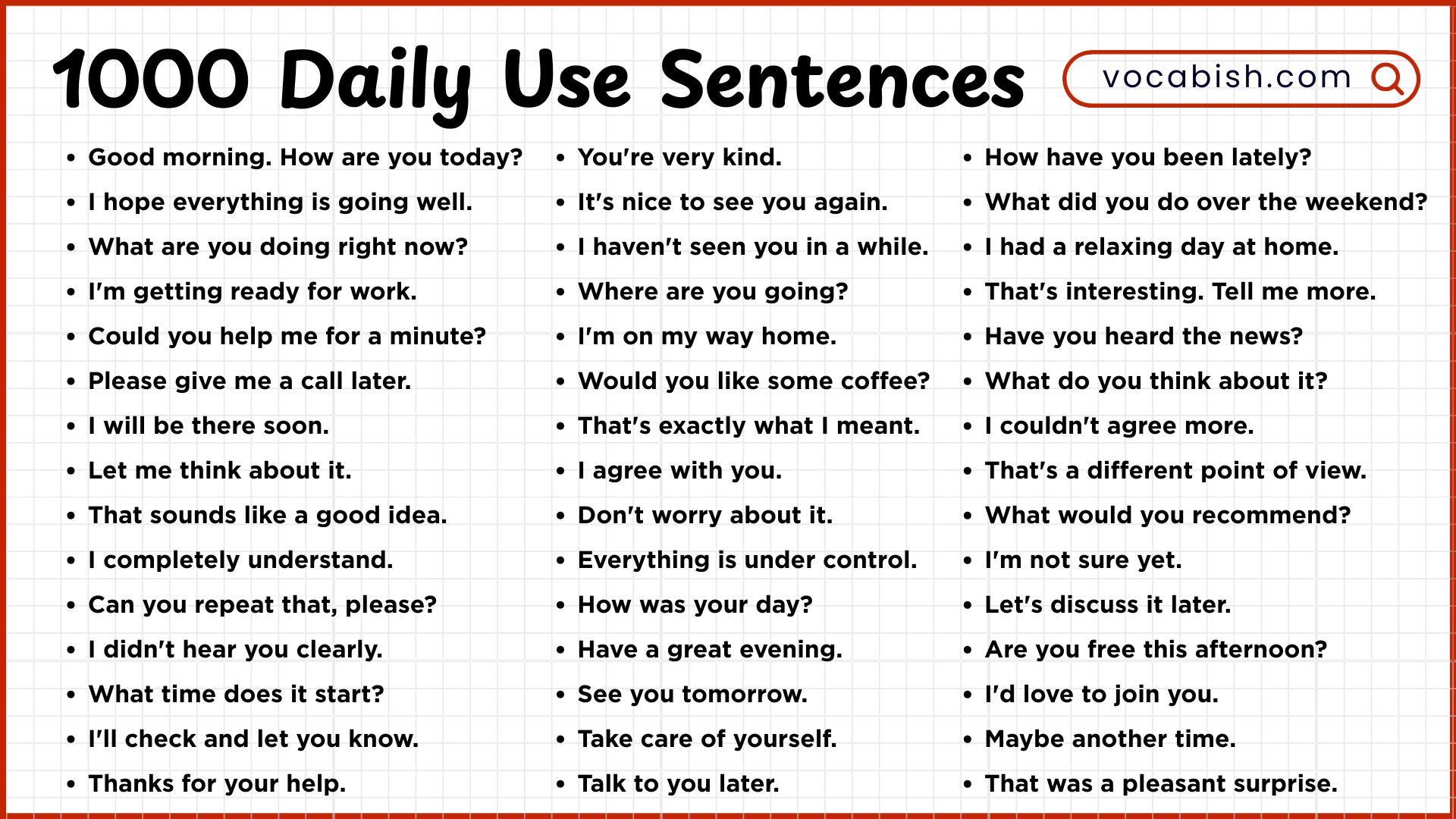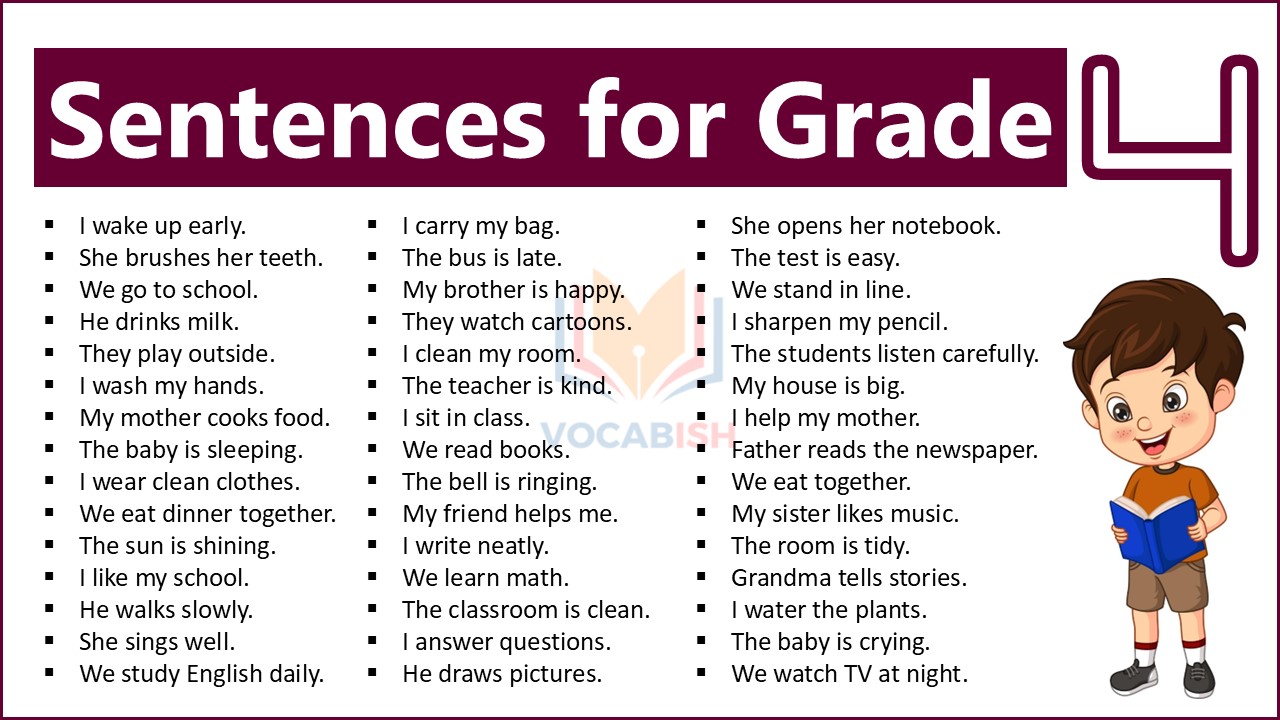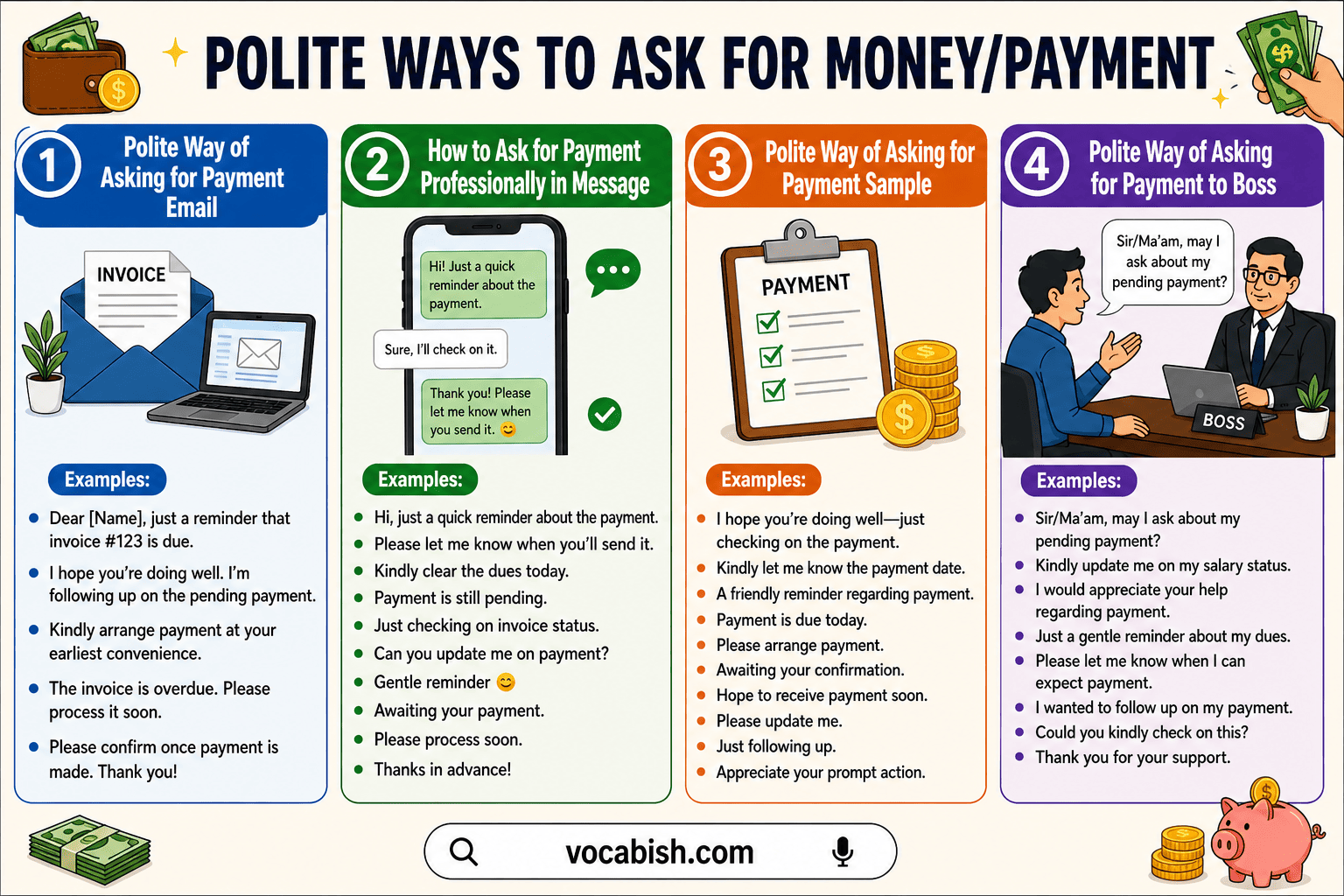
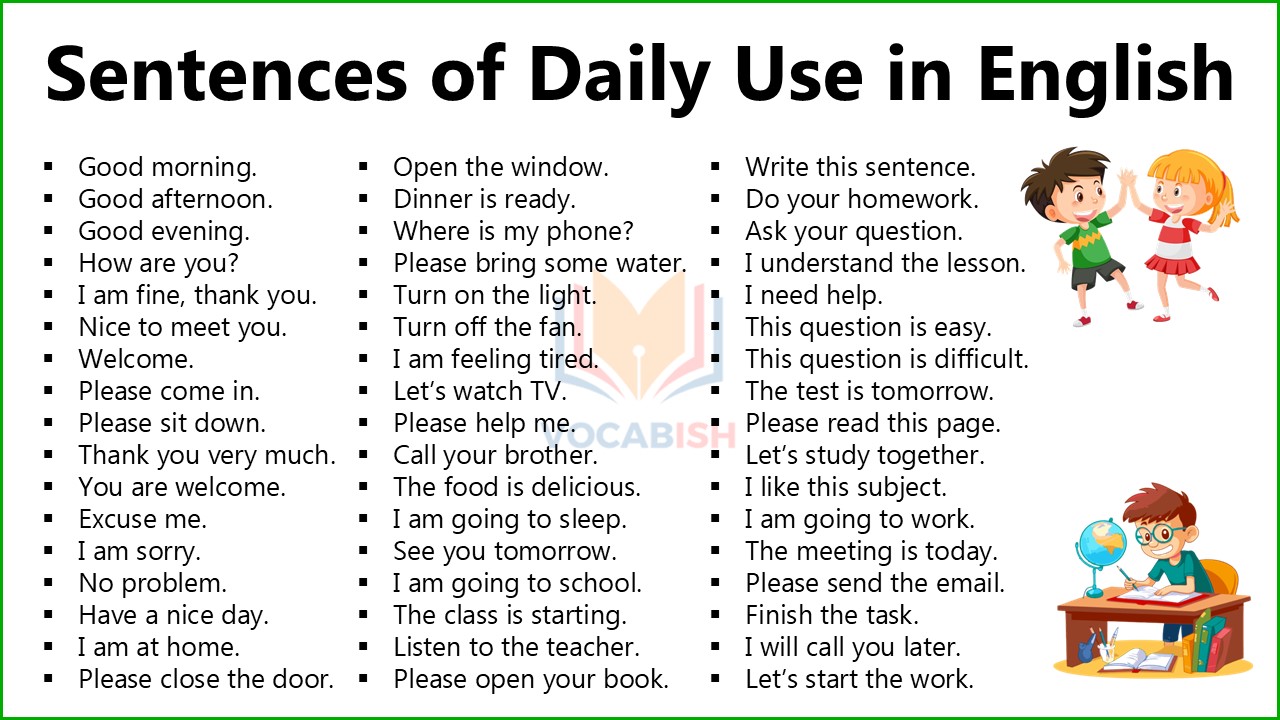

Learning daily use English sentences is one of the easiest ways to improve communication skills. Many English learners understand grammar and vocabulary but struggle when speaking in real situations. Short and practical sentences help learners speak naturally and confidently.
In daily life, people use simple sentences to greet others, ask questions, request help, shop, travel, and talk with friends or colleagues. When learners practice these sentences regularly, they improve speaking, listening, reading, and writing at the same time.
100 Sentences of Daily Use in English
Greetings and Polite Expressions
- Good morning.
- Good afternoon.
- Good evening.
- How are you?
- I am fine, thank you.
- Nice to meet you.
- Welcome.
- Please come in.
- Please sit down.
- Thank you very much.
- You are welcome.
- Excuse me.
- I am sorry.
- No problem.
- Have a nice day.
Home and Family Conversations
- I am at home.
- Please close the door.
- Open the window.
- Dinner is ready.
- Where is my phone?
- Please bring some water.
- Turn on the light.
- Turn off the fan.
- I am feeling tired.
- Let’s watch TV.
- Please help me.
- Call your brother.
- The food is delicious.
- I am going to sleep.
- See you tomorrow.
School and Study Sentences
- I am going to school.
- The class is starting.
- Listen to the teacher.
- Please open your book.
- Write this sentence.
- Do your homework.
- Ask your question.
- I understand the lesson.
- I need help.
- This question is easy.
- This question is difficult.
- The test is tomorrow.
- Please read this page.
- Let’s study together.
- I like this subject.
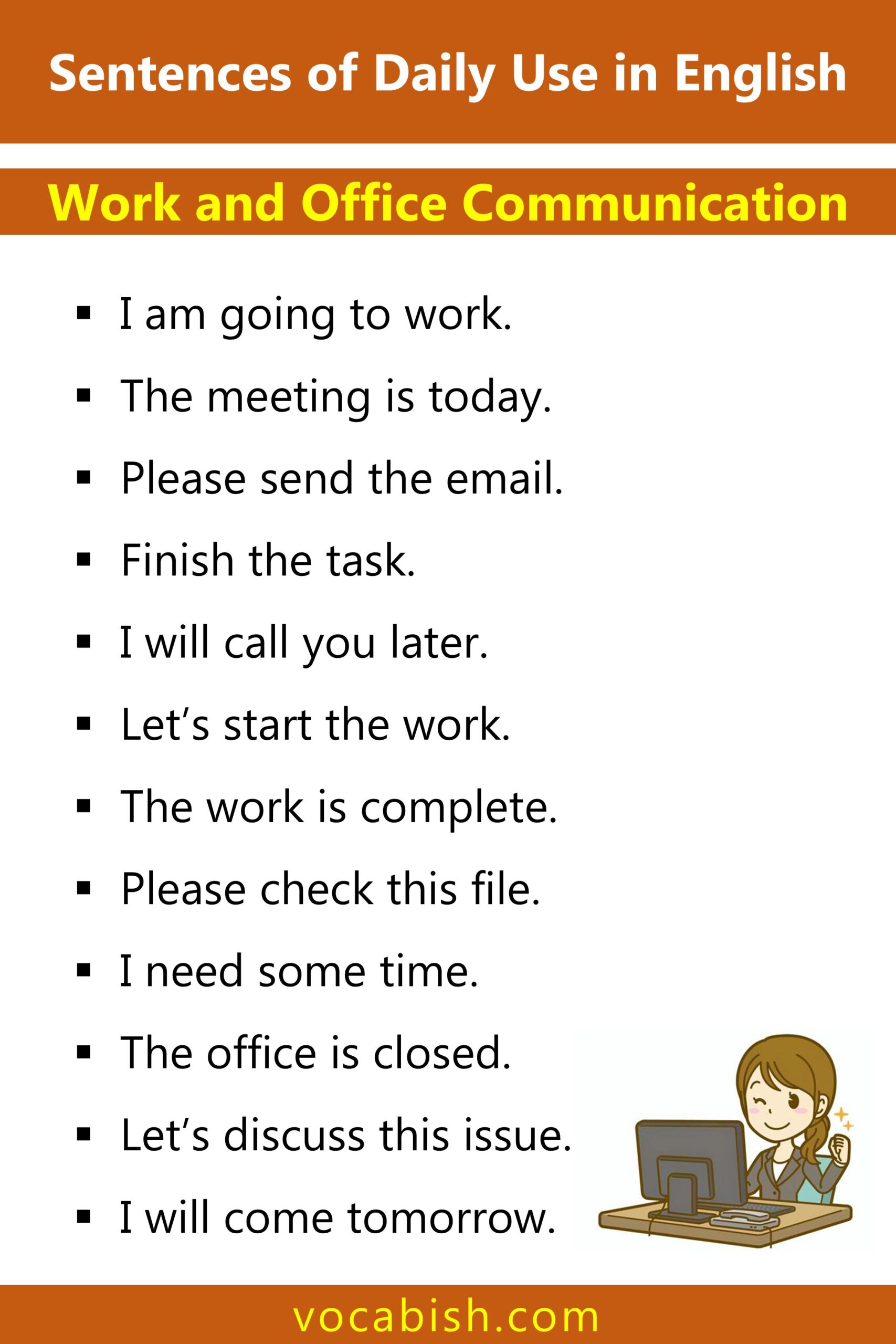
Work and Office Communication
- I am going to work.
- The meeting is today.
- Please send the email.
- Finish the task.
- I will call you later.
- Let’s start the work.
- The work is complete.
- Please check this file.
- I need some time.
- The office is closed.
- Let’s discuss this issue.
- I will come tomorrow.
- The report is ready.
- Please wait a moment.
- Good job.
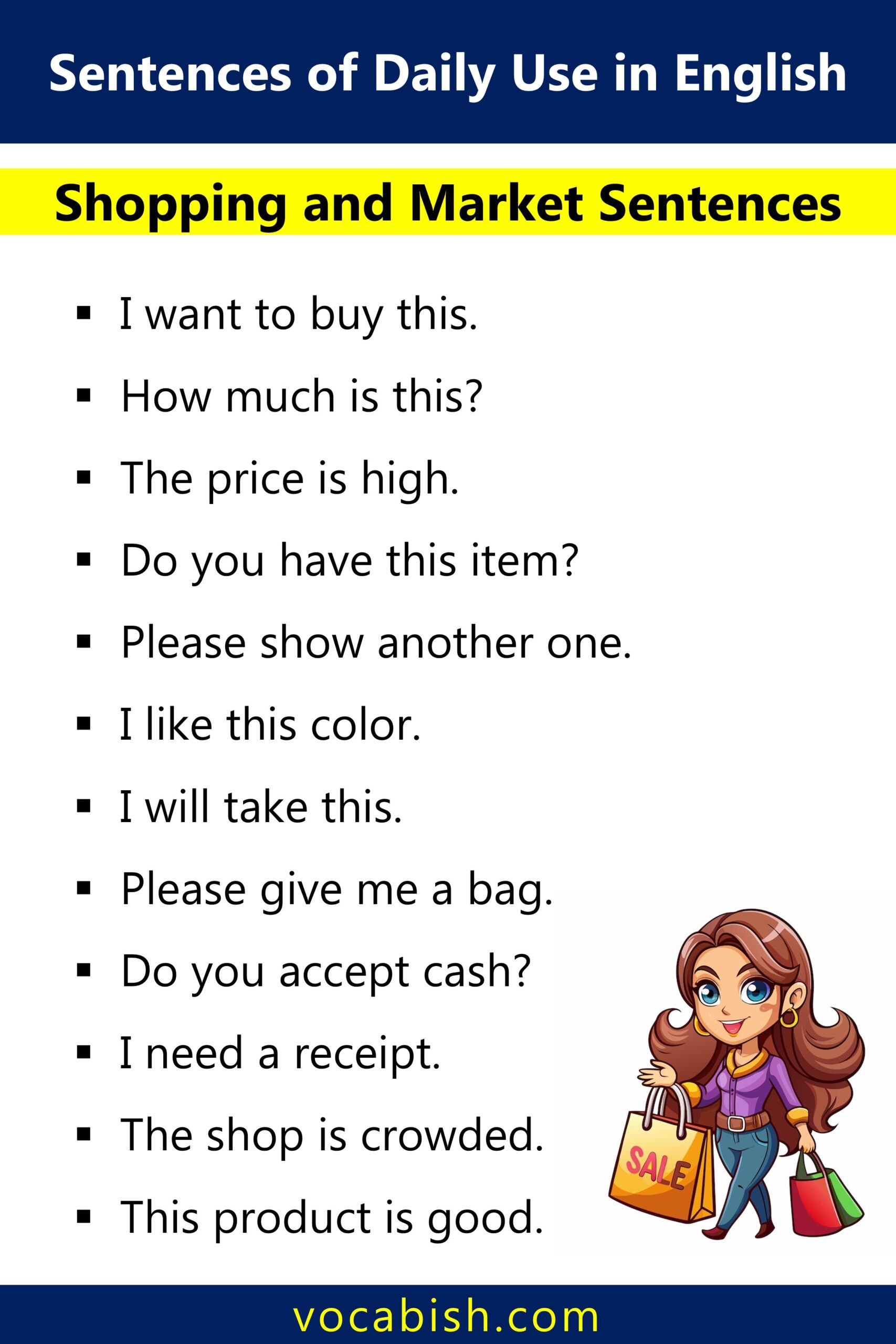
Shopping and Market Sentences
- I want to buy this.
- How much is this?
- The price is high.
- Do you have this item?
- Please show another one.
- I like this color.
- I will take this.
- Please give me a bag.
- Do you accept cash?
- I need a receipt.
- The shop is crowded.
- This product is good.
- I am just looking.
- Thank you for your help.
- See you again.
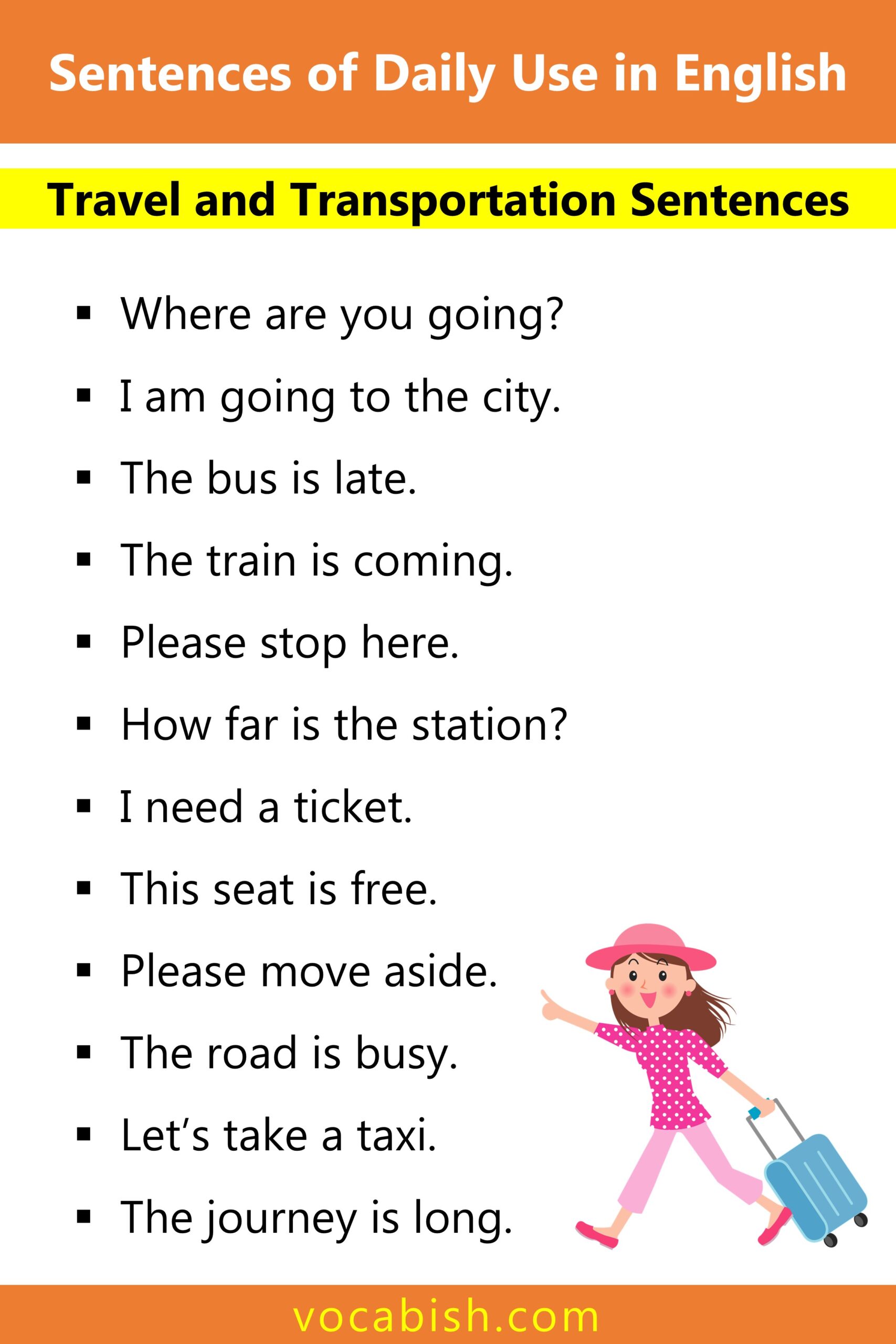
Travel and Transportation Sentences
- Where are you going?
- I am going to the city.
- The bus is late.
- The train is coming.
- Please stop here.
- How far is the station?
- I need a ticket.
- This seat is free.
- Please move aside.
- The road is busy.
- Let’s take a taxi.
- The journey is long.
- We arrived safely.
- This place is beautiful.
- Let’s take a picture.
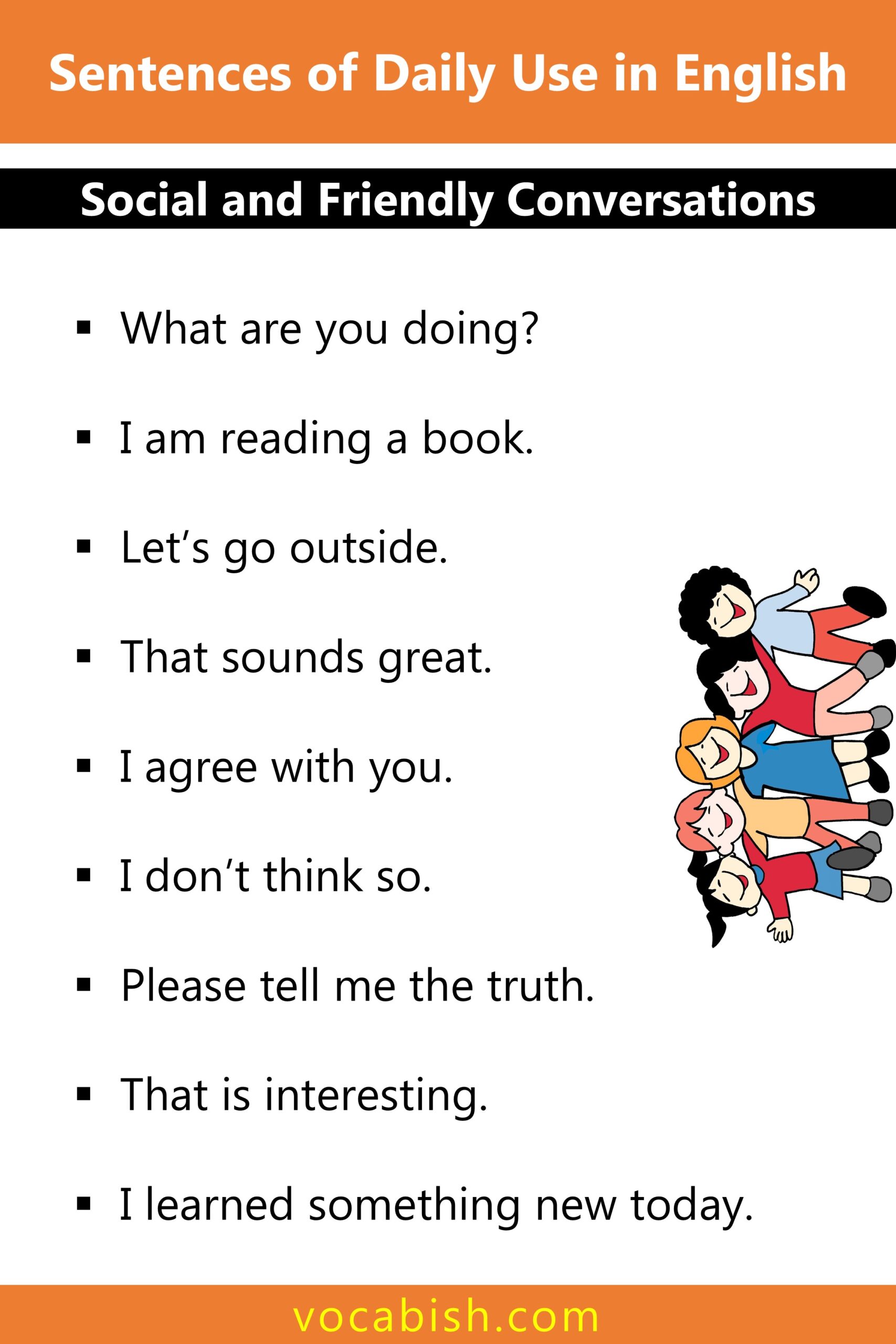
Social and Friendly Conversations
- What are you doing?
- I am reading a book.
- Let’s go outside.
- That sounds great.
- I agree with you.
- I don’t think so.
- Please tell me the truth.
- That is interesting.
- I learned something new today.
- It was nice talking to you.
Common Words Used in Daily Conversations
Many daily sentences use simple and familiar words. Understanding these words helps learners form their own sentences easily.
Important daily vocabulary words:
- Hello
- Please
- Thanks
- Sorry
- Help
- Come
- Go
- Wait
- Listen
- Speak
- Tell
- Ask
- Bring
- Take
- Meet
- Work
- Study
- Buy
- Open
- Close
Tips to Practice Daily Use Sentences
Learning sentences becomes easier with regular practice. Follow these simple steps:
- Read sentences aloud every day
- Repeat them during conversations
- Practice with friends or classmates
- Write the sentences in a notebook
- Use them in real situations
Practice builds confidence and improves speaking speed.
How These Sentences Improve English Fluency
Daily sentences train the brain to think in English. Instead of translating from another language, learners start responding naturally.
These sentences help learners:
- build strong speaking habits
- improve pronunciation
- expand vocabulary knowledge
- understand common expressions
With consistent practice, learners communicate more clearly and confidently.
Conclusion
Learning 100 sentences of daily use in English is a powerful step toward better communication. These sentences cover greetings, family conversations, school, work, shopping, travel, and social situations.
When learners practice these sentences regularly, they develop stronger vocabulary, better pronunciation, and greater speaking confidence.
Daily practice may seem simple, but it creates strong language skills over time.
Download PDF (100 Daily Use Sentences)
Many learners prefer printable resources for regular practice. A PDF version of these 100 daily use sentences allows you to review the sentences anytime on your phone or print them for study.
Related Articles: