
What do you do from the moment you wake up until you go to bed? Daily Routine Sentences help learners talk about waking up, getting ready, going to school, studying, eating, relaxing, and sleeping.
These everyday routine sentences are useful for speaking practice, writing practice, classroom activities, and English conversations.
How to Use These Daily Routine Sentences
Use the sentences to describe what you normally do during the day.
- Read each sentence aloud.
- Replace the time or activity with your own routine.
- Write five sentences about your day.
- Practice saying the sentences in order.
- Use them for classroom speaking and writing activities.
Related Resources: 100 Reading Sentences for Kids in English
How to Form Daily Routine Sentences
Daily routine sentences usually use the simple present tense because they describe activities that happen regularly.
Sentence Pattern | Example |
|---|---|
Subject + Verb + Object | I brush my teeth. |
Subject + Verb + Time | I wake up at 7 o’clock. |
Subject + Adverb + Verb + Object | I usually eat breakfast. |
Subject + Verb + Place | I go to school. |
Subject + Verb + Object + Time | I do my homework in the evening. |
Subject + Verb + Object + Place | I pack my books in my bag. |
Common Daily Routine Verbs
Verb | Example Sentence |
|---|---|
wake up | I wake up early. |
wash | I wash my face. |
brush | I brush my teeth. |
eat | I eat breakfast. |
get | I get dressed. |
go | I go to school. |
study | I study English. |
play | I play after school. |
do | I do my homework. |
sleep | I sleep at night. |
Basic formula: Subject + Verb + Extra Information
Example: I + do + my homework + after school.
Morning Routine Sentences
These sentences describe common activities from waking up to starting the day.
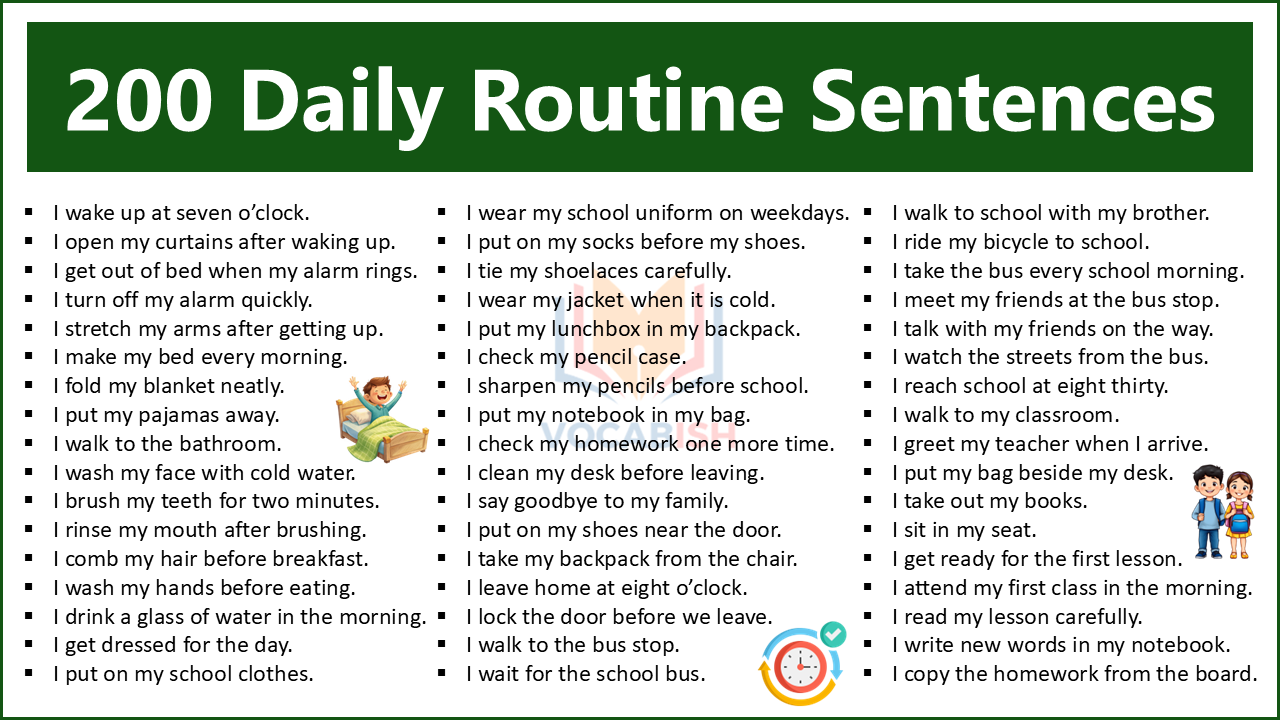
- I wake up at seven o’clock.
- I open my curtains after waking up.
- I get out of bed when my alarm rings.
- I turn off my alarm quickly.
- I stretch my arms after getting up.
- I make my bed every morning.
- I fold my blanket neatly.
- I put my pajamas away.
- I walk to the bathroom.
- I wash my face with cold water.
- I brush my teeth for two minutes.
- I rinse my mouth after brushing.
- I comb my hair before breakfast.
- I wash my hands before eating.
- I drink a glass of water in the morning.
- I get dressed for the day.
- I put on my school clothes.
- I check the weather before leaving home.
- I look at the clock before breakfast.
- I go downstairs for breakfast.
- I eat breakfast with my family.
- I have cereal before school.
- I eat fruit with my breakfast.
- I drink milk in the morning.
- I pack my lunch after breakfast.
- I check my school bag.
- I put my books in my backpack.
- I take my homework from the table.
- I put my homework in my school bag.
- I fill my water bottle before leaving.
Getting Ready for School
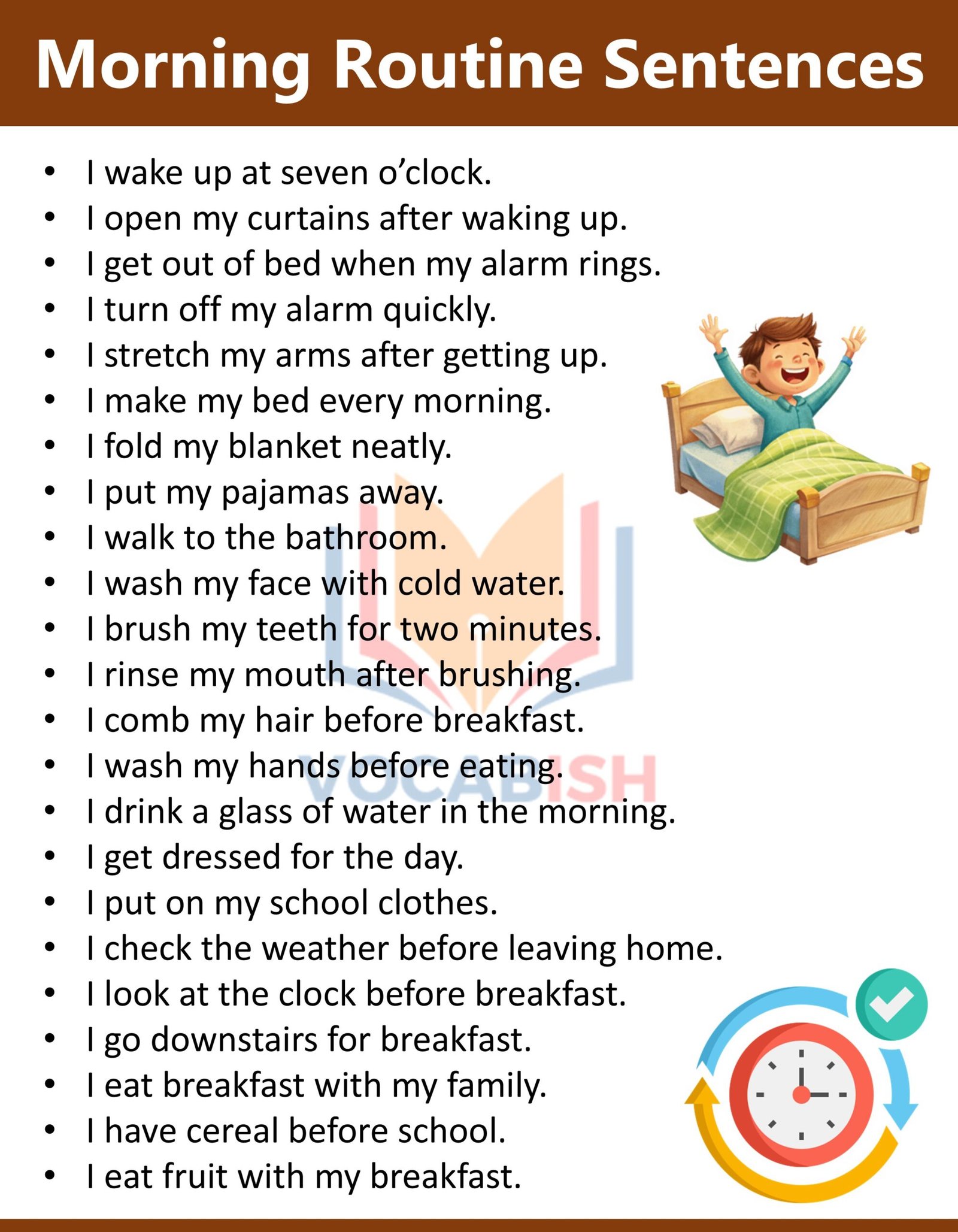
These everyday routine sentences focus on preparing for school and leaving home.
- I wear my school uniform on weekdays.
- I put on my socks before my shoes.
- I tie my shoelaces carefully.
- I wear my jacket when it is cold.
- I put my lunchbox in my backpack.
- I check my pencil case.
- I sharpen my pencils before school.
- I put my notebook in my bag.
- I check my homework one more time.
- I clean my desk before leaving.
- I say goodbye to my family.
- I put on my shoes near the door.
- I take my backpack from the chair.
- I leave home at eight o’clock.
- I lock the door before we leave.
- I walk to the bus stop.
- I wait for the school bus.
- I get on the bus with my classmates.
- I sit in my usual seat.
- I arrive at school before the bell rings.
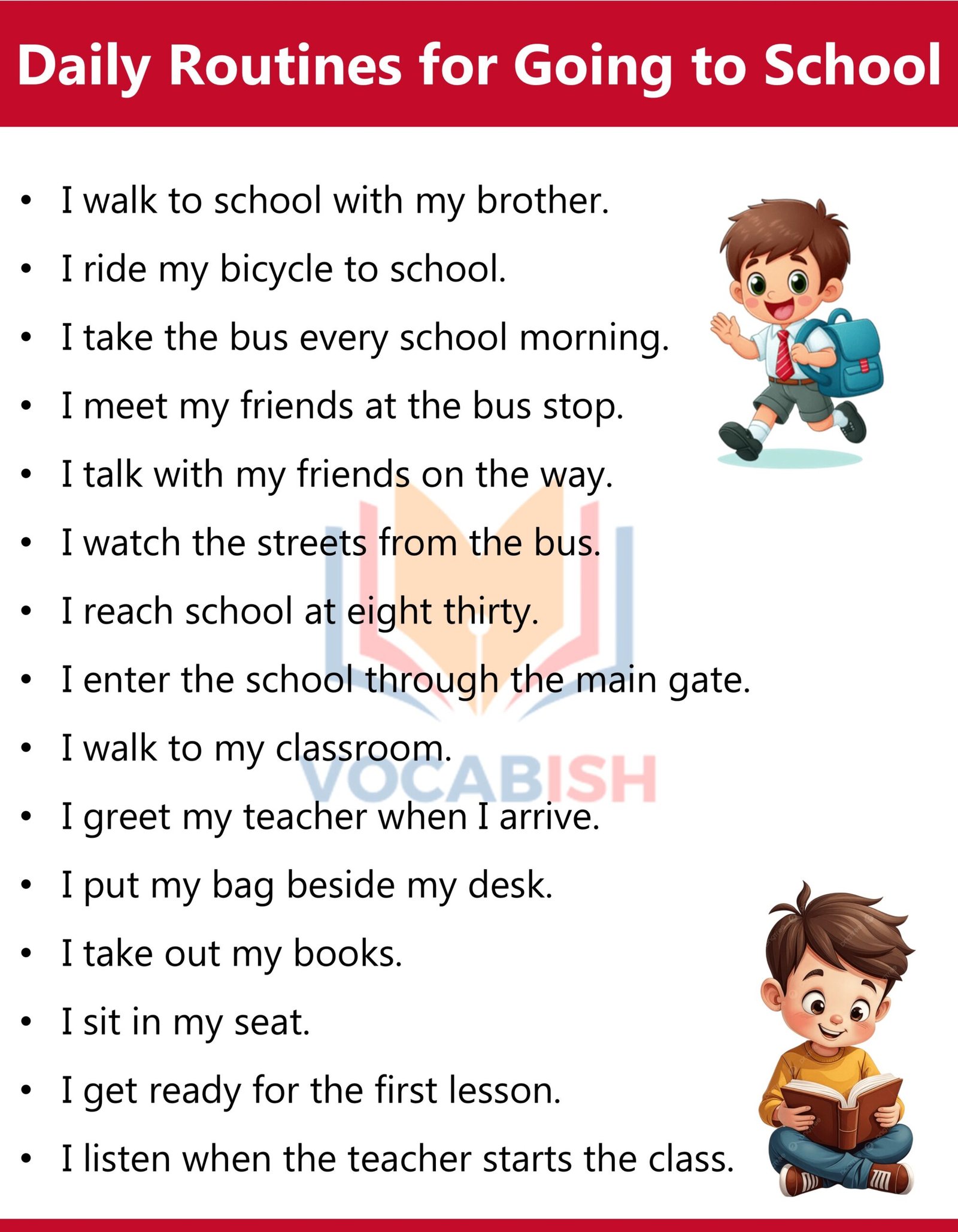
Daily Routines for Going to School
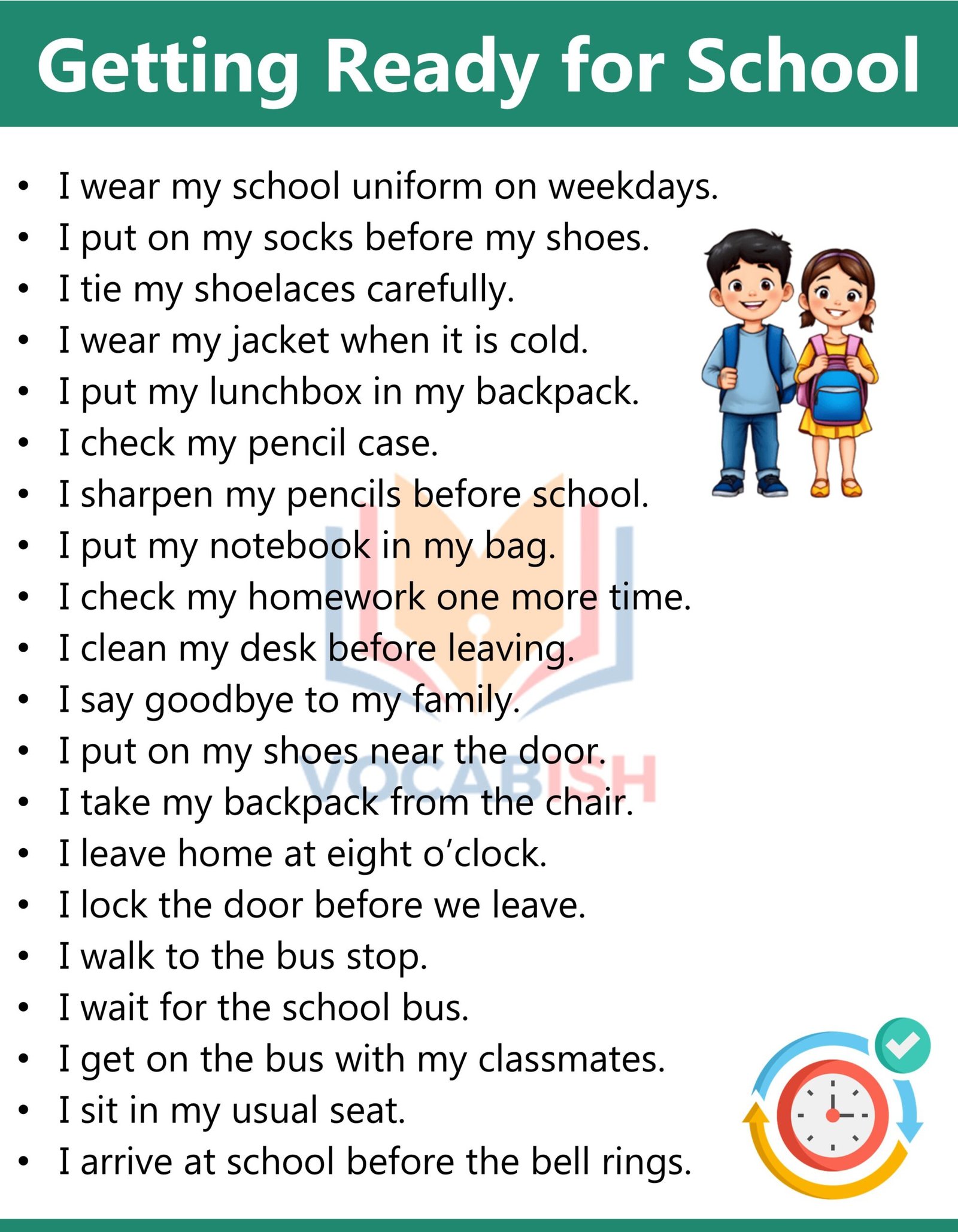
These sentences describe the daily journey to school and the start of the school day.
- I walk to school with my brother.
- I ride my bicycle to school.
- I take the bus every school morning.
- I meet my friends at the bus stop.
- I talk with my friends on the way.
- I watch the streets from the bus.
- I reach school at eight thirty.
- I enter the school through the main gate.
- I walk to my classroom.
- I greet my teacher when I arrive.
- I put my bag beside my desk.
- I take out my books.
- I sit in my seat.
- I get ready for the first lesson.
- I listen when the teacher starts the class.
Explore More: 100 Writing Sentences for Kids in English
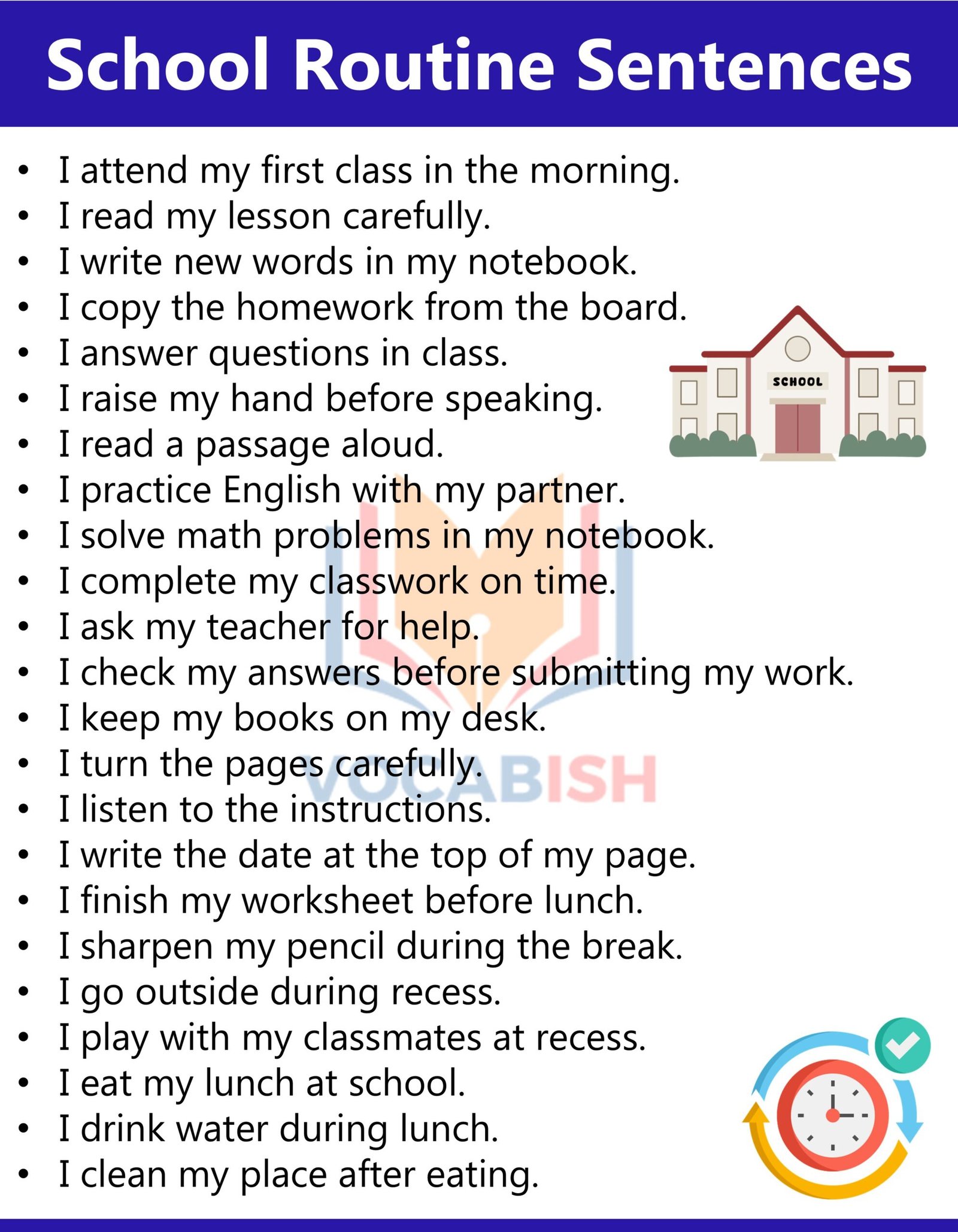
School Routine Sentences
These sentences describe regular activities during a school day.
- I attend my first class in the morning.
- I read my lesson carefully.
- I write new words in my notebook.
- I copy the homework from the board.
- I answer questions in class.
- I raise my hand before speaking.
- I read a passage aloud.
- I practice English with my partner.
- I solve math problems in my notebook.
- I complete my classwork on time.
- I ask my teacher for help.
- I check my answers before submitting my work.
- I keep my books on my desk.
- I turn the pages carefully.
- I listen to the instructions.
- I write the date at the top of my page.
- I finish my worksheet before lunch.
- I sharpen my pencil during the break.
- I go outside during recess.
- I play with my classmates at recess.
- I eat my lunch at school.
- I drink water during lunch.
- I clean my place after eating.
- I return to class after recess.
- I prepare for the next lesson.
- I read quietly when the class is silent.
- I work on a group activity.
- I practice spelling during English class.
- I learn new vocabulary at school.
- I complete my final lesson before going home.
- I pack my books after class.
- I put my homework in my backpack.
- I say goodbye to my teacher.
- I leave the classroom with my classmates.
- I go home when school ends.
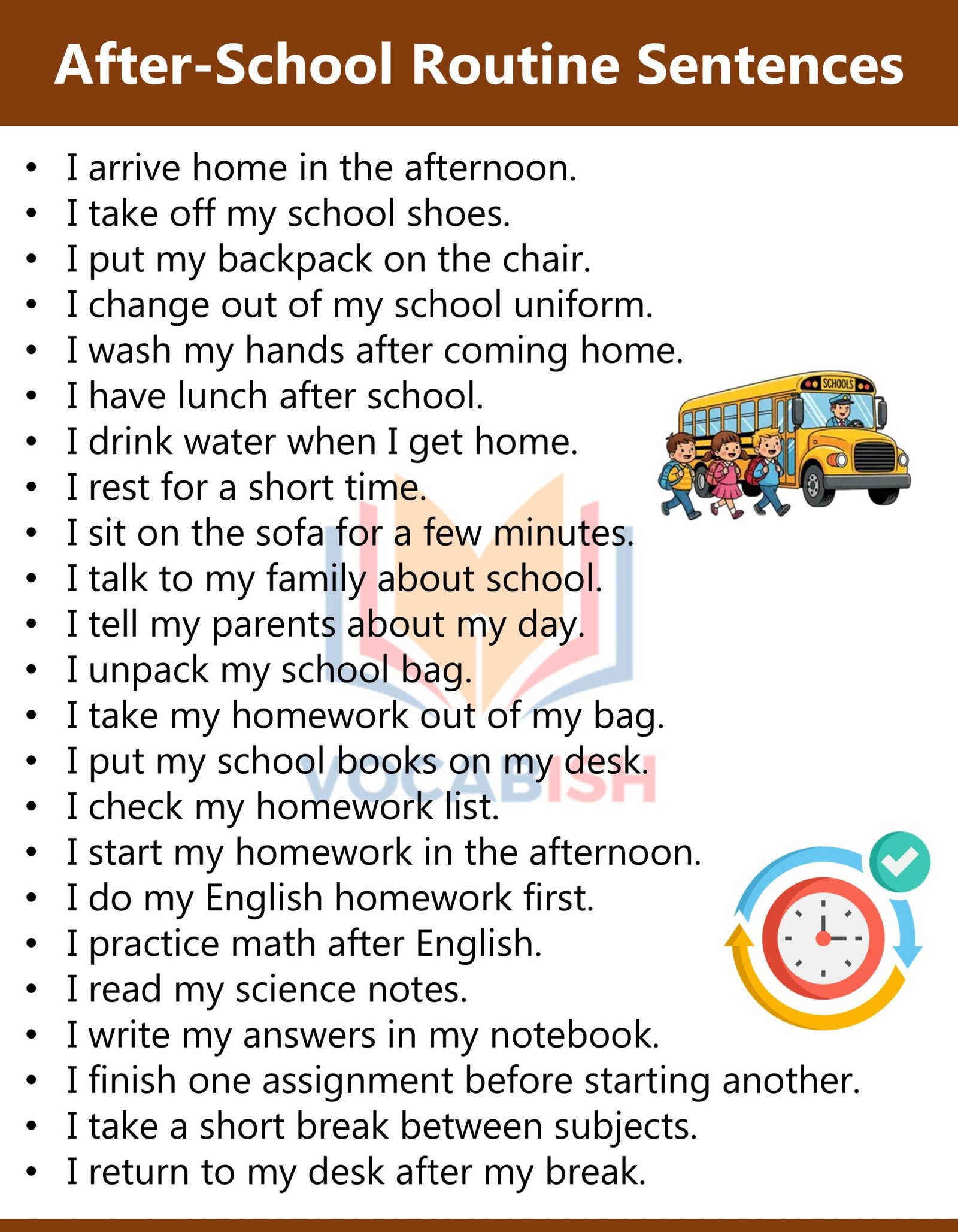
After-School Routine Sentences
These sentences cover the activities learners often do after returning home from school.
- I arrive home in the afternoon.
- I take off my school shoes.
- I put my backpack on the chair.
- I change out of my school uniform.
- I wash my hands after coming home.
- I have lunch after school.
- I drink water when I get home.
- I rest for a short time.
- I sit on the sofa for a few minutes.
- I talk to my family about school.
- I tell my parents about my day.
- I unpack my school bag.
- I take my homework out of my bag.
- I put my school books on my desk.
- I check my homework list.
- I start my homework in the afternoon.
- I do my English homework first.
- I practice math after English.
- I read my science notes.
- I write my answers in my notebook.
- I finish one assignment before starting another.
- I take a short break between subjects.
- I return to my desk after my break.
- I check my homework when I finish.
- I pack my books for the next day.
- I put my finished homework in my folder.
- I clean my study table.
- I read a book after finishing my homework.
- I practice English vocabulary in the afternoon.
- I review what I learned at school.
- I help at home after studying.
- I put my clothes in the laundry basket.
- I tidy my room before dinner.
- I feed my pet after doing my homework.
- I play outside for a while.
- I ride my bike in the afternoon.
- I play a game with my friends.
- I return home before dinner.
- I wash my hands before eating.
- I get ready for the evening.
You May Also Like: 150 Basic English Words for Kids
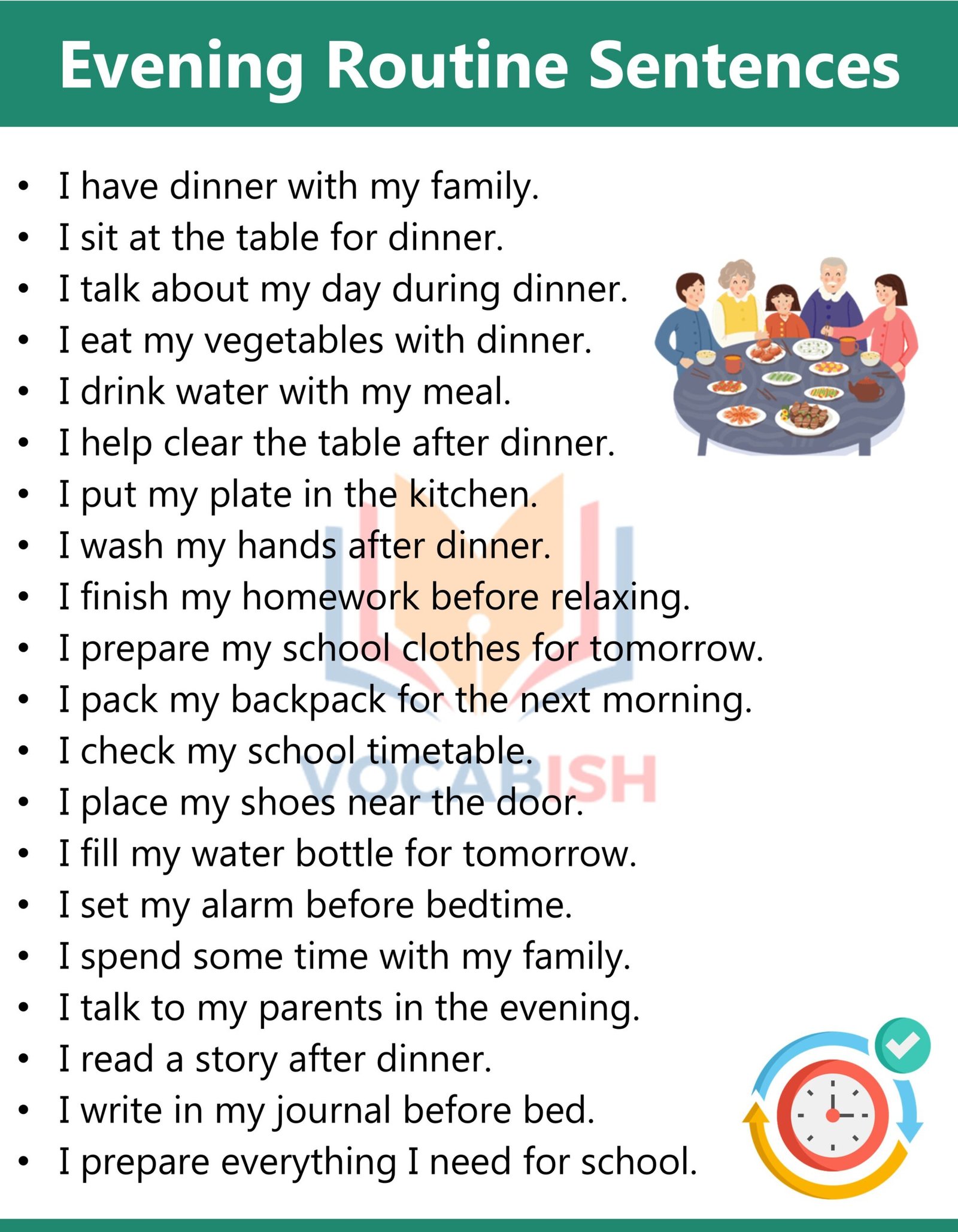
Evening Routine Sentences
These sentences describe regular activities from late afternoon through the evening.
- I have dinner with my family.
- I sit at the table for dinner.
- I talk about my day during dinner.
- I eat my vegetables with dinner.
- I drink water with my meal.
- I help clear the table after dinner.
- I put my plate in the kitchen.
- I wash my hands after dinner.
- I finish my homework before relaxing.
- I prepare my school clothes for tomorrow.
- I pack my backpack for the next morning.
- I check my school timetable.
- I place my shoes near the door.
- I fill my water bottle for tomorrow.
- I set my alarm before bedtime.
- I spend some time with my family.
- I talk to my parents in the evening.
- I read a story after dinner.
- I write in my journal before bed.
- I prepare everything I need for school.
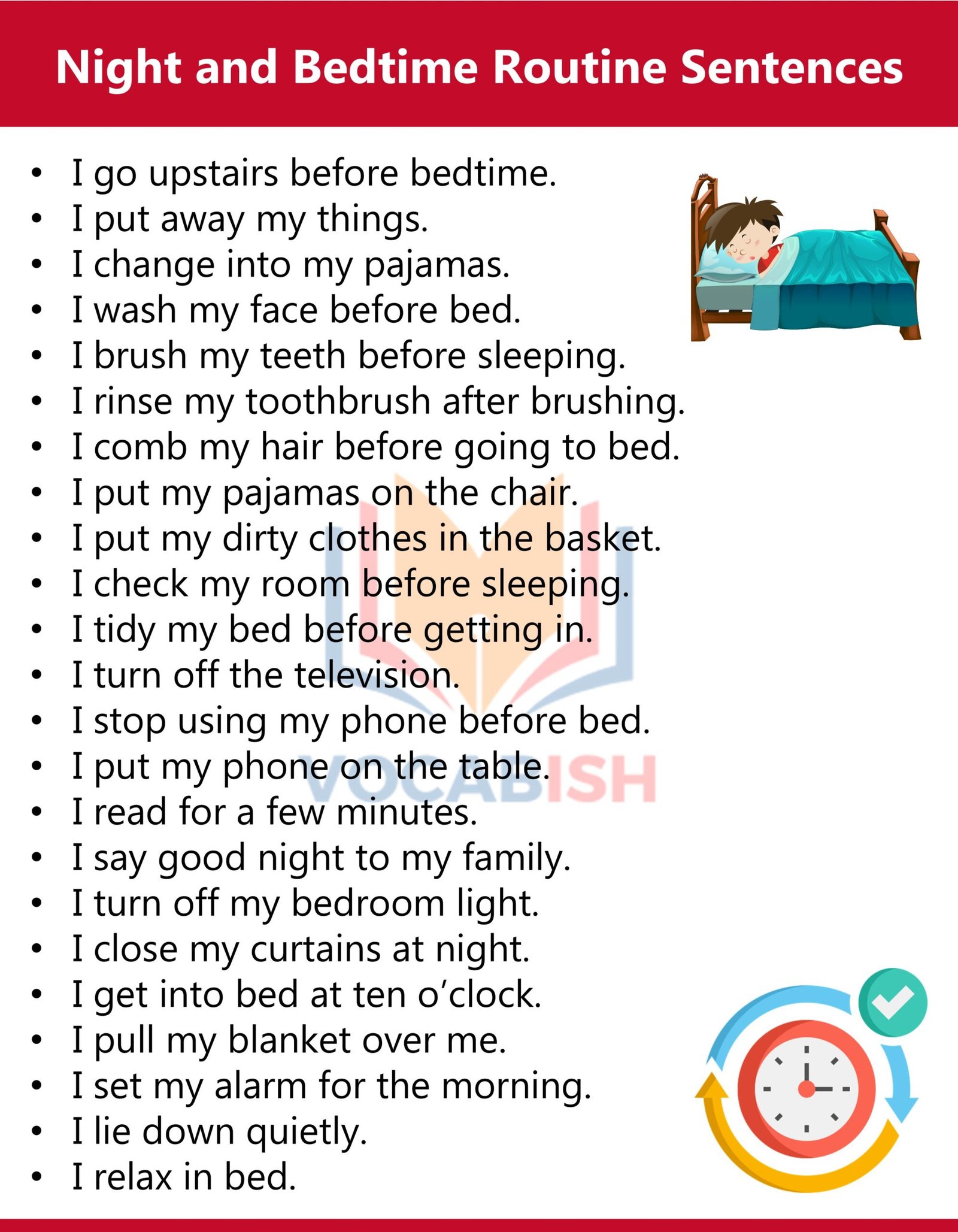
Night and Bedtime Routine Sentences
These sentences focus on the final activities before going to sleep.
- I go upstairs before bedtime.
- I put away my things.
- I change into my pajamas.
- I wash my face before bed.
- I brush my teeth before sleeping.
- I rinse my toothbrush after brushing.
- I comb my hair before going to bed.
- I put my pajamas on the chair.
- I put my dirty clothes in the basket.
- I check my room before sleeping.
- I tidy my bed before getting in.
- I turn off the television.
- I stop using my phone before bed.
- I put my phone on the table.
- I read for a few minutes.
- I say good night to my family.
- I turn off my bedroom light.
- I close my curtains at night.
- I get into bed at ten o’clock.
- I pull my blanket over me.
- I set my alarm for the morning.
- I lie down quietly.
- I relax in bed.
- I close my eyes.
- I fall asleep after a busy day.
Read More: 150 Daily Use English Sentences for Kids
Daily Routine Sentences for Practice
These sentences give learners more ways to describe the order, timing, and regular habits in their daily routines.
- I usually wake up early on school days.
- I always brush my teeth after breakfast.
- I usually eat breakfast before leaving home.
- I often walk to the bus stop with my sister.
- I sometimes read on the bus.
- I always take my homework to school.
- I usually have lunch around noon.
- I often play outside after school.
- I sometimes visit the library after class.
- I usually study before dinner.
- I always prepare my bag at night.
- I often read before going to bed.
- I usually go to sleep at the same time.
- I never leave my homework until bedtime.
- I follow my daily routine from morning until night.
Common Mistakes in Daily Routine Sentences
- Say “I wake up at 7”, not “I wake at up 7.”
- Say “I go to school”, not “I go to the school” when talking about regular school attendance.
- Say “I brush my teeth”, not “I brush my tooth.”
- Say “I have breakfast”, not “I take breakfast” in standard everyday English.
- Say “I go to bed” for the routine of going to sleep.
FAQs
Daily Routine Sentences describe regular activities people do each day, such as waking up, eating, studying, going to school, and sleeping.
Start with the subject, use a suitable present-tense verb, and add details about the activity, time, or place when needed.
The simple present tense is normally used because daily routines describe repeated or regular activities.
Examples include “I wake up early,” “I eat breakfast,” “I go to school,” “I do my homework,” and “I go to bed.”
Students can read the sentences aloud, arrange activities in order, write their own routines, and practice describing their day.
Everyday routine sentences describe activities that happen regularly, including getting ready, studying, eating meals, relaxing, and sleeping.
Describe your school day in order by mentioning when you arrive, attend classes, have lunch, complete schoolwork, and return home.
Conclusion
These Daily Routine Sentences give learners useful English for describing their day from waking up in the morning to going to bed at night. Practice them regularly, then use the same sentence patterns to describe your own routine.
Read More