
Table manners for kids are polite habits we use while eating at home, school, or in public places. In this blog post, you will learn how to use these manners in real life situations. You will understand important words like please, thank you, and excuse me, along with actions such as using utensils, sitting properly, and sharing food.
Learning this vocabulary helps children improve speaking, reading, writing, and listening skills. When kids practice these words, they can speak more politely and understand others better. They can also read instructions easily and write sentences about daily routines. Most importantly, they gain confidence in using English in everyday life.
What Are Table Manners?
Table manners are rules of behavior during meals. These rules teach us how to eat neatly, speak politely, and respect others at the table.
For example:
- Saying “please” and “thank you”
- Eating quietly
- Waiting for your turn
Why Table Manners Are Important for Kids
Good table manners help children in many ways:
- They learn respect for others
- They build confidence in social situations
- They improve communication skills
- They create a positive impression
As a result, children feel more comfortable when eating with family, friends, or guests.
Basic Table Manners Rules
Here are some simple rules every child should follow:
- Wash your hands before eating
- Sit properly at the table
- Do not talk with your mouth full
- Chew food slowly and quietly
- Use utensils correctly
- Say “please” and “thank you”
- Wait until everyone is served
These rules are easy to follow and very important in daily life.
Common Table Manners Vocabulary
Below are useful words that help you understand table manners better:
- Napkin – A cloth or paper used to clean your mouth and hands
- Utensils – Tools like spoon, fork, and knife
- Chew – To break food with your teeth
- Swallow – To move food from mouth to stomach
- Polite – Showing good manners and respect
- Serve – To give food to someone
- Request – To ask for something politely
- Excuse me – A polite phrase to get attention or leave the table
- Burp – Air coming from the stomach through the mouth (should be avoided loudly)
- Table setting – Arrangement of plates, glasses, and utensils
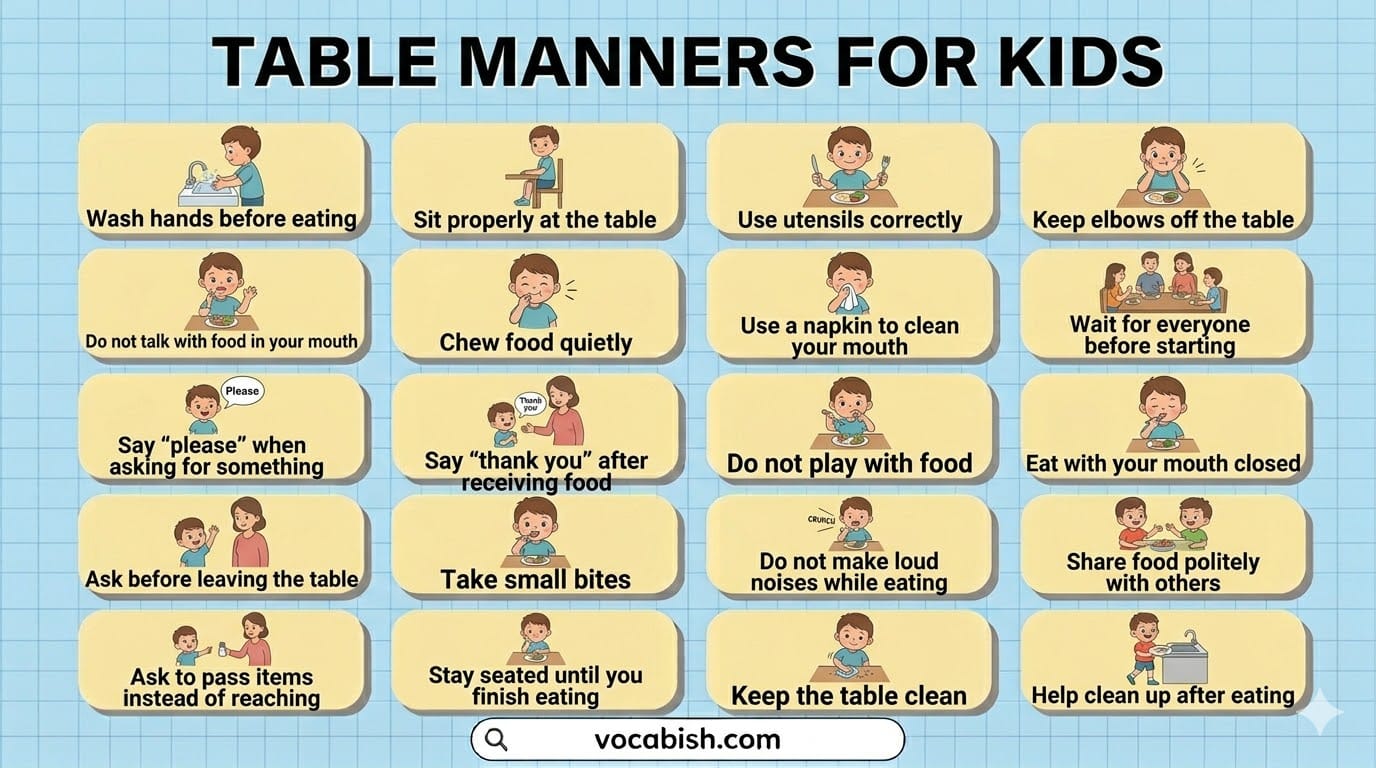
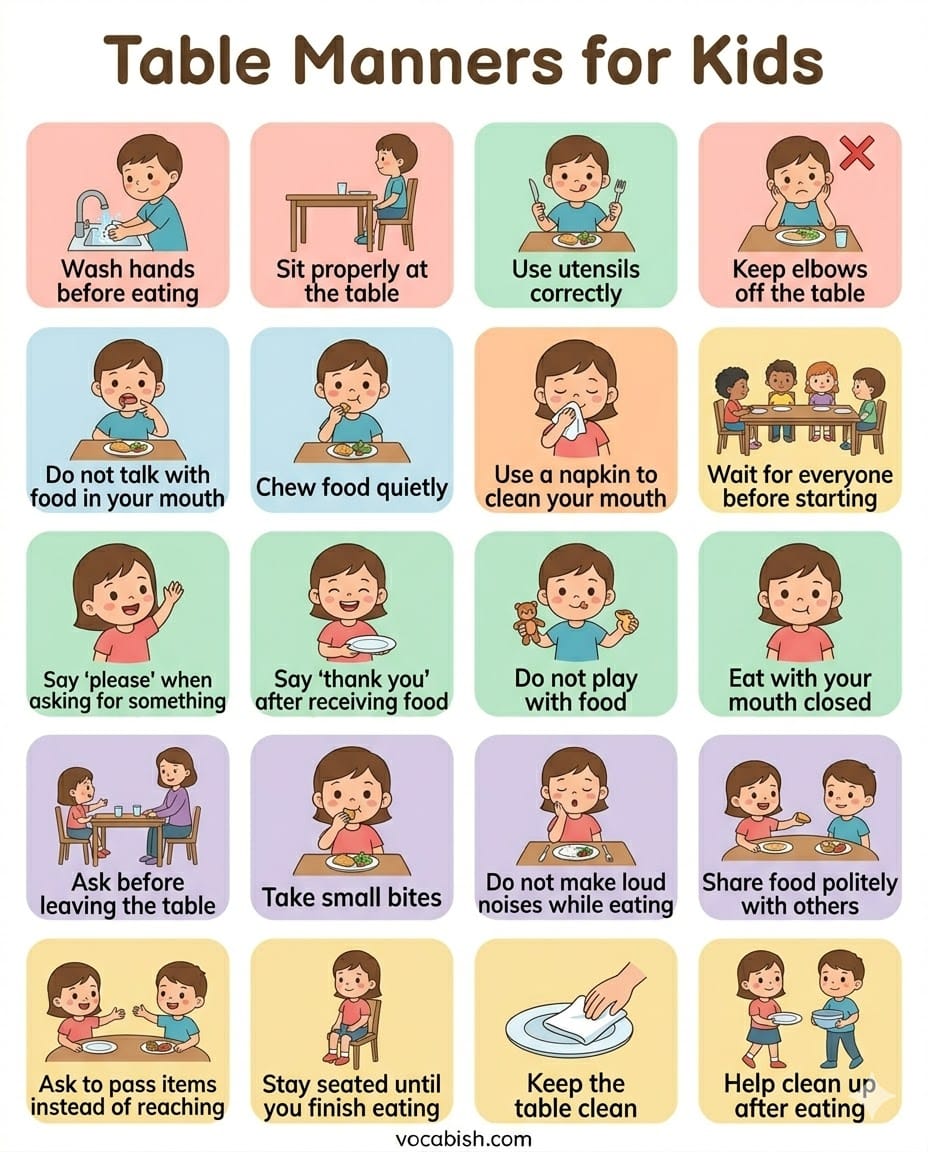
List of Table Manners for Kids with Pictures
- Wash hands before eating
- Sit properly at the table
- Use utensils correctly
- Keep elbows off the table
- Do not talk with food in your mouth
- Chew food quietly
- Use a napkin to clean your mouth
- Wait for everyone before starting
- Say “please” when asking for something
- Say “thank you” after receiving food
- Do not play with food
- Eat with your mouth closed
- Ask before leaving the table
- Take small bites
- Do not make loud noises while eating
- Share food politely with others
- Ask to pass items instead of reaching
- Stay seated until you finish eating
- Keep the table clean
- Help clean up after eating
Daily Use Table Manners Words
These words are often used during meals:
Please
A polite word used when asking for something
Example: Please give me the spoon.
Thank you
A polite way to show you are grateful
Example: Thank you for the delicious food.
Sorry
A word used when you make a mistake or hurt someone
Example: Sorry, I dropped the glass.
May I
A polite way to ask for permission
Example: May I leave the table?
Excuse me
A polite way to get attention or say you are leaving
Example: Excuse me, I need to wash my hands.
Pass
To give something to someone at the table
Example: Please pass the salt.
Share
To give part of something to others
Example: I will share my cake with you.
Wait
To stay calm until your turn comes
Example: Please wait for your turn to eat.
Finish
To complete something
Example: I will finish my food before playing.
Clean
To make something neat and tidy
Example: Clean your plate after eating.
Table Manners Items and Their Uses
Here are important table-related items with uses:
- Plate – Used to hold food
- Bowl – Used for soup or liquid food
- Spoon – Used for eating soft food
- Fork – Used to pick up food
- Knife – Used to cut food
- Glass – Used for drinking water or juice
- Cup – Used for tea or milk
- Napkin – Used to wipe hands and mouth
- Tray – Used to carry food
- Tablecloth – Cloth that covers the table
- Serving dish – Used to serve food
- Chopsticks – Sticks used to eat food in some cultures
- Straw – Used to drink liquids
- Jug – Used to hold and pour water
- Coaster – Placed under a glass to protect the table
- Placemat – Mat placed under a plate
- Serving spoon – Used to serve food to others
- Salad bowl – Used for serving salad
Good Habits at the Dining Table
Children should practice these habits daily:
- Sit straight and do not lean on the table
- Keep your elbows off the table
- Take small bites
- Finish your food without wasting
- Speak softly and politely
These habits make meals enjoyable and respectful.
Mistakes Kids Should Avoid
Some actions are considered bad manners:
- Talking with food in your mouth
- Making loud noises while eating
- Playing with food
- Reaching across the table
- Interrupting others while they speak
Avoiding these mistakes helps children behave properly.
Tips to Practice Table Manners
Here are simple tips to improve:
- Practice daily with family
- Watch and learn from adults
- Use polite words often
- Stay calm and patient
- Remember rules step by step
With regular practice, good table manners become a natural habit.
Related Articles:
Conclusion
Table manners are an important part of everyday life. They teach children how to behave politely and confidently during meals. By learning and using these simple words and habits, kids can improve their English and their behavior at the same time.