
Learning vocabulary about food from different countries helps learners understand how English is used in real life. Exotic fruits are special fruits that come from tropical and unique regions, and they often have names that are different from common fruits like apple or banana. In this blog post, you will explore exotic fruits names in English with their pictures, including fruits such as dragon fruit, rambutan, mangosteen, and passion fruit.
Understanding these names helps learners recognize words when reading menus, food labels, and travel content. It also supports better communication when speaking about food, shopping, or describing meals. By learning this vocabulary, you can improve your speaking skills, strengthen reading ability, and build confidence in everyday English conversations.
Exotic Fruits Meaning in English
Exotic fruits are fruits that grow in regions different from where many people normally live. They usually come from tropical or subtropical climates and may look unusual or taste different from common fruits.
These fruits are known for their bright colors, unique flavors, uncommon shapes, and rich nutrients. Some may have spiky skins, strong aromas, or special textures that make them memorable.
People enjoy exotic fruits in fresh meals, desserts, smoothies, and traditional dishes around the world.
Common Exotic Fruits in English with Pictures
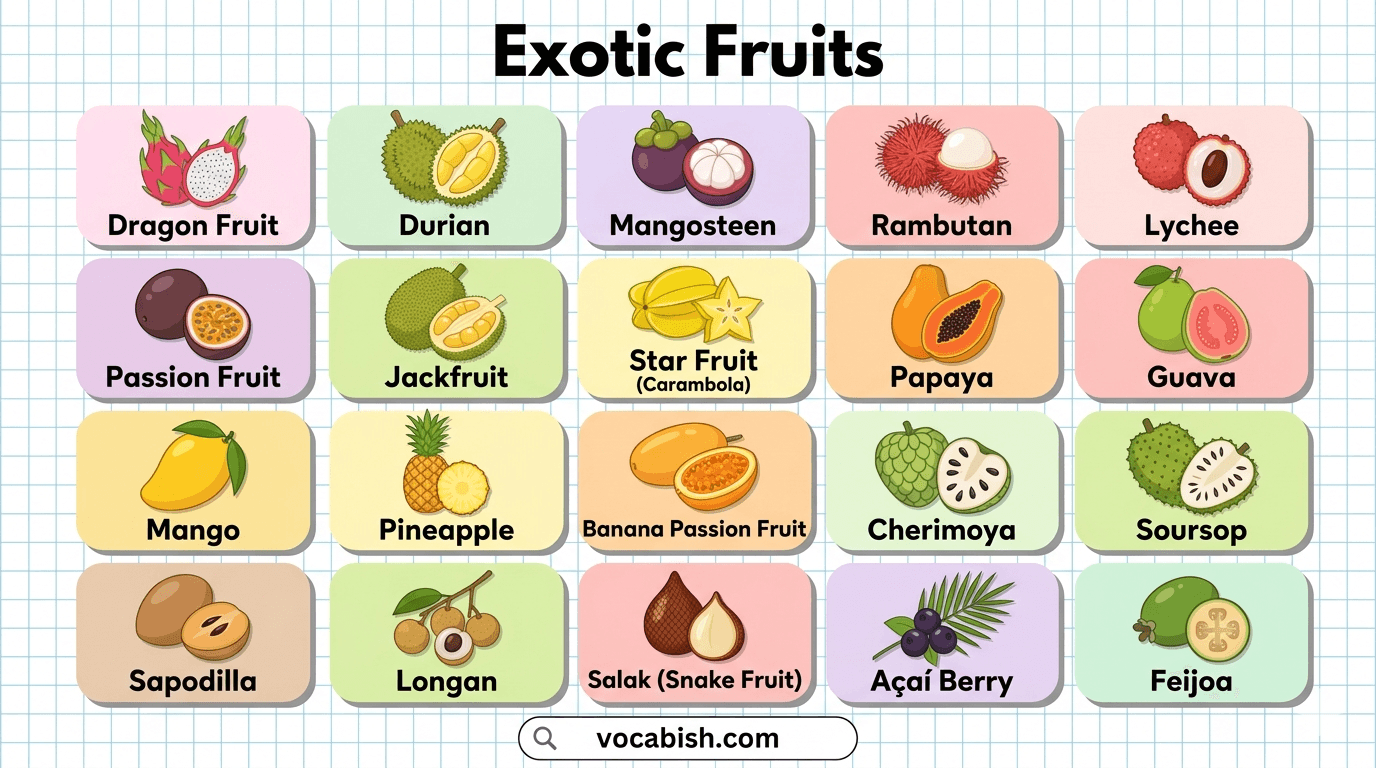
Below are some of the most popular exotic fruits that many people recognize.
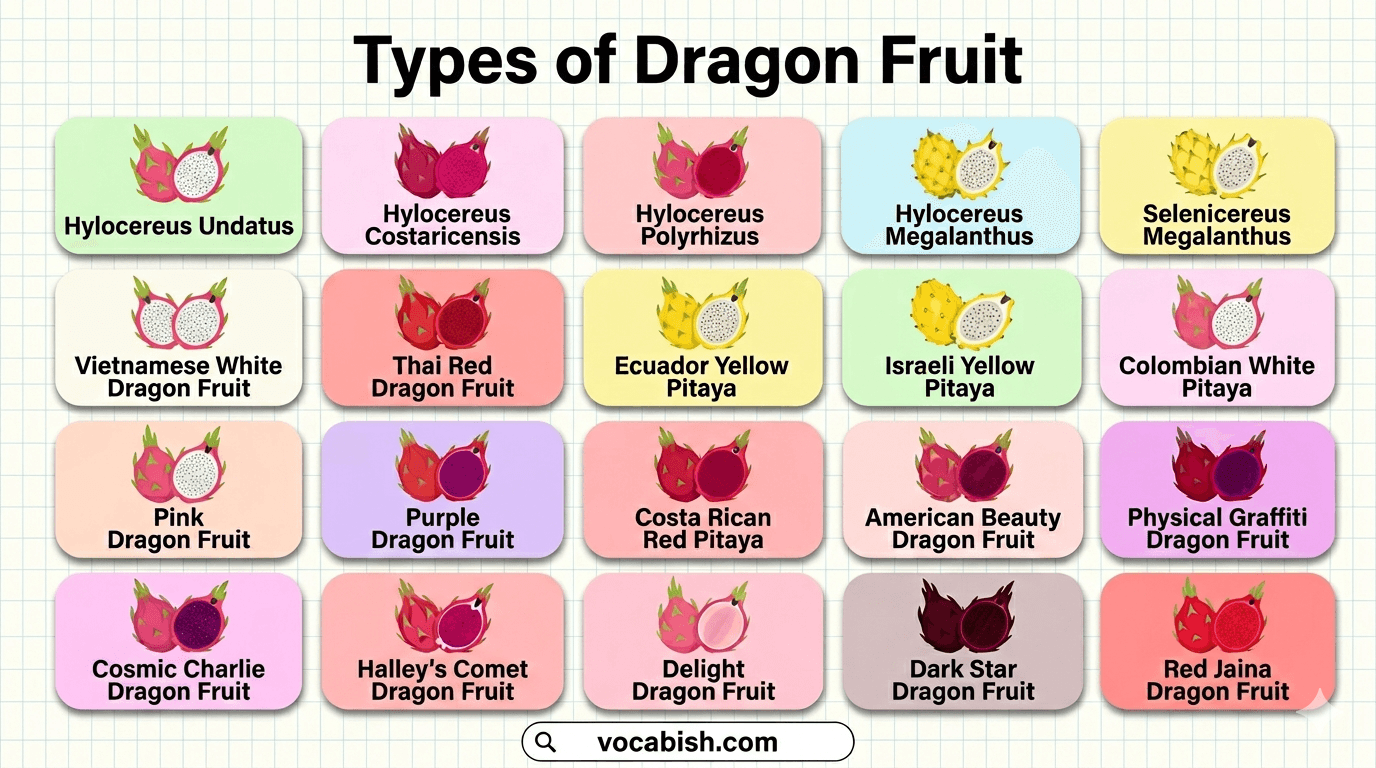
- Dragon Fruit
Bright pink fruit with white or red flesh and small black edible seeds. - Durian
Large spiky fruit famous for its strong smell and creamy yellow flesh. - Mangosteen
Purple tropical fruit with soft white segments and sweet refreshing flavor. - Rambutan
Small red fruit covered with soft hairy spikes and juicy white center. - Lychee
Round fruit with rough red skin and sweet translucent flesh inside. - Passion Fruit
Small purple or yellow fruit filled with aromatic juicy seeds. - Star Fruit
Yellow fruit shaped like a star when sliced with crisp texture. - Jackfruit
Very large fruit with thick green skin and sweet yellow edible bulbs. - Guava
Round or oval fruit with green skin and pink or white flesh. - Papaya
Large orange tropical fruit with soft sweet flesh and black seeds. - Tamarind
Brown pod fruit containing sticky sweet and sour pulp. - Longan
Small brown fruit similar to lychee with juicy transparent flesh. - Sapodilla
Brown fruit with soft sweet flesh tasting slightly like caramel. - Breadfruit
Large green fruit often cooked like vegetables in many tropical dishes. - Salak (Snake Fruit)
Small fruit with reddish brown scaly skin and crunchy sweet flesh.
Different Types of Exotic Fruits with Information
Tropical Exotic Fruits
These fruits mostly grow in warm tropical climates and are widely enjoyed for their sweet taste.
- Atemoya
Hybrid fruit combining cherimoya and sugar apple with creamy sweet pulp. - Cherimoya
Green heart shaped fruit with smooth custard like white flesh. - Soursop
Large green fruit with soft white pulp and slightly sour tropical taste. - Sugar Apple
Round fruit with bumpy skin and sweet creamy segmented flesh. - Canistel
Bright yellow fruit sometimes called egg fruit because of its dense texture. - Abiu
Smooth yellow fruit with sweet jelly like white pulp. - Langsat
Small yellow fruit growing in clusters with juicy sweet segments. - Pulasan
Similar to rambutan but sweeter with thicker red skin. - Santol
Round fruit with thick rind and soft cotton-like pulp inside. - Cupuacu
Brown tropical fruit related to cacao with fragrant creamy pulp.
Rare and Unusual Exotic Fruits
Some exotic fruits are less common but very interesting because of their appearance or flavor.
- Buddha’s Hand
Citrus fruit shaped like fingers with strong fragrant peel. - Miracle Fruit
Small berry that temporarily makes sour foods taste sweet. - Horned Melon
Orange fruit with spikes and green jelly like flesh. - Mangaba
Brazilian fruit with yellow skin and soft aromatic pulp. - Black Sapote
Dark fruit known as chocolate pudding fruit because of its flavor. - White Sapote
Green fruit with creamy custard-like sweet flesh. - Jabuticaba
Dark purple fruit that grows directly on tree trunks. - Monstera Deliciosa Fruit
Tropical fruit tasting like pineapple and banana mixture.
Citrus Exotic Fruits
These exotic fruits belong to the citrus family and have fresh sour or sweet flavors.
- Yuzu
Japanese citrus fruit with strong aroma used in sauces and drinks. - Kaffir Lime
Small wrinkled lime used for fragrant leaves and sour juice. - Calamansi
Small green citrus fruit popular in drinks and sauces. - Finger Lime
Cylindrical citrus fruit filled with tiny juice pearls. - Ugli Fruit
Jamaican citrus fruit with rough skin and sweet tangy taste.
Berry-Type Exotic Fruits
Some exotic fruits are classified as berries because of their structure.
- Goji Berry
Small red berry rich in nutrients and often dried. - Açaí Berry
Dark purple Amazon berry commonly used in smoothie bowls. - Golden Berry
Small yellow berry enclosed in thin papery husk. - Mulberry
Soft elongated berry growing on trees with sweet flavor. - Camu Camu
Small sour berry known for very high vitamin C.
Exotic Melons and Gourd Fruits
These fruits belong to the melon or gourd family but are less common worldwide.
- Winter Melon
Large green fruit used in soups and traditional dishes. - Bitter Melon
Green fruit with bumpy skin known for strong bitter taste. - Kiwano
Horned melon with bright orange skin and green jelly seeds.
Asian Exotic Fruits
Many unique fruits grow in Asian regions with tropical climates.
- Mangosteen
Sweet purple fruit often called queen of tropical fruits. - Durian
Famous strong smelling fruit loved by many fruit enthusiasts. - Langsat
Small clustered fruit with translucent juicy segments. - Salak
Crunchy fruit with brown snake-like skin texture. - Longan
Sweet fruit similar to lychee with transparent flesh.
African Exotic Fruits
Several tropical fruits grow naturally in African regions.
- Baobab Fruit
Hard shelled fruit with powdery nutritious pulp inside. - African Horned Cucumber
Bright orange fruit with spiky skin and jelly seeds. - Marula
Small yellow fruit used for juices and traditional beverages.
South American Exotic Fruits
South America is home to many rare and delicious tropical fruits.
- Açaí Berry
Purple berry widely used in smoothies and energy bowls. - Cupuacu
Tropical fruit with creamy pulp used in desserts. - Jabuticaba
Grape-like fruit growing directly on tree trunks. - Lucuma
Yellow fruit often used in ice cream and sweets. - Feijoa
Green fruit with aromatic sweet flesh sometimes called pineapple guava.
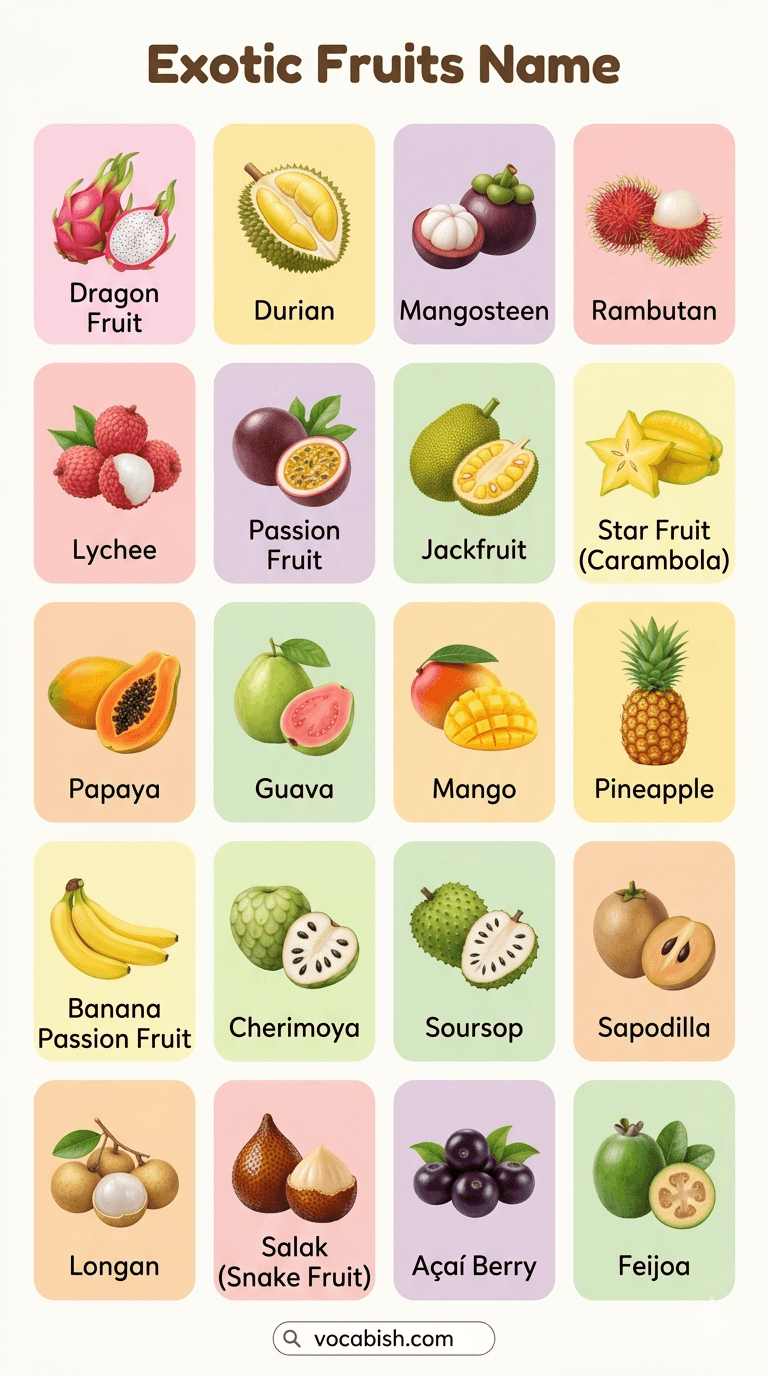
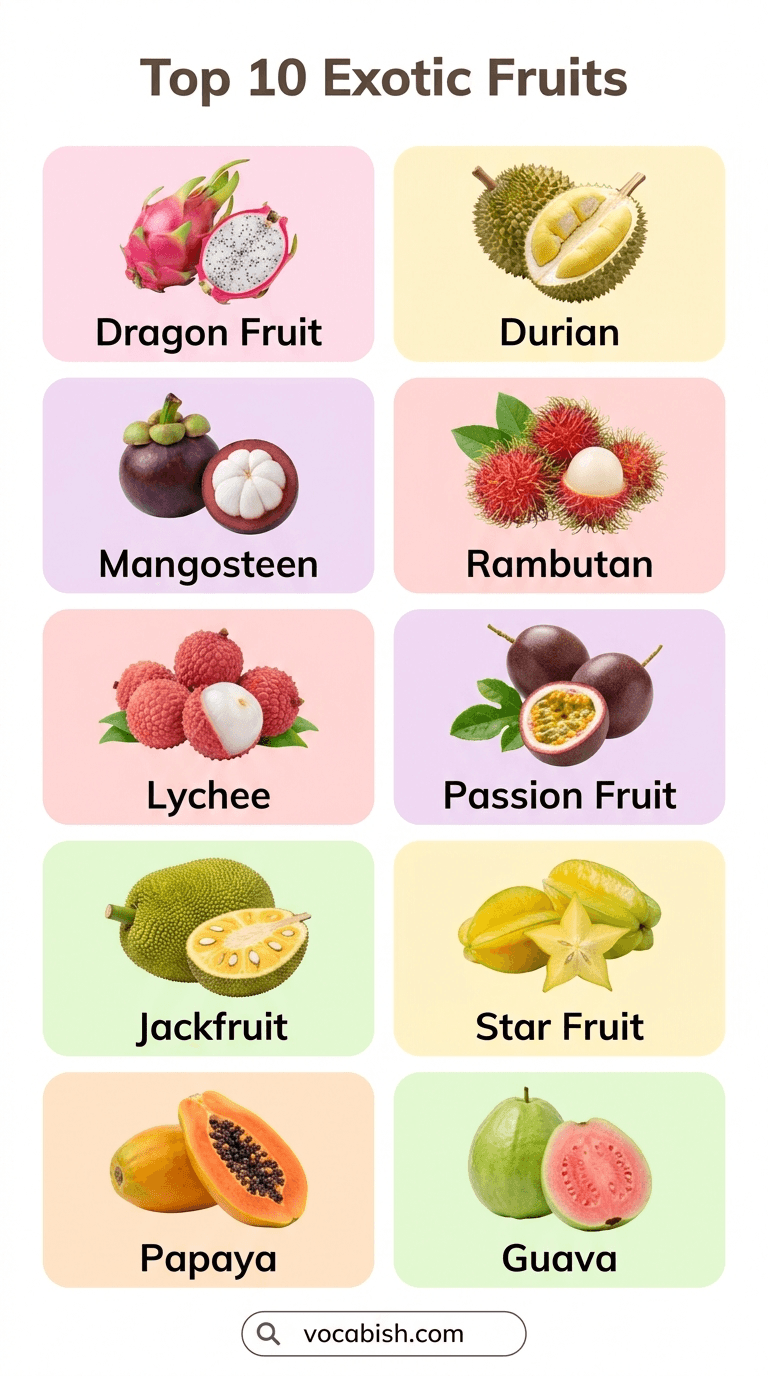
Top 10 Exotic Fruits with Pictures
Here’s the list of the top 10 exotic fruits:
- Dragon Fruit
- Durian
- Mangosteen
- Rambutan
- Lychee
- Passion Fruit
- Jackfruit
- Star Fruit
- Papaya
- Guava
Best Exotic Fruits Name
Here’s the list of the best exotic fruits name for easy learning:
- Mangosteen
- Dragon Fruit
- Lychee
- Rambutan
- Passion Fruit
- Durian
- Jackfruit
- Cherimoya
- Açaí Berry
- Feijoa
- Longan
- Sapodilla
- Salak (Snake Fruit)
- Cupuacu
- Soursop
100 Exotic Fruits Name
Abiu | Açaí Berry | Acerola |
African Horned Cucumber | Atemoya | Baobab Fruit |
Banana Passion Fruit | Buddha’s Hand | Breadfruit |
Canistel | Camu Camu | Calamansi |
Cherimoya | Cupuacu | Dragon Fruit |
Durian | Feijoa | Finger Lime |
Golden Berry | Goji Berry | Guava |
Horned Melon (Kiwano) | Jackfruit | Jabuticaba |
Kaffir Lime | Langsat | Longan |
Lucuma | Lychee | Mangaba |
Mangosteen | Marula | Miracle Fruit |
Monstera Deliciosa Fruit | Mulberry | Papaya |
Passion Fruit | Pulasan | Rambutan |
Salak (Snake Fruit) | Santol | Sapodilla |
Soursop | Star Fruit (Carambola) | Sugar Apple |
Tamarind | Ugli Fruit | White Sapote |
Black Sapote | Yuzu | Winter Melon |
Bitter Melon | Kiwano | Pineapple Guava (Feijoa) |
Benefits of Exotic Fruits
Top Exotic Fruit | Main Benefits |
|---|---|
Dragon Fruit | Rich in fiber, supports digestion and hydration |
Durian | High in energy, contains healthy fats and vitamins |
Mangosteen | Strong antioxidants, helps immune system health |
Rambutan | Good source of vitamin C, boosts immunity |
Lychee | Improves hydration, supports skin health |
Passion Fruit | High fiber, helps digestion and heart health |
Jackfruit | Rich in nutrients, supports energy and immunity |
Star Fruit | Low calories, good for hydration and vitamin C |
Papaya | Aids digestion, supports skin and eye health |
Guava | Very high vitamin C, strengthens immune system |
Related Articles:
Conclusion
Exotic fruits are fascinating because of their unique appearance, rich flavors, and nutritional value. Fruits such as dragon fruit, rambutan, mangosteen, durian, passion fruit, lychee, jackfruit, and açaí berry show the amazing variety found in nature. Learning the exotic fruits names in English helps expand vocabulary while also introducing interesting foods from different cultures. With this complete list of tropical, rare, citrus, and berry-type fruits, learners can easily recognize and talk about many exotic fruits in everyday English.
FAQs about Exotic Fruits
Exotic fruits are fruits that grow in tropical or unusual regions and are not commonly found in local markets. They often have unique taste, color, and texture.
Common exotic fruits names include dragon fruit, durian, mango steen, rambutan, lychee, passion fruit, jackfruit, star fruit, and papaya.
Exotic fruits provide vitamins, minerals, and antioxidants. They support immunity, digestion, skin health, and overall energy when eaten regularly.
Dragon fruit is one of the most famous exotic fruits worldwide because of its bright color, mild sweetness, and high nutritional value.
Yes, most exotic fruits are safe and healthy for daily eating. They provide fiber and nutrients, but should be eaten in balanced portions.
Guava is one of the richest exotic fruits in vitamin C, helping strengthen the immune system and improve skin health naturally.
Exotic fruits mostly grow in tropical and subtropical regions where the climate is warm, humid, and suitable for year-round fruit production.
Exotic fruits are less common and often grown in specific climates, while normal fruits like apples or bananas are widely available in most countries.