
In this blog post, you will learn the names of rare fruits in English with their pictures. Rare fruit vocabulary means the words we use to talk about fruits that are not common in everyday life, such as dragon fruit, rambutan, and mangosteen. Learning these words helps you learn new English vocabulary in a practical way. When you know these fruit names, you can speak about food more easily, read menus or books with confidence, write better descriptions, and listen more carefully in real conversations. This topic also helps you recognize fruits from different parts of the world and use the right words in daily English. By the end, you will feel more confident using these fruit names in speaking and writing.
Rare Fruits Meaning
Rare fruits are fruits that are not commonly found in regular markets or are grown only in specific regions. These fruits may be seasonal, difficult to transport, or limited to certain climates. Many rare fruits have unique tastes, textures, and health benefits.
Some key features of rare fruits include:
- Limited availability worldwide
- Unique taste and texture
- Special growing conditions
- Cultural importance in regions
Common Rare Fruits in English with Pictures
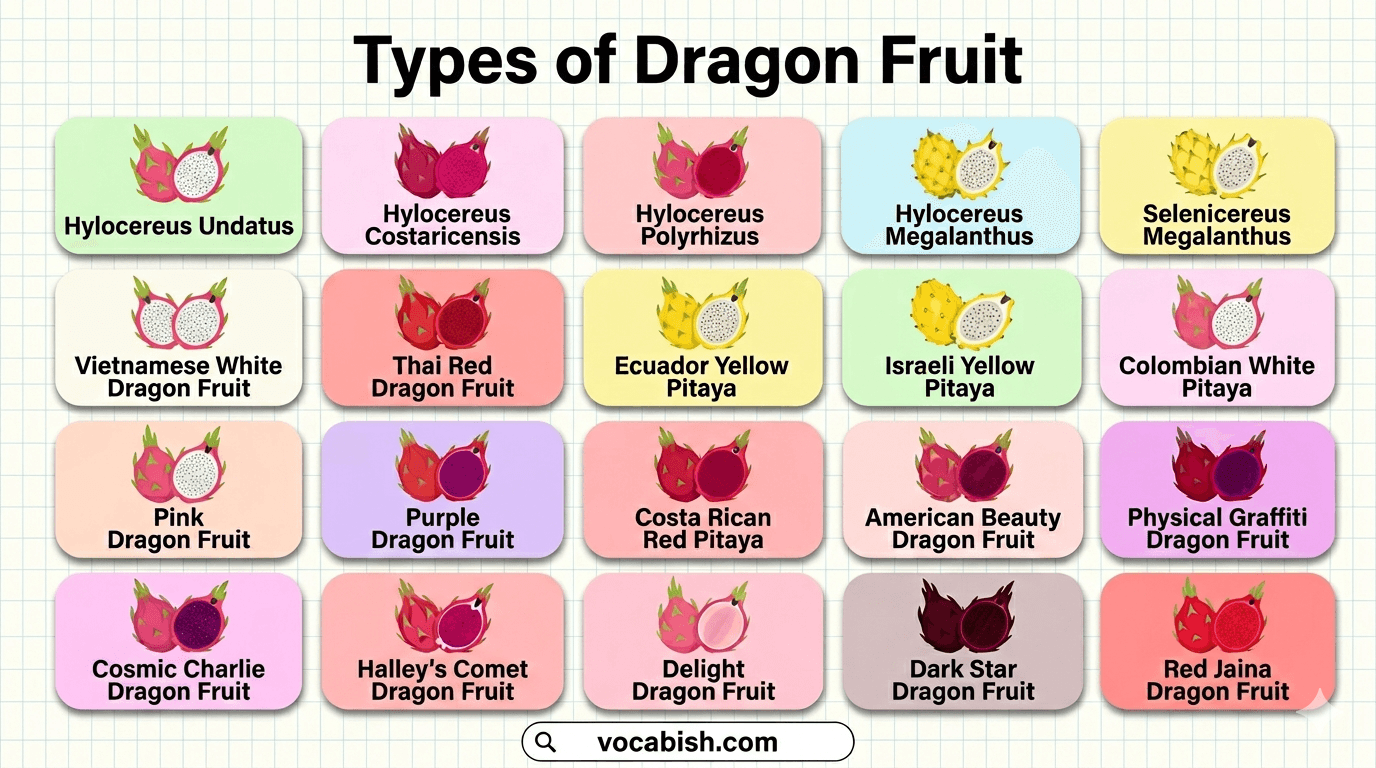
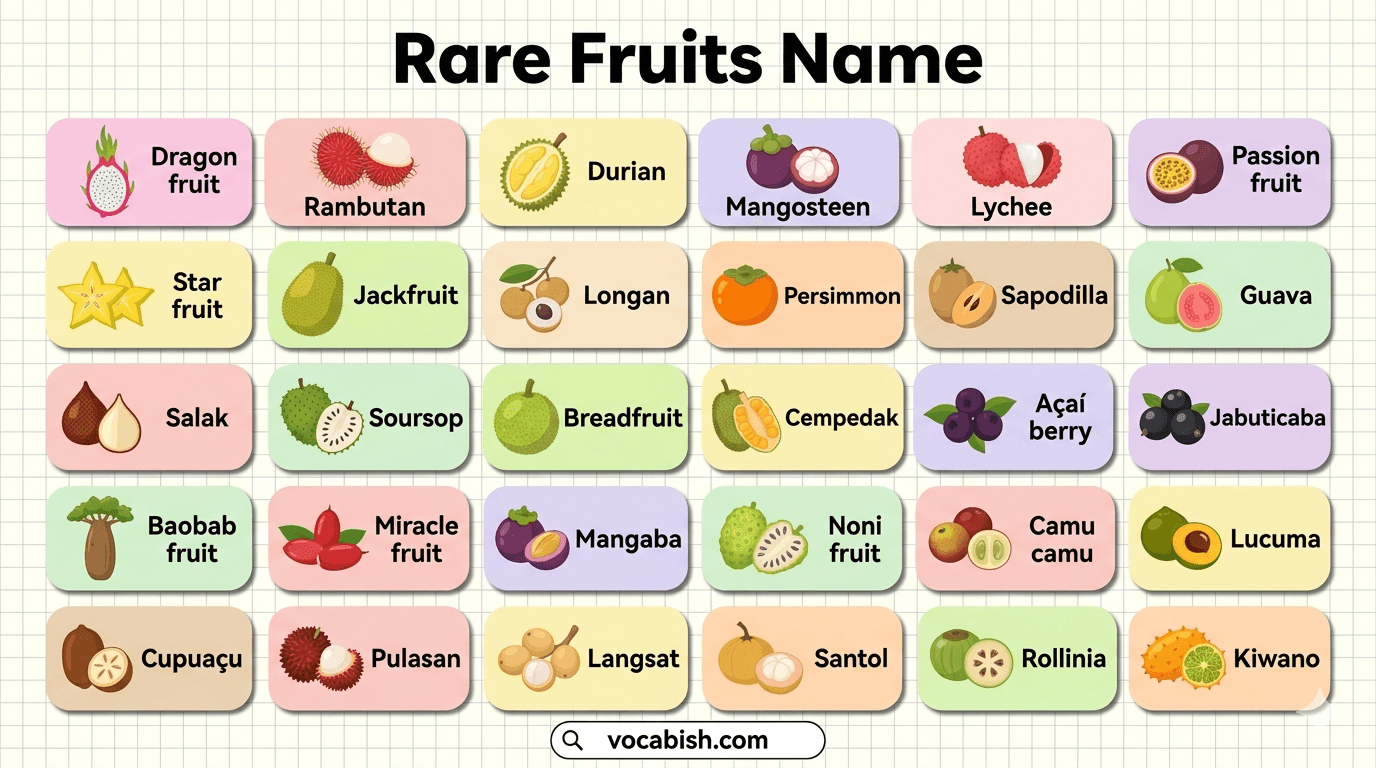
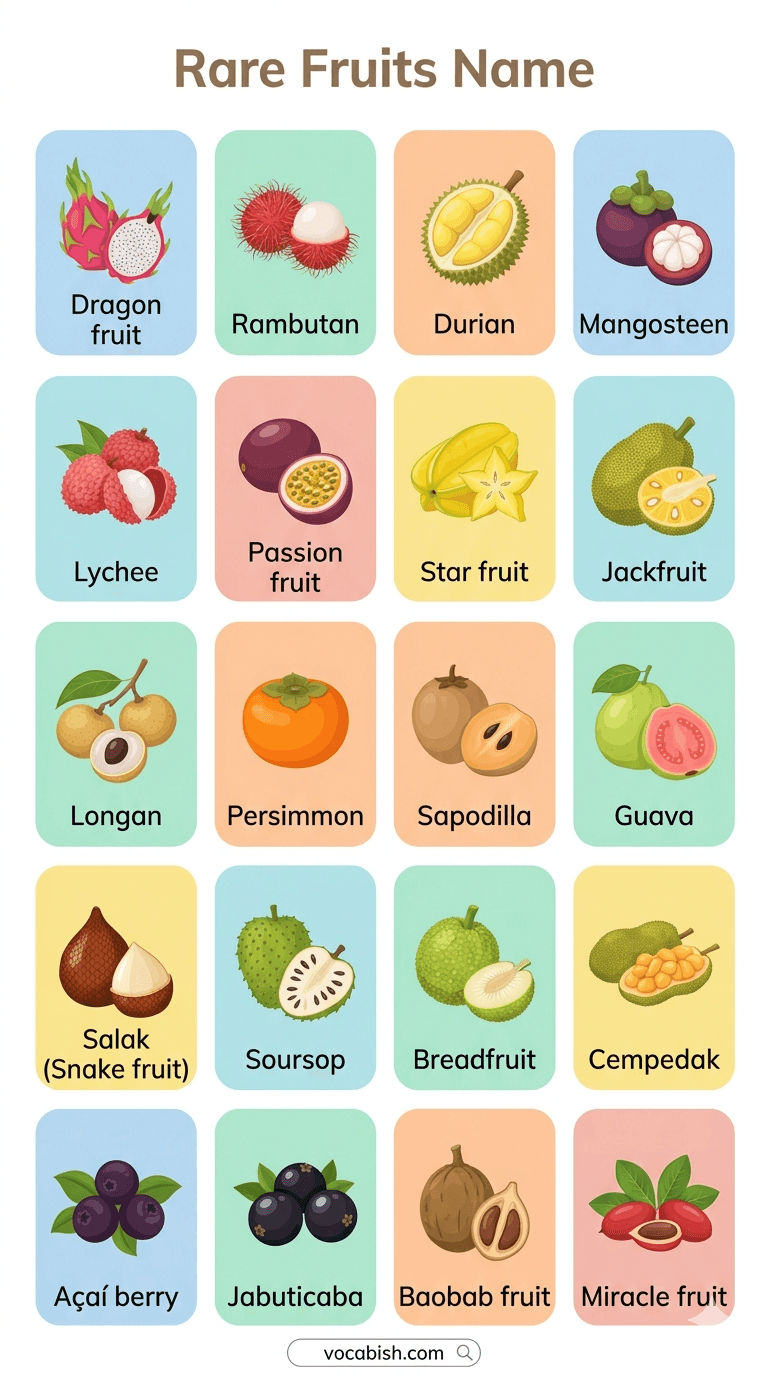
- Dragon fruit: Bright pink skin, white or red flesh, mild sweet taste, rich nutrients.
- Rambutan: Hairy red shell, juicy white flesh, sweet and slightly acidic flavor.
- Durian: Strong smell fruit, creamy texture, rich taste, often called king fruit.
- Mangosteen: Purple outer shell, soft white segments, sweet and slightly tangy taste.
- Lychee: Rough red skin, juicy flesh, floral sweetness, popular in drinks and desserts.
- Passion fruit: Hard shell, juicy seeds inside, tangy flavor, used in juices.
- Star fruit: Star-shaped slices, crunchy texture, sweet and sour refreshing taste.
- Jackfruit: Large fruit, yellow flesh, sweet flavor, used in sweet and savory dishes.
- Longan: Small brown fruit, translucent flesh, sweet taste, similar to lychee.
- Persimmon: Orange fruit, soft texture, honey-like sweetness when fully ripe.
- Sapodilla: Brown fruit, grainy texture, sweet taste like brown sugar and pear.
- Guava: Green or yellow skin, pink or white inside, sweet and slightly sour.
Tropical Rare Fruits
- Salak (Snake fruit): Brown scaly skin, crunchy flesh, sweet and slightly sour taste.
- Soursop: Green spiky skin, soft white pulp, sweet and tangy flavor profile.
- Breadfruit: Large green fruit, starchy texture, often cooked like vegetables.
- Langsat: Small yellow fruit, juicy flesh, sweet with slight bitterness.
- Cempedak: Similar to jackfruit, soft flesh, strong aroma, sweet rich taste.
- Pulasan: Red fruit with soft spikes, juicy flesh, sweeter than rambutan.
- Atemoya: Hybrid fruit, creamy texture, sweet flavor similar to custard.
- Rollinia: Yellow soft fruit, creamy pulp, sweet taste like lemon custard.
Exotic Asian Rare Fruits
- Yuzu: Small citrus fruit, strong aroma, sour juice used in cooking.
- Buddha’s hand: Finger-like citrus fruit, no pulp, used for fragrance and zest.
- Mangaba: Soft fruit, sweet taste, used in juices and desserts.
- Santol: Thick skin fruit, sweet or sour pulp, used in cooking.
- Bael fruit: Hard shell fruit, aromatic pulp, used in drinks and medicine.
- Wood apple: Hard shell, brown pulp, tangy flavor, often used in chutneys.
African Rare Fruits
- Baobab fruit: Hard shell fruit, powdery pulp, rich in vitamin C.
- Marula: Yellow fruit, juicy pulp, sweet and slightly tangy flavor.
- African horned melon: Spiky orange skin, green jelly pulp, mild cucumber-like taste.
- Monkey orange: Hard shell fruit, sweet aromatic pulp, eaten fresh or dried.
South American Rare Fruits
- Jabuticaba: Grows on tree trunk, dark purple skin, sweet juicy flesh.
- Cupuaçu: Large fruit, creamy pulp, chocolate-like flavor, used in desserts.
- Açaí berry: Small dark berry, rich antioxidants, used in smoothie bowls.
- Lucuma: Green fruit, dry yellow flesh, sweet flavor used in ice cream.
- Camu camu: Small fruit, very sour taste, extremely high vitamin C content.
Unusual Citrus and Hybrid Fruits
- Finger lime: Small fruit, bead-like pulp, tangy flavor, used in gourmet dishes.
- Ugli fruit: Citrus hybrid, rough skin, sweet and tangy taste.
- Calamansi: Small citrus fruit, sour juice, widely used in cooking.
- Tangelo: Orange and grapefruit hybrid, juicy and slightly tangy flavor.
Rare Berries and Small Fruits
- Miracle fruit: Changes sour taste into sweet temporarily after eating it.
- Goji berry: Small red fruit, sweet and slightly bitter, rich nutrients.
- Physalis (Golden berry): Small orange fruit, sweet and tangy, covered in husk.
- Elderberry: Dark berries, used in syrups, slightly tart taste when cooked.
- Cloudberry: Soft orange berry, rare in cold regions, sweet and tart flavor.
Desert and Wild Rare Fruits
- Prickly pear: Cactus fruit, sweet juicy pulp, contains small edible seeds.
- Desert lime: Small citrus fruit, strong flavor, grows in dry climates.
- Quandong: Native fruit, sour taste, used in jams and sauces.
- Wild medlar: Brown fruit, soft when ripe, sweet and slightly fermented taste.
List of All Rare Fruits of the World
Here’s the list of A to Z Rare Fruits all around the World:
Abiu | Açaí | Acerola |
African horned melon | Akebi | Ambarella |
Atemoya | Babaco | Bael |
Baobab | Barbadine | Bilimbi |
Black sapote | Breadfruit | Buddha’s hand |
Burdekin plum | Caimito (Star apple) | Calamansi |
Camu camu | Canistel | Cape gooseberry |
Carambola (Star fruit) | Cempedak | Cherimoya |
Cloudberry | Cocona | Cupuaçu |
Currant (rare types) | Damson | Davidson’s plum |
Desert lime | Dragon fruit | Duku |
Durian | Elderberry | Feijoa |
Finger lime | Gac fruit | Genip |
Giant granadilla | Goji berry | Governor’s plum |
Grumichama | Guarana | Hala fruit |
Hog plum | Ice cream bean | Imbe |
Jabuticaba | Jackfruit | Jambul (Java plum) |
Japanese plum (rare types) | Jatoba | Jujube |
Kaffir lime | Kei apple | Kepel |
Kiwano | Korlan | Kumquat |
Langsat | Longan | Lucuma |
Mabolo (Velvet apple) | Mammee apple | Mangaba |
Mangosteen | Marang | Medlar |
Miracle fruit | Monkey orange | Mountain soursop |
Mulberry (rare types) | Nance | Naranjilla |
Neem fruit | Noni | Ohelo berry |
Oil palm fruit | Orange berry | Osage orange |
Pandanus fruit | Passion fruit | Pawpaw (wild) |
Pequi | Persimmon (wild types) | Physalis |
Pitanga (Surinam cherry) | Pitomba | Plantain (rare varieties) |
Prickly pear | Pulasan | Quandong |
Rambai | Rambutan | Red mombin |
Rollinia | Rose apple | Safou (African pear) |
Salak (Snake fruit) | Santol | Sapodilla |
Sapote (Mamey sapote) | Soursop | Spanish lime |
Star apple | Strawberry tree fruit | Sugar apple |
Tamarillo | Tamarind | Tangelo |
Ugli fruit | Velvet tamarind | Voavanga |
Wax apple | White sapote | Wood apple |
Yangmei (Chinese bayberry) | Yellow mombin | Yuzu |
Ziziphus fruit | Zhe fruit | Zucchini fruit (botanical fruit) |
Top 10 Rare Fruits and Their Health Benefits
Rare Fruit | Health Benefits |
|---|---|
Dragon fruit | Rich in antioxidants, supports digestion, boosts immunity, helps maintain healthy skin. |
Rambutan | Contains vitamin C, improves skin health, supports immune system, aids hydration. |
Durian | High in energy and fiber, supports digestion, provides essential vitamins and minerals. |
Mangosteen | Packed with antioxidants, reduces inflammation, supports heart health, boosts immunity. |
Lychee | Rich in vitamin C, improves blood circulation, supports skin health, boosts immunity. |
Passion fruit | High in fiber, supports digestion, helps control blood sugar, improves heart health. |
Jackfruit | Contains vitamin A and C, supports immunity, aids digestion, provides natural energy. |
Açaí berry | Rich in antioxidants, supports brain function, improves heart health, boosts energy levels. |
Baobab fruit | Very high in vitamin C, supports immunity, aids digestion, improves gut health. |
Miracle fruit | Helps in taste improvement, useful for diet control, supports oral health. |
Conclusion
Rare fruits bring diversity and excitement to food and language learning. From tropical varieties like rambutan to wild fruits like cloudberry, each fruit has its own story and flavor. Learning these names improves vocabulary and helps you understand global cultures through food.
Related Articles:
FAQs about Rare Fruits
Rare fruits are names of fruits not commonly found worldwide, like dragon fruit, rambutan, and mangosteen. They help learners expand food-related vocabulary and global awareness.
Common examples include dragon fruit, lychee, durian, rambutan, passion fruit, and star fruit. These names are useful in daily English, especially when talking about food and travel.
The Jabuticaba, Durian (rare wild types), and Miracle fruit are among the most rare fruits in the world due to limited growth areas and short shelf life.
Common fruits like apple and banana are widely known, while rare fruits like durian or jabuticaba are less familiar and region-specific, making them important for advanced vocabulary learning.
The most rare fruit is often considered the Ackee apple or Mangosteen in limited regions, but rarity depends on location, climate, and availability in global markets.
No, dragon fruit is not the most rare fruit today. It is widely grown and available, but still considered exotic in many regions.
Mangosteen is rare because it grows slowly in tropical climates and requires specific conditions, which limits its production and availability worldwide.