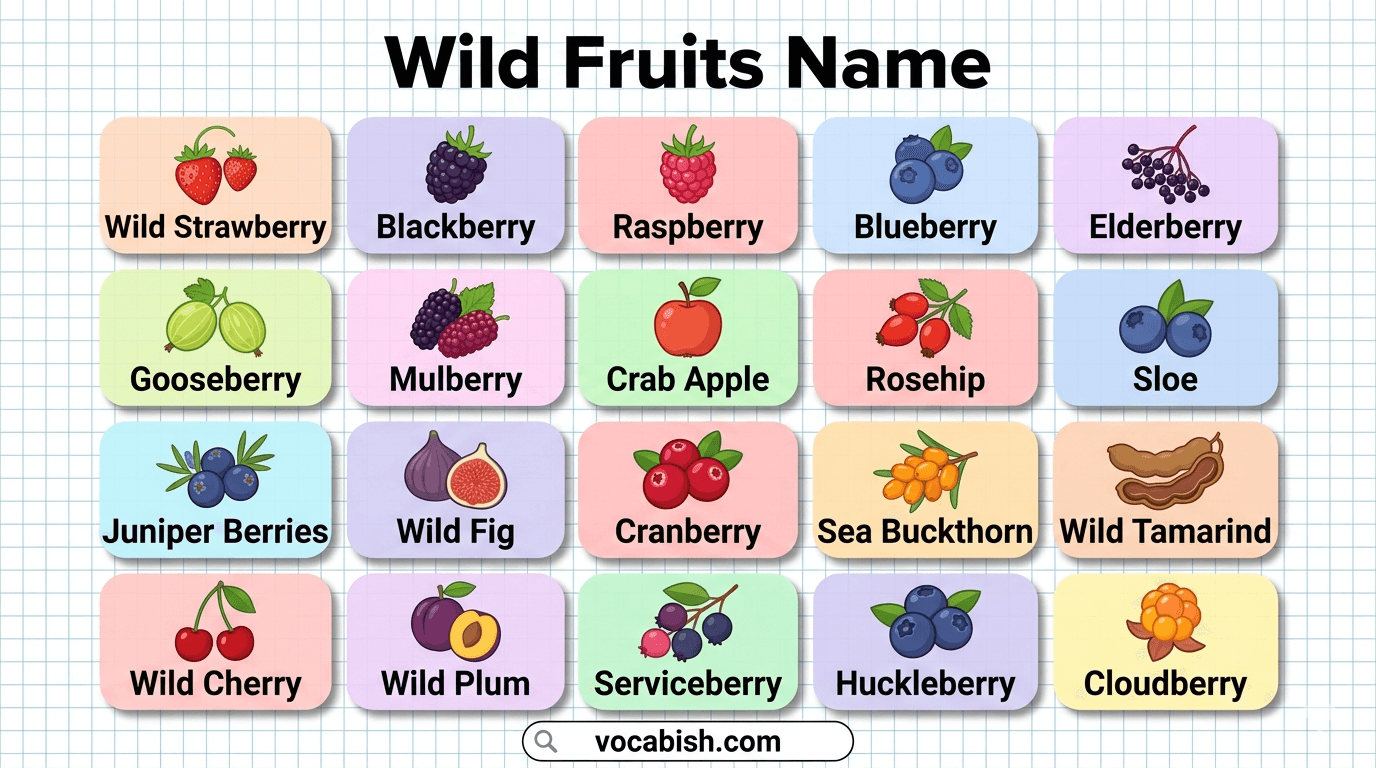

Learning vocabulary about natural food sources helps build strong everyday English understanding, especially when it comes to plants and fruits found in forests and wild areas. In this blog post, we explore the List of Wild Fruits Name in English with Their Pictures, where learners can understand different fruits that grow naturally without farming. These include berries, forest fruits, and tropical wild varieties that are often seen in nature, markets, or traditional food practices.
Wild Fruits Meaning
Wild fruits are fruits that grow naturally without plantation or agricultural care. They develop in forests, mountains, and open natural areas. Animals, birds, and humans often eat them directly. Some wild fruits are sweet, while others are sour or slightly bitter. They are important for biodiversity and natural food chains.
Common Wild Fruits Name in English with Pictures
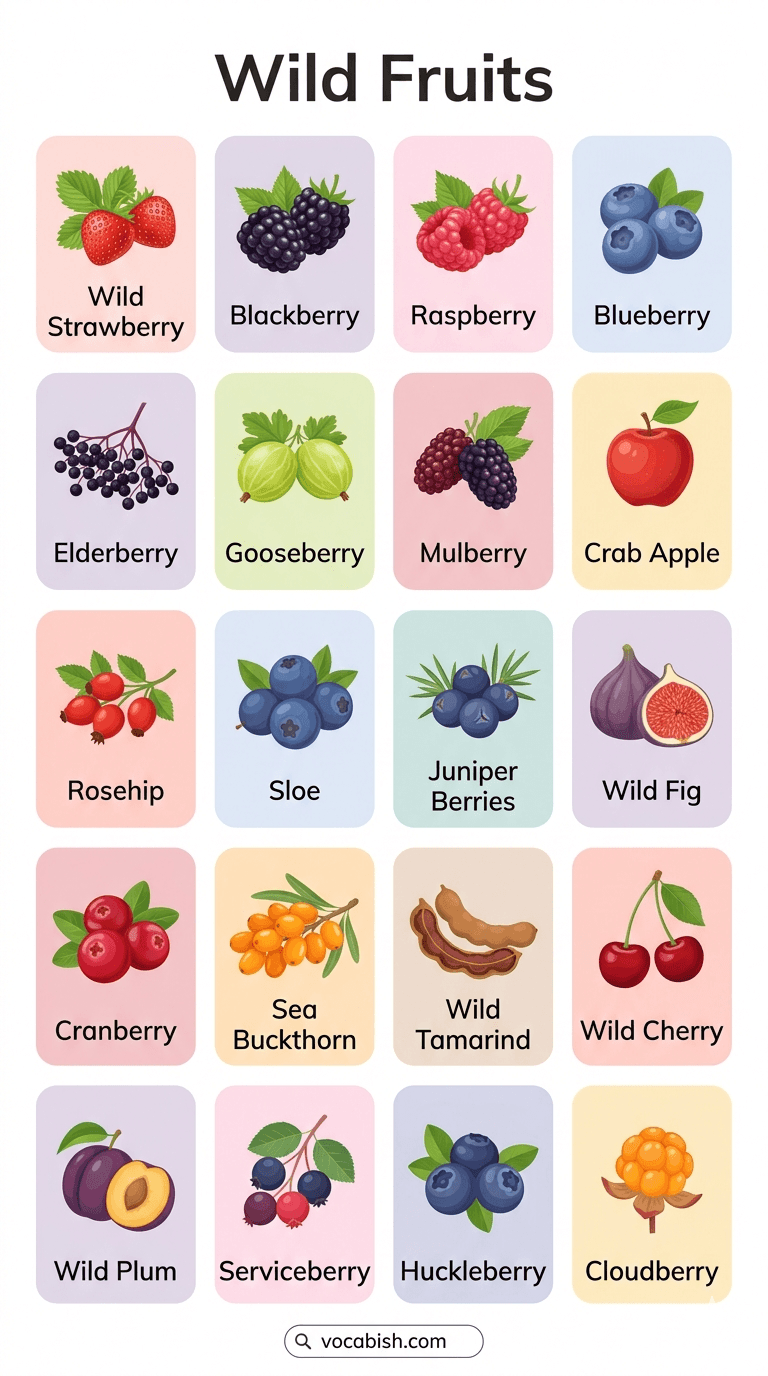
- Wild Strawberry
Small red fruit growing in forests with sweet natural flavor. - Blackberry
Dark purple fruit found on thorny bushes, juicy and slightly tart. - Raspberry
Soft clustered fruit with sweet-sour taste, commonly found in wild areas. - Blueberry
Small round blue fruit rich in antioxidants and naturally sweet flavor. - Elderberry
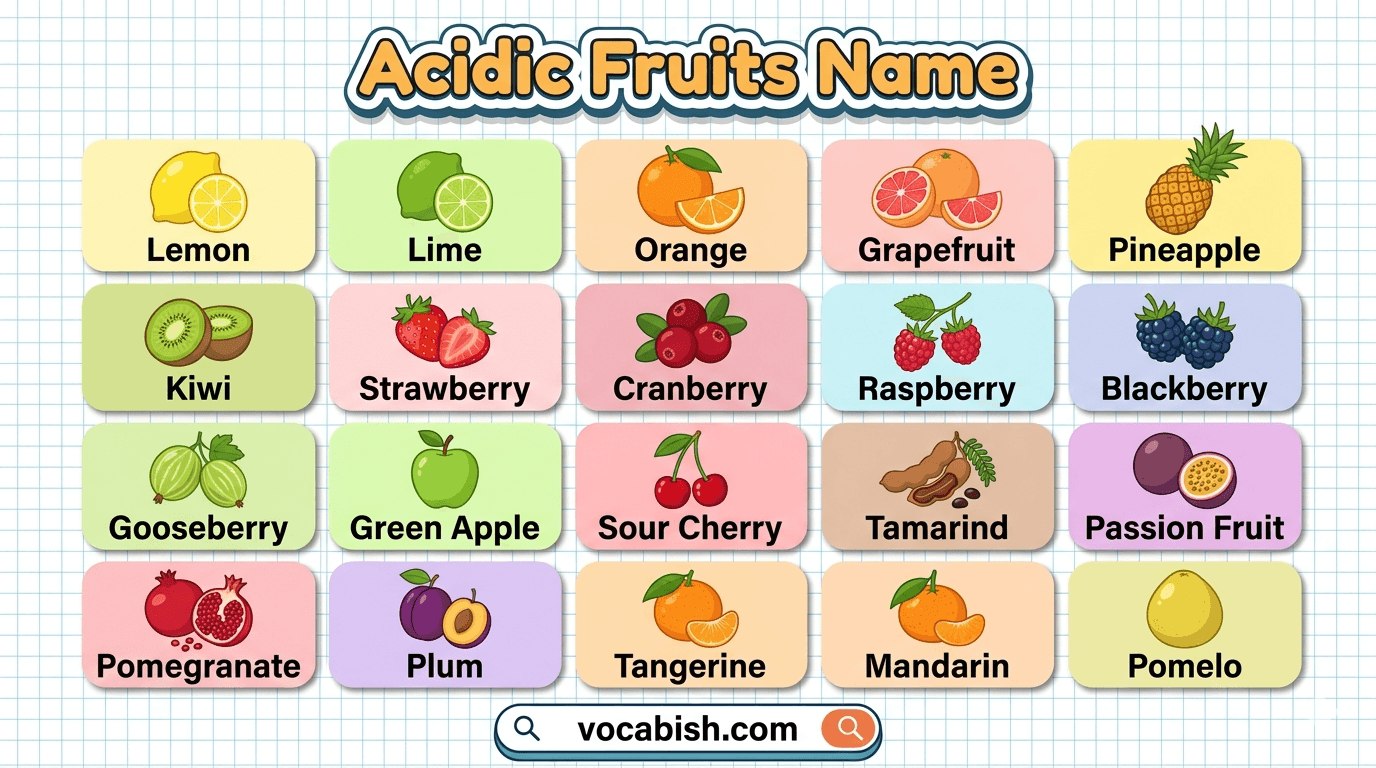
Dark berry used in syrups, often grows on wild shrubs. - Gooseberry
Green or red fruit with sour taste, commonly found in wild bushes. - Mulberry
Long dark fruit growing on wild trees, sweet and soft texture. - Crab Apple
Small sour apple found in forests, used in jams and drinks. - Rosehip
Bright red fruit of wild rose plant, rich in vitamin C. - Sloe (Blackthorn Fruit)
Small dark fruit with strong sour taste, used in traditional drinks. - Juniper Berries
Blue-black berries used in cooking and medicinal preparations worldwide. - Wild Fig
Sweet soft fruit growing on wild fig trees in warm regions. - Cranberry
Red tart fruit growing in wet forest areas and bogs naturally. - Sea Buckthorn
Orange berry with sour taste, grows near coastal and cold regions. - Wild Tamarind
Brown pod fruit with tangy pulp, found in tropical wild forests.
Types of Wild Fruits
Wild Berries Fruit
Small, soft fruits usually found on bushes or low plants in forests.
Wild Forest Fruits
Larger fruits that grow on wild trees in natural forest environments.
Wild Tropical Fruits
Fruits found in warm climates, often growing in dense natural vegetation.
Health Benefits of Wild Fruits
Wild fruits are naturally grown and often richer in nutrients than many cultivated fruits. They are valued in both traditional and modern lifestyles.
- Boost immunity: Wild fruits contain natural compounds that support body defense.
- Improve digestion: Fiber-rich fruits help smooth and healthy digestion process.
- Support heart health: Antioxidants help maintain healthy blood circulation naturally.
- Rich in antioxidants: Protect body cells from damage caused by free radicals.
- Natural energy source: Provide quick and clean energy from natural sugars.
- Support skin health: Vitamins help maintain clear and healthy-looking skin.
Nutritional Value of Wild Fruits
Wild fruits are known for their dense nutritional profile. Even small amounts can provide important nutrients.
- Vitamin C: Helps immunity and improves skin and tissue repair.
- Fiber content: Supports digestion and keeps the stomach healthy.
- Natural sugars: Give energy without processed or artificial ingredients.
- Minerals (Potassium, Iron): Support blood health and muscle function.
- Antioxidants: Help reduce stress on body cells and improve wellness.
- Low calories: Suitable for balanced and healthy diet plans.
Daily Uses of Wild Fruits
Wild fruits are used in many simple and practical ways in daily life.
- Fresh eating: Consumed directly after cleaning from natural sources.
- Juices and drinks: Used in refreshing natural beverages and smoothies.
- Jam and jelly: Turned into spreads for bread and snacks.
- Herbal remedies: Used in traditional medicine for wellness support.
- Cooking ingredient: Added in desserts, sauces, and natural flavoring.
- Dried snacks: Preserved for long-term use as healthy snacks.
List of All Wild Fruits and Their Names
Wild Fruit Name | Category | Description |
|---|---|---|
Wild Strawberry | Wild Berry | Small red fruit with sweet natural forest taste |
Blackberry | Wild Berry | Dark juicy fruit growing on thorny bushes |
Raspberry | Wild Berry | Soft clustered fruit with sweet and sour flavor |
Blueberry | Wild Berry | Small blue fruit rich in antioxidants and nutrients |
Elderberry | Wild Berry | Dark berry used in syrups and herbal drinks |
Gooseberry | Wild Berry | Sour green or red fruit found in wild bushes |
Mulberry | Wild Tree Fruit | Long soft fruit growing on wild trees |
Crab Apple | Wild Tree Fruit | Small sour apple used for jams and drinks |
Rosehip | Wild Berry | Red fruit of wild rose plant rich in vitamin C |
Sloe (Blackthorn Fruit) | Wild Berry | Small dark sour fruit used in traditional drinks |
Juniper Berries | Wild Berry | Blue-black berries used in cooking and medicine |
Wild Fig | Wild Tree Fruit | Sweet soft fruit from wild fig trees |
Cranberry | Wild Berry | Red tart fruit growing in wet forest areas |
Sea Buckthorn | Wild Berry | Orange sour berry from cold and coastal regions |
Wild Tamarind | Wild Tropical Fruit | Tangy pod fruit found in tropical wild forests |
Conclusion
Wild fruits are an important part of natural ecosystems and human nutrition. They grow without farming, offering natural flavors and health benefits. From forest berries to wild tropical fruits, each type plays a role in nature and food culture.
Related Articles:
FAQs about Wild Fruits
Wild fruits are fruits that grow naturally in forests, fields, and uncultivated land without human farming. Examples include blackberry, wild strawberry, and elderberry found in nature.
The most common wild fruits are wild strawberry, blackberry, raspberry, blueberry, gooseberry, mulberry, and elderberry. These are widely known and often studied in basic English learning.
Some wild fruits are safe and edible, such as blackberries and blueberries, but others can be toxic. Proper identification is necessary before eating any wild fruit.
Wild fruits grow in forests, mountains, grasslands, and sometimes near rivers. They develop without farming or human care and depend on natural weather conditions.
Wild fruits grow naturally without cultivation, while farm fruits are grown by humans in orchards or fields using agriculture methods like watering, planting, and fertilizing.