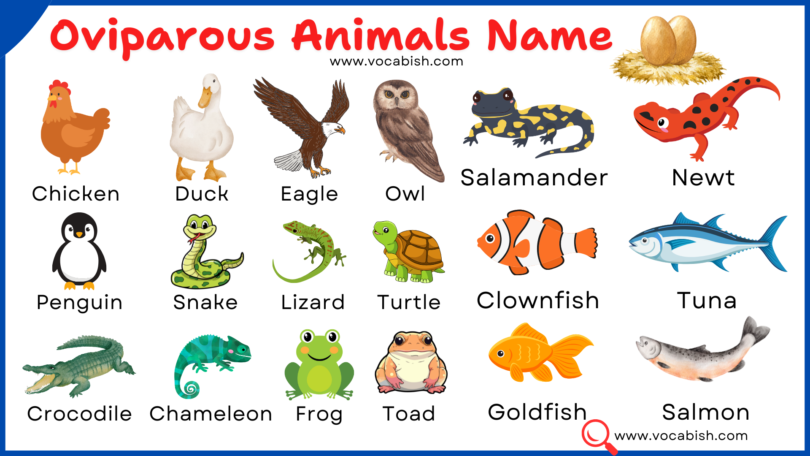

Egg-laying animals are an interesting part of nature, and many of them are names children hear in stories, science lessons, and daily conversations. In 25+ Oviparous Animals Name with Their Pictures, you will explore animals like birds, reptiles, fish, insects, and amphibians through clear visuals and easy English. This helps kids recognize each animal, remember its name, and use the vocabulary more naturally while speaking or writing.
What are Oviparous Animals?
Oviparous animals are animals that lay eggs instead of giving birth to live babies. The baby grows inside the egg, where it stays protected and gets what it needs until it hatches. Many birds, reptiles, fish, amphibians, insects, and other small animals reproduce this way.
To learn about animals that give birth to live young, visit this link: Viviparous Animal Names.
Oviparous Animals Names with Pictures
- Chicken – Gives us eggs often used in daily food.
- Duck – Lays eggs and is usually seen near ponds.
- Eagle – Keeps its eggs safely in high nests.
- Owl – Hides its eggs in quiet, safe places.
- Penguin – Keeps its egg warm in cold places.
- Snake – Many types hatch from eggs in warm areas.
- Lizard – Hides small eggs in soil or under leaves.
- Turtle – Buries eggs on land before returning to water.
- Crocodile – Builds a nest and protects its eggs.
- Chameleon – Leaves eggs in the ground to hatch later.
- Frog – Starts life from eggs laid in water.
- Toad – Lays soft eggs in long strings.
- Salamander – Needs wet places for its eggs.
- Newt – Places eggs carefully on water plants.
- Goldfish – Releases tiny eggs among water plants.
- Salmon – Travels far to lay eggs in rivers.
- Clownfish – Protects its eggs near its sea home.
- Tuna – Releases many eggs into open seawater.
- Seahorse – Baby eggs grow inside the father’s pouch.
- Butterfly – Leaves eggs on leaves for caterpillars.
- Ant – A queen lays eggs for the whole colony.
- Honeybee – A queen lays eggs inside the hive.
- Grasshopper – Hides eggs safely in the soil.
- Dragonfly – Begins life from eggs near water.
- Spider – Wraps eggs in a soft silk sac.
- Scorpion – Usually not oviparous because it gives birth.
- Platypus – A rare mammal that hatches from eggs.
- Echidna – Carries its egg safely in a pouch.
- Octopus – Guards its eggs carefully underwater.
- Squid – Places groups of eggs in the sea.

Tips for Learning Oviparous Animal Names
- Learn names with clear pictures for quick memory.
- Group animals by type: birds, reptiles, fish, insects, and amphibians.
- Practice short sentences like, “A turtle lays eggs.”
- Match each animal with where it lays eggs, such as water, soil, nests, or leaves.
- Use flashcards for daily review.
- Learn 5 to 7 names at one time.
- Compare oviparous animals with viviparous animals for better understanding.
- Repeat the names aloud to improve speaking confidence.
Sentences with Oviparous Animals Name
- A chicken lays eggs on the farm.
- A duck lays eggs near water.
- An eagle keeps its eggs in a high nest.
- A penguin keeps its egg warm in cold weather.
- A turtle buries its eggs in sand.
- A frog lays eggs in water.
- A butterfly lays eggs on leaves.
- A crocodile protects its eggs near water.
- A goldfish lays tiny eggs in water.
- A platypus is a rare mammal that lays eggs.
FAQs about Oviparous Animals
Egg-laying helps animals protect their babies outside the body and reproduce in places like nests, water, soil, or hidden natural spaces.
No. Birds lay eggs, but many reptiles, fish, amphibians, insects, spiders, and two mammals also reproduce by laying eggs.
Kids usually remember chicken, duck, turtle, frog, butterfly, fish, snake, crocodile, penguin, and eagle because they see them often in lessons.
No. Some guard their eggs carefully, while others leave eggs in safe places, and the babies hatch without parent care.
Yes, but it is special. The female gives eggs to the male, and the eggs develop inside his pouch until hatching.
Spiders lay eggs in silk sacs, but most scorpions give birth to live young, so scorpions are not typical oviparous animals.
Oviparous animals lay eggs that hatch later, while viviparous animals give birth to live babies directly from the mother’s body.
Students can learn them by grouping animals as birds, reptiles, fish, insects, and amphibians, then practicing each name with pictures.
You May Also Like: