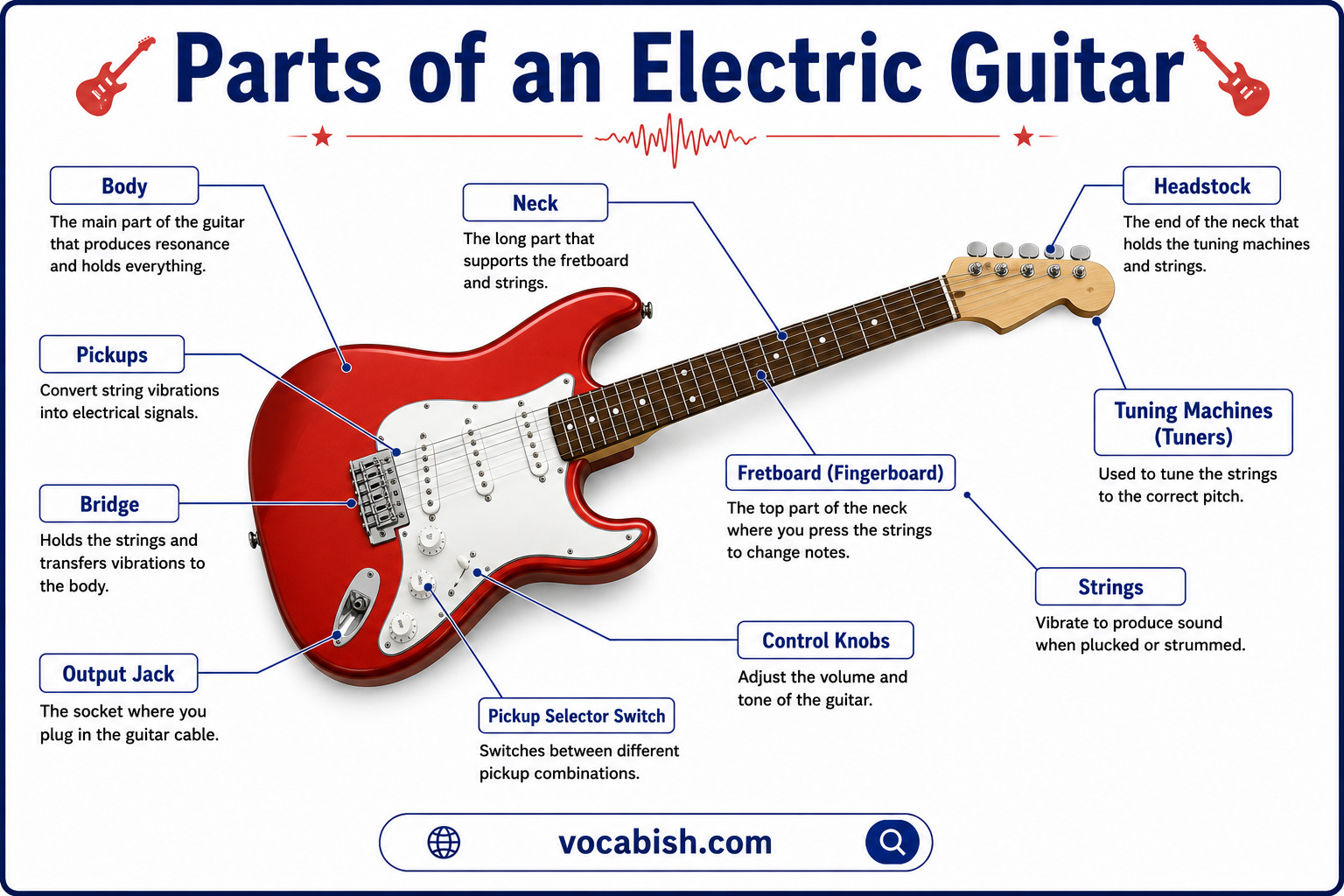

An electric guitar is a popular musical instrument used in many types of music, including rock, pop, jazz, and blues. In this blog post, you will learn the parts of an electric guitar with their functions and diagram to understand how each part helps produce and control sound. From the headstock and fretboard to the pickups and bridge, every part has a specific role in playing music and adjusting tone. Learning the names of electric guitar parts helps readers understand English vocabulary related to musical instruments, sound equipment, and music learning commonly used in music classes, books, and performance activities.
Body of the Guitar
Body
The main part of the guitar. Made of wood, it affects the tone and weight.
Pickguard
A small plate on the body that protects it from scratches while playing.
Bridge
Holds the strings and transfers vibrations to the body for sound.
Controls and Knobs
Used to adjust volume and tone. Usually includes tone and volume knobs.
Neck and Fingerboard
Neck
Long wooden part attached to the body. It holds the fingerboard and frets.
Fingerboard (Fretboard)
Where you press strings to make different notes. Often made of rosewood or maple.
Frets
Thin metal strips on the fingerboard that help you play correct notes.
Nut
Small piece at the top of the neck that guides strings and keeps proper spacing.
Truss Rod
Metal rod inside the neck used to adjust neck curvature for easier play.
Headstock and Tuning Parts
Headstock
Top part of the neck where tuning pegs are located.
Tuning Pegs (Machine Heads)
Turn these to tighten or loosen strings, changing pitch.
String Trees
Small parts that keep strings aligned and prevent buzzing.
Pickups and Electronics
Pickups
Magnetic parts that capture string vibrations and convert them to electrical signals.
Pickup Selector Switch
Lets you choose which pickup to use for different tones.
Output Jack
The plug where you connect a cable to an amplifier.
Wiring and Pots
Internal wires and potentiometers control volume and tone.
Strings and Accessories
Strings
Usually 6 metal strings. Different thicknesses change sound and tension.
Strap Buttons
Small pegs to attach a guitar strap for playing while standing.
Tremolo Arm (Whammy Bar)
Optional bar to bend notes and add effects to sound.
Parts of an Electric Guitar Diagram
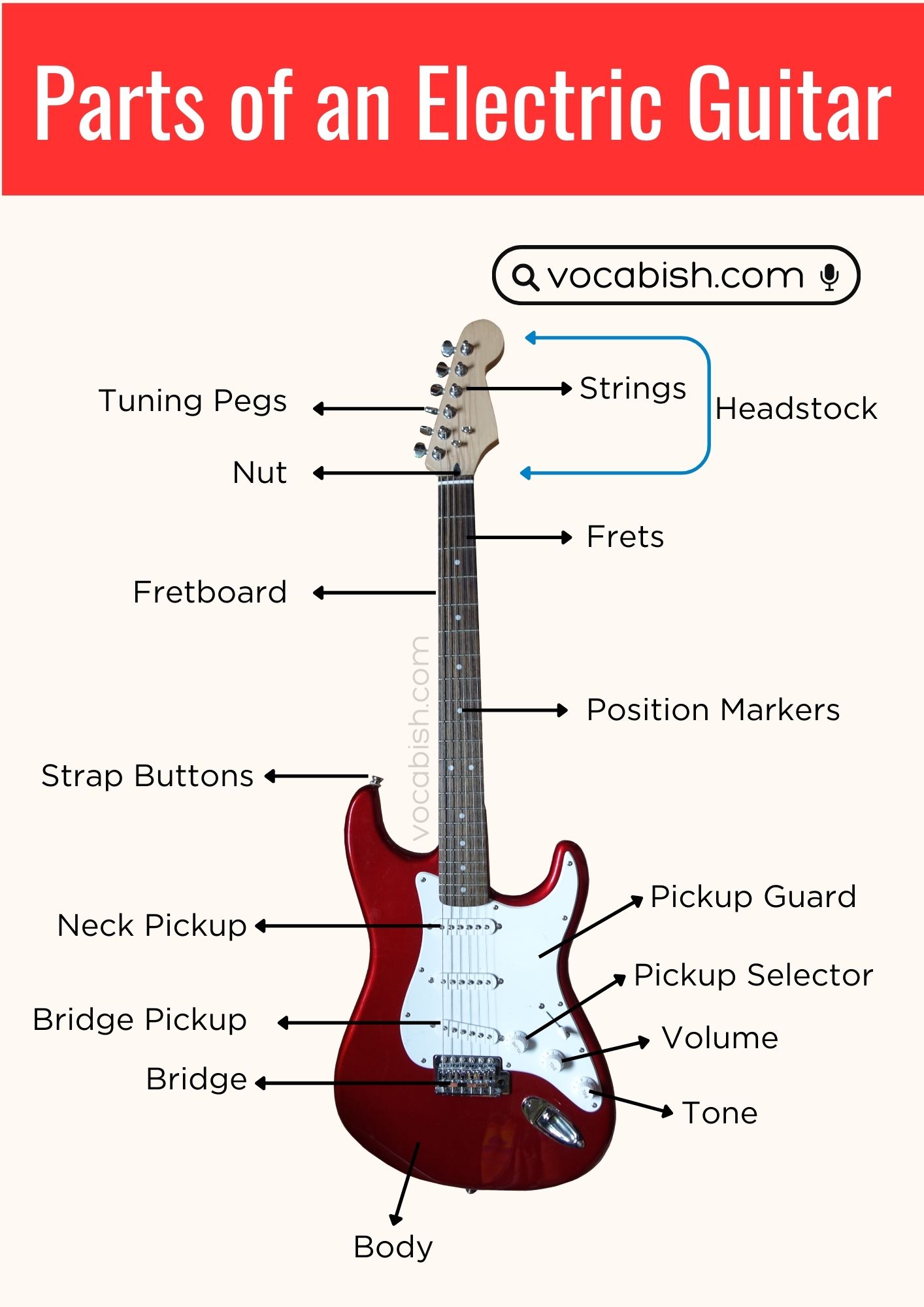
Understanding the parts of an electric guitar and their functions is important for beginners and advanced players alike. Each part has a special role that affects how the guitar sounds and plays. Learning these parts helps you choose the right guitar, play better, and take care of it.
Frequently Asked Questions
The bridge holds the strings in place and transfers their vibrations to the guitar body, helping produce sound.
Pickups capture the string vibrations and convert them into electrical signals for the amplifier.
The truss rod adjusts the neck’s curvature to keep the strings at the right height for easier play.
Tuning pegs tighten or loosen the strings to adjust the pitch and keep the guitar in tune.
The nut guides the strings at the top of the neck and keeps proper spacing between them.
A pickguard protects the guitar body from scratches while playing with a pick.
The pickup selector switch allows you to choose different pickups for various sounds and tones.
Related Articles: