
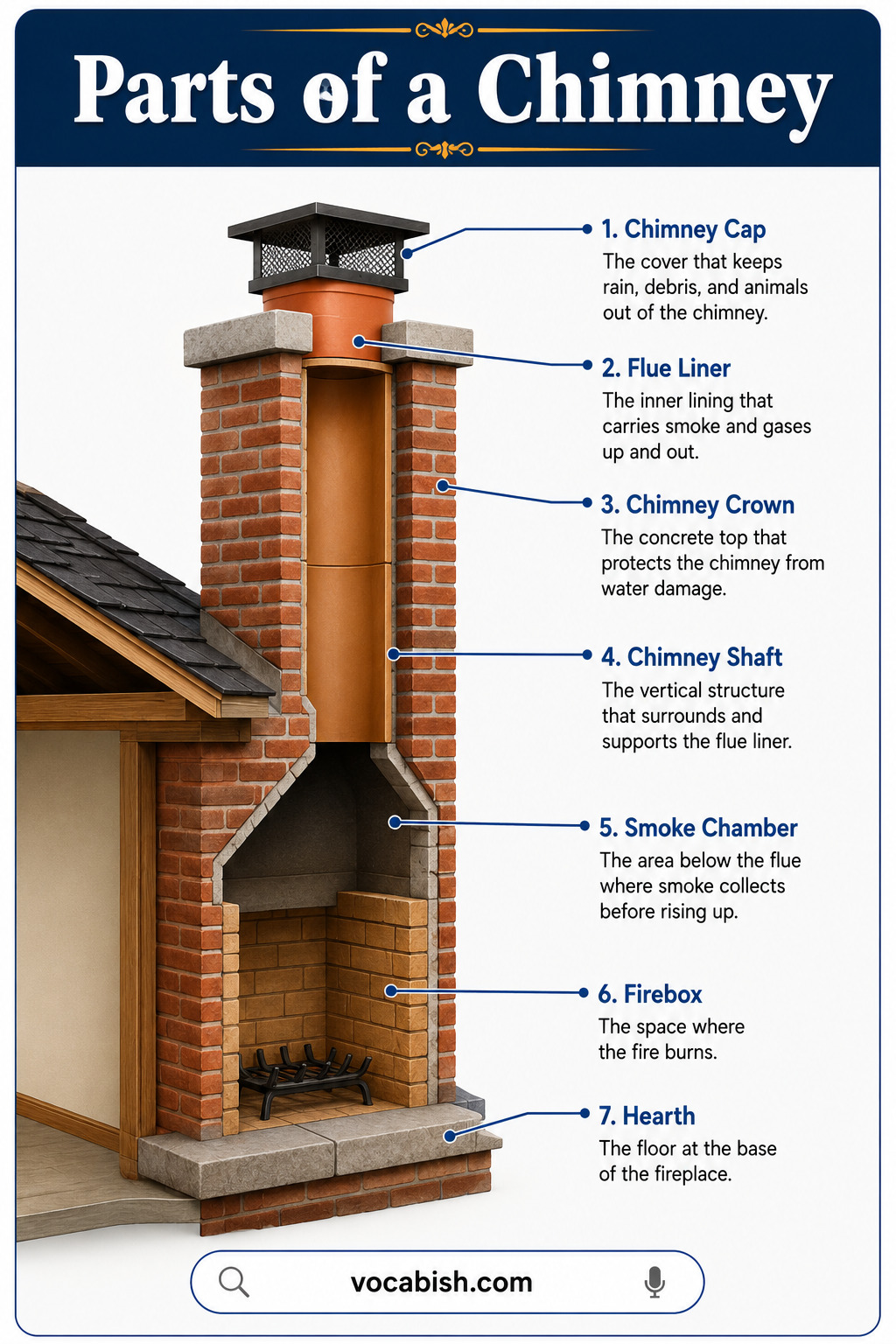
A chimney is a vertical structure that allows smoke, gases, and heat to safely move out from fireplaces, stoves, furnaces, and heating systems. In this blog post, you will learn the parts of a chimney and their functions with a diagram to understand how each section of a chimney works. From the chimney cap and flue to the damper and firebox, every part has a specific role in ventilation, safety, and smoke control. Learning the names of chimney parts helps readers understand English vocabulary related to home construction, heating systems, fireplaces, and building structures commonly used in technical and everyday situations.
What is a Chimney?
A chimney is a vertical structure that carries smoke, hot air, and gases safely out of a building. It is mostly used with fireplaces, wood stoves, gas heaters, and boilers. A well-built chimney improves airflow, safety, and heating efficiency.
Main Parts of a Chimney
Chimney Stack
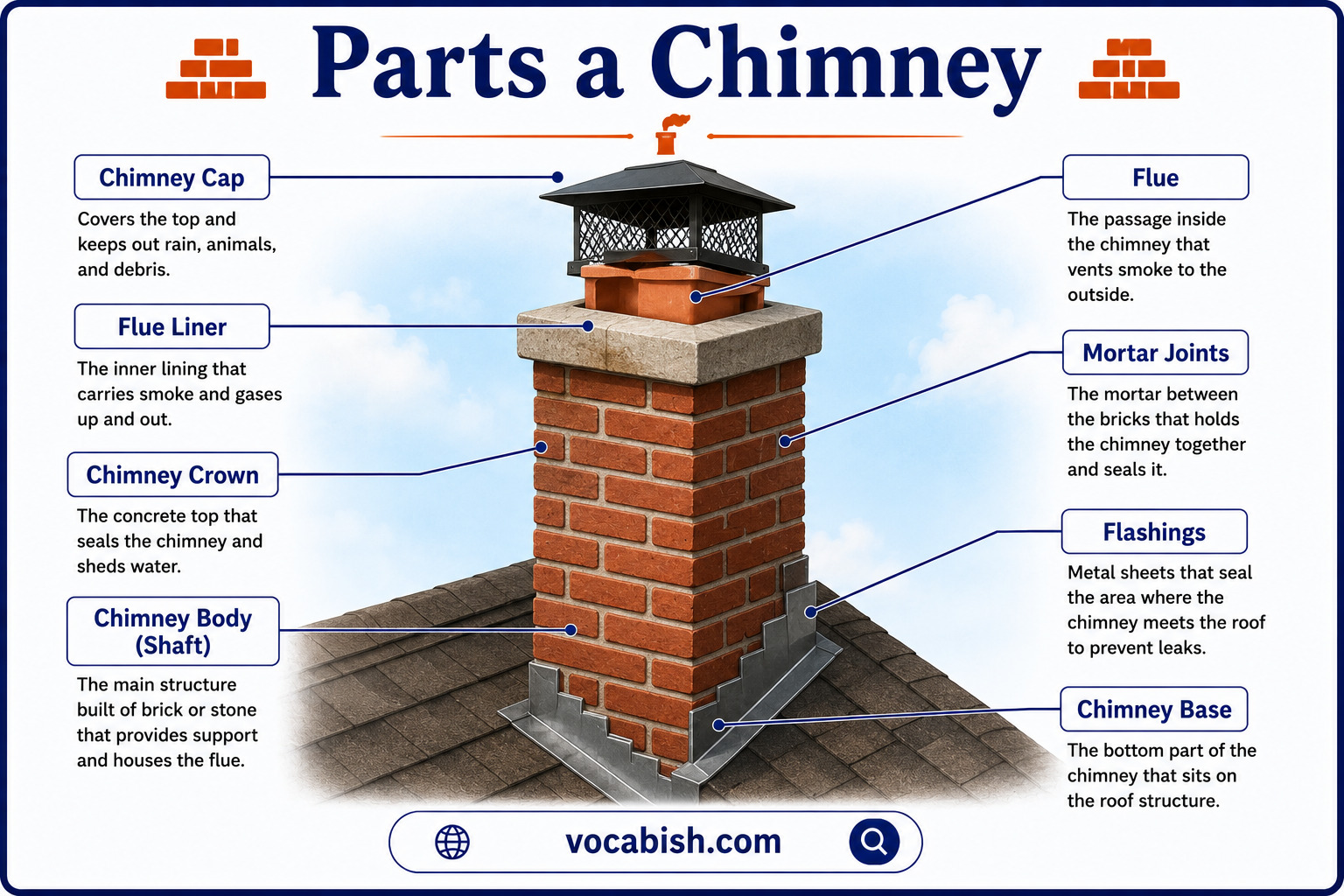
Chimney stack: the tall outer part seen above the roof.
It supports the chimney and allows smoke to rise and leave the house.
Chimney Flue
Chimney flue: the inner passage where smoke travels upward.
It directs smoke and harmful gases outside.
Flue Liner
Flue liner: a smooth inner layer inside the flue.
It protects the chimney walls from heat and corrosion.
Chimney Cap
Chimney cap: a cover placed on top of the chimney.
It keeps out rain, birds, leaves, and debris.
Structural and Support Parts
Chimney Crown
Chimney crown: the sloped top surface around the flue opening.
It stops water from entering the chimney structure.
Chimney Flashing
Chimney flashing: metal strips where the chimney meets the roof.
It prevents water leaks into the house.
Chimney Chase
Chimney chase: an outer covering for factory-built chimneys.
It protects the chimney from weather damage.
Fireplace and Interior Parts
Firebox
Firebox: the area where the fire burns.
It is built with fire-resistant materials.
Smoke Chamber
Smoke chamber: the space above the firebox.
It guides smoke smoothly into the flue.
Damper
Damper: a movable metal door inside the chimney.
It controls airflow and keeps cold air out when not in use.
Safety and Airflow Parts
Spark Arrestor
Spark arrestor: a mesh screen on the chimney top.
It stops sparks from flying out and causing fires.
Cleanout Door
Cleanout door: a small door at the bottom of the chimney.
It allows easy removal of ash and soot.
Parts of a Chimney Diagram
Summary of Chimney Parts
The parts of a chimney work together to ensure safe airflow, heat control, and fire safety. Knowing terms like flue, damper, firebox, and chimney cap helps with home care and improves English vocabulary. This simple guide makes chimney parts easy to learn and remember for everyday use.
Frequently Asked Questions
The main parts of a chimney include the chimney stack, flue, flue liner, chimney cap, firebox, and damper. Each part helps move smoke safely out of the building.
The chimney flue is the inner passage that carries smoke, hot air, and gases from the firebox to the outside air.
A flue liner protects the chimney walls from heat and harmful gases. It also improves airflow and reduces the risk of chimney damage.
A chimney cap covers the top of the chimney and keeps out rain, birds, leaves, and debris while helping stop downdrafts.
The damper controls airflow in the chimney. It opens when a fire is burning and closes to prevent cold air from entering when the fireplace is not in use.
The chimney crown is the top surface around the flue opening. It protects the chimney from water damage by directing rain away from the structure.
The firebox is the area where the fire burns. It is made from heat-resistant materials to safely contain flames and heat.
Related Articles: