
The en dash (–) is a punctuation mark used mainly to show ranges, connections, and relationships. It is longer than a hyphen (-) but shorter than an em dash (—). Its name comes from traditional printing, where the mark was...
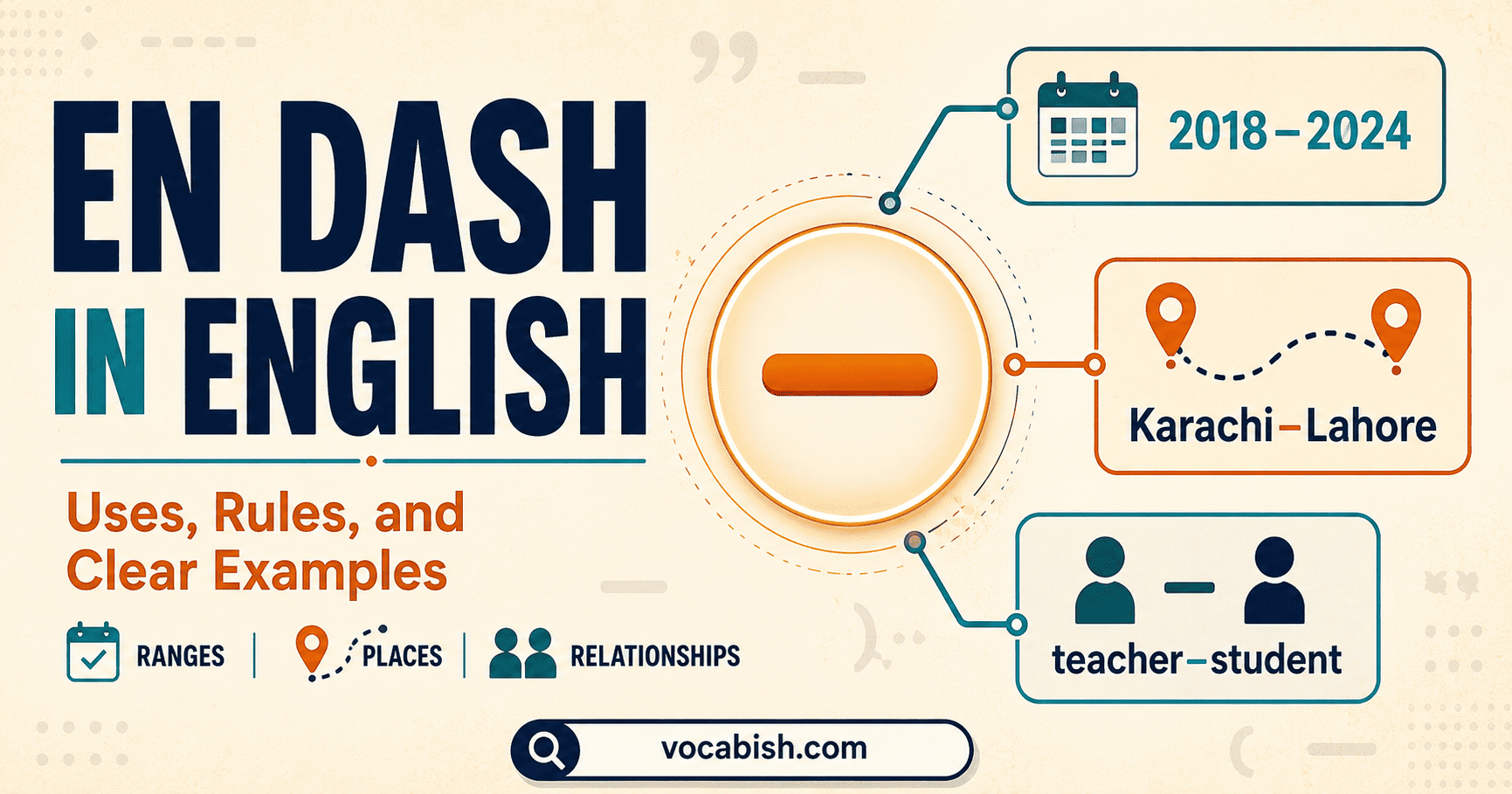
The en dash (–) is a punctuation mark used mainly to show ranges, connections, and relationships. It is longer than a hyphen (-) but shorter than an em dash (—). Its name comes from traditional printing, where the mark was...
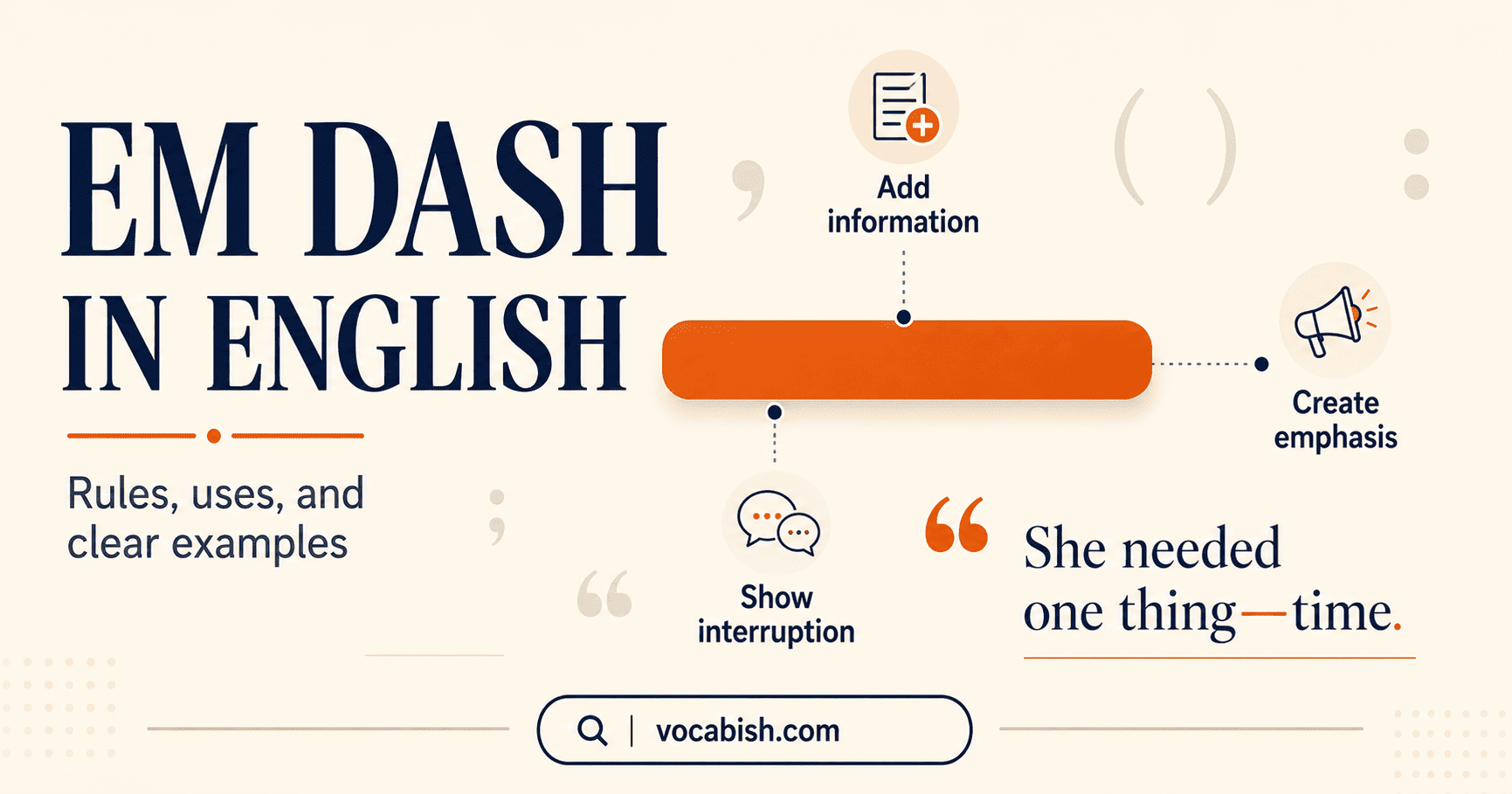
The em dash (—) is a long punctuation mark used to separate, interrupt, or emphasize information within a sentence. It is longer than both a hyphen (-) and an en dash (–). Writers often use an em dash when a comma feels too weak...
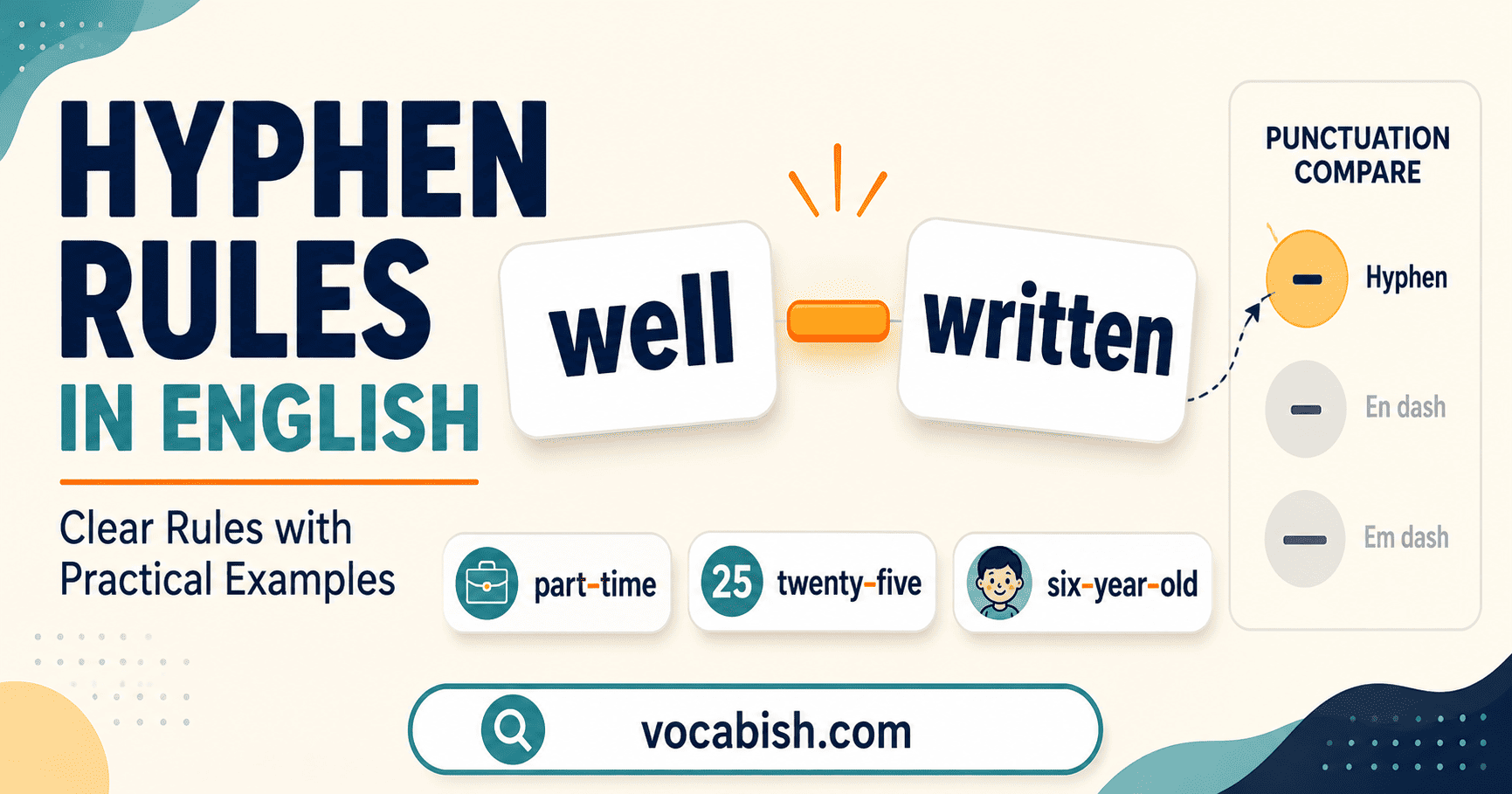
A hyphen (-) is a short punctuation mark that joins words or parts of words. It helps readers see that separate words are connected and should be understood as one unit. Compare: a man-eating shark — a shark that eats people a...
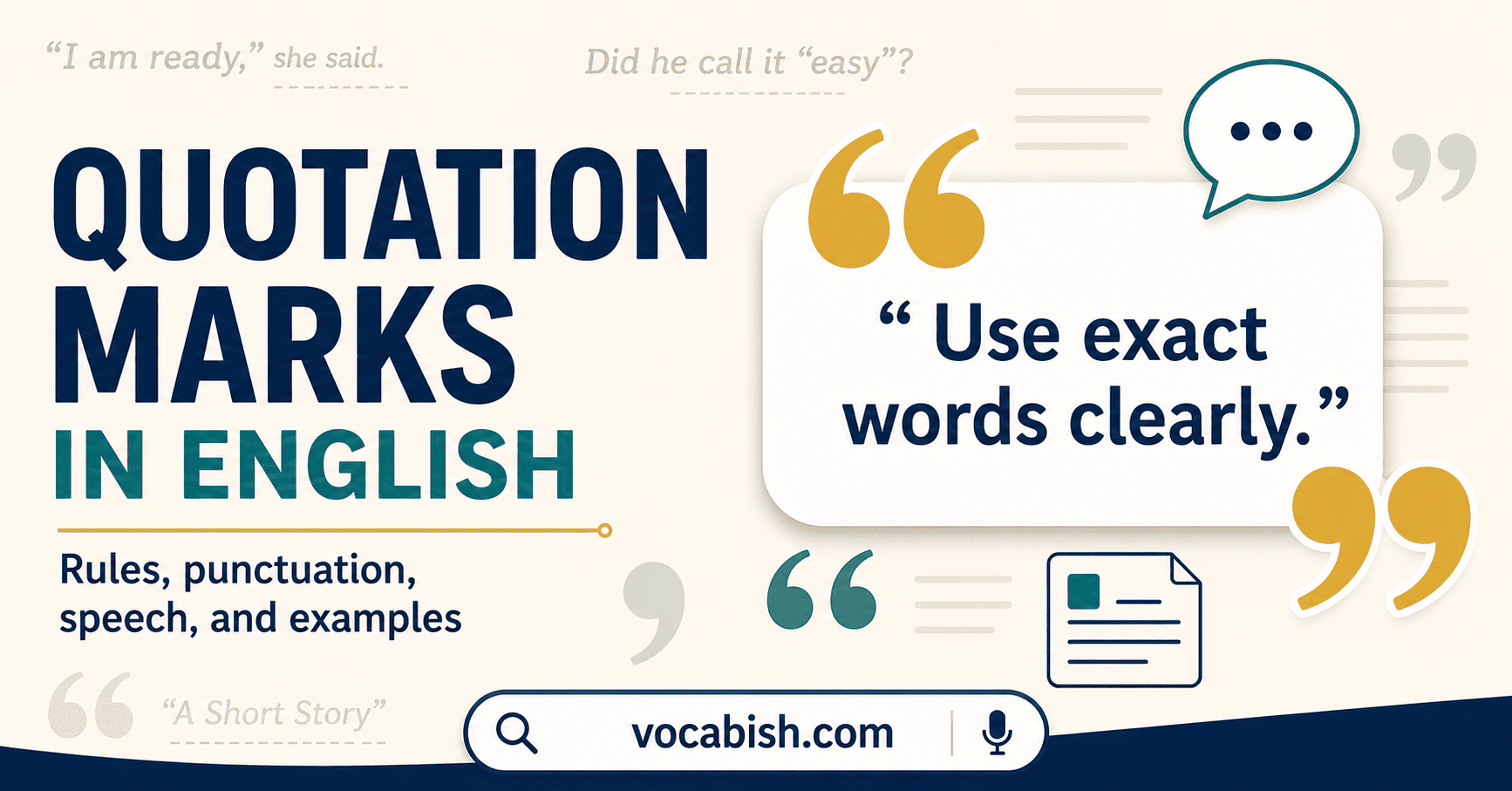
Quotation marks are punctuation marks used to show someone’s exact words, identify certain titles, and separate quoted language from the rest of a sentence. They appear in two common forms: Double quotation marks: “ ” Single...
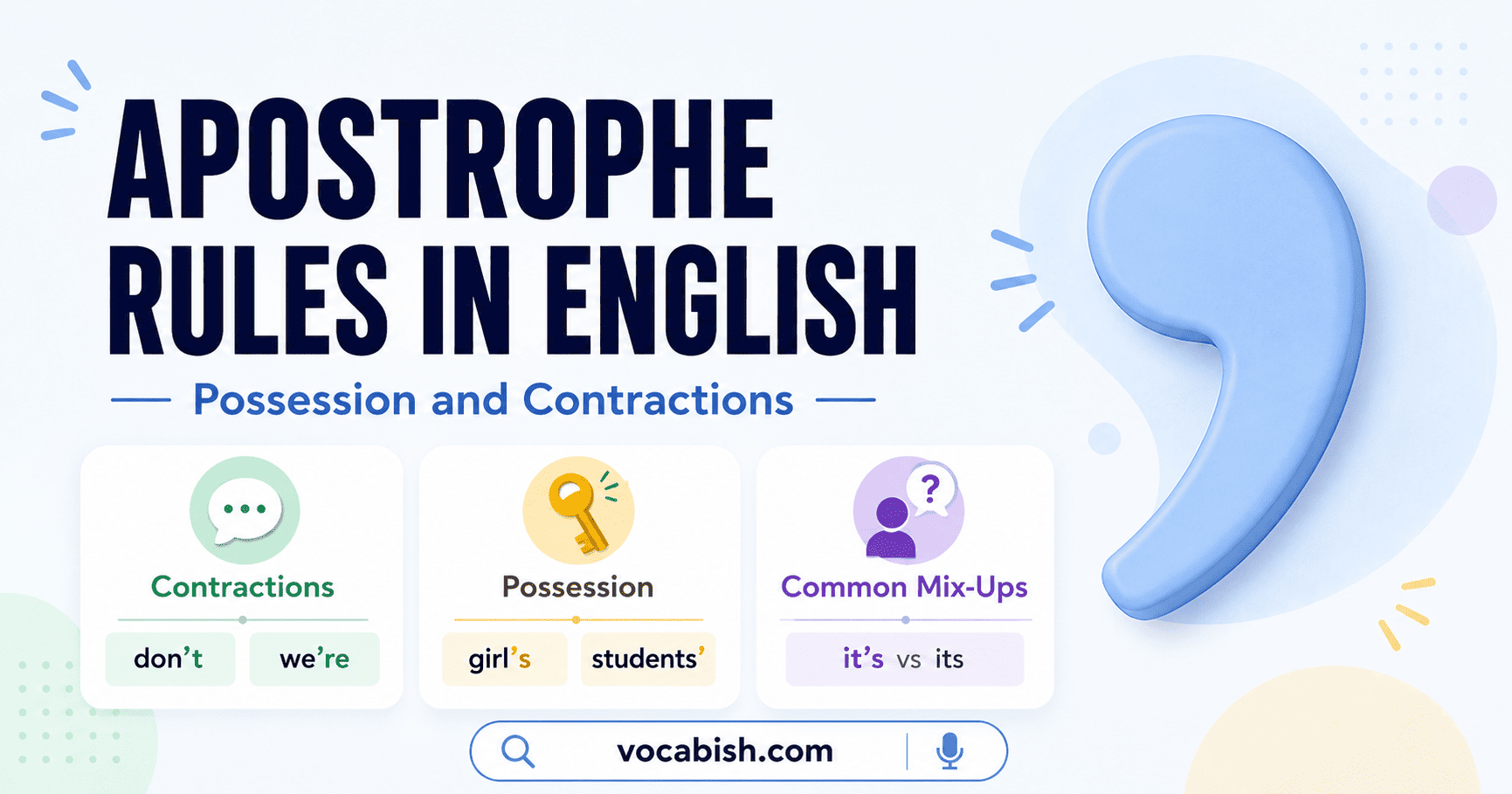
An apostrophe (’) is a small punctuation mark with two main jobs: it shows missing letters in contractions and indicates possession. Although the mark is simple, its position can completely change the meaning of a phrase...
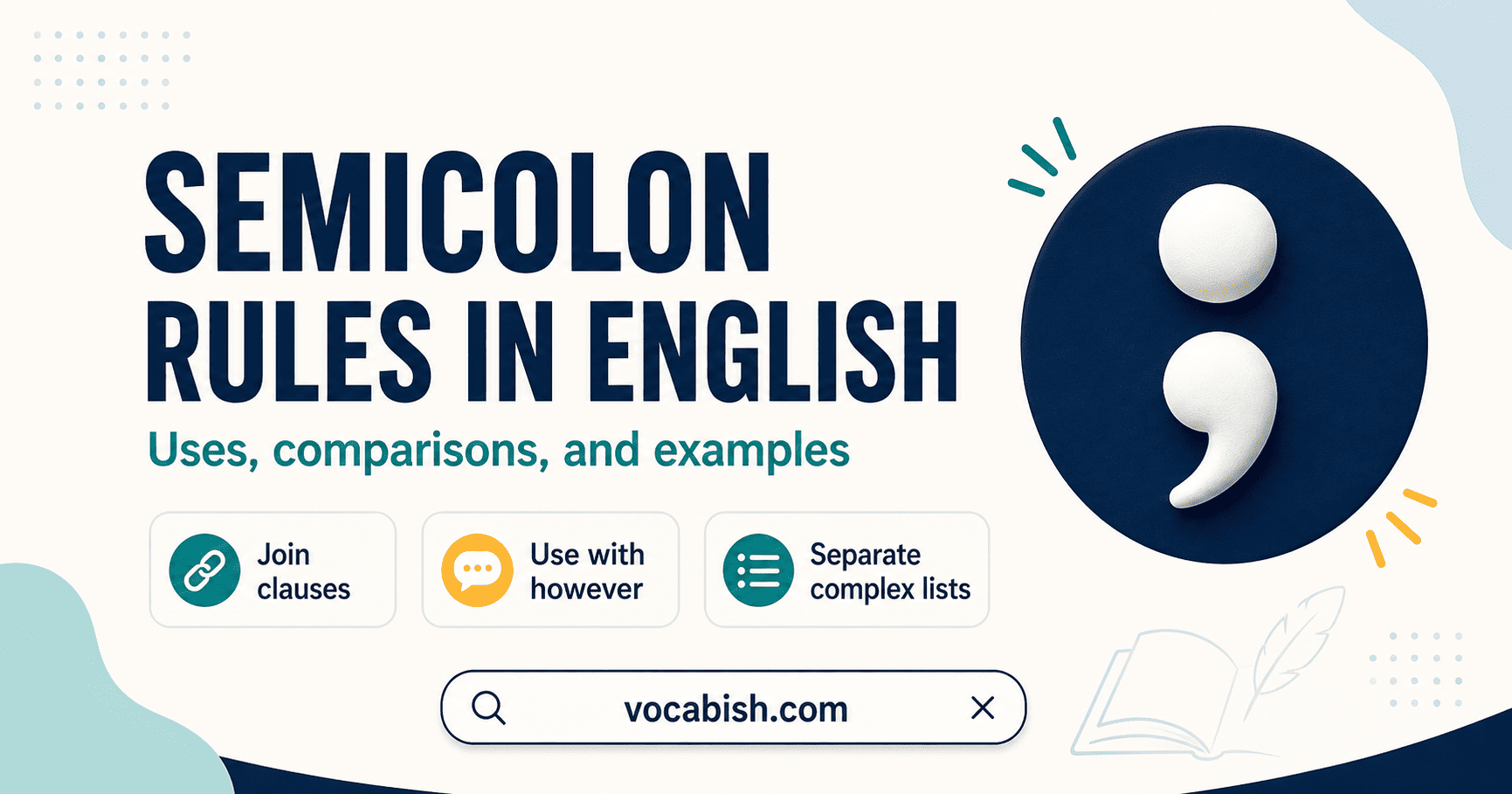
A semicolon (;) connects ideas that are more closely related than two separate sentences but too complete to be joined by a comma alone. Compare: The rain stopped. We continued our journey. The rain stopped; we continued our...
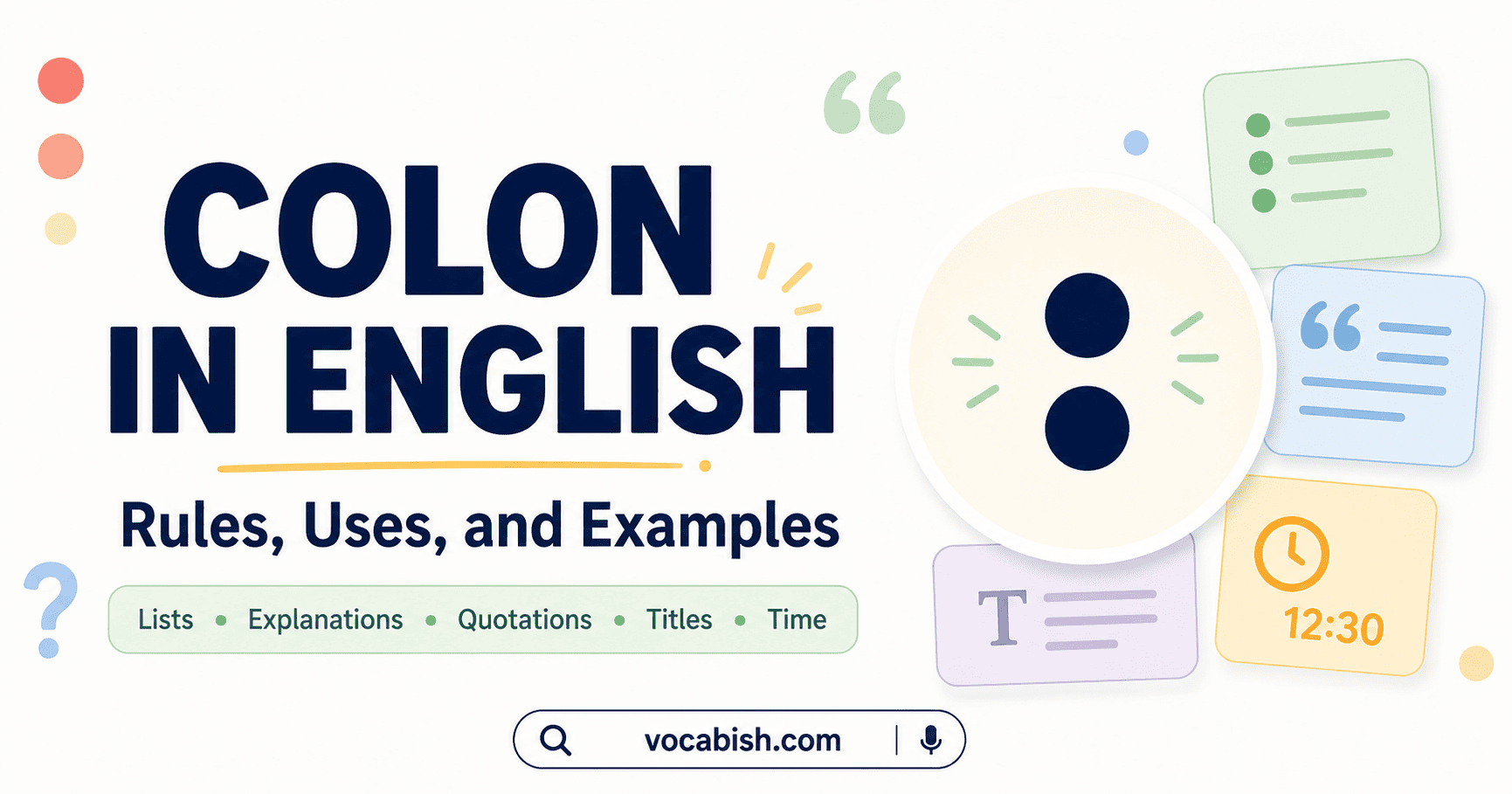
A colon (:) tells the reader that more information is coming. That information may be a list, an explanation, an example, or a quotation. Think of the colon as a sign that says, “Look ahead—the next part develops this idea.” We...
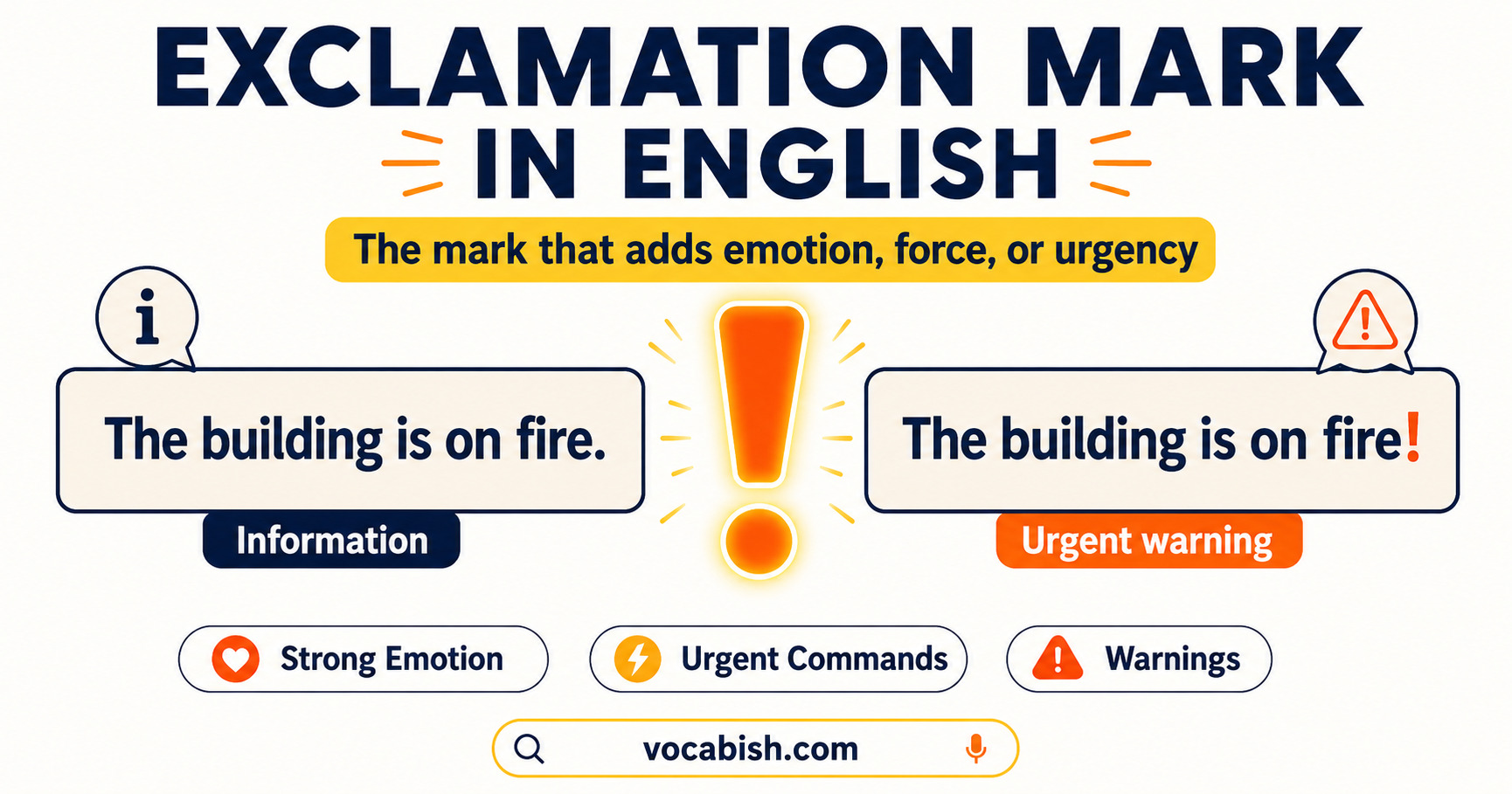
An exclamation mark (!) shows strong emotion, surprise, urgency, excitement, or a forceful command. It tells the reader that a word or sentence should be read with more intensity than an ordinary statement. Compare “The building...
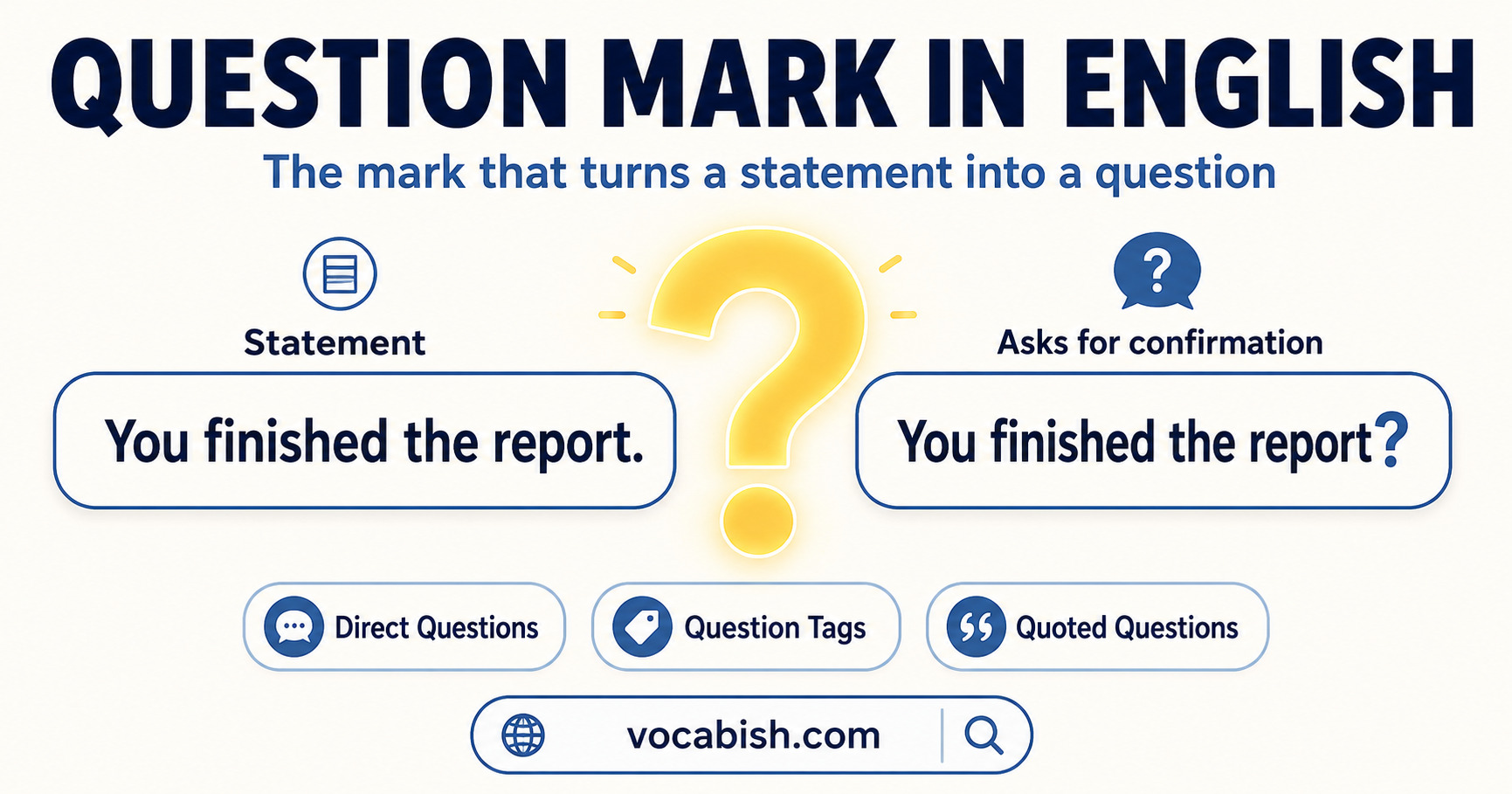
The main question mark rules are simple: place a question mark (?) at the end of a direct question, but not after an indirect question. This small punctuation mark immediately tells the reader that someone is asking for...
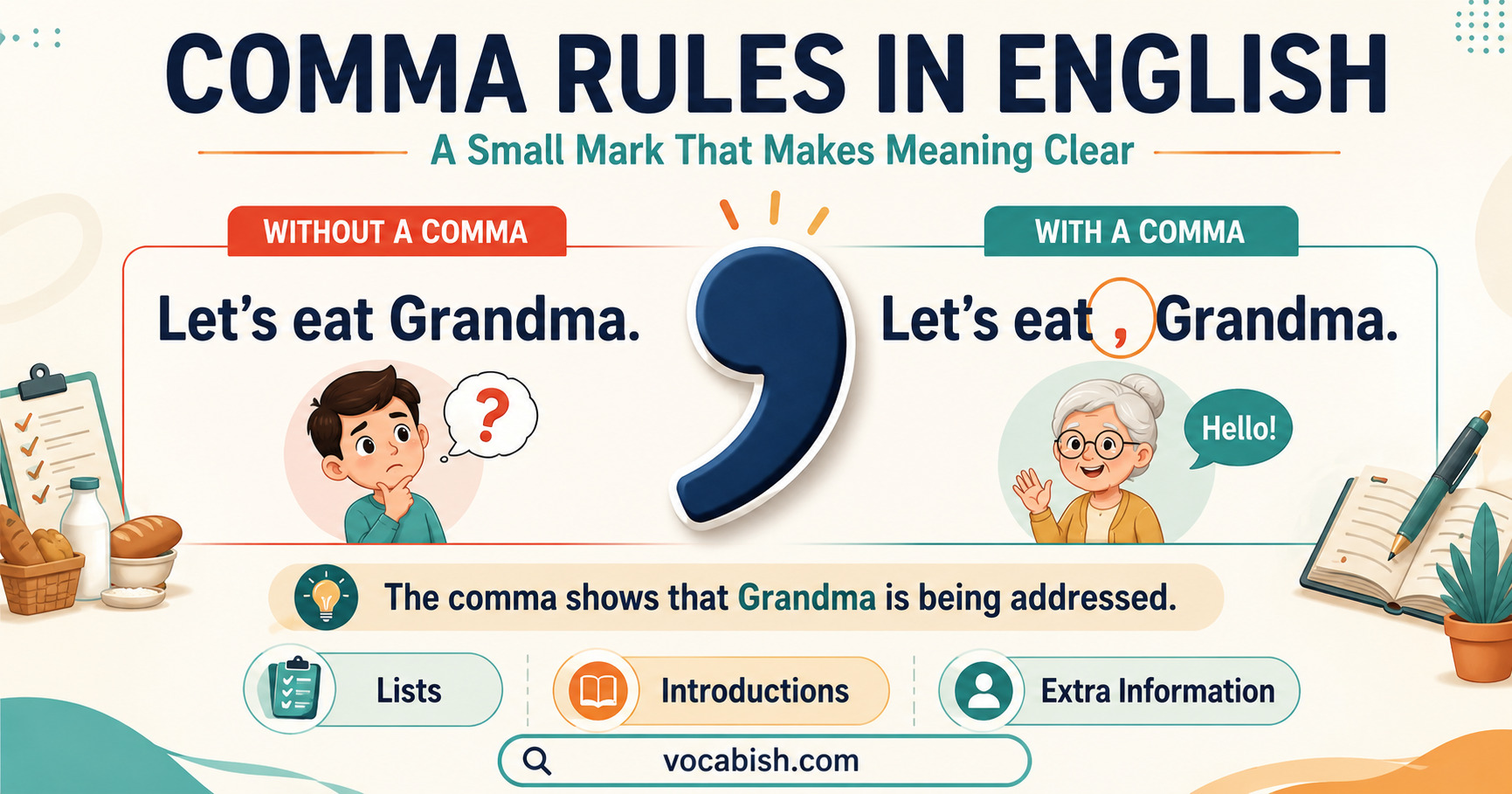
A comma (,) is a small punctuation mark, but it can make a noticeable difference to a sentence. It separates ideas, organizes information, and helps readers understand where one part of a sentence ends and another begins...