
The full stop punctuation mark (.) shows that a complete sentence or idea has ended. It helps readers pause, separate one statement from another, and follow written information clearly. In American English, a full stop is usually...
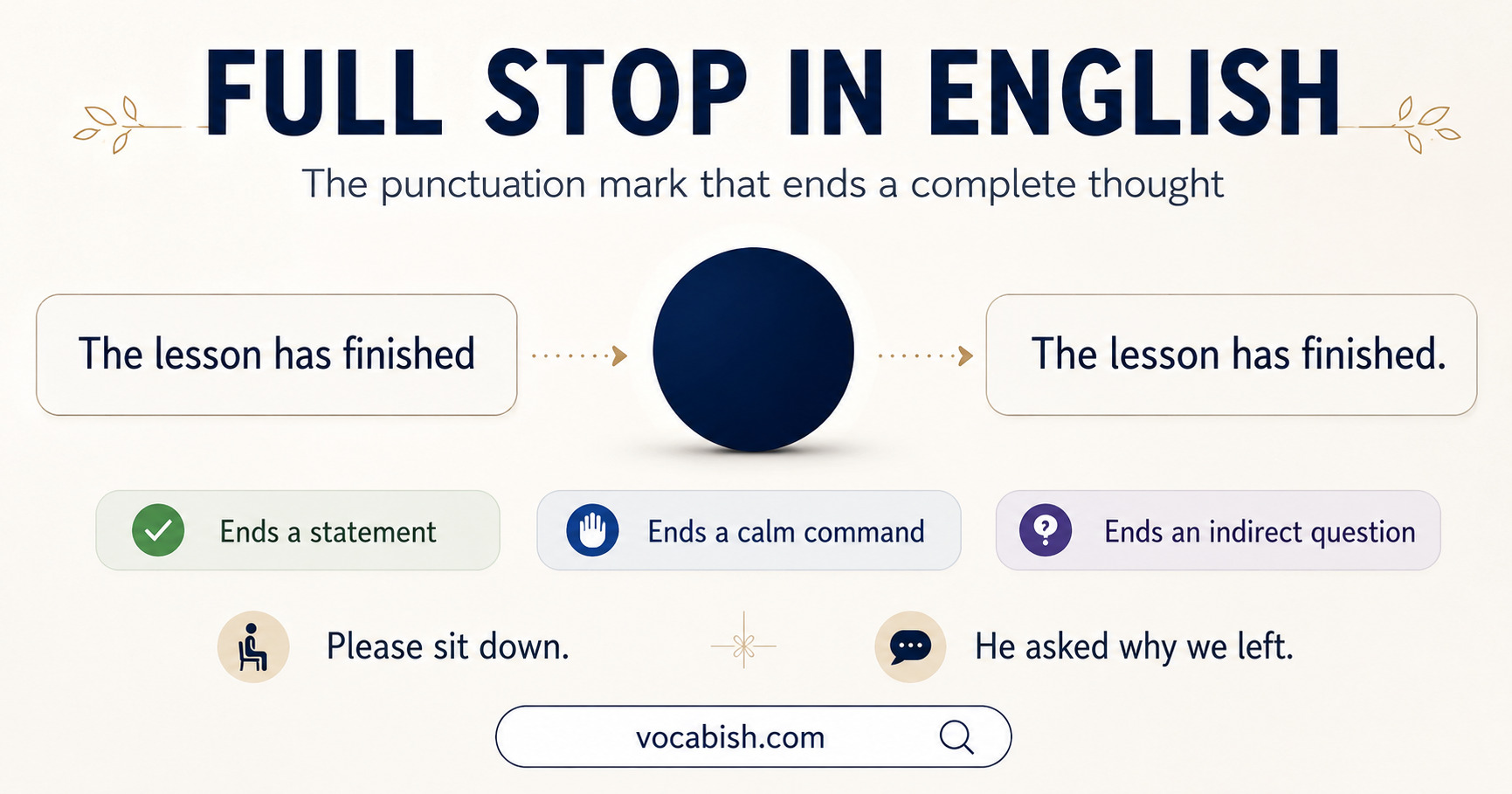
The full stop punctuation mark (.) shows that a complete sentence or idea has ended. It helps readers pause, separate one statement from another, and follow written information clearly. In American English, a full stop is usually...
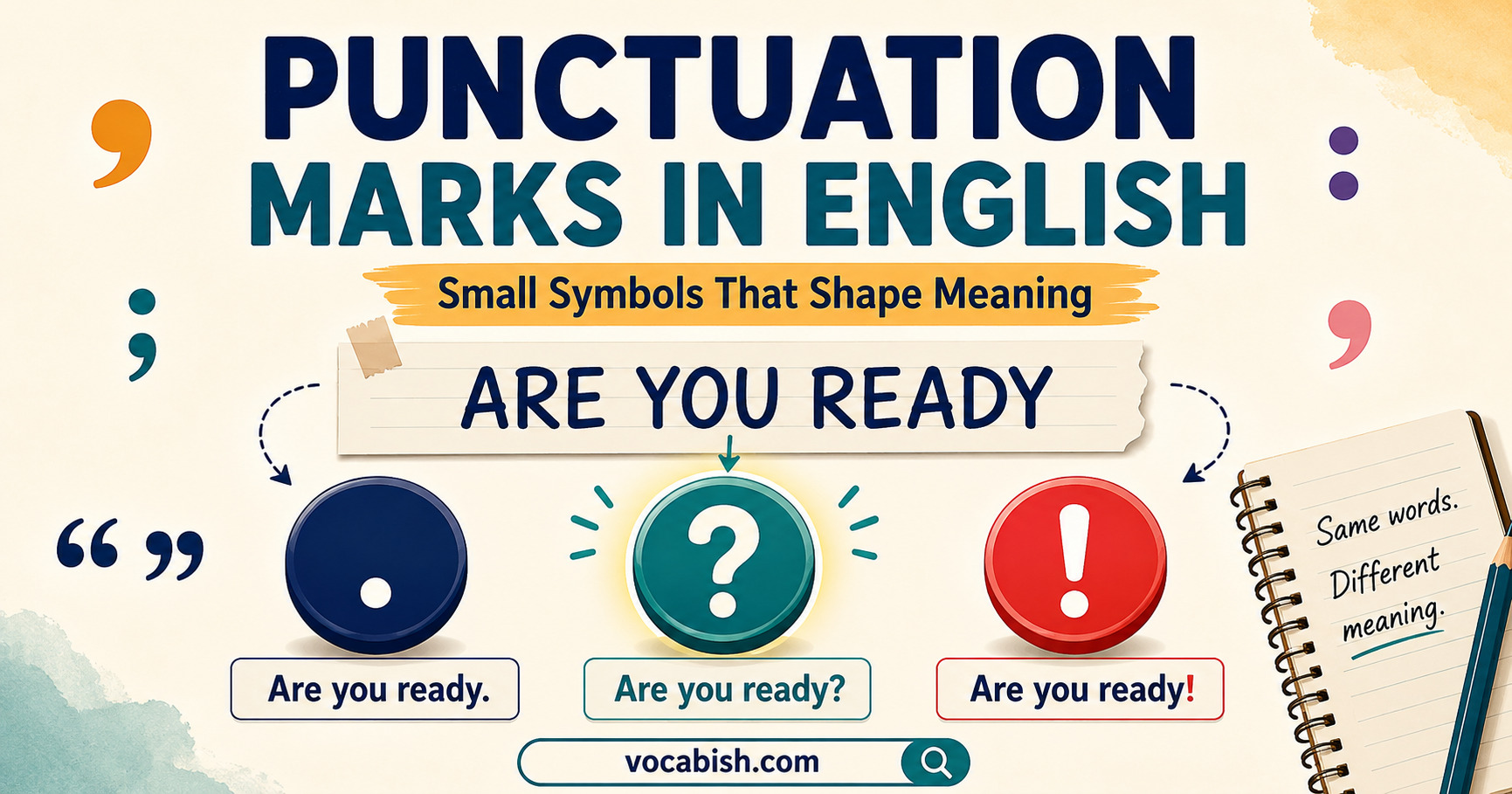
Punctuation marks in English are symbols that organise sentences, separate ideas, and show readers how a message should sound. A missing comma, apostrophe, or full stop can change the meaning of an entire sentence, which makes...
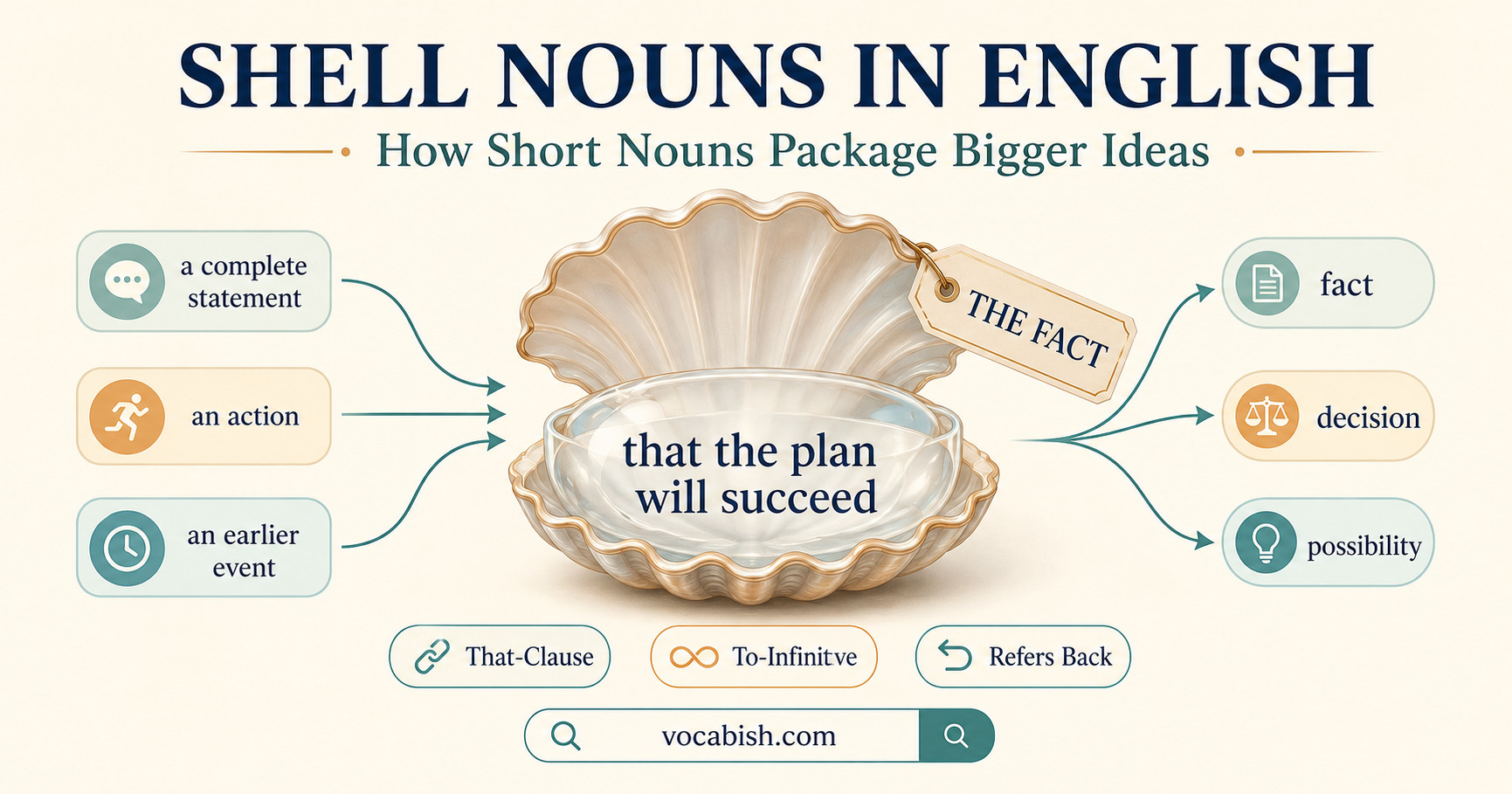
Shell nouns are abstract nouns that package, summarize, or point to a larger piece of information. They allow speakers and writers to refer to a complete idea using a short noun such as fact, problem, reason, or possibility...
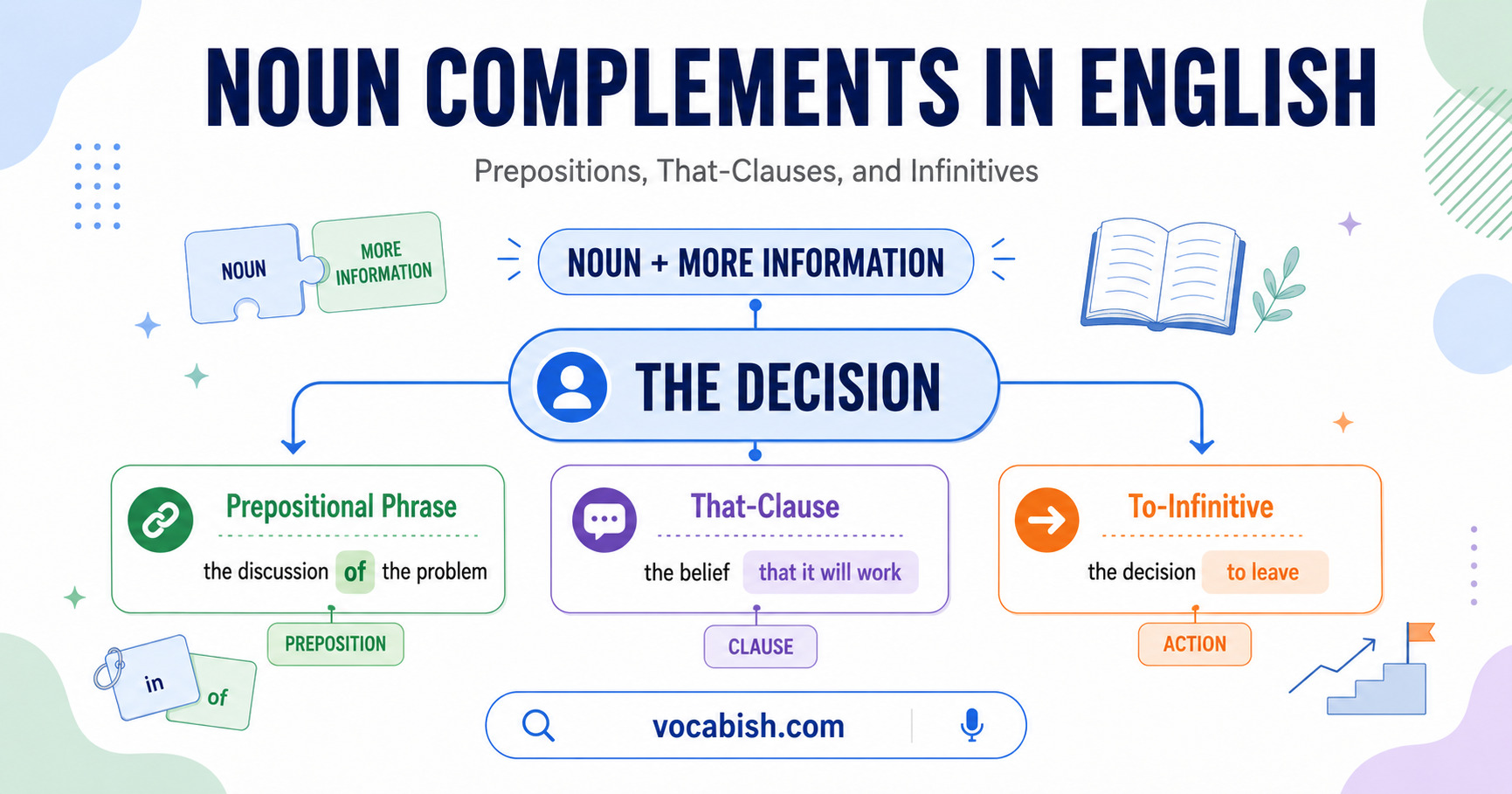
Noun complements are phrases or clauses that complete or clarify the meaning of a noun. They tell us what an idea concerns, what a decision involves, what someone believes, or which action is connected to the noun. Compare the...
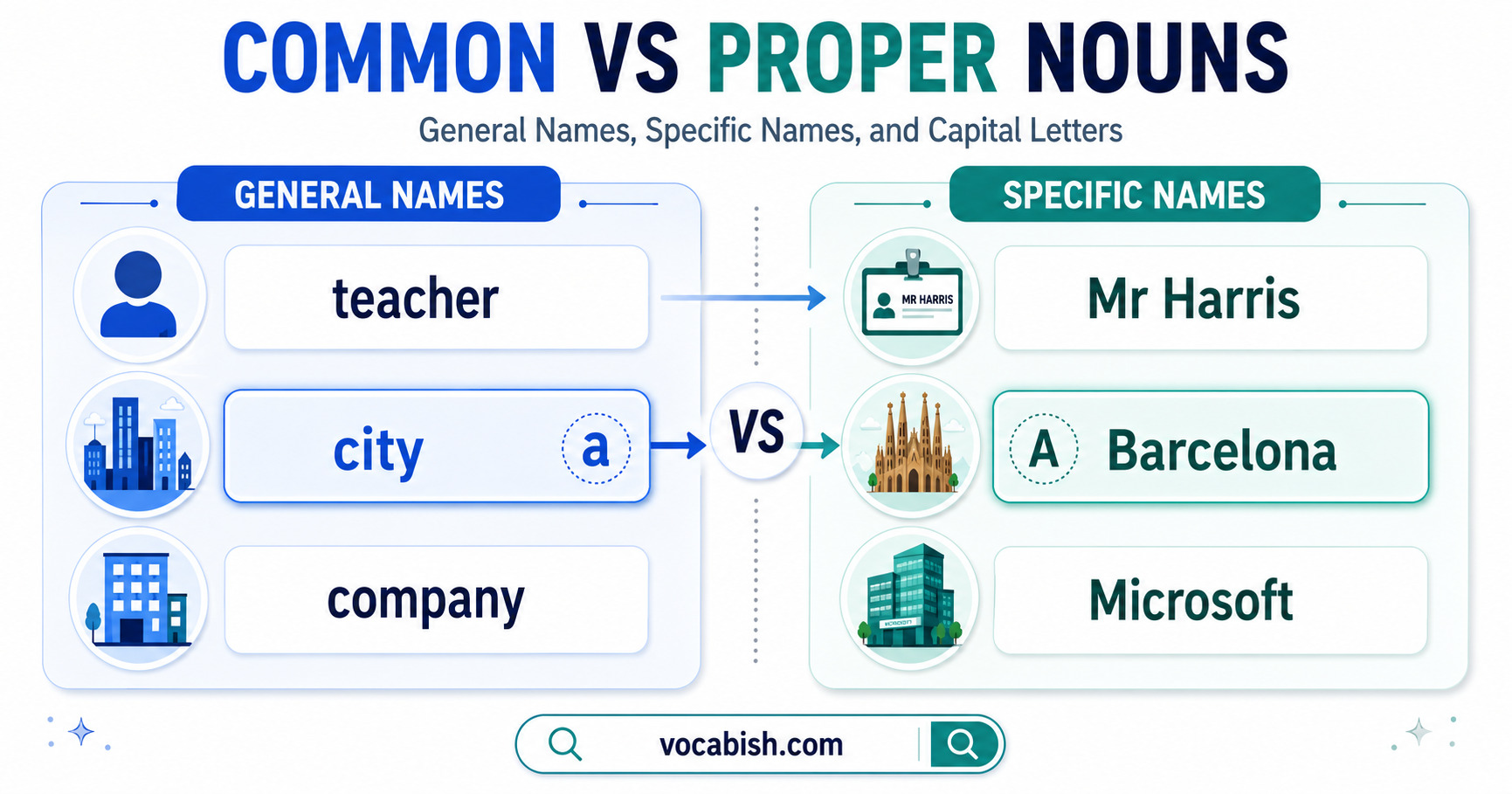
Common nouns vs proper nouns differ in one clear way: common nouns give general names, while proper nouns identify specific people, places, organizations, or things. This difference may seem small, but it determines whether a...
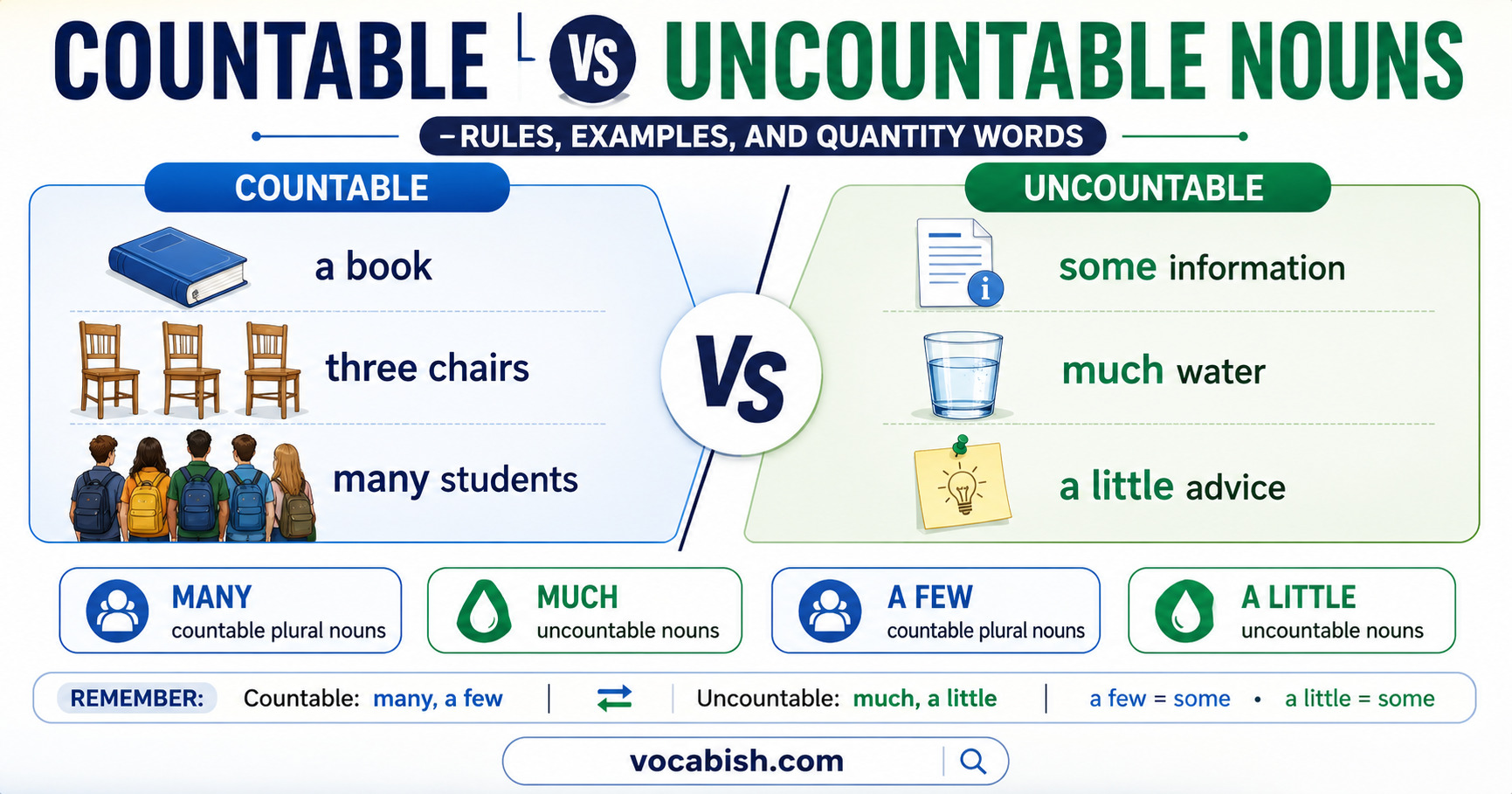
Countable vs uncountable nouns differ in how English treats number and quantity.Countable nouns refer to separate people, objects, or ideas that we can count, while uncountable nouns describe substances, qualities, or general...
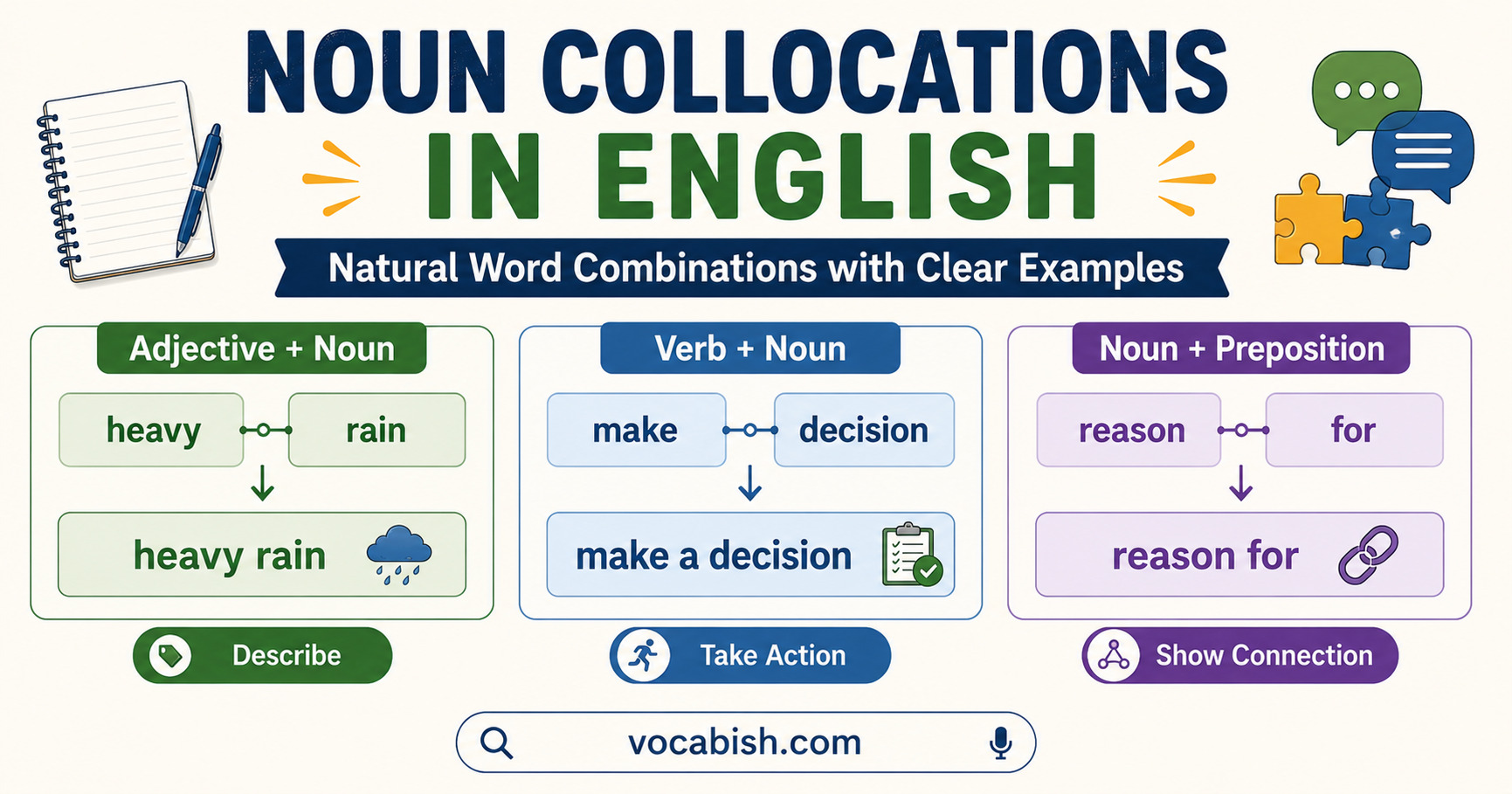
Noun collocations are natural combinations of words built around a noun, such as heavy rain, make a decision, and a sense of humour. Learning noun collocations helps you choose words that native and fluent English speakers...
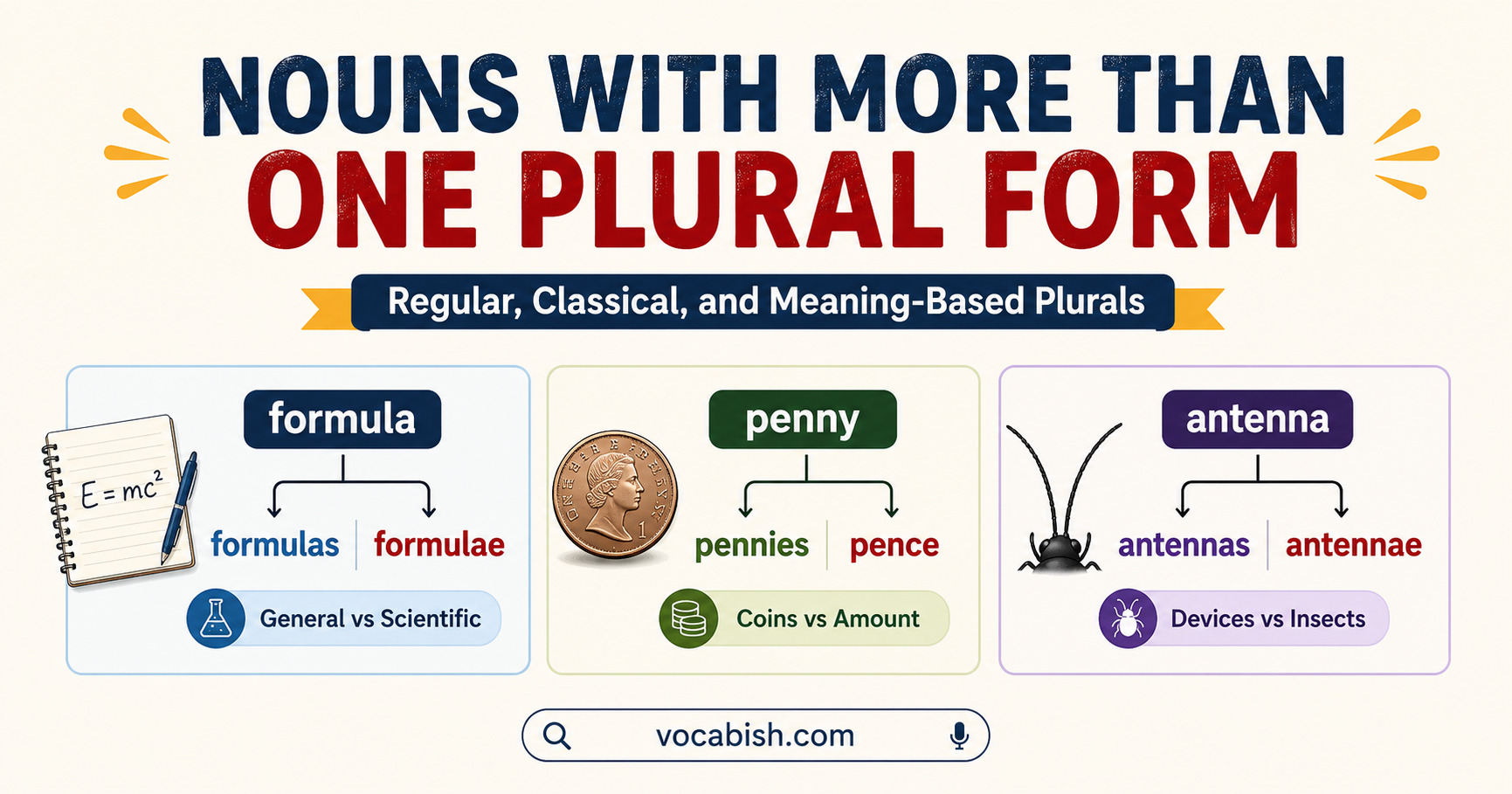
Nouns with more than one plural form are nouns that accept two or more plural forms, sometimes with the same meaning and sometimes with different meanings.These nouns may follow a regular English pattern, retain a Latin or Greek...
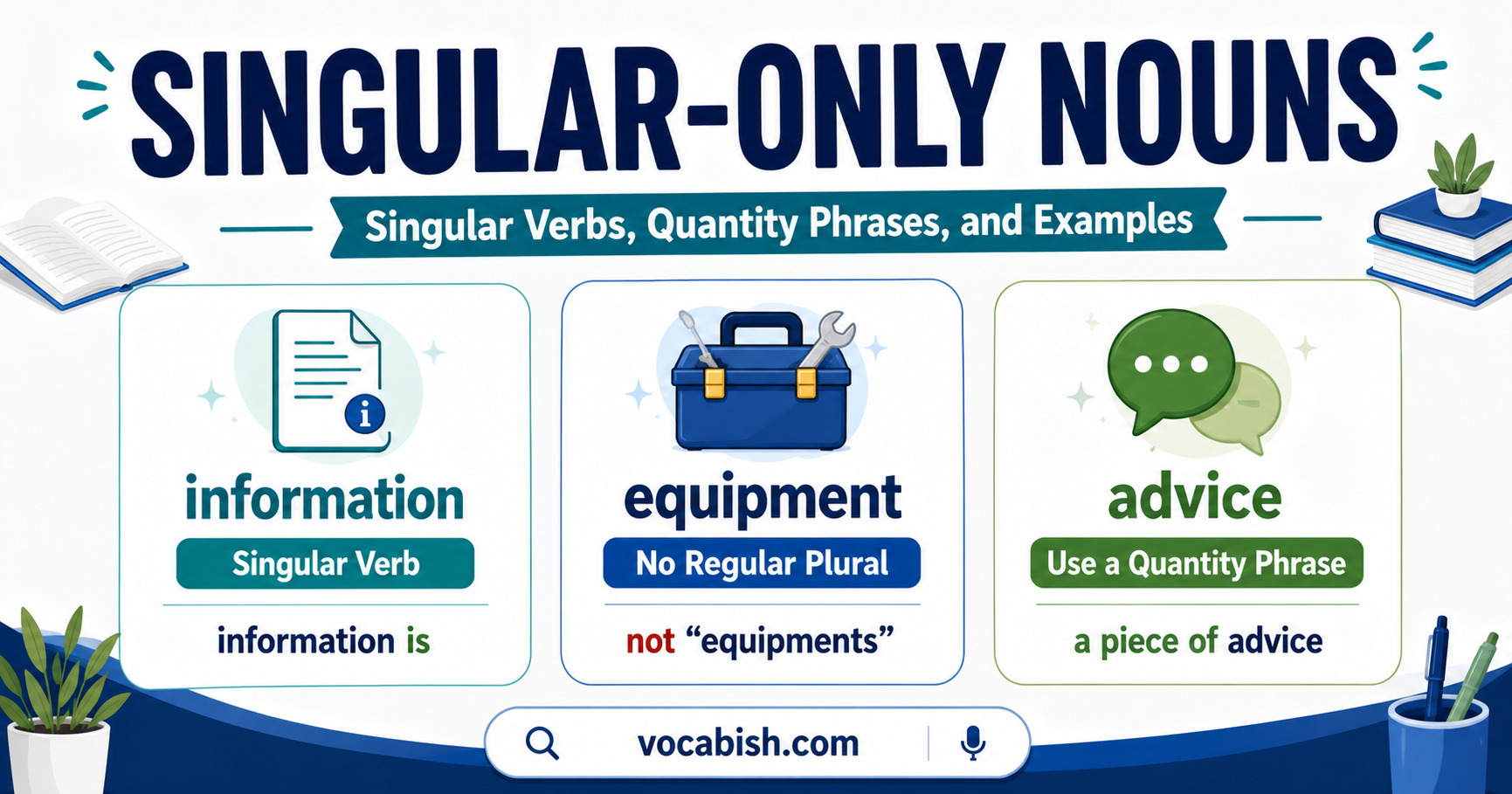
Singular-only nouns are nouns that normally remain singular and take a singular verb in their usual meaning. They do not usually form regular plurals, even when they refer to a large amount of something. For example, we say The...
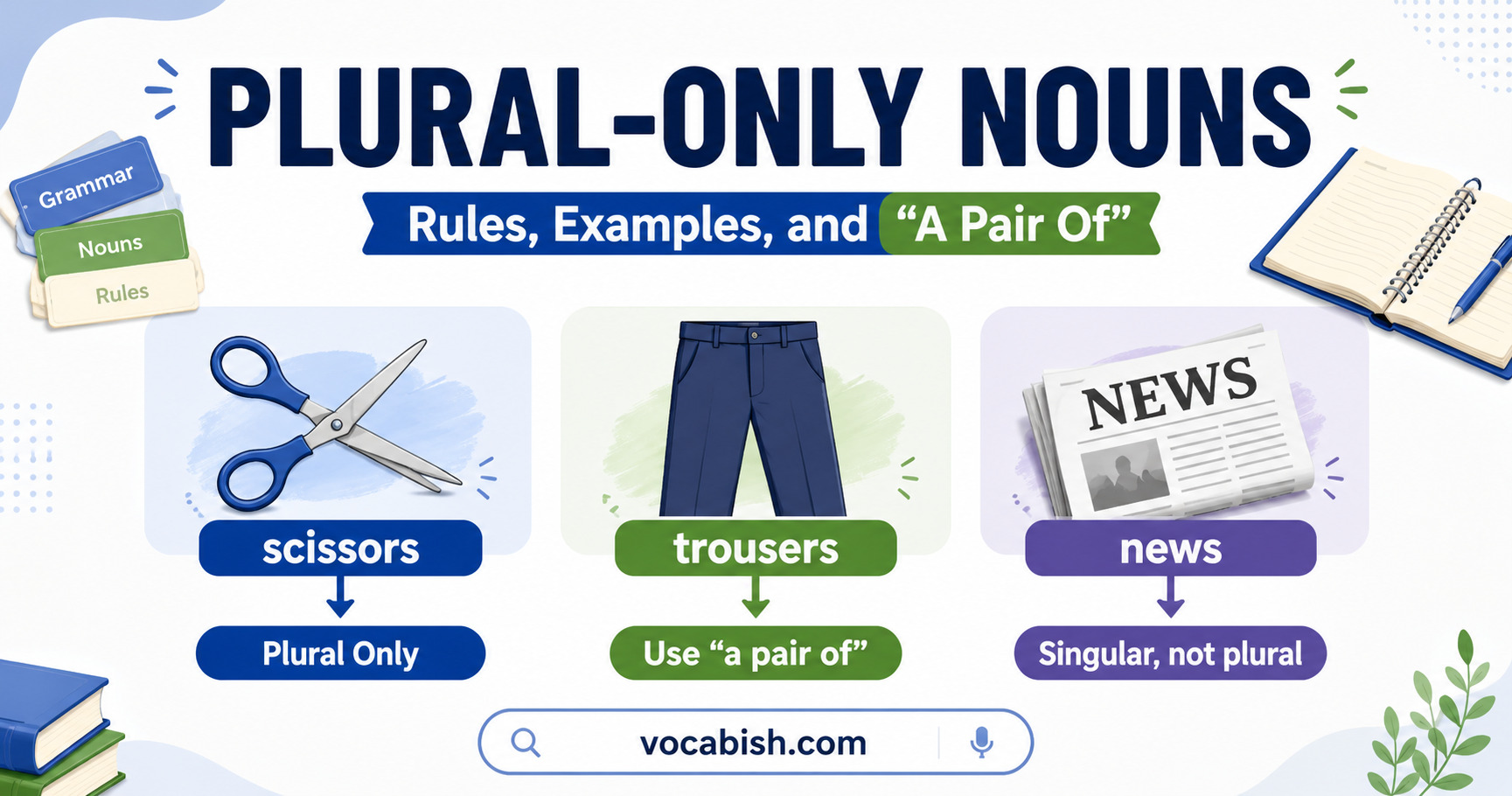
Plural-only nouns are nouns that are normally used only in a plural form, even when they describe one object, group, or idea. They take plural verbs, while two-part objects are often counted with a pair of, as in a pair of...