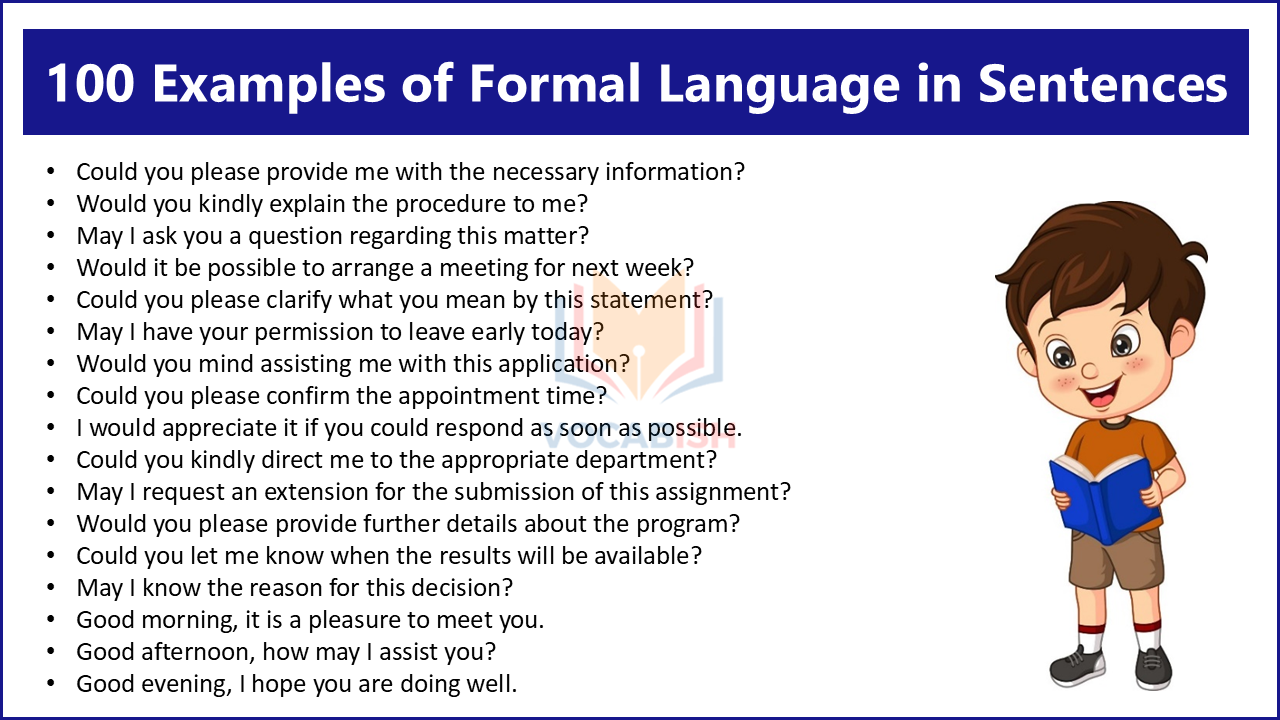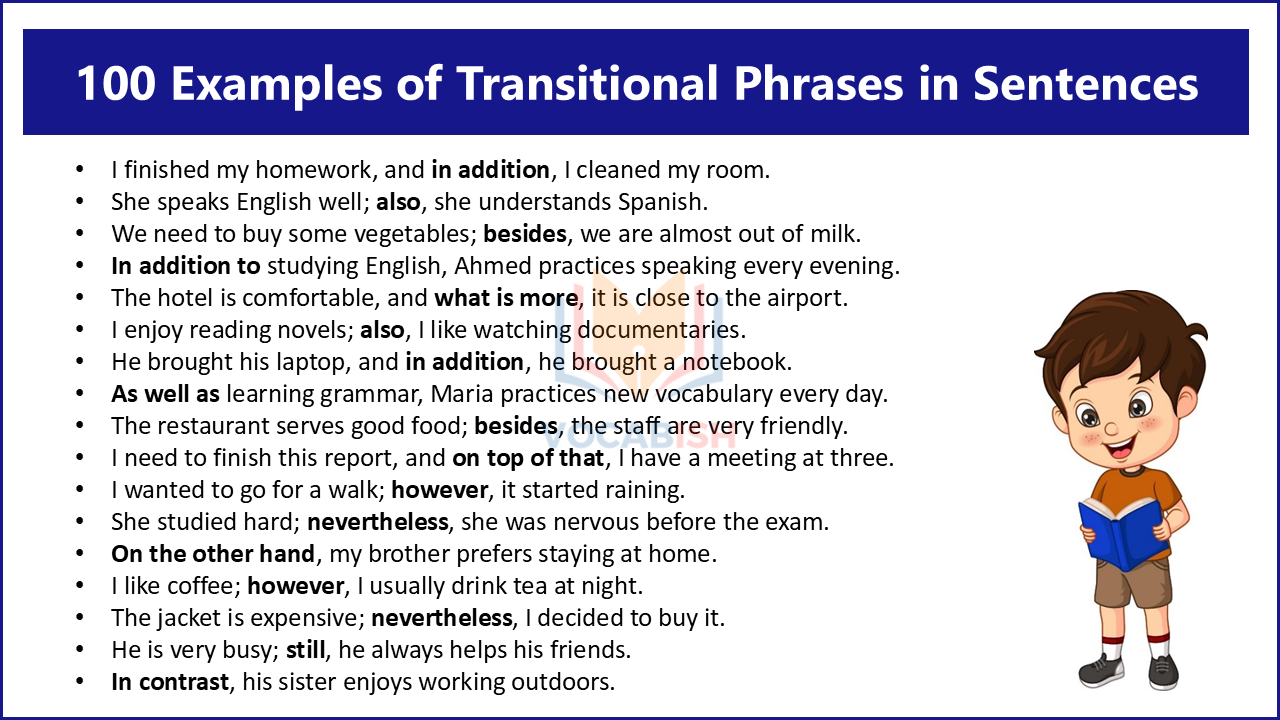
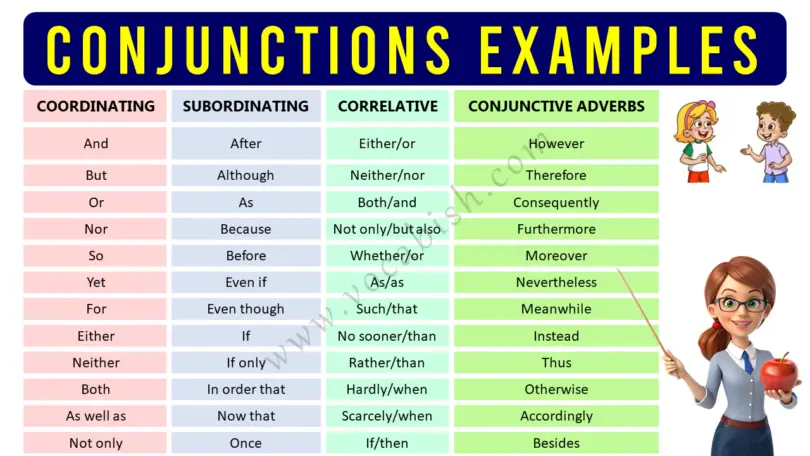

How do native speakers connect ideas so smoothly in English sentences? The answer often lies in list of conjunctions. Whether you’re writing an essay, telling a story, or having a conversation, conjunctions help join words, phrases, and sentences in a natural way.
Words like and, but, because, and although appear in English every day. Learning a wide range of conjunction words can help you express your ideas more clearly and make your speaking and writing flow better. In this article, you’ll discover an A to Z list of conjunction words, their meanings, examples, and visual references to help you remember them more easily.
What Are Conjunction Words?
Conjunction words are connecting words that join ideas, words, phrases, or clauses together. They help create smoother and more meaningful sentences.
For example:
- I like tea and coffee.
- She stayed home because she was sick.
- We went outside although it was raining.
Without conjunctions, English sentences can sound short and disconnected.
Why Are Conjunctions Important?
Conjunctions help speakers and writers show relationships between ideas. They can add information, show contrast, give reasons, present choices, or explain results.
Benefits of learning conjunctions:
- Improve sentence structure
- Connect ideas clearly
- Make writing more natural
- Improve speaking fluency
- Strengthen grammar skills
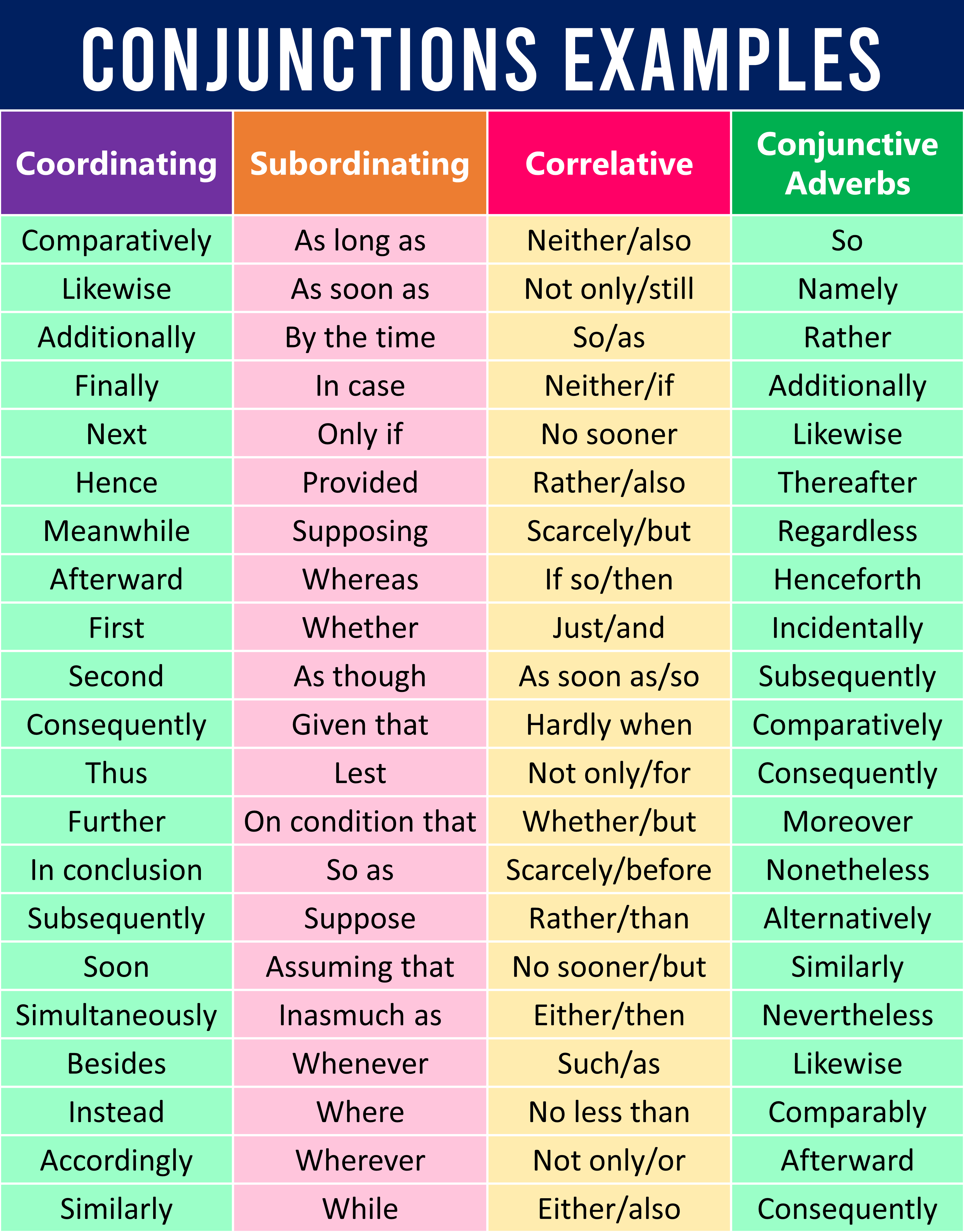
Types of Conjunctions in English
Before learning the A to Z list, it’s helpful to understand the main types of conjunctions.
Coordinating Conjunctions
These join words or clauses of equal importance.
Examples:
- and
- but
- or
- nor
- yet
- so
- for
Example:
I wanted to go outside, but it started raining.
Subordinating Conjunctions
These connect a dependent clause to an independent clause.
Examples:
- because
- although
- since
- while
- unless
- after
Example:
She stayed home because she felt tired.
Correlative Conjunctions
These conjunctions work in pairs.
Examples:
- either…or
- neither…nor
- both…and
- not only…but also
Example:
Both Jack and Emma passed the exam.
A to Z List of Conjunctions in English
Learning conjunctions from A to Z can help you connect ideas more clearly in speaking and writing. Below is an alphabetical list of common conjunctions and conjunction phrases used in English.
- A: after, although, and, as, as if, as long as, as soon as, as though, accordingly, additionally, afterward, alternatively, assuming that
- B: because, before, besides, both, but, by the time
- C: consequently, comparatively, comparably
- D: despite that
- E: either, even if, even though, even so, eventually
- F: for, finally, first, furthermore, further
- G: given that
- H: hence, henceforth, however, hardly…when
- I: if, if only, if…then, in case, in conclusion, in fact, in order that, incidentally, insofar as, inasmuch as, instead
- J: just as, just as…so
- K: knowing that
- L: lest, likewise
- M: meanwhile, moreover
- N: namely, neither, nevertheless, nonetheless, next, nor, not only…but also, not so much…but, no sooner…than, no less than, now that
- O: once, only if, on condition that, or, otherwise
- P: provided, provided that
- Q: (No commonly used conjunction words beginning with Q)
- R: rather than, regardless
- S: second, similarly, since, so, so that, so as, still, subsequently, such as, such that, such…that, suppose, supposing, simultaneously, scarcely…when
- T: than, that, the more…the more, the less…the less, thereafter, then, therefore, though, thus, till
- U: unless, until, ultimately
- V: versus
- W: what with…and, when, whenever, where, whereas, wherefore, wherever, whether, whether or not, whether…or, while
- X: (No commonly used conjunction words beginning with X)
- Y: yet
- Z: (No commonly used conjunction words beginning with Z)
List of Coordinating and Transitional Conjunctions with Sentences
Coordinating and transitional conjunctions help connect words, phrases, sentences, and ideas smoothly. They make your speaking and writing easier to understand by showing relationships such as addition, contrast, choice, result, and sequence. Learning these conjunctions can help you create clearer and more natural English sentences.
- and
Emma bought apples and oranges. - but
I wanted to go outside, but it started raining. - or
Would you like tea or coffee? - nor
He doesn’t like swimming, nor does he enjoy running. - so
It was late, so we went home. - yet
She was tired, yet she continued working. - for
We stayed indoors, for the weather was terrible. - either
You can either call me or send a message. - neither
Neither of the answers was correct. - both
Both students completed the assignment. - as well as
She speaks English as well as Spanish. - not only
He is not only talented but also hardworking. - but also
The course is informative but also engaging. - still
It was expensive; still, I bought it. - even though
Even though it was cold, they went camping. - though
Though he was busy, he helped us. - otherwise
Hurry up; otherwise, you’ll miss the bus. - in fact
She wasn’t upset; in fact, she was quite happy. - however
The task was difficult; however, we finished it. - moreover
The hotel was affordable; moreover, it was comfortable. - furthermore
The software is easy to use; furthermore, it is free. - nevertheless
The journey was long; nevertheless, it was enjoyable. - besides
Besides being smart, she is very kind. - instead
We stayed home instead of going out. - accordingly
The schedule changed, and we adjusted accordingly. - similarly
John enjoys football; similarly, his brother loves sports. - comparatively
This model is comparatively cheaper than the previous one. - likewise
Sarah likes reading; likewise, Emma enjoys books. - additionally
The package includes free delivery; additionally, it comes with a warranty. - finally
Finally, we reached the top of the mountain. - next
First, wash your hands; next, prepare the ingredients. - hence
The roads were flooded; hence, the trip was canceled. - meanwhile
Dad cooked dinner; meanwhile, Mom set the table. - afterward
We watched a movie and afterward went for a walk. - first
First, read the instructions carefully. - second
Second, complete the exercise in your notebook. - consequently
He didn’t prepare for the test; consequently, he failed. - thus
The shop was closed; thus, we returned home. - further
Further, the report explains the causes of the problem. - in conclusion
In conclusion, regular practice improves language skills. - subsequently
She completed the course and subsequently found a new job. - soon
The rain stopped, and soon the sun appeared. - simultaneously
The two events occurred simultaneously. - then
Finish your homework, then you can play outside. - therefore
She worked hard; therefore, she achieved her goal. - beforehand
Please inform us beforehand if you cannot attend. - ultimately
Ultimately, the team succeeded after months of effort. - wherefore
The reason wherefore he left remains unknown. - eventually
After several attempts, they eventually solved the problem.
Subordinating Conjunctions List with Examples in Sentences
As we read above about the subordinating conjunctions that connect a dependent clause to an independent clause. They help show relationships such as time, reason, condition, contrast, purpose, and place. Using these conjunctions makes your sentences more detailed and meaningful.
This section includes common subordinating conjunctions with example sentences to help you understand how they are used in everyday English.
- after
We went home after the movie ended. - although
Although it was raining, they continued playing. - as
As I was leaving, the phone rang. - because
She stayed home because she was sick. - before
Finish your homework before you watch television. - even if
I’ll attend the event even if it rains. - even though
Even though he was tired, he kept working. - if
If you need help, call me. - if only
If only I had more free time. - in order that
She spoke quietly in order that nobody would hear her. - now that
Now that the exam is over, we can relax. - once
Once you understand the rules, the game becomes easy. - provided that
You may join the trip provided that your parents agree. - rather than
She chose tea rather than coffee. - since
Since it was late, we decided to leave. - so that
He saved money so that he could buy a new laptop. - than
This book is more interesting than that one. - that
I believe that she is telling the truth. - though
Though the task was difficult, they completed it. - unless
You won’t succeed unless you work hard. - until
We waited until the bus arrived. - when
Call me when you reach home. - whenever
Whenever I visit my grandparents, I feel happy. - where
Sit where you can see the screen clearly. - wherever
Wherever she goes, her dog follows her. - while
She listened to music while doing her homework. - as long as
You can stay here as long as you follow the rules. - as soon as
I’ll call you as soon as I arrive. - by the time
By the time we reached the station, the train had left. - in case
Take an umbrella in case it rains. - only if
You can enter only if you have a ticket. - provided
You may use my car provided you drive carefully. - supposing
Supposing it rains tomorrow, what will we do? - whereas
John likes coffee, whereas Sarah prefers tea. - whether
I don’t know whether he will come. - as though
He talks as though he knows everything. - given that
Given that traffic is heavy, we should leave early. - lest
She whispered lest she wake the baby. - on condition that
You may borrow the bike on condition that you return it today. - so as
He left early so as to avoid traffic. - suppose
Suppose you won the lottery; what would you do? - assuming that
Assuming that everything goes well, we’ll finish on time. - inasmuch as
Inasmuch as he helped us, we should thank him. - even so
The task was difficult; even so, she completed it. - whether or not
I’ll attend the meeting whether or not he comes. - insofar as
Insofar as I know, the information is accurate. - just as
Just as I opened the door, the phone rang. - though
Though she was nervous, she gave an excellent presentation. - till
Stay here till I come back.
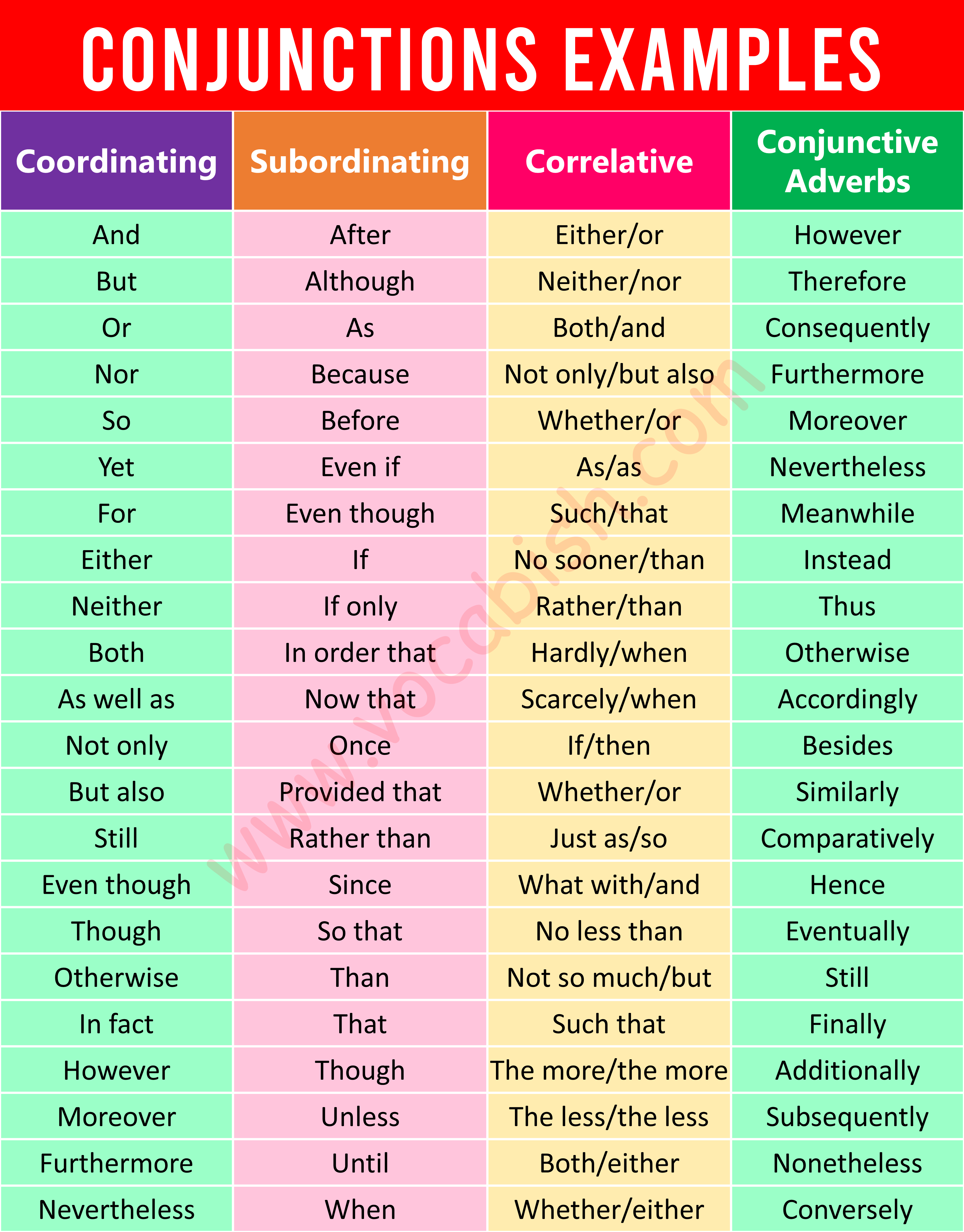
List of Correlative Conjunctions Used in Sentences
Correlative conjunctions work in pairs to connect equal words, phrases, or clauses within a sentence. They help show relationships such as choice, comparison, addition, or contrast. Learning these conjunction pairs can make your English sentences more balanced, clear, and natural.
The examples below show how common correlative conjunctions are used in everyday speaking and writing.
- either…or
You can either take the bus or walk to school. - neither…nor
Neither Jack nor Emma attended the meeting. - both…and
Both Sarah and David enjoy playing tennis. - not only…but also
She is not only intelligent but also hardworking. - whether…or
I don’t know whether we should stay or leave. - as…as
This book is as interesting as the movie. - such…that
It was such a hot day that we stayed indoors. - no sooner…than
No sooner had I arrived than the meeting started. - rather…than
I would rather read a book than watch television. - hardly…when
Hardly had we sat down when the phone rang. - scarcely…when
Scarcely had the game begun when it started raining. - if…then
If you study regularly, then you will improve your grades. - just as…so
Just as the sun rises each morning, so new opportunities appear every day. - what with…and
What with the traffic and the bad weather, we arrived very late. - no less than
The project required no less than six months to complete. - not so much…but
The issue was not so much the cost but the lack of time. - the more…the more
The more you practice English, the more confident you become. - the less…the less
The less you exercise, the less energetic you feel. - such…as
Outdoor activities such as hiking and cycling are very popular.
Conjunctive Adverbs List and Examples in Sentences
Conjunctive adverbs connect related ideas and show how one sentence or clause relates to another. They can express addition, contrast, result, comparison, sequence, or emphasis. Using conjunctive adverbs helps make your writing smoother, clearer, and more organized.
The examples below show how common conjunctive adverbs are used to connect ideas in everyday English sentences.
- However
The weather was cold; however, we still went hiking. - Therefore
She studied hard; therefore, she passed the exam. - Consequently
He missed the bus; consequently, he arrived late. - Furthermore
The course is affordable; furthermore, it includes free study materials. - Moreover
The hotel was comfortable; moreover, it was close to the beach. - Nevertheless
It was raining heavily; nevertheless, the match continued. - Meanwhile
Sarah prepared dinner; meanwhile, her brother set the table. - Instead
We decided to stay home instead of going out. - Thus
The road was blocked; thus, we took another route. - Otherwise
Leave now; otherwise, you’ll miss the train. - Accordingly
The schedule changed, and we adjusted our plans accordingly. - Besides
Besides being talented, she is also very hardworking. - Similarly
John enjoys reading; similarly, his sister loves books. - Comparatively
This laptop is comparatively cheaper than the other models. - Hence
The store was closed; hence, we returned home. - Eventually
After several attempts, she eventually solved the puzzle. - Still
He was tired; still, he finished his assignment. - Finally
After a long journey, we finally reached our destination. - Additionally
The package includes a charger; additionally, it comes with a protective case. - Subsequently
She completed her training and subsequently received a promotion. - Nonetheless
The task was difficult; nonetheless, they completed it on time. - Conversely
Some people enjoy city life; conversely, others prefer the countryside. - Likewise
Emma enjoys painting; likewise, her brother is interested in art. - Comparably
The two products perform comparably in most tests. - Afterward
We had lunch and afterward visited the museum. - So
It was getting dark, so we headed home. - Namely
Three students won awards, namely Anna, David, and Mia. - Rather
I would rather stay home than go out tonight. - Thereafter
The contract was signed, and thereafter the project began. - Regardless
Regardless of the weather, the event will take place. - Henceforth
Henceforth, all reports must be submitted electronically. - Incidentally
Incidentally, I met your cousin at the bookstore yesterday. - Alternatively
You can take the bus; alternatively, you can walk to the station.
Tips for Learning Conjunction Words
Learning conjunctions becomes easier when you notice them in context.
Try these strategies:
- Read English stories and articles regularly.
- Highlight conjunctions while reading.
- Create your own example sentences.
- Practice speaking with conjunctions.
- Learn conjunctions by category.
- Keep a vocabulary notebook.
of Conjunctions” appear in the SEO title. For the best SEO results
The more you see conjunctions in use, the easier it becomes to use them naturally.
You May Also Like:
- 500+ A to Z List of Nouns
- 250+ A to Z List of Pronouns
- 250 A to Z List of Preposition
- 300+ A to Z List of Adjectives
FAQs about Conjunctions
A conjunction is a word that joins words, phrases, or sentences together.
Example: I like tea and coffee.
Here are 10 common conjunctions used in English:
and, but, or, because, so, although, while, if, when, unless.
Conjunctions are used to connect ideas smoothly in a sentence and show the relationship between them.
Example: She was tired, but she kept working.
The three main types are:
Coordinating Conjunctions → and, but, or
Subordinating Conjunctions → because, although, when
Correlative Conjunctions → either…or, neither…nor, both…and
A conjunction links two parts of a sentence.
Example: I stayed home because it was raining.
Here, because connects the reason to the action.
Conclusion
Conjunction words play a key role in English communication. They connect ideas, improve sentence flow, and help speakers express thoughts clearly. From common words like and, but, and because to longer expressions such as even though and provided that, conjunctions appear in almost every conversation and piece of writing.
As you continue learning English, focus on using conjunctions in complete sentences rather than memorizing isolated words. With regular reading, writing, and speaking practice, these connectors will become a natural part of your vocabulary and help you communicate with greater confidence and accuracy.