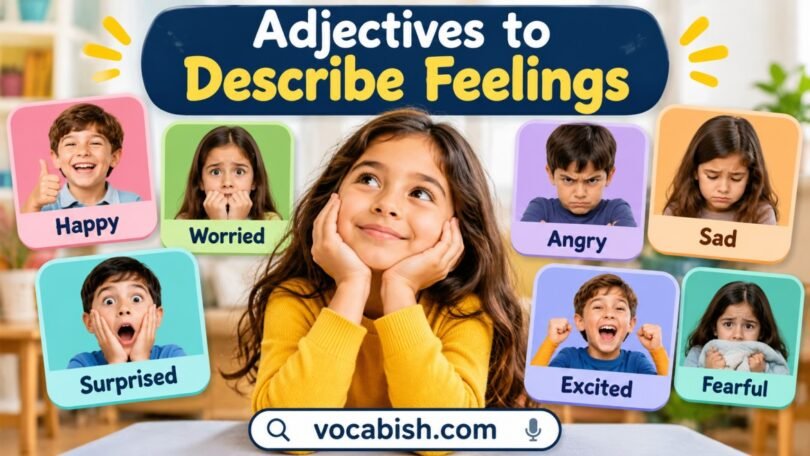

Adjectives to Describe Feelings help you explain how you feel, how another person feels, and how someone reacts to a situation. Words such as happy, anxious, disappointed, grateful, and confident make everyday conversations and writing more expressive.
Different feelings need different adjectives. You might feel excited before a trip, nervous before an exam, relieved after solving a problem, or heartbroken after losing someone you love. Learning these describing words helps you express emotions clearly, choose the right words for different situations, and communicate more naturally in English.
What Are Adjectives to Describe Feelings?
Adjectives to describe feelings are words that express a person’s emotional state, mood, or reaction to an experience, event, person, or situation.
For example:
- I feel happy about my results.
- She is worried about her family.
- We were thrilled by the news.
- He felt disappointed after the match.
- They are grateful for your support.
Feeling adjectives often describe emotions such as happiness, sadness, anger, fear, love, surprise, embarrassment, and confidence. They can also describe more complex states, including uncertainty, emotional exhaustion, relief, and mixed feelings.
How Feeling Adjectives Work
Feeling adjectives commonly appear after linking verbs such as be, feel, seem, look, become, and get.
- I am nervous.
- You seem upset.
- She feels hopeful.
- He became angry.
- They look excited.
- We are getting impatient.
Some adjectives describe how a person feels, while others describe what causes the feeling.
- I am bored. (My feeling)
- The lesson is boring. (The cause of my feeling)
- She is interested in art. (Her feeling)
- The book is interesting. (The quality of the book)
This distinction is useful when choosing the correct adjective in conversation and writing.
Positive Feelings Adjectives
Positive feeling adjectives describe happiness, satisfaction, excitement, hope, and other pleasant emotions. They are useful when sharing good news, celebrating achievements, expressing appreciation, or describing enjoyable experiences.
1. Adjectives for Happiness and Joy
Use these words when someone feels happy, cheerful, or emotionally satisfied.
- Happy: Feeling pleasure or contentment. I am happy with my new job.
- Joyful: Feeling great happiness. The children were joyful during the celebration.
- Cheerful: Noticeably happy and positive. She always sounds cheerful in the morning.
- Delighted: Very pleased about something. I am delighted to hear your good news.
- Thrilled: Extremely excited and happy. He was thrilled to receive the award.
- Ecstatic: Overwhelmed with happiness. They were ecstatic about their wedding.
- Elated: Extremely happy after success or good news. She felt elated after passing the exam.
- Overjoyed: Filled with intense happiness. His parents were overjoyed to see him.
- Merry: Cheerful and happy, especially during celebrations. Everyone felt merry at the party.
- Upbeat: Cheerful and hopeful about what lies ahead. She remained upbeat despite the delay.
- Jolly: Full of good humor and cheerfulness. Our jolly host welcomed every guest.
- Blissful: Experiencing complete happiness or peace. We enjoyed a blissful afternoon together.
- Gleeful: Showing excitement and pleasure, sometimes mischievously. The children were gleeful when school ended early.
- Lighthearted: Feeling relaxed, cheerful, and free from serious worries. We had a lighthearted conversation.
- Radiant: Showing happiness clearly through appearance or expression. She looked radiant on her graduation day.
2. Adjectives for Excitement and Anticipation
These adjectives describe positive energy before an event, during an activity, or when something exciting happens.
- Excited: Feeling eager and enthusiastic. I am excited about our upcoming trip.
- Enthusiastic: Showing strong interest and eagerness. He is enthusiastic about learning English.
- Eager: Wanting something to happen soon. She is eager to meet her new classmates.
- Pumped: Informal; feeling energized and ready. We are pumped for the final match.
- Animated: Showing lively interest or excitement. He became animated while discussing his plans.
- Exhilarated: Feeling extremely excited and energized. I felt exhilarated after the first ride.
- Fired-up: Highly motivated or excited about doing something. The team was fired-up before the game.
- Electrified: Filled with sudden, powerful excitement. The crowd was electrified by the performance.
- Euphoric: Experiencing an intense feeling of happiness and well-being. She felt euphoric after reaching her goal.
- Enchanted: Filled with delight or wonder. We were enchanted by the beautiful garden.
3. Adjectives for Satisfaction and Contentment
Use these words when something meets your expectations, a problem is solved, or you feel comfortable with your situation.
- Content: Satisfied with what you have. He feels content with his life.
- Satisfied: Pleased because your needs or expectations have been met. I am satisfied with my progress.
- Pleased: Feeling happy about a result or situation. The teacher was pleased with our work.
- Fulfilled: Feeling that your life or activities are meaningful. She feels fulfilled by helping others.
- Gratified: Pleased because something confirms your efforts or expectations. I felt gratified by their appreciation.
- Comfortable: Feeling at ease in a situation. I feel comfortable speaking English here.
- At ease: Relaxed and free from nervousness. He felt at ease among his friends.
- Accomplished: Feeling proud of completing something successfully. I felt accomplished after finishing the project.
- Reassured: Feeling less worried because something provides confidence or certainty. I felt reassured after talking to my doctor.
- Validated: Feeling that your feelings, efforts, or experiences have been acknowledged as reasonable. She felt validated when her concerns were taken seriously.
4. Adjectives for Relief and Reassurance
These words describe the pleasant feeling that comes when fear, pressure, uncertainty, or difficulty decreases.
- Relieved: No longer as worried or stressed. I was relieved when the results arrived.
- Reassured: Made confident or less anxious by new information. He felt reassured by her explanation.
- Comforted: Made to feel better through kindness or support. She felt comforted by her mother’s words.
- Unburdened: Feeling free from a worry or responsibility. He felt unburdened after sharing his problem.
- Liberated: Feeling free from restrictions or emotional pressure. She felt liberated after leaving the stressful situation.
- Carefree: Free from serious worries. We felt carefree during our holiday.
- Untroubled: Not disturbed by worries or problems. He seemed untroubled by the delay.
- Secure: Feeling safe and confident. The child felt secure with her parents.
- Settled: Feeling comfortable and emotionally stable in a situation. I feel settled in my new home.
Negative Feelings Adjectives
Negative feeling adjectives describe unpleasant emotions, including sadness, fear, anger, frustration, shame, and emotional discomfort. They help explain difficult experiences without using the same basic words repeatedly.
5. Adjectives for Sadness and Unhappiness
Use these words to describe feeling low, unhappy, or emotionally hurt.
- Sad: Feeling unhappy. I felt sad when my friend moved away.
- Unhappy: Not feeling pleased or content. She is unhappy with the decision.
- Downcast: Looking or feeling sad and discouraged. He appeared downcast after the interview.
- Gloomy: Feeling sad or expecting little happiness. I felt gloomy on the rainy afternoon.
- Miserable: Extremely unhappy or uncomfortable. He felt miserable after the argument.
- Heartbroken: Experiencing deep emotional pain, often after loss or rejection. She was heartbroken when the relationship ended.
- Devastated: Extremely upset by a serious loss or disappointment. They were devastated by the news.
- Despondent: Losing hope and feeling deeply discouraged. He felt despondent after several failed attempts.
- Melancholy: Experiencing a quiet, thoughtful sadness. I felt melancholy while looking at old photographs.
- Woeful: Showing or experiencing great sadness. She gave a woeful account of her experience.
- Blue: Informal; feeling sad or low. I feel a little blue today.
- Mournful: Expressing sorrow, especially after a loss. He sounded mournful when he spoke about his friend.
- Sorrowful: Feeling or showing deep sadness. She felt sorrowful after saying goodbye.
- Dejected: Feeling low after failure or disappointment. The players looked dejected after losing.
- Dispirited: Lacking enthusiasm or hope. The workers felt dispirited after the announcement.
6. Adjectives for Disappointment and Regret
These words describe feelings when something does not happen as expected, a decision turns out badly, or an opportunity is lost.
- Disappointed: Unhappy because expectations were not met. I was disappointed with my exam score.
- Dissatisfied: Not pleased with a result or situation. She is dissatisfied with the service.
- Disillusioned: Disappointed after discovering that something is not as good as expected. He became disillusioned with his workplace.
- Let down: Disappointed because someone or something failed to meet expectations. I felt let down by my teammate.
- Regretful: Feeling sorry about a past action or decision. He felt regretful about his harsh words.
- Remorseful: Feeling deep regret for having done something wrong. She was remorseful after hurting her friend.
- Contrite: Showing sincere regret for wrongdoing. He sounded contrite when he apologized.
- Penitent: Feeling sorry and wanting to make amends for wrongdoing. The penitent student admitted his mistake.
- Rueful: Showing sadness or regret, often with a little humor. She gave a rueful smile after forgetting her keys.
- Disheartened: Losing confidence or hope. I felt disheartened after the rejection.
- Frustrated: Upset because something is difficult or prevents progress. She felt frustrated by the repeated errors.
- Discouraged: Losing confidence about succeeding. He was discouraged by the slow progress.
7. Adjectives for Fear and Anxiety
Fear adjectives describe reactions to danger, uncertainty, or threatening situations. Anxiety adjectives often describe ongoing worry about what might happen.
- Afraid: Feeling fear. I am afraid of flying.
- Scared: Feeling fear or alarm. The child was scared by the loud noise.
- Frightened: Feeling sudden or strong fear. She was frightened by the strange sound.
- Terrified: Extremely frightened. He was terrified during the storm.
- Fearful: Feeling or showing fear about something. She felt fearful about the uncertain future.
- Anxious: Worried or uneasy about a possible outcome. I feel anxious before interviews.
- Nervous: Worried or tense about an event. He is nervous about his presentation.
- Apprehensive: Worried that something unpleasant may happen. We were apprehensive about the meeting.
- Uneasy: Slightly worried or uncomfortable. I felt uneasy about his behavior.
- Worried: Thinking anxiously about a problem. She is worried about her exam.
- Alarmed: Suddenly worried by a possible danger. They were alarmed by the warning.
- Panicked: Overwhelmed by sudden fear. He felt panicked when he lost his passport.
- Petrified: So frightened that you feel unable to move or act. She was petrified during the earthquake.
- Intimidated: Feeling less confident because someone or something seems powerful or threatening. I felt intimidated by the difficult interview.
- Insecure: Lacking confidence or feeling uncertain about yourself or a situation. He feels insecure about his speaking skills.
- Jittery: Nervous and unable to remain still. I felt jittery before the exam.
- Edgy: Nervous, tense, or easily annoyed. Everyone seemed edgy while waiting for the results.
- Tense: Unable to relax because of worry or pressure. She felt tense during the discussion.
- Fear-stricken: Overwhelmed by fear. The fear-stricken passengers waited for help.
- Horrified: Extremely shocked and upset by something frightening or terrible. We were horrified by the accident.
8. Adjectives for Anger and Irritation
Use these words when someone feels annoyed, angry, offended, or unable to tolerate a situation.
- Annoyed: Slightly angry or bothered. I was annoyed by the constant noise.
- Irritated: Feeling bothered by something repeated or unpleasant. She felt irritated by his interruptions.
- Angry: Feeling strong displeasure. He was angry about the unfair decision.
- Mad: Informal; angry or upset. My brother was mad at me.
- Furious: Extremely angry. She was furious about the damage.
- Enraged: Filled with intense anger. The unfair treatment left him enraged.
- Livid: Extremely angry. He was livid when he discovered the lie.
- Infuriated: Made extremely angry. I was infuriated by the rude response.
- Irate: Very angry, often in response to an offense. The irate customer demanded an explanation.
- Resentful: Feeling bitterness about unfair treatment or past events. She felt resentful about being ignored.
- Bitter: Feeling deep anger or disappointment over something painful or unfair. He remained bitter about the betrayal.
- Indignant: Angry because something seems unfair or wrong. She was indignant about the accusation.
- Aggravated: Increasingly annoyed or frustrated. I felt aggravated by the repeated delays.
- Exasperated: Extremely annoyed after repeated difficulties. He was exasperated by the endless paperwork.
- Hostile: Showing anger or unwillingness to be friendly. She felt hostile toward the person who insulted her.
- Outraged: Extremely angry about something unfair or unacceptable. Residents were outraged by the decision.
- Touchy: Easily upset or offended. He becomes touchy when people criticize his work.
- Testy: Easily annoyed or impatient. She sounded testy after a long day.
- Vexed: Annoyed or troubled by a difficult issue. I felt vexed by the confusing instructions.
- Cross: British English; slightly angry or annoyed. Dad was cross because we arrived late.
9. Adjectives for Frustration and Impatience
These adjectives describe emotional discomfort when progress is slow, plans are blocked, or someone must wait longer than expected.
- Frustrated: Upset by obstacles or lack of progress. I feel frustrated when my computer freezes.
- Impatient: Unwilling to wait calmly. The children became impatient in the queue.
- Agitated: Emotionally disturbed, restless, or upset. He became agitated during the argument.
- Restless: Unable to relax or remain still. I felt restless while waiting for the call.
- Exasperated: Extremely frustrated after repeated problems. She felt exasperated by the constant interruptions.
- Fed up: Informal; tired and annoyed by something repeated. I am fed up with these delays.
- Disgruntled: Annoyed or dissatisfied about a situation. The disgruntled passengers complained about the cancellation.
- Irritable: Easily annoyed, often because of tiredness or discomfort. I become irritable when I do not sleep well.
- Aggravated: Annoyed by something that makes a problem worse. He felt aggravated by the extra work.
- Displeased: Unhappy or dissatisfied with something. The manager was displeased with the result.
- Bothered: Worried, annoyed, or troubled by something. I was bothered by his comment.
- Put out: Informal; annoyed because something causes inconvenience. She was put out by the last-minute change.
Adjectives for Mixed and Conflicting Feelings
Sometimes you experience two emotions at once. You may feel happy about a new opportunity but sad about leaving familiar people, or excited about a change while worrying about its outcome.
10. Adjectives for Mixed Emotions
- Conflicted: Experiencing opposing feelings or wishes. I feel conflicted about changing jobs.
- Ambivalent: Having both positive and negative feelings about something. She is ambivalent about moving abroad.
- Torn: Finding it difficult to choose between two options or feelings. He felt torn between work and family.
- Bittersweet: Combining happiness with sadness. Graduation was a bittersweet experience.
- Uncertain: Not sure how to feel or what will happen. I feel uncertain about the decision.
- Hesitant: Slow to act because of doubt or nervousness. She was hesitant to accept the offer.
- Reluctant: Unwilling or not eager to do something. He felt reluctant to leave his hometown.
- Pensive: Quietly thoughtful, often with some sadness or concern. She became pensive while reading the letter.
- Reflective: Thinking carefully about experiences or feelings. I felt reflective after the conversation.
- Nostalgic: Feeling a mixture of happiness and sadness about the past. We felt nostalgic while visiting our old school.
- Wistful: Feeling gentle sadness or longing for something unavailable. He gave a wistful smile when he remembered his childhood.
- Yearning: Having a strong emotional desire for something. She felt yearning for the home she had left.
- Longing: Deeply wanting someone or something absent. He felt longing for his family.
- Resigned: Accepting an unpleasant situation because you believe it cannot be changed. She felt resigned to the delay.
- Cautious: Careful because of possible risks or uncertainty. I am cautious about making promises.
11. Adjectives for Confusion, Doubt, and Uncertainty
These words are useful when you cannot understand a situation, trust your judgment, or decide what to do.
- Confused: Unable to understand something clearly. I felt confused by the instructions.
- Puzzled: Slightly confused and trying to understand. He looked puzzled by the question.
- Bewildered: Extremely confused by something unexpected. She was bewildered by the sudden change.
- Perplexed: Confused by something difficult to explain. I felt perplexed by his response.
- Baffled: Completely unable to understand something. They were baffled by the strange behavior.
- Uncertain: Not confident about what is true or what will happen. She feels uncertain about her future.
- Doubtful: Not convinced that something is true or likely. I am doubtful about the plan.
- Skeptical: Not easily convinced without evidence. He was skeptical about the promise.
- Suspicious: Feeling that something may be wrong or dishonest. She felt suspicious about the offer.
- Perplexed: Unsure how to interpret or respond to something. He seemed perplexed by the unexpected question.
- Bewildered: Deeply confused, especially by unexpected events. The bewildered visitor could not find the exit.
- Undecided: Not having made a choice. I am undecided about which course to take.
- Apprehensive: Uneasy because of possible future problems. She felt apprehensive about the changes.
Adjectives for Calmness, Peace, and Relaxation
Calm feeling adjectives describe emotional balance, freedom from pressure, and a sense of safety. They are useful when talking about holidays, quiet environments, comfortable relationships, and stressful situations that have settled down.
12. Adjectives for Peace and Relaxation
- Calm: Not nervous, angry, or excited. She stayed calm during the emergency.
- Peaceful: Feeling free from conflict or disturbance. I felt peaceful beside the lake.
- Relaxed: Free from tension or worry. He felt relaxed after his vacation.
- Serene: Calm, peaceful, and undisturbed. She felt serene in the quiet garden.
- Tranquil: Peaceful and free from disturbance. We felt tranquil in the countryside.
- Composed: Calm and in control of your emotions. He remained composed during the interview.
- Collected: Calm and able to think clearly. She stayed collected when the plans changed.
- Unruffled: Not upset by difficulties or unexpected events. He remained unruffled by the criticism.
- Mellow: Calm, gentle, and relaxed. I felt mellow after listening to soft music.
- Carefree: Not troubled by worries. The children seemed carefree during their holiday.
- Grounded: Emotionally stable and connected to what matters. She feels grounded after spending time outdoors.
- Centered: Emotionally balanced and focused. I felt centered after a quiet walk.
- Rested: Feeling refreshed after sleeping or taking a break. I feel rested after a good night’s sleep.
- At peace: Feeling emotionally settled and free from inner conflict. She is finally at peace with her decision.
Adjectives for Love, Affection, and Attraction
These adjectives express emotional closeness, romantic interest, care, tenderness, and attachment. Some describe the feeling itself, while others describe the way a person behaves toward someone they care about.
13. Adjectives for Love and Affection
- Loving: Showing deep care and affection. She comes from a loving family.
- Affectionate: Expressing warmth and fondness. He is affectionate toward his younger sister.
- Fond: Feeling affection or liking for someone. I am fond of my childhood friends.
- Caring: Showing concern for another person’s well-being. She is caring and thoughtful.
- Tender: Showing gentle affection or emotional sensitivity. He felt tender toward the sleeping puppy.
- Devoted: Showing strong love, loyalty, or commitment. She is devoted to her family.
- Attached: Feeling emotionally connected to someone or something. The child is attached to his favorite toy.
- Adoring: Showing deep love and admiration. He gave his partner an adoring look.
- Cherished: Deeply loved and valued. She felt cherished by her family.
- Beloved: Greatly loved by others. He was a beloved member of the community.
- Passionate: Feeling strong enthusiasm, love, or desire. She is passionate about her work.
- Romantic: Expressing or experiencing love and attraction. He felt romantic on their anniversary.
- Smitten: Strongly attracted to or delighted by someone. He was completely smitten with her.
- Infatuated: Experiencing intense, often short-lived romantic attraction. She was infatuated with the singer.
- Enamored: Filled with strong admiration or love. He became enamored of the charming town.
- Lovestruck: So attracted to someone that it affects your thoughts and behavior. The lovestruck teenager wrote poems every evening.
- Warm: Showing friendly affection and emotional closeness. I felt warm toward the welcoming family.
- Protective: Feeling a strong desire to keep someone safe. She felt protective of her younger brother.
14. Adjectives for Trust, Connection, and Belonging
- Trusting: Willing to believe that someone is honest or reliable. She is trusting toward people she knows well.
- Trustful: Showing confidence in someone’s honesty or intentions. He felt trustful after their conversation.
- Connected: Feeling emotionally linked to another person or group. I feel connected to my community.
- Close: Having a strong personal or emotional relationship. They are close to their grandparents.
- Accepted: Feeling welcomed and recognized by others. I felt accepted by my new classmates.
- Included: Feeling that you are part of a group or activity. She felt included in the discussion.
- Appreciated: Feeling that others recognize your value or efforts. I felt appreciated by my colleagues.
- Valued: Feeling important or respected. Every employee wants to feel valued.
- Understood: Feeling that someone recognizes your thoughts or emotions. I felt understood when I spoke to her.
- Supported: Feeling that others are helping or standing by you. He felt supported by his friends.
- Welcome: Feeling that others are pleased to have you there. I felt welcome in their home.
Adjectives for Confidence, Pride, and Motivation
These words describe belief in yourself, satisfaction with achievements, courage, determination, and the desire to keep moving toward a goal.
15. Adjectives for Confidence and Self-Belief
- Confident: Believing in your abilities or decisions. I feel confident about my presentation.
- Self-assured: Confident without needing constant approval. She sounded self-assured during the interview.
- Secure: Feeling certain about yourself or your position. He feels secure in his abilities.
- Bold: Willing to take risks or act confidently. She felt bold enough to share her idea.
- Courageous: Showing courage despite fear or difficulty. He felt courageous when he spoke up.
- Brave: Willing to face danger or difficulty. I felt brave enough to try again.
- Fearless: Showing little or no fear. The fearless climber continued toward the summit.
- Empowered: Feeling able to take action or make decisions. She felt empowered after the training.
- Capable: Feeling able to do something successfully. I feel capable of handling the task.
- Assured: Confident and certain about something. He felt assured of his team’s support.
- Determined: Strongly committed to achieving a goal. She is determined to improve her English.
- Resolute: Firm in purpose and not easily discouraged. He remained resolute despite the setbacks.
16. Adjectives for Pride and Achievement
- Proud: Pleased with an achievement or someone you care about. I am proud of my progress.
- Pleased: Happy with a result or accomplishment. She was pleased with her performance.
- Accomplished: Feeling satisfaction from completing something successfully. He felt accomplished after finishing the course.
- Victorious: Feeling that you have won or overcome a challenge. The team felt victorious after the final match.
- Triumphant: Feeling great satisfaction after a major success. She felt triumphant after completing the race.
- Successful: Pleased with having achieved a desired result. He felt successful after reaching his target.
- Honored: Feeling respected because of recognition or an opportunity. I felt honored to receive the award.
- Humbled: Feeling modest or deeply moved by an experience or recognition. She felt humbled by their generosity.
- Grateful: Feeling thankful for help, kindness, or an opportunity. I am grateful for your advice.
- Appreciative: Recognizing and feeling thankful for someone’s help or effort. We are appreciative of your support.
- Motivated: Feeling eager to work toward a goal. I feel motivated to study every day.
- Inspired: Feeling encouraged to create, act, or improve. Her story left me inspired.
- Driven: Strongly motivated to achieve something. He is driven to succeed.
- Ambitious: Eager to achieve important goals. She feels ambitious about her future.
Adjectives for Surprise, Curiosity, and Wonder
Surprise adjectives describe unexpected events. Curiosity and wonder adjectives describe interest, fascination, and the desire to understand something unfamiliar.
17. Adjectives for Surprise and Astonishment
- Surprised: Feeling something unexpected has happened. I was surprised by the announcement.
- Astonished: Extremely surprised. We were astonished by the result.
- Amazed: Filled with surprise and admiration. She was amazed by the view.
- Stunned: So surprised that you temporarily cannot react. He was stunned by the news.
- Astounded: Extremely surprised, often because something is difficult to believe. They were astounded by her achievement.
- Flabbergasted: Informal; completely shocked or amazed. I was flabbergasted by the unexpected gift.
- Speechless: Too surprised or emotional to speak. She was speechless when she saw the ring.
- Gobsmacked: Informal, especially British English; completely astonished. He was gobsmacked by the announcement.
- Startled: Suddenly surprised or frightened. I was startled by the loud bang.
- Taken aback: Surprised and temporarily unsure how to react. She was taken aback by his question.
18. Adjectives for Curiosity, Interest, and Wonder
- Curious: Wanting to know or understand something. I am curious about different cultures.
- Interested: Wanting to learn more about something. She is interested in wildlife photography.
- Fascinated: Extremely interested in something. He is fascinated by space exploration.
- Intrigued: Interested because something is unusual or mysterious. I was intrigued by her explanation.
- Captivated: Completely absorbed by something interesting. We were captivated by the storyteller.
- Absorbed: Giving your full attention to an activity. She was absorbed in her book.
- Engrossed: So interested that you pay little attention to anything else. He was engrossed in the film.
- Awe-struck: Filled with wonder and admiration. We were awe-struck by the mountain view.
- Wonderstruck: Filled with amazement or wonder. The children were wonderstruck by the fireworks.
- Impressed: Feeling admiration because something is good or skillful. I was impressed by her confidence.
- Intrigued: Eager to understand something that attracts your attention. They were intrigued by the unusual design.
- Enthralled: Completely fascinated or delighted. The audience was enthralled by the performance.
Adjectives for Embarrassment, Shame, and Guilt
These adjectives help describe uncomfortable feelings related to mistakes, social situations, personal values, and the fear of judgment.
19. Adjectives for Embarrassment and Awkwardness
- Embarrassed: Feeling uncomfortable because of a mistake or attention. I felt embarrassed when I forgot his name.
- Ashamed: Feeling bad about something you have done or about yourself. He felt ashamed of his behavior.
- Self-conscious: Worried about how other people see you. She felt self-conscious while speaking in public.
- Awkward: Feeling uncomfortable in a social situation. I felt awkward during the silence.
- Flustered: Confused or upset because of nervousness or pressure. He became flustered when everyone looked at him.
- Mortified: Extremely embarrassed. I was mortified when I sent the message to the wrong person.
- Humiliated: Feeling deeply embarrassed because you have been insulted or made to look foolish. She felt humiliated by the public criticism.
- Sheepish: Looking embarrassed after doing something foolish or wrong. He gave a sheepish smile after breaking the cup.
- Abashed: Embarrassed or ashamed, often after criticism. She looked abashed when her mistake was noticed.
- Uncomfortable: Feeling uneasy in a situation. I felt uncomfortable discussing private matters.
- Exposed: Feeling vulnerable because private information or weaknesses have been revealed. He felt exposed after sharing his secret.
20. Adjectives for Guilt and Moral Regret
- Guilty: Feeling responsible for doing something wrong. I felt guilty about lying to my friend.
- Remorseful: Feeling deep sorrow for a wrong action. He was remorseful about his decision.
- Regretful: Feeling sorry about something that happened or something you did. She felt regretful about missing the opportunity.
- Contrite: Sincerely sorry for wrongdoing. The contrite employee admitted the mistake.
- Ashamed: Feeling shame about an action or situation. He was ashamed of his rude behavior.
- Sorry: Feeling regret or sympathy. I am sorry for hurting your feelings.
- Accountable: Accepting responsibility for your actions. She felt accountable for the team’s mistake.
- Penitent: Feeling regret and wanting forgiveness. The penitent boy apologized to his parents.
Adjectives for Loneliness and Social Feelings
Social feeling adjectives describe how people feel when they are included, excluded, accepted, rejected, or separated from others.
21. Adjectives for Loneliness and Isolation
- Lonely: Feeling sad because of a lack of companionship. I felt lonely in the new city.
- Isolated: Feeling separated from other people. She felt isolated while working from home.
- Excluded: Feeling left out of a group or activity. He felt excluded from the conversation.
- Rejected: Feeling unwanted or refused by someone. She felt rejected after the invitation was declined.
- Unwanted: Feeling that others do not want you around. He felt unwanted after the argument.
- Abandoned: Feeling left alone by someone you depend on. The child felt abandoned when everyone left.
- Neglected: Feeling that others have failed to give you attention or care. She felt neglected when nobody listened.
- Disconnected: Feeling emotionally distant from others. I felt disconnected from my old friends.
- Alienated: Feeling separated from a group or community. He felt alienated by their attitudes.
- Homesick: Feeling sad because you miss home or familiar people. I felt homesick during my first week abroad.
- Friendless: Feeling or being without friends. He felt friendless at his new school.
- Forgotten: Feeling that others have failed to remember or consider you. She felt forgotten on her birthday.
22. Adjectives for Social Comfort and Acceptance
- Accepted: Feeling welcomed by others. I felt accepted by my classmates.
- Included: Feeling part of a group. She felt included in the team.
- Welcomed: Feeling that others are pleased to see you. We felt welcomed by our hosts.
- Belonging: Experiencing a sense of being part of a group or place. I felt a sense of belonging at university.
- Connected: Feeling close to people or a community. He felt connected to his neighbors.
- Respected: Feeling that others recognize your rights or value. She felt respected by her colleagues.
- Admired: Feeling that others appreciate your qualities or achievements. He felt admired by the younger players.
- Supported: Feeling that others care about your needs. I felt supported during a difficult time.
- Appreciated: Feeling that others recognize your contribution. She felt appreciated by her team.
- Understood: Feeling that someone understands your experience. He felt understood by his closest friend.
Adjectives for Stress, Exhaustion, and Overwhelm
These adjectives describe the emotional effects of pressure, too many responsibilities, lack of rest, or demanding situations.
23. Adjectives for Stress and Pressure
- Stressed: Feeling mental or emotional pressure. I feel stressed about the deadline.
- Overwhelmed: Feeling unable to manage the amount of work or emotion involved. She felt overwhelmed by her responsibilities.
- Pressured: Feeling forced to act or meet expectations. He felt pressured to accept the offer.
- Burdened: Feeling weighed down by responsibilities or worries. She felt burdened by family problems.
- Strained: Feeling emotionally stretched by difficulty or pressure. Their relationship felt strained after the argument.
- Overloaded: Feeling that you have too much to handle. I feel overloaded with assignments.
- Frazzled: Informal; feeling exhausted and stressed. I was frazzled after a busy day.
- Distraught: Extremely upset and unable to think calmly. She was distraught after hearing the news.
- Troubled: Worried or emotionally disturbed. He seemed troubled by the decision.
- Agitated: Feeling restless or upset. The waiting passengers grew agitated.
- Tense: Feeling tight or anxious because of pressure. I felt tense before the meeting.
- Worn-out: Feeling extremely tired after effort or stress. I was worn-out after working all day.
24. Adjectives for Tiredness and Emotional Exhaustion
- Tired: Needing rest. I feel tired after the long journey.
- Exhausted: Extremely tired physically or mentally. She felt exhausted after the exam.
- Drained: Having little emotional or physical energy left. I felt emotionally drained after the argument.
- Weary: Feeling very tired, often after a long period of effort. He felt weary after weeks of hard work.
- Fatigued: Experiencing significant tiredness. I felt fatigued after the demanding shift.
- Depleted: Having very little energy or emotional strength left. She felt emotionally depleted after caring for everyone.
- Burned-out: Feeling exhausted and emotionally worn down after prolonged stress. He felt burned-out after months of overtime.
- Spent: Having no energy left. I was completely spent after the race.
- Lethargic: Feeling unusually low in energy or enthusiasm. I felt lethargic after the heavy meal.
- Listless: Lacking energy, interest, or enthusiasm. She felt listless on the hot afternoon.
- Weighed down: Feeling emotionally burdened by problems. He felt weighed down by his responsibilities.
- Overtaxed: Feeling that your mental or physical abilities have been pushed too far. I felt overtaxed by the extra workload.
Adjectives for Hope, Gratitude, and Sympathy
These adjectives help you express positive expectations, appreciation, concern for others, and kindness during difficult experiences.
25. Adjectives for Hope and Optimism
- Hopeful: Believing that something good may happen. I feel hopeful about the future.
- Optimistic: Expecting a positive outcome. She remains optimistic about finding a job.
- Encouraged: Feeling more confident because of support or progress. I felt encouraged by his feedback.
- Positive: Expecting or focusing on good possibilities. He feels positive about the change.
- Promising: Giving reason to expect a good result. We felt promising signs of improvement.
- Expectant: Feeling that something is likely to happen. She felt expectant before the announcement.
- Reassured: Feeling less worried after receiving information or support. I felt reassured by the results.
- Confident: Believing that a desired outcome is possible. We are confident about our chances.
- Inspired: Feeling motivated by an idea or person. I felt inspired by her determination.
- Encouraged: Feeling supported or motivated to continue. They felt encouraged by the team’s progress.
- Resolute: Firmly determined to continue despite difficulty. He remained resolute about reaching his goal.
- Forward-looking: Focused on future possibilities rather than past problems. She felt forward-looking after the fresh start.
26. Adjectives for Gratitude and Appreciation
- Grateful: Feeling thankful for kindness or help. I am grateful for your support.
- Thankful: Feeling pleased because of something good received. We are thankful for your generosity.
- Appreciative: Recognizing the value of someone’s actions. She felt appreciative of their time.
- Indebted: Feeling that you owe someone gratitude for help. I felt indebted to my mentor.
- Touched: Emotionally moved by kindness or thoughtfulness. I was touched by her message.
- Moved: Deeply affected emotionally by something. He was moved by the family’s generosity.
- Obliged: Feeling grateful or indebted for assistance; also used for duty. I felt obliged to thank her personally.
- Blessed: Feeling fortunate or thankful for what you have. I feel blessed to have supportive friends.
- Fortunate: Feeling lucky because of favorable circumstances. I feel fortunate to have this opportunity.
- Privileged: Feeling grateful for a special opportunity or advantage. I felt privileged to attend the event.
27. Adjectives for Sympathy, Compassion, and Concern
- Sympathetic: Showing understanding or care for another person’s difficulty. She was sympathetic toward her upset friend.
- Compassionate: Feeling concern and a desire to help someone suffering. He is compassionate toward people in need.
- Empathetic: Able to understand another person’s feelings. She was empathetic when I shared my worries.
- Concerned: Worried about someone’s well-being or a problem. I am concerned about your health.
- Caring: Showing kindness and attention to others. Our caring neighbor helped us.
- Understanding: Patiently accepting another person’s feelings or difficulties. He was understanding about my mistake.
- Moved: Emotionally affected by another person’s experience. I was moved by their story.
- Heartfelt: Deeply and sincerely felt. She offered heartfelt sympathy after the loss.
- Compassionate: Showing kindness toward someone experiencing hardship. The compassionate nurse listened carefully.
- Tenderhearted: Easily moved by the feelings or suffering of others. He is tenderhearted toward abandoned animals.
- Sorry: Feeling sympathy or regret. I am sorry to hear about your loss.
- Grieved: Experiencing deep sorrow, especially after a loss. The grieved family gathered to remember him.
Adjectives for Emotional Intensity
Some adjectives describe not a separate emotion but the strength of a feeling. Choosing the right intensity makes your English more accurate and expressive.
28. Mild, Moderate, and Strong Feelings
Mild feelings describe emotions that are present but not very strong.
- Slightly upset: A little unhappy or disturbed. I was slightly upset by the comment.
- Uneasy: Mildly worried or uncomfortable. I felt uneasy about the arrangement.
- Irritated: Somewhat annoyed. She was irritated by the delay.
- Concerned: Feeling some worry. I am concerned about the schedule.
- Displeased: Not fully satisfied. He was displeased with the result.
- Hesitant: Unsure about taking action. I felt hesitant about asking.
Moderate feelings describe emotions that noticeably affect your mood or behavior.
- Worried: Thinking about a possible problem. I was worried about the interview.
- Upset: Unhappy or emotionally disturbed. She felt upset after the argument.
- Frustrated: Annoyed by a difficulty. He felt frustrated by the delay.
- Nervous: Anxious about an event. I was nervous before the presentation.
- Disappointed: Unhappy because expectations were not met. We were disappointed by the result.
- Excited: Eager and happy about something. They were excited about the trip.
Strong feelings describe intense emotions.
- Overjoyed: Extremely happy. She was overjoyed by the news.
- Devastated: Extremely upset by a serious loss. He was devastated by the rejection.
- Furious: Extremely angry. They were furious about the damage.
- Terrified: Extremely frightened. I was terrified during the storm.
- Ecstatic: Overwhelmingly happy. He was ecstatic after winning.
- Heartbroken: Experiencing deep emotional pain. She was heartbroken after the farewell.
29. Adjectives for Emotional Sensitivity
These words describe how easily or deeply someone experiences emotions.
- Sensitive: Easily affected by words, actions, or situations. He is sensitive to criticism.
- Emotional: Experiencing or expressing strong feelings. She became emotional during the speech.
- Sentimental: Strongly affected by memories, relationships, or meaningful objects. I felt sentimental while looking at old letters.
- Tenderhearted: Easily moved by kindness or suffering. She is tenderhearted toward stray animals.
- Empathetic: Able to understand another person’s emotional experience. He is empathetic toward his classmates.
- Vulnerable: Feeling emotionally exposed or open to being hurt. I felt vulnerable after sharing my secret.
- Fragile: Emotionally delicate or easily upset at a particular time. She felt emotionally fragile after the loss.
- Stoic: Enduring difficulty without showing much emotion. He remained stoic during the difficult conversation.
- Expressive: Readily showing thoughts and emotions. She is expressive when she talks about her family.
- Reserved: Not openly showing emotions or personal thoughts. He felt reserved around strangers.
Adjectives for Temporary and Lasting Feelings
Some adjectives describe short-lived reactions, while others describe emotions that remain over time. Understanding this difference helps you choose words that match the situation.
30. Temporary Feelings and Sudden Reactions
These words often describe feelings that arise because of a specific event and may change quickly.
- Startled: Suddenly surprised or frightened. I was startled by the sudden noise.
- Shocked: Strongly disturbed by unexpected news. She was shocked by the announcement.
- Excited: Eager and happy about something approaching. We were excited before the concert.
- Annoyed: Bothered by a particular action or event. He was annoyed by the interruption.
- Flustered: Temporarily confused or upset. I felt flustered when everyone asked questions.
- Relieved: Feeling better after a worry ends. She was relieved when the test was over.
- Embarrassed: Feeling uncomfortable after a mistake or awkward moment. He was embarrassed by the misunderstanding.
- Astonished: Extremely surprised. We were astonished by the sudden change.
31. Lasting Feelings and Emotional States
These adjectives can describe feelings or attitudes that continue over time, although context determines how long they last.
- Resentful: Holding bitterness about unfair treatment. She felt resentful about the unequal workload.
- Hopeful: Continuing to expect a good outcome. He remains hopeful about his future.
- Content: Generally satisfied with a situation. They are content with their quiet life.
- Insecure: Often lacking confidence or feeling uncertain. He feels insecure about his abilities.
- Disillusioned: Having lost a previous belief or ideal after disappointment. She became disillusioned with the organization.
- Trusting: Generally willing to trust others. He is trusting with people he knows.
- Optimistic: Tending to expect positive outcomes. She remains optimistic despite the setbacks.
- Bitter: Holding strong negative feelings after a painful experience. He became bitter after years of conflict.
- Confident: Having a strong belief in one’s abilities or decisions. She feels confident in her role.
- Peaceful: Experiencing or seeking emotional peace. He feels peaceful in his new surroundings.
Adjectives to Describe Feelings in Different Situations
The best adjective depends on what happened, how strong the emotion is, and what you want to communicate. These examples show how the same situation can produce different feelings.
32. Feelings Before an Exam or Interview
- Nervous: I feel nervous before every important exam.
- Anxious: She is anxious about her interview results.
- Apprehensive: He felt apprehensive about meeting the new manager.
- Confident: I feel confident because I prepared well.
- Hopeful: We are hopeful about our chances.
- Excited: She is excited to begin her new course.
- Overwhelmed: I feel overwhelmed by the amount of revision.
- Determined: He is determined to do his best.
- Focused: I feel focused when I study in a quiet room.
- Reassured: She felt reassured after reviewing her preparation.
33. Feelings After Success or Failure
- Proud: I am proud of what I achieved.
- Elated: She felt elated after winning the competition.
- Satisfied: He was satisfied with his performance.
- Accomplished: I felt accomplished after finishing the assignment.
- Disappointed: She was disappointed by her score.
- Discouraged: He felt discouraged after another unsuccessful attempt.
- Frustrated: I was frustrated because I made the same mistake again.
- Resilient: She felt resilient and ready to try again.
- Motivated: The feedback left me motivated to improve.
- Determined: They remained determined after the defeat.
34. Feelings in Relationships and Friendships
- Loved: I feel loved when my family supports me.
- Appreciated: She feels appreciated by her friends.
- Trusting: He is trusting of people who treat him honestly.
- Jealous: I felt jealous when my friend received all the attention.
- Envious: She felt envious of her colleague’s success.
- Rejected: He felt rejected when nobody replied to his invitation.
- Lonely: I felt lonely after moving to a new city.
- Misunderstood: She felt misunderstood during the discussion.
- Resentful: He became resentful when his efforts went unnoticed.
- Forgiving: She felt forgiving after they discussed the problem.
- Protective: He felt protective of his younger sister.
- Attached: The child felt attached to his caregiver.
35. Feelings During Difficult Changes
- Uncertain: I feel uncertain about moving to another country.
- Hopeful: She feels hopeful about starting over.
- Reluctant: He was reluctant to leave his old job.
- Overwhelmed: We felt overwhelmed by the sudden changes.
- Apprehensive: They were apprehensive about the move.
- Optimistic: I am optimistic about the new opportunity.
- Homesick: She felt homesick during her first month abroad.
- Liberated: He felt liberated after making the difficult decision.
- Resigned: She felt resigned to the unavoidable change.
- Adaptable: He felt adaptable and ready to learn new routines.
36. Feelings in Everyday Conversations
These expressions help you talk about your emotions naturally with family, friends, classmates, and coworkers.
- Happy: I am happy to see you.
- Upset: I am a little upset about what happened.
- Worried: I am worried about being late.
- Relieved: I am relieved that everything worked out.
- Exhausted: I am exhausted after today’s work.
- Grateful: I am grateful for your help.
- Confused: I am confused about these instructions.
- Excited: I am excited about the weekend.
- Annoyed: I am annoyed by the constant noise.
- Embarrassed: I am embarrassed about my mistake.
- Pleased: I am pleased with the result.
- Curious: I am curious to know what happened.
- Disappointed: I am disappointed that the event was canceled.
- Hopeful: I am hopeful that things will improve.
- Relaxed: I feel relaxed after taking a walk.
- Overwhelmed: I feel overwhelmed by everything happening today.
More Words to Describe Feelings
The following additional adjectives broaden your vocabulary for less common, specific, or nuanced emotions. Their meanings can overlap, so select the word that best fits the situation.
37. Less Common Positive Feeling Adjectives
- Buoyant: Cheerful and able to recover quickly from setbacks. She felt buoyant after the encouraging news.
- Exuberant: Full of lively energy and happiness. The exuberant children ran across the playground.
- Jubilant: Extremely happy because of a victory or success. The jubilant fans celebrated the win.
- Rapturous: Experiencing or expressing overwhelming delight. She felt rapturous after hearing the beautiful music.
- Invigorated: Feeling refreshed and energized. I felt invigorated after the morning walk.
- Refreshed: Feeling rested and renewed. He felt refreshed after a short break.
- Revitalized: Feeling energetic and renewed after tiredness or difficulty. She felt revitalized after her vacation.
- Rejuvenated: Feeling younger, fresher, or more energetic. I felt rejuvenated after a quiet weekend.
- Exhilarated: Filled with excitement and energy. They felt exhilarated after the hike.
- Enraptured: Completely delighted or absorbed by something beautiful. The audience was enraptured by the performance.
- Enchanted: Delighted or charmed by someone or something. We were enchanted by the village.
- Buoyed: Made more hopeful or confident. I felt buoyed by their encouragement.
- Gratified: Pleased by a result or acknowledgment. He felt gratified by the positive response.
- Gladdened: Made happy by something. Her message gladdened my heart.
- Sanguine: Optimistic, especially in difficult circumstances. She remained sanguine about the outcome.
38. Less Common Negative Feeling Adjectives
- Forlorn: Feeling lonely, abandoned, or hopeless. The forlorn child waited for his parents.
- Desolate: Feeling completely unhappy or emotionally empty. He felt desolate after the loss.
- Distraught: Extremely upset and unable to remain calm. She was distraught after the accident.
- Inconsolable: Impossible or very difficult to comfort. The inconsolable child continued to cry.
- Aggrieved: Feeling that you have been treated unfairly. He felt aggrieved by the unfair decision.
- Indignant: Angry because something seems unjust. She felt indignant about the accusation.
- Disgruntled: Dissatisfied and annoyed. The disgruntled employee expressed his concerns.
- Disheartened: Having lost confidence or hope. We felt disheartened by the rejection.
- Despondent: Deeply discouraged and without much hope. He became despondent after repeated failures.
- Morose: Gloomy, sullen, or persistently unhappy. He seemed morose after the disagreement.
- Peevish: Easily irritated, often over small things. She felt peevish after a sleepless night.
- Petulant: Irritably impatient, often in a childish way. The petulant child complained about waiting.
- Chagrined: Distressed or embarrassed because of a failure or mistake. He felt chagrined by his poor performance.
- Disconsolate: Extremely sad and difficult to comfort. She was disconsolate after saying goodbye.
- Agonized: Experiencing severe emotional distress or indecision. He felt agonized about the difficult choice.
39. Adjectives for Longing, Memory, and Reflection
- Homesick: Missing home or familiar surroundings. I felt homesick during the first few days.
- Nostalgic: Feeling affection and sadness about the past. We became nostalgic while looking at family pictures.
- Wistful: Feeling gentle sadness about something desired or lost. She gave a wistful look toward the sea.
- Yearning: Experiencing a strong desire for something absent. He felt yearning for a more peaceful life.
- Pensive: Deeply thoughtful, often with a hint of sadness. She looked pensive during the journey.
- Reflective: Thinking carefully about experiences. I felt reflective after the reunion.
- Contemplative: Quietly considering an idea or experience. He became contemplative after the discussion.
- Sentimental: Emotionally affected by memories or meaningful objects. I felt sentimental when I found my old diary.
- Reminiscent: Bringing back memories or feelings of the past. The song made me feel reminiscent of my childhood.
- Melancholy: Feeling thoughtful sadness. A melancholy mood came over him.
- Longing: Deeply desiring someone or something absent. She felt a longing to see her family again.
40. Adjectives for Uneasiness and Suspicion
- Wary: Cautious because you suspect possible danger or trouble. I felt wary of the unfamiliar offer.
- Distrustful: Unwilling to trust someone or something. He became distrustful after being deceived.
- Suspicious: Believing that something may be wrong. She felt suspicious about the unusual request.
- Guarded: Careful about revealing feelings or information. He felt guarded around strangers.
- Defensive: Feeling the need to protect yourself from criticism or attack. She became defensive when questioned.
- Threatened: Feeling that someone or something may cause harm. He felt threatened by the aggressive behavior.
- Vulnerable: Feeling open to emotional or physical harm. She felt vulnerable after the argument.
- Distracted: Unable to give full attention because of thoughts or concerns. I felt distracted by my worries.
- Unsettled: Feeling disturbed or unable to relax. The strange message left me unsettled.
- Perturbed: Worried or disturbed by something. He was perturbed by the unexpected change.
- Disconcerted: Made uneasy or confused by an unexpected event. She felt disconcerted by his reaction.
- Nonplussed: Confused or unsure how to respond. I was nonplussed by the unusual question.
41. Adjectives for Frustration, Resentment, and Displeasure
- Aggrieved: Feeling unfairly treated. She felt aggrieved by the decision.
- Exasperated: Extremely annoyed after repeated difficulties. He was exasperated by the constant errors.
- Incensed: Extremely angry. Residents were incensed by the sudden increase in fees.
- Indignant: Angry about perceived injustice. She was indignant about the unfair criticism.
- Vexed: Annoyed or worried by a problem. I felt vexed by the confusing instructions.
- Disgruntled: Unhappy and dissatisfied. The disgruntled customers requested a refund.
- Resentful: Bitter about unfairness or mistreatment. He felt resentful about the unequal responsibilities.
- Aggravated: Increasingly annoyed. She felt aggravated by the unnecessary delays.
- Put out: Annoyed by an inconvenience. I was put out by the last-minute cancellation.
- Chafed: Irritated by restrictions or unfair treatment. He felt chafed by the strict rules.
- Indignant: Feeling anger because something violates your sense of fairness. The workers felt indignant about the accusation.
- Displeased: Unhappy with something. She was displeased with the final decision.
How to Choose the Right Feeling Adjective
Several adjectives can describe a similar emotion, but each word communicates a different level or type of feeling. Choose the word that matches the reason, intensity, and context.
Happy, Delighted, Thrilled, and Ecstatic
- Happy: A general feeling of pleasure. I am happy with my new room.
- Delighted: Strong pleasure or satisfaction. I am delighted with your progress.
- Thrilled: Excited happiness about something important or enjoyable. I am thrilled about the opportunity.
- Ecstatic: Extremely intense happiness. She was ecstatic after winning the prize.
Sad, Disappointed, Heartbroken, and Devastated
- Sad: General unhappiness. I felt sad when the holiday ended.
- Disappointed: Unhappy because expectations were not met. I was disappointed by the result.
- Heartbroken: Deep emotional pain, often involving love or loss. He was heartbroken after the breakup.
- Devastated: Extreme distress caused by a serious event. They were devastated by the loss.
Nervous, Anxious, Apprehensive, and Terrified
- Nervous: Uneasy about an event or performance. I am nervous about the interview.
- Anxious: Worried about an uncertain outcome. She feels anxious about the future.
- Apprehensive: Expecting something unpleasant or difficult. He was apprehensive about the meeting.
- Terrified: Extremely frightened. The child was terrified by the thunder.
Annoyed, Frustrated, Angry, and Furious
- Annoyed: Mildly bothered. I am annoyed by the noise.
- Frustrated: Upset because progress is blocked. I am frustrated by the slow internet.
- Angry: Feeling strong displeasure. She was angry about the unfair treatment.
- Furious: Extremely angry. He was furious when he discovered the damage.
Worried, Concerned, Uneasy, and Troubled
- Worried: Thinking anxiously about a problem. I am worried about the deadline.
- Concerned: Showing care or worry about a person or issue. We are concerned about the delay.
- Uneasy: Feeling uncomfortable or uncertain. I felt uneasy about the situation.
- Troubled: Emotionally disturbed by something serious. She seemed troubled by the news.
How to Use Adjectives to Describe Feelings in Sentences
Feeling adjectives become more useful when you learn the sentence patterns that people use in everyday English.
1. Use Feeling Adjectives After “Be”
Use am, is, are, was, and were to describe a person’s emotional state.
- I am excited about the trip.
- She is disappointed with the result.
- He was nervous before the speech.
- They were delighted by the surprise.
- We are grateful for your support.
- The children were frightened by the noise.
2. Use Feeling Adjectives After “Feel”
The verb feel directly introduces an emotional state or personal experience.
- I feel confident about my decision.
- She feels lonely in her new school.
- He felt embarrassed by the mistake.
- We feel hopeful about the future.
- They felt relieved after the meeting.
- I am feeling overwhelmed today.
3. Use Feeling Adjectives With “Look,” “Seem,” and “Become”
These verbs describe how someone appears or how an emotional state changes.
- You look tired today.
- She seems upset about something.
- He became frustrated with the process.
- They looked astonished by the result.
- I became more confident with practice.
- The children seemed delighted by the activity.
Remember that look and seem describe appearances or impressions. A person may look upset without actually feeling upset.
4. Use “Feelings About” to Explain the Reason
Use about when explaining the subject that causes an emotion.
- I feel anxious about my exam.
- She is excited about her new job.
- He is uncertain about the decision.
- We are optimistic about the results.
- They felt disappointed about the cancellation.
5. Use “Feelings Toward” to Describe Emotions About People
Use toward or towards when describing your emotional attitude toward a person or group.
- She feels protective toward her younger brother.
- He became resentful toward his manager.
- I feel grateful toward everyone who helped me.
- They felt hostile toward the opposing team.
- She is affectionate toward her family.
6. Use “Feelings After” to Describe Reactions to Events
Use after when the emotion follows an experience or event.
- I felt relieved after the exam.
- She was embarrassed after making the mistake.
- He felt proud after completing the project.
- We were exhausted after the journey.
- They felt disappointed after losing the match.
7. Use “Feelings When” to Describe a Particular Moment
Use when to explain the situation in which an emotion appears.
- I feel nervous when I speak in public.
- She feels happy when she helps others.
- He gets irritated when people interrupt him.
- We feel relaxed when we listen to music.
- They become anxious when plans change unexpectedly.
8. Strengthen Feeling Adjectives With Intensifiers
Words such as very, really, extremely, quite, slightly, deeply, and absolutely can change the intensity of an adjective.
- I am slightly worried about the weather.
- She is really excited about the concert.
- He feels extremely disappointed by the outcome.
- We are deeply grateful for your kindness.
- I was absolutely delighted to see you.
- They were completely exhausted after the trip.
Some combinations are more natural than others. For example, absolutely delighted and deeply disappointed are common, while very ecstatic is less natural because ecstatic already expresses an intense emotion.
9. Use “Feel Like” Carefully
Feel + adjective describes an emotional state, while feel like + noun or -ing verb expresses a desire or impression.
- I feel nervous about the test. (Emotion)
- I feel like taking a break. (Desire)
- She feels sad today. (Emotion)
- She feels like staying home. (Desire)
- He feels confident about the plan. (Emotion)
- He feels like he needs more time. (Impression)
Common Mistakes When Describing Feelings
- Confusing -ed and -ing adjectives: Say “I am bored” for your feeling and “The movie is boring” for the cause.
- Using the wrong preposition: Say “interested in music,” “afraid of dogs,” and “disappointed with the result.”
- Mixing up jealous and envious: Jealousy often involves fear of losing a relationship or something you have; envy involves wanting what someone else has.
- Using an adjective where a noun is needed: Say “I feel happiness” or, more naturally, “I feel happy.”
- Overusing very: Choose stronger adjectives such as “furious” instead of “very angry” when appropriate.
Practice Exercises: Choose the Correct Feeling Adjective
Choose the best adjective for each sentence. Use the context to decide which emotion fits the situation.
- I studied hard, but I failed the exam. I feel ______.
- a) delighted
- b) disappointed
- c) relaxed
- She received a scholarship and could not stop smiling. She was ______.
- a) ecstatic
- b) gloomy
- c) apprehensive
- He heard a sudden loud noise in the dark and felt ______.
- a) grateful
- b) terrified
- c) satisfied
- I have too many assignments and do not know where to begin. I feel ______.
- a) overwhelmed
- b) carefree
- c) proud
- She apologized sincerely after hurting her friend’s feelings. She felt ______.
- a) remorseful
- b) thrilled
- c) curious
- I miss my family while studying in another country. I feel ______.
- a) homesick
- b) furious
- c) triumphant
- He was pleased that the problem had finally been solved. He felt ______.
- a) relieved
- b) jealous
- c) uneasy
- She is unsure whether to accept the new job. She feels ______.
- a) jubilant
- b) conflicted
- c) affectionate
- I appreciate everything you have done for me. I feel ______.
- a) grateful
- b) hostile
- c) ashamed
- He practiced every day and believes he can perform well. He feels ______.
- a) insecure
- b) confident
- c) miserable
Practice Answers
- Disappointed — The result did not meet expectations.
- Ecstatic — She feels extremely happy about the scholarship.
- Terrified — The sudden noise causes intense fear.
- Overwhelmed — She has more work than she feels able to manage.
- Remorseful — He feels deep regret for hurting someone.
- Homesick — The person misses family and familiar surroundings.
- Relieved — The problem has ended, reducing worry.
- Conflicted — She has difficulty choosing between options.
- Grateful — The person feels thankful for help.
- Confident — He believes in his ability to perform well.
Frequently Asked Questions
Adjectives to describe feelings are words that express emotions or moods, such as happy, anxious, angry, grateful, disappointed, and excited.
Common feeling adjectives include happy, sad, angry, excited, nervous, worried, relaxed, confused, proud, embarrassed, and grateful.
Positive feeling adjectives include joyful, delighted, cheerful, content, hopeful, confident, grateful, relieved, enthusiastic, and satisfied.
Negative feeling adjectives include sad, miserable, anxious, frightened, angry, frustrated, disappointed, lonely, ashamed, and overwhelmed.
Choose an adjective that matches the emotion and its intensity. For example, use nervous for mild anxiety and terrified for extreme fear.
Emotions are responses to experiences, while feelings are how people consciously experience or interpret those emotional responses. The words often overlap in everyday English.
Bored describes how someone feels, while boring describes something that causes boredom. For example, “I am bored” and “The lecture is boring.”
Use feeling adjectives after verbs such as feel, be, look, and seem. For example, “I feel nervous,” “She looks happy,” and “We are relieved.”
Conclusion
Learning Adjectives to Describe Feelings helps you express emotions more accurately in conversations, schoolwork, personal messages, and creative writing. Instead of relying only on basic words such as happy, sad, or angry, you can use more specific adjectives such as delighted, heartbroken, apprehensive, frustrated, relieved, and grateful.
Choose words according to the emotion, its intensity, and the situation. Practice using different adjectives in your own sentences, and you will gradually become more confident when describing feelings in English.