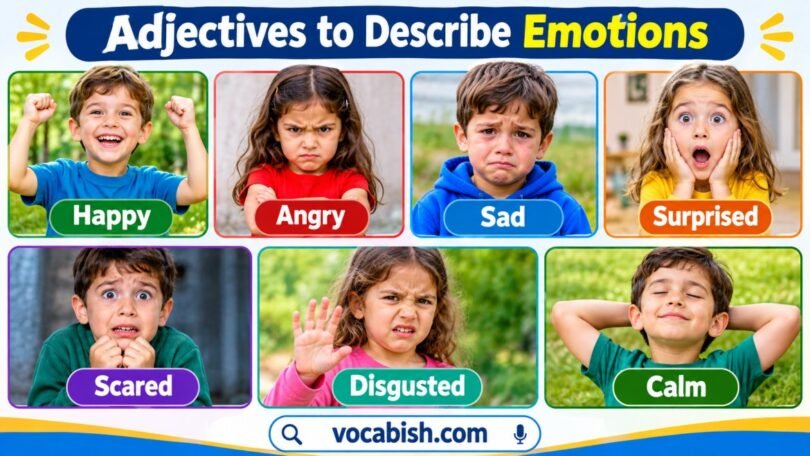

The right words can help you explain exactly how you feel, whether you are excited about good news, nervous before an exam, disappointed by a result, or grateful for someone’s help. Adjectives to Describe Emotions help you express feelings clearly and naturally in English.
These descriptive words cover happiness, sadness, anger, fear, love, surprise, embarrassment, confidence, and many other emotional states. Learning adjectives for emotions also helps you describe other people’s feelings, respond politely in conversations, and express your reactions without repeating words such as happy, sad, and angry.
What Are Adjectives to Describe Emotions?
Adjectives to describe emotions are words that express how someone feels or reacts to a person, situation, event, memory, or experience. They can describe positive feelings, negative feelings, mixed emotions, and changes in emotional intensity.
For example:
- I feel delighted about the good news.
- She looks worried about her examination.
- He became furious when he discovered the mistake.
- We were relieved after hearing the results.
- They felt curious about the new project.
- I am grateful for your support.
- She seemed disappointed by the decision.
Emotion adjectives commonly appear after linking verbs such as feel, seem, look, appear, become, and be. They can also describe a person’s emotional state before a noun.
- She is a cheerful person.
- He gave me a warm smile.
- It was an embarrassing moment.
- We had an exciting experience.
- She received encouraging news.
Some adjectives describe the person experiencing a feeling, while others describe the thing that causes it. For example, bored describes a person’s feeling, whereas boring describes something that causes boredom.
Adjectives for Happiness and Joy
Happiness adjectives describe positive feelings, pleasure, excitement, and satisfaction. Choose the word that matches how strong your happiness is and what caused it.
- Happy: Feeling pleasure or contentment. I am happy with my progress.
- Cheerful: Showing happiness through words or behavior. She always sounds cheerful in the morning.
- Joyful: Feeling or expressing great happiness. The family had a joyful celebration.
- Delighted: Extremely pleased about something. I am delighted with your results.
- Thrilled: Feeling very excited and happy. He was thrilled to receive the invitation.
- Excited: Feeling eager and enthusiastic. We are excited about our upcoming trip.
- Elated: Feeling extremely happy after a success. She felt elated after winning the competition.
- Ecstatic: Feeling overwhelming happiness. They were ecstatic about their new home.
- Overjoyed: Extremely happy about something wonderful. I was overjoyed to see my old friends.
- Pleased: Feeling satisfied or happy with something. The teacher was pleased with my work.
- Content: Feeling satisfied with what you have. He feels content with his life.
- Glad: Happy about a situation or result. I am glad you came.
- Merry: Cheerful and full of happiness. Everyone was merry during the holiday.
- Jubilant: Expressing great happiness after a victory or achievement. The jubilant supporters celebrated the win.
- Upbeat: Positive and hopeful in mood. She remained upbeat despite the delay.
- Buoyant: Feeling cheerful and optimistic. He felt buoyant after the good news.
- Lighthearted: Feeling relaxed, cheerful, and free from serious worries. We had a lighthearted conversation.
- Blissful: Experiencing great happiness or peace. They enjoyed a blissful afternoon together.
- Exhilarated: Feeling energetic excitement and happiness. I felt exhilarated after the mountain hike.
- Radiant: Showing happiness through a bright expression. She looked radiant on her wedding day.
- Pleased: Feeling happy with an outcome or experience. I was pleased to hear about your success.
- Satisfied: Feeling that something has met your expectations. She felt satisfied with her performance.
Adjectives for Sadness and Sorrow
Sadness adjectives help you describe disappointment, emotional pain, grief, and low spirits. Some express mild unhappiness, while others describe deep sorrow.
- Sad: Feeling unhappy. He felt sad after saying goodbye.
- Unhappy: Not feeling pleased or satisfied. She was unhappy with the decision.
- Upset: Feeling unhappy, troubled, or distressed. I was upset by the unexpected news.
- Miserable: Feeling extremely unhappy or uncomfortable. I felt miserable after the argument.
- Heartbroken: Feeling deep emotional pain, often after a loss or breakup. She was heartbroken when her relationship ended.
- Devastated: Feeling deeply shocked and emotionally hurt. He was devastated by the loss.
- Grief-stricken: Overwhelmed by sadness after someone’s death or a major loss. The grief-stricken family gathered together.
- Sorrowful: Full of sadness. She gave him a sorrowful look.
- Melancholy: Feeling thoughtful and quietly sad. A melancholy mood came over him.
- Gloomy: Feeling sad or expecting something unpleasant. I felt gloomy on the rainy afternoon.
- Downcast: Looking sad or discouraged. He appeared downcast after the interview.
- Dejected: Feeling low after a disappointment or failure. The players looked dejected after the defeat.
- Disheartened: Losing hope or confidence. She felt disheartened by the rejection.
- Despondent: Feeling very discouraged and without hope. He became despondent after several failures.
- Blue: An informal word meaning sad. I have been feeling a little blue lately.
- Forlorn: Appearing lonely, abandoned, or deeply sad. The child looked forlorn without his family.
- Wistful: Feeling gentle sadness while wishing for something. She felt wistful when looking at old photographs.
- Mournful: Expressing deep sadness or grief. His voice sounded mournful.
- Downhearted: Feeling discouraged or sad. Do not feel downhearted about one mistake.
- Woeful: Feeling or showing great sadness. He gave a woeful account of what had happened.
- Heavyhearted: Feeling deep sadness or worry. She felt heavyhearted as she left her hometown.
- Sombre: Serious, sad, or gloomy in mood. He seemed sombre after the meeting.
Adjectives for Anger and Irritation
Anger adjectives describe annoyance, frustration, resentment, and intense anger. Choosing the right word helps you communicate your reaction without exaggerating it.
- Annoyed: Slightly angry or bothered. I was annoyed by the constant noise.
- Irritated: Feeling impatient or bothered. She became irritated by the delay.
- Angry: Feeling strong displeasure. He was angry about the unfair decision.
- Mad: An informal word for angry, especially in American English. I am mad at myself for forgetting.
- Frustrated: Upset because something is difficult or not working. I felt frustrated when the computer stopped working.
- Furious: Extremely angry. She was furious about the broken promise.
- Enraged: Filled with intense anger. The unfair treatment left him enraged.
- Livid: Extremely angry. My father was livid when he saw the damage.
- Irate: Very angry, often in response to a problem. The irate customer demanded an explanation.
- Outraged: Extremely angry about something unfair or wrong. People were outraged by the decision.
- Resentful: Feeling bitterness about unfair treatment. He felt resentful about being ignored.
- Bitter: Feeling angry or hurt because of past experiences. She became bitter after the dispute.
- Indignant: Angry because something seems unfair or insulting. I felt indignant about the false accusation.
- Cross: Slightly angry; common in British English. Dad was cross about the mess.
- Testy: Easily annoyed or impatient. He became testy after a long wait.
- Agitated: Upset and unable to remain calm. She looked agitated during the argument.
- Exasperated: Extremely annoyed after repeated problems. I was exasperated by his repeated excuses.
- Hostile: Showing anger or opposition toward someone. His hostile response surprised everyone.
- Vexed: Annoyed or troubled by a difficult situation. She felt vexed by the complicated instructions.
- Incensed: Extremely angry about something unfair or offensive. He was incensed by the accusation.
- Indignant: Feeling anger at perceived unfairness. She was indignant about the unfair treatment.
- Aggrieved: Feeling that you have been treated unfairly. He felt aggrieved by the decision.
Adjectives for Fear and Anxiety
These adjectives describe fear, nervousness, worry, and uncertainty. They are useful when talking about examinations, interviews, unfamiliar situations, danger, or important decisions.
- Afraid: Feeling fear. I am afraid of speaking in front of a crowd.
- Scared: Feeling frightened. The loud noise made me scared.
- Frightened: Feeling fear because something seems dangerous. The frightened child held his mother’s hand.
- Terrified: Feeling extreme fear. She was terrified during the storm.
- Fearful: Feeling or showing fear. He felt fearful about the uncertain future.
- Anxious: Worried about what might happen. I am anxious about my examination.
- Nervous: Worried or uneasy about an upcoming event. She felt nervous before the interview.
- Worried: Thinking anxiously about a problem. My parents are worried about my results.
- Apprehensive: Uneasy about something that may happen. He was apprehensive about moving abroad.
- Uneasy: Feeling uncomfortable or uncertain. I felt uneasy about the strange message.
- Alarmed: Suddenly worried by possible danger. We were alarmed by the warning.
- Panicked: Feeling sudden, intense fear. He became panicked when he lost his passport.
- Petrified: So frightened that you feel unable to move. She was petrified of the large dog.
- Horrified: Feeling intense shock, fear, or disgust. They were horrified by the accident.
- Intimidated: Feeling less confident because someone or something seems powerful. I felt intimidated during my first presentation.
- Insecure: Lacking confidence or feeling uncertain about yourself. He feels insecure about his abilities.
- Timid: Shy and easily frightened. The timid puppy hid behind the chair.
- Jittery: Nervous and unable to relax. I felt jittery before the results were announced.
- Tense: Feeling nervous or unable to relax. Everyone was tense before the final match.
- Restless: Unable to relax because of worry or impatience. She felt restless while waiting for the call.
- Fearful: Experiencing or showing concern about a possible threat. The fearful passengers waited for instructions.
- Trepidatious: Feeling nervous or afraid about something that lies ahead. I felt trepidatious before my first day at work.
Adjectives for Love and Affection
Love-related adjectives express closeness, warmth, attraction, care, and emotional attachment. They can describe relationships with family members, partners, friends, and people you appreciate.
- Loving: Showing love and care. She comes from a loving family.
- Affectionate: Openly showing fondness or love. He is affectionate toward his younger sister.
- Caring: Showing concern for another person’s well-being. She is a caring friend.
- Fond: Feeling affection for someone or something. I am fond of my childhood memories.
- Devoted: Showing strong love, loyalty, and commitment. He is devoted to his family.
- Adoring: Showing deep love or admiration. She gave her adoring grandfather a hug.
- Attached: Feeling emotionally connected to someone. The child is deeply attached to his grandmother.
- Tender: Gentle and full of affection. He gave her a tender smile.
- Warm: Friendly, affectionate, and welcoming. She greeted us with a warm expression.
- Passionate: Showing intense love or enthusiasm. They share a passionate relationship.
- Romantic: Expressing or feeling love and attraction. He planned a romantic evening.
- Enamored: Filled with admiration or love. She was enamored with his kindness.
- Smitten: Strongly attracted to someone. He was completely smitten with her.
- Lovestruck: Overwhelmed by romantic attraction. The lovestruck teenager wrote poems every day.
- Compassionate: Showing care for another person’s suffering. She is compassionate toward people in need.
- Protective: Wanting to keep someone safe. He feels protective of his younger brother.
- Loyal: Remaining faithful and supportive. She is a loyal friend.
- Cherished: Deeply loved and valued. She is a cherished member of the family.
- Tenderhearted: Easily moved by another person’s suffering. He is tenderhearted toward animals.
- Devoted: Showing lasting love and commitment. She is devoted to caring for her family.
Adjectives for Surprise and Amazement
Surprise adjectives express reactions to unexpected events, unusual experiences, or information that is difficult to believe.
- Surprised: Feeling unexpected amazement. I was surprised by the announcement.
- Amazed: Very surprised by something impressive. We were amazed by the beautiful view.
- Astonished: Extremely surprised. She was astonished by his sudden arrival.
- Astounded: Deeply shocked or amazed. I was astounded by the final score.
- Stunned: So surprised that you briefly cannot react. He was stunned by the news.
- Speechless: Unable to find words because of strong emotion. I was speechless when I saw the gift.
- Flabbergasted: Extremely surprised or shocked; informal. She was flabbergasted by the unexpected result.
- Bewildered: Confused and surprised. He looked bewildered by the sudden change.
- Perplexed: Puzzled by something unexpected or difficult. I was perplexed by her reaction.
- Incredulous: Finding something difficult to believe. She gave me an incredulous look.
- Dumbfounded: Too surprised to respond immediately. We were dumbfounded by the announcement.
- Awestruck: Filled with wonder and admiration. The children were awestruck by the fireworks.
- Startled: Suddenly surprised or frightened. I was startled by the loud bang.
- Taken aback: Surprised and temporarily unsure how to react. I was taken aback by his rude comment.
- Awe-struck: Filled with wonder, respect, or admiration. We were awe-struck by the enormous waterfall.
- Gobsmacked: Extremely surprised; informal, especially in British English. I was gobsmacked when I heard the news.
Adjectives for Embarrassment and Shame
These words describe discomfort caused by mistakes, awkward situations, unwanted attention, or feelings of personal responsibility.
- Embarrassed: Feeling uncomfortable because of an awkward situation. I was embarrassed when I forgot his name.
- Ashamed: Feeling guilty or upset about something you did or believe about yourself. He felt ashamed of his behavior.
- Self-conscious: Worried about how other people see you. She felt self-conscious about speaking English.
- Awkward: Feeling uncomfortable in a social situation. I felt awkward during the long silence.
- Humiliated: Feeling deeply embarrassed because someone has treated you as inferior. He felt humiliated by the public criticism.
- Mortified: Extremely embarrassed. I was mortified when I sent the message to the wrong person.
- Flustered: Confused or nervous because of embarrassment or pressure. She became flustered when everyone looked at her.
- Sheepish: Embarrassed because you have done something wrong or silly. He gave a sheepish smile after breaking the vase.
- Chagrined: Disappointed or embarrassed because something went wrong. She was chagrined by her careless mistake.
- Abashed: Feeling embarrassed or ashamed. He looked abashed after the correction.
- Contrite: Sincerely sorry for doing something wrong. He was contrite after hurting his friend’s feelings.
- Humbled: Made less proud and more aware of your limitations. I felt humbled by their generosity.
- Regretful: Feeling sorry about a past action or decision. She was regretful about her harsh words.
- Penitent: Feeling sorry and wanting to make up for wrongdoing. The penitent child apologized to his parents.
Adjectives for Confidence and Pride
Confidence adjectives describe self-belief, courage, satisfaction with achievements, and a sense of personal worth.
- Confident: Believing in your abilities. I feel confident about the presentation.
- Self-assured: Calm and certain about yourself. She sounded self-assured during the interview.
- Proud: Pleased with an achievement or someone you care about. My parents are proud of my progress.
- Accomplished: Feeling successful after achieving something. She felt accomplished after finishing the course.
- Empowered: Feeling able to make decisions or take action. I felt empowered after learning the new skill.
- Courageous: Showing courage despite fear. She was courageous enough to speak up.
- Brave: Willing to face danger or difficulty. He felt brave enough to try again.
- Fearless: Showing little or no fear. The fearless climber continued up the mountain.
- Bold: Confident and willing to take risks. She made a bold decision.
- Determined: Firmly decided to achieve something. I am determined to improve my English.
- Resilient: Able to recover after difficulties. She remained resilient after the setback.
- Capable: Having the ability to do something. I feel capable of handling the task.
- Optimistic: Expecting good things to happen. He remained optimistic about his future.
- Victorious: Having won or achieved success. The victorious team celebrated together.
- Triumphant: Showing great satisfaction after success. She gave a triumphant smile after completing the race.
- Assured: Confident and certain. He gave an assured response to the question.
- Valiant: Showing courage when facing danger or difficulty. She made a valiant effort to solve the problem.
Adjectives for Disappointment and Frustration
Disappointment adjectives describe the gap between what you expected and what actually happened. Frustration words describe the irritation that arises when progress is blocked.
- Disappointed: Unhappy because something did not meet your expectations. I was disappointed by the result.
- Discouraged: Losing confidence or motivation. She felt discouraged after failing the test.
- Frustrated: Upset because something is not working as expected. I was frustrated by the slow internet.
- Dissatisfied: Not pleased with a result or situation. He was dissatisfied with the service.
- Displeased: Unhappy or annoyed about something. The manager was displeased with the delay.
- Disillusioned: Disappointed after discovering that something is not as good as expected. She became disillusioned with the organization.
- Defeated: Feeling as though you have lost or cannot succeed. He felt defeated after several failed attempts.
- Deflated: Suddenly less confident or enthusiastic. I felt deflated after hearing the criticism.
- Disheartened: Losing hope or enthusiasm. She was disheartened by the rejection.
- Resigned: Accepting an unpleasant situation because you believe it cannot be changed. He seemed resigned to the decision.
- Dismayed: Upset or worried by something unexpected. I was dismayed by the sudden change.
- Disgruntled: Dissatisfied and annoyed. The disgruntled employee complained about the schedule.
- Aggrieved: Feeling unfairly treated. She felt aggrieved by the unfair criticism.
- Impatient: Annoyed because something is taking too long. I became impatient while waiting for the bus.
- Exasperated: Extremely frustrated or annoyed. He was exasperated by the repeated errors.
- Fed up: An informal expression for being tired of an unwanted situation. I am fed up with all these delays.
- Let down: Disappointed by someone or something. I felt let down by his broken promise.
- Underwhelmed: Less impressed or excited than expected. I was underwhelmed by the performance.
Adjectives for Calmness and Peace
Calmness adjectives describe emotional balance, relaxation, patience, and freedom from immediate worry.
- Calm: Peaceful and not upset. I feel calm after a short walk.
- Relaxed: Free from tension or worry. She looked relaxed after her holiday.
- Peaceful: Feeling quiet and free from disturbance. I felt peaceful beside the lake.
- Serene: Calm and untroubled. He had a serene expression.
- Tranquil: Quiet, peaceful, and emotionally settled. She felt tranquil in the garden.
- Composed: Remaining calm, especially in a difficult situation. He stayed composed during the interview.
- Collected: Calm and in control of your reactions. She remained collected during the disagreement.
- Level-headed: Able to think clearly without becoming overly emotional. He stayed level-headed during the crisis.
- Patient: Able to wait without becoming annoyed. I felt patient while helping the child.
- Untroubled: Free from worry or distress. She seemed untroubled by the delay.
- Comfortable: Feeling physically or emotionally relaxed. He felt comfortable sharing his opinion.
- Reassured: Feeling less worried after receiving help or information. I felt reassured by the explanation.
- Grounded: Emotionally stable and connected to what matters. She felt grounded after talking to her family.
- Unruffled: Remaining calm despite difficulties. He stayed unruffled during the argument.
- Unperturbed: Not worried or upset. She seemed unperturbed by the sudden change.
- At ease: Comfortable and relaxed. I felt at ease with my new colleagues.
Adjectives for Confusion and Uncertainty
These adjectives help explain situations in which you do not understand something, cannot make a decision, or feel unsure about what may happen.
- Confused: Unable to understand something clearly. I am confused about the instructions.
- Puzzled: Unable to explain or understand something. She looked puzzled by his response.
- Perplexed: Confused by something complicated or unexpected. He felt perplexed by the unusual result.
- Bewildered: Very confused and unsure what to do. I was bewildered by the sudden changes.
- Uncertain: Not sure about a fact, choice, or outcome. I feel uncertain about my next step.
- Unsure: Lacking confidence in a decision or answer. She was unsure how to respond.
- Doubtful: Not convinced that something is true or likely. I am doubtful about the plan.
- Hesitant: Slow to act because of uncertainty. He felt hesitant about accepting the offer.
- Ambivalent: Having mixed or conflicting feelings. I feel ambivalent about moving to another city.
- Torn: Struggling to choose between two options or feelings. She felt torn between work and family.
- Indecisive: Finding it difficult to make a decision. I become indecisive when there are too many choices.
- Conflicted: Experiencing opposing feelings or beliefs. He felt conflicted about leaving his job.
- Baffled: Completely confused by something. I was baffled by the strange explanation.
- Disoriented: Confused about where you are or what is happening. He felt disoriented after waking from a deep sleep.
- Perplexed: Uncertain because something is difficult to interpret. She seemed perplexed by the question.
Adjectives for Interest and Curiosity
Interest adjectives describe attention, enthusiasm, fascination, and the desire to discover or learn something.
- Interested: Wanting to know more about something. I am interested in learning new languages.
- Curious: Eager to know or understand something. She is curious about other cultures.
- Intrigued: Interested because something is unusual or mysterious. I was intrigued by his explanation.
- Fascinated: Extremely interested in something. He is fascinated by space exploration.
- Captivated: Completely absorbed by something interesting. We were captivated by the speaker’s story.
- Engaged: Actively interested and involved. The students felt engaged during the activity.
- Enthusiastic: Showing strong interest and excitement. She is enthusiastic about the new project.
- Eager: Strongly wanting to do or learn something. I am eager to improve my speaking skills.
- Absorbed: Giving your full attention to something. He was absorbed in the book.
- Avid: Showing a strong interest in an activity. She is an avid reader.
- Keen: Very interested or enthusiastic, especially in British English. He is keen to join the club.
- Inspired: Feeling motivated by an idea, person, or experience. I felt inspired by her success story.
- Enchanted: Filled with delight or fascination. The children were enchanted by the puppet show.
- Spellbound: Completely fascinated and unable to look away. We were spellbound by the performance.
- Engrossed: Giving complete attention to something. She was engrossed in the documentary.
Adjectives for Gratitude and Appreciation
Gratitude adjectives describe thankfulness, appreciation, and positive feelings toward people who help, support, or care for you.
- Grateful: Feeling thankful for help or kindness. I am grateful for your support.
- Thankful: Feeling appreciation for something received. She was thankful for the opportunity.
- Appreciative: Recognizing the value of someone’s help or effort. We are appreciative of your time.
- Touched: Emotionally moved by kindness. I was touched by her thoughtful message.
- Moved: Strongly affected emotionally by an action or experience. He was moved by their generosity.
- Indebted: Feeling that you owe someone for their help. I feel indebted to everyone who supported me.
- Obliged: Grateful or appreciative, sometimes in a formal sense. I am much obliged for your assistance.
- Fortunate: Feeling lucky because of a positive situation. I feel fortunate to have such supportive friends.
- Blessed: Feeling fortunate and thankful for what you have. I feel blessed to have my family.
- Valued: Feeling that others recognize your importance. I felt valued by my team.
- Respected: Feeling that others treat you with consideration. I felt respected during the discussion.
- Encouraged: Feeling more hopeful or confident because of support. I felt encouraged by her advice.
- Supported: Feeling that others are helping you. I felt supported throughout the difficult period.
- Gratified: Pleased because your efforts or expectations have been rewarded. I was gratified by their positive feedback.
Adjectives for Loneliness and Isolation
Loneliness adjectives express a lack of companionship, emotional distance, or the feeling of being left out. They can describe temporary feelings or longer periods of disconnection.
- Lonely: Feeling sad because you lack companionship. I felt lonely after moving to a new city.
- Alone: Being by yourself; it does not always mean feeling lonely. I was alone at home, but I felt peaceful.
- Isolated: Feeling separated from other people. She felt isolated in the unfamiliar environment.
- Excluded: Feeling left out of a group or activity. He felt excluded from the conversation.
- Abandoned: Feeling left behind or no longer cared for. The child felt abandoned when nobody arrived.
- Disconnected: Feeling emotionally distant from others. I felt disconnected from my old friends.
- Alienated: Feeling separated from a group or community. He felt alienated at his new school.
- Neglected: Feeling that others are not giving you enough attention or care. She felt neglected when nobody listened.
- Homesick: Sad because you miss your home or family. I felt homesick during my first week abroad.
- Friendless: Having no friends or feeling without friendship. He felt friendless at the new school.
- Forsaken: Feeling completely abandoned; a strong, literary word. He felt forsaken during his darkest days.
- Unwanted: Feeling that others do not want you around. She felt unwanted after the rejection.
- Remote: Emotionally distant or detached. She seemed remote during the conversation.
- Left out: Feeling excluded from something others are enjoying. I felt left out when everyone made plans without me.
Adjectives for Hope and Optimism
These words describe positive expectations, confidence in the future, and the belief that a situation can improve.
- Hopeful: Believing that something good may happen. I feel hopeful about the future.
- Optimistic: Expecting a favorable outcome. She is optimistic about her exam results.
- Encouraged: Feeling more confident because of support or progress. I felt encouraged by my improvement.
- Positive: Focusing on good possibilities or outcomes. He has a positive attitude toward change.
- Promising: Creating a feeling that something good may happen. The early results look promising.
- Confident: Believing that something will succeed or that you can do it. I am confident that we can finish on time.
- Expectant: Believing that something is likely to happen. She felt expectant before the announcement.
- Buoyant: Cheerful and hopeful despite challenges. He remained buoyant after the setback.
- Upbeat: Hopeful and positive in mood. The team stayed upbeat before the final.
- Reassured: Feeling more confident after receiving comfort or information. I felt reassured by the teacher’s feedback.
- Determined: Strongly committed to achieving a goal. I am determined to keep improving.
- Resilient: Able to recover from difficulties. She stayed resilient after the disappointment.
- Inspired: Feeling motivated to act or improve. I felt inspired to try again.
- Encouraging: Making someone feel hopeful or confident. Her words were encouraging.
- Forward-looking: Focused on future possibilities rather than past problems. He has a forward-looking attitude.
Adjectives for Jealousy and Envy
Jealousy and envy describe uncomfortable feelings connected with attention, relationships, possessions, achievements, or other people’s success.
- Jealous: Afraid of losing someone’s attention or relationship, or resentful of what someone has. He felt jealous when his friend received all the attention.
- Envious: Wishing you had something another person has. I felt envious of her beautiful garden.
- Resentful: Feeling bitterness about a perceived unfairness. She became resentful when her efforts went unnoticed.
- Possessive: Wanting to control or keep someone close. He became possessive about his relationship.
- Insecure: Lacking confidence in yourself or your relationship. She felt insecure when he stopped communicating.
- Bitter: Feeling angry or resentful about another person’s advantage. He felt bitter about being overlooked.
- Covetous: Strongly wanting something belonging to another person; formal. He felt covetous of his neighbor’s success.
- Competitive: Wanting to do better than others; not always negative. She felt competitive when the race began.
- Threatened: Feeling that someone or something may take away your position, relationship, or security. He felt threatened by the new colleague’s success.
- Aggrieved: Feeling unfairly treated in comparison with others. He felt aggrieved when his coworker received the promotion.
Adjectives for Guilt and Regret
These adjectives describe feeling responsible for a mistake, wishing you had acted differently, or wanting to make amends.
- Guilty: Feeling responsible for doing something wrong. I felt guilty for lying to my friend.
- Regretful: Feeling sorry about a past action or decision. She was regretful about missing the event.
- Remorseful: Feeling deep regret for having caused harm. He was remorseful after hurting his brother.
- Sorry: Feeling regret or sympathy. I am sorry for speaking harshly.
- Contrite: Sincerely sorry and willing to admit wrongdoing. She gave a contrite apology.
- Ashamed: Feeling shame about an action or personal behavior. He felt ashamed of his dishonesty.
- Repentant: Feeling sorry and wishing to change your behavior. The repentant student promised to do better.
- Penitent: Showing sorrow for wrongdoing. He sounded penitent when he apologized.
- Apologetic: Showing that you feel sorry. She was apologetic about arriving late.
- Self-critical: Judging your own actions or performance harshly. I became self-critical after the mistake.
- Haunted: Troubled by a memory or past action. He felt haunted by his earlier decision.
- Conflicted: Experiencing opposing feelings about what you did or should do. She felt conflicted about telling the truth.
Adjectives for Boredom and Tiredness
These adjectives describe a lack of interest, mental fatigue, physical exhaustion, or a desire to stop an activity.
- Bored: Feeling uninterested because something lacks stimulation. I felt bored during the long lecture.
- Uninterested: Not feeling curiosity or attention toward something. He seemed uninterested in the discussion.
- Unenthusiastic: Lacking excitement or interest. She was unenthusiastic about the proposal.
- Weary: Feeling very tired, often after a long effort. I felt weary after the journey.
- Exhausted: Extremely tired physically or mentally. She was exhausted after working all day.
- Drained: Having little energy left. I felt emotionally drained after the argument.
- Fatigued: Feeling tired and lacking energy. He felt fatigued after the long shift.
- Worn-out: Extremely tired from effort or stress. I was worn-out after moving house.
- Listless: Lacking energy, interest, or enthusiasm. She felt listless on the hot afternoon.
- Lethargic: Feeling unusually sluggish or lacking energy. I felt lethargic after a heavy meal.
- Restless: Unable to relax or remain interested. He felt restless during the long wait.
- Fed up: Annoyed or tired of something unwanted. I am fed up with the repeated delays.
- Disengaged: Not emotionally or mentally involved. The audience seemed disengaged during the speech.
- Unmotivated: Lacking the desire to act or work. I felt unmotivated after several setbacks.
- Jaded: Tired or bored after too much of the same experience. He felt jaded after years of repetitive work.
Adjectives for Relief and Reassurance
Relief adjectives describe the positive feeling that follows the end of worry, danger, uncertainty, or pressure.
- Relieved: Feeling better because a worry has ended. I was relieved when the exam was over.
- Reassured: Feeling less worried after receiving support or information. She felt reassured by his promise.
- Comforted: Feeling less sad or worried because of someone’s care. I felt comforted by her kind words.
- Calmed: Made less anxious or upset. He felt calmed by the familiar surroundings.
- Settled: Feeling comfortable and emotionally stable. I felt settled after a few days in my new home.
- Secure: Feeling safe and free from threat. She felt secure with her supportive family.
- Safe: Feeling protected from danger. The children felt safe with their parents.
- Grateful: Thankful that a problem has been resolved. I was grateful that everyone arrived safely.
- Unburdened: Feeling free from a worry or responsibility. I felt unburdened after sharing my concerns.
- Carefree: Free from worry or responsibility. We felt carefree during the holiday.
- Untroubled: Free from worry. He seemed untroubled after receiving the explanation.
- At peace: Feeling emotionally calm and accepting. I finally felt at peace with my decision.
Adjectives for Disgust and Aversion
Disgust adjectives describe strong dislike, revulsion, or discomfort in response to something unpleasant, offensive, or unacceptable.
- Disgusted: Feeling strong dislike or revulsion. I was disgusted by the rude behavior.
- Repulsed: Feeling a strong desire to avoid something. She felt repulsed by the cruel treatment.
- Revolted: Feeling intense disgust. He was revolted by the sight.
- Appalled: Shocked and disgusted by something unacceptable. We were appalled by the unfair treatment.
- Horrified: Feeling intense shock, fear, or disgust. She was horrified by the cruelty.
- Nauseated: Feeling sick or disgusted. I felt nauseated by the strong smell.
- Sickened: Feeling deeply disgusted or upset. The report sickened everyone who read it.
- Offended: Feeling hurt or upset by an insult or disrespectful action. He felt offended by the remark.
- Repelled: Feeling pushed away by something unpleasant. She was repelled by his dishonest behavior.
- Averse: Strongly disliking or unwilling to accept something. I am averse to unnecessary conflict.
- Uncomfortable: Feeling uneasy or bothered. I felt uncomfortable during the argument.
- Put off: Informally feeling less interested or attracted because of something unpleasant. I was put off by his rude attitude.
Adjectives for Sympathy and Compassion
These adjectives help you express concern for someone else’s pain, difficulties, or emotional needs. They are useful in supportive conversations and sensitive situations.
- Sympathetic: Showing understanding and concern for someone’s difficulties. She was sympathetic when I explained my problem.
- Compassionate: Caring about another person’s suffering and wanting to help. He is compassionate toward people in need.
- Empathetic: Able to understand another person’s feelings. My friend was empathetic when I felt anxious.
- Concerned: Worried about someone’s well-being. I am concerned about your safety.
- Caring: Showing kindness and attention. She is a caring colleague.
- Tenderhearted: Easily moved by another person’s suffering. He is tenderhearted toward animals.
- Moved: Emotionally affected by someone’s experience. I was moved by her courage.
- Touched: Feeling emotional appreciation because of someone’s kindness. She was touched by the support she received.
- Understanding: Willing to recognize another person’s feelings or difficulties. He was understanding when I explained the delay.
- Supportive: Giving encouragement and help. My family has always been supportive.
- Solicitous: Showing careful concern for another person’s comfort or safety; formal. She was solicitous about her friend’s recovery.
- Protective: Wanting to keep someone safe from harm. He felt protective of his younger sister.
- Heartfelt: Deeply sincere and emotional. She offered a heartfelt expression of sympathy.
Adjectives for Emotional Intensity
Some adjectives describe not one particular emotion but the strength, depth, or complexity of a person’s feelings. They help you explain whether an emotion is mild, powerful, overwhelming, or difficult to control.
- Emotional: Experiencing or expressing strong feelings. I felt emotional during the farewell.
- Sensitive: Easily affected by words, events, or other people’s feelings. He is sensitive to criticism.
- Overwhelmed: Feeling that emotions or demands are too much to manage. I felt overwhelmed by all the responsibilities.
- Intense: Very strong or powerful. She experienced intense excitement before the performance.
- Passionate: Showing powerful feelings or enthusiasm. He is passionate about his work.
- Distraught: Extremely upset and unable to think calmly. She was distraught after the accident.
- Agitated: Emotionally disturbed or restless. He became agitated during the discussion.
- Volatile: Likely to change quickly or become intense; often used for moods or emotional reactions. His mood became volatile under pressure.
- Moody: Experiencing frequent changes in mood. I feel moody when I do not get enough rest.
- Temperamental: Likely to experience changing moods or reactions. He can be temperamental when stressed.
- Stoic: Not showing much emotion, even during difficulty. She remained stoic during the difficult conversation.
- Reserved: Not openly expressing feelings. He is reserved around new people.
- Detached: Emotionally distant or uninvolved. She seemed detached during the discussion.
- Numb: Unable to feel or express much emotion, often after shock or distress. I felt numb after hearing the news.
- Vulnerable: Feeling emotionally exposed or open to being hurt. I felt vulnerable when sharing my fears.
- Conflicted: Experiencing opposing feelings. I felt conflicted about accepting the offer.
- Ambivalent: Having both positive and negative feelings about something. She was ambivalent about the move.
- Overjoyed: Experiencing extremely strong happiness. We were overjoyed by the announcement.
- Heartbroken: Experiencing very deep sadness. He was heartbroken by the separation.
Adjectives for Affection, Respect, and Admiration
Some emotional descriptions focus on the positive feelings we have toward a person’s character, abilities, behavior, or achievements.
- Impressed: Feeling respect because someone has done something well. I was impressed by his presentation.
- Respectful: Showing consideration for someone. She remained respectful during the disagreement.
- Amazed: Feeling great surprise and admiration. We were amazed by her determination.
- Inspired: Feeling motivated by someone’s example. I felt inspired by his story.
- Reverent: Showing deep respect, often for something important or sacred. They felt reverent during the ceremony.
- Appreciative: Recognizing someone’s value or effort. I am appreciative of her patience.
- Gracious: Showing kindness and good manners, especially when receiving something. She was gracious about the compliment.
- Awe-struck: Filled with wonder and admiration. I was awe-struck by the magnificent view.
- Admiring: Showing respect or approval for someone. She gave him an admiring look.
- Esteemed: Highly respected or admired. He is an esteemed member of the community.
- Valued: Feeling that others recognize your importance. I felt valued by my colleagues.
- Gratified: Feeling pleased by a positive outcome or recognition. She felt gratified when her hard work was recognized.
Adjectives for Mixed Feelings
Sometimes a situation creates more than one emotion. You may feel excited and nervous about a new job, happy and sad about moving away, or relieved but disappointed when a difficult experience ends.
- Mixed: Involving different or conflicting feelings. I have mixed feelings about leaving my school.
- Conflicted: Experiencing a struggle between opposing emotions. I feel conflicted about accepting the offer.
- Ambivalent: Having both positive and negative feelings about the same thing. She is ambivalent about moving abroad.
- Bittersweet: Combining happiness with sadness. Graduation was a bittersweet moment for us.
- Nostalgic: Feeling affection and sadness when remembering the past. I felt nostalgic while looking at my childhood photographs.
- Wistful: Quietly sad because you want something you cannot have or return to. He felt wistful about his school days.
- Reluctant: Unwilling or hesitant to do something. I felt reluctant to leave my friends.
- Apprehensive: Worried about what may happen. I feel apprehensive about moving to a new city.
- Hopeful: Expecting that something good may happen. I feel hopeful about this new opportunity.
- Resigned: Accepting a situation that you cannot change. She seemed resigned to the outcome.
- Sentimental: Strongly affected by memories or personal attachments. He became sentimental when he found his old letters.
- Pensive: Deeply thoughtful, often with some sadness. He looked pensive after the conversation.
Adjectives for Social Uneasiness
These words are useful when you feel uncomfortable around people, struggle to fit into a group, or do not know how to respond in a social situation.
- Shy: Nervous or uncomfortable around other people. I feel shy when meeting new people.
- Bashful: Shy, especially when receiving attention or praise. She looked bashful after the compliment.
- Awkward: Uncomfortable or unsure how to behave. I felt awkward during the introduction.
- Self-conscious: Overly aware of how others may judge you. He felt self-conscious about his accent.
- Insecure: Lacking confidence in yourself or your position. I felt insecure during my first week at work.
- Intimidated: Feeling nervous because someone seems powerful or impressive. I was intimidated by the experienced speakers.
- Uncomfortable: Feeling uneasy or not at ease. She felt uncomfortable with the personal questions.
- Uneasy: Experiencing mild worry or discomfort. I felt uneasy about the conversation.
- Alienated: Feeling separated from a group or community. He felt alienated among his new classmates.
- Excluded: Feeling that others have left you out. She felt excluded from the team discussion.
- Flustered: Confused or embarrassed under pressure. I became flustered when I forgot my lines.
- Hesitant: Unsure about taking action. He was hesitant to share his opinion.
- Guarded: Cautious about showing your feelings or sharing information. She remained guarded around strangers.
- Reserved: Not openly expressing emotions or opinions. He is reserved in large groups.
Adjectives for Satisfaction and Dissatisfaction
These adjectives describe how you feel about results, experiences, decisions, relationships, or the quality of something.
- Satisfied: Pleased because something meets your expectations. I am satisfied with my progress.
- Content: Peacefully satisfied with what you have. She feels content with her current life.
- Fulfilled: Feeling that something gives your life purpose or satisfaction. He feels fulfilled by helping others.
- Gratified: Pleased because your efforts or expectations have been rewarded. I was gratified by their positive feedback.
- Accomplished: Feeling successful after completing something meaningful. I felt accomplished after finishing the project.
- Unfulfilled: Feeling that something important is missing. She felt unfulfilled in her previous job.
- Dissatisfied: Unhappy with the quality or result of something. I was dissatisfied with the service.
- Discontented: Unhappy with your present situation. He felt discontented with his routine.
- Displeased: Unhappy or annoyed about something. The customer was displeased with the delay.
- Frustrated: Unhappy because progress or success is blocked. I felt frustrated by the lack of progress.
- Unimpressed: Not feeling admiration or approval. She was unimpressed by the explanation.
- Underwhelmed: Less impressed or excited than expected. I was underwhelmed by the performance.
- Disillusioned: Disappointed after discovering that something is not what you expected. He felt disillusioned with the process.
Adjectives for Emotional Distance and Indifference
Not every emotional state is strong or obvious. Sometimes people feel detached, uninterested, or unwilling to react.
- Indifferent: Not interested or concerned. He seemed indifferent to the outcome.
- Unconcerned: Not worried about something. She appeared unconcerned about the delay.
- Detached: Emotionally separate or uninvolved. I felt detached from the discussion.
- Apathetic: Showing little interest, enthusiasm, or emotion. He became apathetic about the project.
- Unresponsive: Not reacting or responding as expected. She seemed unresponsive to the suggestion.
- Unmoved: Not emotionally affected by something. He remained unmoved by the criticism.
- Impassive: Showing little or no emotion on your face. She maintained an impassive expression.
- Stoic: Enduring difficulties without showing much emotion. He stayed stoic during the setback.
- Reserved: Keeping thoughts and feelings private. She is reserved around unfamiliar people.
- Aloof: Appearing emotionally distant or unfriendly. He seemed aloof at the gathering.
- Nonchalant: Appearing unconcerned or relaxed about something that might worry others. She gave a nonchalant response to the news.
- Unfazed: Not disturbed or surprised by something. He remained unfazed by the criticism.
- Unperturbed: Not worried or upset. She seemed unperturbed by the sudden change.
Adjectives for Longing and Nostalgia
These words help describe feelings about the past, missed opportunities, separation, and things you wish had happened differently.
- Nostalgic: Feeling sentimental about the past. I feel nostalgic when I hear that song.
- Wistful: Quietly longing for something. She gave a wistful smile.
- Regretful: Sorry about a past action or decision. He felt regretful about leaving early.
- Remorseful: Deeply sorry for causing harm. She was remorseful about her behavior.
- Homesick: Missing home and familiar people. I became homesick during my first month abroad.
- Yearning: Experiencing a strong desire for something. She felt a yearning for a fresh start.
- Sentimental: Emotionally affected by personal memories. I felt sentimental when I found the old photographs.
- Melancholy: Quietly or thoughtfully sad. A melancholy feeling came over me.
- Bittersweet: Mixing happiness and sadness. The reunion was bittersweet.
- Pensive: Deeply thoughtful, often with some sadness. He looked pensive after the conversation.
- Longing: Strongly wanting someone or something absent. She felt a longing for home.
- Reminiscent: Bringing back memories of the past. The old house was reminiscent of my childhood.
How to Choose the Right Emotion Adjective
Many emotion adjectives have similar meanings, but they do not express exactly the same feeling. The best choice depends on the strength of the emotion, its cause, and the situation.
Mild, Moderate, and Strong Emotions
Happiness
- Mild: pleased, glad, content.
- Moderate: happy, cheerful, delighted.
- Strong: thrilled, elated, ecstatic, overjoyed.
Sadness
- Mild: down, blue, unhappy.
- Moderate: sad, upset, disappointed.
- Strong: devastated, heartbroken, grief-stricken.
Anger
- Mild: annoyed, irritated, cross.
- Moderate: angry, frustrated, exasperated.
- Strong: furious, livid, enraged.
Fear
- Mild: uneasy, nervous, apprehensive.
- Moderate: worried, frightened, scared.
- Strong: terrified, petrified, horrified.
Interest
- Mild: interested, curious, keen.
- Moderate: intrigued, engaged, enthusiastic.
- Strong: fascinated, captivated, spellbound.
These groups are approximate. The strength of an adjective can change depending on the situation and the speaker.
Positive, Negative, and Mixed Emotions
Positive emotions
- Happy
- Delighted
- Hopeful
- Grateful
- Confident
- Peaceful
- Affectionate
- Inspired
- Satisfied
- Relieved
Negative emotions
- Sad
- Anxious
- Frustrated
- Jealous
- Guilty
- Embarrassed
- Lonely
- Disappointed
- Miserable
- Ashamed
Mixed or complex emotions
- Bittersweet
- Conflicted
- Ambivalent
- Nostalgic
- Wistful
- Sentimental
- Apprehensive
- Reluctant
An emotion is not always completely positive or negative. For example, you might feel proud of a friend while also feeling envious of their success. You might feel excited about a move while feeling sad about leaving your family.
Adjectives for Feelings vs. Adjectives for Things That Cause Feelings
Some adjectives describe the person who experiences an emotion. Others describe the situation, event, person, or thing that creates it.
Words ending in -ed often describe how someone feels:
- I am bored during the meeting.
- She feels excited about the trip.
- He was disappointed by the result.
- They were frightened by the noise.
- I felt confused by the instructions.
Words ending in -ing often describe something that causes a feeling:
- The meeting is boring.
- The trip sounds exciting.
- The result was disappointing.
- The noise was frightening.
- The instructions were confusing.
Remember that this is a useful pattern, not an absolute rule. Not every adjective ending in -ed or -ing describes an emotion.
How to Use Adjectives to Describe Emotions in Sentences
Emotion adjectives can fit different sentence patterns. Learning these structures will help you use them in everyday conversations, writing, messages, and classroom activities.
1. Use Emotion Adjectives After “Feel”
Use feel followed by an adjective to describe your current emotional state.
- I feel happy today.
- She feels anxious about the interview.
- We feel grateful for your support.
- He felt embarrassed by the mistake.
- They feel optimistic about the future.
- I am feeling overwhelmed by my workload.
You can add words such as a little, very, quite, really, extremely, and incredibly to show the strength of an emotion.
- I feel a little nervous.
- She is really excited.
- He felt extremely disappointed.
- We are incredibly grateful.
2. Use Emotion Adjectives After “Be”
The verb be helps describe a person’s emotional state.
- I am happy with the decision.
- She is upset about the delay.
- He was nervous before the test.
- We were delighted by the news.
- They are proud of their achievements.
- I am uncertain about what to do next.
3. Use Emotion Adjectives After “Look,” “Seem,” and “Appear”
These verbs describe how someone appears emotionally. They do not always prove how the person actually feels.
- You look tired.
- She seems worried about something.
- He appeared confident during the presentation.
- They looked delighted with the result.
- My friend seems disappointed.
- The child looked frightened by the noise.
Use look when referring to visible expressions, seem when making a general impression, and appear when you want a slightly more formal tone.
4. Use Emotion Adjectives Before Nouns
An adjective can describe a person, expression, reaction, experience, or situation.
- A cheerful child greeted us at the door.
- She gave me an anxious look.
- We had an exciting day.
- He made an angry comment.
- It was an embarrassing mistake.
- She received some encouraging news.
- They shared a heartfelt message.
- I had a frustrating experience.
5. Use Emotion Adjectives With Common Prepositions
Different adjectives commonly use different prepositions. Learning these combinations will make your English sound more natural.
Happy about / happy with
- I am happy about the new opportunity.
- She is happy with her progress.
Excited about
- We are excited about the school trip.
Worried about
- He is worried about his results.
Angry with / angry about
- I am angry with him for lying.
- She is angry about the unfair decision.
Disappointed with / disappointed in / disappointed by
- I am disappointed with the service.
- My parents were disappointed in my behavior.
- We were disappointed by the final result.
Proud of
- I am proud of my achievements.
Afraid of
- She is afraid of heights.
Interested in
- He is interested in science.
Grateful for
- I am grateful for your help.
Jealous of / envious of
- She is jealous of his relationship.
- I am envious of her success.
Embarrassed about / embarrassed by
- I feel embarrassed about my mistake.
- He was embarrassed by the unexpected attention.
Upset about / upset with
- I am upset about the cancellation.
- She is upset with me.
6. Use Emotion Adjectives to Explain Reasons
Use because, because of, after, when, and about to explain why you feel a certain way.
- I am nervous because I have an interview tomorrow.
- She felt relieved after receiving the results.
- He was upset because of the misunderstanding.
- I felt proud when I completed the project.
- We were excited about meeting our relatives.
- I became frustrated when the application stopped working.
7. Use Emotion Adjectives to Give Advice or Reassurance
These adjectives can help you respond kindly when another person shares a feeling.
- You do not need to feel embarrassed about asking a question.
- It is understandable to feel nervous before an interview.
- You should feel proud of your progress.
- Do not feel discouraged by one mistake.
- It is natural to feel homesick when you move away.
- You have every reason to feel happy about your achievement.
- I understand why you feel disappointed.
- You are not alone in feeling anxious about change.
8. Use Emotion Adjectives to Express Opinions and Reactions
Use these sentence patterns to communicate a personal reaction naturally.
- I am glad that you told me.
- I am surprised that he agreed.
- I am disappointed that we missed the opportunity.
- I am delighted to hear that.
- I am concerned that she has not arrived.
- I am relieved that everyone is safe.
- I am sorry that you had such a difficult day.
- I am pleased to see your improvement.
9. Use Emotion Adjectives in Questions
Questions about emotions help you start conversations, show concern, and understand how someone feels.
- Are you happy with the result?
- Why do you seem upset?
- Are you nervous about the interview?
- How do you feel about the decision?
- Were you surprised by the news?
- Are you worried about anything?
- Do you feel comfortable here?
- Are you excited about your new job?
10. Use Emotion Adjectives to Describe Changes in Feelings
Use verbs such as become, feel, grow, remain, and get to describe changing emotional states.
- I became nervous when the interview started.
- She grew impatient while waiting.
- He remained calm during the argument.
- I got excited when I heard the announcement.
- They became frustrated by the repeated delays.
- She felt relieved after talking to her friend.
- He grew more confident with practice.
- I became less anxious after receiving the information.
Common Mistakes When Describing Emotions
Avoid these common errors when using emotion adjectives in English.
- Confusing bored and boring: Use bored for the person feeling uninterested and boring for the thing causing that feeling. Example: I am bored because the movie is boring.
- Using the wrong preposition: Say interested in English, proud of your work, and worried about the exam.
- Confusing angry and annoyed: Annoyed usually describes milder irritation, while angry often expresses a stronger reaction.
- Confusing sensitive and sensible: Sensitive means easily affected by feelings or criticism, while sensible means practical and showing good judgment.
- Assuming appearance reveals feelings: Someone who looks calm may still feel anxious. Use seems or appears when you are unsure.
Practice Exercises: Choose the Right Emotion Adjective
Complete each sentence with the most suitable adjective from the options provided.
- I felt ______ when I heard that I had passed my final exam. (delighted / guilty / bored)
- She was ______ about speaking in front of the audience. (nervous / grateful / peaceful)
- He felt ______ after realizing that he had hurt his friend’s feelings. (remorseful / ecstatic / curious)
- We were ______ when the missing child was found safe. (relieved / jealous / irritated)
- I felt ______ when everyone received an invitation except me. (excluded / confident / fascinated)
- The children were ______ by the magician’s amazing tricks. (captivated / ashamed / resentful)
- She felt ______ about leaving her hometown, both happy and sad. (bittersweet / furious / indifferent)
- He became ______ when his computer stopped working for the third time. (frustrated / affectionate / serene)
- I am ______ of my sister because she worked hard to achieve her goals. (proud / apprehensive / disillusioned)
- They were ______ to learn more about the unusual discovery. (curious / devastated / guilty)
- I felt ______ after working for twelve hours without a break. (exhausted / jubilant / astonished)
- She was ______ by the kindness of complete strangers. (touched / hostile / bored)
- He remained ______ during the difficult discussion and listened carefully. (composed / panicked / livid)
- I felt ______ about moving to another country because I was excited but also worried. (conflicted / disgusted / carefree)
- We were ______ with the service because it did not meet our expectations. (dissatisfied / ecstatic / affectionate)
Practice Exercise Answers
- Delighted
- Nervous
- Remorseful
- Relieved
- Excluded
- Captivated
- Bittersweet
- Frustrated
- Proud
- Curious
- Exhausted
- Touched
- Composed
- Conflicted
- Dissatisfied
FAQs About Adjectives to Describe Emotions
Adjectives to describe emotions are words that express feelings, such as happy, anxious, excited, disappointed, grateful, nervous, and relieved.
Common emotion adjectives include happy, sad, angry, excited, worried, scared, nervous, surprised, embarrassed, proud, grateful, and disappointed.
Positive emotion adjectives include joyful, delighted, cheerful, hopeful, confident, peaceful, grateful, enthusiastic, content, and optimistic.
Negative emotion adjectives include upset, anxious, frustrated, furious, jealous, lonely, disappointed, ashamed, miserable, and heartbroken.
Adjectives ending in -ed often describe how someone feels, while -ing adjectives often describe what causes that feeling. For example, bored and boring.
Use emotion adjectives after verbs such as feel, be, look, and seem. For example, “I feel nervous” or “She seems excited.”
Words such as bittersweet, conflicted, ambivalent, nostalgic, and wistful describe mixed feelings, emotional uncertainty, or a combination of happiness and sadness.
Learn adjectives in groups, compare similar words, practice them in complete sentences, and use them when describing your daily experiences, reactions, and conversations.
Conclusion
Learning Adjectives to Describe Emotions helps you express your feelings more accurately and understand how other people may feel. Instead of relying on basic words such as happy, sad, and angry, you can choose more specific words such as delighted, heartbroken, frustrated, apprehensive, grateful, and relieved.
Practice using these adjectives in sentences about your daily experiences, relationships, studies, work, and personal reactions. Pay attention to the strength of each word and the situation in which it fits. With regular practice, you can describe emotions more naturally, communicate clearly, and develop a stronger English vocabulary.
Explore More Related Topics
- 200+ Adjectives to Describe Feelings in English
- 1000+ Descriptive Words with Meanings and PDF
- 200+ Adjectives and Words to Describe Animals
- 100+ Adjectives to Describe Someone in English
- 100+ Describing Words That Start with E
- 100+ Words to Describe Yourself for a Job Interview
- 100+ Describing Words that Start with N for a Person