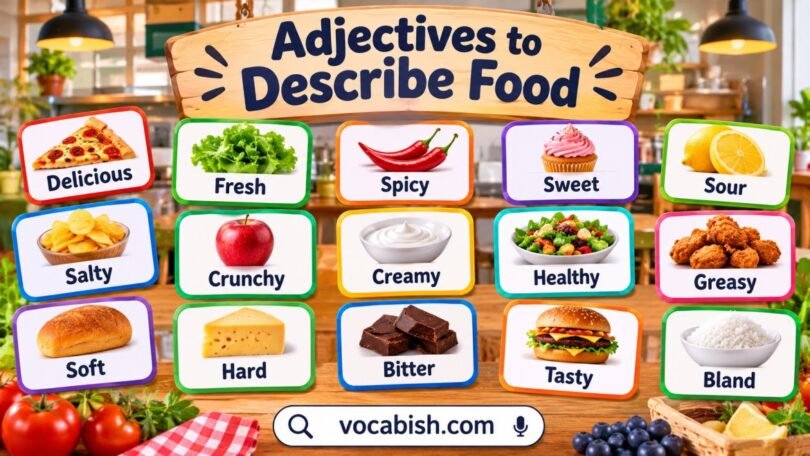

The right adjectives can make an ordinary food description more interesting and help you explain exactly what you like or dislike about a meal. Adjectives to Describe Food include words such as crispy, creamy, spicy, sweet, savory, and juicy. These descriptive words help English learners talk about taste, texture, smell, appearance, freshness, and quality.
Whether you are ordering at a restaurant, sharing a favorite recipe, reviewing a dish, or talking about dinner with friends, learning food adjectives makes your English more natural and expressive.
What Are Adjectives to Describe Food?
Adjectives to describe food are words that tell us what food tastes, smells, looks, or feels like. They can also describe its freshness, cooking method, quality, and nutritional characteristics.
For example:
- The soup is creamy.
- These chips are crispy.
- The mango is ripe.
- The coffee smells aromatic.
- The chicken is tender.
- The sauce is spicy.
Different adjectives describe different food characteristics. Choosing the right word helps you communicate your opinion clearly instead of using general words such as good, bad, or nice.
Adjectives to Describe Food Taste and Flavor
Taste and flavor adjectives describe the flavor you experience when eating or drinking something. They are especially useful when discussing recipes, restaurant meals, snacks, desserts, and beverages.
Sweet
Sweet describes food that tastes sugary or naturally contains a noticeable sweetness.
- This chocolate cake is sweet and delicious.
- The ripe strawberries taste sweet.
- I prefer sweet drinks to bitter ones.
Salty
Salty describes food that contains a noticeable salt flavor.
- These potato chips are too salty.
- The soup tastes slightly salty.
- I like salty snacks with my tea.
Sour
Sour describes a sharp, acidic taste, often found in lemons, vinegar, and some fermented foods.
- The lemon juice is extremely sour.
- This yogurt tastes a little sour.
- I enjoy sour candies.
Bitter
Bitter describes a sharp taste that is not sweet, commonly associated with black coffee, dark chocolate, and some vegetables.
- Black coffee can taste bitter.
- Dark chocolate has a slightly bitter flavor.
- The bitter melon tastes stronger than I expected.
Spicy
Spicy describes food containing spices or ingredients that create a hot, pungent sensation, such as chili peppers.
- This curry is too spicy for me.
- I love spicy noodles.
- The restaurant serves spicy chicken wings.
Savory
Savory describes food with a rich, salty, or umami flavor rather than a primarily sweet taste.
- The savory pie contains cheese and vegetables.
- I prefer savory breakfasts to sweet ones.
- These savory crackers go well with soup.
Umami
Umami describes a deep, satisfying, savory taste found in foods such as mushrooms, aged cheese, tomatoes, and soy sauce.
- Mushrooms give the soup an umami flavor.
- The tomato sauce has a rich umami taste.
- Soy sauce adds an umami flavor to the noodles.
Tangy
Tangy describes a lively, sharp flavor that is often slightly sour.
- The salad dressing has a tangy flavor.
- I like tangy barbecue sauce.
- The yogurt dip tastes fresh and tangy.
Tart
Tart describes a pleasantly sharp or sour flavor, especially in fruits and fruit-based desserts.
- The green apple tastes tart.
- We ordered a tart lemon pie.
- These berries are too tart to eat alone.
Bland
Bland describes food that has very little flavor or seasoning.
- The rice tastes bland without the sauce.
- This soup is a little bland.
- Adding herbs can make bland vegetables more flavorful.
Mild
Mild describes food with a gentle flavor that is not too strong, hot, or spicy.
- This curry has a mild flavor.
- I prefer mild cheese.
- The sauce is mild enough for people who dislike chili.
Pungent
Pungent describes a very strong, sharp flavor or smell.
- Blue cheese has a pungent flavor.
- The pungent mustard gives the sandwich a strong taste.
- Garlic adds a pungent note to the sauce.
Fruity
Fruity describes a flavor that resembles fresh or ripe fruit.
- This tea has a fruity flavor.
- The dessert tastes sweet and fruity.
- I enjoy fruity yogurt for breakfast.
Nutty
Nutty describes a flavor similar to nuts, even when the food itself does not contain whole nuts.
- Browned butter gives the sauce a nutty flavor.
- This cheese tastes slightly nutty.
- The roasted seeds have a rich, nutty taste.
Smoky
Smoky describes a flavor that resembles food cooked over smoke or a fire.
- The grilled eggplant has a smoky flavor.
- I love smoky barbecue sauce.
- These roasted peppers taste sweet and smoky.
Earthy
Earthy describes a natural, soil-like flavor often associated with mushrooms, beets, and root vegetables.
- The mushrooms have an earthy taste.
- Beets add an earthy flavor to the salad.
- This soup has a deep, earthy character.
Buttery
Buttery describes food with the rich, smooth flavor of butter.
- The mashed potatoes taste buttery.
- These biscuits have a delicious buttery flavor.
- The sauce is rich and buttery.
Cheesy
Cheesy describes food with a noticeable cheese flavor.
- The pasta is creamy and cheesy.
- I ordered a cheesy vegetable pizza.
- These crackers have a strong, cheesy taste.
Garlicky
Garlicky describes food with a noticeable garlic flavor.
- The bread is warm and garlicky.
- This pasta sauce tastes wonderfully garlicky.
- I prefer a lightly garlicky dressing.
Peppery
Peppery describes a sharp, slightly hot flavor resembling black pepper.
- The soup has a peppery finish.
- Arugula gives the salad a peppery taste.
- This sauce is slightly peppery.
Herby
Herby describes food with a noticeable flavor from herbs such as basil, parsley, thyme, or rosemary.
- The chicken has a fresh, herby flavor.
- This dressing tastes lemony and herby.
- The herby sauce complements the roasted vegetables.
Minty
Minty describes a cool, refreshing flavor resembling mint.
- The dessert has a fresh, minty taste.
- I like minty chocolate ice cream.
- This drink tastes sweet and minty.
Lemony
Lemony describes food with a noticeable lemon flavor.
- The fish has a light, lemony sauce.
- These cookies taste sweet and lemony.
- I enjoy lemony salad dressings.
Caramelized
Caramelized describes food that has developed a sweet, deep flavor through the browning of its natural sugars.
- The onions are soft and caramelized.
- The caramelized carrots taste naturally sweet.
- This dessert has a rich caramelized flavor.
Adjectives to Describe Food Texture
Texture adjectives describe how food feels when you bite, chew, or touch it. These words help you explain whether a dish is soft, firm, crunchy, smooth, or chewy.
Crispy
Crispy describes food with a firm, thin outer layer that breaks easily when bitten.
- The fried chicken is crispy on the outside.
- I like crispy potato chips.
- The crispy pastry makes a satisfying sound when bitten.
Crunchy
Crunchy describes food that makes a noticeable crunch when chewed.
- These carrots are fresh and crunchy.
- I added crunchy nuts to the salad.
- The crunchy topping improves the texture of the dessert.
Crispy vs. Crunchy
Both words describe food that makes a crunch, but crispy often refers to a thin, crisp surface, while crunchy can describe a firmer texture throughout.
- The fried fish has crispy skin.
- The raw cabbage is crunchy.
Soft
Soft describes food that is easy to press, bite, or chew.
- The bread is soft and fresh.
- These cookies are soft in the middle.
- The cooked beans are soft enough to mash.
Tender
Tender describes food that is easy to cut or chew, especially meat and cooked vegetables.
- The beef is tender and juicy.
- The chicken becomes tender after slow cooking.
- These tender vegetables are easy to eat.
Chewy
Chewy describes food that requires repeated chewing before it can be swallowed.
- This bread has a pleasantly chewy texture.
- The caramel is sweet and chewy.
- I enjoy chewy dried mango.
Gooey
Gooey describes food that is soft, sticky, and often melted or thick.
- The brownies are warm and gooey.
- This melted cheese is deliciously gooey.
- The chocolate center is soft and gooey.
Creamy
Creamy describes food with a smooth, rich texture, often similar to cream.
- The mushroom soup is creamy.
- This yogurt has a thick, creamy texture.
- I made a creamy pasta sauce.
Smooth
Smooth describes food without noticeable lumps, roughness, or graininess.
- The soup has a smooth texture.
- This chocolate mousse is light and smooth.
- Blend the sauce until it becomes smooth.
Silky
Silky describes food that feels exceptionally smooth and soft.
- The pudding has a silky texture.
- This soup feels silky on the tongue.
- The silky custard melts in my mouth.
Juicy
Juicy describes food containing plenty of liquid, especially fruit and meat.
- The grilled chicken is juicy.
- These peaches are ripe and juicy.
- The burger contains a juicy beef patty.
Moist
Moist describes food that contains enough moisture to feel soft rather than dry.
- The chocolate cake is moist.
- These muffins stay moist for several days.
- The roasted chicken remains moist inside.
Dry
Dry describes food that lacks moisture or feels insufficiently moist when eaten.
- The bread has become dry.
- The chicken is a little dry.
- These biscuits are dry and crumbly.
Flaky
Flaky describes food that breaks into thin, delicate layers or pieces.
- The croissant is buttery and flaky.
- This fish is tender and flaky.
- The pie has a golden, flaky crust.
Crumbly
Crumbly describes food that breaks into small pieces easily.
- The shortbread is crumbly.
- This cheese has a soft, crumbly texture.
- The biscuit becomes crumbly when broken.
Sticky
Sticky describes food that clings to your fingers, teeth, or other surfaces.
- The rice is sticky.
- These honey-coated nuts are sticky and sweet.
- The sticky toffee pudding is rich and warm.
Springy
Springy describes food that returns to its original shape after being pressed.
- The noodles have a springy texture.
- This bread feels soft and springy.
- The rice cakes are pleasantly springy.
Rubbery
Rubbery describes food that is unusually elastic, tough, or difficult to chew.
- The overcooked squid has become rubbery.
- These eggs have a rubbery texture.
- The chicken feels rubbery because it was overcooked.
Gritty
Gritty describes food that feels rough because of tiny particles.
- The sauce has a gritty texture.
- This pudding feels gritty rather than smooth.
- The poorly blended smoothie is gritty.
Grainy
Grainy describes food that contains small particles that can be felt while eating.
- The homemade peanut butter is slightly grainy.
- This custard has a grainy texture.
- The sauce became grainy after cooling.
Lumpy
Lumpy describes food that contains uneven pieces or unwanted lumps.
- The mashed potatoes are lumpy.
- This gravy is too lumpy.
- Stir the mixture until the sauce is no longer lumpy.
Stringy
Stringy describes food that contains long, thin fibers or strands.
- The melted cheese is stringy.
- The celery has a stringy texture.
- The overcooked meat has become stringy.
Dense
Dense describes food that is compact, heavy, or tightly textured.
- This chocolate cake is dense and rich.
- The bread is too dense.
- The cheesecake has a dense, creamy texture.
Fluffy
Fluffy describes food that is light, airy, and soft.
- The scrambled eggs are fluffy.
- These pancakes are light and fluffy.
- The cake has a fluffy texture.
Light
Light describes food that feels airy or not heavy in texture.
- The mousse is light and smooth.
- This sponge cake is light and fluffy.
- We had a light dessert after dinner.
Hearty
Hearty describes food that is filling, substantial, and often rich in texture.
- The restaurant serves hearty vegetable soup.
- This is a hearty meal for a cold evening.
- I prefer hearty bread with my stew.
Adjectives to Describe Food Smell and Aroma
Smell adjectives describe the scent of food before or during eating. They are useful for discussing cooking, freshness, ingredients, and the overall eating experience.
Fragrant
Fragrant describes food with a pleasant, noticeable smell.
- The fragrant rice fills the kitchen with a lovely aroma.
- These fragrant herbs improve the sauce.
- The freshly baked bread smells fragrant.
Aromatic
Aromatic describes food that releases a strong, often pleasant smell.
- The aromatic spices make the curry inviting.
- This tea is aromatic and refreshing.
- The aromatic broth contains ginger and garlic.
Sweet-Smelling
Sweet-smelling describes food with a sugary or pleasant scent.
- The sweet-smelling strawberries are ready to eat.
- The bakery sells sweet-smelling cinnamon rolls.
- The sweet-smelling mango attracts everyone’s attention.
Pungent
Pungent describes a powerful smell that may be sharp or overwhelming.
- The pungent cheese has a strong smell.
- Raw onions have a pungent aroma.
- The pungent sauce contains plenty of garlic.
Musty
Musty describes a stale, damp smell that can indicate poor storage or deterioration.
- The bread smells musty.
- These stored nuts have a musty odor.
- The musty smell suggests that the food may not have been stored properly.
Rancid
Rancid describes food containing fats or oils that have deteriorated and developed an unpleasant smell or taste.
- The nuts smell rancid.
- This oil has a rancid odor.
- The rancid butter should not be used.
Fishy
Fishy describes a smell or flavor resembling fish. An unusually strong fishy smell can sometimes signal deterioration.
- The seafood has a mild, clean smell.
- The seafood smells unusually fishy.
- This sauce has a fishy flavor from the anchovies.
Smoky
Smoky describes food with the smell of smoke from grilling, roasting, or smoking.
- The smoky aroma comes from the grilled peppers.
- The kitchen smells smoky after barbecuing.
- I enjoy the smoky smell of freshly grilled corn.
Earthy
Earthy describes a natural smell resembling soil, often associated with mushrooms and root vegetables.
- The mushrooms have an earthy aroma.
- The roasted beets smell earthy and sweet.
- This herbal tea has an earthy scent.
Adjectives to Describe Food Appearance and Color
Appearance adjectives help you describe the color, shape, surface, and visual appeal of food. They are especially useful when discussing recipes, baking, restaurant meals, and food photography.
Colorful
Colorful describes food containing several noticeable colors.
- The colorful salad contains tomatoes, peppers, and greens.
- We prepared a colorful fruit platter.
- Colorful vegetables make the dish look appealing.
Golden
Golden describes food with a yellowish-brown color, often developed during baking, frying, or roasting.
- The bread has a golden crust.
- These golden fries look delicious.
- Bake the pastry until it becomes golden.
Golden-Brown
Golden-brown describes food with a warm brown surface and a golden color.
- The cookies are golden-brown around the edges.
- The roasted potatoes have a golden-brown crust.
- Fry the pancakes until golden-brown.
Pale
Pale describes food with a light or weak color.
- The sauce is pale yellow.
- These pale mushrooms need more cooking.
- The bread has a pale crust.
Bright
Bright describes food with a strong, noticeable color.
- The bright red strawberries look fresh.
- The soup has a bright orange color.
- Fresh herbs give the dish a bright green appearance.
Vibrant
Vibrant describes food with lively, intense colors.
- The vibrant fruit salad looks appetizing.
- The peppers add vibrant colors to the stir-fry.
- The vibrant green sauce contains fresh herbs.
Glossy
Glossy describes food with a smooth, shiny surface.
- The glossy chocolate coating looks attractive.
- The sauce gives the vegetables a glossy finish.
- These glazed carrots look glossy and bright.
Shiny
Shiny describes food that reflects light from its surface.
- The shiny glaze covers the doughnuts.
- The apples have shiny red skins.
- The shiny sauce coats the noodles.
Matte
Matte describes a surface that is not shiny.
- The chocolate coating has a matte finish.
- The matte surface of the bread looks dry.
- The cake has a matte rather than glossy appearance.
Appealing
Appealing describes food that looks or seems attractive.
- The dessert looks appealing.
- The restaurant served an appealing plate of roasted vegetables.
- The appealing presentation made the meal more inviting.
Appetizing
Appetizing describes food that looks or smells good enough to make you want to eat it.
- The freshly baked pizza looks appetizing.
- The appetizing aroma made us hungry.
- The chef arranged the vegetables in an appetizing way.
Unappetizing
Unappetizing describes food that looks, smells, or seems unpleasant to eat.
- The cold, soggy fries look unappetizing.
- The unappetizing appearance put me off the dish.
- The soup looked unappetizing, although it tasted fine.
Speckled
Speckled describes food with small spots of a different color.
- The speckled eggs have brown spots.
- The cheese contains speckled herbs.
- The speckled banana skin has dark marks.
Marbled
Marbled describes food with streaks or patterns of different colors or fat.
- The beef has beautifully marbled fat.
- The marbled chocolate cake looks attractive.
- This cheese has a marbled pattern.
Uniform
Uniform describes food that has a consistent appearance, size, or shape.
- The cookies are uniform in size.
- The chopped vegetables have a uniform shape.
- The sauce has a uniform color.
Adjectives to Describe Food Temperature
Temperature adjectives describe how hot, cold, or warm food feels when served or eaten.
Hot
Hot describes food served at a high temperature or food that produces a strong spicy sensation, depending on context.
- The soup is too hot to eat.
- I ordered hot vegetable soup.
- This hot curry contains fresh chili peppers.
Warm
Warm describes food that is pleasantly heated but not extremely hot.
- The bread is warm and fresh.
- We enjoyed warm apple pie.
- Serve the sauce while it is still warm.
Cold
Cold describes food served or stored at a low temperature.
- The cold pasta salad tastes refreshing.
- I prefer cold milk with breakfast.
- We served cold fruit after lunch.
Chilled
Chilled describes food that has been cooled, usually in a refrigerator, for serving.
- The restaurant serves chilled melon soup.
- We enjoyed chilled fruit juice.
- The chilled dessert was refreshing on a hot day.
Frozen
Frozen describes food that has been cooled below its freezing point.
- Frozen berries work well in smoothies.
- We bought frozen vegetables.
- The frozen dessert needs a few minutes to soften.
Lukewarm
Lukewarm describes food or drink that is only slightly warm, often less warm than expected.
- The coffee was lukewarm when it arrived.
- The soup became lukewarm while we waited.
- I prefer hot tea to lukewarm tea.
Piping Hot
Piping hot describes food or drink served very hot.
- The restaurant served piping-hot soup.
- I love piping-hot pizza straight from the oven.
- Be careful with the piping-hot tea.
Refreshing
Refreshing describes food or drink that feels cool, fresh, or pleasant, especially in warm weather.
- The chilled watermelon is refreshing.
- This cucumber salad tastes light and refreshing.
- We drank a refreshing lemon beverage.
Adjectives to Describe Food Freshness and Ripeness
Freshness and ripeness adjectives help you explain whether food is recently prepared, ready to eat, properly matured, or past its best quality.
Fresh
Fresh describes food that is recently harvested, prepared, or obtained and has retained its expected quality.
- The salad contains fresh vegetables.
- We bought fresh bread this morning.
- Fresh herbs improve the flavor of the soup.
Ripe
Ripe describes fruit or vegetables that have developed to the stage when they are ready to eat or use.
- The mango is ripe and juicy.
- These ripe bananas are perfect for baking.
- Choose ripe tomatoes for the sauce.
Unripe
Unripe describes fruit or vegetables that have not fully matured.
- The unripe banana tastes firm and starchy.
- These unripe tomatoes are still green.
- The unripe pear needs more time to soften.
Overripe
Overripe describes food, especially fruit, that has matured beyond the ideal stage for eating.
- The overripe banana is very soft.
- These overripe peaches are better for making jam.
- The mango has become overripe and mushy.
Juicy
Juicy describes fruit or meat containing plenty of liquid.
- The ripe orange is juicy.
- These juicy grapes taste sweet.
- The grilled steak remains juicy inside.
Crisp
Crisp describes food that is fresh, firm, and breaks cleanly when bitten.
- The lettuce is crisp and fresh.
- I prefer crisp apples.
- These crisp vegetables make the salad enjoyable.
Stale
Stale describes food that has lost its freshness, often becoming dry or less pleasant to eat.
- The crackers taste stale.
- This bread has gone stale.
- The stale biscuits are no longer crunchy.
Spoiled
Spoiled describes food that has deteriorated and is no longer suitable to eat.
- The milk has spoiled.
- The spoiled fruit smells unpleasant.
- Do not eat spoiled leftovers.
Moldy
Moldy describes food that has developed visible mold.
- The bread is moldy.
- We threw away the moldy strawberries.
- The moldy cheese was discarded because it was not intended to contain mold.
Fermented
Fermented describes food changed by microorganisms during a controlled process that can create distinctive flavors and textures.
- Kimchi has a fermented flavor.
- The fermented cabbage tastes tangy.
- Fermented yogurt can have a pleasantly sour taste.
Adjectives to Describe Food for Cooking and Preparation
Cooking and preparation adjectives describe the way food has been prepared and the qualities that develop during cooking.
Baked
Baked describes food cooked using dry heat in an oven.
- The baked potatoes are soft inside.
- We served baked fish with vegetables.
- The baked bread smells wonderful.
Roasted
Roasted describes food cooked with dry heat, usually in an oven or over a fire.
- The roasted carrots taste sweet.
- I prepared roasted chicken for dinner.
- Roasted nuts have a deep, nutty flavor.
Grilled
Grilled describes food cooked on a grill or under direct high heat.
- The grilled vegetables have a smoky flavor.
- We ordered grilled fish.
- The grilled chicken is tender and juicy.
Fried
Fried describes food cooked in hot oil or fat.
- The fried eggs are ready.
- These fried snacks are crispy.
- The restaurant serves fried chicken with rice.
Deep-Fried
Deep-fried describes food cooked while completely submerged in hot oil.
- The deep-fried shrimp are crispy.
- We shared deep-fried potato wedges.
- Deep-fried pastries can have a crunchy exterior.
Sautéed
Sautéed describes food cooked quickly in a small amount of oil or fat.
- The sautéed mushrooms are tender.
- We served sautéed spinach with the fish.
- The sautéed onions add flavor to the dish.
Steamed
Steamed describes food cooked using the heat of steam.
- The steamed vegetables are bright and tender.
- I prefer steamed fish for dinner.
- These steamed dumplings are soft.
Boiled
Boiled describes food cooked in bubbling water or another liquid.
- The boiled eggs are ready.
- We prepared boiled potatoes for lunch.
- The boiled vegetables are soft.
Grilled vs. Roasted
Both methods use dry heat, but grilled food is usually cooked over or near a direct heat source, while roasted food is generally cooked in an oven or over a fire.
- The grilled corn has charred edges.
- The roasted chicken has evenly browned skin.
Charred
Charred describes food with a darkened or blackened surface caused by intense heat.
- The charred peppers have a smoky flavor.
- The grilled corn has slightly charred edges.
- The charred crust adds a roasted taste to the vegetables.
Caramelized
Caramelized describes food that has developed a deeper color and sweeter flavor as its sugars brown during cooking.
- The caramelized onions taste sweet.
- These caramelized apples are perfect for pancakes.
- The carrots have a rich caramelized surface.
Homemade
Homemade describes food prepared at home rather than commercially produced.
- The homemade soup tastes comforting.
- We enjoyed homemade bread.
- Her homemade cookies are soft and buttery.
Handcrafted
Handcrafted describes food made carefully by hand, often in small batches.
- The bakery sells handcrafted chocolates.
- We ordered handcrafted pasta.
- These handcrafted pastries have delicate layers.
Adjectives to Describe Food Quality and Overall Food
These adjectives describe the overall quality, enjoyment, or condition of a dish. They are useful when giving opinions, writing food reviews, or talking about meals.
Delicious
Delicious describes food that tastes very good.
- The vegetable curry is delicious.
- We enjoyed a delicious homemade pizza.
- This soup is absolutely delicious.
Tasty
Tasty describes food that has a pleasant flavor.
- These sandwiches are tasty.
- The rice dish is simple but tasty.
- I made a tasty vegetable soup.
Flavorful
Flavorful describes food with a noticeable, well-developed flavor.
- The flavorful sauce contains garlic and herbs.
- This soup is rich and flavorful.
- The flavorful rice pairs well with grilled chicken.
Delectable
Delectable describes food that tastes especially pleasant or tempting.
- The bakery sells delectable chocolate pastries.
- We enjoyed a delectable fruit tart.
- The chef prepared a delectable mushroom dish.
Mouthwatering
Mouthwatering describes food that looks, smells, or sounds so appealing that it makes you want to eat it.
- The menu features mouthwatering burgers.
- The mouthwatering aroma filled the room.
- We ordered a mouthwatering chocolate dessert.
Scrumptious
Scrumptious describes food that is exceptionally enjoyable to eat.
- The bakery makes scrumptious cinnamon rolls.
- We had a scrumptious homemade dinner.
- These scrumptious cookies are full of chocolate chips.
Appetizing
Appetizing describes food that looks or smells attractive and makes you want to eat it.
- The appetizing soup arrived with warm bread.
- The colorful salad looked appetizing.
- The appetizing aroma came from the kitchen.
Satisfying
Satisfying describes food that provides enjoyment or makes you feel that you have eaten enough.
- A bowl of warm soup is satisfying on a cold day.
- The hearty meal was satisfying.
- This simple rice dish is surprisingly satisfying.
Comforting
Comforting describes food that creates a feeling of warmth, familiarity, or emotional comfort.
- Homemade chicken soup is comforting.
- I find warm porridge comforting on winter mornings.
- This comforting casserole reminds me of family dinners.
Filling
Filling describes food that makes you feel full after eating.
- The bean soup is filling.
- This sandwich is surprisingly filling.
- I need a filling breakfast before work.
Overcooked
Overcooked describes food that has been cooked for too long.
- The chicken is dry and overcooked.
- These vegetables are soft because they are overcooked.
- The overcooked pasta has lost its firm texture.
Undercooked
Undercooked describes food that has not been cooked enough.
- The rice is undercooked and hard.
- The potatoes are still undercooked.
- The center of the cake is undercooked.
Greasy
Greasy describes food that contains or is covered with too much oil or fat.
- The fries are too greasy.
- This pizza has a greasy surface.
- I prefer less greasy food.
Oily
Oily describes food with a noticeable amount of oil on its surface or in its texture.
- The sauce looks oily.
- These fried snacks feel oily.
- The oily dressing coats the vegetables.
Watery
Watery describes food that contains too much water or has a weak, diluted texture or flavor.
- The soup is too watery.
- This sauce tastes watery.
- The watery pudding needs more time to set.
Soggy
Soggy describes food that has absorbed too much liquid and become unpleasantly soft.
- The cereal becomes soggy in milk.
- The fries are soggy instead of crispy.
- The soggy pastry has lost its texture.
Tough
Tough describes food that is difficult to cut or chew.
- The steak is tough.
- This piece of meat feels tough and dry.
- The tough bread is difficult to bite.
Richness and Intensity Adjectives to Describe Food
These adjectives describe the strength of a food’s flavor, its heaviness, and how strongly its ingredients affect the eating experience.
Rich
Rich describes food with a deep, full flavor or a high amount of fat, cream, or other substantial ingredients.
- The chocolate cake is rich and moist.
- This creamy soup has a rich flavor.
- The rich sauce contains butter and cheese.
Creamy
Creamy describes a smooth, soft texture and may also suggest a rich flavor.
- The creamy mushroom sauce tastes delicious.
- I ordered creamy tomato soup.
- This creamy dessert contains vanilla.
Decadent
Decadent describes food that feels especially luxurious, rich, or indulgent.
- The restaurant serves decadent chocolate desserts.
- We shared a decadent cheesecake.
- This decadent pudding contains chocolate and cream.
Intense
Intense describes a flavor or smell that is particularly strong.
- The cheese has an intense flavor.
- This coffee has an intense aroma.
- The intense ginger flavor makes the soup distinctive.
Subtle
Subtle describes a flavor that is gentle or noticeable without being overpowering.
- The sauce has a subtle garlic flavor.
- This tea has a subtle floral aroma.
- The dessert contains a subtle hint of cinnamon.
Delicate
Delicate describes food with a light, gentle flavor or a fragile texture.
- The fish has a delicate flavor.
- These delicate pastries have thin layers.
- The soup has a delicate herbal aroma.
Strong
Strong describes a flavor or smell that is easy to notice and may be powerful.
- The cheese has a strong flavor.
- This coffee is too strong for me.
- The sauce has a strong garlic taste.
Mild vs. Strong
Use mild when a flavor is gentle and strong when it is powerful or noticeable.
- This salsa has a mild chili flavor.
- The blue cheese has a strong aroma.
Health and Nutritional Adjectives
These adjectives describe the nutritional qualities or general dietary characteristics of food. They can help you discuss meal choices without making unsupported health claims.
Nutritious
Nutritious describes food that provides useful nutrients, such as vitamins, minerals, protein, or fiber.
- Lentil soup is a nutritious meal.
- Eggs can be part of a nutritious breakfast.
- This nutritious salad contains beans and vegetables.
Healthy
Healthy describes food that can contribute to a balanced eating pattern.
- We prepared a healthy vegetable soup.
- Fresh fruit can be part of a healthy snack.
- This meal contains a healthy variety of vegetables.
Wholesome
Wholesome describes food that is nourishing and often minimally processed or made from familiar ingredients.
- The café serves wholesome homemade meals.
- I prefer wholesome breakfasts with oats and fruit.
- This wholesome soup contains beans and vegetables.
Lean
Lean describes meat with relatively little fat.
- The recipe uses lean chicken.
- Lean beef works well in this stew.
- We chose lean meat for the grilled kebabs.
Fatty
Fatty describes food containing a noticeable amount of fat.
- This cut of meat is fatty.
- Fatty fish contains beneficial omega-3 fats.
- The fatty sauce has a rich texture.
Low-Fat
Low-fat describes food containing less fat than a comparable regular product.
- I bought low-fat yogurt.
- The recipe uses low-fat milk.
- This low-fat dressing has a mild flavor.
Sugar-Free
Sugar-free describes food made without sugar, according to the product’s labeling and applicable standards.
- The store sells sugar-free candy.
- I added a sugar-free syrup to my coffee.
- These sugar-free biscuits have a mild sweetness.
High-Protein
High-protein describes food that provides a relatively large amount of protein.
- Lentils make a high-protein addition to the meal.
- The breakfast includes high-protein yogurt.
- We prepared a high-protein bean salad.
Fiber-Rich
Fiber-rich describes food that contains a substantial amount of dietary fiber.
- Oats are a fiber-rich breakfast choice.
- This fiber-rich meal contains beans and vegetables.
- Pears are a fiber-rich fruit.
Organic
Organic describes food produced according to recognized organic farming and processing standards.
- The market sells organic vegetables.
- We bought organic apples.
- The recipe uses organic milk.
Plant-Based
Plant-based describes food made primarily or entirely from plant ingredients.
- The restaurant offers plant-based burgers.
- This plant-based soup contains lentils.
- We prepared a plant-based dinner with vegetables and beans.
Adjectives for Different Types of Food
Some adjectives are especially useful for particular foods. Learning these combinations helps you describe dishes naturally in everyday English.
Adjectives to Describe Fruits
Fruit adjectives often describe sweetness, acidity, ripeness, juiciness, and texture.
- Juicy: The watermelon is juicy.
- Ripe: The mango is ripe.
- Tart: The green apple is tart.
- Sweet: The grapes are sweet.
- Tangy: The pineapple has a tangy flavor.
- Crisp: The pear is crisp.
- Fleshy: The peach has a soft, fleshy texture.
- Fibrous: This mango is slightly fibrous.
- Seedless: These grapes are seedless.
- Overripe: The banana is overripe.
Adjectives to Describe Vegetables
Vegetable adjectives describe freshness, firmness, flavor, color, and cooking results.
- Crunchy: The carrots are crunchy.
- Tender: The broccoli is tender.
- Leafy: We added leafy greens to the salad.
- Earthy: The beetroot has an earthy flavor.
- Bitter: The leafy vegetable tastes bitter.
- Peppery: The arugula has a peppery taste.
- Fibrous: The celery is fibrous.
- Crisp: The lettuce is crisp.
- Roasted: The roasted cauliflower is flavorful.
- Caramelized: The caramelized onions taste sweet.
Adjectives to Describe Meat and Chicken
Meat adjectives commonly describe tenderness, moisture, fat, cooking, and flavor.
- Tender: The beef is tender.
- Juicy: The chicken is juicy.
- Lean: This is a lean cut of beef.
- Fatty: The pork is quite fatty.
- Smoky: The grilled meat has a smoky flavor.
- Well-seasoned: The chicken is well-seasoned.
- Overcooked: The steak is overcooked.
- Undercooked: The chicken appears undercooked.
- Succulent: The roasted chicken is succulent.
- Chewy: The meat is too chewy.
Adjectives to Describe Fish and Seafood
Seafood adjectives describe flavor, texture, freshness, and cooking quality.
- Fresh: The fish tastes fresh.
- Flaky: The cooked fish is flaky.
- Tender: The shrimp are tender.
- Firm: The fish has firm flesh.
- Mild: The white fish has a mild flavor.
- Briny: The oysters have a briny taste.
- Smoky: The smoked salmon has a smoky flavor.
- Salty: The seafood broth is salty.
- Rubbery: The squid has become rubbery.
- Fishy: The seafood has an unusually fishy smell.
Adjectives to Describe Bread and Baked Goods
Bread and baked goods can be described by their crust, crumb, moisture, flavor, and overall texture.
- Crusty: The bread has a crusty exterior.
- Fluffy: The cake is fluffy.
- Chewy: The bread has a chewy texture.
- Flaky: The pastry is flaky.
- Buttery: The biscuits are buttery.
- Moist: The banana bread is moist.
- Crumbly: The shortbread is crumbly.
- Dense: The fruit cake is dense.
- Golden-brown: The rolls are golden-brown.
- Stale: The bread has become stale.
Adjectives to Describe Desserts
Dessert adjectives often describe sweetness, richness, creaminess, temperature, and texture.
- Decadent: The chocolate cake is decadent.
- Creamy: The cheesecake is creamy.
- Gooey: The brownies are gooey.
- Silky: The custard is silky.
- Sweet: The pudding is sweet.
- Rich: The chocolate mousse is rich.
- Fruity: The tart has a fruity flavor.
- Caramelized: The apples are caramelized.
- Frozen: The dessert is frozen.
- Refreshing: The fruit sorbet is refreshing.
Adjectives to Describe Drinks
Drink adjectives describe flavor, temperature, strength, consistency, and aroma.
- Refreshing: The lemonade is refreshing.
- Fizzy: The soda is fizzy.
- Bubbly: The sparkling water is bubbly.
- Bitter: The coffee is bitter.
- Aromatic: The tea is aromatic.
- Fruity: The smoothie is fruity.
- Creamy: The milkshake is creamy.
- Watery: The juice tastes watery.
- Strong: The coffee is strong.
- Chilled: The juice is chilled.
Adjectives to Describe Soups and Sauces
Soups and sauces can be described by their consistency, flavor, richness, and seasoning.
- Creamy: The soup is creamy.
- Brothy: The soup has a light, brothy consistency.
- Thick: The sauce is thick.
- Watery: The soup is too watery.
- Savory: The broth is savory.
- Tangy: The tomato sauce is tangy.
- Spicy: The curry sauce is spicy.
- Smooth: The gravy is smooth.
- Lumpy: The sauce is lumpy.
- Flavorful: The broth is flavorful.
Positive and Negative Adjectives to Describe Food
Food adjectives can communicate whether you enjoy a dish or find something wrong with it. The best word depends on the quality you want to describe.
Positive Adjectives for Food
Use these words to express enjoyment, appealing qualities, or good preparation.
- Delicious: The vegetable soup is delicious.
- Flavorful: The sauce is flavorful.
- Fresh: The salad contains fresh vegetables.
- Tender: The chicken is tender.
- Crispy: The fries are crispy.
- Juicy: The burger is juicy.
- Creamy: The pasta sauce is creamy.
- Fragrant: The rice is fragrant.
- Appetizing: The meal looks appetizing.
- Satisfying: The dinner was satisfying.
- Mouthwatering: The grilled sandwiches look mouthwatering.
- Wholesome: The meal is wholesome.
- Succulent: The roast is succulent.
- Fluffy: The pancakes are fluffy.
- Refreshing: The drink is refreshing.
Negative Adjectives for Food
Use these words to explain unpleasant flavors, textures, smells, or cooking problems.
- Bland: The soup is bland.
- Burnt: The toast is burnt.
- Greasy: The fries are greasy.
- Soggy: The cereal is soggy.
- Stale: The bread is stale.
- Rancid: The oil smells rancid.
- Rubbery: The squid is rubbery.
- Tough: The meat is tough.
- Watery: The sauce is watery.
- Overcooked: The vegetables are overcooked.
- Undercooked: The rice is undercooked.
- Bitter: The coffee is bitter.
- Mushy: The vegetables are mushy.
- Gritty: The sauce is gritty.
- Unappetizing: The dish looks unappetizing.
How to Use Food Adjectives in Sentences
You can use food adjectives in several sentence patterns. Learning these structures will help you describe meals, share opinions, and speak more naturally.
1. Use an Adjective After a Linking Verb
The verbs is, are, looks, smells, tastes, and feels can connect food to a descriptive adjective.
Pattern: Food + linking verb + adjective.
- The soup is delicious.
- The mango tastes sweet.
- The bread feels soft.
- The coffee smells aromatic.
- The chicken looks crispy.
- The sauce seems watery.
2. Use an Adjective Before a Food Noun
An adjective can come before a noun to describe a food’s qualities.
Pattern: Adjective + food noun.
- We ordered crispy fries.
- She baked a moist chocolate cake.
- I prefer fresh vegetables.
- He prepared a spicy curry.
- They served creamy mushroom soup.
- I bought ripe bananas.
3. Use Two or More Adjectives Together
You can combine adjectives when a dish has several noticeable qualities.
- The chicken is crispy and juicy.
- This soup is warm, creamy, and flavorful.
- The mango is ripe, sweet, and juicy.
- The bread is soft inside and crusty outside.
- The coffee is strong and aromatic.
- The dessert is rich, smooth, and decadent.
4. Use Adjectives to Give Opinions
These sentence patterns are helpful when recommending food or explaining personal preferences.
- I find this soup delicious.
- This pizza tastes too greasy for me.
- The salad looks fresh and appetizing.
- I think the sauce is slightly bland.
- The dessert seems rich but satisfying.
- In my opinion, these noodles are perfectly seasoned.
5. Use Adjectives to Compare Food
Comparative adjectives help you explain differences between two foods.
- This apple is sweeter than that one.
- The homemade bread is softer than the packaged bread.
- The grilled chicken is juicier than the fried chicken.
- This curry is spicier than the previous one.
- The fresh strawberries are more flavorful than the frozen ones.
- The soup is less salty than yesterday’s batch.
6. Use Adverbs to Make Food Descriptions More Precise
Adverbs such as slightly, extremely, quite, very, and too can modify adjectives.
- The soup is slightly salty.
- The sauce is extremely spicy.
- The cake is very moist.
- The coffee is quite bitter.
- The fries are too greasy.
- The fruit is perfectly ripe.
Common Food Adjective Mistakes
English learners sometimes choose adjectives that sound similar but describe different qualities.
- Spicy vs. Hot: Spicy often describes chili heat or spices, while hot can describe temperature or a burning sensation.
- Crispy vs. Crunchy: Crispy often describes a thin, crisp surface; crunchy emphasizes a noticeable crunch when chewing.
- Sour vs. Bitter: Sour describes an acidic taste, while bitter describes a different sharp taste found in foods such as black coffee.
- Fresh vs. Ripe: Fresh describes freshness or condition, while ripe describes whether fruit has matured enough to eat.
- Delicious vs. Flavorful: Delicious expresses a positive opinion, while flavorful describes food with a noticeable, developed flavor.
Practice Exercises
Choose the most suitable adjective to complete each sentence. Use the words in the box.
Word Bank: crispy, ripe, bland, creamy, juicy, stale, tangy, tender, watery, fragrant
- The fried chicken has a __________ coating that breaks easily when bitten.
- The mango is soft, sweet, and __________.
- The soup has very little seasoning, so it tastes __________.
- This mushroom sauce is smooth and __________.
- The freshly picked watermelon is __________.
- The bread has lost its freshness and tastes __________.
- The lemon dressing has a sharp, slightly sour flavor, so it is __________.
- The slow-cooked beef is soft and __________.
- The sauce contains too much water and tastes __________.
- The __________ rice fills the kitchen with a pleasant smell.
Answers
- Crispy
- Ripe
- Bland
- Creamy
- Juicy
- Stale
- Tangy
- Tender
- Watery
- Fragrant
Frequently Asked Questions
Common food adjectives include sweet, salty, sour, bitter, spicy, savory, crispy, crunchy, soft, creamy, juicy, fresh, delicious, and flavorful.
Describe food by its taste, texture, smell, appearance, temperature, and freshness. For example, the soup is creamy, warm, and flavorful.
Positive food adjectives include delicious, tasty, appetizing, flavorful, fresh, tender, juicy, crispy, fragrant, satisfying, mouthwatering, and scrumptious.
Negative food adjectives include bland, greasy, soggy, stale, burnt, rancid, rubbery, tough, watery, overcooked, undercooked, and unappetizing.
Texture adjectives include crispy, crunchy, soft, tender, chewy, creamy, smooth, silky, flaky, crumbly, sticky, fluffy, dense, and rubbery.
Taste adjectives include sweet, salty, sour, bitter, spicy, savory, tangy, tart, bland, nutty, smoky, buttery, peppery, and fruity.
Use alternatives such as flavorful, scrumptious, delectable, mouthwatering, savory, rich, succulent, satisfying, or appetizing, depending on the food’s qualities.
Taste refers mainly to sensations such as sweet, sour, salty, bitter, and umami. Flavor combines taste with aroma and other sensory experiences.
Conclusion
Learning adjectives to describe food helps you communicate more clearly when discussing meals, ordering at restaurants, sharing recipes, or expressing your preferences. Instead of relying on general words such as good or bad, you can describe food as crispy, tender, creamy, tangy, fragrant, juicy, or flavorful.
Start by learning adjectives for taste and texture, then practice using words for smell, appearance, freshness, temperature, and cooking methods. Combine two or three suitable adjectives in your everyday sentences to make your English more precise and natural.
Explore More Related Topics
- 200+ Adjectives to Describe Feelings in English
- 200+ Adjectives to Describe Emotions in English
- 1000+ Descriptive Words with Meanings and PDF
- 200+ Adjectives and Words to Describe Animals
- 100+ Adjectives to Describe Someone in English
- 100+ Describing Words That Start with E
- 100+ Words to Describe Yourself for a Job Interview
- 100+ Describing Words that Start with N for a Person