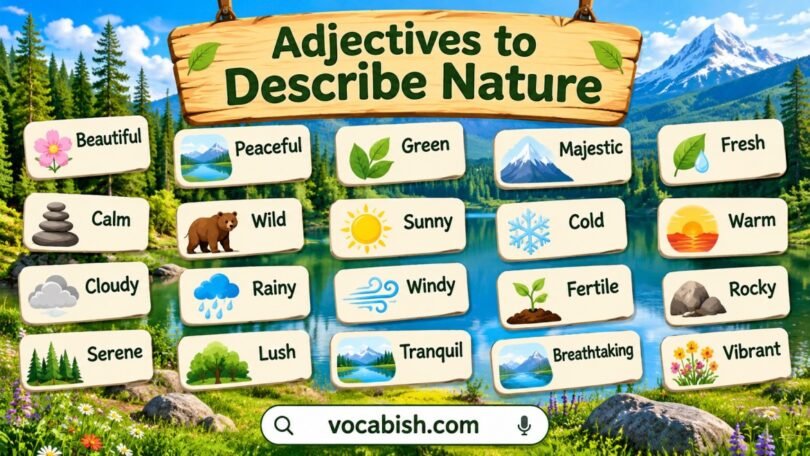

Nature is full of beautiful sights, sounds, colors, and experiences. From lush green forests and crystal-clear rivers to peaceful valleys and breathtaking mountains, the right adjectives help us describe what we see and feel.
Adjectives to describe nature are words that explain the appearance, condition, beauty, atmosphere, and characteristics of natural things. These include descriptive words for landscapes, plants, animals, weather, water, seasons, and natural environments.
Learning nature adjectives helps English learners describe outdoor experiences, talk about the environment, write descriptive paragraphs, and express their feelings about the natural world more clearly.
What Are Adjectives to Describe Nature?
Adjectives to describe nature are descriptive words that tell us what natural things look, sound, smell, feel, or seem like. They provide information about the qualities of natural places and living things.
For example:
- Lush: The forest is lush and full of green trees.
- Serene: We enjoyed the serene atmosphere near the lake.
- Breathtaking: The mountain view was breathtaking.
- Crystal-clear: Small fish were visible in the crystal-clear water.
- Barren: Few plants grow on the barren land.
Nature adjectives can describe several things, including:
- Appearance: Green, colorful, golden, beautiful, vibrant.
- Size and shape: Vast, towering, enormous, rocky, steep.
- Atmosphere: Peaceful, tranquil, refreshing, mysterious.
- Weather: Sunny, cloudy, windy, misty, stormy.
- Condition: Lush, dry, fertile, barren, polluted.
- Sounds: Melodious, soothing, thunderous, gentle.
- Smells: Fragrant, earthy, fresh, musty.
The best adjective depends on the natural feature you want to describe and the meaning you want to communicate.
General and Common Adjectives for Nature
These are commonly used words for describing different natural places and outdoor environments. They work well when talking about nature in everyday conversations, school writing, and travel descriptions.
- Natural: Existing in nature rather than being made by people. Example: The park has a beautiful natural environment.
- Green: Covered with or having the color of green plants. Example: Green fields stretched across the countryside.
- Fresh: Clean, pleasant, and not polluted or stale. Example: We enjoyed the fresh air in the mountains.
- Wild: Existing freely without being controlled or cultivated by people. Example: Wild flowers covered the hillside.
- Beautiful: Pleasing to look at. Example: The countryside looks beautiful in spring.
- Vibrant: Full of bright colors and life. Example: The garden becomes vibrant during summer.
- Rich: Full of something valuable or abundant. Example: The region has rich plant and animal life.
- Diverse: Containing many different types of plants, animals, or environments. Example: The island has diverse wildlife.
- Magnificent: Extremely impressive and beautiful. Example: The magnificent waterfall attracted many visitors.
- Remarkable: Unusual or impressive in a way that attracts attention. Example: The forest has remarkable biodiversity.
- Spectacular: Extremely impressive to see. Example: We watched a spectacular sunset over the sea.
- Expansive: Covering a large area. Example: Expansive grasslands surrounded the village.
- Pristine: Extremely clean and undamaged. Example: The island is famous for its pristine beaches.
- Picturesque: Attractive enough to look like a picture. Example: We stayed near a picturesque mountain village.
- Majestic: Having impressive beauty, size, or dignity. Example: Majestic mountains surrounded the valley.
Beautiful and Attractive Nature Adjectives
When describing nature’s beauty, use adjectives that communicate visual appeal, impressive views, and attractive natural features. These words are particularly useful for travel writing, photography descriptions, and conversations about scenic places.
- Breathtaking: Extremely beautiful or impressive. Example: The view from the mountain was breathtaking.
- Enchanting: Delightfully beautiful and magical. Example: An enchanting forest surrounded the small village.
- Stunning: Extremely attractive or impressive. Example: The lake has stunning blue water.
- Charming: Pleasant and attractive in a gentle way. Example: We discovered a charming garden beside the river.
- Gorgeous: Extremely beautiful. Example: The countryside looks gorgeous in autumn.
- Exquisite: Extremely beautiful and delicate. Example: The exquisite flowers filled the garden with color.
- Captivating: Holding someone’s attention because of its beauty or interest. Example: The captivating scenery made us stop walking.
- Dazzling: Extremely bright or impressive. Example: Dazzling sunlight covered the snowy peaks.
- Radiant: Shining brightly or appearing full of light. Example: The radiant morning sun lit up the fields.
- Glorious: Extremely beautiful or wonderful. Example: We enjoyed a glorious sunrise at the beach.
- Luminous: Giving off or reflecting light. Example: The luminous moon appeared above the quiet forest.
- Elegant: Graceful and attractive in appearance. Example: Elegant wildflowers grew along the pathway.
- Alluring: Attractive and inviting. Example: The alluring coastline encouraged us to explore.
- Dreamlike: So beautiful or unusual that it seems like a dream. Example: The misty valley looked dreamlike at sunrise.
- Resplendent: Shining brilliantly or displaying impressive beauty. Example: The garden looked resplendent with colorful flowers.
Peaceful and Calming Nature Adjectives
Some natural environments make people feel relaxed, comfortable, and free from stress. These adjectives help describe quiet forests, calm lakes, gentle breezes, and relaxing outdoor experiences.
- Peaceful: Free from noise, disturbance, or conflict. Example: We spent the afternoon in a peaceful garden.
- Serene: Calm, quiet, and undisturbed. Example: The serene lake reflected the surrounding mountains.
- Tranquil: Very peaceful and relaxing. Example: A tranquil atmosphere filled the countryside.
- Soothing: Making someone feel relaxed or comfortable. Example: The soothing sound of flowing water helped me relax.
- Calming: Making people feel less worried or stressed. Example: The calming ocean breeze made the evening pleasant.
- Still: Without movement. Example: The still water reflected the trees perfectly.
- Quiet: Making little or no noise. Example: We found a quiet place beneath the trees.
- Gentle: Soft, mild, or not forceful. Example: A gentle breeze moved the grass.
- Restful: Providing relaxation or peace. Example: The restful surroundings made the holiday enjoyable.
- Secluded: Away from busy places and other people. Example: We found a secluded beach surrounded by cliffs.
- Undisturbed: Not interrupted or affected by outside activity. Example: The birds enjoyed an undisturbed nesting area.
- Relaxing: Helping someone feel comfortable and less stressed. Example: Walking through the relaxing woodland was enjoyable.
- Idyllic: Extremely pleasant and peaceful. Example: The family spent the weekend in an idyllic countryside setting.
- Harmonious: Showing a pleasing balance between different elements. Example: The harmonious natural surroundings created a beautiful view.
- Unhurried: Moving or happening without pressure or rush. Example: An unhurried walk through the countryside made the day enjoyable.
Adjectives to Describe Landscapes and Scenery
A landscape includes the natural features of an area, such as fields, valleys, hills, forests, rocks, and open spaces. These adjectives help explain the size, appearance, shape, and overall character of a scenic place.
- Vast: Extremely large or wide. Example: Vast grasslands stretched beyond the horizon.
- Rolling: Having gently rising and falling surfaces. Example: Rolling hills covered the countryside.
- Open: Having plenty of empty space without many obstacles. Example: Open fields surrounded the farmhouse.
- Rocky: Covered with or containing many rocks. Example: A rocky landscape extended across the island.
- Hilly: Containing many hills. Example: The hilly countryside was difficult to cross.
- Flat: Having a level surface without significant slopes. Example: Flat plains covered much of the region.
- Uneven: Having an irregular surface. Example: The uneven ground made walking difficult.
- Rugged: Rough, irregular, and difficult to travel across. Example: Rugged terrain surrounded the mountain village.
- Dramatic: Having striking features that create a strong impression. Example: Dramatic cliffs rose above the ocean.
- Remote: Far away from towns, cities, or busy places. Example: The remote valley had very few visitors.
- Expansive: Spreading across a wide area. Example: An expansive desert appeared beyond the hills.
- Undulating: Having a series of gentle rises and falls. Example: Undulating fields covered the green countryside.
- Barren: Having little or no vegetation. Example: Barren land surrounded the abandoned settlement.
- Fertile: Rich in nutrients and suitable for growing plants. Example: Fertile plains supported large farms.
- Lush: Covered with thick, healthy green vegetation. Example: Lush countryside surrounded the small town.
Adjectives to Describe Mountains and Hills
Mountains and hills have different shapes, heights, surfaces, and appearances. Use these descriptive adjectives when talking about mountain ranges, rocky peaks, snowy summits, and highland scenery.
- Towering: Extremely tall and impressive. Example: Towering mountains stood behind the village.
- Steep: Rising or falling at a sharp angle. Example: We climbed a steep mountain path.
- Snow-capped: Having snow covering the top. Example: Snow-capped peaks looked beautiful in the morning light.
- Rocky: Full of rocks or stones. Example: Rocky hills surrounded the campsite.
- Jagged: Having sharp, uneven edges. Example: Jagged mountain peaks appeared against the blue sky.
- Alpine: Related to high mountains, especially the Alps or similar environments. Example: Alpine meadows were covered with wildflowers.
- Elevated: Situated at a high level. Example: The elevated plateau offered wonderful views.
- Massive: Extremely large and heavy. Example: A massive mountain dominated the landscape.
- Volcanic: Formed by or related to volcanoes. Example: The island has a volcanic landscape.
- Icy: Covered with ice or extremely cold. Example: Icy mountain slopes made the journey difficult.
- Glacial: Related to glaciers or the slow movement of ice. Example: Glacial valleys shaped the surrounding mountains.
- Breathtaking: Extremely impressive to look at. Example: The breathtaking mountain scenery attracted photographers.
- Craggy: Having many rough, steep rocks. Example: Craggy cliffs surrounded the mountain lake.
- Majestic: Impressive because of great size or beauty. Example: Majestic peaks dominated the horizon.
Adjectives to Describe Forests and Trees
Forests contain trees, shrubs, grasses, wildlife, and other vegetation. Their appearance can change with the weather, season, and amount of sunlight.
- Wooded: Covered with trees. Example: We walked through a wooded area near the river.
- Leafy: Full of leaves or covered with trees. Example: A leafy pathway led into the forest.
- Dense: Having many trees or plants growing close together. Example: Dense forests covered the mountainside.
- Thick: Growing closely together or having a large amount of vegetation. Example: Thick bushes surrounded the walking trail.
- Shady: Providing protection from direct sunlight. Example: We rested beneath a shady tree.
- Mossy: Covered with moss. Example: Mossy rocks appeared along the forest floor.
- Ancient: Very old and existing for a long time. Example: Ancient trees stood deep inside the forest.
- Tall: Having greater height than usual. Example: Tall pine trees lined the road.
- Evergreen: Remaining green throughout the year. Example: Evergreen forests remain colorful during winter.
- Deciduous: Losing leaves during a particular season, usually autumn. Example: Deciduous trees change color before winter.
- Overgrown: Covered with plants that have grown without control. Example: An overgrown forest path was difficult to follow.
- Shimmering: Shining with a soft, moving light. Example: Sunlight created shimmering patterns on the forest leaves.
- Sun-dappled: Covered with small patches of sunlight passing through leaves or branches. Example: We walked along a sun-dappled forest trail.
- Twisted: Having a bent or winding shape. Example: Twisted tree branches stretched across the pathway.
- Leafless: Without leaves. Example: Leafless trees stood quietly in the winter forest.
Adjectives to Describe Flowers and Plants
Flowers and plants bring different colors, shapes, textures, and fragrances to natural environments. These words help describe their appearance, growth, health, and condition.
- Blooming: Producing flowers. Example: Blooming flowers covered the garden.
- Floral: Related to or having the appearance of flowers. Example: The floral display brightened the meadow.
- Fragrant: Having a pleasant smell. Example: Fragrant roses grew beside the garden wall.
- Delicate: Soft, fine, and easily damaged. Example: Delicate petals moved in the breeze.
- Colorful: Having many attractive colors. Example: Colorful wildflowers decorated the hillside.
- Vibrant: Full of bright and lively colors. Example: Vibrant plants grew along the riverbank.
- Thorny: Covered with sharp thorns. Example: Thorny bushes surrounded the flowering plants.
- Dew-covered: Having small drops of water on the surface. Example: Dew-covered petals sparkled in the morning sunlight.
- Wilted: Becoming weak or drooping because of a lack of water or age. Example: The wilted flowers needed fresh water.
- Lush: Growing thickly and healthily. Example: Lush vegetation covered the garden.
- Blossoming: Producing flowers or developing successfully. Example: Blossoming trees filled the park with color.
- Wild: Growing naturally without being planted or controlled by people. Example: Wild orchids appeared in the forest.
- Leafy: Having many green leaves. Example: Leafy plants decorated the entrance.
- Thornless: Without thorns. Example: Thornless rose bushes grew beside the pathway.
- Hardy: Able to survive difficult weather or growing conditions. Example: Hardy plants survived the cold winter.
Adjectives to Describe Rivers, Lakes, and Oceans
Water bodies can look clear, muddy, calm, rough, deep, or shallow. These adjectives are useful for describing beaches, waterfalls, rivers, ponds, lakes, and seas.
- Crystal-clear: Completely clear and easy to see through. Example: Crystal-clear water flowed through the mountain stream.
- Turquoise: Having a blue-green color. Example: Turquoise water surrounded the tropical island.
- Azure: Having a bright blue color. Example: Azure waves moved gently across the beach.
- Deep: Extending far below the surface. Example: Deep water covered the center of the lake.
- Shallow: Not very deep. Example: Children played in the shallow water near the shore.
- Calm: Without strong movement or waves. Example: The calm sea reflected the evening sky.
- Rough: Having strong waves or turbulent movement. Example: Rough ocean waves crashed against the rocks.
- Murky: Dark or dirty and difficult to see through. Example: Murky water flowed through the muddy river.
- Muddy: Containing or covered with mud. Example: The muddy river became wider after heavy rain.
- Sparkling: Shining with small flashes of light. Example: Sparkling water covered the surface of the lake.
- Flowing: Moving continuously in a particular direction. Example: Flowing water passed through the green valley.
- Frozen: Changed into ice because of extreme cold. Example: The frozen lake attracted winter visitors.
- Turbulent: Moving violently or irregularly. Example: Turbulent water rushed through the narrow gorge.
- Refreshing: Making someone feel cool and comfortable. Example: The refreshing river water felt wonderful on a hot day.
- Salty: Containing salt. Example: Salty ocean water covered the sandy shore.
- Foamy: Covered with bubbles or foam. Example: Foamy waves reached the beach.
- Gentle: Moving softly without much force. Example: Gentle waves touched the sandy coastline.
- Surging: Moving forward with great force. Example: Surging waves struck the rocky shore.
Adjectives to Describe Weather and Sky
Weather and sky conditions strongly influence how natural places look and feel. These adjectives help describe sunlight, clouds, rain, wind, storms, fog, and other atmospheric conditions.
Sunny and bright weather
- Sunny: Receiving plenty of sunlight. Example: It was a sunny morning in the countryside.
- Bright: Full of light. Example: A bright sky appeared above the green fields.
- Clear: Free from clouds or mist. Example: The clear sky offered a beautiful view of the stars.
- Golden: Having a warm yellow or gold color. Example: Golden sunlight covered the mountains.
- Radiant: Shining brightly. Example: Radiant sunshine warmed the open fields.
Cloudy and rainy weather
- Cloudy: Covered with clouds. Example: The cloudy sky suggested that rain was coming.
- Overcast: Completely or mostly covered with clouds. Example: An overcast sky made the afternoon look dull.
- Gloomy: Dark and unpleasant, often because of clouds or poor weather. Example: The gloomy weather continued throughout the day.
- Misty: Filled with a light cloud of tiny water droplets near the ground. Example: A misty morning covered the valley.
- Foggy: Filled with thick fog that makes it difficult to see. Example: The foggy road disappeared into the forest.
- Rainy: Having frequent or continuous rain. Example: Rainy weather kept us indoors.
- Drizzly: Having light, fine rain. Example: A drizzly afternoon made the streets wet.
- Stormy: Having strong winds, heavy rain, or thunder. Example: Stormy weather approached the coastline.
Windy and cold weather
- Breezy: Having a light, pleasant wind. Example: A breezy afternoon made the beach enjoyable.
- Windy: Having strong or noticeable wind. Example: It was a windy day in the open countryside.
- Gusty: Having sudden, strong bursts of wind. Example: Gusty winds moved the branches of the trees.
- Chilly: Uncomfortably cool. Example: A chilly breeze passed through the valley.
- Freezing: Extremely cold. Example: Freezing temperatures covered the mountain region.
- Icy: Extremely cold or covered with ice. Example: Icy winds blew across the snowy fields.
- Humid: Having a high amount of moisture in the air. Example: The humid weather made the tropical forest feel warmer.
- Mild: Neither very hot nor very cold. Example: Mild weather made the morning walk pleasant.
Adjectives to Describe Seasons
Every season brings different changes to plants, trees, weather, and natural scenery. These adjectives help describe the appearance and atmosphere of spring, summer, autumn, and winter.
Spring adjectives
- Blossoming: Producing flowers. Example: Blossoming trees covered the park.
- Fresh: Clean and pleasantly cool. Example: Fresh spring air filled the garden.
- Blooming: Full of flowers. Example: Blooming flowers appeared across the meadow.
- Mild: Pleasantly warm or cool. Example: Mild spring weather encouraged outdoor activities.
- Lively: Full of activity and energy. Example: The lively countryside welcomed the spring season.
Summer adjectives
- Sunny: Full of sunshine. Example: Sunny summer days attracted visitors to the beach.
- Scorching: Extremely hot. Example: Scorching temperatures dried the open fields.
- Warm: Having a comfortable or high temperature. Example: Warm summer evenings were perfect for walking.
- Lush: Growing thickly and healthily. Example: Lush vegetation covered the countryside.
- Tropical: Related to hot regions near the equator. Example: Tropical forests remain warm throughout the year.
Autumn adjectives
- Golden: Having a yellow-gold color. Example: Golden leaves covered the forest floor.
- Colorful: Showing many different colors. Example: Colorful autumn trees decorated the hillside.
- Crisp: Pleasantly cool and fresh. Example: The crisp autumn air felt refreshing.
- Amber: Having a warm yellowish-orange or brown color. Example: Amber leaves covered the walking path.
- Rustling: Making a soft sound as leaves move. Example: Rustling leaves moved across the garden.
Winter adjectives
- Snowy: Covered with snow. Example: Snowy mountains appeared in the distance.
- Frosty: Covered with frost or very cold. Example: Frosty grass sparkled in the early morning.
- Icy: Covered with ice or extremely cold. Example: Icy branches surrounded the frozen lake.
- Bare: Without leaves or covering. Example: Bare trees stood across the winter landscape.
- Bitterly cold: Extremely cold and uncomfortable. Example: Bitterly cold winds swept across the valley.
Adjectives to Describe Animals and Wildlife
Animals are an important part of the natural world. These adjectives describe their appearance, behavior, movement, and relationship with their environment.
- Wild: Living naturally without domestication. Example: Wild deer walked through the forest.
- Graceful: Moving in a smooth and attractive way. Example: Graceful swans swam across the lake.
- Majestic: Having an impressive appearance. Example: Majestic eagles flew above the mountains.
- Colorful: Having bright or different colors. Example: Colorful butterflies visited the flowers.
- Nocturnal: Active mainly during the night. Example: Nocturnal animals search for food after sunset.
- Aquatic: Living in or closely associated with water. Example: Aquatic animals live in rivers, lakes, and oceans.
- Terrestrial: Living mainly on land. Example: Terrestrial animals depend on land habitats.
- Endangered: At risk of becoming extinct. Example: Endangered species need protection.
- Rare: Not commonly found. Example: Rare birds live in this protected forest.
- Native: Naturally belonging to a particular region. Example: Native animals play an important role in the ecosystem.
- Migratory: Moving from one region to another at certain times of the year. Example: Migratory birds visit the wetlands during winter.
- Camouflaged: Having colors or patterns that help an animal blend into its surroundings. Example: The camouflaged lizard was difficult to see.
- Fierce: Showing strong aggression or power. Example: A fierce tiger moved through the dense forest.
- Timid: Easily frightened or nervous. Example: Timid rabbits hid among the bushes.
- Playful: Enjoying activity and play. Example: Playful dolphins jumped above the waves.
Related Resources: 200+ Adjectives and Words to Describe Animals
Adjectives to Describe Natural Colors
Natural colors appear in flowers, leaves, mountains, oceans, sunsets, and wildlife. These adjectives make descriptions more specific and help readers imagine the scene.
- Emerald: Having a rich, bright green color. Example: Emerald forests covered the mountain slopes.
- Olive: Having a muted yellowish-green color. Example: Olive-green leaves covered the branches.
- Sapphire: Having a deep blue color. Example: Sapphire water surrounded the island.
- Turquoise: Having a blue-green shade. Example: Turquoise waves moved along the coastline.
- Azure: Having a clear, bright blue color. Example: Azure skies stretched above the countryside.
- Golden: Having a warm yellow or gold color. Example: Golden sunlight touched the hills.
- Amber: Having a yellowish-orange or brown color. Example: Amber leaves covered the ground.
- Scarlet: Having a bright red color. Example: Scarlet flowers grew beside the pathway.
- Crimson: Having a deep red color. Example: Crimson leaves appeared among the autumn trees.
- Ivory: Having a soft, creamy-white color. Example: Ivory-colored flowers grew near the pond.
- Silver: Having a shiny gray-white appearance. Example: Silver moonlight reflected on the lake.
- Violet: Having a blue-purple color. Example: Violet wildflowers decorated the meadow.
- Lavender: Having a pale purple color. Example: Lavender flowers covered the hillside.
- Coral: Having a pinkish-orange color. Example: Coral-colored flowers brightened the garden.
- Moss-green: Having the muted green color of moss. Example: Moss-green rocks lined the forest stream.
- Earthy: Having natural brown, green, or soil-like colors. Example: Earthy colors dominated the rocky landscape.
Related: Words to Describe Colors with Meanings
Adjectives to Describe Natural Sounds
Nature produces many sounds, from birds singing and leaves rustling to waterfalls crashing and thunder rumbling. These adjectives help explain the volume, quality, and feeling of natural sounds.
- Melodious: Pleasant and musical. Example: Melodious birdsong filled the forest.
- Soothing: Making someone feel relaxed. Example: The soothing sound of flowing water was relaxing.
- Gentle: Soft and not forceful. Example: Gentle waves reached the shore.
- Whispering: Making a very soft sound. Example: Whispering leaves moved in the evening breeze.
- Rustling: Making a soft, dry sound through movement. Example: Rustling branches moved above our heads.
- Chirping: Making short, high-pitched bird sounds. Example: Chirping birds welcomed the morning.
- Trilling: Producing a series of quick, high musical sounds. Example: Trilling birds sang from the treetops.
- Humming: Producing a low, continuous sound. Example: Humming insects filled the summer garden.
- Roaring: Making a very loud, powerful sound. Example: The roaring waterfall echoed through the valley.
- Thunderous: Extremely loud and powerful. Example: Thunderous waves crashed against the cliffs.
- Rumbling: Making a deep, continuous sound. Example: Rumbling thunder approached from the distance.
- Murmuring: Making a low, soft, continuous sound. Example: A murmuring stream flowed through the forest.
- Melodic: Having a pleasant musical quality. Example: Melodic bird calls echoed through the trees.
- Echoing: Repeating a sound after it reflects from a surface. Example: Echoing animal calls traveled across the valley.
- Rhythmic: Having a regular pattern or beat. Example: Rhythmic waves moved against the rocky shore.
Here’s a complete guide: 150+ Adjectives to Describe Sounds in English
Adjectives to Describe Natural Smells
Natural environments have different scents, including the fragrance of flowers, the smell of wet soil, and the fresh scent of pine trees. Use these adjectives to describe the way nature smells.
- Fragrant: Having a pleasant smell. Example: Fragrant flowers grew along the garden path.
- Aromatic: Having a noticeable and usually pleasant smell. Example: Aromatic herbs grew beside the forest trail.
- Earthy: Having a smell similar to soil or damp ground. Example: The earthy smell of wet soil filled the air.
- Fresh: Having a clean and pleasant smell. Example: Fresh mountain air surrounded the campsite.
- Floral: Having a smell similar to flowers. Example: A floral fragrance came from the blooming garden.
- Woody: Having a smell similar to wood or trees. Example: The woody scent of pine trees filled the forest.
- Pine-scented: Having the smell of pine trees. Example: Pine-scented air surrounded the mountain cabin.
- Musty: Having a slightly damp or stale smell. Example: A musty smell came from the old forest hut.
- Mossy: Having a smell associated with damp moss. Example: A mossy scent filled the shaded woodland.
- Herbal: Having a smell similar to fresh herbs. Example: Herbal scents spread through the garden.
- Sweet-smelling: Having a pleasant, sweet fragrance. Example: Sweet-smelling blossoms attracted butterflies.
- Pungent: Having a very strong and sharp smell. Example: Pungent plant odors filled the tropical wetland.
Adjectives to Describe the Natural Environment
These adjectives describe the condition, health, cleanliness, and ecological characteristics of natural surroundings. They are useful when discussing environmental protection, conservation, pollution, and biodiversity.
- Polluted: Containing harmful substances. Example: Polluted rivers can harm aquatic animals.
- Unpolluted: Free from harmful contamination. Example: Unpolluted mountain streams support healthy ecosystems.
- Clean: Free from dirt or pollution. Example: Clean beaches provide safer habitats for marine life.
- Healthy: Growing or functioning well. Example: Healthy forests support many different species.
- Fertile: Rich in nutrients that support plant growth. Example: Fertile soil helps crops grow.
- Dry: Having little moisture. Example: Dry soil makes it difficult for plants to survive.
- Arid: Extremely dry, with very little rainfall. Example: Arid regions receive little annual rainfall.
- Humid: Containing a high amount of moisture in the air. Example: Humid forests support many tropical plants.
- Biodiverse: Containing many different species of living organisms. Example: Biodiverse forests provide habitats for countless animals.
- Fragile: Easily damaged or disturbed. Example: Fragile ecosystems need careful protection.
- Sustainable: Able to continue without causing serious environmental damage. Example: Sustainable farming protects natural resources.
- Protected: Kept safe from harm or destruction. Example: Protected wetlands provide shelter for migratory birds.
- Degraded: Damaged or reduced in quality. Example: Degraded soil cannot support healthy plant growth.
- Eroded: Gradually worn away by water, wind, or other natural forces. Example: Eroded hillsides lose valuable topsoil.
- Overgrown: Covered with excessive plant growth. Example: The overgrown garden provided shelter for small animals.
Adjectives to Describe Wild and Untouched Nature
Some natural places remain largely unaffected by human development. These words help describe remote forests, untouched beaches, wilderness areas, and naturally preserved environments.
- Untouched: Not changed or damaged by human activity. Example: Untouched forests covered the remote mountain region.
- Unspoiled: Remaining in its original and attractive condition. Example: The island has unspoiled beaches and clear water.
- Uncultivated: Not prepared or used for growing crops. Example: Uncultivated land surrounded the forest.
- Wilderness: Although commonly used as a noun, it refers to a natural area with little human development. Example: The vast wilderness provided a home for wild animals.
- Pristine: Clean and in excellent original condition. Example: Pristine lakes attracted nature photographers.
- Remote: Far from populated areas. Example: Remote valleys contain many rare plants.
- Isolated: Separated from other places or communities. Example: An isolated island supported unusual wildlife.
- Untamed: Not controlled or changed by humans. Example: Untamed rivers flowed through the wilderness.
- Uninhabited: Having no permanent human residents. Example: Uninhabited islands provided nesting places for seabirds.
- Undisturbed: Not affected by interruption or outside activity. Example: Undisturbed forests provide safe habitats for wildlife.
- Secluded: Hidden or away from busy areas. Example: A secluded waterfall was discovered deep in the forest.
- Wild: Existing naturally without human control. Example: Wild landscapes stretched across the national park.
Adjectives to Describe Different Feelings About Nature
Sometimes, describing nature means expressing how a place makes you feel. These adjectives communicate emotions and impressions created by natural surroundings.
- Inspiring: Making someone feel motivated or creative. Example: The inspiring mountain scenery encouraged us to explore.
- Refreshing: Making someone feel renewed or comfortable. Example: A refreshing walk through the forest improved my mood.
- Invigorating: Giving someone energy or strength. Example: The invigorating mountain air made us feel active.
- Fascinating: Extremely interesting and attractive. Example: The fascinating coral reefs attracted marine researchers.
- Mysterious: Difficult to understand or explain. Example: A mysterious fog covered the ancient forest.
- Magical: Having an unusually beautiful or special quality. Example: The forest looked magical under the moonlight.
- Overwhelming: So powerful or impressive that it creates a strong emotional reaction. Example: The overwhelming beauty of the mountains left us speechless.
- Impressive: Creating admiration because of size, quality, or beauty. Example: The impressive waterfall attracted hundreds of visitors.
- Unforgettable: Impossible to forget because of a strong experience. Example: Watching the sunrise over the ocean was unforgettable.
- Adventurous: Exciting and involving new experiences. Example: The adventurous mountain trail offered wonderful views.
- Dramatic: Creating a powerful visual or emotional effect. Example: Dramatic clouds gathered above the coastline.
- Comforting: Making someone feel safe or relaxed. Example: The comforting sound of rain made the evening peaceful.
Adjectives for Nature Based on the Five Senses
One effective way to describe nature is to focus on what you experience through your senses. This approach is especially useful when writing descriptive paragraphs or sharing outdoor experiences.
1. Sight – What You See
These words describe the appearance, colors, and visual qualities of natural surroundings.
- Colorful
- Bright
- Golden
- Shimmering
- Sparkling
- Lush
- Vibrant
- Picturesque
- Breathtaking
- Majestic
- Radiant
- Misty
Example: Golden sunlight spread across the lush green valley.
2. Hearing – What You Hear
These words describe sounds produced by animals, water, wind, and weather.
- Melodious
- Soothing
- Gentle
- Rustling
- Chirping
- Roaring
- Rumbling
- Whispering
- Thunderous
- Murmuring
- Echoing
- Rhythmic
Example: Melodious birdsong echoed through the peaceful forest.
3. Smell – What You Smell
These adjectives describe the different scents found in natural environments.
- Fragrant
- Aromatic
- Earthy
- Fresh
- Floral
- Woody
- Herbal
- Musty
- Sweet-smelling
- Pine-scented
Example: The earthy smell of wet soil filled the garden after the rain.
4. Touch – What You Feel
These words describe the physical sensations of touching or experiencing natural elements.
- Soft
- Rough
- Smooth
- Coarse
- Silky
- Prickly
- Damp
- Wet
- Dry
- Sticky
- Cool
- Warm
- Icy
- Breezy
Example: Soft grass felt cool beneath our feet.
5. Taste – What You Taste
Taste adjectives are useful when describing naturally occurring foods, fruits, herbs, and edible plants.
- Sweet
- Sour
- Bitter
- Tangy
- Juicy
- Ripe
- Tart
- Refreshing
- Mild
- Savory
Example: The ripe wild berries tasted sweet and juicy.
Positive and Negative Nature Adjectives
Nature can be described positively or negatively depending on its appearance, condition, and the experience it creates.
Positive Nature Adjectives
Use these words to describe attractive, healthy, peaceful, and enjoyable natural environments.
- Beautiful
- Breathtaking
- Peaceful
- Serene
- Tranquil
- Lush
- Vibrant
- Pristine
- Refreshing
- Colorful
- Majestic
- Magnificent
- Fertile
- Fragrant
- Picturesque
- Spectacular
- Blooming
- Untouched
- Invigorating
- Idyllic
Example sentences:
- The peaceful forest was perfect for a morning walk.
- Beautiful wildflowers covered the green meadow.
- The pristine beach had crystal-clear water.
- Majestic mountains surrounded the peaceful valley.
- Fresh air made the countryside feel refreshing.
Negative Nature Adjectives
These words describe unpleasant weather, damaged environments, harsh landscapes, and undesirable natural conditions.
- Barren
- Polluted
- Gloomy
- Murky
- Muddy
- Stormy
- Harsh
- Dry
- Dusty
- Rocky
- Rugged
- Lifeless
- Wilted
- Overgrown
- Degraded
- Foggy
- Dull
- Eroded
- Unpleasant
- Treacherous
Example sentences:
- Barren land covered most of the dry region.
- Polluted water threatened the local wildlife.
- Stormy weather made the sea dangerous.
- The muddy pathway became difficult to cross.
- Gloomy clouds covered the entire sky.
Related Resources: Positive and Negative Adjectives with Meanings
How to Use Nature Adjectives in Sentences
Nature adjectives usually appear before nouns or after linking verbs such as is, are, looks, feels, and seems. You can use one adjective or combine several descriptive words to make your sentences more detailed.
1. Place an Adjective Before a Noun
This is one of the most common ways to describe natural features.
- A beautiful garden surrounded the house.
- Tall trees covered the hillside.
- Crystal-clear water flowed through the valley.
- Colorful butterflies visited the flowers.
- A gentle breeze moved across the field.
2. Use Adjectives After Linking Verbs
Words such as is, looks, seems, and feels connect the adjective to the subject.
- The forest is peaceful.
- The mountain looks magnificent.
- The weather feels pleasant.
- The river seems calm.
- The flowers are fragrant.
3. Combine Two or More Adjectives
You can use multiple adjectives when they describe different qualities of the same natural feature.
- The lake is beautiful, peaceful, and crystal-clear.
- We walked through a lush, green forest.
- The mountains looked tall, rugged, and majestic.
- A cool, gentle breeze passed through the garden.
- The sunset created a warm, golden glow across the sky.
4. Describe a Complete Natural Scene
Combine adjectives for different natural features to help someone imagine the entire environment.
- The peaceful valley had lush green fields, tall trees, and a sparkling river.
- We explored a dense forest filled with colorful flowers and melodious birds.
- The remote island had pristine beaches, turquoise water, and beautiful coral reefs.
- Snow-capped mountains stood beneath a clear blue sky.
5. Use Nature Adjectives in Everyday Conversation
These expressions are useful when talking about outdoor activities, holidays, weather, and beautiful places.
- The weather is absolutely gorgeous today.
- What a breathtaking view!
- This place feels so peaceful.
- The mountain air is incredibly fresh.
- The flowers smell wonderful.
- The river looks crystal-clear.
- I love the beautiful scenery here.
- The forest is so quiet and relaxing.
- The sunset looks spectacular.
- The countryside is especially beautiful in spring.
Common Mistakes When Describing Nature
Some nature adjectives have similar meanings but are not interchangeable in every sentence. Pay attention to their correct usage.
- Sunny vs. Bright: Sunny means receiving sunlight, while bright means full of light. A room can be bright without being sunny.
- Misty vs. Foggy: Misty describes light, thin moisture in the air, while foggy usually refers to thicker moisture that reduces visibility.
- Lush vs. Fertile: Lush describes thick, healthy plant growth, while fertile describes soil that supports plant growth.
- Serene vs. Silent: Serene means peaceful and calm, while silent means completely or almost completely without sound.
- Wild vs. Untouched: Wild describes something existing naturally without human control, while untouched means not changed or affected by human activity.
Practice Exercises: Choose the Correct Nature Adjective
Test your understanding by choosing the most suitable adjective for each sentence.
Complete the sentences:
- The ______ forest was filled with thick green trees. (lush / barren)
- We enjoyed the ______ atmosphere beside the lake. (serene / stormy)
- ______ water flowed through the mountain stream. (crystal-clear / murky)
- The ______ mountains were covered with snow. (snow-capped / leafless)
- The ______ flowers filled the garden with a pleasant smell. (fragrant / rocky)
- A ______ breeze moved through the trees. (gentle / thunderous)
- The ______ land received very little rainfall. (arid / fertile)
- ______ waves crashed against the rocky coastline. (turbulent / still)
- The ______ sky was completely covered with clouds. (overcast / radiant)
- ______ leaves covered the ground during autumn. (golden / aquatic)
Answers:
- Lush
- Serene
- Crystal-clear
- Snow-capped
- Fragrant
- Gentle
- Arid
- Turbulent
- Overcast
- Golden
FAQs About Adjectives to Describe Nature
Beautiful, lush, peaceful, vibrant, breathtaking, serene, magnificent, refreshing, pristine, and picturesque are excellent adjectives for describing nature.
Five positive nature adjectives are beautiful, peaceful, refreshing, colorful, and breathtaking. They describe attractive and enjoyable natural environments.
Use picturesque, stunning, magnificent, spectacular, gorgeous, captivating, enchanting, and breathtaking to describe beautiful natural scenery.
Serene, tranquil, quiet, soothing, calm, secluded, restful, and undisturbed describe peaceful natural environments.
Describe a beautiful forest using adjectives such as lush, dense, leafy, green, peaceful, shady, ancient, and vibrant.
Majestic, towering, snow-capped, rugged, magnificent, breathtaking, craggy, and spectacular are useful adjectives for describing mountains.
Use vivid words such as shimmering, fragrant, golden, crystal-clear, rustling, misty, lush, and tranquil to create clear descriptions of natural surroundings.
Picturesque, breathtaking, magnificent, stunning, gorgeous, spectacular, and enchanting are alternatives to beautiful when describing natural scenery.
Conclusion
Learning Adjectives to Describe Nature helps you express the beauty, appearance, atmosphere, and characteristics of the natural world. Words such as lush, serene, breathtaking, crystal-clear, fragrant, and majestic make descriptions more specific and meaningful.
Use these nature adjectives when talking about forests, mountains, rivers, flowers, animals, weather, and outdoor experiences. Practice using different descriptive words in your everyday conversations and writing to develop a richer English vocabulary.
Explore More Related Topics
- 200+ Adjectives to Describe Feelings in English
- 150+ Adjectives to Describe Sounds in English
- 150+ Adjectives to Describe Food in English
- 200+ Adjectives to Describe Emotions in English
- 1000+ Descriptive Words with Meanings and PDF
- 200+ Adjectives and Words to Describe Animals
- 100+ Adjectives to Describe Someone in English
- 100+ Words to Describe Yourself for a Job Interview