Music is everywhere, and knowing the names of musical instruments helps you learn English in a practical way. In this blog post, you will explore 100+ musical instruments with pictures, which makes it easier to recognize, remember, and talk about them. Learning musical instrument vocabulary improves your speaking, reading, writing, and listening skills. When you can name and describe instruments confidently, you can enjoy music, share your thoughts, and communicate more effectively in English.
Common Musical Instruments with Pictures
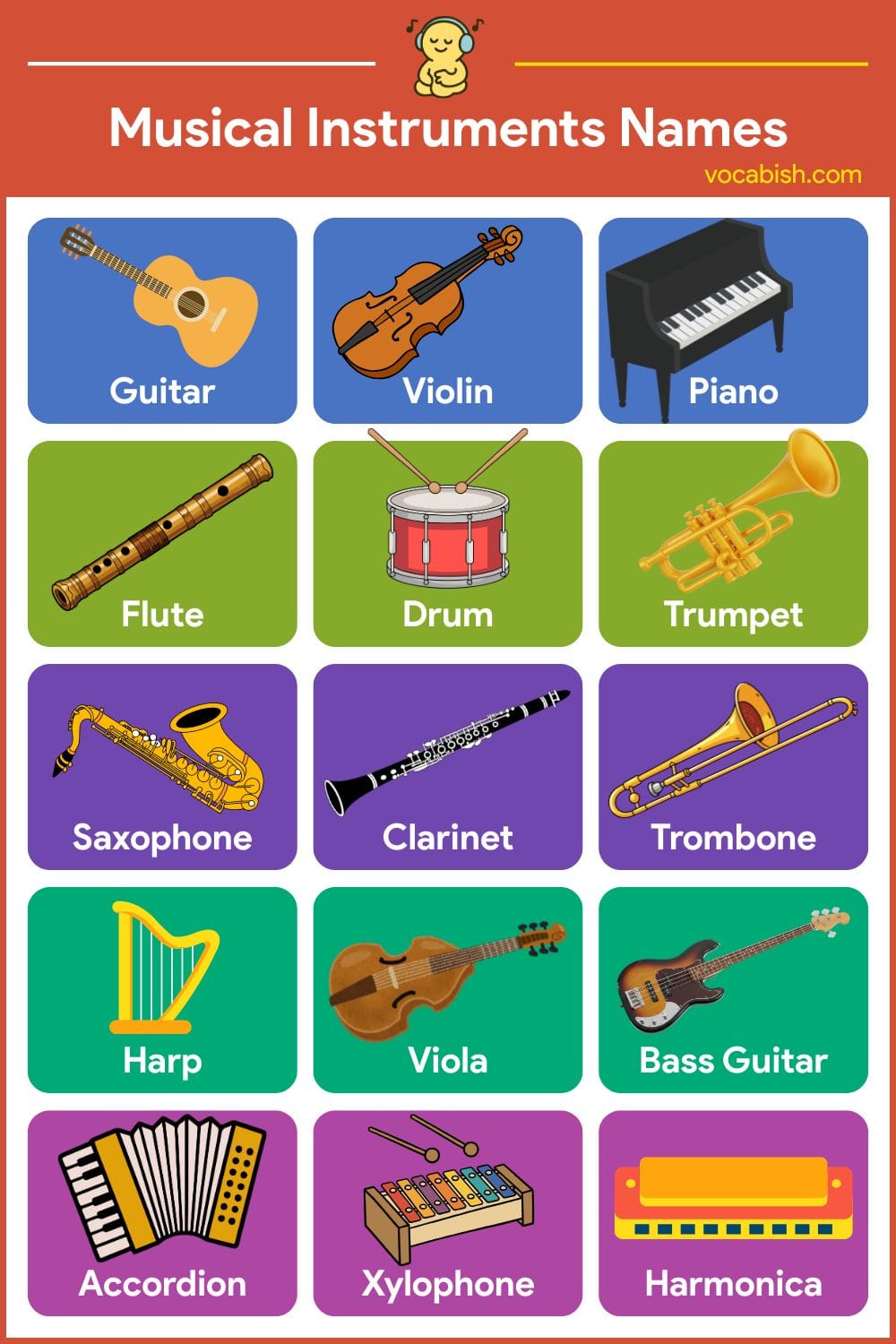
Here’s the list of most common and useful musical instrument names in English with their information and pictures:
- Guitar: Six strings, used in pop, rock, and folk music.
- Violin: Four strings, small, played with a bow.
- Piano: Black and white keys, used in many music styles.
- Flute: Long tube, played by blowing across a hole.
- Drum: Produces rhythm when hit with sticks or hands.
- Trumpet: Bright and loud, used in bands and orchestras.
- Saxophone: Single-reed, metal body, popular in jazz.
- Cello: Large, played sitting down, rich sound.
- Clarinet: Single-reed instrument, smooth tone.
- Trombone: Slide instrument, strong sound.
- Harp: Triangular frame with many plucked strings.
- Viola: Slightly bigger than violin, deeper sound.
- Bass Guitar: Four strings, low tones in bands.
- Accordion: Keys and bellows, used in folk music.
- Oboe: Double-reed, bright and high-pitched.
- Tambourine: Small frame with jingles, shaken or hit.
- Marimba: Wooden bars, makes musical notes.
- Timpani: Large drums, tuned to specific notes.
- Electric Guitar: Guitar with pickup, needs amplifier.
- Organ: Large keyboard, many pipes, used in churches.
- Bagpipes: Airbag supplies wind to pipes, used in folk music.
- Harmonica: Small, mouth-blown, used in blues and folk.
- Ukulele: Small four-string guitar, bright sound.
- Xylophone: Wooden bars, produces musical notes.
- Steel Drum: Tuned metal drum, Caribbean music sound.
String Instruments Names and Their Types
String instruments produce sound by vibrating strings. You can pluck, strum, or bow them. Here, you will explore the different types of string instruments and their uses.
Common String Instruments
- Guitar: Six strings, used in pop, rock, and folk music.
- Violin: Four strings, small and played with a bow.
- Viola: Slightly bigger than a violin, deeper sound.
- Cello: Large, played sitting down, rich sound.
- Double Bass: Very big, lowest string instrument.
Classical String Instruments
- Harp: Triangular frame with many strings, played by plucking.
- Lyre: Ancient instrument with a U-shaped frame.
- Lute: Old European instrument with round body.
Folk and Traditional String Instruments
- Banjo: Circular body, used in folk and country music.
- Mandolin: Small, played with a pick, bright sound.
- Sitar: Long-necked Indian instrument with a resonant tone.
- Koto: Japanese instrument, played by plucking strings.
Read More about: String Instruments Names
List of Wind Instruments and Their Uses
Wind instruments create sound by blowing air through them. In this section, you will learn and understand the different types of wind instruments along with their uses and functions.
Woodwind Instruments
- Flute: Long tube, played by blowing across a hole.
- Clarinet: Single-reed instrument, smooth tone.
- Oboe: Double-reed, bright and high-pitched.
- Bassoon: Large double-reed, deep sound.
- Saxophone: Popular in jazz, single-reed, metal body.
Brass Instruments
- Trumpet: Bright and loud, used in bands and orchestras.
- Trombone: Slide instrument, powerful sound.
- French Horn: Circular brass instrument, rich tone.
- Tuba: Biggest brass, very low notes.
- Cornet: Smaller version of trumpet, softer tone.
List of Percussion Instruments and Types
Percussion instruments produce sound when hit, shaken, or scraped.
Drums and Rhythm Instruments
- Drum Kit: Set of drums and cymbals.
- Snare Drum: Sharp, crisp sound, part of marching bands.
- Bass Drum: Large drum, deep beat.
- Cymbals: Metal plates, crash for effect.
- Tambourine: Small frame with jingles, shaken or hit.
Tuned Percussion
- Xylophone: Wooden bars, produces musical notes.
- Marimba: Similar to xylophone, lower sound.
- Glockenspiel: Metal bars, bright sound.
- Timpani: Large kettle drums, tuned to specific notes.
Types of Keyboard Instruments
Keyboard instruments are played by pressing keys. Here’s the list and different types of keyboard instruments with their information.
Pianos and Organs
- Piano: Most common, black and white keys.
- Grand Piano: Large piano, used in concerts.
- Upright Piano: Smaller, vertical, for homes.
- Pipe Organ: Large church instrument, many pipes.
Modern Electronic Keyboards
- Synthesizer: Creates many sounds electronically.
- Electric Piano: Electronic version of piano.
- Accordion: Keys and bellows, used in folk music.
Electronic Instruments in Music
Electronic instruments use electricity to produce sound.
- Drum Machine: Electronic percussion sounds.
- Theremin: Played without touching, hand movements control pitch.
- Electric Guitar: Guitar with pickup, requires amplifier.
- Sampler: Plays recorded sounds digitally.
Unique Instruments Used by Musicians
- Harmonica: Small, mouth-blown, used in blues and folk.
- Bagpipes: Airbag supplies wind to pipes.
- Didgeridoo: Long wind instrument from Australia.
- Steel Drum: Caribbean instrument, tuned metal surface.
- Melodica: Keyboard blown through a mouthpiece.
You May Also Like:
A to Z List of Musical Instruments
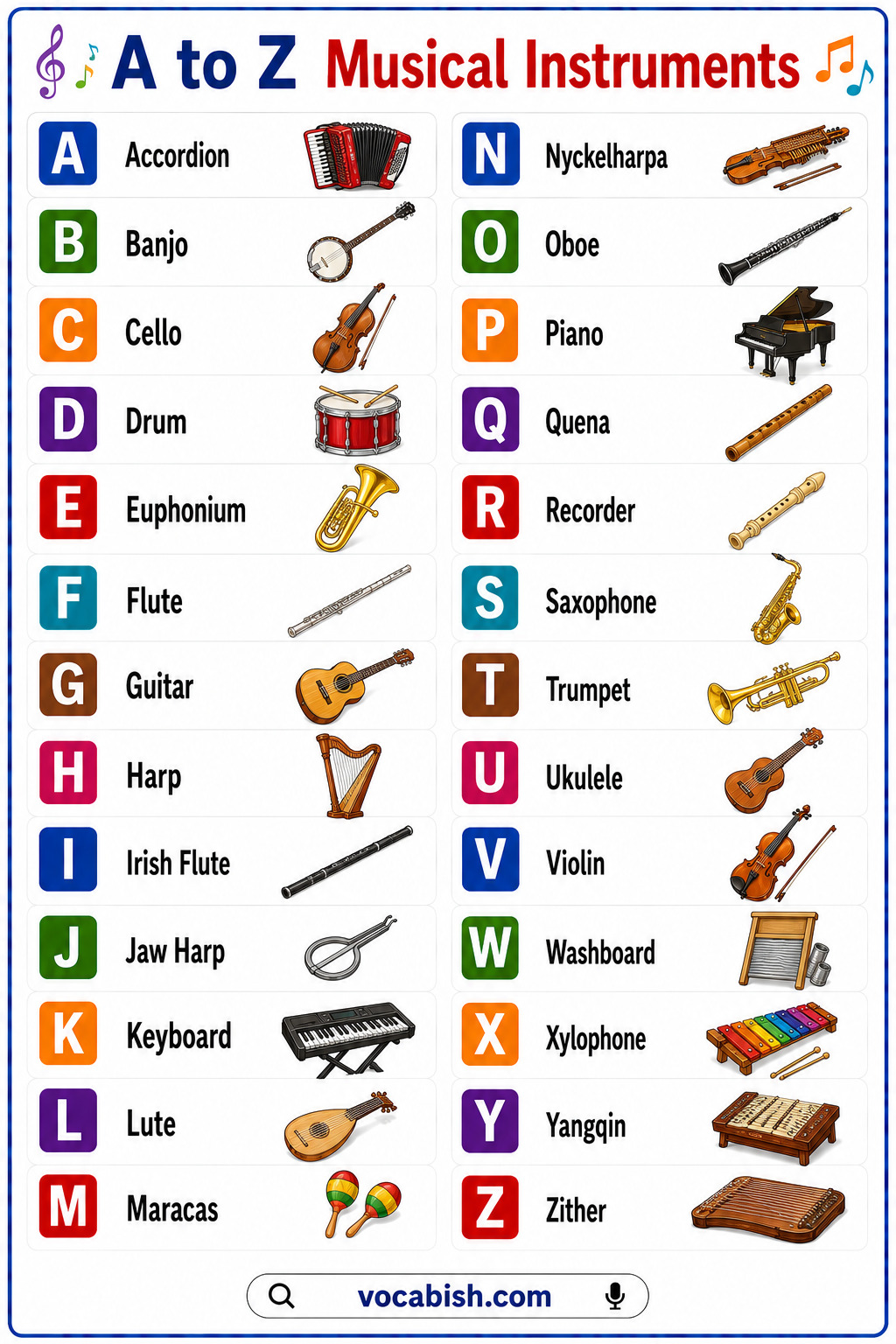
Here’s an alphabetical list of musical instruments that start from A to Z:
A: Accordion, Alphorn, Autoharp
B: Banjo, Bassoon, Bongos, Bagpipes, Balalaika
C: Cello, Clarinet, Cornet, Congas, Cymbals
D: Drum, Didgeridoo, Dulcimer, Djembe, Double Bass
E: Electric Guitar, English Horn, Euphonium
F: Flute, Fiddle, Flugelhorn, French Horn
G: Guitar, Glockenspiel, Gong, Guiro
H: Harp, Harmonica, Harpsichord
I: Irish Flute
J: Jaw Harp
K: Kalimba, Koto, Keyboard
L: Lute, Lyre
M: Mandolin, Marimba, Melodica
N: Native American Flute, Nyckelharpa
O: Oboe, Ocarina, Organ
P: Piano, Piccolo, Pan Flute
Q: Quena
R: Recorder
S: Saxophone, Sitar, Snare Drum, Steel Drum
T: Trumpet, Trombone, Tambourine, Tuba, Triangle
U: Ukulele
V: Violin, Viola, Vibraphone
W: Washboard, Whistle
X: Xylophone
Y: Yangqin, Yidaki
Z: Zither, Zhongruan, Zurna
Frequently Asked Questions
There are 100+ musical instruments including guitar, piano, violin, flute, drums, trumpet, saxophone, cello, harp, and many more.
Common percussion instruments are drums, snare drum, bass drum, cymbals, tambourine, xylophone, marimba, glockenspiel, and timpani, played by hitting, shaking, or scraping.
The 10 most common instruments are guitar, piano, violin, drums, flute, trumpet, saxophone, cello, clarinet, and trombone.
Wind and brass instruments include flute, clarinet, oboe, bassoon, saxophone, trumpet, trombone, French horn, tuba, and cornet.
The six main types are string, wind, brass, percussion, keyboard, and electronic instruments.
The guitar is the most popular among the top 10 instruments, widely used in many music styles.
String instruments include guitar, violin, viola, cello, double bass, harp, banjo, mandolin, and sitar, played by plucking, strumming, or bowing.
Conclusion
Learning the names of musical instruments in English is fun and useful. With this easy guide, you can now recognise over 100 instruments quickly. Start by categorising them, and use pictures to improve memory. Whether for school, music lessons, or conversation, these words will boost your vocabulary and make learning fast and enjoyable.