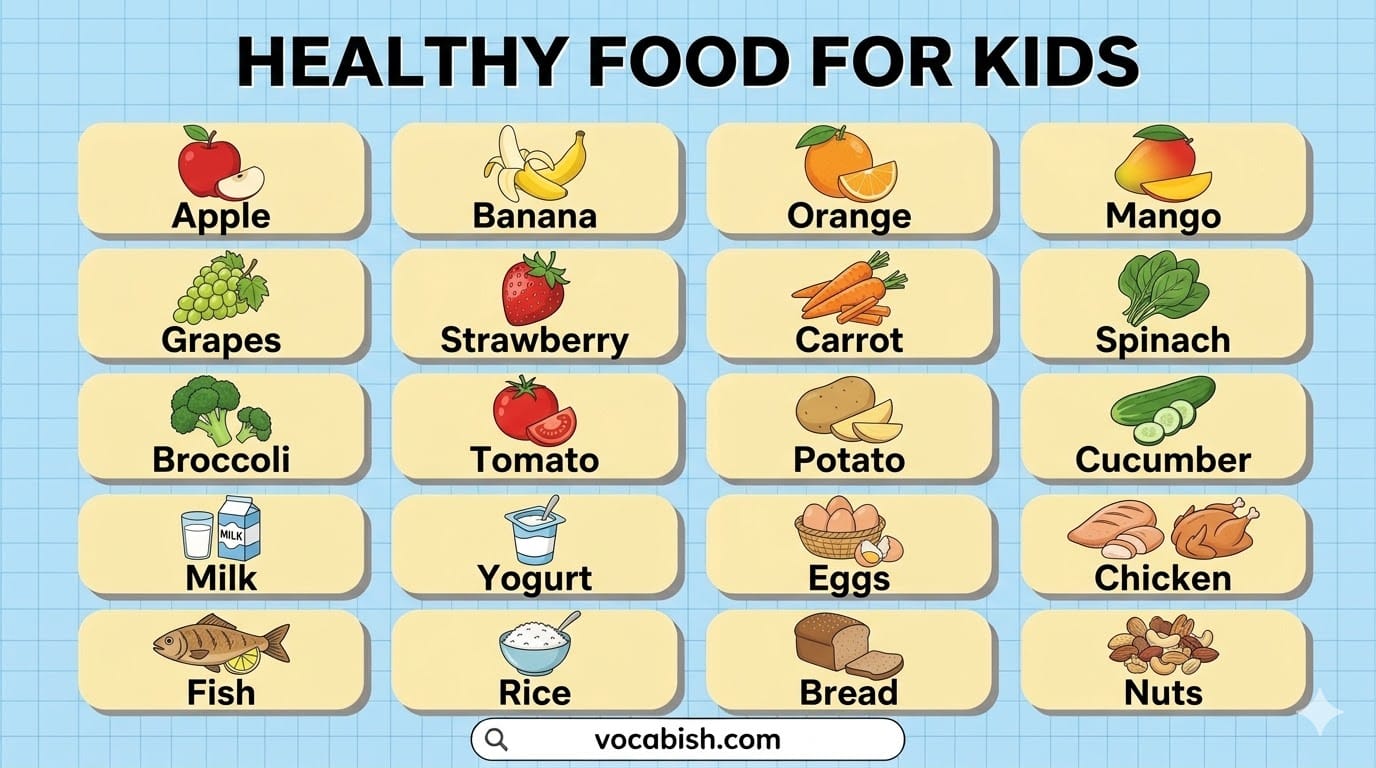

In this blog post, you will learn healthy foods for kids vocabulary in a simple and meaningful way. This type of vocabulary includes names of foods like fruits, vegetables, milk, grains, and proteins. These are the foods children eat to stay strong, active, and healthy.
Understanding this vocabulary is important for English learners because food is part of daily life. When you know these words, you can talk about meals, describe your diet, and understand health-related topics in English with confidence.
What is Healthy Food for Kids?
Healthy food means food that helps the body grow, stay strong, and stay active. It includes fruits, vegetables, milk, grains, and proteins.
Children need healthy food every day. It gives energy for school, play, and learning.
Why Healthy Food is Important
Healthy food is important because it:
- Builds strong bones and muscles
- Improves brain power
- Protects the body from illness
- Keeps energy levels high
In simple words, healthy food helps kids grow strong and smart.
Benefits of Healthy Food
- Energy: Gives strength to play and study
- Growth: Helps height and body development
- Immunity: Protects from diseases
- Focus: Improves concentration in class
- Healthy skin: Keeps skin clean and fresh
Healthy Food Vocabulary for Kids
Learning vocabulary helps learners understand and talk about healthy food easily.
Here are important words with simple meanings:
- Nutrition: The food that keeps the body healthy
- Vitamins: Natural substances that protect the body
- Minerals: Elements like calcium that build strong bones
- Protein: Nutrient that builds muscles
- Fiber: Helps digestion and keeps the stomach clean
Common Healthy Foods With Benefits
- Apple: A sweet fruit that is rich in fiber
- Banana: A soft fruit that gives quick energy
- Milk: A drink that makes bones strong
- Eggs: High in protein, good for growth
- Carrot: A vegetable that helps eyesight
- Spinach: A green leafy vegetable full of iron
- Rice: A common grain that gives energy
- Bread: A food made from grains
- Fish: Rich in protein and healthy fats
- Chicken: A protein-rich food for muscle growth
- Yogurt: A dairy product good for digestion
- Nuts: Small foods full of healthy fats
- Beans: Plant-based protein food
- Tomato: A vegetable rich in vitamins
- Orange: A fruit high in vitamin C
Types of Healthy Foods
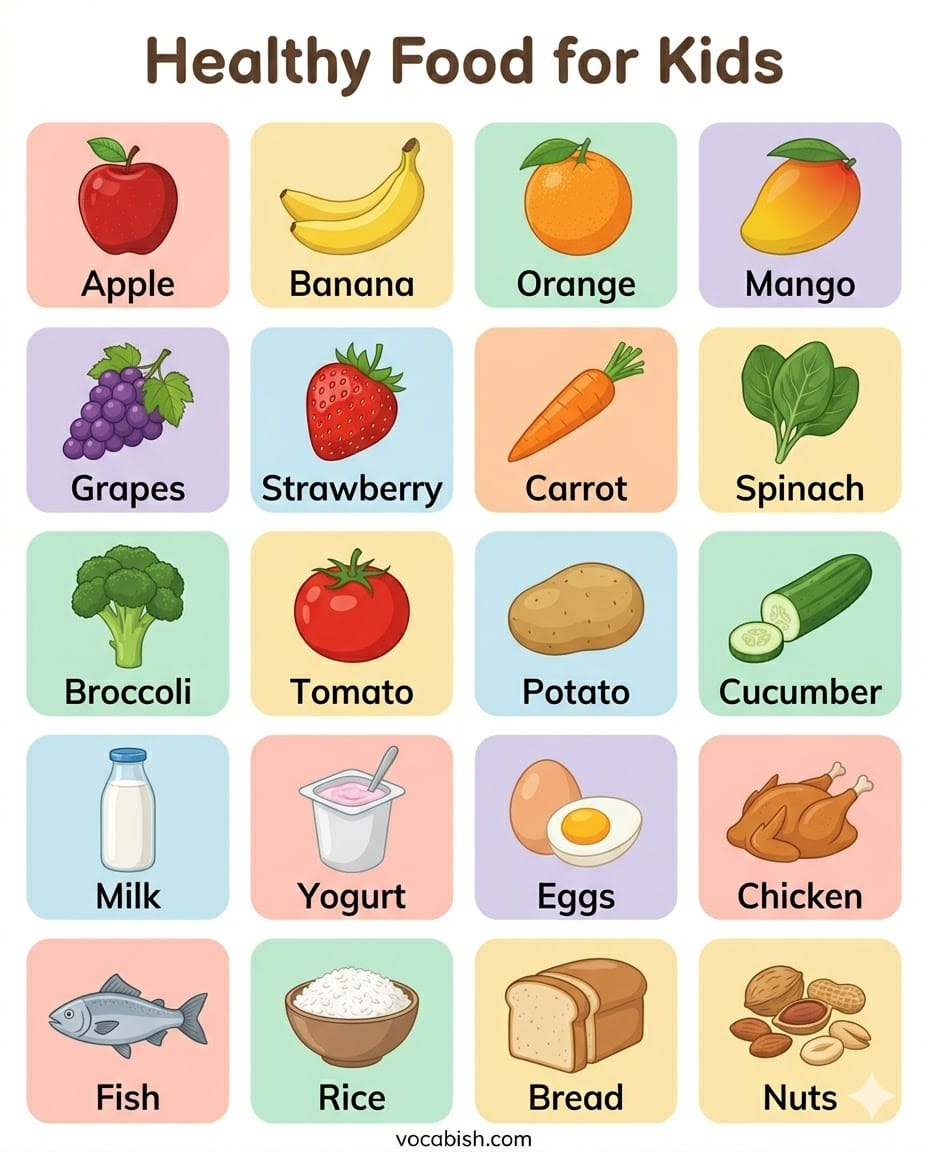
Fruits
Fruits give vitamins and natural sugar.
Examples: Apple, banana, mango, orange
Vegetables
Vegetables help protect the body.
Examples: Carrot, spinach, broccoli
Grains
Grains give energy.
Examples: Rice, bread, oats
Protein Foods
Protein builds muscles.
Examples: Eggs, fish, chicken, beans
Dairy Products
Dairy strengthens bones.
Examples: Milk, cheese, yogurt
Daily Healthy Food Habits
Good habits help kids stay healthy:
- Eat breakfast every morning
- Drink milk daily
- Eat fruits and vegetables
- Avoid junk food and sugary drinks
- Drink enough water
A simple habit like eating an apple a day supports better health.
Simple Sentences for Practice
- I eat an apple every day.
- Milk makes my bones strong.
- Vegetables keep me healthy.
- Fish is good for my body.
- I drink water after playing.
These sentences help learners use vocabulary in real life.
Related Articles:
FAQs
Healthy food for kids includes fruits, vegetables, milk, grains, and protein foods. These foods provide energy, support growth, and keep the body strong, active, and protected from common illnesses.
The best healthy foods for kids include fruits like apples and bananas, vegetables like carrots and spinach, milk, eggs, fish, and whole grains. These foods provide essential nutrients for growth and health.
Healthy food provides essential nutrients like protein, vitamins, and minerals. These nutrients help build muscles, strengthen bones, and support overall physical and mental development in children.
Examples of healthy food for kids include apples, oranges, milk, yogurt, eggs, rice, bread, fish, chicken, carrots, and spinach. These foods are rich in nutrients and support overall body health.
Kids can follow a healthy diet by eating balanced meals, including fruits and vegetables, drinking milk, staying hydrated, and avoiding junk food. Regular meal timing also helps maintain good health.
Kids should avoid junk food because it contains high sugar, salt, and unhealthy fats. These can cause weight gain, poor health, and low energy, and may affect long-term growth and development.
Eating healthy food helps kids stay strong, improves concentration, boosts immunity, and supports growth. It also helps maintain a healthy weight and reduces the risk of diseases.
Conclusion
Healthy food is important for every child. Learning its vocabulary helps English learners understand health topics easily. Practice these words daily to build strong English skills and a healthy lifestyle.