
Examples of Positive Sentences show that something is true, happens, exists, or is being done. These positive sentences are also called affirmative sentences and are used constantly in everyday English.
From talking with family and friends to speaking at school or work, learners need natural positive sentence examples to communicate clearly and confidently.
What Is a Positive Sentence?
A positive sentence states something in an affirmative way. It does not use a negative form such as not, never, or no to deny an action, fact, person, or situation.
Positive sentences can describe actions, habits, facts, feelings, plans, people, places, and everyday situations.
How to Form Positive Sentences
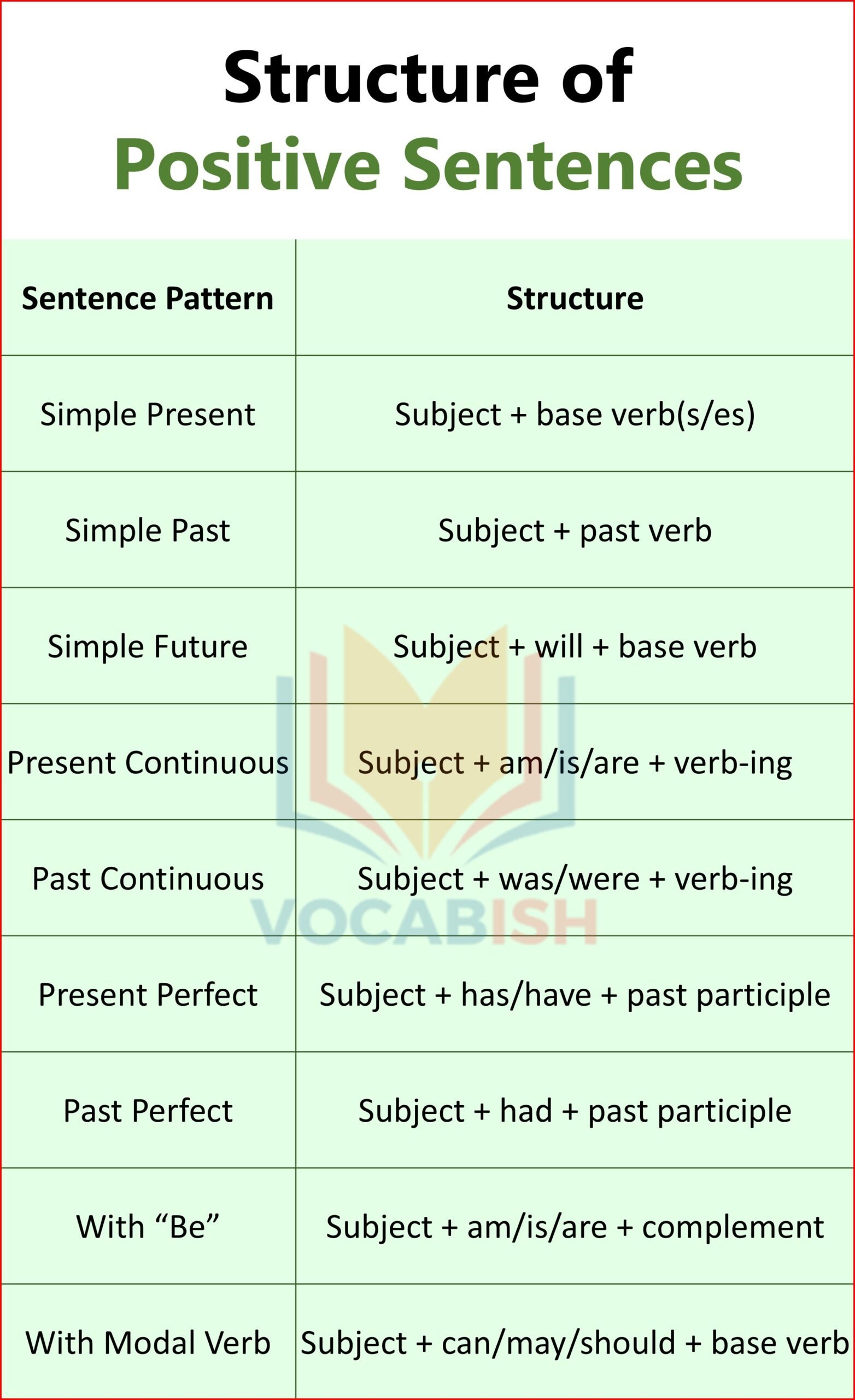
Here’s a complete formation of a positive sentence with structure and examples:
Sentence Pattern | Structure | Example |
|---|---|---|
Simple Present | Subject + base verb(s/es) | She reads books. |
Simple Past | Subject + past verb | He visited his uncle. |
Simple Future | Subject + will + base verb | They will come tomorrow. |
Present Continuous | Subject + am/is/are + verb-ing | I am studying English. |
Past Continuous | Subject + was/were + verb-ing | She was cooking dinner. |
Present Perfect | Subject + has/have + past participle | We have finished our work. |
Past Perfect | Subject + had + past participle | He had completed the task. |
With “Be” | Subject + am/is/are + complement | She is happy. |
With Modal Verb | Subject + can/may/should + base verb | You can use my pen. |
Basic Formula:
Subject + Verb + Object/Complement
- I + play + football.
- She + is + happy.
- They + study + English.
- We + will visit + the park.
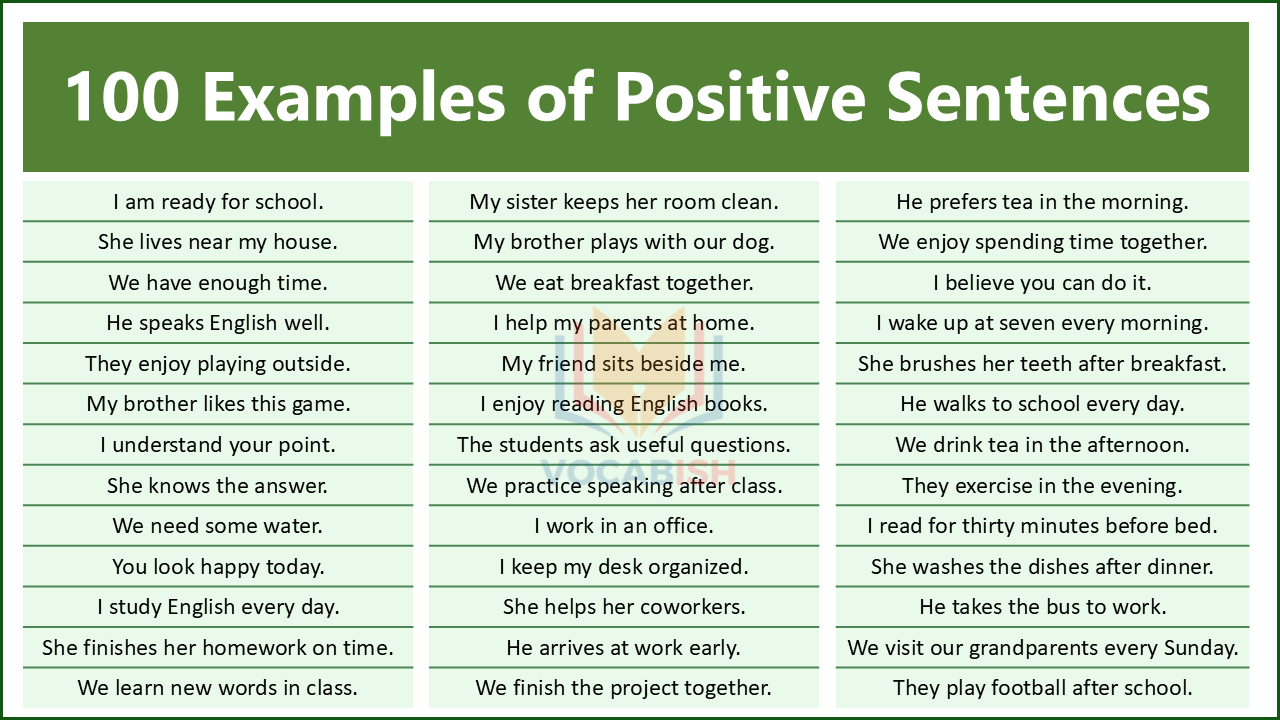
100 Examples of Positive Sentences
These examples use common vocabulary and situations for daily conversation and communication.
Everyday Conversation
These positive sentences are useful when speaking with friends, classmates, neighbors, or other people during ordinary conversations.
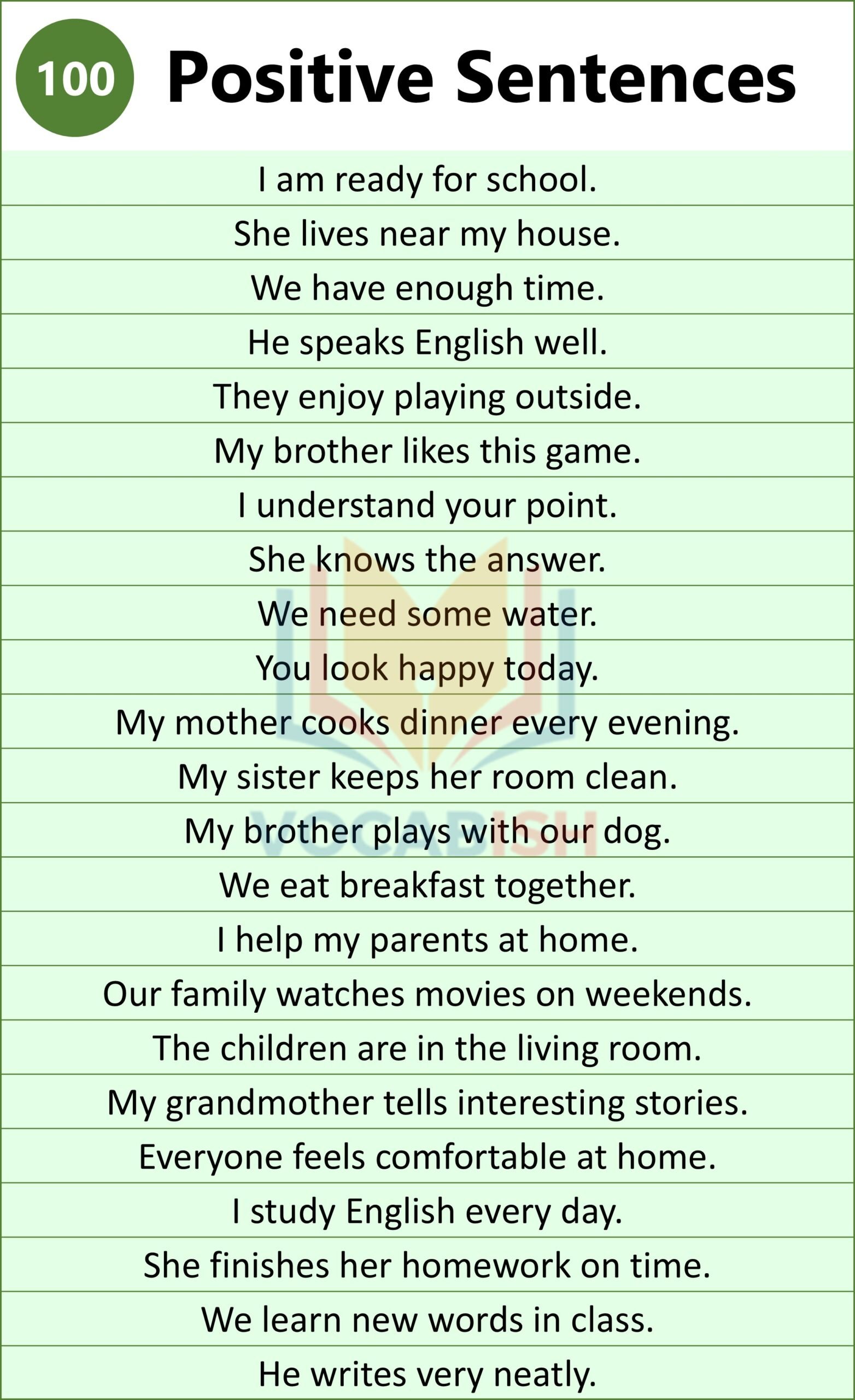
- I am ready for school.
- She lives near my house.
- We have enough time.
- He speaks English well.
- They enjoy playing outside.
- My brother likes this game.
- I understand your point.
- She knows the answer.
- We need some water.
- You look happy today.
Family and Home
Use these sentences when talking about family members, household activities, and things that happen at home.
- My mother cooks dinner every evening.
- My father reads the newspaper in the morning.
- My sister keeps her room clean.
- My brother plays with our dog.
- We eat breakfast together.
- I help my parents at home.
- Our family watches movies on weekends.
- The children are in the living room.
- My grandmother tells interesting stories.
- Everyone feels comfortable at home.
School and Learning
These examples fit classroom conversations, homework, reading, writing, and other school activities.
- I study English every day.
- She finishes her homework on time.
- We learn new words in class.
- He writes very neatly.
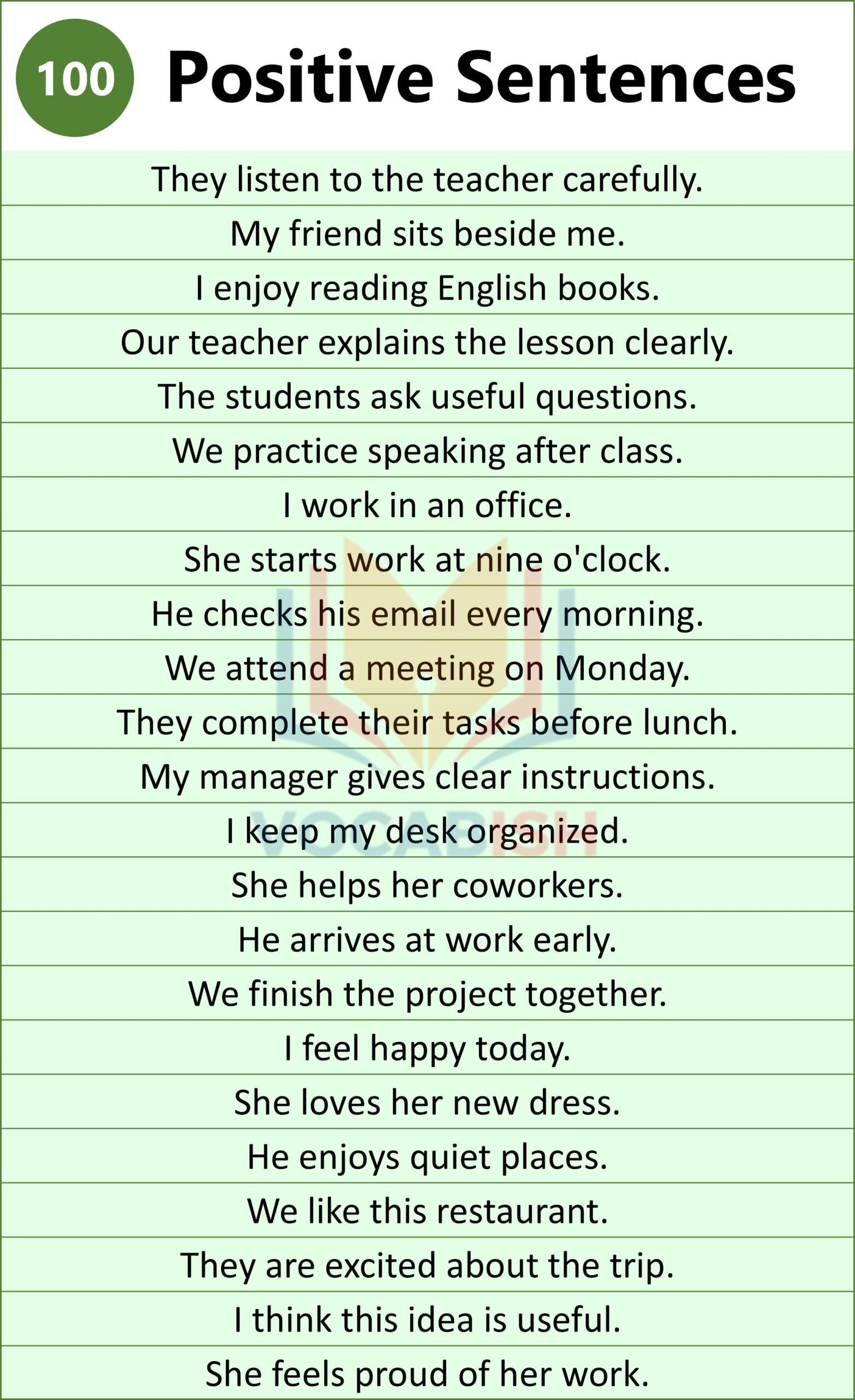
- They listen to the teacher carefully.
- My friend sits beside me.
- I enjoy reading English books.
- Our teacher explains the lesson clearly.
- The students ask useful questions.
- We practice speaking after class.
Work and Daily Activities
These sentences can be used when discussing jobs, tasks, schedules, and responsibilities.
- I work in an office.
- She starts work at nine o’clock.
- He checks his email every morning.
- We attend a meeting on Monday.
- They complete their tasks before lunch.
- My manager gives clear instructions.
- I keep my desk organized.
- She helps her coworkers.
- He arrives at work early.
- We finish the project together.
Feelings and Opinions
Positive sentences can also express feelings, preferences, thoughts, and personal opinions.
- I feel happy today.
- She loves her new dress.
- He enjoys quiet places.
- We like this restaurant.
- They are excited about the trip.
- I think this idea is useful.
- She feels proud of her work.
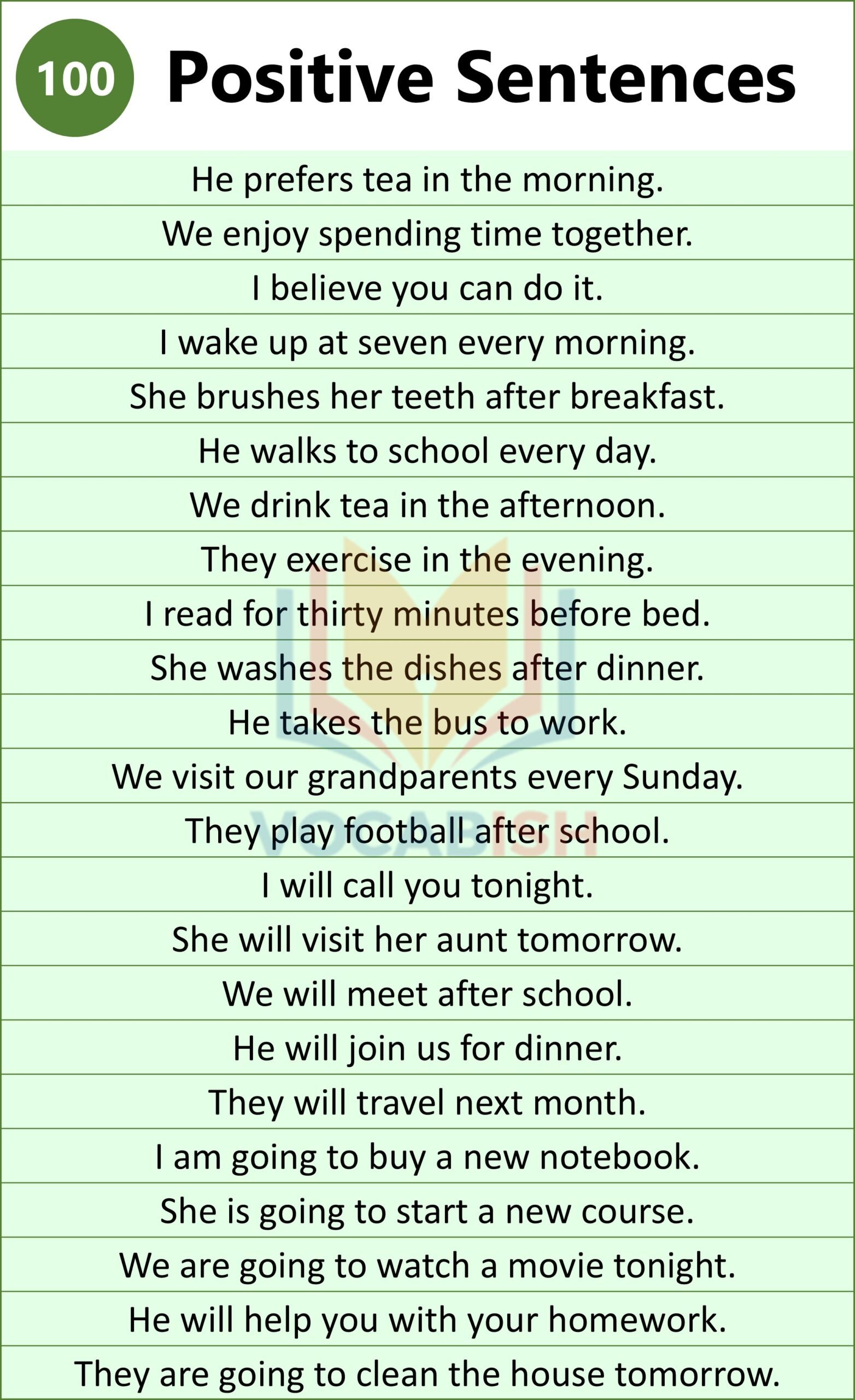
- He prefers tea in the morning.
- We enjoy spending time together.
- I believe you can do it.
Actions and Routines
These examples describe regular actions and habits that learners commonly talk about.
- I wake up at seven every morning.
- She brushes her teeth after breakfast.
- He walks to school every day.
- We drink tea in the afternoon.
- They exercise in the evening.
- I read for thirty minutes before bed.
- She washes the dishes after dinner.
- He takes the bus to work.
- We visit our grandparents every Sunday.
- They play football after school.
Plans and Future Activities
Use these positive sentences to talk about future plans, arrangements, decisions, and expected actions.
- I will call you tonight.
- She will visit her aunt tomorrow.
- We will meet after school.
- He will join us for dinner.
- They will travel next month.
- I am going to buy a new notebook.
- She is going to start a new course.
- We are going to watch a movie tonight.
- He will help you with your homework.
- They are going to clean the house tomorrow.
Social and Polite Conversation
These examples are useful for everyday interactions, greetings, invitations, offers, and polite communication.
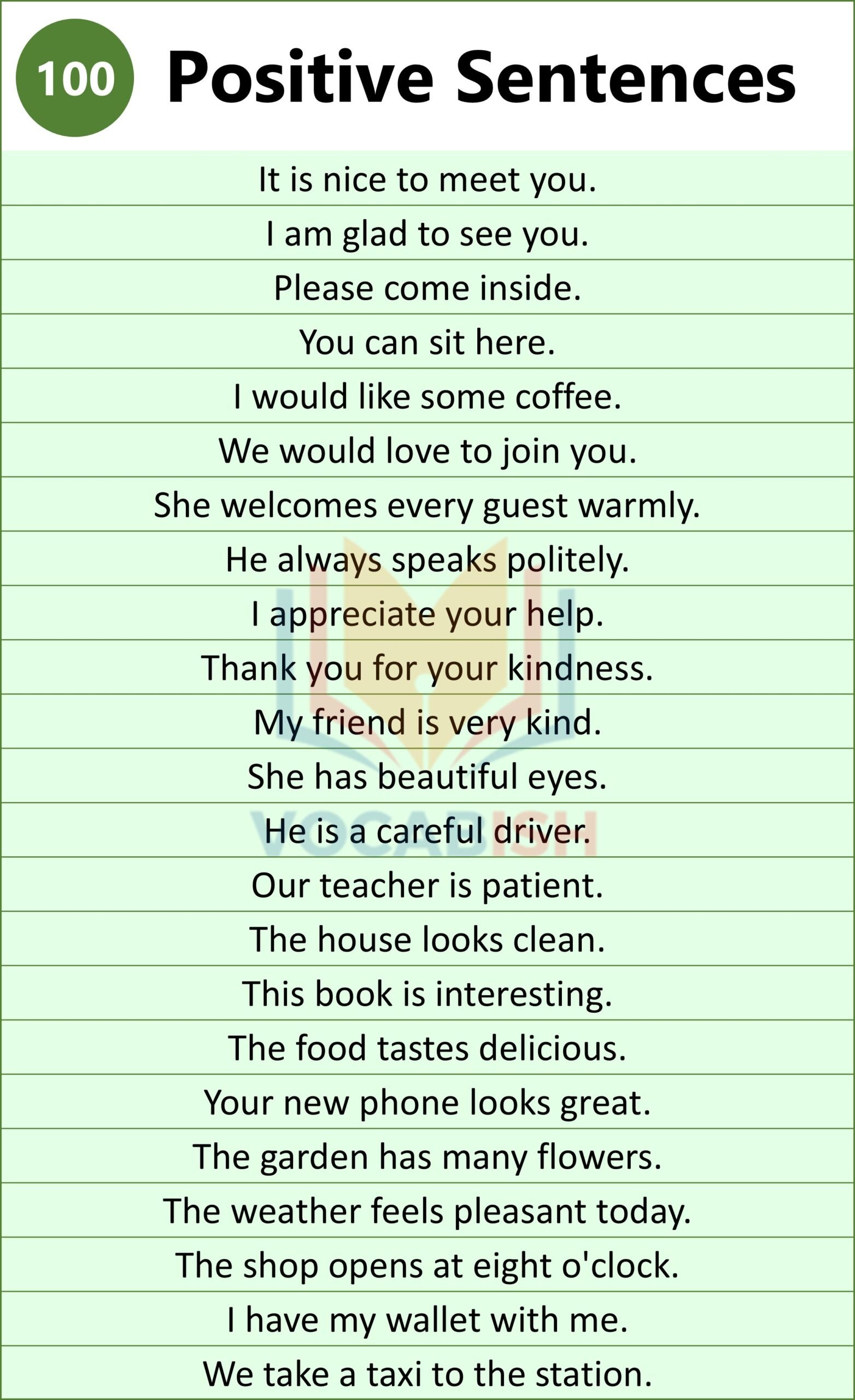
- It is nice to meet you.
- I am glad to see you.
- Please come inside.
- You can sit here.
- I would like some coffee.
- We would love to join you.
- She welcomes every guest warmly.
- He always speaks politely.
- I appreciate your help.
- Thank you for your kindness.
Describing People and Things
These positive sentence examples describe appearance, qualities, objects, places, and situations.
- My friend is very kind.
- She has beautiful eyes.
- He is a careful driver.
- Our teacher is patient.
- The house looks clean.
- This book is interesting.
- The food tastes delicious.
- Your new phone looks great.
- The garden has many flowers.
- The weather feels pleasant today.
Common Situations
These sentences cover common situations learners may experience while shopping, traveling, eating, meeting people, or handling everyday tasks.
- The shop opens at eight o’clock.
- I have my wallet with me.
- She buys fresh vegetables every morning.
- We take a taxi to the station.
- He carries a small backpack.
- They arrive at the airport early.
- I order chicken and rice for lunch.
- She pays the bill at the counter.
- We find a good seat near the window.
- He brings his passport with him.
More Natural Positive Sentence Examples
These final examples give learners additional sentences for short conversations and everyday communication.
- I have a meeting this afternoon.
- She works from home on Fridays.
- He drinks plenty of water.
- We share the same classroom.
- They live in a quiet neighborhood.
- I remember your name.
- She speaks to her friends every day.
- He keeps his promises.
- We respect our teachers.
- They follow the rules.
- I enjoy learning new things.
- She makes breakfast for the family.
- He carries his books in a backpack.
- We spend our evenings together.
- They visit the park on weekends.
- I need a little more time.
- She has a beautiful smile.
- He knows my brother.
- We have a lot in common.
- They enjoy fresh fruit.
- I feel comfortable here.
- She takes good care of her plants.
- He practices English with his friends.
- We celebrate birthdays together.
- They help their neighbors.
- I use my phone for studying.
- She keeps her books on the shelf.
- He enjoys listening to music.
- We meet our friends after work.
- They bring lunch from home.
- I speak English with my classmates.
- She studies hard for her exams.
- He plays the guitar very well.
- We share our ideas in class.
- They learn quickly.
- I finish my work before dinner.
- She visits the library every week.
- He sends messages to his friends.
- We enjoy our free time.
- They work as a team.
Common Mistakes With Positive Sentences
Keep these points in mind when forming affirmative sentences.
- Wrong: She go to school every day.
Correct: She goes to school every day. - Wrong: He are happy.
Correct: He is happy. - Wrong: They is ready.
Correct: They are ready. - Wrong: I am like coffee.
Correct: I like coffee. - Wrong: She don’t like tea.
Correct positive sentence: She likes tea.
How to Practice Positive Sentences
Practice each sentence aloud and then change the subject, verb, time, or object.
- Change I to he, she, we, or they.
- Replace everyday nouns with words from your own life.
- Read each sentence aloud several times.
- Write five new affirmative sentences about your day.
- Use the sentences in short conversations with classmates or friends.
FAQs
A positive sentence states an action, fact, condition, feeling, or situation affirmatively rather than denying it.
I enjoy reading books is an example of a positive sentence because it states an affirmative action.
Positive sentences are also called affirmative sentences because they state that something is true, happens, exists, or is being done.
Start with a subject and use the appropriate verb form, such as She works, They play, or I am happy.
A positive sentence affirms something, while a negative sentence denies or rejects something, often using words such as not, never, or no.
Yes. Positive sentences can describe feelings, opinions, preferences, and emotional states, such as I feel happy today.
Yes. People use positive sentences constantly when discussing routines, family, school, work, plans, opinions, and daily activities.
Yes. Learning affirmative sentence patterns helps learners form clear statements and communicate naturally in everyday English.
Conclusion
These 100 Examples of Positive Sentences give learners practical patterns for everyday English. Practice them with your own words, situations, and routines to build stronger sentence skills and more natural communication.
Read More
- 100 Examples of Formal Language
- 100 Transitional Phrases Example Sentences
- 100 Example Sentences of Simple Sentences
- 100 Examples of Negative Sentences
- 200 Daily Routine Sentences in English for Kids