
Have you ever told a story and needed to explain what was happening before something else occurred?
Imagine this:
I was walking home from work when it suddenly started raining.
In this sentence, “was walking” shows an action that was already in progress before another action interrupted it. This is one of the most common uses of the past continuous tense.
The past continuous tense helps us describe ongoing actions, background situations, and simultaneous events in the past. It makes stories more vivid and helps listeners understand what was happening at a particular moment.
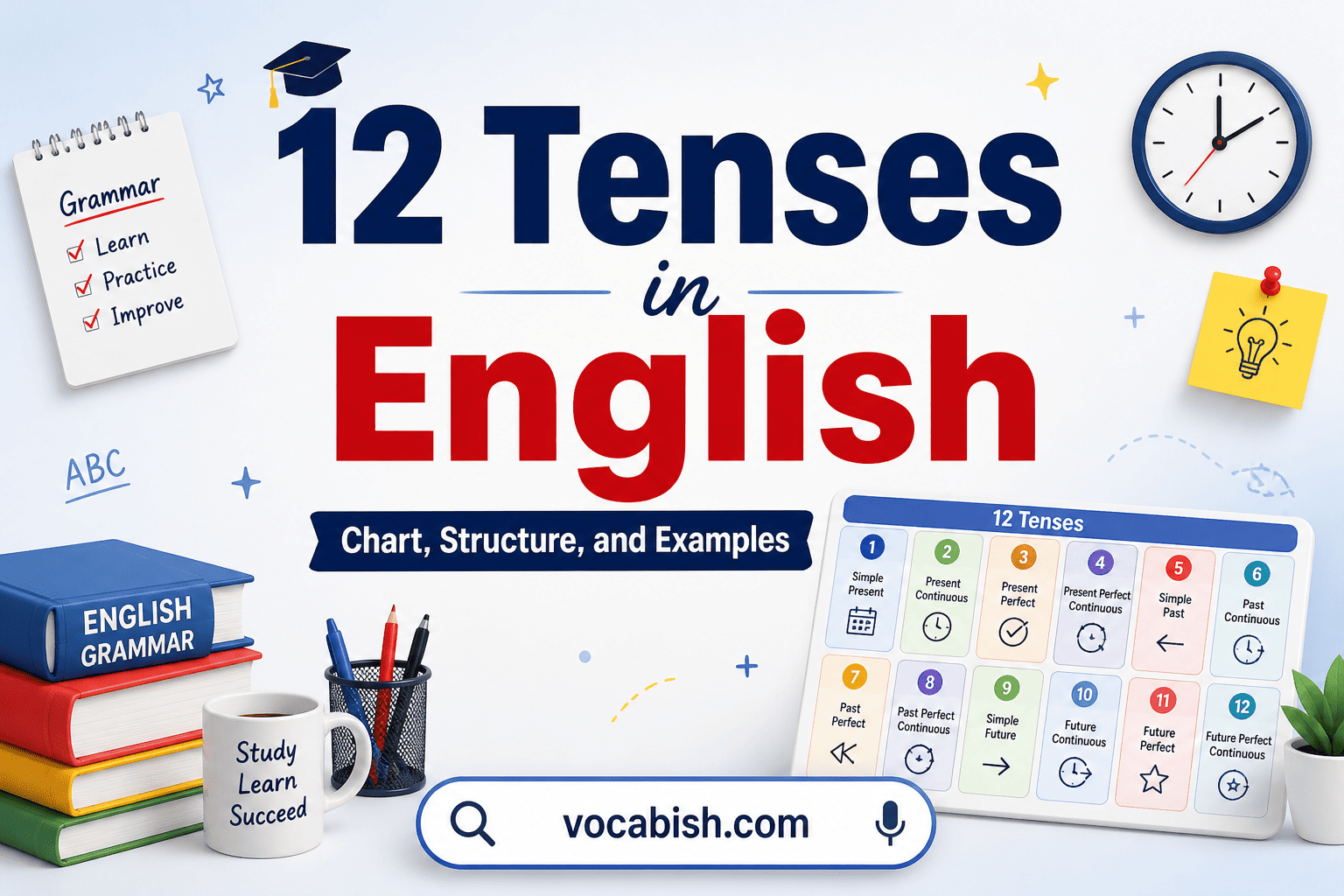
The 12 Tenses Chart will help you learn all tenses in one place.
Definition and Structure of Past Continuous Tense
The past continuous tense describes an action that was in progress at a specific time in the past. It focuses on the duration of an activity rather than its completion.
It is often used when talking about interrupted actions, background events, or two actions happening at the same time.
Forming the Past Continuous
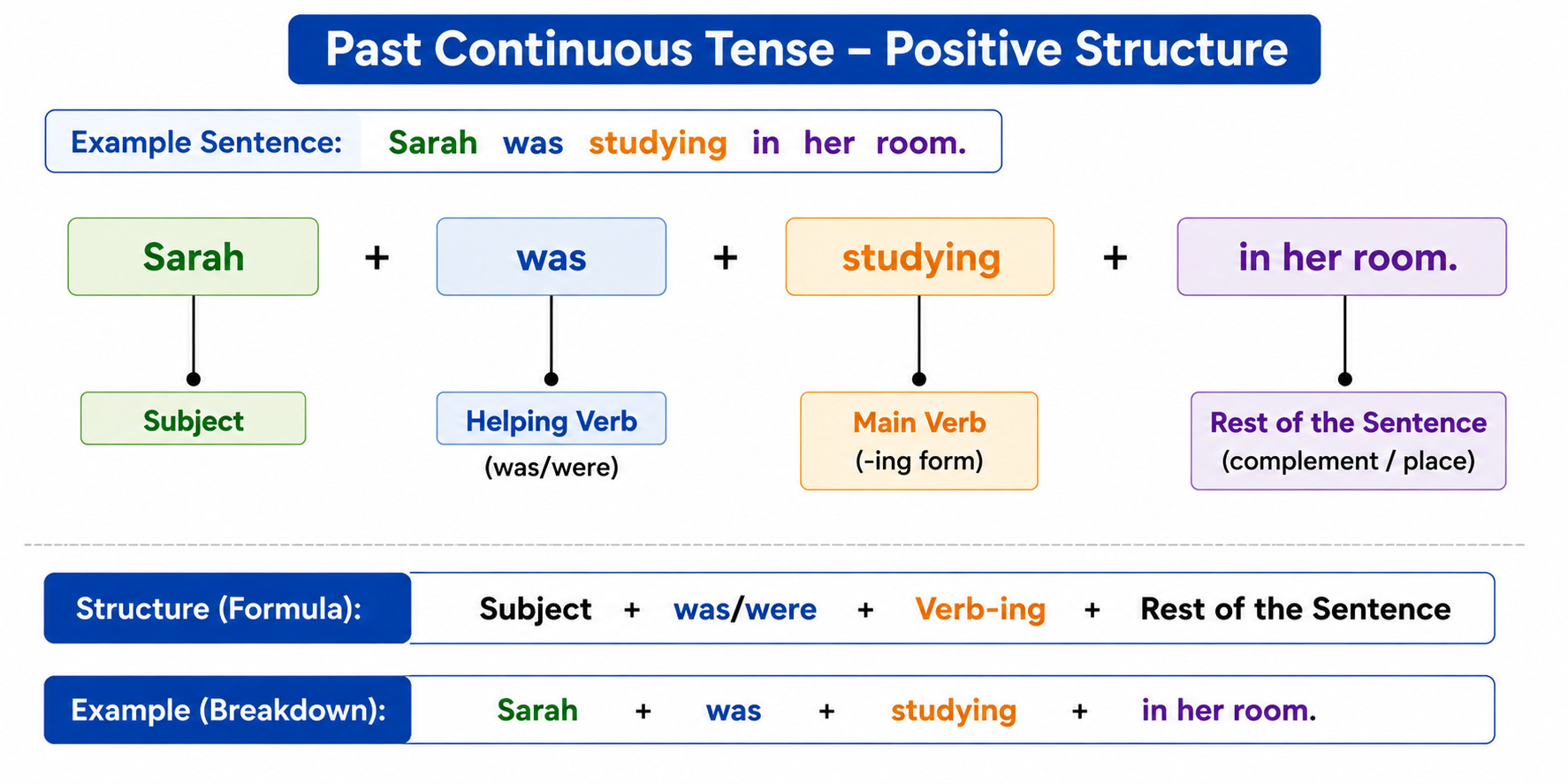
The structure is:
Subject | Was/Were | Verb + ing |
|---|---|---|
I | was | working |
He/She/It | was | sleeping |
You/We/They | were | studying |
Formula:
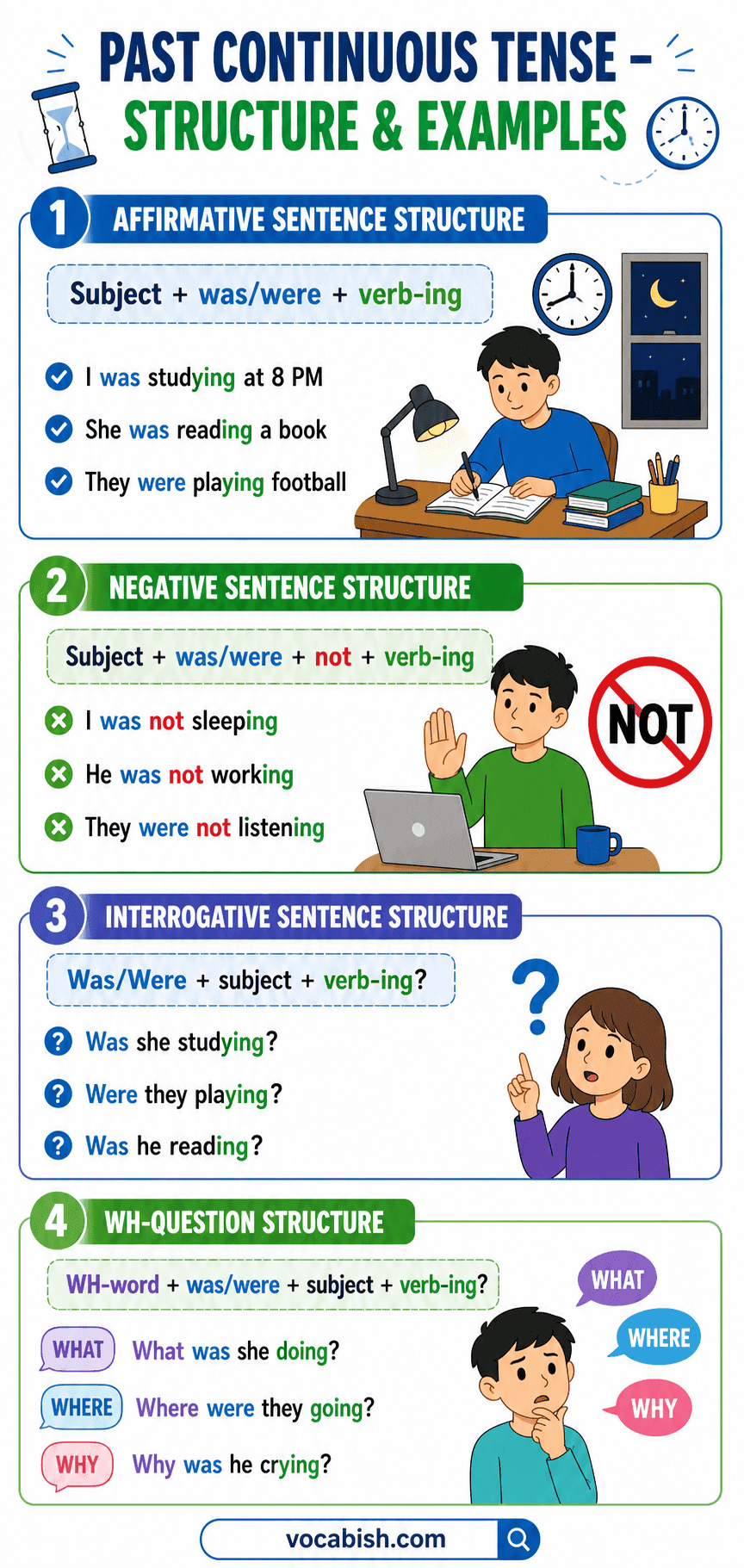
Subject + was/were + verb (-ing)
Examples:
- I was reading a novel.
- She was cooking dinner.
- They were playing football.
- We were watching a movie.
- The baby was sleeping.
Common Time Expressions
The past continuous tense often appears with time expressions such as:
- while
- when
- at that moment
- all evening
- all day
- at 7 o’clock yesterday
- during the meeting
- as
Examples:
- I was studying at 8 p.m. yesterday.
- She was talking on the phone when I arrived.
- While they were playing chess, it started to rain.
Story Example Using Time Expressions:
Sarah was working on an important project all day. At 7 o’clock yesterday, she was discussing ideas with her team during the meeting. While everyone was sharing suggestions, Sarah was taking notes. When the manager asked a question, she was checking her documents. At that moment, her phone was vibrating in her bag. She continued working all evening. As she was leaving the office, it started to rain.
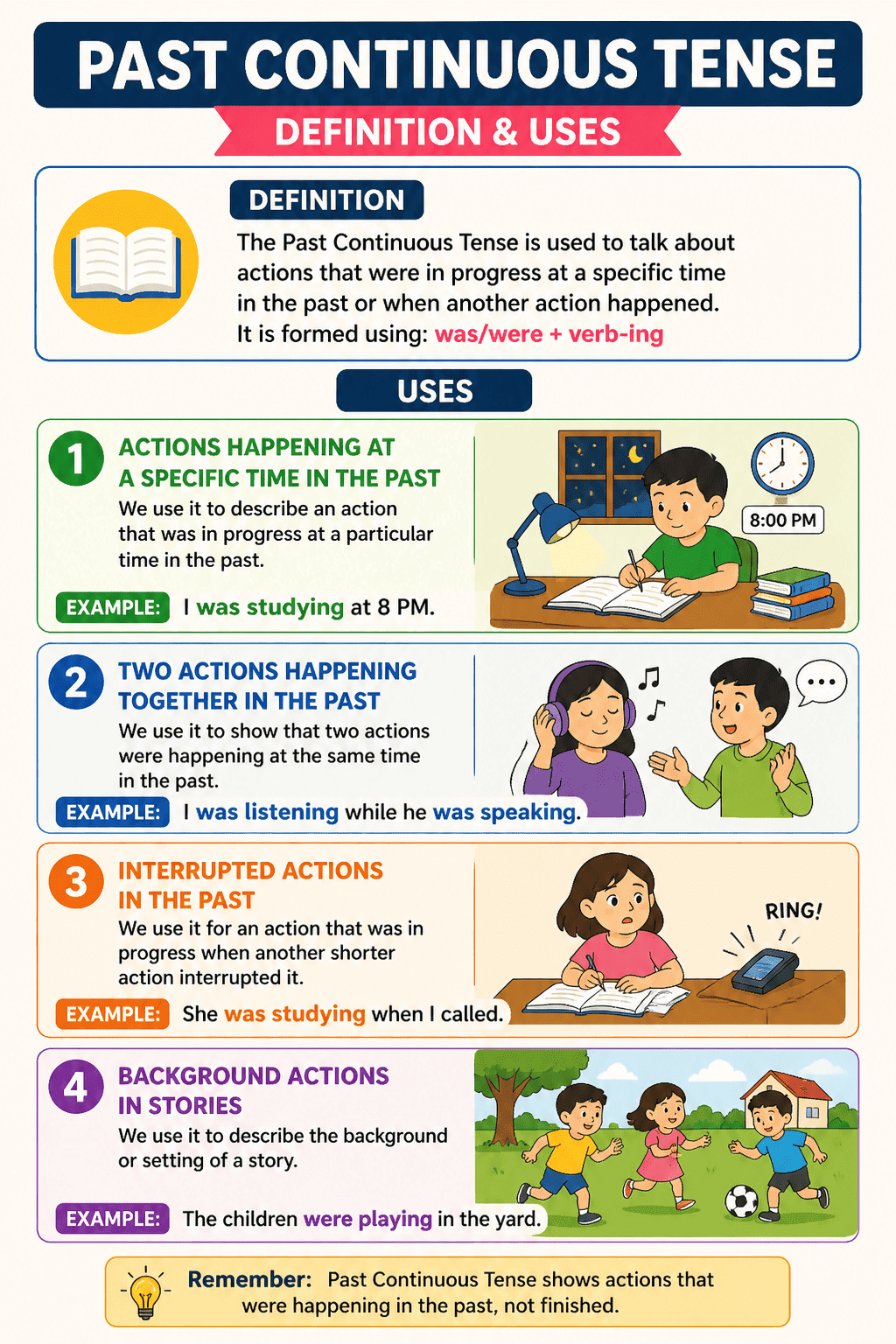
Usage of Past Continuous Tense
The past continuous tense helps show actions that were developing over time in the past. It often provides context for another event.
It is especially useful in storytelling because it allows readers and listeners to picture what was happening before something changed.
Describing Interrupted Actions
An interrupted action is an activity that was already happening when another event occurred.
Examples:
- I was driving to work when my car broke down.
- She was taking a shower when the phone rang.
- They were watching television when the electricity went out.
- We were having dinner when the guests arrived.
- The children were playing outside when it started raining.
Notice that the longer action is usually in the past continuous, while the interrupting action is often in the simple past.
Setting the Background
Writers and speakers frequently use the past continuous to create the scene before describing the main event.
Examples:
- The sun was shining, and birds were singing.
- People were walking through the market.
- The wind was blowing gently across the beach.
- Everyone was enjoying the party.
- Cars were moving slowly through the city streets.
Story example:
It was a cold evening. People were hurrying home, and light rain was falling. Suddenly, a loud noise came from the street.
The past continuous creates the background, while the simple past introduces the main event.
Indicating Parallel Actions
Sometimes two actions happened at the same time in the past.
Examples:
- I was doing my homework while my sister was watching TV.
- They were dancing while the band was playing.
- She was reading while her friend was studying.
- We were cooking while the children were setting the table.
- The students were taking notes while the teacher was explaining the lesson.
These actions were occurring simultaneously.
Expressing Actions in Progress at a Specific Moment
The past continuous can focus on what was happening at a particular time.
Examples:
- At 9 p.m. last night, I was working.
- She was sleeping at midnight.
- We were traveling at that time yesterday.
- They were waiting for the train at 6 o’clock.
- He was preparing his presentation at 10 a.m.
The exact starting or ending point is not important. The focus is on the action in progress.
Important Signal Words and Phrases
Certain words and phrases often appear with the past continuous tense. They help indicate that an action was ongoing in the past.
Learning these signals can make it easier to recognize when the tense is needed.
Examples of Common Signal Words
Signal Word/Phrase | Example |
|---|---|
while | While I was studying, my brother was sleeping. |
when | I was eating when the phone rang. |
as | As they were leaving, it started raining. |
at that moment | At that moment, she was speaking to the manager. |
all day | He was working all day. |
all evening | We were talking all evening. |
during | She was reading during the flight. |
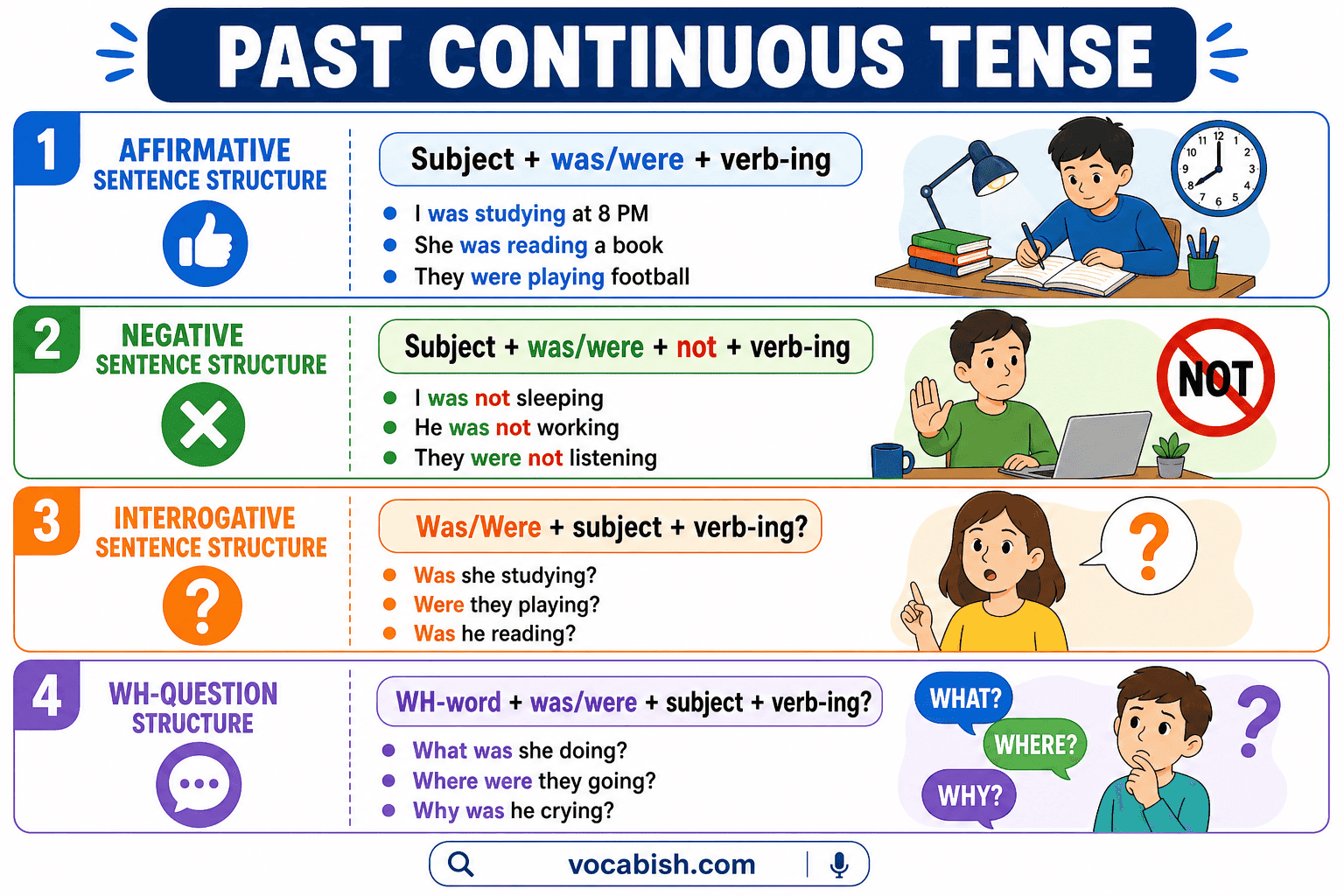
Negative Statements in Past Continuous Tense
Negative sentences show that an action was not happening at a particular time in the past.
Simply add not after was or were.
Structure of Negative Sentences
Subject + was/were + not + verb (-ing)
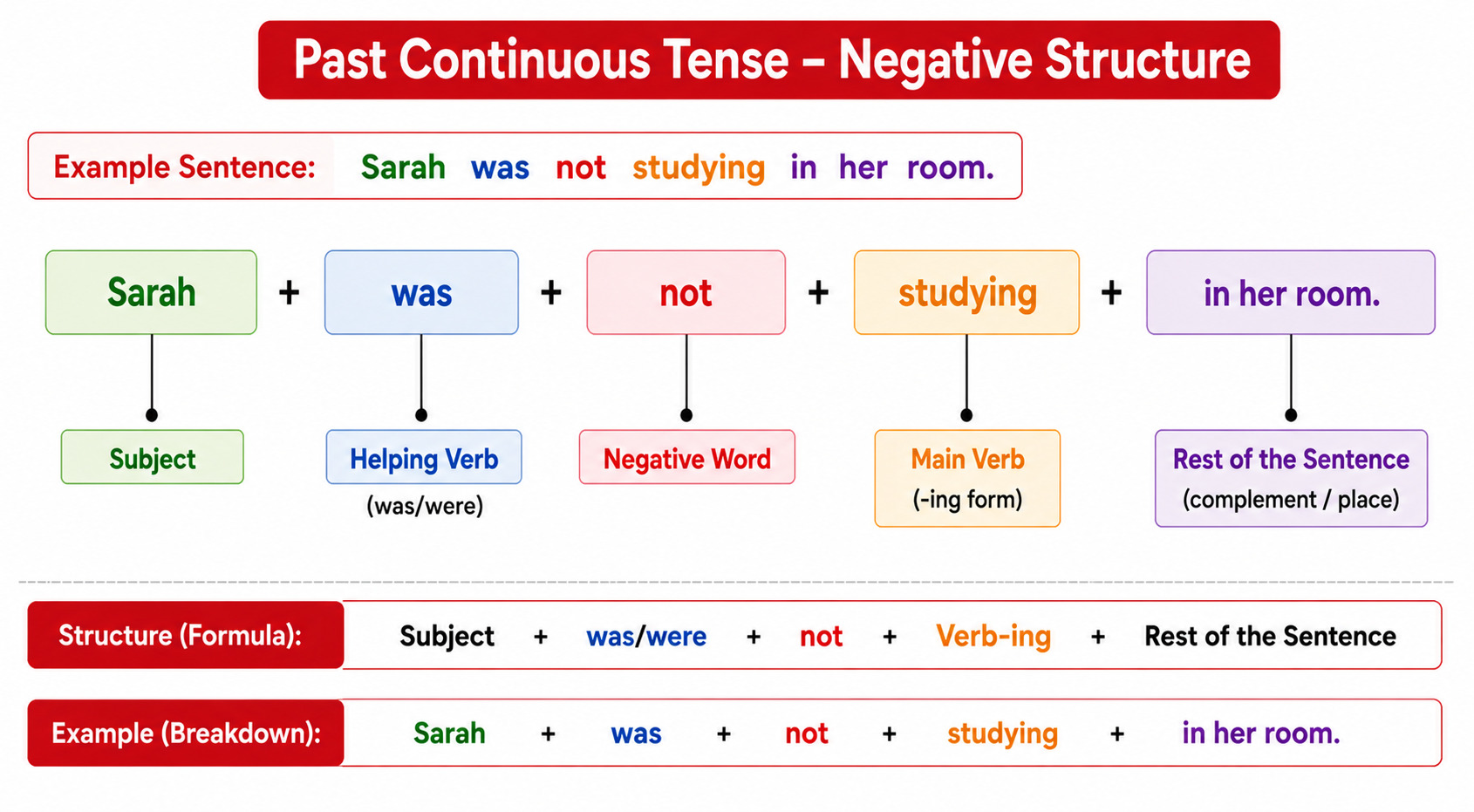
Examples:
- I was not sleeping.
- She was not listening.
- They were not working.
- We were not waiting.
- He was not driving.
Short forms:
- wasn’t = was not
- weren’t = were not
Examples:
- I wasn’t paying attention.
- They weren’t studying.
- She wasn’t feeling well.
- We weren’t talking about you.
- He wasn’t watching television.
Interrogative Form of Past Continuous Tense
Questions in the past continuous tense ask whether an action was happening at a specific time in the past.
The auxiliary verb moves to the beginning of the sentence.
Yes-No Questions
Was/Were + subject + verb (-ing)?
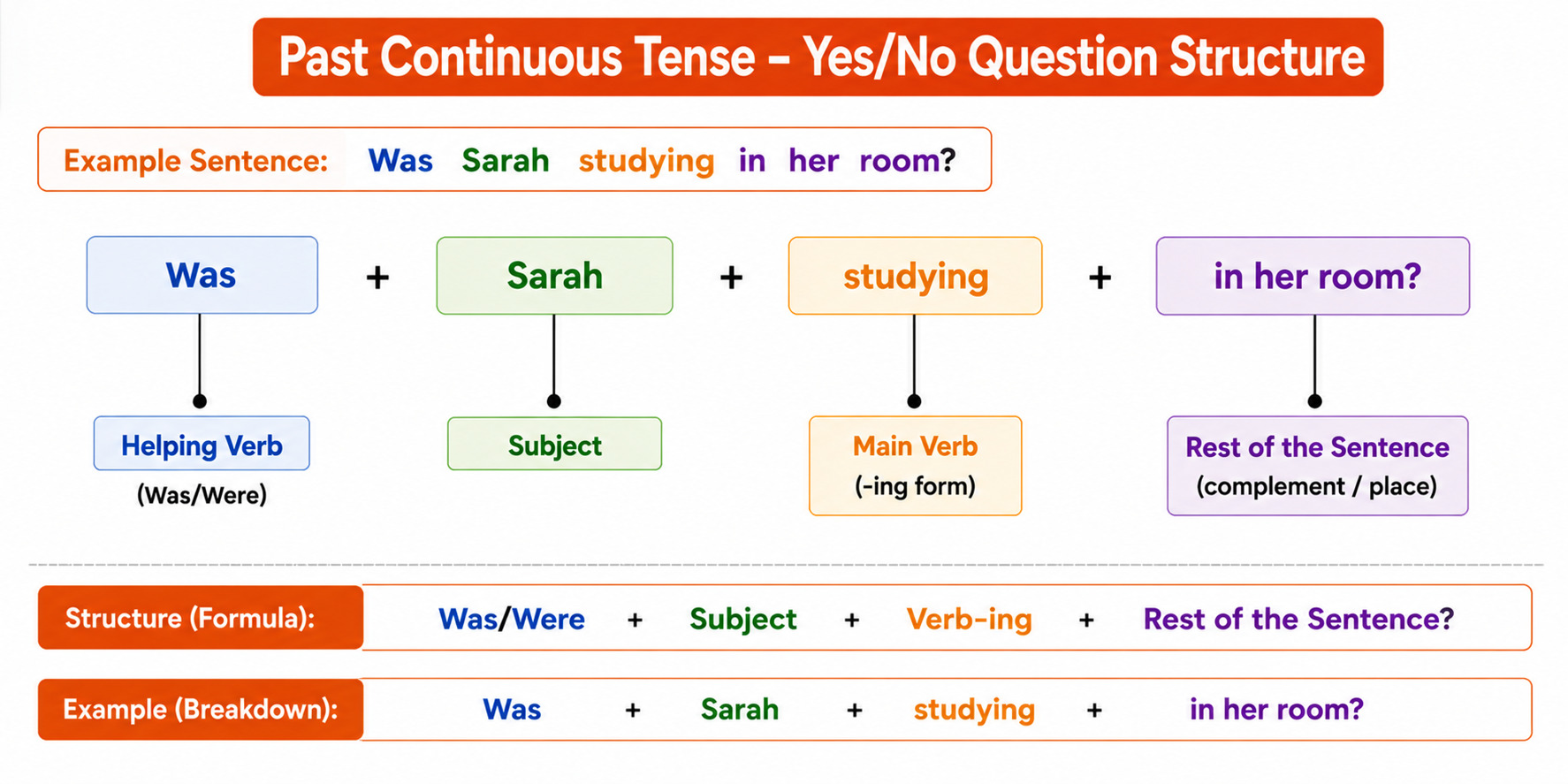
Examples:
- Was she working?
- Were they playing football?
- Was he sleeping?
- Were you studying?
- Was the baby crying?
Answers:
- Yes, she was.
- No, she wasn’t.
- Yes, they were.
- No, they weren’t.
Wh-Questions
Wh-word + was/were + subject + verb (-ing)?
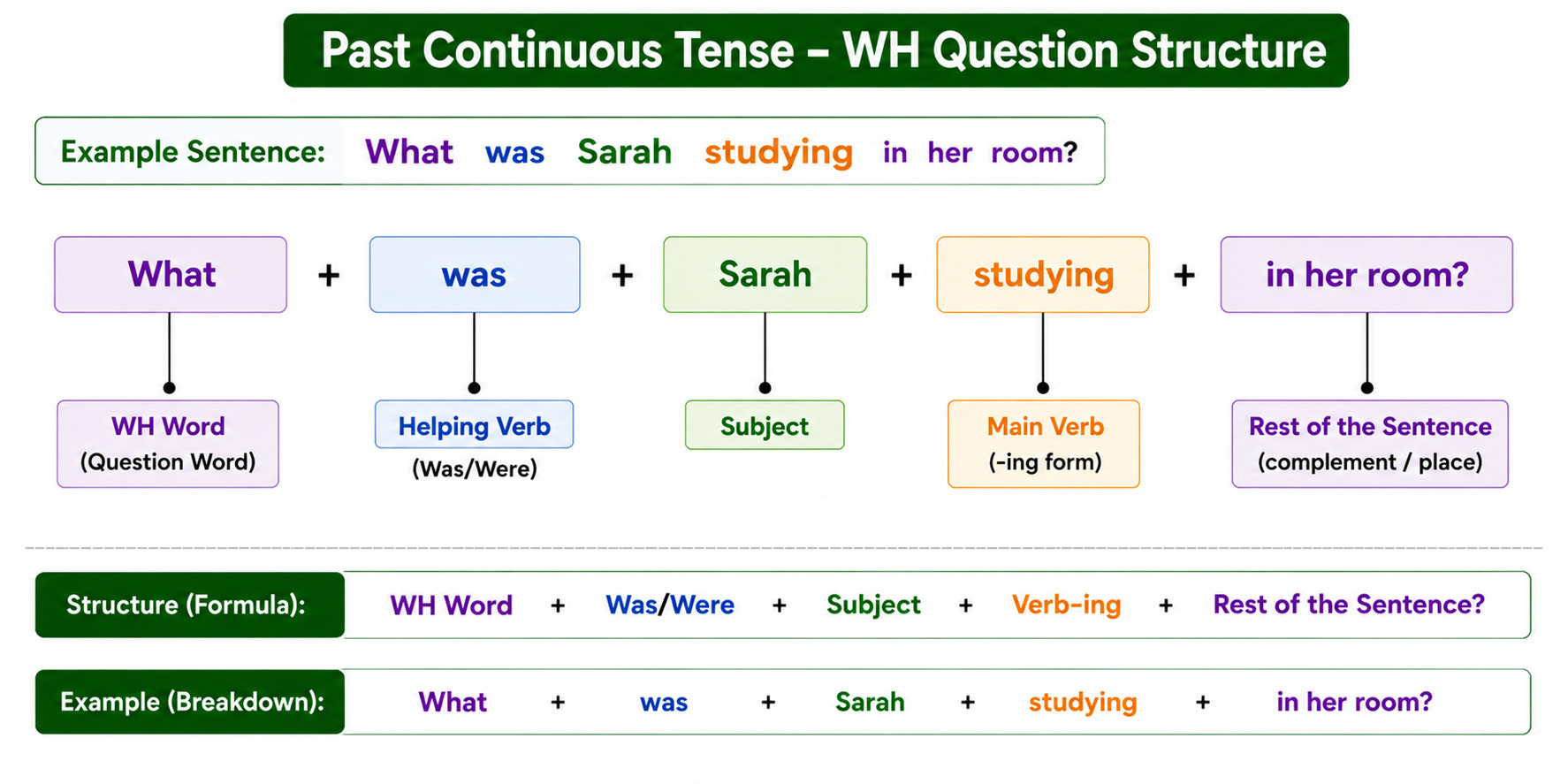
Examples:
- What were you doing at 8 p.m.?
- Where was she going?
- Why were they laughing?
- Who was talking to the teacher?
- When were you studying?
Past Continuous Tense Exercises
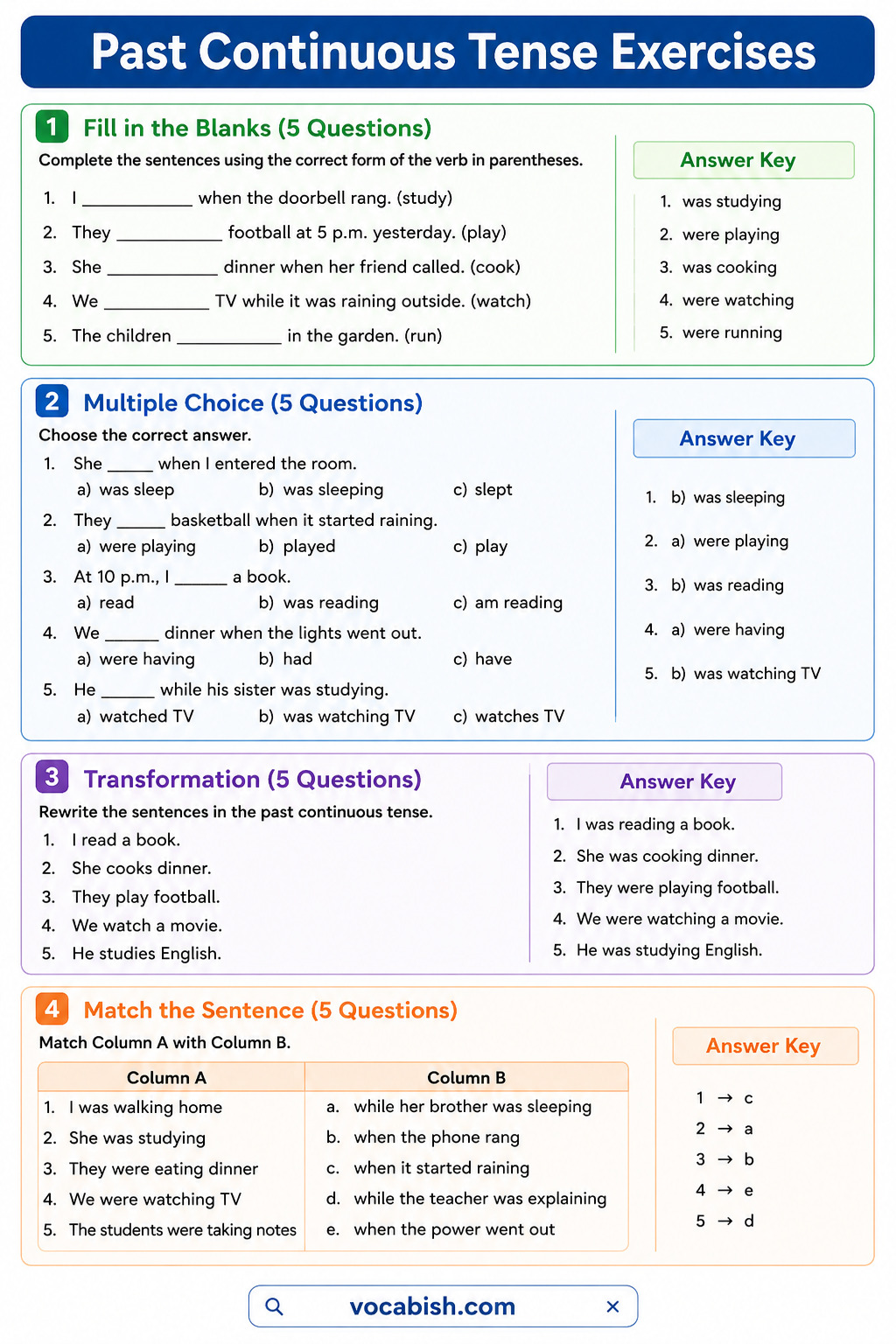
Fill in the Blanks
Complete the sentences using the correct form of the verb in parentheses.
- I __________ when the doorbell rang. (study)
- They __________ football at 5 p.m. yesterday. (play)
- She __________ dinner when her friend called. (cook)
- We __________ TV while it was raining outside. (watch)
- The children __________ in the garden. (run)
Answer Key
- was studying
- were playing
- was cooking
- were watching
- were running
Multiple Choice
Choose the correct answer.
- She _____ when I entered the room.
- a) was sleep
- b) was sleeping
- c) slept
- They _____ basketball when it started raining.
- a) were playing
- b) played
- c) play
- At 10 p.m., I _____ a book.
- a) read
- b) was reading
- c) am reading
- We _____ dinner when the lights went out.
- a) were having
- b) had
- c) have
- He _____ while his sister was studying.
- a) watched TV
- b) was watching TV
- c) watches TV
Answer Key
- b) was sleeping
- a) were playing
- b) was reading
- a) were having
- b) was watching TV
Transformation
Rewrite the sentences in the past continuous tense.
- I read a book.
- She cooks dinner.
- They play football.
- We watch a movie.
- He studies English.
Answer Key
- I was reading a book.
- She was cooking dinner.
- They were playing football.
- We were watching a movie.
- He was studying English.
Match the Sentence
Match Column A with Column B.
Column A | Column B |
|---|---|
1. I was walking home | a. while her brother was sleeping |
2. She was studying | b. when the phone rang |
3. They were eating dinner | c. when it started raining |
4. We were watching TV | d. while the teacher was explaining |
5. The students were taking notes | e. when the power went out |
Answer Key
1 → c
2 → a
3 → b
4 → e
5 → d
You May Also Like:
- Present Continuous Tense Definition and Examples
- Future Continuous Tense Uses and Examples
- Structure of the 12 Tenses with Examples
FAQs about Past Continuous Tense
The past continuous tense describes an action that was happening at a specific time in the past. It uses was/were + verb-ing.
Use the past continuous tense for ongoing past actions, interrupted activities, background situations, or two actions happening simultaneously in the past.
The structure is subject + was/were + verb-ing. Example: She was reading a book while her brother was watching television.
Past continuous shows an action in progress, while simple past shows a completed action. Example: I was studying when the teacher arrived.
Yes. The past continuous often describes the longer action, while when introduces the shorter action that interrupted it.
The past continuous tense uses was with singular subjects and were with plural subjects before the verb ending in -ing.
Add not after was or were. Example: They were not playing football when the rain started.
Common signal words include while, when, as, at that moment, all day, all evening, and during.
Yes. Use the past continuous for parallel actions. Example: She was cooking while her husband was setting the table.
Conclusion
The past continuous tense is used to describe actions that were in progress at a particular time in the past. It is especially useful for showing interrupted actions, creating background details, describing simultaneous events, and talking about ongoing activities at a specific moment. Once you understand the structure was/were + verb-ing, you’ll be able to tell richer and more natural stories about past events.