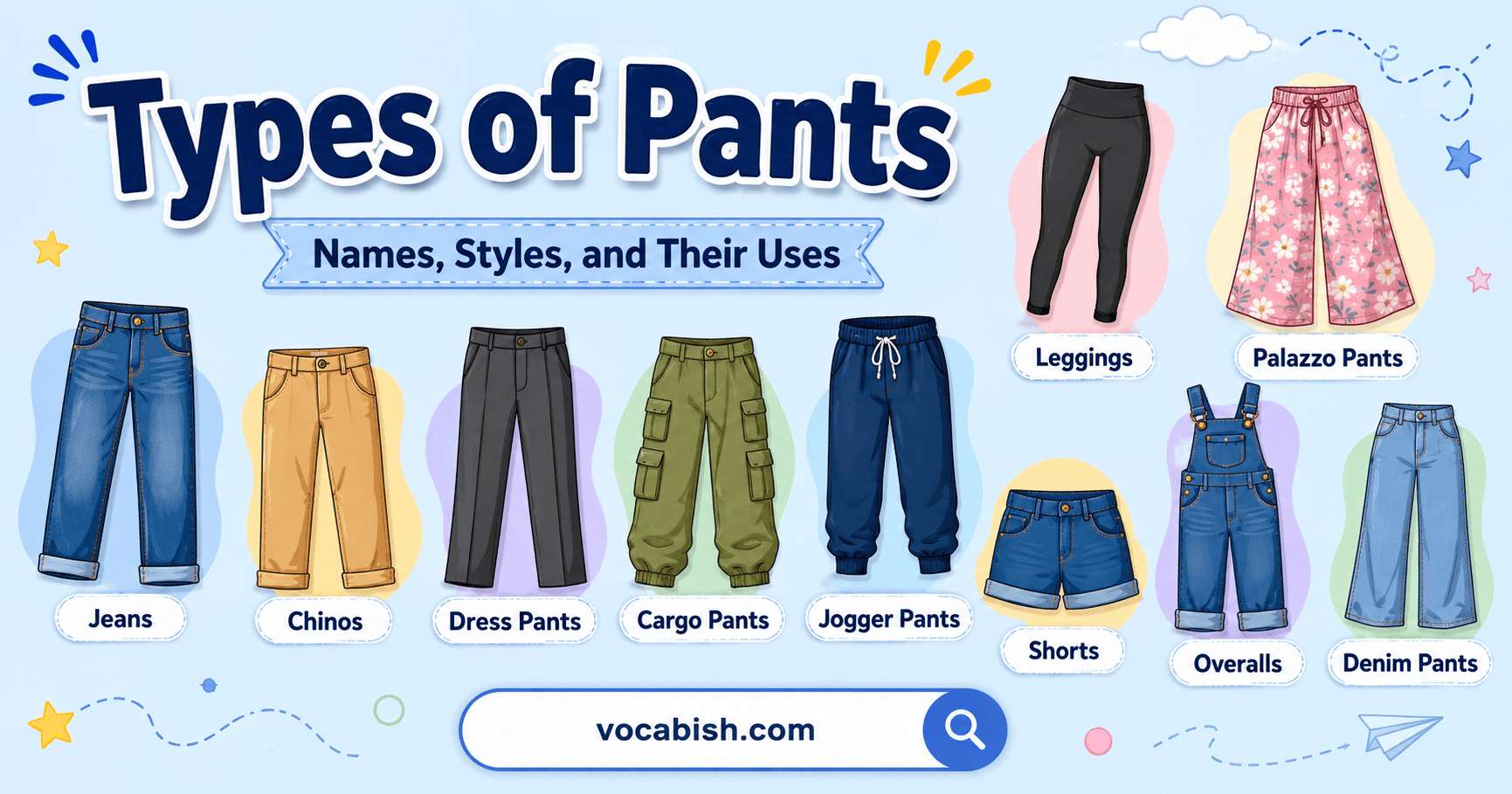

Pants come in many shapes, fabrics, lengths, and fits. Some are designed for work or formal events, while others focus on comfort, sports, travel, or everyday wear. Learning the names of common pant styles makes it easier to describe clothing, understand fashion vocabulary, and choose the right pair for an occasion.
This guide explains the most useful types of pants, their main features, how they fit, and where people usually wear them. It also covers differences between commonly confused styles, such as chinos and khakis or joggers and sweatpants.
What Are Pants?
Pants are lower-body garments that usually extend from the waist to the ankles, with a separate section for each leg. Some styles end at the knee, calf, or ankle.
In American English, they are commonly called pants. In British English, the usual word is trousers.
Types of Pants at a Glance
Pant Type | Main Feature | Common Use | Typical Fit |
|---|---|---|---|
Jeans | Strong denim fabric | Everyday casual wear | Skinny to relaxed |
Chinos | Smooth cotton twill | Smart-casual outfits | Straight or tapered |
Dress Pants | Tailored construction | Offices and formal events | Slim or regular |
Cargo Pants | Large utility pockets | Outdoor and casual wear | Relaxed |
Jogger Pants | Cuffed ankles | Casual and athleisure wear | Tapered |
Sweatpants | Soft, comfortable fabric | Relaxing and light exercise | Loose or regular |
Leggings | Stretchy, close-fitting fabric | Exercise and casual outfits | Skin-tight |
Palazzo Pants | Very wide legs | Summer and dressy outfits | Flowing |
Capri Pants | End around the calf | Warm-weather wear | Slim or relaxed |
Corduroy Pants | Raised vertical ridges | Casual and smart-casual wear | Varies |
Linen Pants | Lightweight, breathable fabric | Hot-weather clothing | Relaxed |
Track Pants | Sports fabric and side details | Training and casual wear | Straight or tapered |
Common Types of Pants and Their Names
The following pant styles differ in fabric, shape, length, fit, and purpose. Some are practical, while others are mainly chosen for comfort or appearance.
Jeans
Jeans are durable casual pants made from denim. They are one of the most widely worn clothing styles because they work with shirts, T-shirts, jackets, and many types of footwear.
Common designs include skinny, slim, straight-leg, bootcut, flared, and relaxed jeans. Blue is the traditional color, but black, gray, white, and other shades are also popular.
Chinos
Chinos are lightweight trousers usually made from smooth cotton twill. They look neater than jeans but feel less formal than suit pants.
People often wear chinos for office-casual outfits, dinners, travel, and social events. They commonly have a straight or tapered fit and come in neutral colors such as beige, navy, olive, black, and gray.
Dress Pants
Dress pants are tailored trousers made for professional and formal settings. They usually have a clean shape, a structured waistband, and a smooth front. Some include pressed creases or pleats.
Common materials include wool, polyester, rayon, and blended fabrics. Dress pants are often worn with a button-down shirt, blazer, suit jacket, or formal shoes.
Cargo Pants
Cargo pants are relaxed trousers with large pockets on the sides of the legs. They were originally designed for military use because the extra pockets provided practical storage.
Modern cargo pants are popular in outdoor clothing, workwear, streetwear, and casual fashion. They may be made from cotton, canvas, nylon, or lightweight performance fabric.
Jogger Pants
Jogger pants have an elastic waistband, tapered legs, and fitted cuffs around the ankles. They offer the comfort of casual sportswear while giving the legs a more shaped appearance.
Joggers may be made from cotton, fleece, nylon, or stretchy synthetic fabric. Unlike many sweatpants, they normally become narrower toward the ankle.
Sweatpants
Sweatpants are soft, comfortable trousers designed for relaxing, exercising, or casual daily wear. They usually have an elastic waistband and may include a drawstring.
Traditional sweatpants have a loose or straight fit, although fitted versions are also available. Cotton jersey, fleece, and cotton-polyester blends are common materials.
Leggings
Leggings are close-fitting garments made from soft, stretchable fabric. They follow the shape of the legs and usually end at the ankle.
People wear leggings for yoga, exercise, travel, layering, and casual outfits. They are generally lighter, tighter, and more flexible than ordinary trousers. Some athletic versions also provide compression or moisture control.
Palazzo Pants
Palazzo pants have extremely wide legs that flow from the waist or hips to the hem. Their loose shape gives them a light and elegant appearance.
They are often made from breathable or flowing fabrics such as linen, rayon, crepe, or lightweight cotton. Palazzo pants work well for summer outfits, holidays, casual events, and semi-formal occasions.
Culottes
Culottes are wide-legged pants that usually end between the knee and mid-calf. Because the legs are broad and flowing, they may look like a skirt when the wearer stands still.
They can be styled casually or professionally, depending on the fabric. Cotton and denim versions feel casual, while structured or pleated culottes appear more formal.
Capri Pants
Capri pants are shorter trousers that usually end around the mid-calf or lower calf. They are longer than shorts but shorter than most cropped trousers.
Capris are commonly worn in warm weather and may have a slim, straight, or relaxed fit. They are available in cotton, denim, stretch fabric, and athletic materials.
Khaki Pants
Khaki originally refers to a light brown or dusty tan color. However, people also use the term “khaki pants” for casual cotton trousers in similar neutral shades.
Khakis and chinos often overlap, but they are not exactly the same. Chinos describe a style and fabric construction, while khaki mainly describes a color. Chinos can also be navy, black, gray, or green.
Corduroy Pants
Corduroy pants are made from a textured fabric with raised vertical lines called wales. The ridges may be narrow and subtle or wide and clearly visible.
Corduroy is warmer than many lightweight cotton fabrics, so these pants are especially suitable for autumn and winter. They can be worn casually or as part of a smart-casual outfit.
Linen Pants
Linen pants are lightweight, breathable trousers made from linen fibers or linen blends. Air moves easily through the fabric, making them comfortable in hot and humid weather.
They usually have a relaxed or wide-leg shape. Linen wrinkles quickly, but this slightly creased appearance is a natural feature of the fabric rather than a sign of poor quality.
Leather Pants
Leather pants are made from genuine leather or synthetic alternatives such as faux leather. They have a smooth or slightly textured surface and create a bold, structured appearance.
Common shapes include skinny, straight-leg, flared, and biker-inspired designs. Leather pants are usually worn for fashion, evening events, concerts, or statement outfits rather than everyday formal occasions.
Parachute Pants
Parachute pants are loose, lightweight trousers usually made from nylon or another synthetic fabric. They often include a flexible waistband, roomy legs, large pockets, and adjustable cords at the ankles.
Their shape allows easy movement and creates a relaxed streetwear look. Modern parachute pants are especially common in casual, dance-inspired, and urban fashion.
Harem Pants
Harem pants have a loose upper section, a low or dropped crotch, and legs that narrow toward the ankles. Their shape creates extra room around the hips and thighs.
They are often made from soft, flowing materials and may include an elastic or drawstring waist. People wear them for casual outfits, travel, dance, and relaxed summer clothing.
Flared Pants
Flared pants fit closely around the waist, hips, and thighs before becoming wider below the knees. The widening creates a noticeable bell-like shape.
Some flares are gentle, while others are dramatic and are called bell-bottoms. Flared designs appear in denim, dress trousers, leggings, and other fabrics.
Bootcut Pants
Bootcut pants remain fairly straight through the thighs and widen slightly below the knees. The opening is large enough to sit comfortably over boots.
They are less dramatic than flared pants because the lower-leg expansion is subtle. Bootcut jeans are especially common, although the cut also appears in formal and casual trousers.
High-Waisted Pants
High-waisted pants sit at the natural waist or slightly above it. The term describes the position of the waistband rather than the shape or material of the trousers.
High-waisted designs may be skinny, straight, wide-legged, flared, or tailored. They often make the waist more noticeable and can create the appearance of longer legs.
Paperbag-Waist Pants
Paperbag-waist pants have extra fabric gathered above the waistband, creating a folded or ruffled effect. They usually include a belt, tie, or fabric sash.
The upper section is often relaxed, while the legs may be tapered, straight, or wide. These pants work well in casual, office-casual, and smart-casual outfits.
Pleated Pants
Pleated pants have one or more folds sewn into the fabric at the front of the waistband. These folds provide extra space around the hips and thighs.
Single-pleat pants have one fold on each side, while double-pleat pants have two. Pleats commonly appear in dress trousers, wide-leg pants, and tailored clothing.
Track Pants
Track pants are lightweight sports trousers originally designed for training and warm-up activities. They often have elastic waistbands, smooth performance fabric, and stripes or panels along the sides.
Some track pants have straight legs, while others taper toward the ankles. Unlike most joggers, they are strongly connected with athletic clothing and sports uniforms.
Overalls and Bib Pants
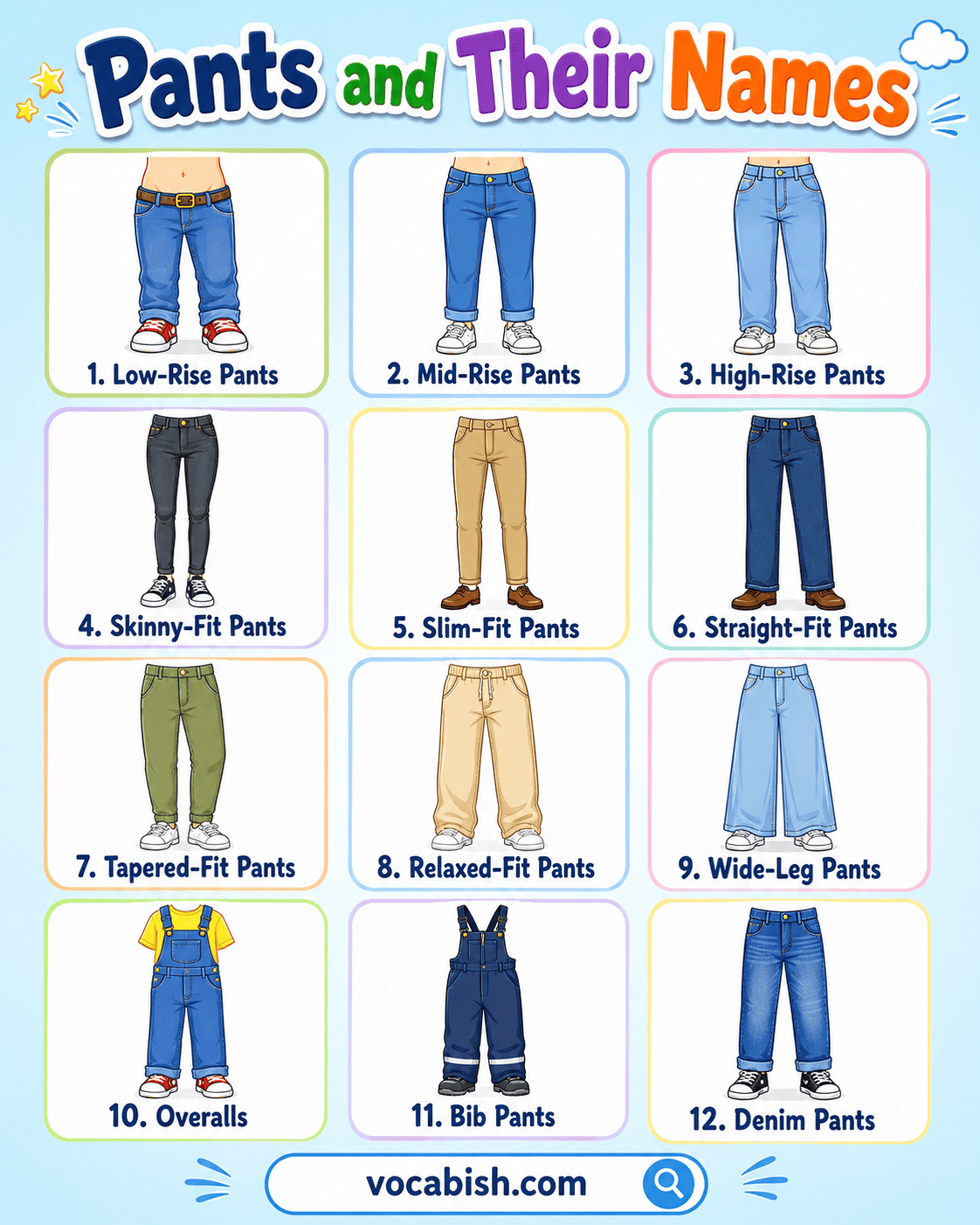
Overalls combine full-length pants with an attached bib that covers part of the chest. Shoulder straps hold the garment in place, and the bib often includes a large front pocket.
They were traditionally worn as protective work clothing, but denim and fashion versions are now common in casual outfits. Bib pants are also used for skiing, fishing, and outdoor work.
Types of Pants by Fit
The fit describes how closely the pants follow the shape of the body. Two pairs made from the same fabric can look and feel very different because of their fit.
Skinny Fit
Skinny-fit pants sit closely around the hips, thighs, knees, calves, and ankles. Stretch fabric is often added to make movement easier.
This fit creates a narrow silhouette and is common in jeans, chinos, and formal trousers.
Slim Fit
Slim-fit pants follow the shape of the legs without feeling as tight as skinny pants. They usually provide a little more space around the thighs and calves.
They offer a neat, modern look and work well for casual, smart-casual, and professional outfits.
Straight Fit
Straight-fit pants maintain a similar width from the hips or thighs to the hem. They do not narrow sharply or widen significantly.
This classic shape suits many body types and appears in jeans, chinos, dress trousers, and work pants.
Tapered Fit
Tapered pants provide more room around the hips and thighs before becoming narrower toward the ankles.
The shape offers comfort in the upper leg while keeping the lower section neat. Chinos, joggers, pleated trousers, and casual pants often use this fit.
Relaxed Fit
Relaxed-fit pants provide extra space around the seat, thighs, knees, and lower legs. They allow comfortable movement and do not closely follow the body.
This fit is common in workwear, cargo pants, casual jeans, sweatpants, and travel clothing.
Wide-Leg Fit
Wide-leg pants remain broad from the waist or hips to the hem. Unlike flared pants, they do not need to fit closely around the thighs before widening.
This fit creates a flowing or structured silhouette, depending on the fabric.
Fit | Thigh Area | Leg Opening | Best Known For |
|---|---|---|---|
Skinny | Very close | Very narrow | Body-hugging shape |
Slim | Close | Narrow | Neat modern appearance |
Straight | Regular | Regular | Balanced classic shape |
Tapered | Roomy | Narrow | Comfort with a clean ankle |
Relaxed | Loose | Loose | Easy movement |
Wide-Leg | Very roomy | Very wide | Flowing or bold silhouette |
Classification of Pants by Length
Pant length affects both appearance and function. The main lengths include:
- Full-length pants: Extend to the ankle, top of the foot, or slightly below.
- Ankle-length pants: End at or just above the ankle bone.
- Cropped pants: End several centimeters above the ankle.
- Capri pants: Usually end around the middle or lower part of the calf.
- Knee-length pants: Finish near the knee and provide more coverage than ordinary shorts.
- Shorts: End above the knee, although some styles may reach the knee.
The exact ending point can vary slightly according to the design and the wearer’s height.
Pants Based on Waist Rise
The rise describes where the waistband sits and the distance between the crotch seam and the top of the waistband.
Low-Rise Pants
Low-rise pants sit below the natural waist, usually around the hips. They have a shorter distance between the crotch and waistband.
This rise is common in certain jeans, casual trousers, and fashion-focused designs.
Mid-Rise Pants
Mid-rise pants sit between the hips and natural waist. They provide more coverage than low-rise styles without reaching as high as high-rise trousers.
This balanced rise is common in jeans, chinos, dress pants, and everyday clothing.
High-Rise Pants
High-rise pants sit at the natural waist or above it. They have a longer rise and cover more of the midsection.
High-rise designs appear in jeans, tailored trousers, wide-leg pants, leggings, and vintage-inspired clothing.
Types of Pants by Occasion
Different occasions require different levels of comfort, durability, and formality.
Casual Pants
Jeans, joggers, cargo pants, leggings, sweatpants, and corduroy trousers are suitable for casual wear. They work well for shopping, relaxed meetings, travel, and everyday activities.
The best choice depends on the weather and how polished the outfit needs to look.
Formal Pants
For formal occasions, dress pants, tailored trousers, and suit pants are the most suitable choices. They usually have a clean shape, structured waistband, and smooth fabric.
Dark or neutral colors such as black, navy, charcoal, and beige are easy to combine with formal shirts and jackets.
Workwear Pants
Cargo pants, carpenter pants, utility trousers, overalls, and reinforced work pants are designed for practical tasks. They may include strong seams, tool loops, large pockets, or abrasion-resistant fabric.
The right work pants should match the job environment and allow safe, comfortable movement.
Sports and Activewear Pants
Track pants, yoga pants, compression leggings, training trousers, and running pants are designed for physical activity. They often use flexible, breathable, or moisture-wicking fabrics.
Choose the style according to the activity. Loose track pants suit warm-ups, while fitted leggings work well for yoga, running, and gym training.
Summer Pants
Linen pants, palazzo pants, lightweight chinos, cotton trousers, and loose cropped pants are comfortable choices for warm weather.
Breathable fabric and a relaxed fit help air circulate around the body. Light colors may also feel more comfortable in strong sunlight.
Men’s, Women’s, and Unisex Pants
Many pant styles are available in men’s, women’s, and unisex collections. Jeans, chinos, cargo pants, joggers, sweatpants, and track pants are worn across all categories.
The main differences usually involve cut, sizing, rise, hip-to-waist proportions, and design details. For example, one version may provide more room through the hips, while another may use a straighter cut. The label matters less than the actual measurements, fit, comfort, and intended style.
Pants vs Trousers: Is There a Difference?
The difference mainly depends on the variety of English being used. In American English, pants is the standard general word for clothing worn from the waist downward with separate leg sections.
In British English, the same garment is usually called trousers. The word pants may refer to underwear in British usage, so learners should consider the country and context when choosing the term.
How to Choose the Right Type of Pants
The right choice should suit the occasion, fit comfortably, and work with the rest of the outfit.
Consider the Occasion
Start by deciding where you will wear the pants. Dress trousers suit formal events and professional settings, while jeans, chinos, and joggers are better for casual situations.
For exercise, outdoor work, or travel, choose a style designed for movement and practical use.
Check the Fit
Choose a fit that gives you the appearance and comfort you need. Skinny and slim pants create a narrow shape, while straight fits offer a balanced look.
Relaxed and wide-leg styles provide more space. Tapered pants combine a roomy upper section with a narrower ankle.
Choose the Right Fabric
Fabric affects comfort, appearance, and durability.
- Denim is strong and suitable for everyday wear.
- Linen feels breathable in hot weather.
- Wool and wool blends create a polished formal appearance.
- Cotton twill works well for chinos and casual trousers.
- Stretch fabric improves flexibility in fitted pants.
- Nylon and polyester are common in sportswear and outdoor clothing.
Select the Appropriate Length
Pant length should match the style, footwear, weather, and setting. Full-length trousers work in most situations, while ankle-length and cropped styles create a lighter appearance.
Capri pants and shorts are practical for warm weather, but they may not suit formal or traditional workplaces.
Prioritize Comfort and Movement
A fashionable design is not useful if it restricts movement or feels uncomfortable. Check the waistband, thigh room, fabric flexibility, and leg opening.
Sit, walk, and bend while trying on pants. This simple test shows whether the garment will remain comfortable during normal daily activities.
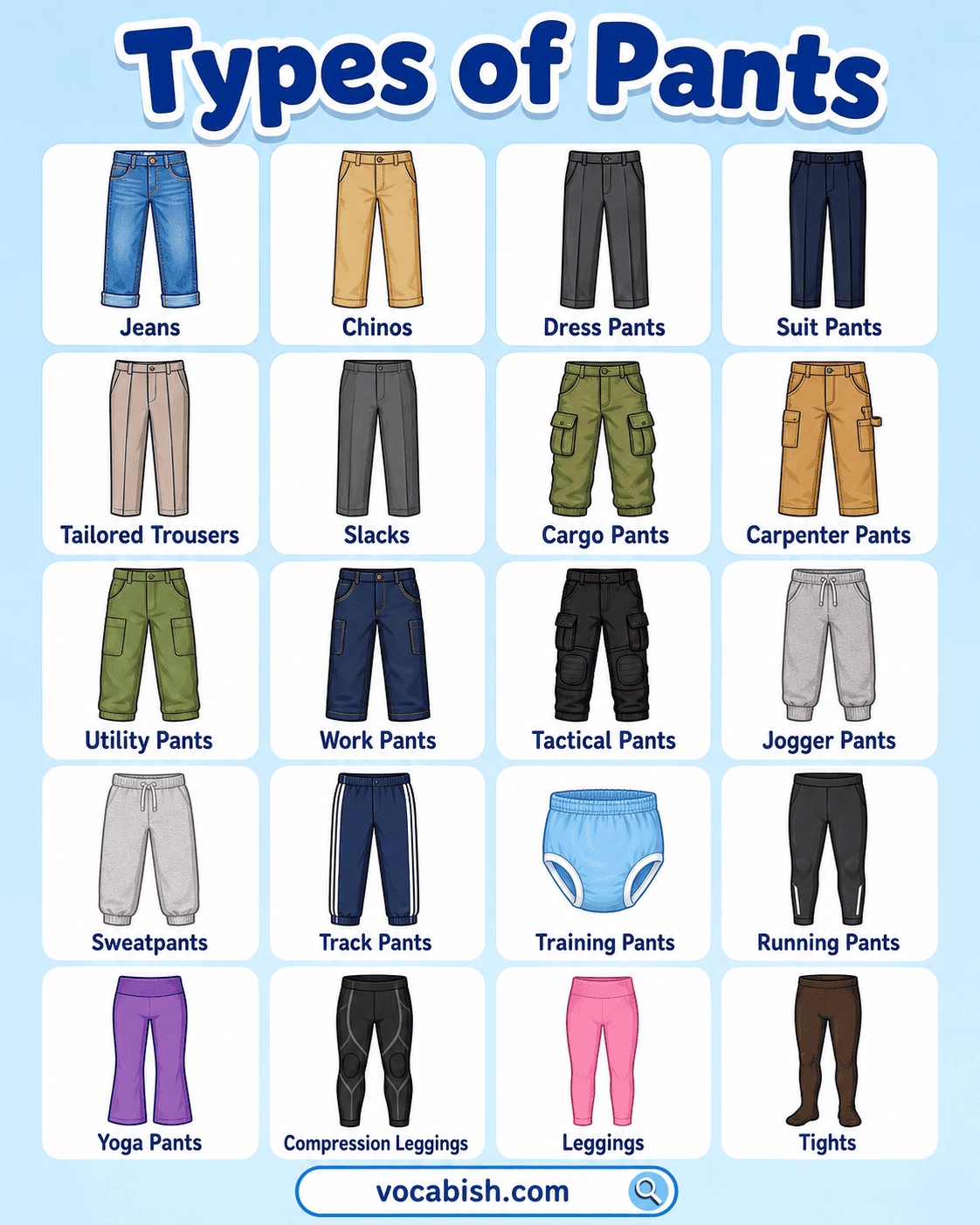
List of All Types of Pants and Their Names
- Jeans
- Chinos
- Dress Pants
- Suit Pants
- Tailored Trousers
- Slacks
- Cargo Pants
- Carpenter Pants
- Utility Pants
- Work Pants
- Tactical Pants
- Jogger Pants
- Sweatpants
- Track Pants
- Training Pants
- Running Pants
- Yoga Pants
- Compression Leggings
- Leggings
- Tights
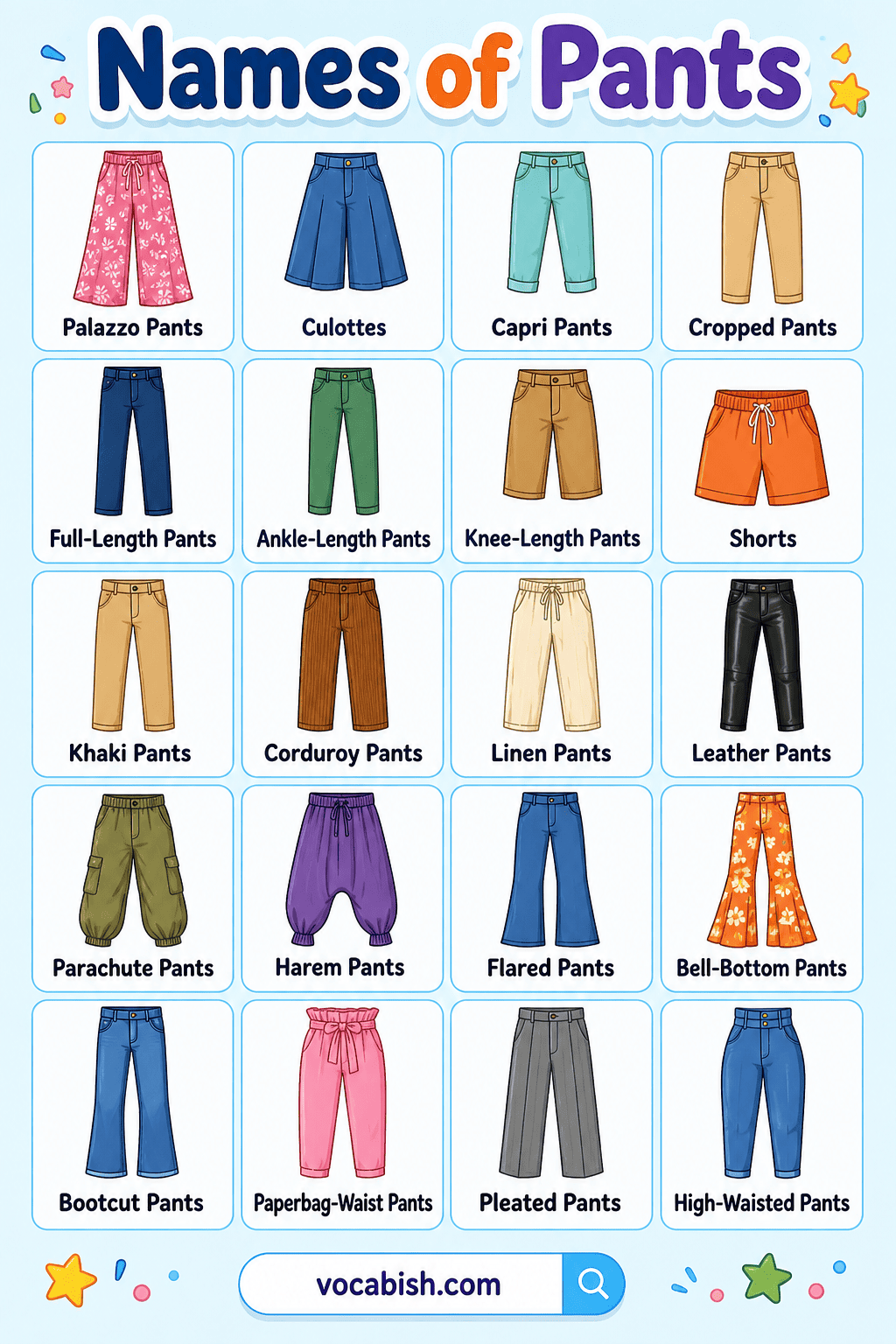
- Palazzo Pants
- Culottes
- Capri Pants
- Cropped Pants
- Full-Length Pants
- Ankle-Length Pants
- Knee-Length Pants
- Shorts
- Khaki Pants
- Corduroy Pants
- Linen Pants
- Leather Pants
- Parachute Pants
- Harem Pants
- Flared Pants
- Bell-Bottom Pants
- Bootcut Pants
- Paperbag-Waist Pants
- Pleated Pants
- High-Waisted Pants
- Low-Rise Pants
- Mid-Rise Pants
- High-Rise Pants
- Skinny-Fit Pants
- Slim-Fit Pants
- Straight-Fit Pants
- Tapered-Fit Pants
- Relaxed-Fit Pants
- Wide-Leg Pants
- Overalls
- Bib Pants
- Denim Pants
Quick Comparison of Popular Pant Styles
Style | Fit | Fabric | Best For |
|---|---|---|---|
Jeans | Skinny to relaxed | Denim | Everyday casual wear |
Chinos | Straight or tapered | Cotton twill | Smart-casual outfits |
Dress Pants | Tailored | Wool or blended fabric | Offices and formal events |
Joggers | Tapered | Cotton or synthetic fabric | Casual and athleisure wear |
Cargo Pants | Relaxed | Cotton, canvas, or nylon | Outdoor wear and streetwear |
Palazzo Pants | Very wide | Lightweight flowing fabric | Summer and dressy outfits |
Leggings | Skin-tight | Stretch fabric | Exercise and casual layering |
Linen Pants | Relaxed | Linen or linen blend | Hot weather and holidays |
Track Pants | Straight or tapered | Performance fabric | Training and sportswear |
Corduroy Pants | Varies | Ridged cotton fabric | Cool-weather outfits |
Commonly Confused Pant Styles
Some trouser names describe a fabric, while others describe a fit, color, length, or design. This is why several styles can appear similar.
Chinos vs Khakis
Chinos are trousers usually made from lightweight cotton twill. They often have a smooth surface and a neat, semi-casual appearance.
Khaki originally describes a tan or light brown color. A pair of chinos may be khaki-colored, but chinos can also be black, navy, gray, or green.
Joggers vs Sweatpants
Joggers usually have tapered legs and fitted ankle cuffs. They create a more shaped, athletic appearance.
Sweatpants focus mainly on softness and comfort. They may have straight, loose, or cuffed legs. Some sweatpants look like joggers, so the terms sometimes overlap.
Flared Pants vs Bootcut Pants
Flared pants widen noticeably below the knees and may create a dramatic bell shape.
Bootcut pants widen only slightly at the bottom. Their leg opening is designed to fit comfortably over boots without producing a large flare.
Capri Pants vs Cropped Pants
Capri pants usually end around the middle or lower part of the calf.
Cropped pants are generally longer and often end a short distance above the ankle. Both are shorter than full-length trousers, but their ending points are different.
Leggings vs Tights
Leggings are usually thicker, footless, and suitable for exercise, layering, or casual wear.
Tights are generally thinner and often cover the feet. They are commonly worn under dresses, skirts, shorts, or other garments rather than as ordinary trousers.
FAQs About Types of Pants
The most common types include jeans, chinos, dress pants, cargo pants, joggers, sweatpants, leggings, track pants, and wide-leg trousers. These styles cover everyday wear, work, exercise, formal occasions, and warm-weather clothing.
Dress pants, tailored trousers, and suit pants are the best options for formal wear. Choose a clean fit, smooth fabric, and a neutral color. Wool, polyester blends, and structured fabrics usually create the most polished appearance.
Loose-fitting styles include wide-leg pants, palazzo pants, harem pants, parachute pants, relaxed-fit trousers, and some cargo pants. The correct name depends on the shape, fabric, waistband, and width of the legs.
Pants with several large utility pockets are usually called cargo pants. Their most recognizable feature is the pair of roomy pockets placed on the outer thighs. Some work pants and tactical trousers also include multiple pockets.
Short pants that end below the knee are often called capri pants or cropped pants. Capris usually end around the calf, while cropped pants normally finish closer to the ankle.
Yes, jeans are a type of pants made mainly from denim. They are available in many cuts, including skinny, straight, tapered, relaxed, bootcut, and flared styles.
Linen pants, lightweight chinos, palazzo pants, cropped cotton trousers, and loose-fitting pants are suitable for summer. Breathable materials and relaxed shapes help reduce heat and improve air circulation.
Pants is a broad American English term that includes casual, formal, athletic, and work styles. Slacks usually refers to non-denim trousers with a neat but slightly relaxed appearance. Slacks are often worn for office, business-casual, or smart-casual occasions.
Final Summary
Pants can be classified by style, fit, fabric, length, waist rise, and purpose. Jeans and joggers are useful for casual wear, while dress pants and tailored trousers suit professional or formal occasions. Cargo and work pants provide practical features, and linen or wide-leg styles offer comfort in warm weather.
Learning these differences makes clothing vocabulary easier to understand and helps you choose garments more confidently. The right pants depend on the occasion, preferred fit, fabric, comfort, and personal style.
Explore More Related Resources