
Example sentences of simple sentences usually have one independent clause with a subject and a verb, yet they can express a complete thought clearly. From “I am tired” to “Please sit down,” simple sentences appear everywhere in everyday English.
For ESL students, school learners, and anyone building basic English skills, practicing different examples of simple sentence types can make speaking and writing more natural.
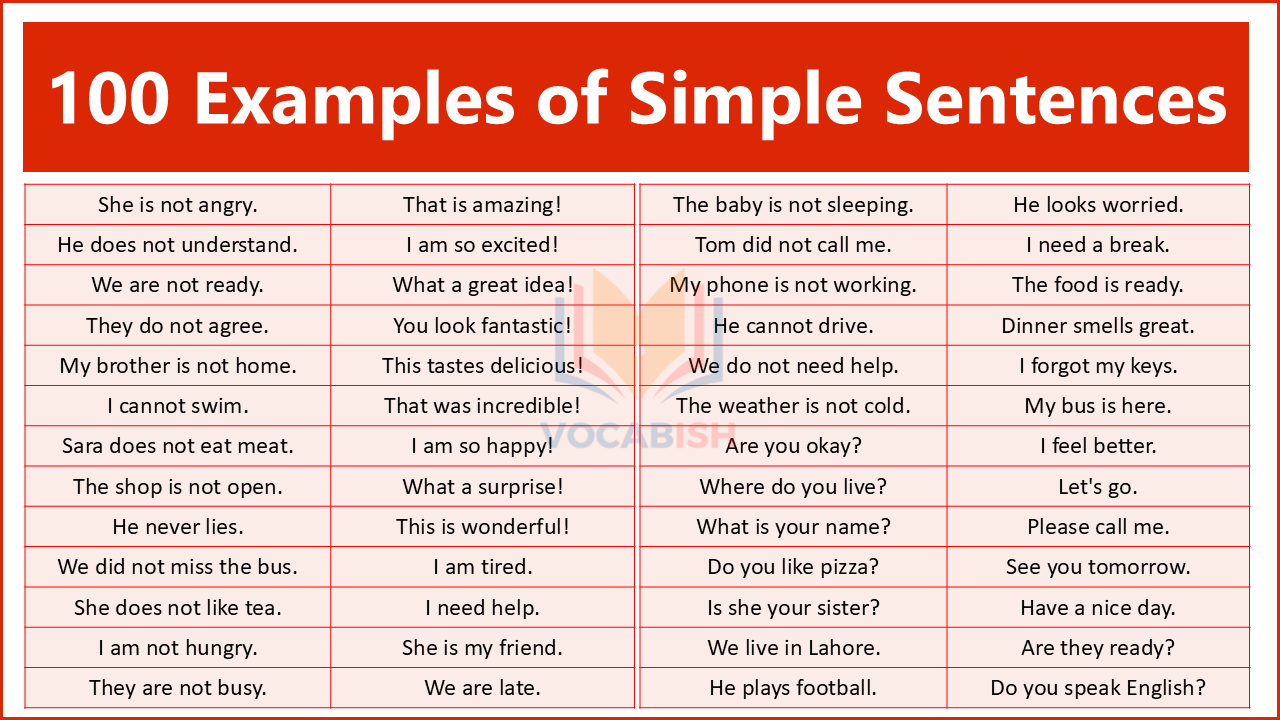
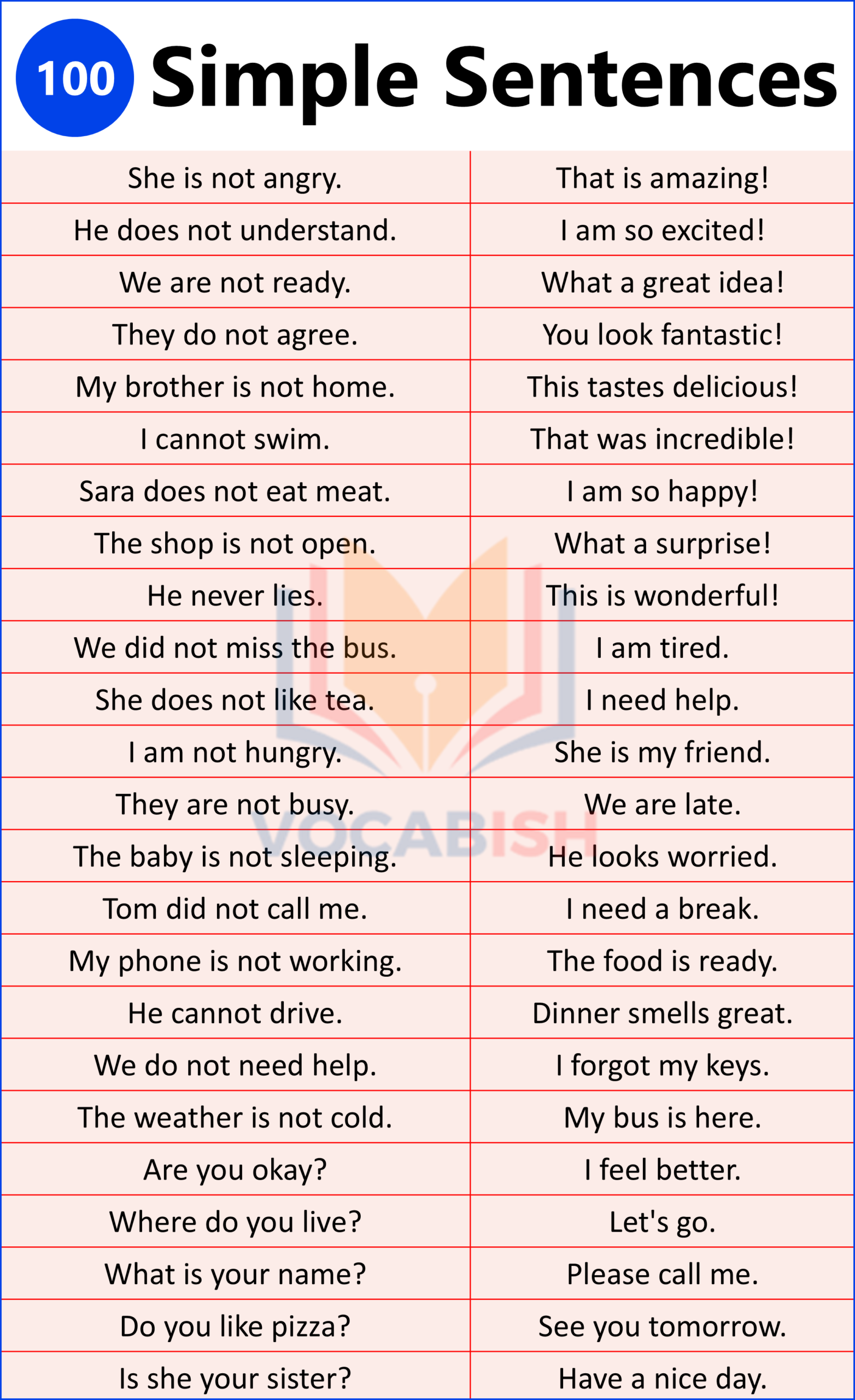
The 100 examples below include statements, negative sentences, questions, commands, requests, exclamations, and common conversation lines.
What Is a Simple Sentence?
A simple sentence contains one independent clause. It has a complete thought and can stand on its own.
A simple sentence may be short:
- Birds fly.
It can also be longer while still having one independent clause:
- The young students studied quietly in the library.
A simple sentence does not have to contain only a few words. What matters is that it contains one independent clause.
Basic Patterns of Simple Sentences
Common patterns include:
Subject + Verb
- Children laugh.
Subject + Verb + Object
- Sarah opened the window.
Subject + Linking Verb + Complement
- My brother is tired.
Subject + Verb + Adverbial
- The baby slept peacefully.
Some simple sentences can also contain compound subjects or compound verbs while remaining one independent clause.
Example Sentence of Simple Sentence: 100 Examples
The following simple sentence examples are grouped by purpose so learners can see how this sentence structure works in different situations.
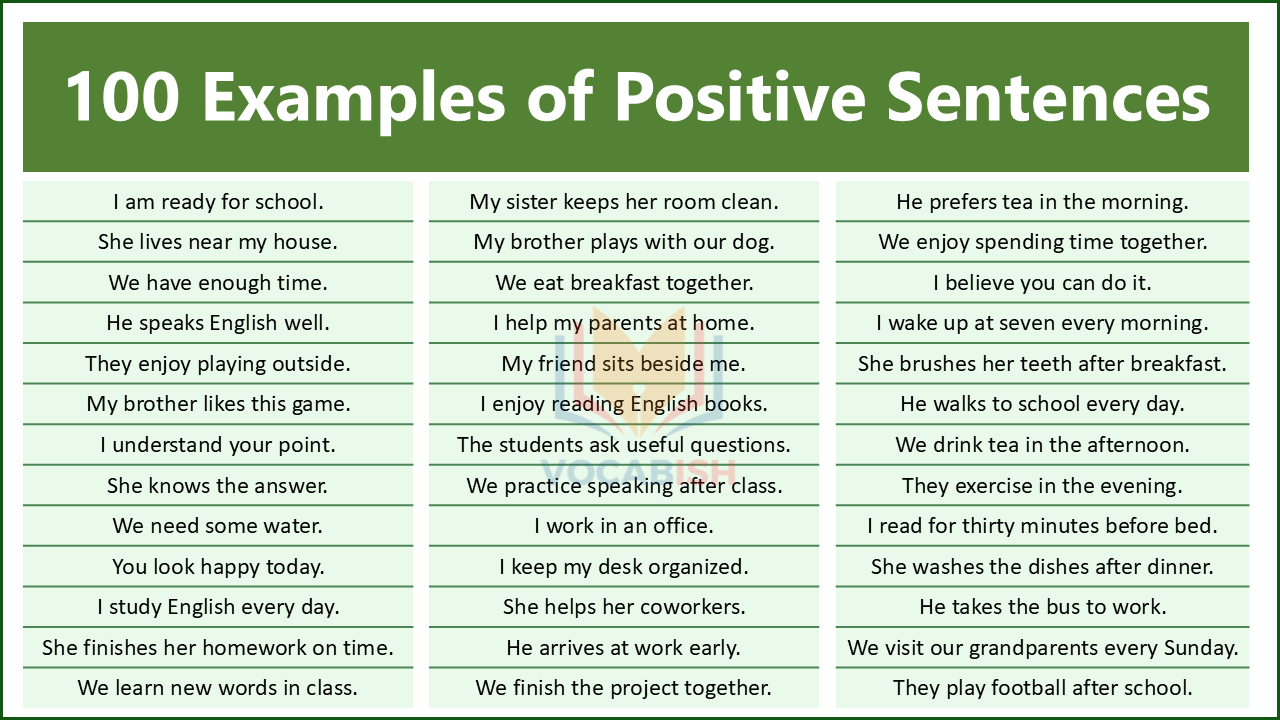
1. Affirmative Simple Sentences
These sentences make statements, describe actions, or provide information.
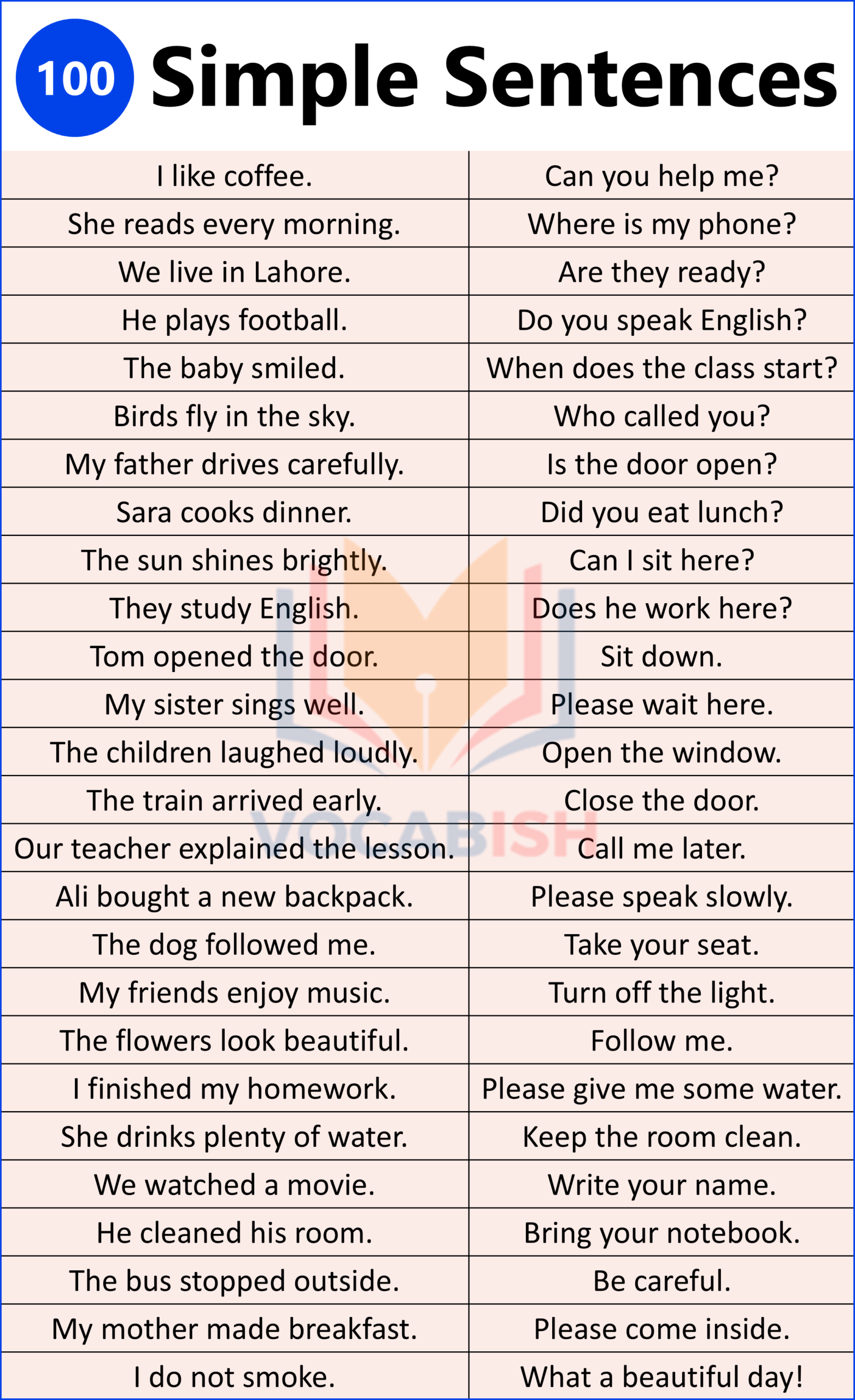
- I like coffee.
- She reads every morning.
- We live in Lahore.
- He plays football.
- The baby smiled.
- Birds fly in the sky.
- My father drives carefully.
- Sara cooks dinner.
- The sun shines brightly.
- They study English.
- Tom opened the door.
- My sister sings well.
- The children laughed loudly.
- The train arrived early.
- Our teacher explained the lesson.
- Ali bought a new backpack.
- The dog followed me.
- My friends enjoy music.
- The flowers look beautiful.
- I finished my homework.
- She drinks plenty of water.
- We watched a movie.
- He cleaned his room.
- The bus stopped outside.
- My mother made breakfast.
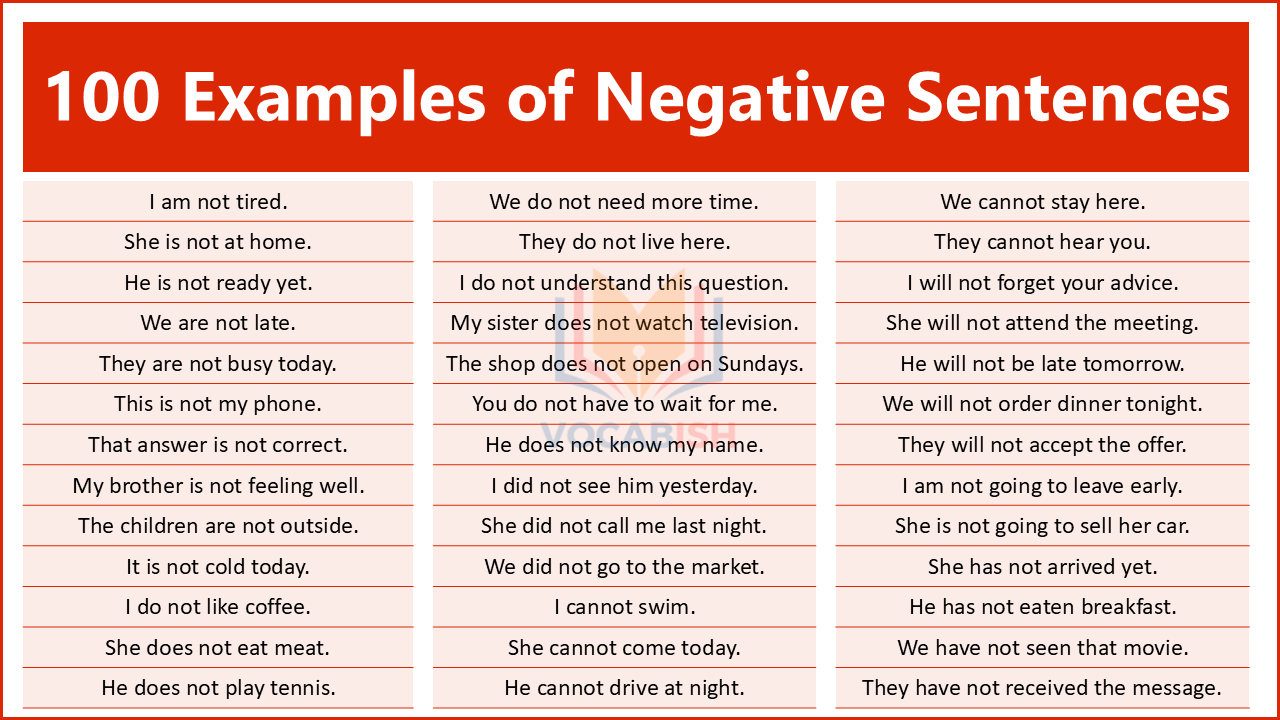
2. Negative Simple Sentences
Negative sentences use words such as not, never, no, or other negative expressions.
- I do not smoke.
- She is not angry.
- He does not understand.
- We are not ready.
- They do not agree.
- My brother is not home.
- I cannot swim.
- Sara does not eat meat.
- The shop is not open.
- He never lies.
- We did not miss the bus.
- She does not like tea.
- I am not hungry.
- They are not busy.
- The baby is not sleeping.
- Tom did not call me.
- My phone is not working.
- He cannot drive.
- We do not need help.
- The weather is not cold.
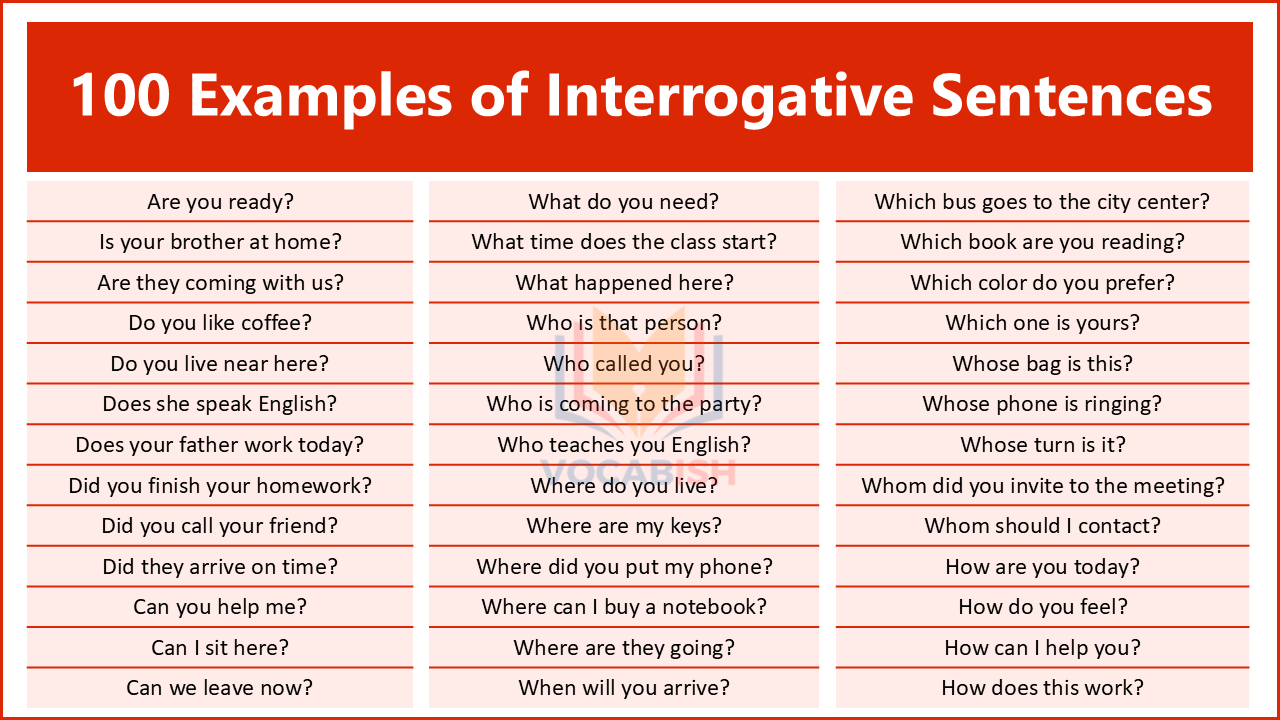
3. Simple Sentence Questions
These questions are common in conversations and everyday situations.
- Are you okay?
- Where do you live?
- What is your name?
- Do you like pizza?
- Is she your sister?
- Can you help me?
- Where is my phone?
- Are they ready?
- Do you speak English?
- When does the class start?
- Who called you?
- Is the door open?
- Did you eat lunch?
- Can I sit here?
- Does he work here?
4. Commands and Requests
Imperative sentences often begin with a verb. They can give instructions, commands, advice, or polite requests.
- Sit down.
- Please wait here.
- Open the window.
- Close the door.
- Call me later.
- Please speak slowly.
- Take your seat.
- Turn off the light.
- Follow me.
- Please give me some water.
- Keep the room clean.
- Write your name.
- Bring your notebook.
- Be careful.
- Please come inside.
5. Exclamatory Simple Sentences
These sentences express strong feelings such as excitement, surprise, happiness, or frustration.
- What a beautiful day!
- That is amazing!
- I am so excited!
- What a great idea!
- You look fantastic!
- This tastes delicious!
- That was incredible!
- I am so happy!
- What a surprise!
- This is wonderful!
6. Everyday Conversation Examples
These are natural simple sentence examples learners may hear or use during ordinary conversations.
- I am tired.
- I need help.
- She is my friend.
- We are late.
- He looks worried.
- I need a break.
- The food is ready.
- Dinner smells great.
- I forgot my keys.
- My bus is here.
- I feel better.
- Let’s go.
- Please call me.
- See you tomorrow.
- Have a nice day.
Simple Sentences in Everyday Conversation
Simple sentences are common in spoken English because they communicate information quickly and clearly. Learners can use them at home, at school, at work, in shops, and while talking with friends.
At Home
- I am hungry.
- Dinner is ready.
- The baby is sleeping.
- Please close the window.
- I need my phone.
- Mom is in the kitchen.
- The room is clean.
- Come here.
At School
- The class starts now.
- I have a question.
- Please repeat that.
- I forgot my book.
- The teacher is here.
- Can I come in?
- I finished my work.
- The lesson is easy.
At Work
- I need help.
- The meeting starts at ten.
- Please send the file.
- I am busy.
- The manager is here.
- We need more time.
- The report is ready.
- I will call you later.
In Shops
- How much is this?
- I like this shirt.
- Do you have my size?
- I need a bag.
- This is too expensive.
- Can I pay by card?
- The shop is crowded.
- Please give me a receipt.
With Friends
- Are you free?
- Let’s go outside.
- I miss you.
- That sounds great.
- I am almost ready.
- Wait for me.
- Where are you?
- See you tonight.
Simple Sentences by Purpose
The structure may be simple even when the purpose changes.
Statements
- I love reading.
- She works here.
- The movie starts soon.
- My brother plays tennis.
- We need more chairs.
Negative Statements
- I do not know.
- She is not ready.
- He does not drive.
- We are not late.
- They cannot stay.
Questions
- Are you hungry?
- Do you need help?
- Where is the station?
- Can you hear me?
- Did she arrive?
Commands
- Listen carefully.
- Open your book.
- Please stand here.
- Take this seat.
- Come with me.
Requests
- Please help me.
- Please wait a moment.
- Give me your pen.
- Please call tomorrow.
- Open the door, please.
Exclamations
- What a day!
- That is fantastic!
- How beautiful!
- This is incredible!
- What a surprise!
Longer Simple Sentence Examples
A simple sentence can contain several details and still remain a simple sentence when it has only one independent clause.
- The little boy played football in the park.
- My older sister works at a local hospital.
- The students completed their English homework.
- Our family visited the museum on Sunday.
- The blue car stopped near the main gate.
- My best friend bought a birthday gift for me.
- The young teacher spoke clearly to the class.
- The children played happily in the garden.
- My mother prepared a delicious meal for everyone.
- The old man walked slowly toward the bus stop.
Simple Sentence Examples With Compound Subjects or Verbs
A simple sentence may contain more than one subject or verb and still express one independent clause.
- Ali and Ahmed study together.
- Sara and Maria work here.
- The cat and the dog slept outside.
- Tom washed the dishes and cleaned the table.
- She opened the box and removed the gift.
- We laughed and talked all evening.
- My brother and sister live nearby.
- The teacher checked the homework and marked the papers.
- John and Peter played football.
- She cooked dinner and served the guests.
Common Mistakes With Simple Sentences
Simple sentences are easy to recognize once you focus on the complete thought, but learners often make a few basic errors.
- Sentence fragment: “Because I was tired.” This does not express a complete thought by itself.
- Missing subject: “Went to the market.” A complete sentence normally needs a clear subject.
- Missing verb: “The children in the classroom.” This does not complete the thought.
- Incorrect verb agreement: “She play tennis.” The correct form is “She plays tennis.”
- Run-on confusion: Two complete thoughts should not be incorrectly joined without proper punctuation.
Practice: Identify the Simple Sentences
Read each sentence and decide whether it is a simple sentence.
- The dog barked.
- Because the rain started.
- My sister loves chocolate.
- We went home after school.
- I was tired, but I finished my work.
- The baby cried.
- Running through the park.
- Sarah opened the door.
- The boys played football in the field.
- When the teacher arrived.
Answers:
- Simple sentence
- Not a complete sentence
- Simple sentence
- Simple sentence
- Not a simple sentence
- Simple sentence
- Not a complete sentence
- Simple sentence
- Simple sentence
- Not a complete sentence
How to Practice Simple Sentences
Start with short sentences you can use naturally in conversation. Then add useful details without changing the basic sentence structure.
Try building sentences around familiar topics such as:
- Family
- School
- Work
- Food
- Hobbies
- Weather
- Travel
- Daily routines
- Friends
- Shopping
You can also practice by changing one sentence into different forms:
- I am ready.
- I am not ready.
- Are you ready?
- Please get ready!
- I feel ready now.
This type of practice helps learners become comfortable with statements, negatives, questions, commands, and exclamations.
FAQs About Simple Sentences
A simple sentence contains one independent clause and expresses a complete thought with a subject and a predicate.
“I like apples” is a simple sentence because it contains one independent clause and expresses a complete thought.
Yes. A simple sentence can include several words, phrases, or details while still containing only one independent clause.
Examples include “She reads books,” “We are ready,” “Please sit down,” and “Are you okay?”
Yes. A simple sentence can have compound verbs, such as “She cooked dinner and washed the dishes.”
Yes. A sentence can have a compound subject, such as “Ali and Ahmed play football.”
Yes. A question can be a simple sentence when it contains one independent clause and expresses a complete thought.
Simple sentences help learners communicate clearly, build grammar confidence, and form a strong foundation for more advanced sentence structures.
Conclusion
Learning the example sentences of Simple Sentences pattern gives English learners a practical foundation for everyday communication. The 100 examples above show how simple sentences can make statements, ask questions, give instructions, express feelings, and handle ordinary conversations.
Practice these simple sentences aloud, write your own examples, and gradually add useful details. Strong control of basic sentence structure makes it easier to move on to compound and complex sentences.
Explore More Example Sentences