
Interrogative sentences are used to ask questions and get information, confirmation, choices, or responses. These Examples of Interrogative Sentences cover common WH-questions, yes-no questions, choice questions, tag questions, and everyday conversation.
What Is an Interrogative Sentence?
An interrogative sentence is a sentence that asks a question. It normally ends with a question mark (?).
Common interrogative words include who, what, when, where, why, which, whose, whom, and how. Questions can also begin with helping verbs such as is, are, do, does, did, can, could, will, would, should, and have.
100 Examples of Interrogative Sentences
The following interrogative sentence examples focus on situations learners commonly encounter at home, school, work, shopping areas, public places, and while talking with friends.
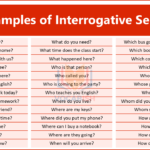
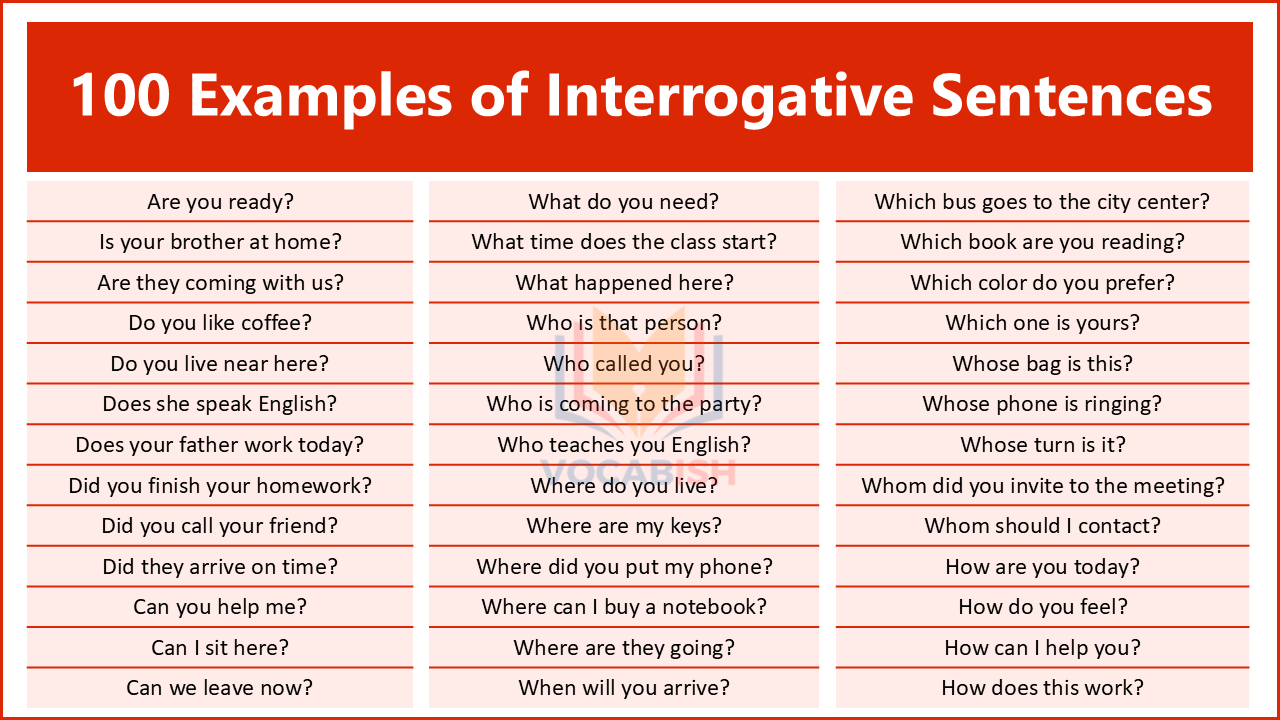
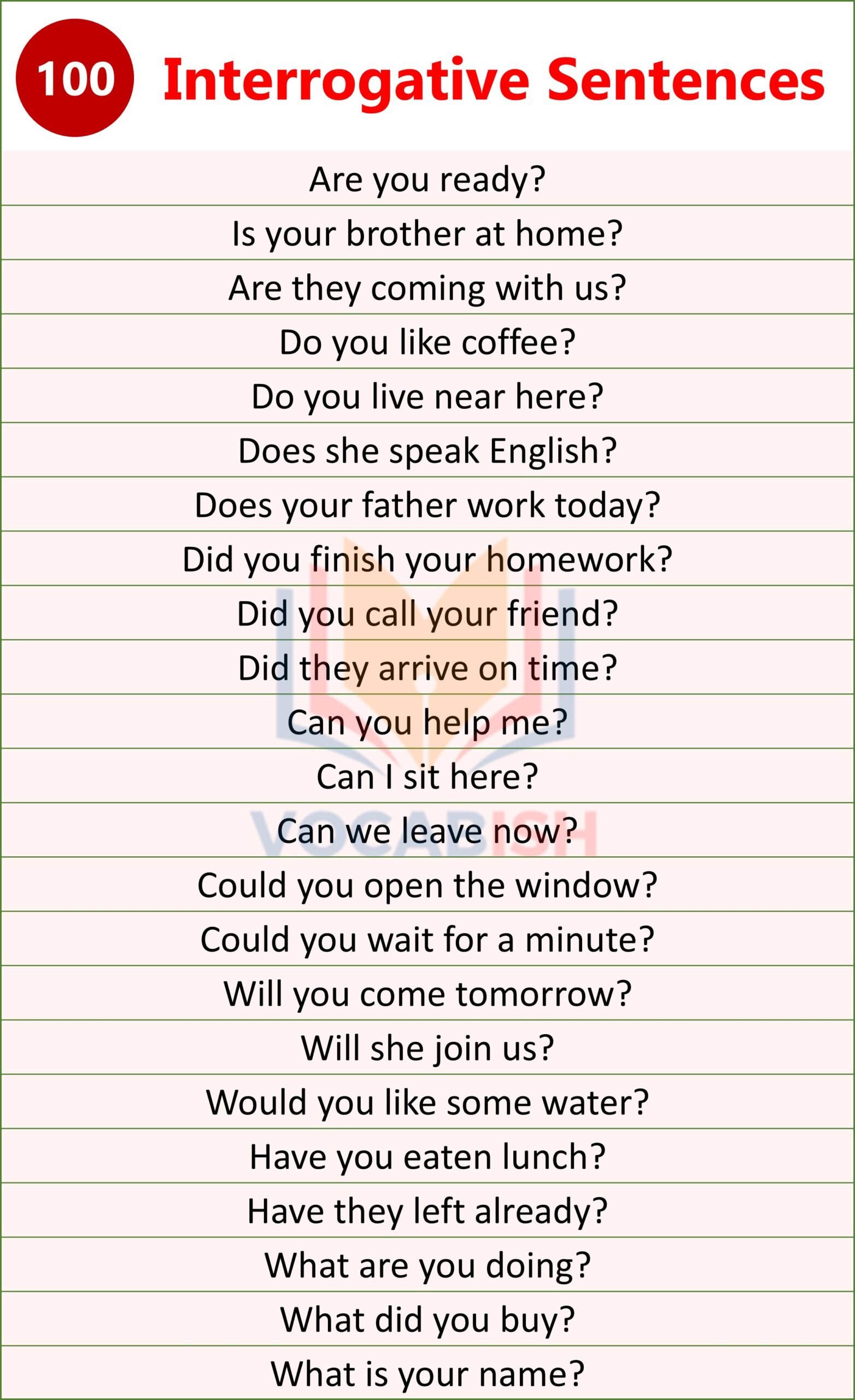
- Are you ready?
- Is your brother at home?
- Are they coming with us?
- Do you like coffee?
- Do you live near here?
- Does she speak English?
- Does your father work today?
- Did you finish your homework?
- Did you call your friend?
- Did they arrive on time?
- Can you help me?
- Can I sit here?
- Can we leave now?
- Could you open the window?
- Could you wait for a minute?
- Will you come tomorrow?
- Will she join us?
- Would you like some water?
- Have you eaten lunch?
- Have they left already?
- What are you doing?
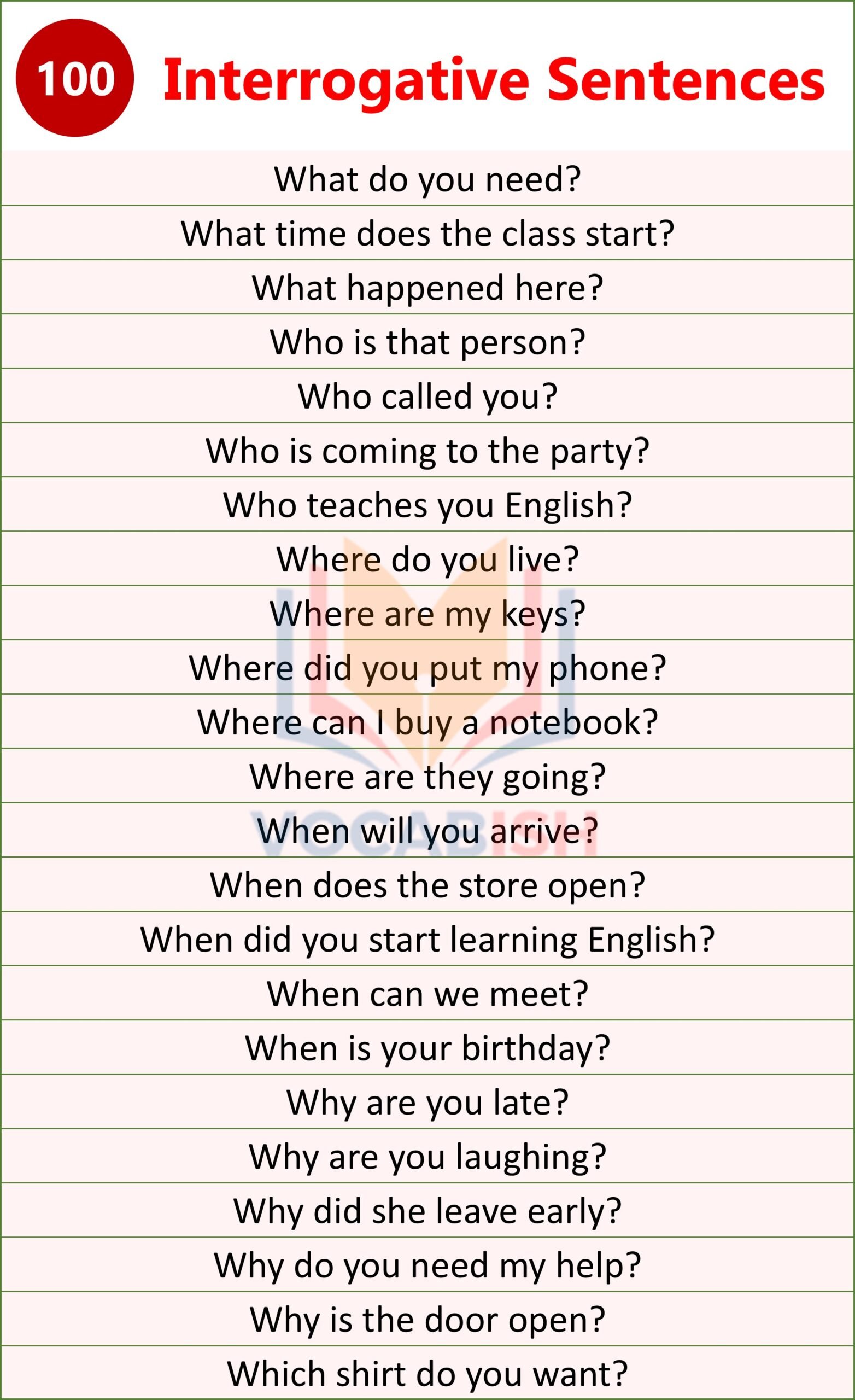
- What do you need?
- What did you buy?
- What is your name?
- What time does the class start?
- What happened here?
- Who is that person?
- Who called you?
- Who is coming to the party?
- Who teaches you English?
- Where do you live?
- Where are my keys?
- Where did you put my phone?
- Where can I buy a notebook?
- Where are they going?
- When will you arrive?
- When does the store open?
- When did you start learning English?
- When can we meet?
- When is your birthday?
- Why are you late?
- Why are you laughing?
- Why did she leave early?
- Why do you need my help?
- Why is the door open?
- Which shirt do you want?
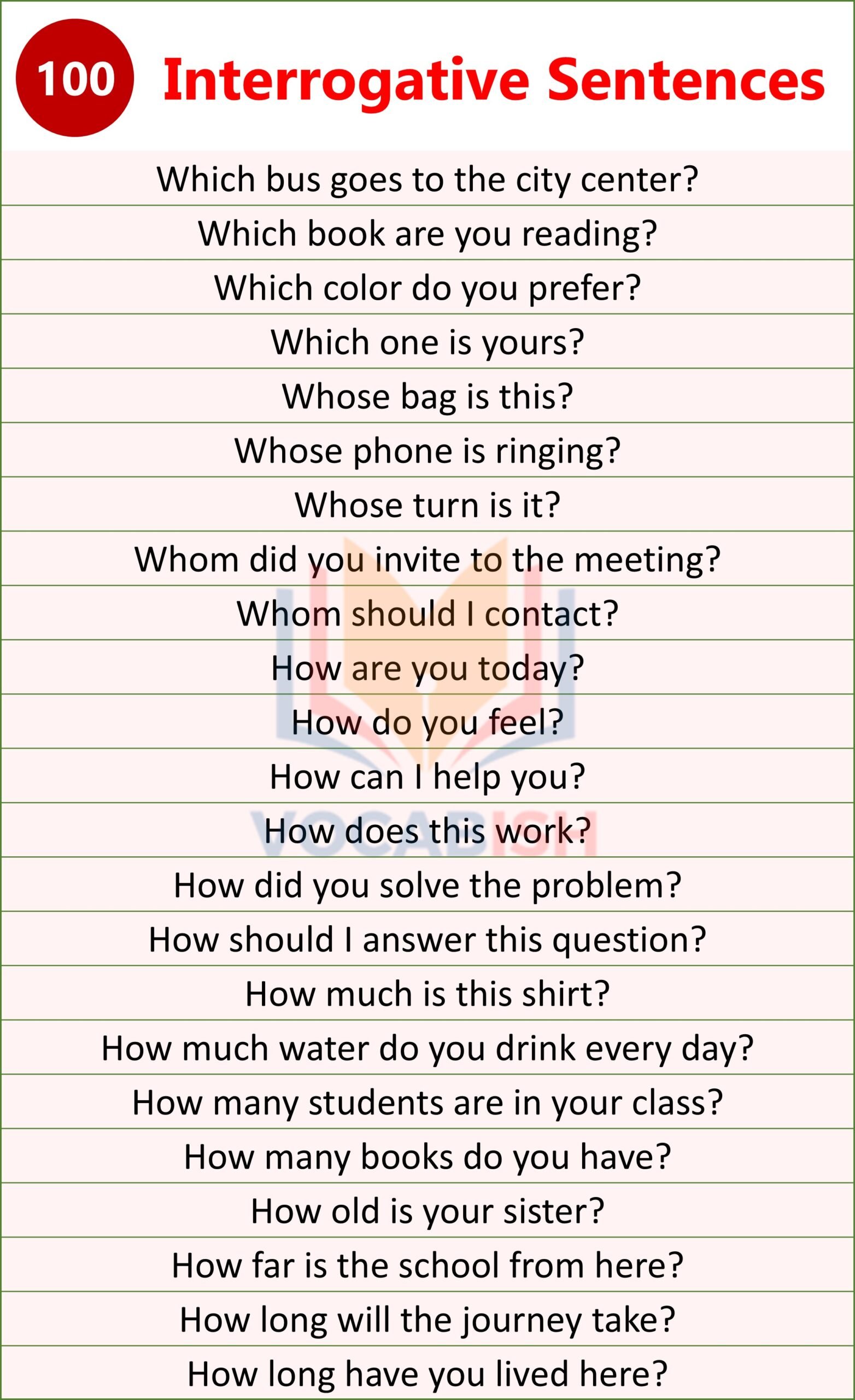
- Which bus goes to the city center?
- Which book are you reading?
- Which color do you prefer?
- Which one is yours?
Daily Use of Interrogative Sentences in English
- Whose bag is this?
- Whose phone is ringing?
- Whose turn is it?
- Whom did you invite to the meeting?
- Whom should I contact?
- How are you today?
- How do you feel?
- How can I help you?
- How does this work?
- How did you solve the problem?
- How should I answer this question?
- How much is this shirt?
- How much water do you drink every day?
- How many students are in your class?
- How many books do you have?
- How old is your sister?
- How far is the school from here?
- How long will the journey take?
- How long have you lived here?
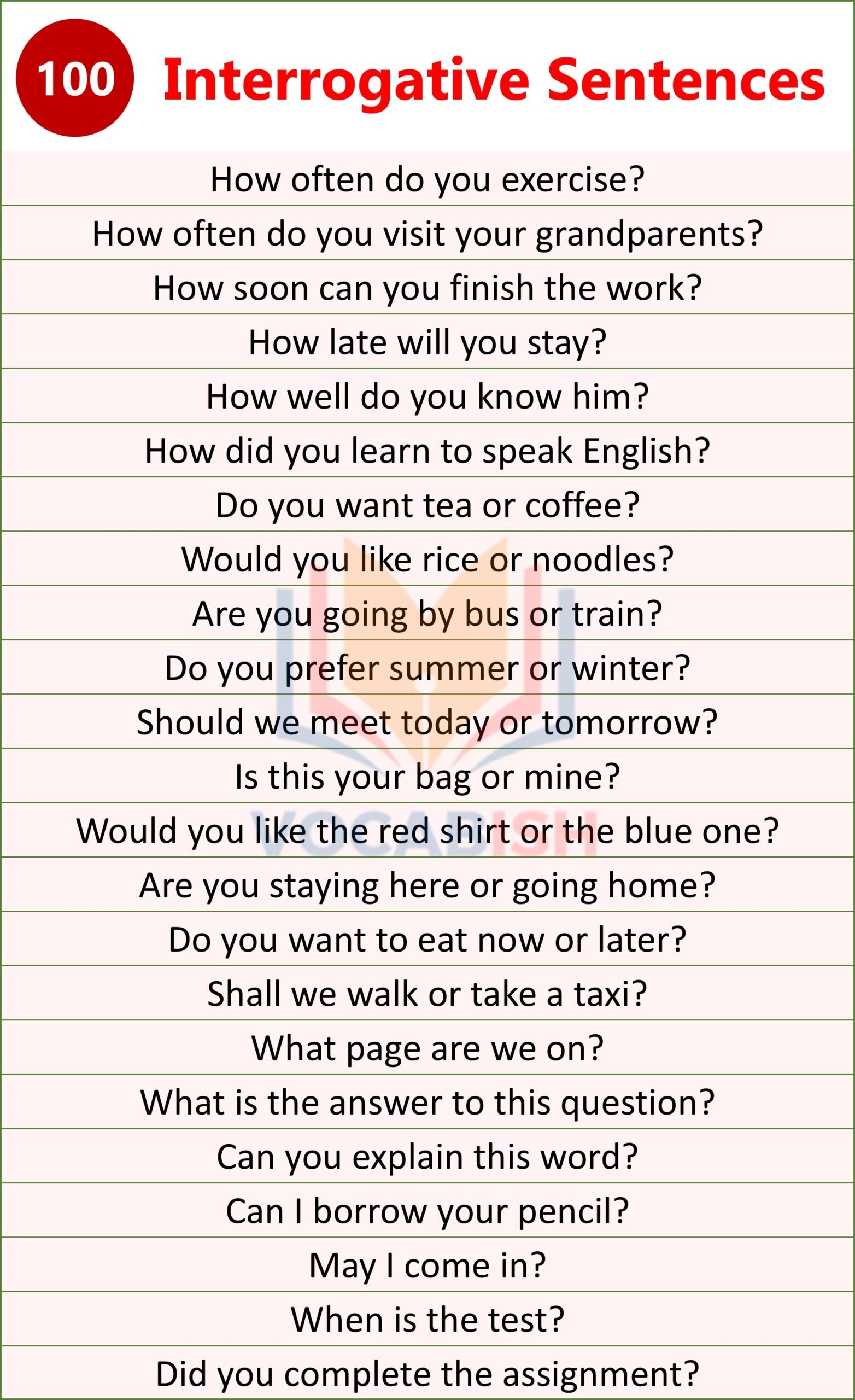
- How often do you exercise?
- How often do you visit your grandparents?
- How soon can you finish the work?
- How late will you stay?
- How well do you know him?
- How did you learn to speak English?
- Do you want tea or coffee?
- Would you like rice or noodles?
- Are you going by bus or train?
- Do you prefer summer or winter?
- Should we meet today or tomorrow?
- Is this your bag or mine?
- Would you like the red shirt or the blue one?
- Are you staying here or going home?
- Do you want to eat now or later?
- Shall we walk or take a taxi?
- What page are we on?
- What is the answer to this question?
- Can you explain this word?
- Can I borrow your pencil?
- May I come in?
- When is the test?
- Did you complete the assignment?
- Which exercise should we do?
- Can you repeat the question?
- How do you spell this word?
- How was your day?
- What are you doing this evening?
- Are you free tonight?
- What did you have for breakfast?
- Did you sleep well?
Interrogative Sentences by Question Type
These questions can be classified based on the type of answer they require.
Yes-No Questions
These usually begin with an auxiliary verb or modal verb.
- Is he your cousin?
- Do you understand the lesson?
- Did she send the email?
- Can they join us?
- Will you be there?
- Have you finished your work?
WH-Questions
These begin with question words such as who, what, where, when, why, and which.
- Who is your teacher?
- What do you want?
- Where did you park the car?
- When does the movie start?
- Why are you worried?
- Which dress do you like?
Choice Questions
These ask someone to select between alternatives.
- Do you want apples or oranges?
- Should I call you now or later?
- Are you taking the stairs or the elevator?
Tag Questions
A tag question adds a short question to the end of a statement.
- You are coming with us, aren’t you?
- She is your sister, isn’t she?
- They finished the work, didn’t they?
- You like this song, don’t you?
- He can drive, can’t he?
Common Question Words in Interrogative Sentences
- Who — asks about a person.
- What — asks about a thing, action, or information.
- Where — asks about a place.
- When — asks about a time.
- Why — asks about a reason.
- Which — asks someone to choose.
- Whose — asks about ownership.
- Whom — asks about the person receiving an action.
- How — asks about a method, condition, amount, degree, frequency, or other detail.
Basic Patterns of Interrogative Sentences
English questions commonly change the normal word order used in statements.
Questions With Be Verbs
Be verb + subject + rest of sentence?
- Are you tired?
- Is she your teacher?
- Were they at school?
Questions With Do, Does, and Did
Do/Does/Did + subject + base verb + rest of sentence?
- Do you play football?
- Does he work here?
- Did you watch the movie?
Questions With Modal Verbs
Modal verb + subject + base verb + rest of sentence?
- Can you swim?
- Should I wait here?
- Will they come tomorrow?
Questions With WH-Words
Question word + auxiliary verb + subject + main verb?
- Where do you work?
- Why did he leave?
- When will they arrive?
Common Mistakes With Interrogative Sentences
Learners often make mistakes with word order, auxiliary verbs, and verb forms.
- Incorrect: Where you are going?
Correct: Where are you going? - Incorrect: Does she likes coffee?
Correct: Does she like coffee? - Incorrect: Did you went there?
Correct: Did you go there? - Incorrect: What he is doing?
Correct: What is he doing? - Incorrect: Can you to help me?
Correct: Can you help me?
How to Practice Interrogative Sentences
Use questions from everyday situations instead of memorizing isolated grammar rules.
- Ask a family member three questions about their day.
- Ask a classmate about homework and school activities.
- Practice five questions using what, where, when, why, and how.
- Turn ten statements into questions.
- Practice short conversations using yes-no and WH-questions.
- Answer each question aloud using a complete sentence.
Quick Practice: Turn Statements Into Questions
Change each statement into an interrogative sentence.
- You are ready.
- She lives in Lahore.
- They play cricket.
- He finished his homework.
- You can drive.
- She is coming tomorrow.
- They have eaten dinner.
- He likes English.
- You went to the market.
- She will call you.
Answers:
- Are you ready?
- Does she live in Lahore?
- Do they play cricket?
- Did he finish his homework?
- Can you drive?
- Is she coming tomorrow?
- Have they eaten dinner?
- Does he like English?
- Did you go to the market?
- Will she call you?
FAQs About Interrogative Sentences
An interrogative sentence asks a question and normally ends with a question mark. It can request information, confirmation, a choice, or a response.
Five examples are: “Are you ready?”, “Where do you live?”, “What is your name?”, “Can you help me?”, and “When will you arrive?”
Common types include yes-no questions, WH-questions, choice questions, and tag questions. Each type is used for a different conversational purpose.
Common question words include who, what, where, when, why, which, whose, whom, and how. Auxiliary and modal verbs also form many questions.
Standard direct interrogative sentences end with a question mark. Indirect questions, however, can appear inside statements and may end with a period.
Place the appropriate auxiliary, modal, or be verb before the subject, or begin with a question word when specific information is needed.
A question is something that asks for information or a response, while an interrogative sentence is the grammatical sentence form used to ask it.
They help learners ask for information, start conversations, clarify details, make requests, check understanding, and communicate naturally in everyday situations.
Conclusion
These examples of interrogative sentences provide practical questions for everyday English, school conversations, requests, choices, and information gathering. Regular practice with yes-no questions, WH-questions, choice questions, and tag questions can help learners form questions more naturally and communicate with greater confidence.
Read More
- 100 Examples of Positive/Affirmative Sentences
- 100 Examples of Negative Sentences
- 100 Closing Sentence Examples for Essays and Paragraphs
- 100 Example Sentences of Simple Sentences
- 100 Complex Sentence Examples in English