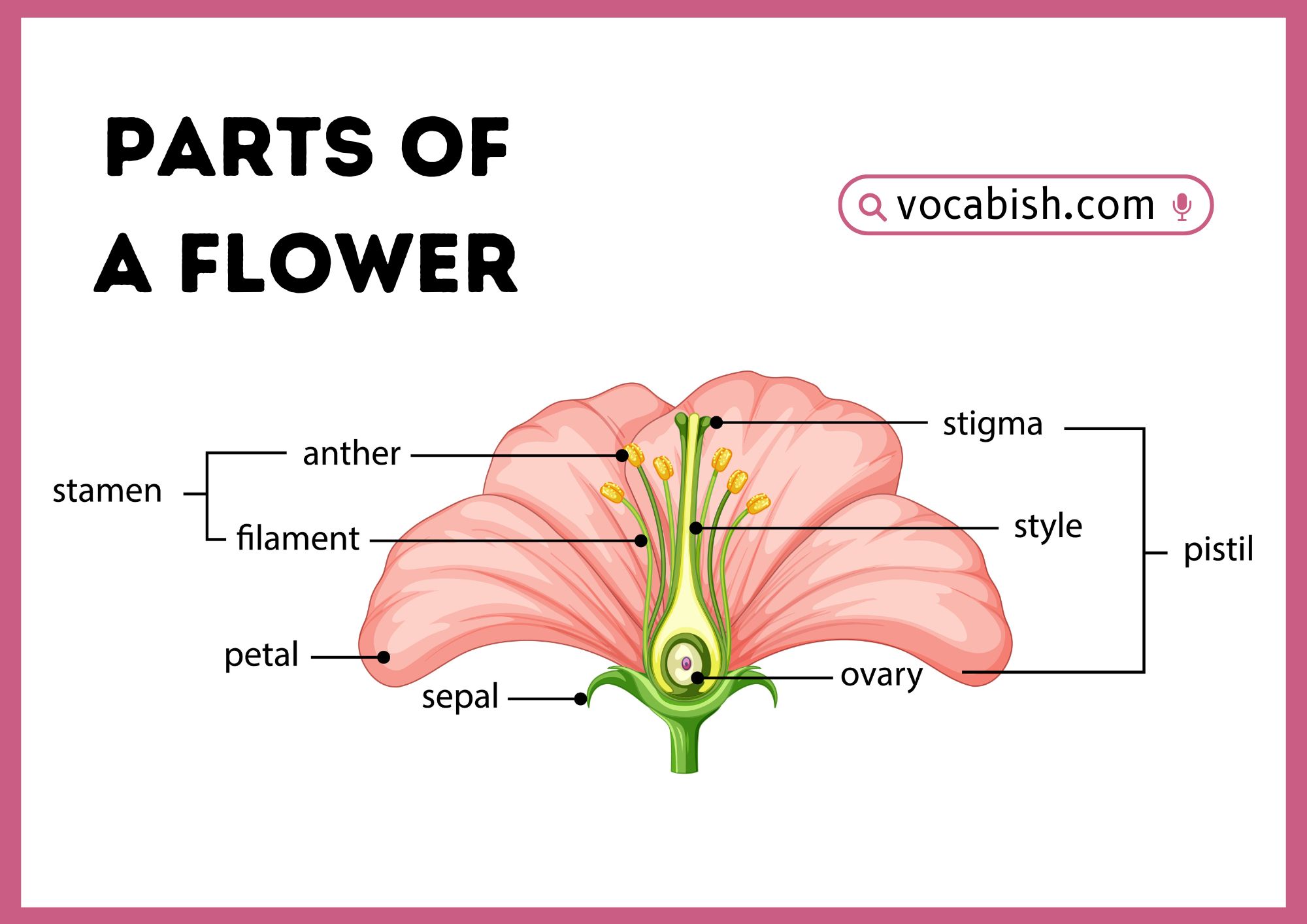

A flower has many parts, and each part has a special function in helping the plant grow and reproduce. Parts like petals, sepals, stamens, and pistils work together to make flowers bloom and produce seeds. In this blog post, you will learn all parts of a flower, their functions, and see a diagram to understand them clearly. When you understand these parts, you can describe flowers accurately, improve your science vocabulary, and explain how plants reproduce. With regular practice, you will master the names and roles of flower parts and use them confidently in speaking, writing, and reading about plants.
What is a Flower?
A flower is the reproductive part of a plant. Flowers help plants make seeds. They can attract insects, birds, or wind to transfer pollen from one flower to another. This process is called pollination.
Flowers can be different in shape, size, and colour, but most have the same basic parts.
Main Parts of a Flower
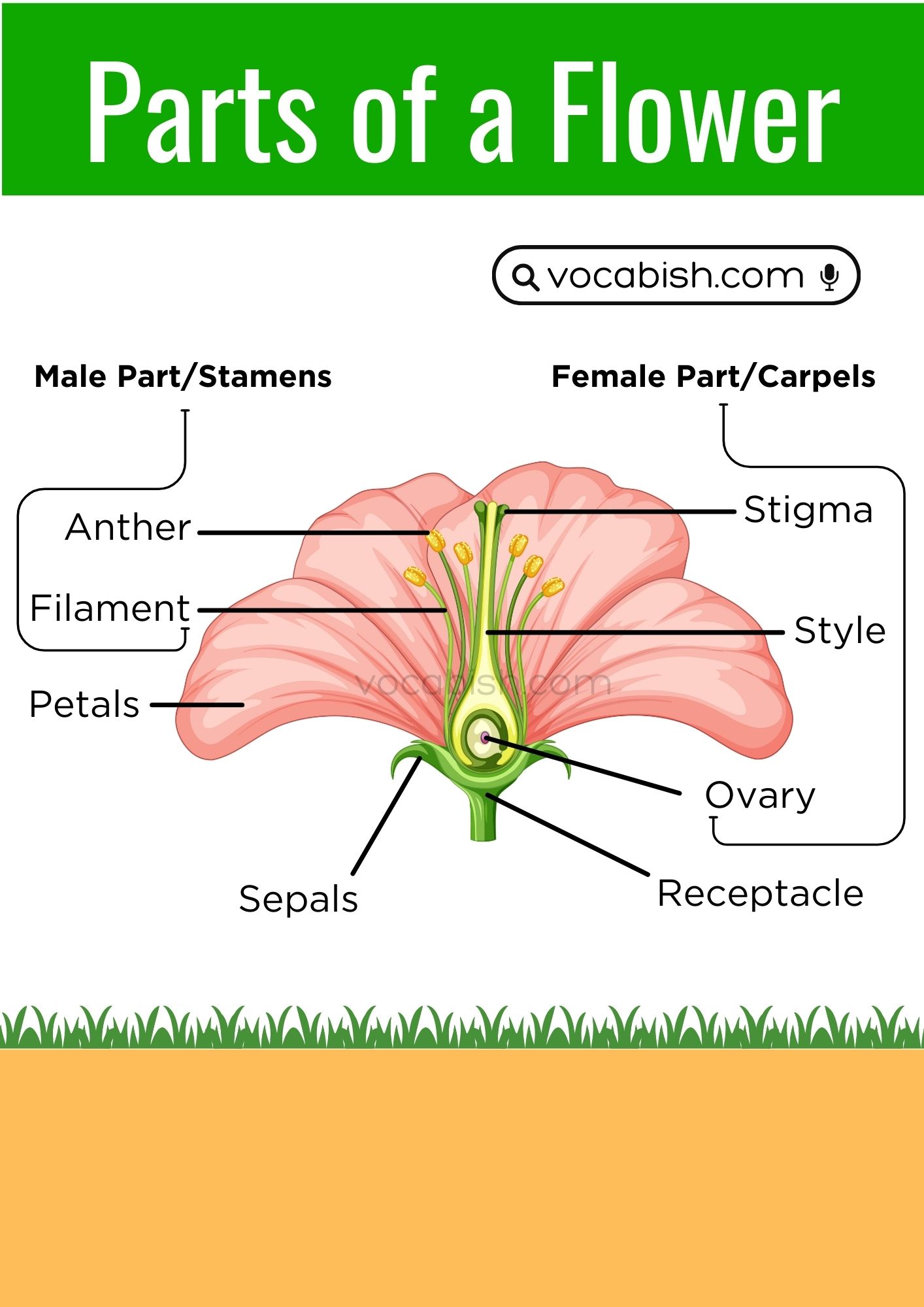
1. Sepals
- Usually green leaf-like parts at the bottom of a flower.
- Function: Protect the flower when it is a bud.
2. Petals
- Colourful parts of a flower that attract insects and birds.
- Function: Help in pollination by attracting pollinators.
3. Stamens (Male Part)
The male reproductive part of a flower.
Main Parts of Stamen:
- Anther: Produces pollen.
- Filament: Holds the anther up.
Function: Makes pollen which is needed to fertilise the female part.
4. Carpels / Pistil (Female Part)
The female reproductive part of a flower.
Main Parts of Pistil:
- Stigma: Sticky top part that catches pollen.
- Style: A tube that connects stigma to ovary.
- Ovary: Contains ovules (future seeds).
Function: Receives pollen and makes seeds after fertilization.
Additional Parts of a Flower
1. Receptacle
- The base of the flower where all parts join.
- Function: Supports the flower structure.
2. Peduncle (Flower Stem)
- The stem that holds the flower.
- Function: Connects the flower to the plant and supports it.
Functions of Each Part of a Flower
Part | Function |
|---|---|
Sepals | Protect the flower bud |
Petals | Attract pollinators |
Anther | Produce pollen |
Filament | Hold anther |
Stigma | Receive pollen |
Style | Carry pollen to ovary |
Ovary | Produce seeds |
Receptacle | Support all flower parts |
Peduncle | Connect flower to plant |
Differences Between Male and Female Parts
- Male (Stamens): Produces pollen, needed for fertilisation.
- Female (Carpel/Pistil): Receives pollen and develops seeds.
- Pollination happens when pollen moves from male to female parts.
Quick Summary
Flower Part | Male/Female | Function |
|---|---|---|
Sepals | Both | Protect bud |
Petals | Both | Attract pollinators |
Stamens | Male | Make pollen |
Pistil/Carpel | Female | Make seeds |
Receptacle | Both | Support flower |
Peduncle | Both | Connect flower to plant |
Parts of a Flower Diagram
Frequently Asked Questions
What is the main purpose of a flower?
The main purpose is reproduction and making seeds.
Which part attracts insects?
Petals attract insects with their colour and scent.
Where is pollen made?
Pollen is made in the anther of the stamen.
Which part becomes the fruit?
The ovary develops into a fruit after fertilisation.
Do all flowers have the same parts?
Most flowers have similar parts, but some may be missing male or female parts.
Read More