
Many English learners want to know how to say thank you in Spanish because it is one of the most useful expressions in daily communication. Whether you are speaking with friends, teachers, coworkers, or people while traveling, knowing different ways to express gratitude helps conversations feel more natural.
In Spanish, the most common phrase for thank you in Spanish is gracias. However, there are many other ways to show appreciation depending on the situation, the relationship, and the level of formality.
This article shows practical examples with English translations so you can understand how Spanish speakers use these expressions in everyday life.
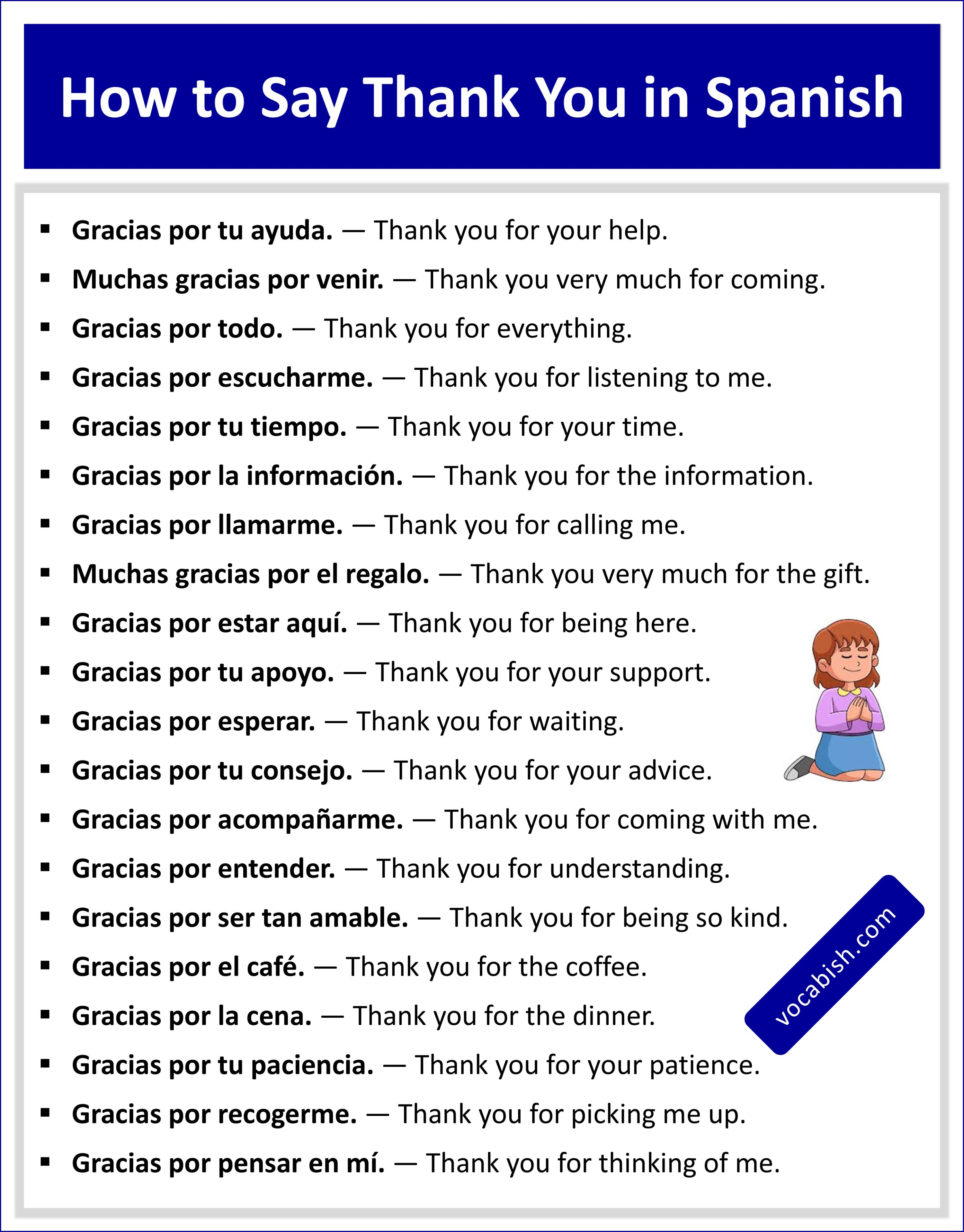
The Most Common Way to Say Thank You in Spanish
If you are learning how to say thank you in Spanish, start with the word gracias. It works in many situations and is easy to remember.
The examples below show how native speakers use it in everyday conversations.
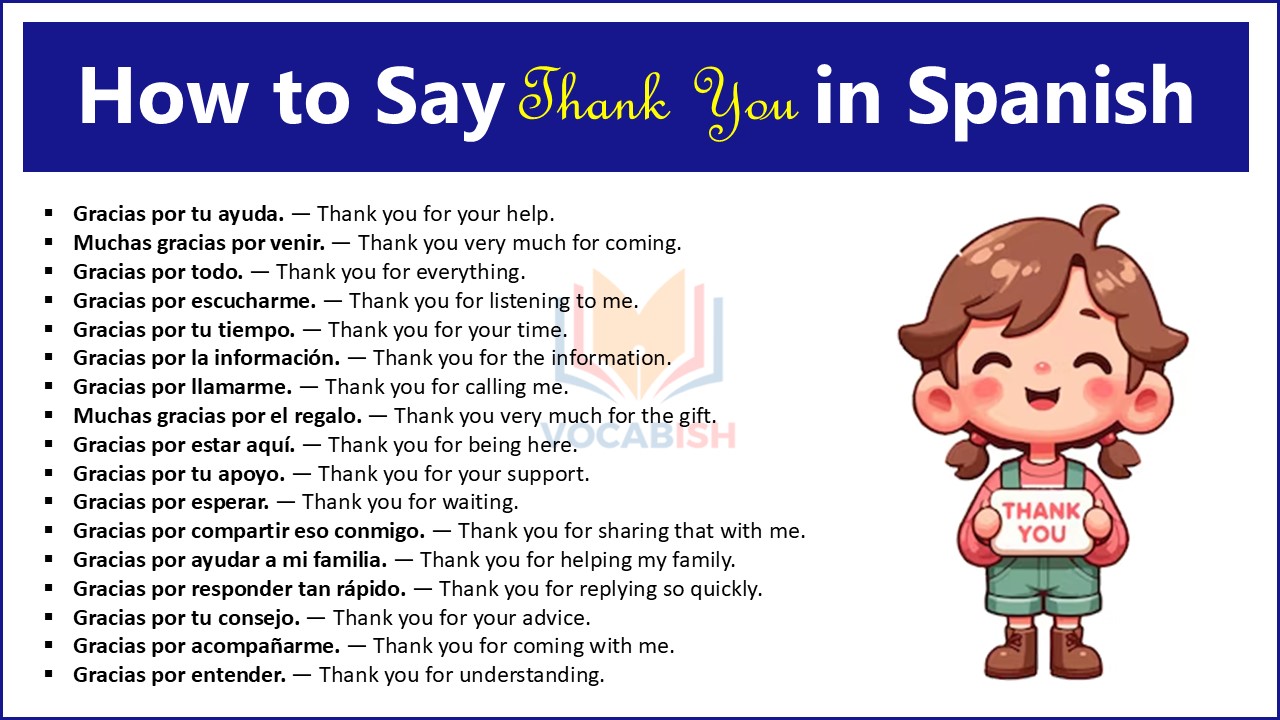
- Gracias por tu ayuda. — Thank you for your help.
- Muchas gracias por venir. — Thank you very much for coming.
- Gracias por todo. — Thank you for everything.
- Gracias por escucharme. — Thank you for listening to me.
- Gracias por tu tiempo. — Thank you for your time.
- Gracias por la información. — Thank you for the information.
- Gracias por llamarme. — Thank you for calling me.
- Muchas gracias por el regalo. — Thank you very much for the gift.
- Gracias por estar aquí. — Thank you for being here.
- Gracias por tu apoyo. — Thank you for your support.
- Gracias por esperar. — Thank you for waiting.
- Gracias por compartir eso conmigo. — Thank you for sharing that with me.
- Gracias por ayudar a mi familia. — Thank you for helping my family.
- Gracias por responder tan rápido. — Thank you for replying so quickly.
- Gracias por tu consejo. — Thank you for your advice.
- Gracias por acompañarme. — Thank you for coming with me.
- Gracias por entender. — Thank you for understanding.
- Gracias por ser tan amable. — Thank you for being so kind.
- Gracias por el café. — Thank you for the coffee.
- Gracias por la cena. — Thank you for the dinner.
- Gracias por tu paciencia. — Thank you for your patience.
- Gracias por recogerme. — Thank you for picking me up.
- Gracias por pensar en mí. — Thank you for thinking of me.
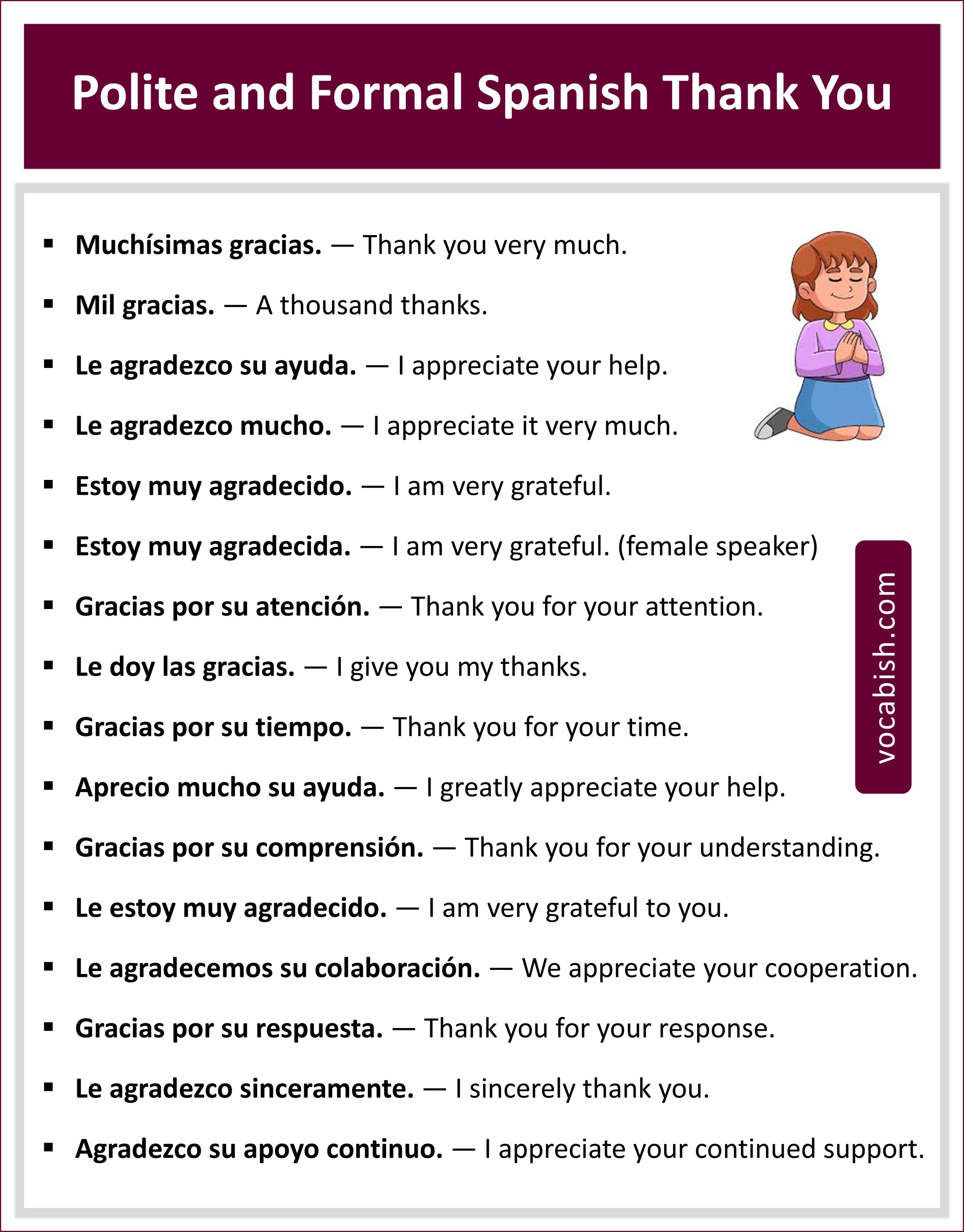
Polite and Formal Spanish Thank You Expressions
Sometimes a basic gracias is enough, but certain situations call for a more polite expression. These phrases are often used in workplaces, schools, customer service settings, and formal conversations.
Learning these variations can make your Spanish sound more natural and respectful.
- Muchísimas gracias. — Thank you very much.
- Mil gracias. — A thousand thanks.
- Le agradezco su ayuda. — I appreciate your help.
- Le agradezco mucho. — I appreciate it very much.
- Estoy muy agradecido. — I am very grateful.
- Estoy muy agradecida. — I am very grateful. (female speaker)
- Gracias por su atención. — Thank you for your attention.
- Le doy las gracias. — I give you my thanks.
- Gracias por su tiempo. — Thank you for your time.
- Aprecio mucho su ayuda. — I greatly appreciate your help.
- Gracias por su comprensión. — Thank you for your understanding.
- Le estoy muy agradecido. — I am very grateful to you.
- Le agradecemos su colaboración. — We appreciate your cooperation.
- Gracias por su respuesta. — Thank you for your response.
- Le agradezco sinceramente. — I sincerely thank you.
- Gracias por considerar mi solicitud. — Thank you for considering my request.
- Agradezco su apoyo continuo. — I appreciate your continued support.
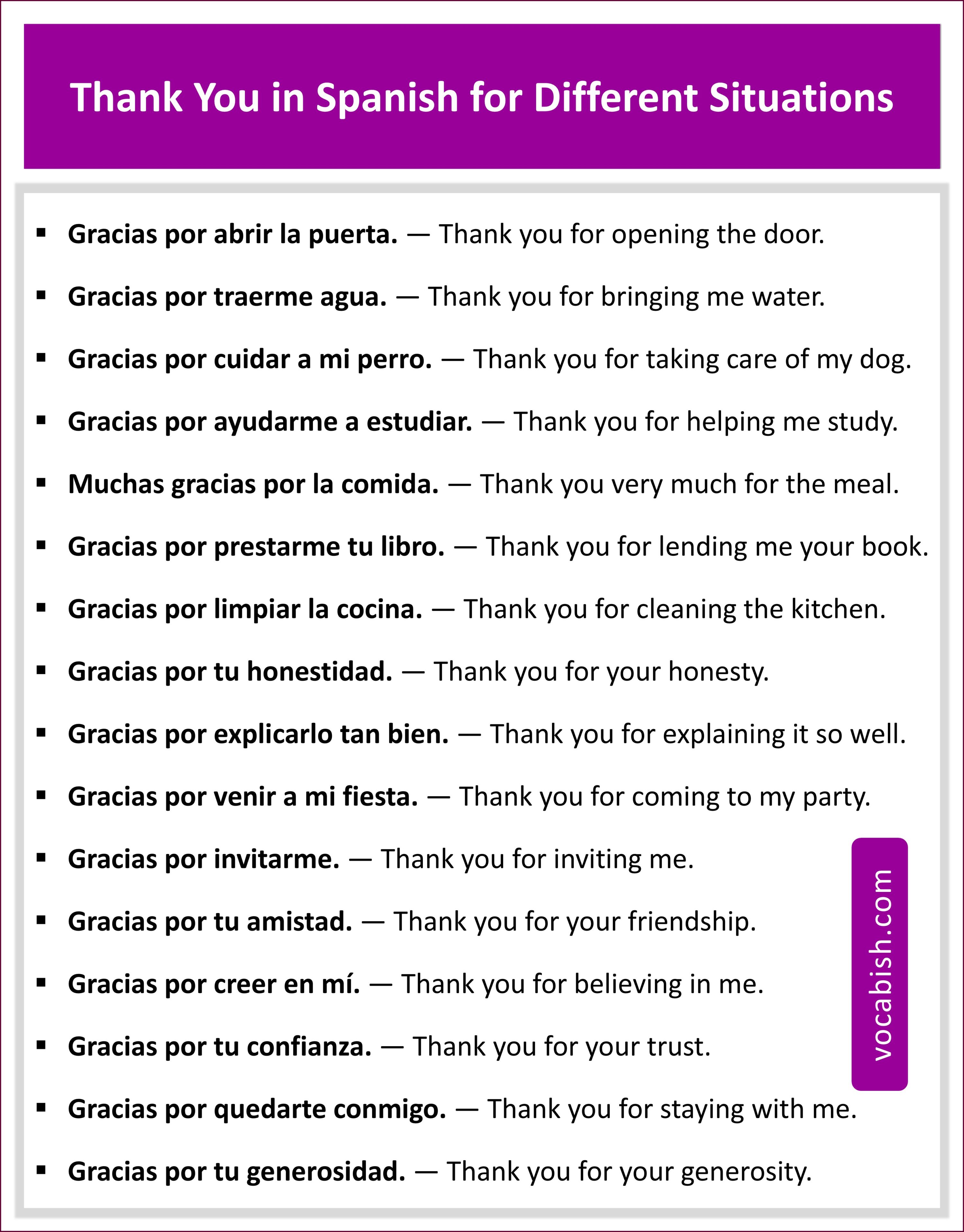
Thank You in Spanish for Different Situations
One of the best ways to remember vocabulary is through context. These examples show Spanish thank you expressions in common situations at home, school, work, and during travel.
Notice how the wording changes depending on what the speaker is thankful for.
- Gracias por abrir la puerta. — Thank you for opening the door.
- Gracias por traerme agua. — Thank you for bringing me water.
- Gracias por cuidar a mi perro. — Thank you for taking care of my dog.
- Gracias por ayudarme a estudiar. — Thank you for helping me study.
- Muchas gracias por la comida. — Thank you very much for the meal.
- Gracias por prestarme tu libro. — Thank you for lending me your book.
- Gracias por limpiar la cocina. — Thank you for cleaning the kitchen.
- Gracias por tu honestidad. — Thank you for your honesty.
- Gracias por organizar la reunión. — Thank you for organizing the meeting.
- Muchas gracias por el descuento. — Thank you very much for the discount.
- Gracias por explicarlo tan bien. — Thank you for explaining it so well.
- Gracias por venir a mi fiesta. — Thank you for coming to my party.
- Gracias por invitarme. — Thank you for inviting me.
- Gracias por tu amistad. — Thank you for your friendship.
- Gracias por creer en mí. — Thank you for believing in me.
- Gracias por tu confianza. — Thank you for your trust.
- Gracias por quedarte conmigo. — Thank you for staying with me.
- Gracias por tu generosidad. — Thank you for your generosity.
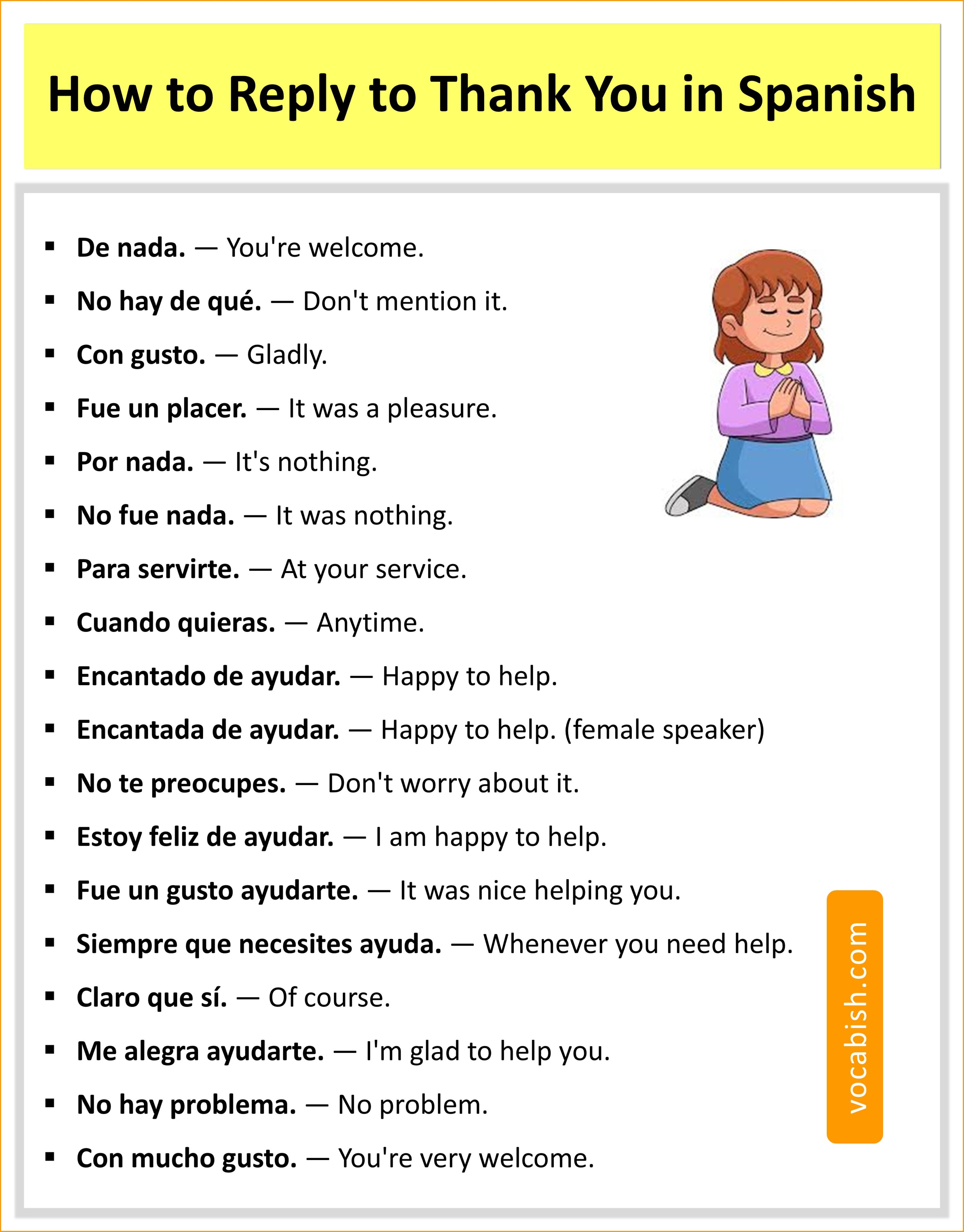
How to Reply to Thank You in Spanish
When learning how to say thank you in Spanish, it is also useful to know how people respond after hearing thanks.
These expressions are common in everyday conversations and help keep interactions friendly and polite.
- De nada. — You’re welcome.
- No hay de qué. — Don’t mention it.
- Con gusto. — Gladly.
- Fue un placer. — It was a pleasure.
- Por nada. — It’s nothing.
- No fue nada. — It was nothing.
- Para servirte. — At your service.
- Cuando quieras. — Anytime.
- Encantado de ayudar. — Happy to help.
- Encantada de ayudar. — Happy to help. (female speaker)
- No te preocupes. — Don’t worry about it.
- Estoy feliz de ayudar. — I am happy to help.
- Fue un gusto ayudarte. — It was nice helping you.
- Siempre que necesites ayuda. — Whenever you need help.
- Claro que sí. — Of course.
- Me alegra ayudarte. — I’m glad to help you.
- No hay problema. — No problem.
- Con mucho gusto. — You’re very welcome.
- Es un placer ayudarte. — It is a pleasure to help you.
- Aquí estoy para ayudarte. — I am here to help you.
Pronunciation Tips for Thank You in Spanish
Learning the pronunciation of Spanish thank-you expressions can help you sound more natural and understand native speakers more easily. Spanish pronunciation is often more consistent than English pronunciation, so once you learn a few patterns, many words become easier to say.
How to Pronounce “Gracias”
Gracias is the most common way to say thank you in Spanish.
Pronunciation:
- Latin America: GRAH-see-ahs
- Most of Spain: GRAH-thee-ahs
Pronunciation Breakdown
- Gra sounds similar to “gra” in “grand.”
- ci often sounds like:
- see in many Latin American countries
- thee in much of Spain
- as sounds like “ahs.”
Practice Sentences
- Gracias por tu ayuda. → GRAH-see-ahs por too ah-YOO-dah.
- Muchas gracias. → MOO-chahs GRAH-see-ahs.
- Mil gracias. → Meel GRAH-see-ahs.
- Gracias por venir. → GRAH-see-ahs por veh-NEER.
- Gracias por todo. → GRAH-see-ahs por TOH-doh.
Pronouncing Other Common Thank-You Expressions
Spanish Expression | Approximate Pronunciation | English Meaning |
|---|---|---|
Gracias | GRAH-see-ahs | Thank you |
Muchas gracias | MOO-chahs GRAH-see-ahs | Thank you very much |
Mil gracias | Meel GRAH-see-ahs | A thousand thanks |
Le agradezco | Leh ah-grah-DEHS-koh | I appreciate it |
Estoy agradecido | Ehs-TOY ah-grah-deh-SEE-doh | I am grateful |
Gracias por todo | GRAH-see-ahs por TOH-doh | Thank you for everything |
Common Pronunciation Mistakes
Many learners make the same pronunciation errors when saying gracias.
- ❌ Gray-see-us
- ✅ GRAH-see-ahs
- ❌ Grass-ee-us
- ✅ GRAH-see-ahs
- ❌ Pronouncing it as one fast syllable
- ✅ Say each part clearly: Gra-ci-as
You May Also Like:
- How to Say Sorry in Spanish with PDF
- Internet Slangs and Abbreviations with Meanings
- Spanish Phrases for Daily Use with PDF
Download PDF of Spanish Thank-You Phrases
Learning Tips for Thank You in Spanish
Learning how to say thank you in Spanish becomes easier when you use the phrases regularly instead of just memorizing them. Start with gracias, then gradually learn other common expressions such as muchas gracias and mil gracias. Try using these phrases in everyday situations, like thanking a friend, teacher, or coworker.
Listening to native speakers, reading sentences aloud, and practicing short conversations can also help you remember the expressions more naturally. The more often you hear and use thank you in Spanish, the more confident you will feel when speaking with others.
FAQs
The most common expression is gracias, which means “thank you.”
You can say muchas gracias or muchísimas gracias.
Gracias works in both formal and informal situations.
Mil gracias literally means “a thousand thanks” and expresses strong gratitude.
A common response is de nada, which means “you’re welcome.”
Yes. Gracias is one of the first Spanish words many children learn.
You can say le agradezco su ayuda, which means “I appreciate your help.”
Yes. In many everyday situations, gracias is natural and appropriate.
Conclusion
Learning how to say thank you in Spanish helps you communicate politely and confidently in many situations. While gracias is the most common expression, phrases such as muchas gracias, mil gracias, and le agradezco su ayuda allow you to express different levels of appreciation.
Practice these examples regularly, and you will become more comfortable using thank you in Spanish naturally in conversations, messages, school activities, work settings, and travel experiences.