
Have you ever heard someone say lunes or viernes and wondered what they meant? Learning the Days of The Week in Spanish is one of the fastest ways to start understanding everyday Spanish conversations.
You’ll hear these words in travel plans, school schedules, business meetings, calendars, and casual chats. In this article, you’ll learn the 7 days of the week in Spanish, how to pronounce them, their English meanings, common abbreviations, and how native speakers actually use them.
Days of The Week in Spanish
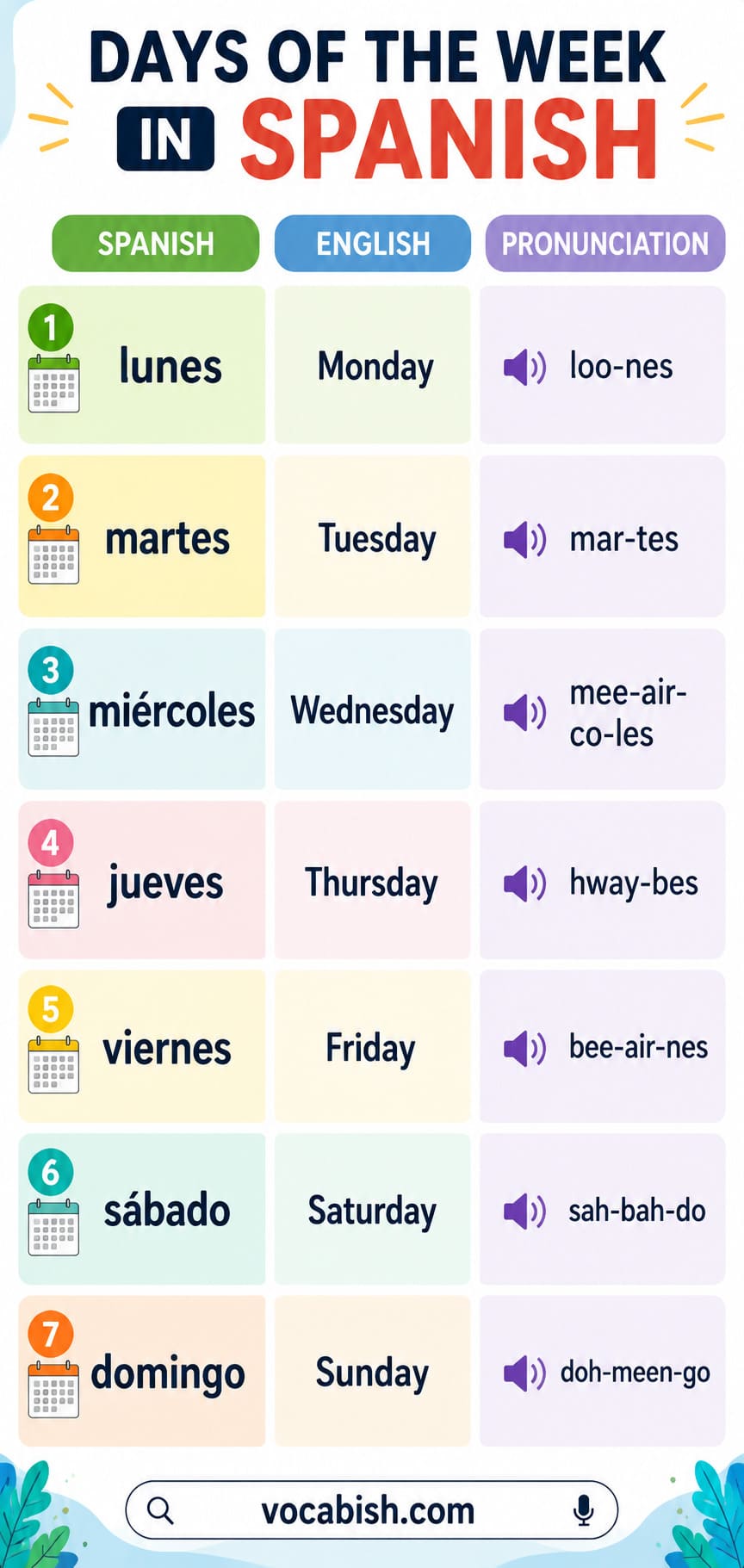
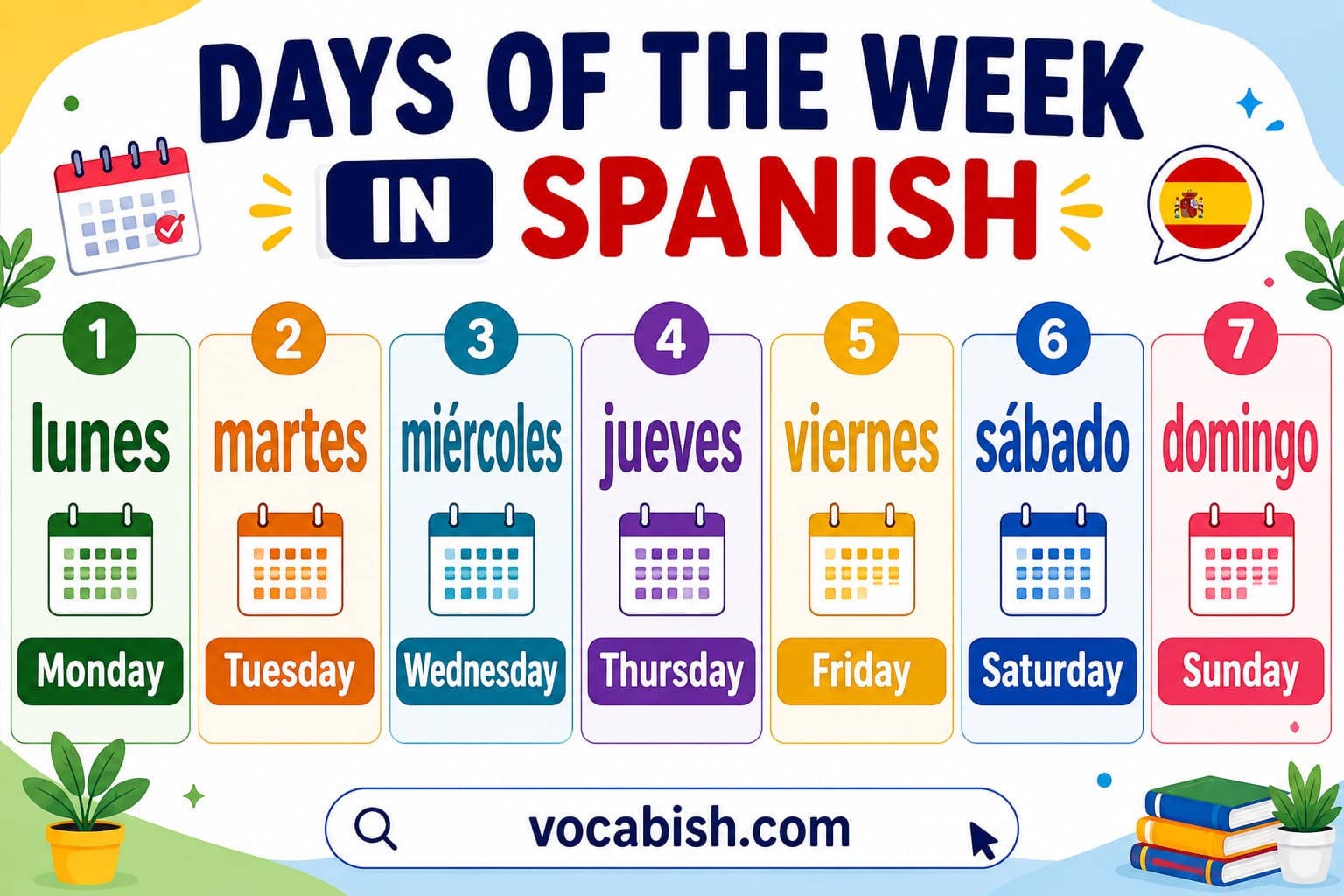
The names of the days of the week in Spanish are easy to learn because many sound familiar to English speakers. Once you memorize them, you can talk about routines, appointments, travel plans, and daily activities more naturally.
Unlike English, Spanish days of the week are not capitalized unless they appear at the beginning of a sentence.
English | In Spanish Days of the Week |
|---|---|
Monday | lunes |
Tuesday | martes |
Wednesday | miércoles |
Thursday | jueves |
Friday | viernes |
Saturday | sábado |
Sunday | domingo |
Days of the Week in Spanish to English
Understanding the connection between Spanish and English meanings helps vocabulary stick faster. Here’s a quick comparison table you can scan anytime.
Days of Week in Spanish | English Meaning | Pronunciation |
|---|---|---|
lunes | Monday | loo-nes |
martes | Tuesday | mar-tes |
miércoles | Wednesday | mee-air-co-les |
jueves | Thursday | hway-bes |
viernes | Friday | bee-air-nes |
sábado | Saturday | sah-bah-do |
domingo | Sunday | doh-meen-go |
How to Pronounce the Days of the Week in Spanish
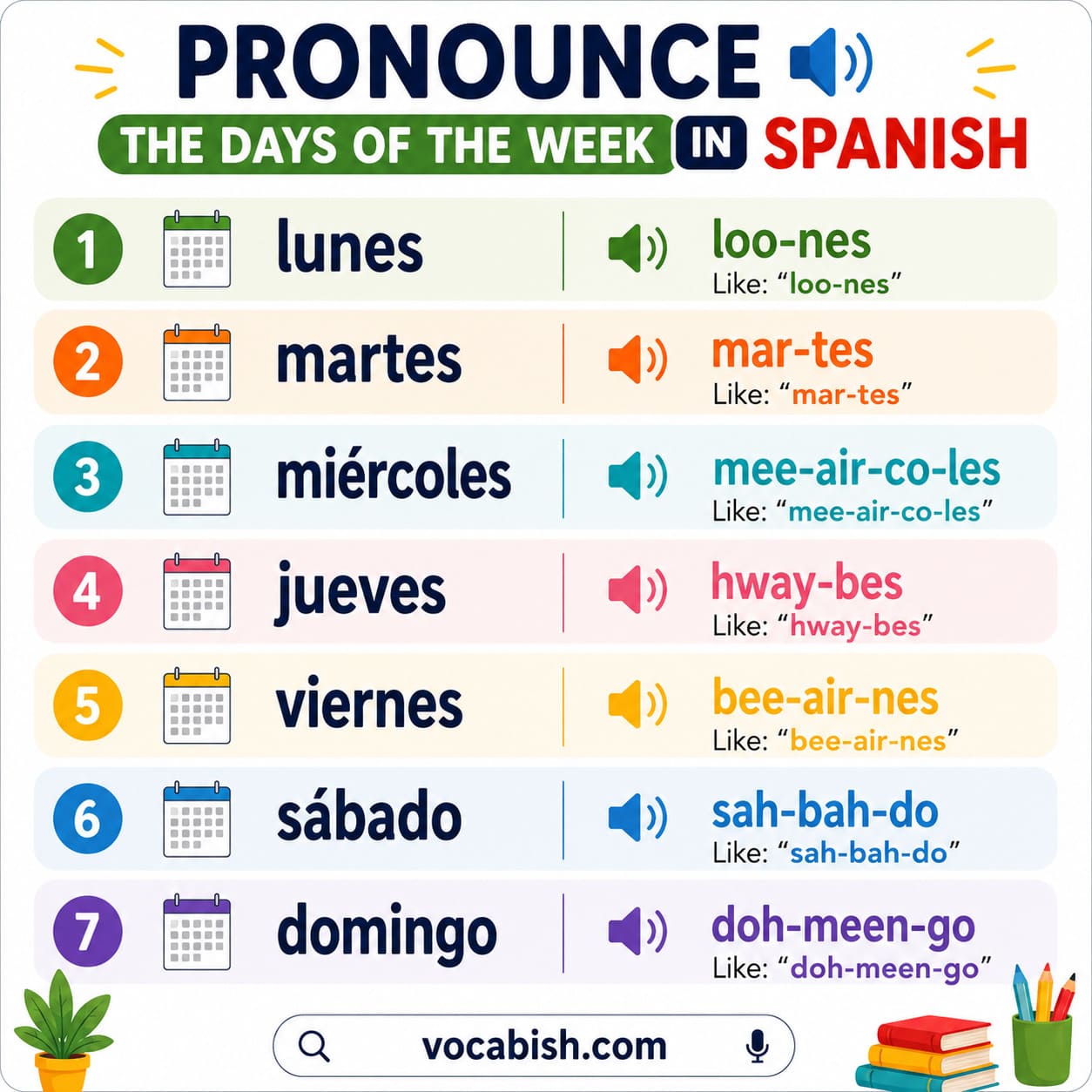
Many learners can read Spanish words but hesitate when speaking. The good news is that Spanish pronunciation is usually consistent.
Here’s how native speakers commonly pronounce the days:
1. lunes
Sounds like: loo-nes
Example:
- Nos vemos el lunes.
See you on Monday.
2. martes
Sounds like: mar-tes
Example:
- Tengo clase el martes.
I have class on Tuesday.
3. miércoles
Sounds like: mee-air-co-les
This word has an accent mark. Stress the first syllable slightly more.
4. jueves
Sounds like: hway-bes
The “j” in Spanish has a soft throaty sound.
5. viernes
Sounds like: bee-air-nes
The Spanish “v” often sounds close to “b.”
6. sábado
Sounds like: sah-bah-do
Remember the accent on the first syllable.
7. domingo
Sounds like: doh-meen-go
A very common word in weekend conversations.
Days of the Week in Spanish Abbreviations
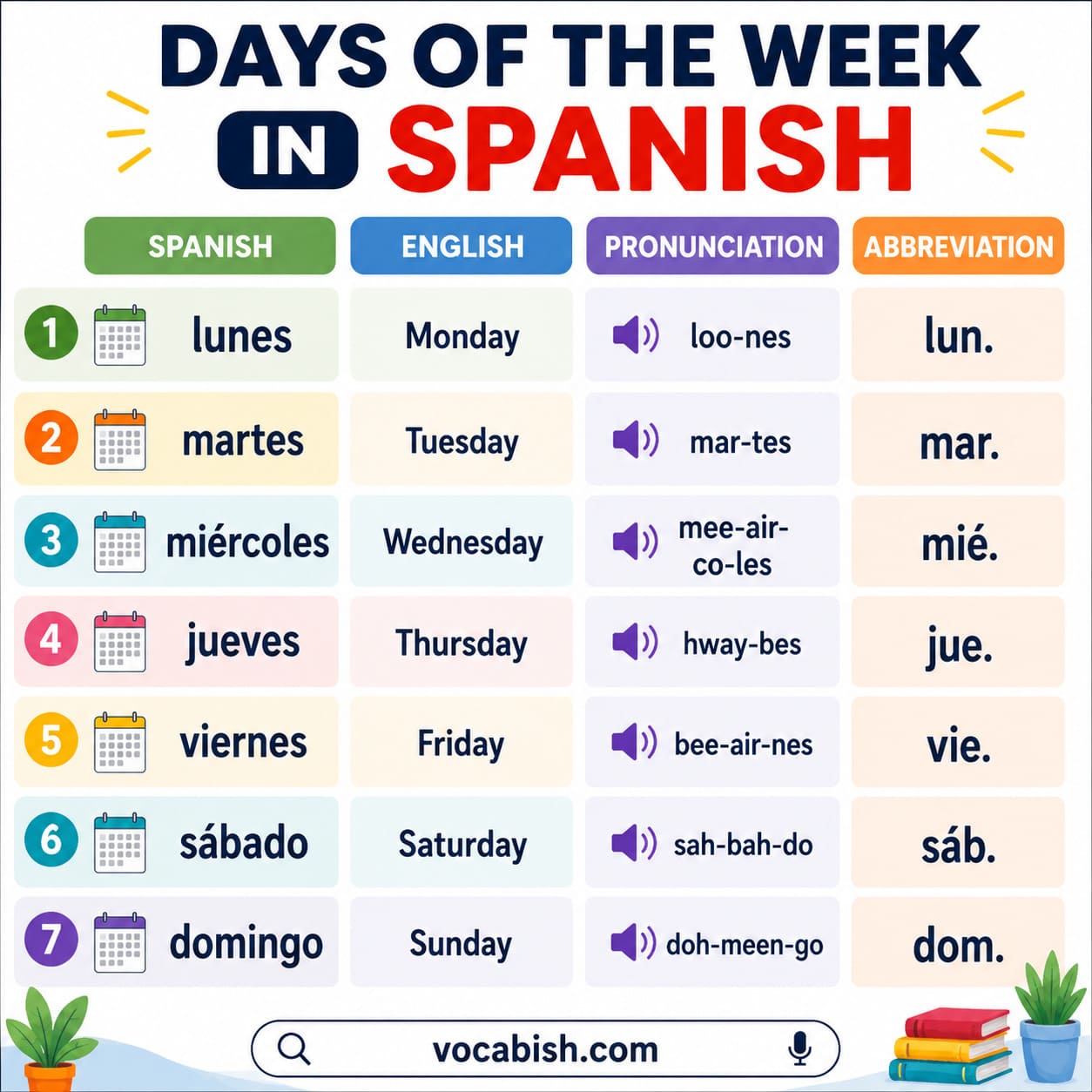
Spanish abbreviations are widely used in timetables, apps, calendars, and public transportation schedules.
Here are the standard days of the week in Spanish abbreviations:
Full Day Name | Abbreviation |
|---|---|
lunes | lun. |
martes | mar. |
miércoles | mié. |
jueves | jue. |
viernes | vie. |
sábado | sáb. |
domingo | dom. |
You’ll often see these forms in:
- school routines
- office calendars
- train schedules
- digital planners
Important Grammar Rules for Week Days in Spanish
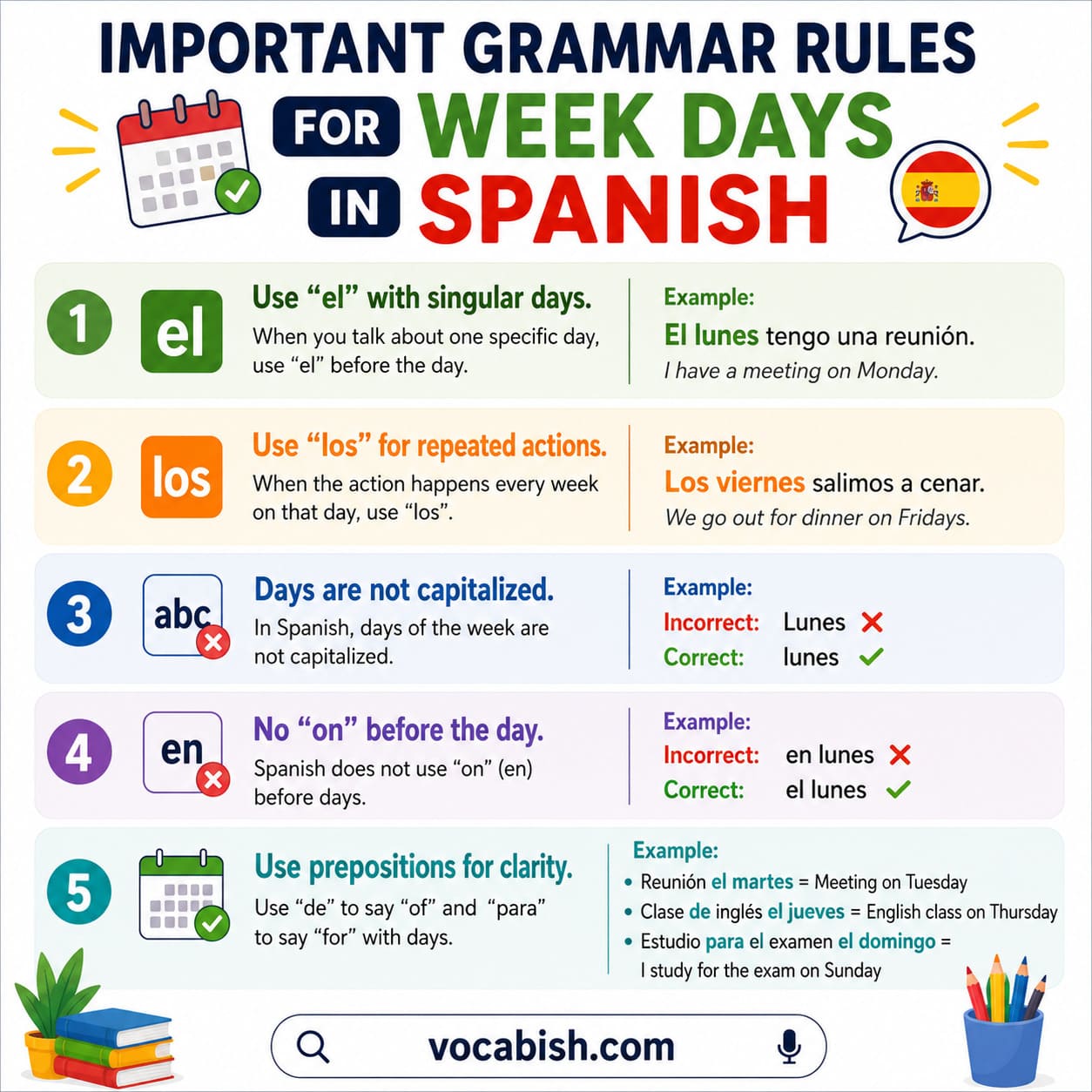
Spanish uses a few grammar patterns that differ from English. Learning them early makes your sentences sound more natural.
Use “el” with singular days
Example:
- El lunes tengo una reunión.
I have a meeting on Monday.
Use “los” for repeated actions
Example:
- Los viernes salimos a cenar.
We go out for dinner on Fridays.
Days are not capitalized
Incorrect:
- Lunes
Correct:
- lunes
No “on” before the day
English says:
- on Monday
Spanish simply says:
- el lunes
Example Sentences Using Spanish Days
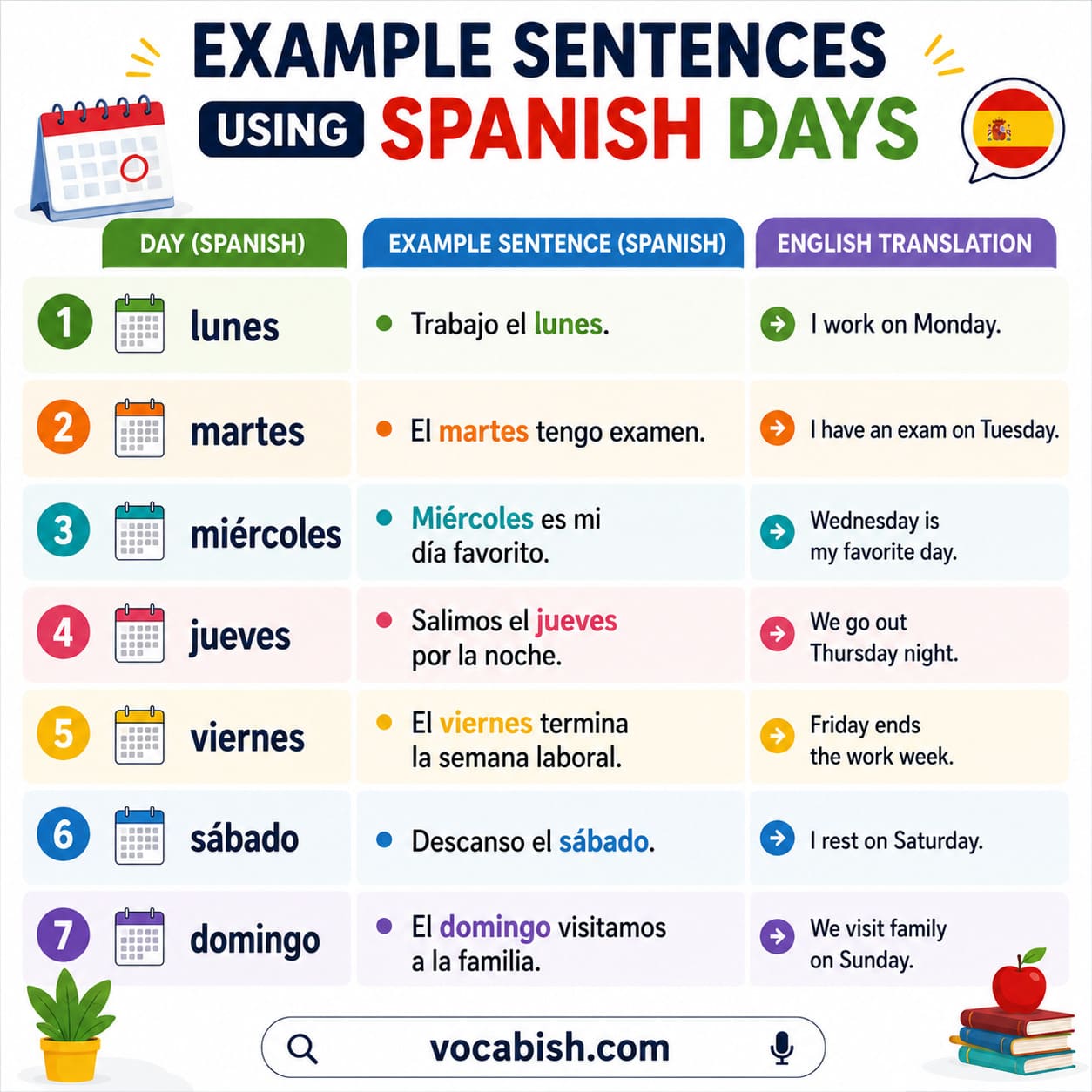
Seeing vocabulary in context makes memorization easier. These examples show how people naturally use the days of the week in Spanish in everyday conversations.
Spanish Sentence | English Translation |
|---|---|
Trabajo el lunes. | I work on Monday. |
El martes tengo examen. | I have an exam on Tuesday. |
Miércoles es mi día favorito. | Wednesday is my favorite day. |
Salimos el jueves por la noche. | We go out Thursday night. |
El viernes termina la semana laboral. | Friday ends the work week. |
Descanso el sábado. | I rest on Saturday. |
El domingo visitamos a la familia. | We visit family on Sunday. |
Easy Tricks to Remember
Memorizing vocabulary becomes easier when you connect words with patterns and routines.
1. Notice repeating endings
Many weekdays end with:
- -es
Examples:
- lunes
- martes
- viernes
2. Practice with your weekly routine
Try saying:
- El lunes trabajo.
- El sábado descanso.
This helps your brain connect language with habits.
3. Use your phone calendar in Spanish
Seeing the words daily improves recognition naturally.
4. Read them aloud
Pronunciation practice improves memory much faster than silent reading.
You May Also Like:
- A to Z List of Spanish Words with PDF
- Common Condolences Phrases in Spanish
- 30 Spanish Phrases for Everyday Conversations
Common Mistakes English Speakers Make
Many learners repeat the same small errors when studying the days of the week in Spanish. Here are the most common ones.
Mistake | Correct Form |
|---|---|
Capitalizing days | lunes |
Saying “en lunes” | el lunes |
Forgetting accents | miércoles, sábado |
Mispronouncing jueves | hway-bes |
Translating word-for-word | Use natural Spanish structure |
Download PDF
FAQs
The 7 days are lunes, martes, miércoles, jueves, viernes, sábado, and domingo. They correspond to Monday through Sunday in English.
Spanish pronunciation is phonetic. For example, lunes sounds like “loo-nes,” while jueves sounds similar to “hway-bes.”
No. Spanish normally writes days in lowercase unless they begin a sentence or appear in a title.
“Lunes” means Monday. It is the first weekday in many Spanish-speaking countries.
The weekend days are sábado and domingo, which mean Saturday and Sunday.
Spanish usually says “el lunes” instead of using a separate word for “on.”
Examples include lun. for lunes, mar. for martes, and vie. for viernes. These appear often in calendars and schedules.
The accent mark shows the correct stress in pronunciation. Without it, the word would sound incorrect to native speakers.