
Want to speak Spanish faster without memorizing difficult grammar rules? Learning the 30 Common Spanish Phrases with English meanings can help you start basic conversations almost immediately.
These useful Spanish expressions appear in greetings, travel situations, shopping, restaurants, school, and everyday chats. In this article, you’ll learn practical phrases, easy pronunciation tips, and natural examples that help you sound more confident when speaking Spanish.
Why Learn Common Spanish Phrases
You don’t need thousands of words to start speaking Spanish. A small group of everyday phrases can help you handle many common situations.
These phrases are useful for:
- travel
- meeting new people
- ordering food
- asking questions
- daily conversations
- learning pronunciation naturally
Spanish becomes easier when you focus on expressions people actually use.
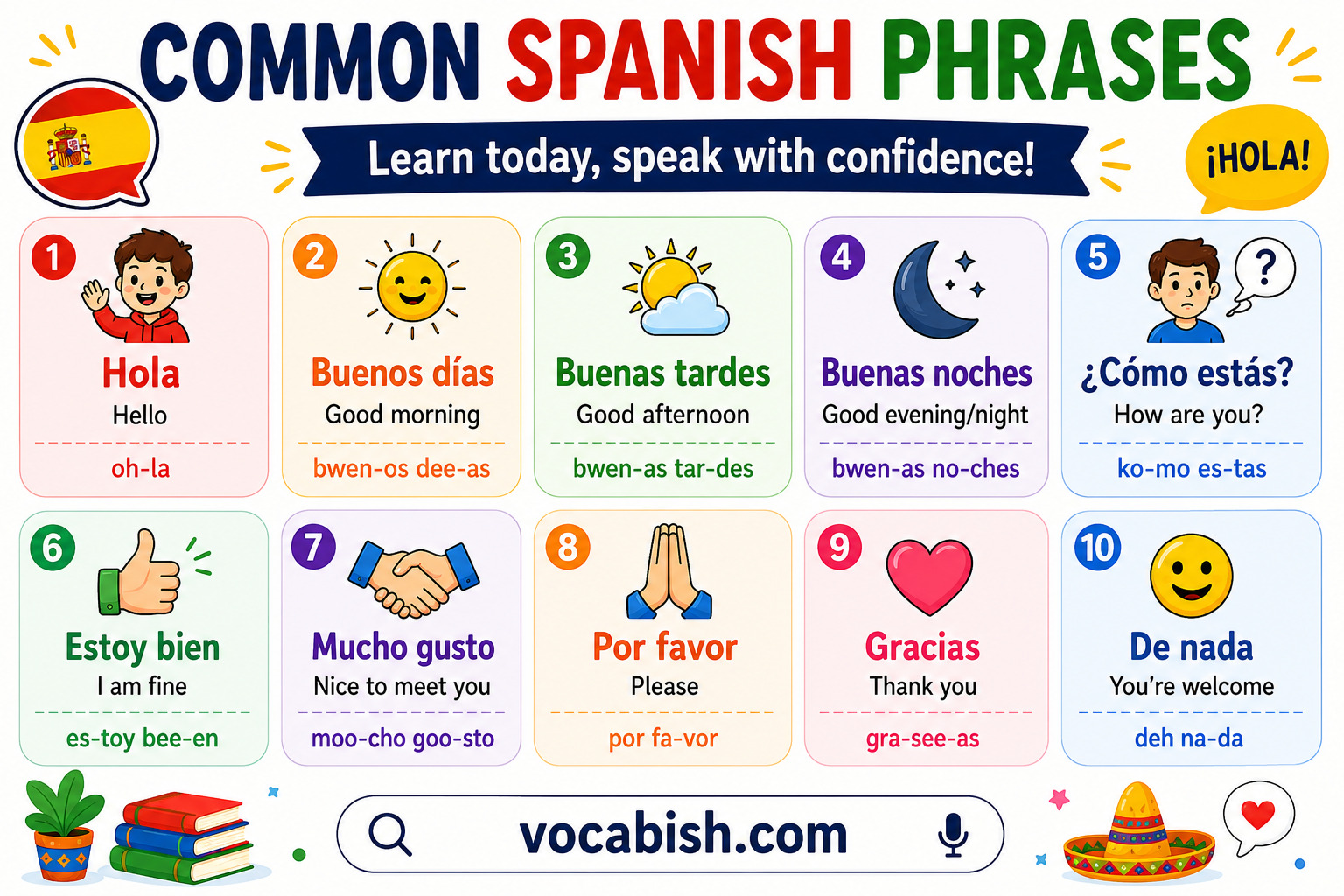
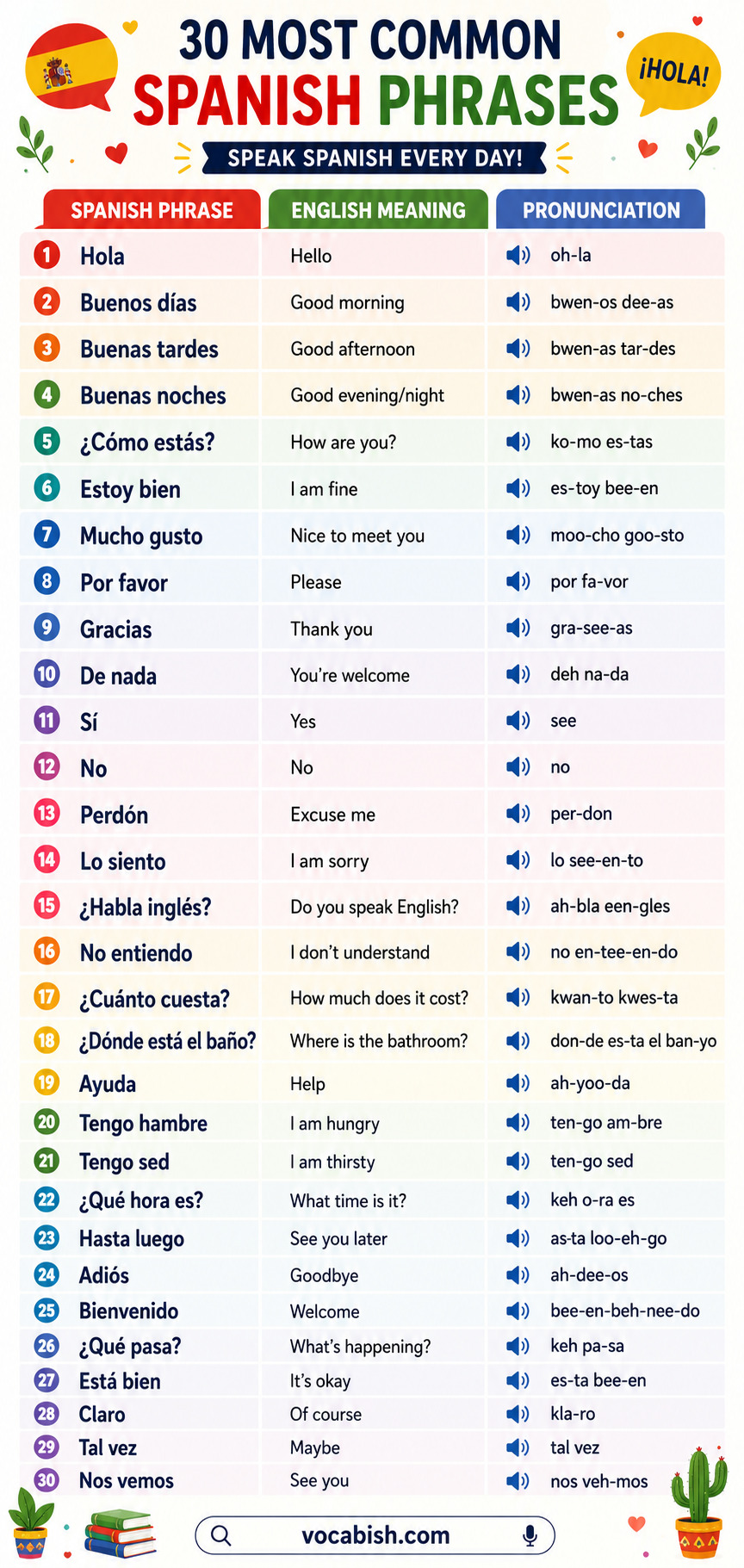
30 Common Spanish Phrases with English
Here are the most useful Spanish phrases beginners should know first.
Spanish Phrase | English Meaning | Pronunciation |
|---|---|---|
Hola | Hello | oh-la |
Buenos días | Good morning | bwen-os dee-as |
Buenas tardes | Good afternoon | bwen-as tar-des |
Buenas noches | Good evening/night | bwen-as no-ches |
¿Cómo estás? | How are you? | ko-mo es-tas |
Estoy bien | I am fine | es-toy bee-en |
Mucho gusto | Nice to meet you | moo-cho goo-sto |
Por favor | Please | por fa-vor |
Gracias | gra-see-as | |
De nada | You’re welcome | deh na-da |
Sí | Yes | see |
No | No | no |
Perdón | per-don | |
I am sorry | lo see-en-to | |
¿Habla inglés? | Do you speak English? | ah-bla een-gles |
No entiendo | I don’t understand | no en-tee-en-do |
¿Cuánto cuesta? | How much does it cost? | kwan-to kwes-ta |
¿Dónde está el baño? | Where is the bathroom? | don-de es-ta el ban-yo |
Ayuda | Help | ah-yoo-da |
Tengo hambre | I am hungry | ten-go am-bre |
Tengo sed | I am thirsty | ten-go sed |
¿Qué hora es? | What time is it? | keh o-ra es |
Hasta luego | See you later | as-ta loo-eh-go |
Adiós | Goodbye | ah-dee-os |
Bienvenido | Welcome | bee-en-beh-nee-do |
¿Qué pasa? | What’s happening? | keh pa-sa |
Está bien | It’s okay | es-ta bee-en |
Claro | Of course | kla-ro |
Tal vez | Maybe | tal vez |
Nos vemos | See you | nos veh-mos |
Greetings and Everyday Spanish Expressions
Greetings are often the first phrases learners memorize because they appear everywhere. Spanish speakers use them daily in casual and formal conversations.
Common Greeting Phrases
Spanish | English |
|---|---|
Hola | Hello |
Buenos días | Good morning |
Buenas tardes | Good afternoon |
Buenas noches | Good evening |
Friendly Conversation Starters
- ¿Cómo estás? — How are you?
- Mucho gusto — Nice to meet you
- ¿Qué pasa? — What’s up?
These phrases help conversations feel more natural and polite.
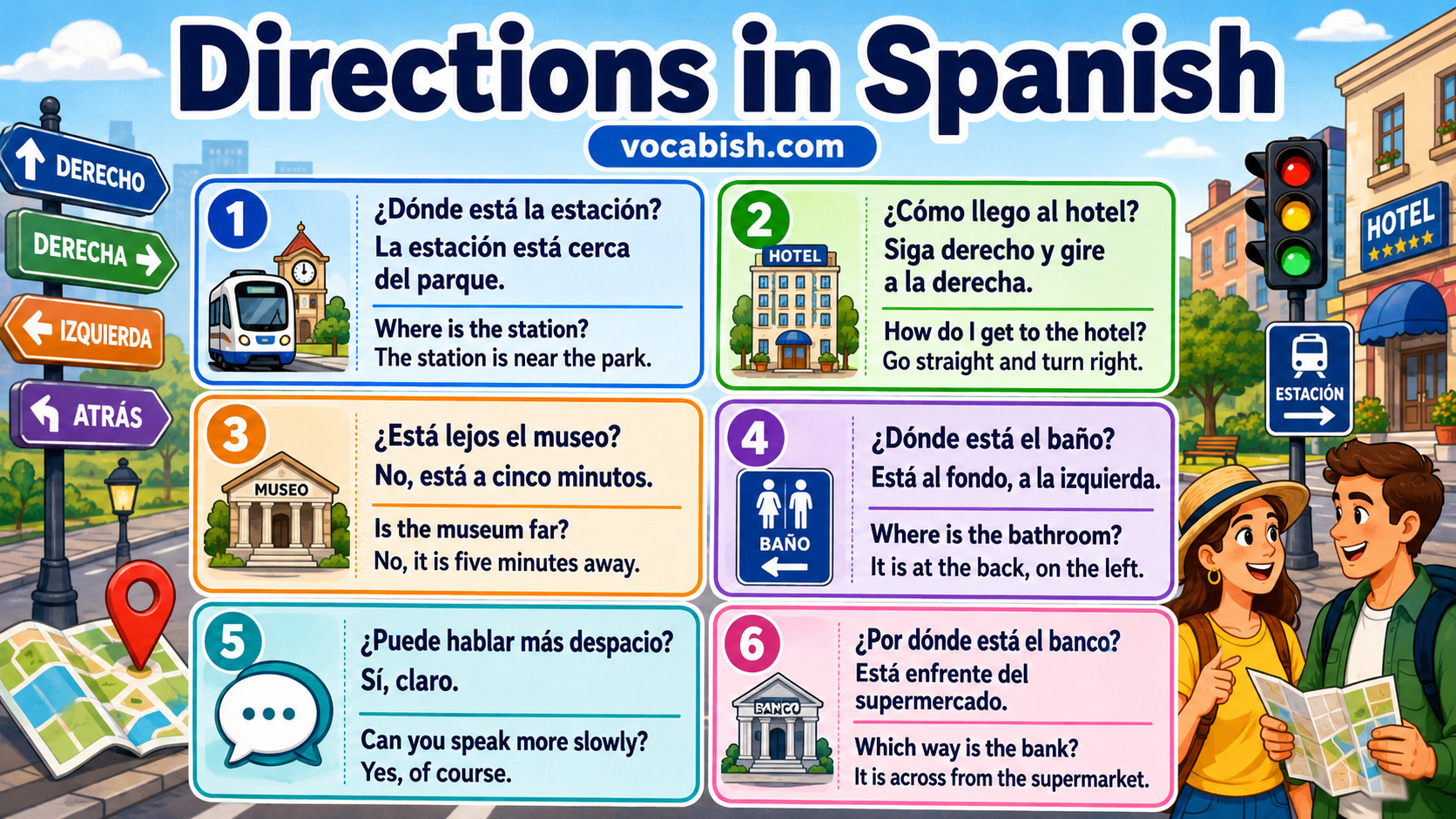
Spanish Travel Phrases with English
Travel becomes much easier when you know a few practical Spanish expressions.
Spanish Phrase | English Meaning |
|---|---|
¿Dónde está el hotel? | Where is the hotel? |
¿Dónde está el baño? | Where is the bathroom? |
Ayuda | Help |
¿Habla inglés? | Do you speak English? |
Shopping and Restaurant Phrases
Spanish | English |
|---|---|
¿Cuánto cuesta? | How much does it cost? |
Tengo hambre | I am hungry |
Tengo sed | I am thirsty |
Por favor | Please |
These phrases are especially useful in restaurants, markets, airports, and hotels.
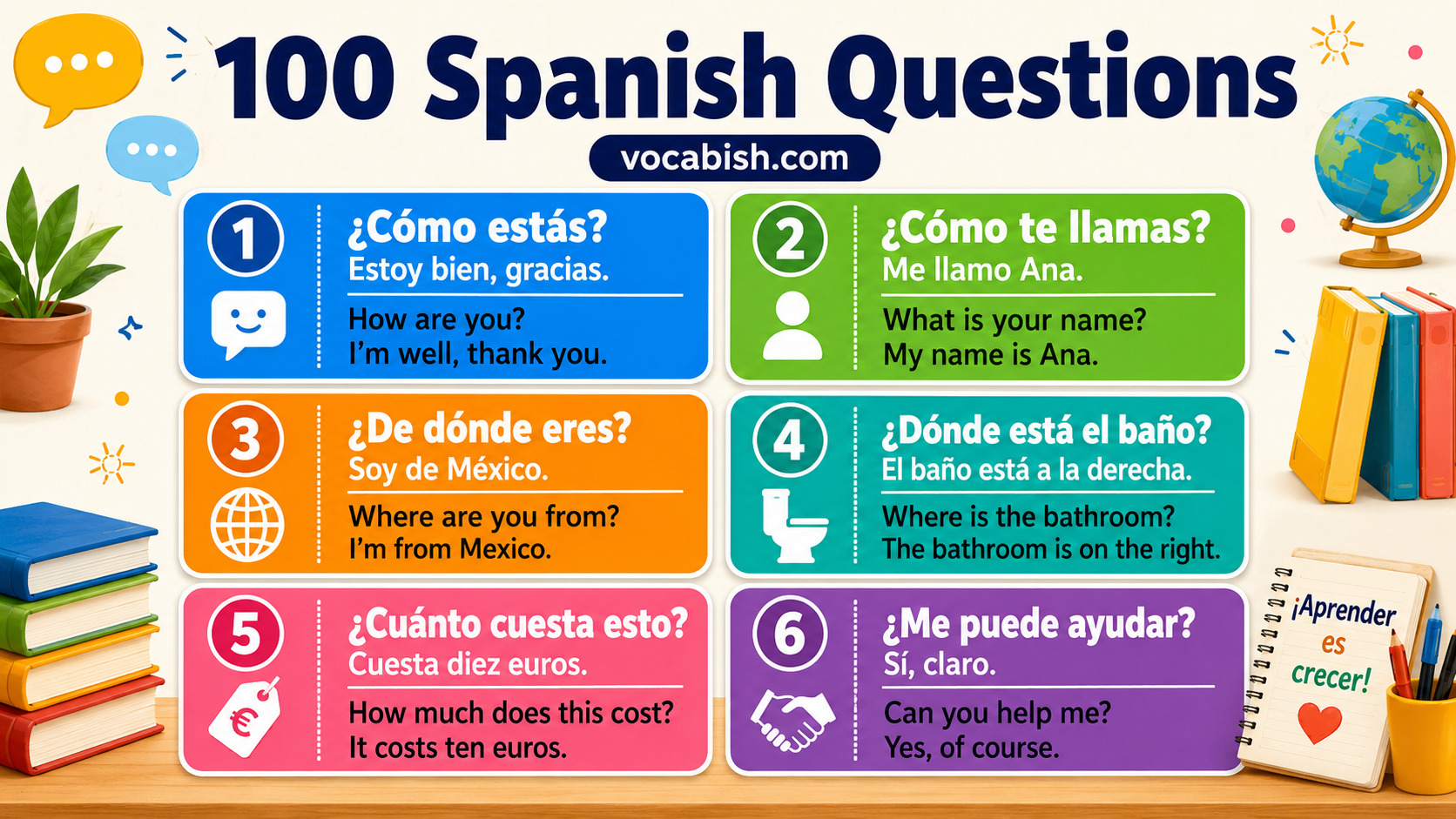
Common Questions in Spanish
Questions help you continue conversations and understand people more easily.
Spanish Question | English Meaning |
|---|---|
¿Cómo estás? | How are you? |
¿Qué hora es? | What time is it? |
¿Dónde está el baño? | Where is the bathroom? |
¿Habla inglés? | Do you speak English? |
Spanish questions often begin with inverted question marks:
- ¿ ?
This is a normal part of Spanish writing.
Polite Spanish Phrases You Should Know
Politeness matters in every language. These expressions make conversations friendlier and more respectful.
Spanish | English |
|---|---|
Por favor | Please |
Gracias | Thank you |
De nada | You’re welcome |
Perdón | Excuse me |
Lo siento |
You May Also Need to Learn: 90 Ways to Say Thank You in Spanish
Easy Spanish Conversation Examples
Reading full conversations helps learners understand how phrases connect naturally.
Example 1
Spanish
- Hola
- Hola, ¿cómo estás?
- Estoy bien, gracias.
English
- Hello
- Hello, how are you?
- I’m fine, thank you.
Example 2
Spanish
- ¿Habla inglés?
- Sí, un poco.
English
- Do you speak English?
- Yes, a little.
Example 3
Spanish
- ¿Cuánto cuesta?
- Diez dólares.
English
- How much does it cost?
- Ten dollars.
Tips to Remember Spanish Phrases Faster
Learning phrases becomes easier when you hear and use them often.
1. Practice Daily
Repeat phrases aloud every day for a few minutes.
2. Use Flashcards
Write:
- Spanish on one side
- English meaning on the other
3. Watch Spanish Videos
Listening improves pronunciation and memory naturally.
4. Speak Short Sentences
Instead of memorizing isolated words, practice full phrases like:
- Tengo hambre
- Hasta luego
You May Also Like:
- List of Spanish Words from A to Z
- 7 Days of The Week in Spanish and English
- Condolences Phrases in Spanish with Meanings
Common Mistakes English Speakers Make
Many learners make small pronunciation and grammar mistakes when using Spanish phrases.
Mistake | Correct Form |
|---|---|
Ignoring accent marks | gracias, adiós |
Saying English vowels | Use clear Spanish vowel sounds |
Translating word-for-word | Learn phrases as complete expressions |
Mispronouncing “ll” | Softer “y” sound in many regions |
Forgetting polite phrases | Use por favor and gracias often |
FAQs
Common beginner phrases include hola, gracias, por favor, ¿cómo estás?, and hasta luego. These appear frequently in daily Spanish conversations.
Practice phrases aloud daily, use flashcards, listen to Spanish audio, and repeat full sentences instead of learning isolated vocabulary words.
“¿Cómo estás?” means “How are you?” and is one of the most common Spanish greetings.
Spanish pronunciation is usually consistent and easier to predict than English once you learn basic vowel and letter sounds.
Learning common phrases helps you communicate faster and build confidence before studying more detailed grammar rules.
“Gracias” means “thank you” in English and is one of the most widely used Spanish expressions.
Common goodbye phrases include adiós, hasta luego, and nos vemos depending on the situation and level of formality.
Yes. Basic Spanish phrases help with directions, restaurants, shopping, hotels, transportation, and everyday communication while traveling.