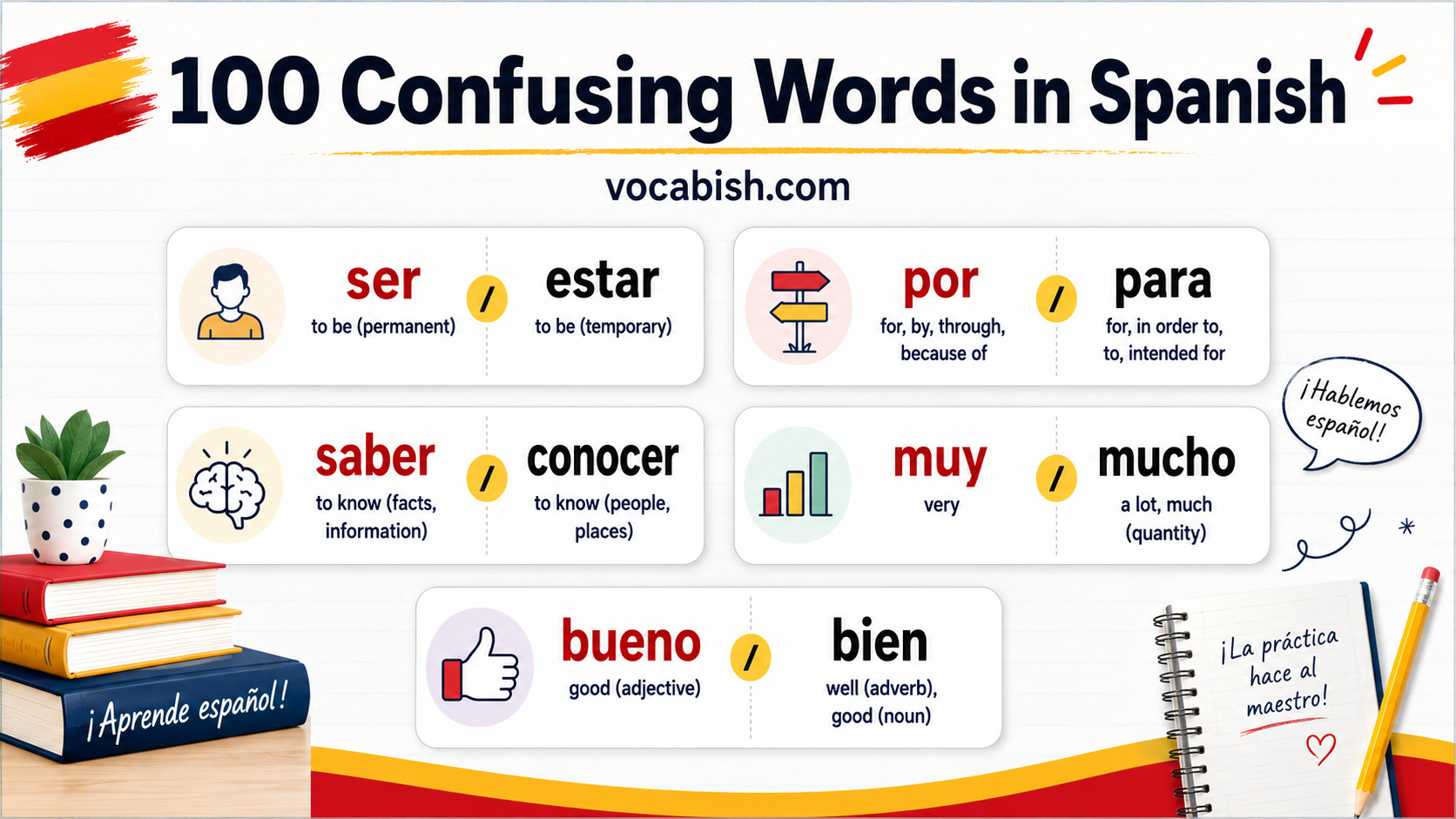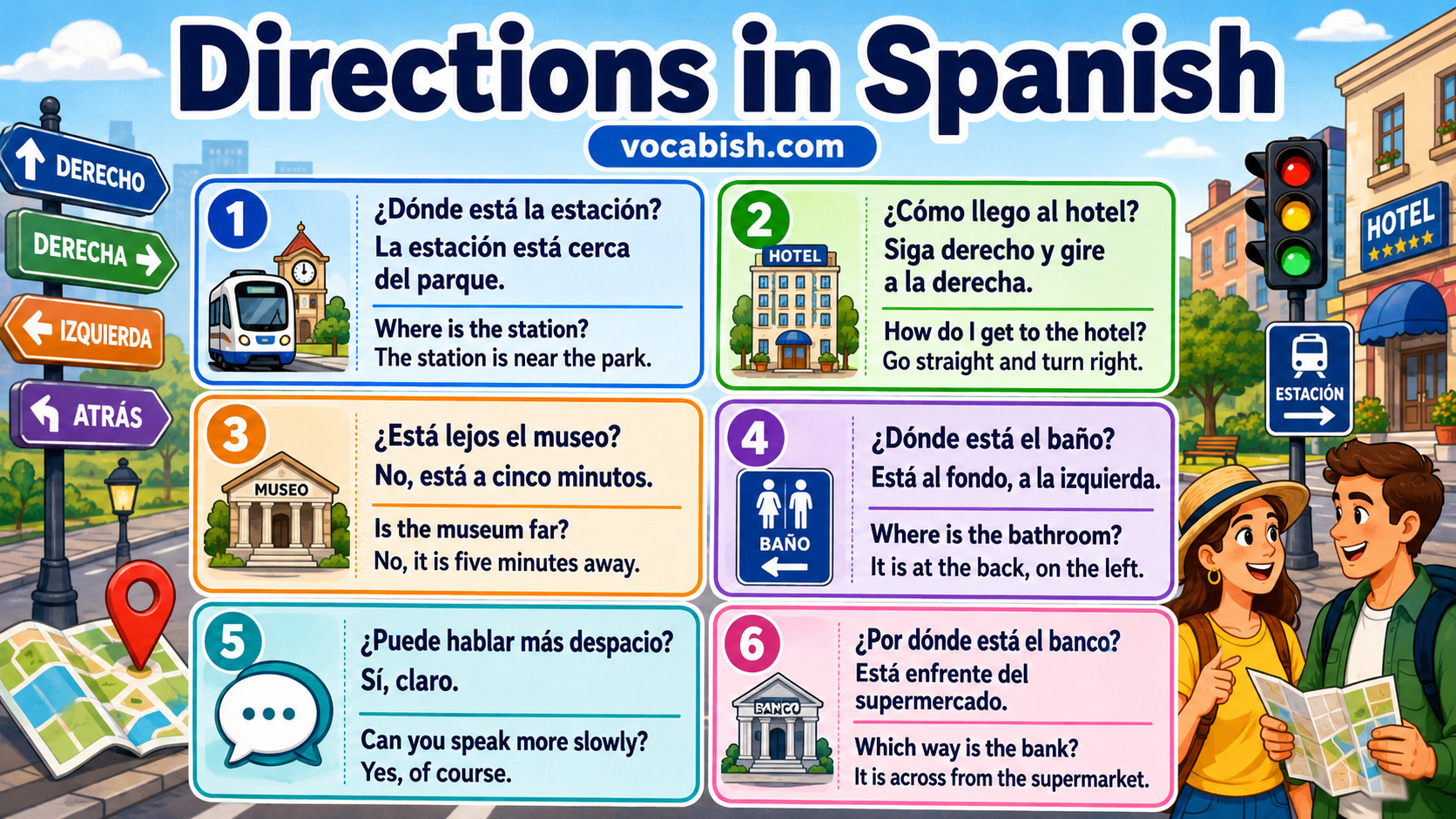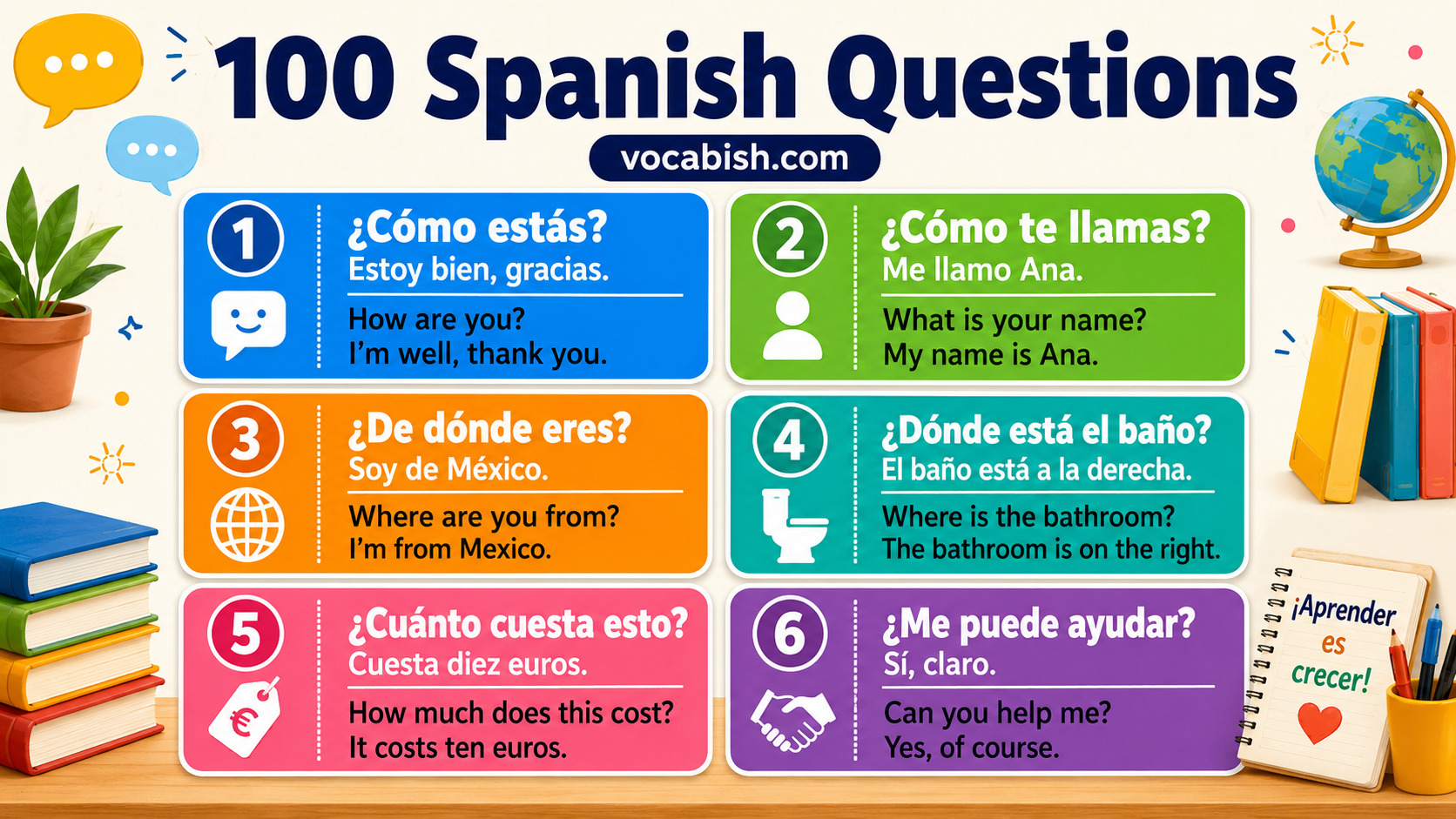

This lesson is about Spanish words and meanings, covering some of the most useful vocabulary used in everyday conversations. Have you ever wanted to understand common Spanish phrases, read Spanish books, or recognize words in videos, apps, and PDF learning materials? Building your vocabulary is one of the best ways to start.
In this article, you’ll learn over 200 Spanish words grouped into easy categories such as greetings, family, numbers, colors, food, travel, work, and technology. You’ll also find meanings, examples, and easy-to-follow sections to help you remember new words and use them with confidence.
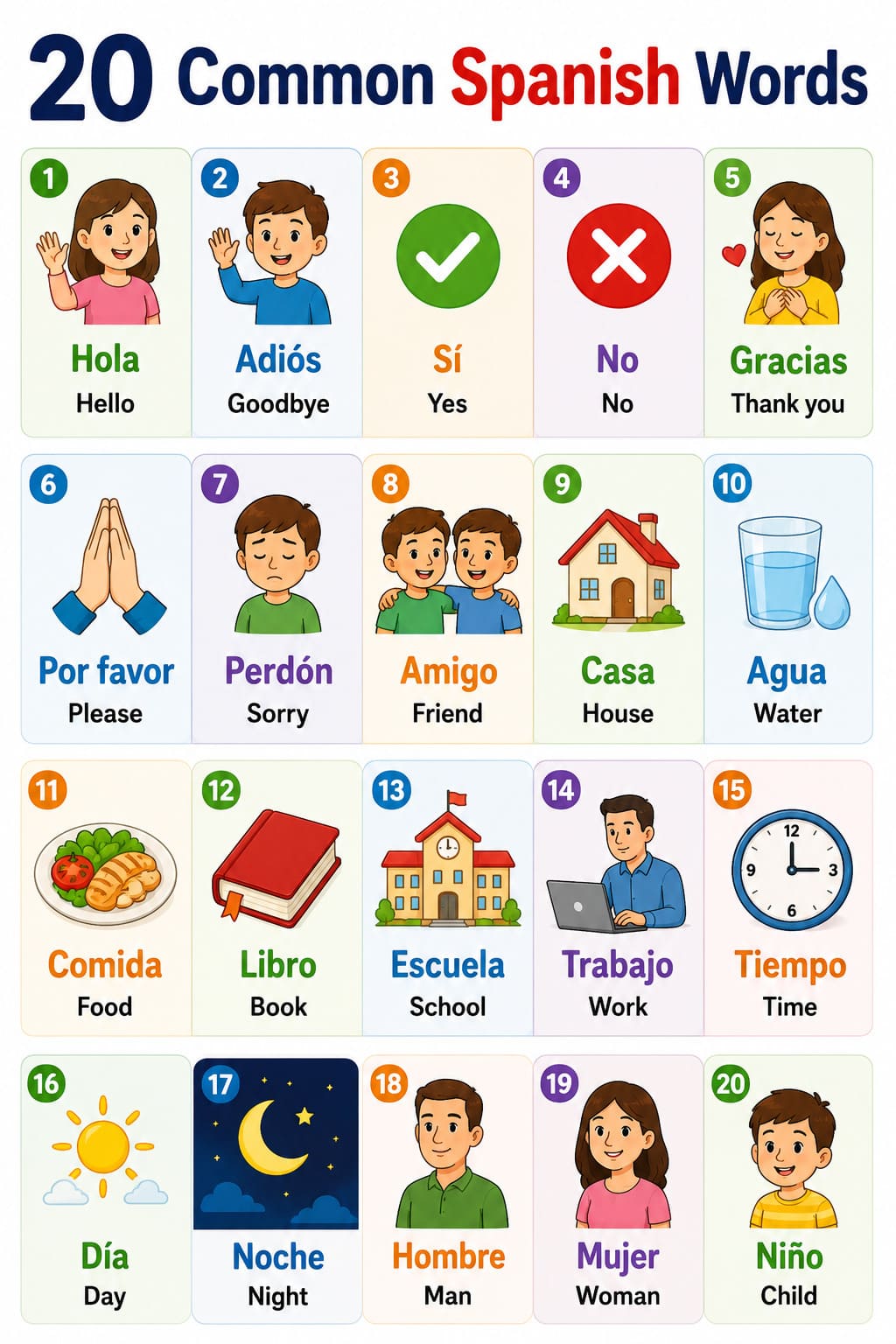
20 Common Spanish Words and Meanings
If you’re just starting Spanish, focus on words you’ll hear and use every day. These common terms appear in greetings, conversations, shopping, travel, and daily activities.
Spanish Word | Meaning |
|---|---|
Hola | Hello |
Adiós | Goodbye |
Sí | Yes |
No | No |
Gracias | Thank you |
Por favor | Please |
Perdón | Sorry |
Amigo | Friend |
Casa | House |
Agua | Water |
Comida | Food |
Libro | Book |
Escuela | School |
Trabajo | Work |
Tiempo | Time |
Día | Day |
Noche | Night |
Hombre | Man |
Mujer | Woman |
Niño | Child |
Spanish Greetings and Polite Expressions
A few polite words can make conversations feel more natural and respectful. Whether you’re meeting someone for the first time or asking for help, these expressions are used every day in Spanish-speaking communities.
Spanish | Meaning |
|---|---|
Buenos días | Good morning |
Buenas tardes | Good afternoon |
Buenas noches | Good evening |
Mucho gusto | Nice to meet you |
Bienvenido | Welcome |
Hasta luego | See you later |
Hasta mañana | See you tomorrow |
De nada | You’re welcome |
Con permiso | Excuse me |
Disculpe | Excuse me |
Example in Sentences:
- Hola, ¿cómo estás? (Hello, how are you?)
- Gracias por tu ayuda. (Thank you for your help.)
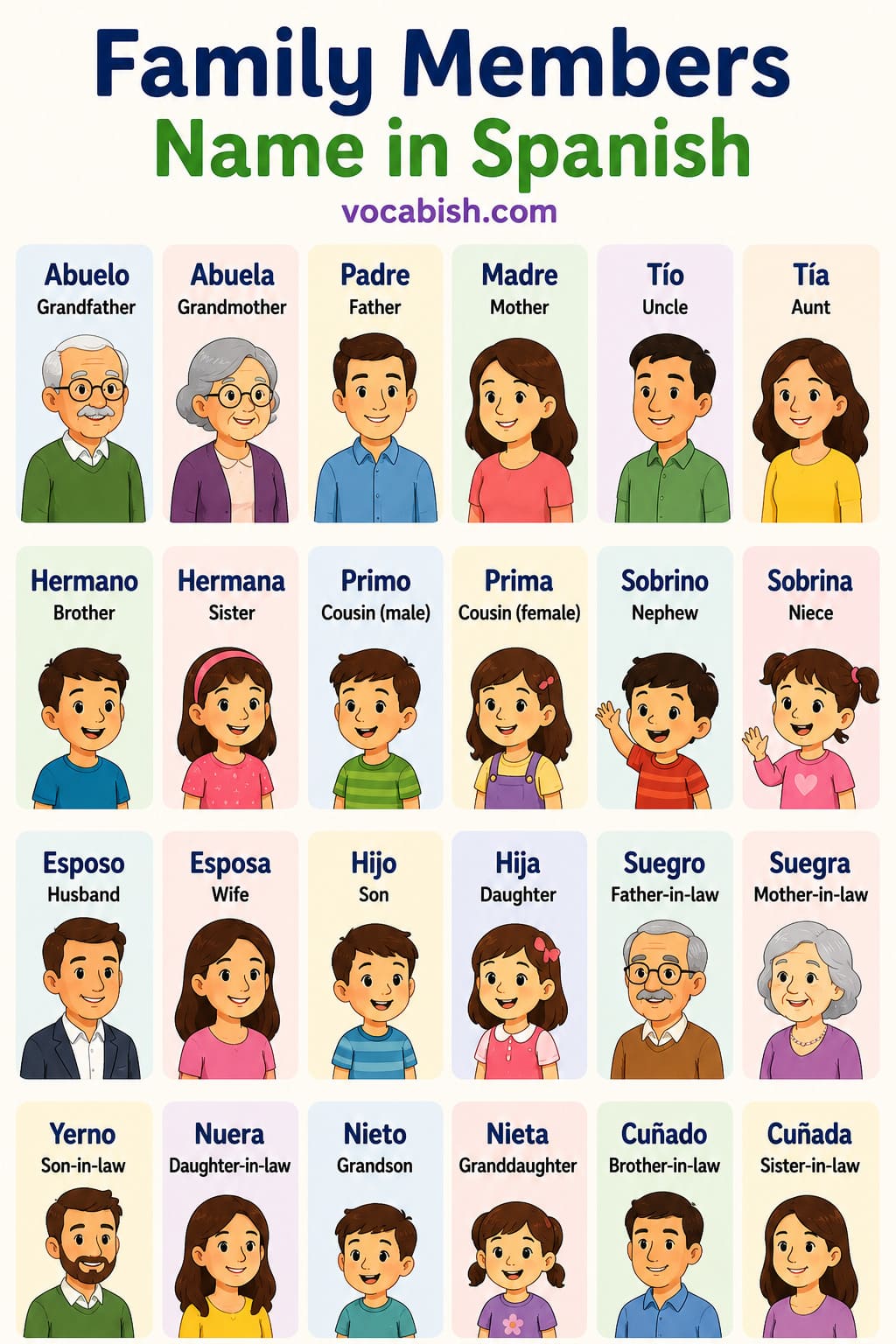
Spanish Words for Family Members
Family is a common topic in everyday conversations. These words help you talk about parents, siblings, grandparents, and other relatives with confidence.
Here’ a more comprehensive lesson on: Family Member Names with Photos
Spanish | Meaning |
|---|---|
Familia | Family |
Madre | Mother |
Padre | Father |
Hermano | Brother |
Hermana | Sister |
Abuelo | Grandfather |
Abuela | Grandmother |
Hijo | Son |
Hija | Daughter |
Tío | Uncle |
Tía | Aunt |
Primo | Cousin |
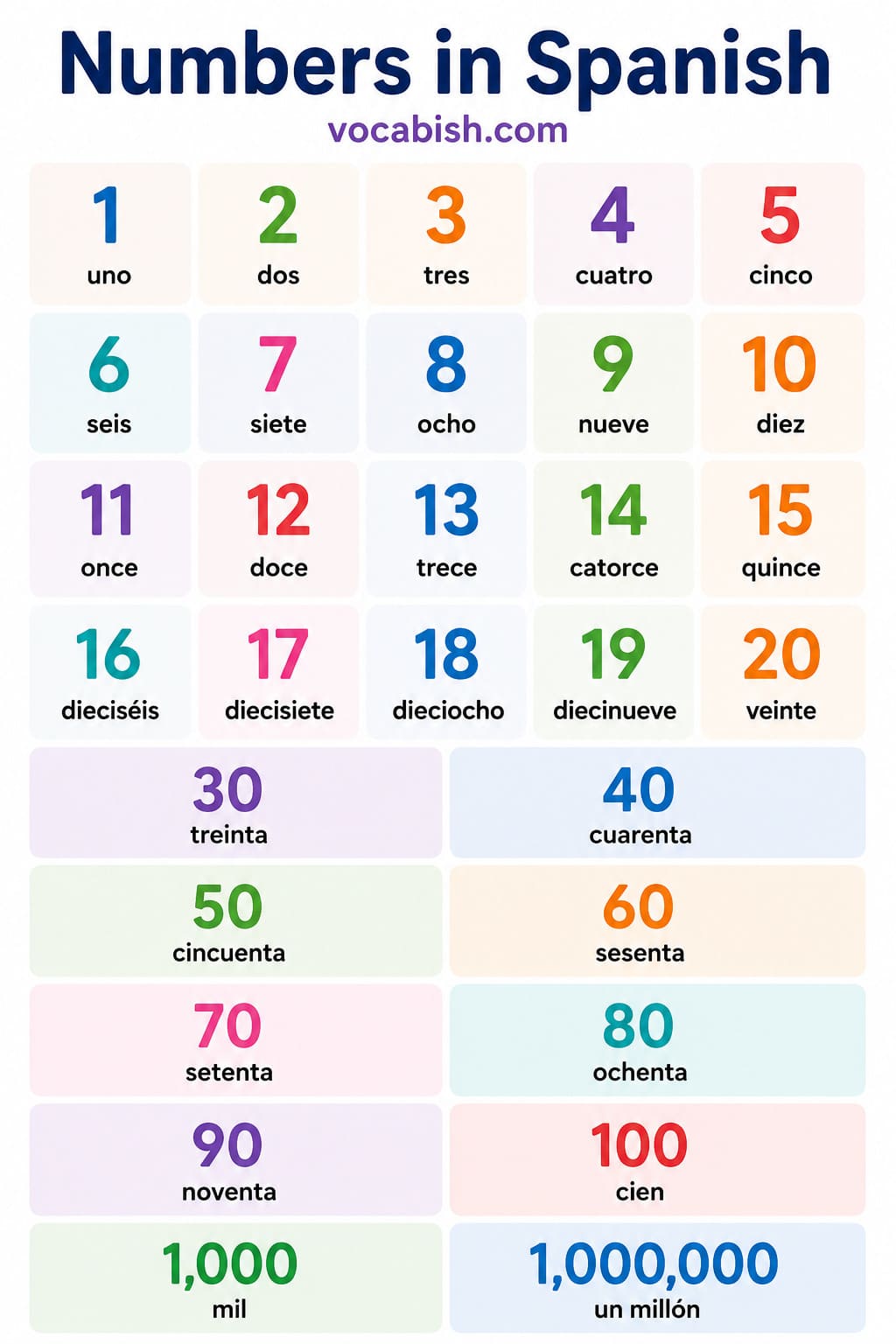
Numbers in Spanish with English Meanings
Numbers show up everywhere—from telling time and sharing phone numbers to talking about prices and dates. Learning them early makes everyday Spanish much easier to understand and use.
Number | Spanish | English Meaning |
|---|---|---|
1 | Uno | One |
2 | Dos | Two |
3 | Tres | Three |
4 | Cuatro | Four |
5 | Cinco | Five |
6 | Seis | Six |
7 | Siete | Seven |
8 | Ocho | Eight |
9 | Nueve | Nine |
10 | Diez | Ten |
11 | Once | Eleven |
12 | Doce | Twelve |
13 | Trece | Thirteen |
14 | Catorce | Fourteen |
15 | Quince | Fifteen |
16 | Dieciséis | Sixteen |
17 | Diecisiete | Seventeen |
18 | Dieciocho | Eighteen |
19 | Diecinueve | Nineteen |
20 | Veinte | Twenty |
List of Colors in Spanish
Colors help you describe the world around you more clearly. From clothing and food to animals and everyday objects, these words appear in conversations more often than many learners expect.
Spanish | Meaning |
|---|---|
Rojo | Red |
Azul | Blue |
Verde | Green |
Amarillo | Yellow |
Negro | Black |
Blanco | White |
Gris | Gray |
Marrón | Brown |
Rosa | Pink |
Naranja | Orange |
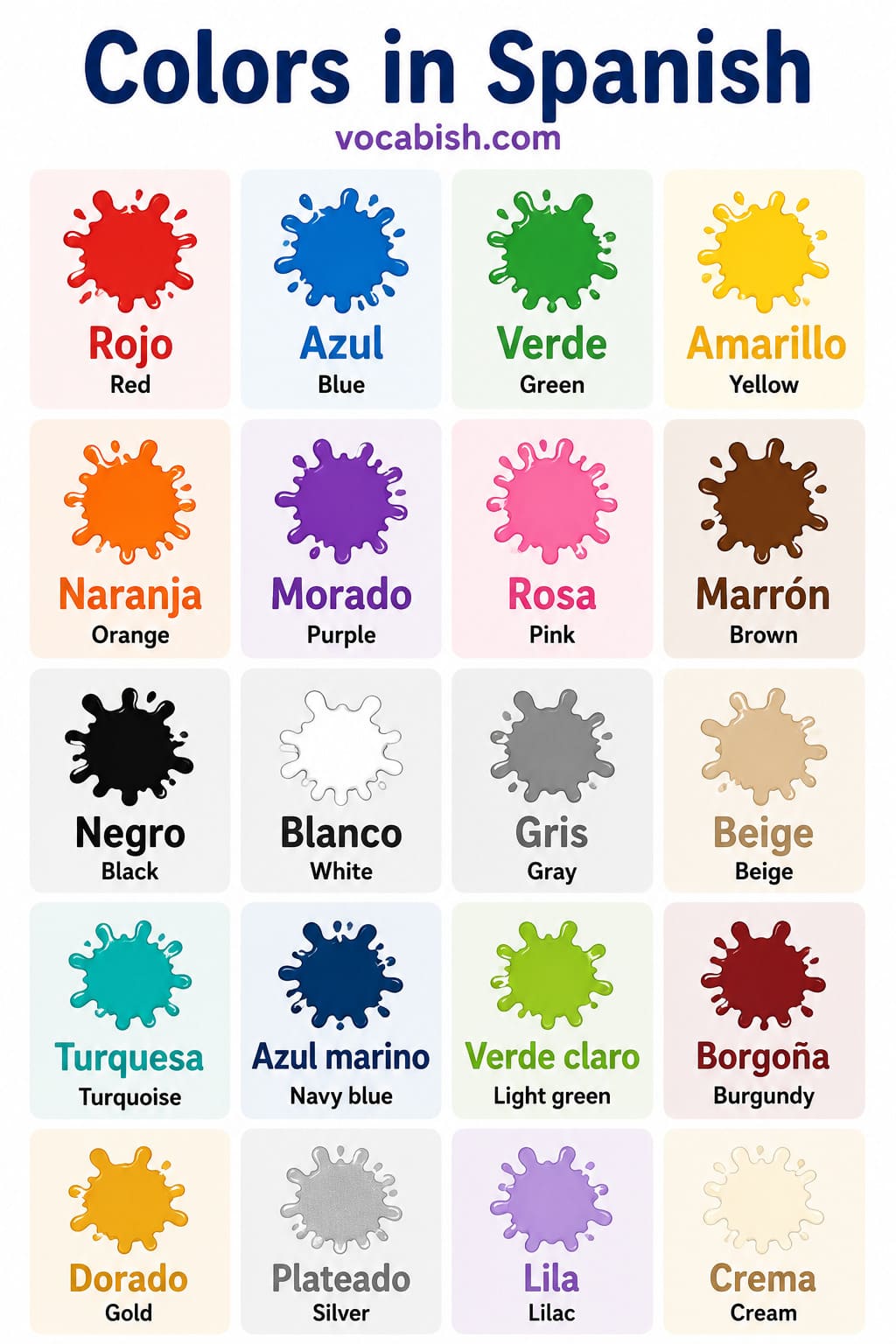
Related Resources: 50 Colors in Spanish with English
Days and Months in Spanish
Talking about dates becomes much easier when you know the days of the week and months of the year. You’ll use these words when discussing schedules, birthdays, holidays, appointments, and events.
Days of the Week in Spanish
Spanish | Meaning |
|---|---|
Lunes | Monday |
Martes | Tuesday |
Miércoles | Wednesday |
Jueves | Thursday |
Viernes | Friday |
Sábado | Saturday |
Domingo | Sunday |
Months in Spanish
Spanish | Meaning |
|---|---|
Enero | January |
Febrero | February |
Marzo | March |
Abril | April |
Mayo | May |
Junio | June |
Julio | July |
Agosto | August |
Septiembre | September |
Octubre | October |
Noviembre | November |
Diciembre | December |
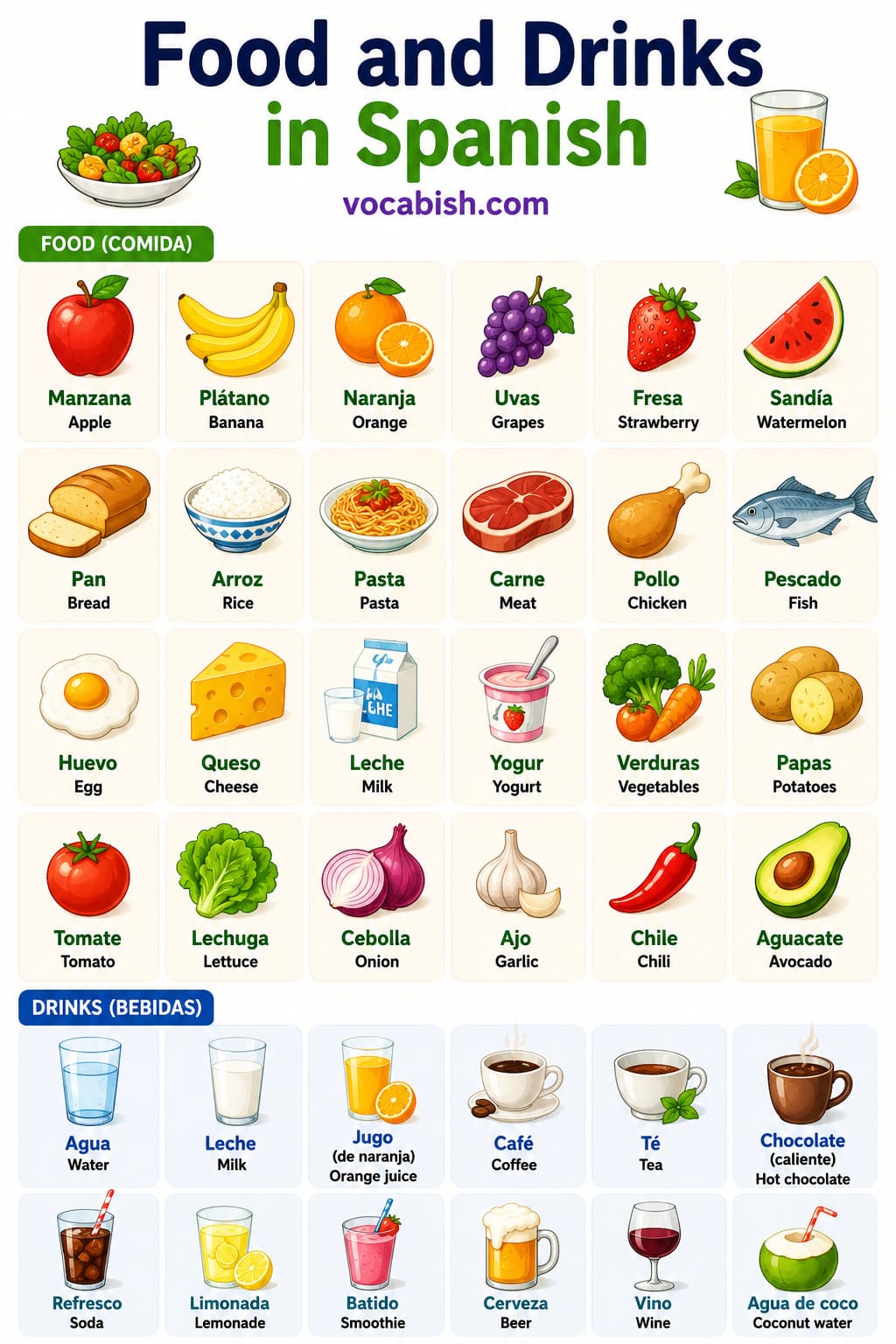
Food and Drink Words in Spanish
Ordering a meal, visiting a café, or shopping for groceries becomes easier when you know common food and drink vocabulary. These are some of the words you’ll hear and use most often in everyday situations.
Spanish | Meaning |
|---|---|
Pan | Bread |
Leche | Milk |
Café | Coffee |
Té | Tea |
Arroz | Rice |
Carne | Meat |
Pescado | Fish |
Fruta | Fruit |
Verdura | Vegetable |
Queso | Cheese |
Huevo | Egg |
Jugo | Juice |
Agua | Water |
Azúcar | Sugar |
Sal | Salt |
Spanish School and Learning Vocabulary
Whether you’re in a classroom or studying on your own, these words come up often while learning Spanish. They cover common school items, subjects, and people involved in education.
Spanish | Meaning |
|---|---|
Escuela | School |
Maestro | Teacher |
Estudiante | Student |
Clase | Class |
Libro | Book |
Cuaderno | Notebook |
Lápiz | Pencil |
Bolígrafo | Pen |
Examen | Exam |
Biblioteca | Library |
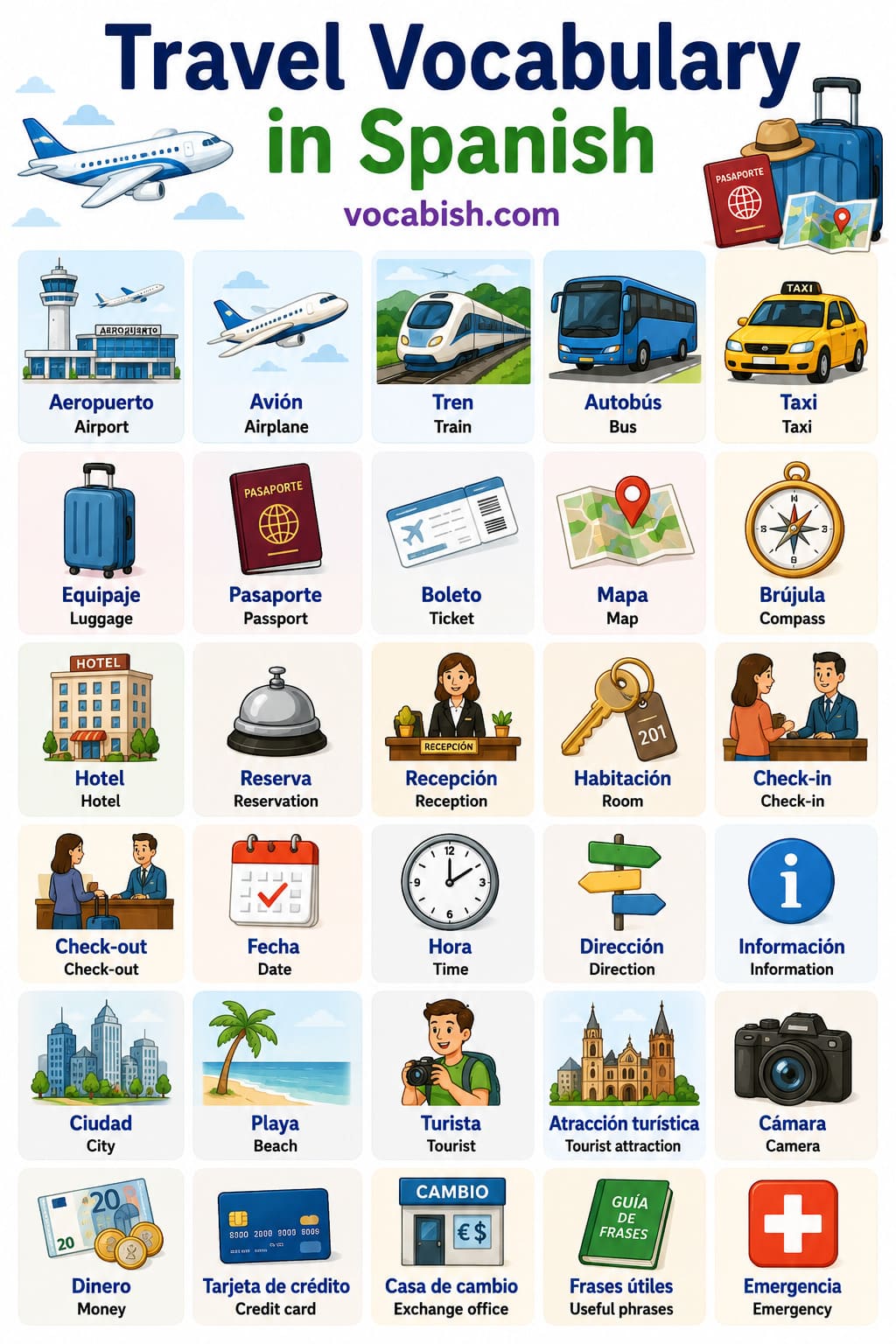
Spanish Travel Words and Meanings
Traveling becomes less stressful when you understand the words used at airports, hotels, train stations, and tourist spots. Learning this vocabulary can help you ask for directions, book services, and move around with more confidence.
Spanish | Meaning |
|---|---|
Aeropuerto | Airport |
Hotel | Hotel |
Mapa | Map |
Pasaporte | Passport |
Billete | Ticket |
Tren | Train |
Autobús | Bus |
Taxi | Taxi |
Viaje | Trip |
Ciudad | City |
Calle | Street |
Playa | Beach |
Places and Objects Name in Spanish
From your home and school to parks, shops, and streets, these words help you talk about the places you visit and the objects you use every day. Knowing them makes it easier to describe your surroundings in Spanish.
Looking for more household objects and item names? Check our guide on: 50+ Household Item Names with Pictures
Spanish | Meaning |
|---|---|
Casa | House |
Habitación | Room |
Cocina | Kitchen |
Baño | Bathroom |
Puerta | Door |
Ventana | Window |
Mesa | Table |
Silla | Chair |
Cama | Bed |
Jardín | Garden |
Nature Words in Spanish
Nature vocabulary helps you talk about the environment, weather, and outdoor places. These words are useful when discussing seasons, landscapes, plants, animals, and natural surroundings.
Spanish | Meaning |
|---|---|
Sol | Sun |
Luna | Moon |
Estrella | Star |
Río | River |
Mar | Sea |
Montaña | Mountain |
Árbol | Tree |
Flor | Flower |
Cielo | Sky |
Lluvia | Rain |
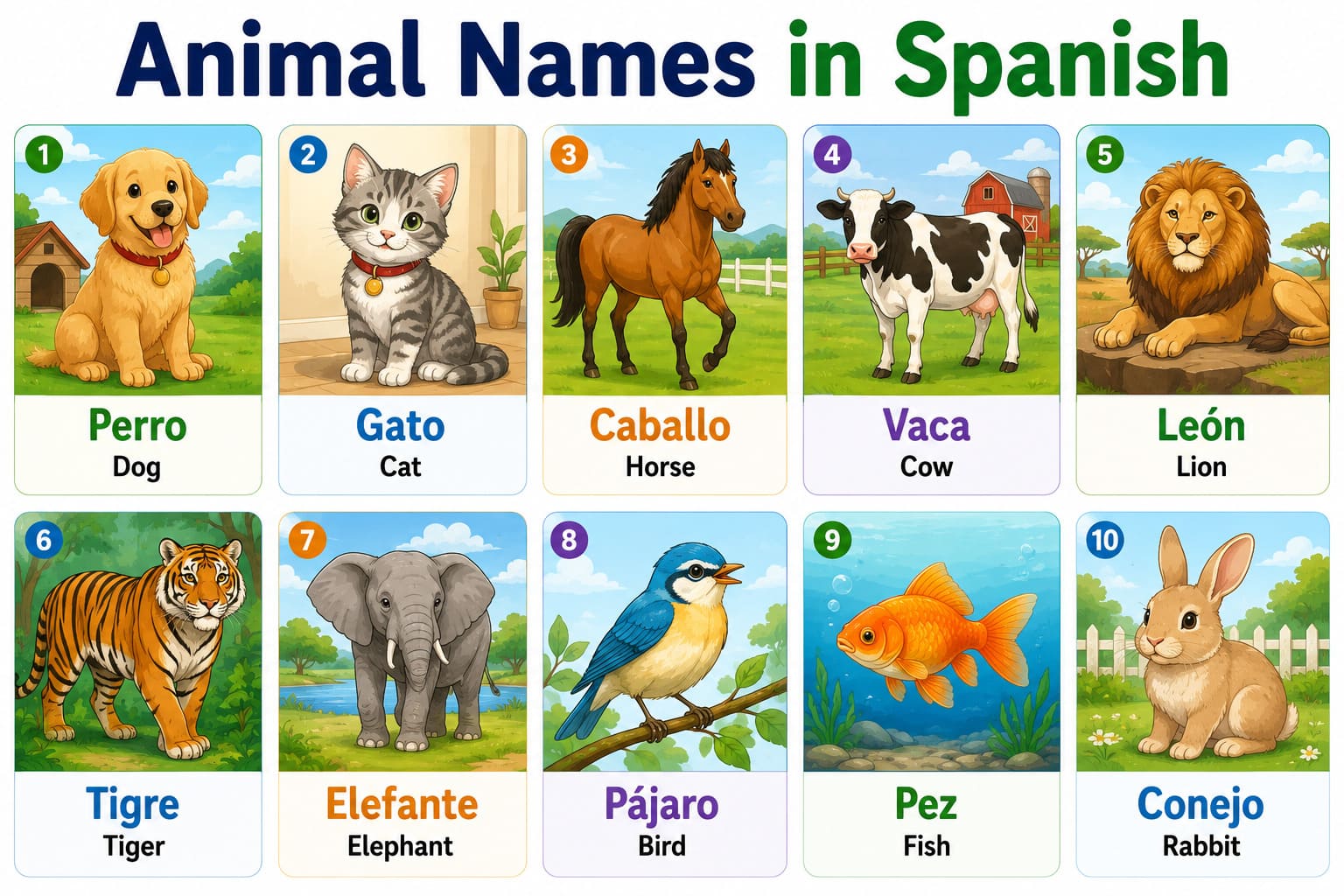
Animal Names in Spanish
Animals are a popular topic when talking about pets, wildlife, farms, and nature. Learning these names can help you understand stories, conversations, and everyday descriptions more easily.
Spanish | Meaning |
|---|---|
Perro | Dog |
Gato | Cat |
Caballo | Horse |
Vaca | Cow |
León | Lion |
Tigre | Tiger |
Elefante | Elephant |
Pájaro | Bird |
Pez | Fish |
Conejo | Rabbit |
Spanish Verbs for Beginners with Meanings
Verbs are also known as action words that describe what people do, making them an important part of everyday communication. Once you know a few common verbs, you can start building basic sentences and expressing ideas more naturally.
Spanish | Meaning |
|---|---|
Hablar | To speak |
Comer | To eat |
Beber | To drink |
Leer | To read |
Escribir | To write |
Caminar | To walk |
Correr | To run |
Dormir | To sleep |
Escuchar | To listen |
Estudiar | To study |
Trabajar | To work |
Vivir | To live |
Example Sentences:
- Yo estudio español. (I study Spanish.)
- Nosotros caminamos al parque. (We walk to the park.)
Feelings and Emotions in Spanish
Being able to talk about your feelings makes conversations more personal and meaningful. These words help you express emotions, describe your mood, and understand how others feel in different situations.
Spanish | Meaning |
|---|---|
Feliz | Happy |
Triste | Sad |
Enojado | Angry |
Cansado | Tired |
Nervioso | Nervous |
Sorprendido | Surprised |
Emocionado | Excited |
Preocupado | Worried |
Seguro | Confident |
Relajado | Relaxed |
Question Words in Spanish
Questions are the starting point of most conversations. Learning these words helps you ask for information, understand responses, and communicate more effectively in everyday situations.
Spanish | Meaning |
|---|---|
Qué | What |
Quién | Who |
Dónde | Where |
Cuándo | When |
Por qué | Why |
Cómo | How |
Cuál | Which |
Cuánto | How much |
Easy Examples:
- ¿Dónde vives? (Where do you live?)
- ¿Cómo te llamas? (What is your name?)
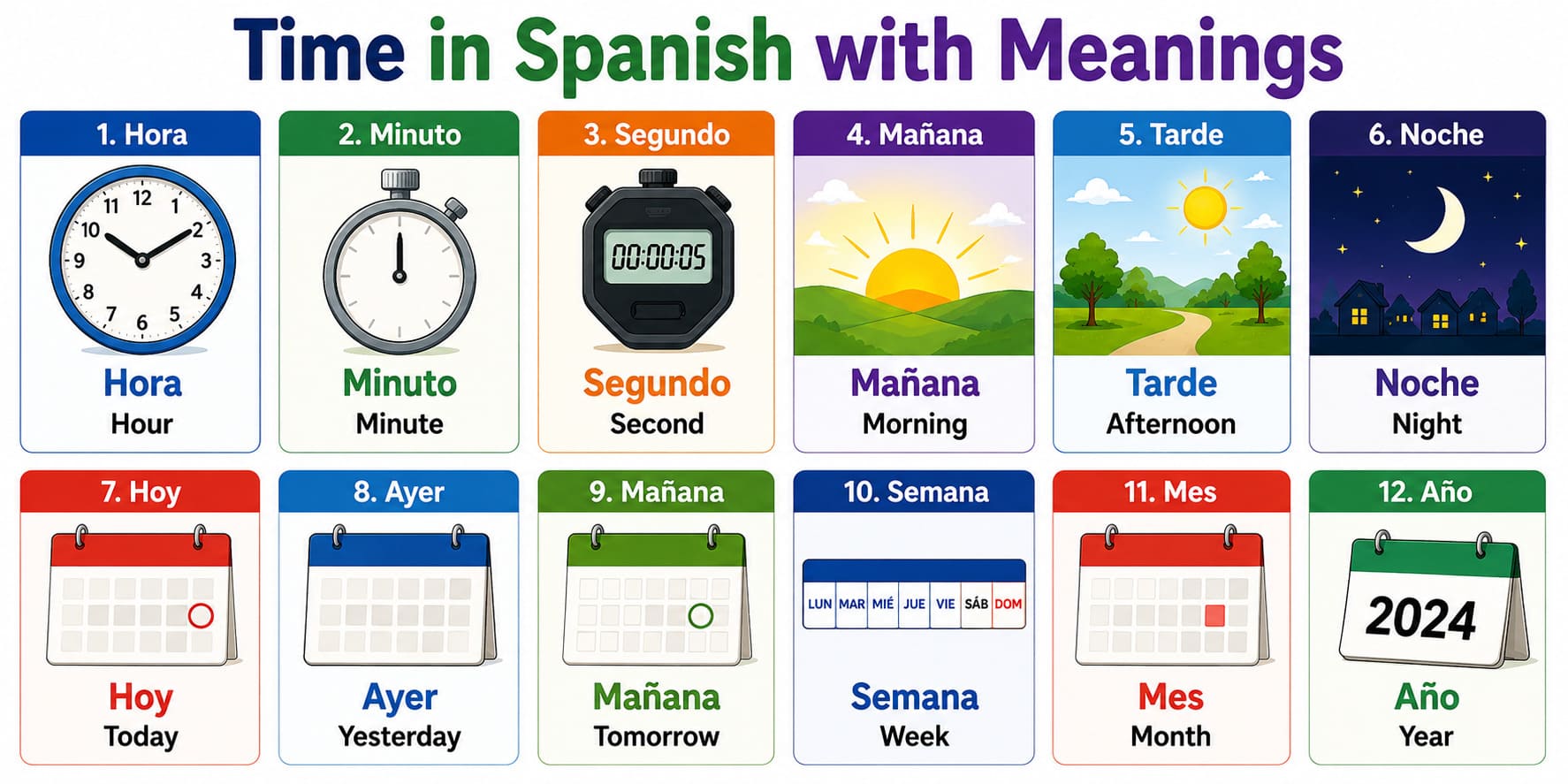
Time in Spanish with Meanings
Time-related words are useful when talking about daily routines, schedules, appointments, and events. You’ll hear them often in conversations about work, school, travel, and everyday activities. Learning these words helps you talk about how to tell time in Spanish.
Spanish | Meaning |
|---|---|
Hora | Hour |
Minuto | Minute |
Segundo | Second |
Mañana | Morning |
Tarde | Afternoon |
Noche | Night |
Hoy | Today |
Ayer | Yesterday |
Mañana | Tomorrow |
Semana | Week |
Mes | Month |
Año | Year |
Job and Work Related Words in Spanish
Work-related vocabulary is useful when discussing careers, workplaces, responsibilities, and professional goals. These words often appear in job applications, office conversations, and everyday discussions about work life.
To read more about the 200+ jobs, occupations, and professions names. You can check our comprehensive guide on: All Types of Jobs and Occupations
Spanish | Meaning |
|---|---|
Trabajo | Work |
Oficina | Office |
Jefe | Boss |
Empleado | Employee |
Empresa | Company |
Reunión | Meeting |
Proyecto | Project |
Salario | Salary |
Cliente | Client |
Carrera | Career |
Daily Use Technology Words in Spanish
Technology is part of everyday life, whether you’re sending messages, browsing the internet, or using mobile apps. Learning these words can help you understand common conversations and digital content more easily.
Spanish | Meaning |
|---|---|
Computadora | Computer |
Teléfono | Phone |
Internet | Internet |
Correo electrónico | Email |
Sitio web | Website |
Contraseña | Password |
Archivo | File |
Aplicación | App |
Pantalla | Screen |
Teclado | Keyboard |
Spanish Words Used in Simple Sentences
Seeing words in context makes them easier to remember. Here are some short Spanish sentences with English meanings.
Spanish Sentence | English Meaning |
|---|---|
Hola, amigo. | Hello, friend. |
Gracias por tu ayuda. | Thank you for your help. |
Mi familia es grande. | My family is big. |
Tengo dos hermanos. | I have two brothers. |
El coche es rojo. | The car is red. |
Hoy es lunes. | Today is Monday. |
Quiero un café. | I want a coffee. |
La escuela está cerca. | The school is nearby. |
Vamos al aeropuerto. | We are going to the airport. |
Mi perro es muy amable. | My dog is very friendly. |
Yo estudio español. | I study Spanish. |
Ella está feliz. | She is happy. |
¿Dónde está la estación? | Where is the station? |
Tengo tiempo ahora. | I have time now. |
Trabajo en una oficina. | I work in an office. |
Download Spanish Words PDF
Some vocabulary images are not included in this article to keep the page clean and easy to browse. You can find all missing images, along with additional learning materials, in the downloadable PDF version below.
Tips for Remembering Spanish Vocabulary
Learning words becomes easier when you see and use them regularly.
Try these methods:
- Learn words by topic instead of random lists.
- Read short Spanish texts daily.
- Use new words in sentences.
- Label objects around your home.
- Review vocabulary every week.
- Listen to Spanish podcasts and videos.
- Practice speaking out loud.
Instead of memorizing only a word, learn it inside a phrase.
Example:
- Agua = Water
- Quiero agua. = I want water.
Phrases are easier to remember than isolated words.
FAQs about Spanish Words
Common Spanish words include hola, gracias, sí, no, casa, amigo, agua, comida, escuela, trabajo, tiempo, and familia.
Some common color words are rojo (red), azul (blue), verde (green), and amarillo (yellow).
The most common way to say hello in Spanish is Hola. It works in both formal and informal situations.
Common family vocabulary includes madre (mother), padre (father), hermano (brother), and hermana (sister).
Spanish uses Es la for one o’clock and Son las for other hours. For example, Son las cuatro means “It’s four o’clock.”
The days are lunes, martes, miércoles, jueves, viernes, sábado, and domingo.
Conclusion
Learning Spanish becomes much easier when you focus on words you can use every day. From greetings and family members to numbers, colors, food, travel, and technology, each group of vocabulary helps you handle different situations with greater confidence.
Instead of trying to memorize hundreds of words at once, start with the terms you are most likely to see and hear. Practice them regularly, use them in short sentences, and review them often. Over time, these Spanish words and meanings will become familiar, helping you understand conversations, express your ideas, and build a stronger foundation in the language.