
Countable vs uncountable nouns differ in how English treats number and quantity.Countable nouns refer to separate people, objects, or ideas that we can count, while uncountable nouns describe substances, qualities, or general...
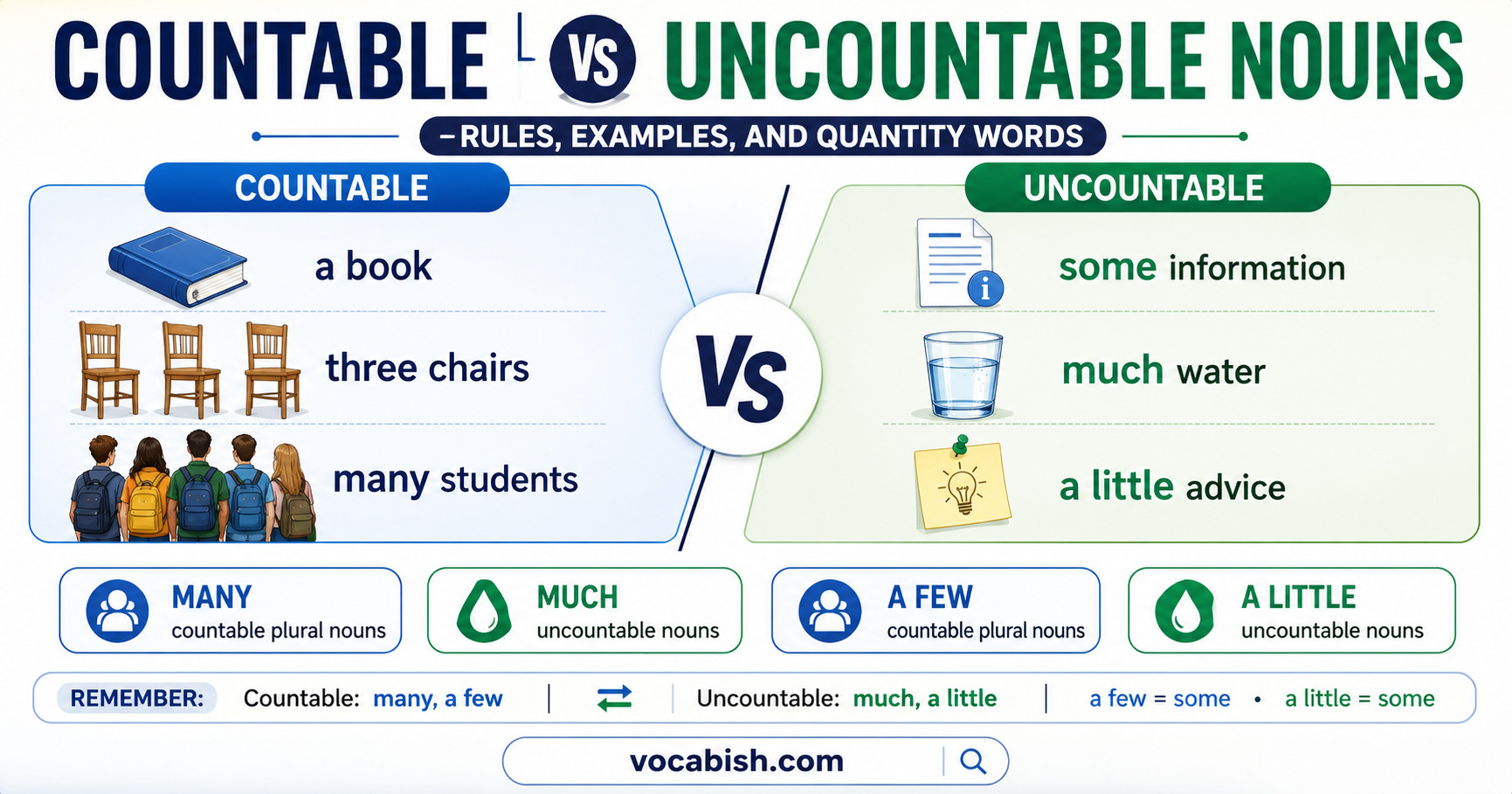
Countable vs uncountable nouns differ in how English treats number and quantity.Countable nouns refer to separate people, objects, or ideas that we can count, while uncountable nouns describe substances, qualities, or general...
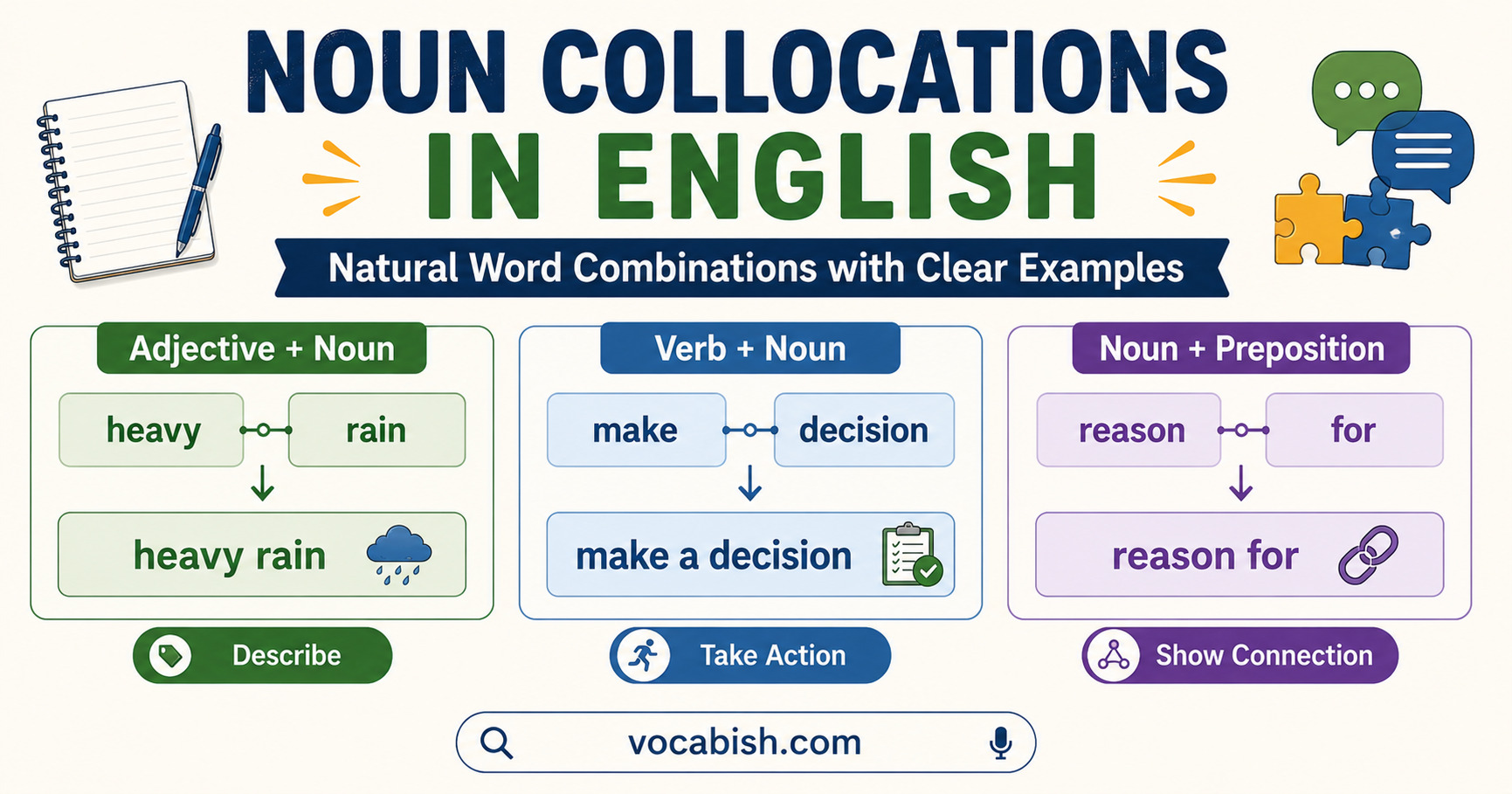
Noun collocations are natural combinations of words built around a noun, such as heavy rain, make a decision, and a sense of humour. Learning noun collocations helps you choose words that native and fluent English speakers...
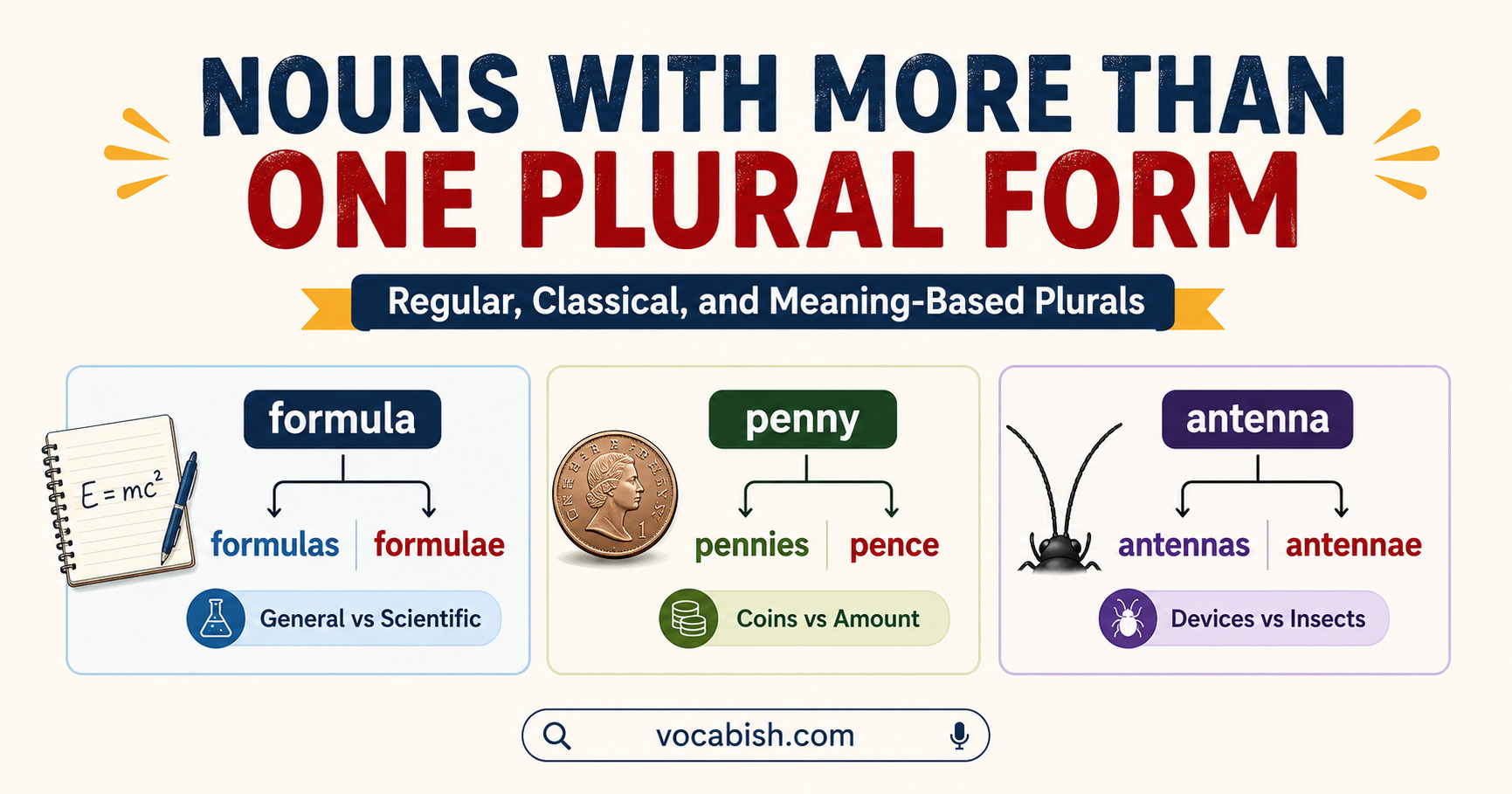
Nouns with more than one plural form are nouns that accept two or more plural forms, sometimes with the same meaning and sometimes with different meanings.These nouns may follow a regular English pattern, retain a Latin or Greek...
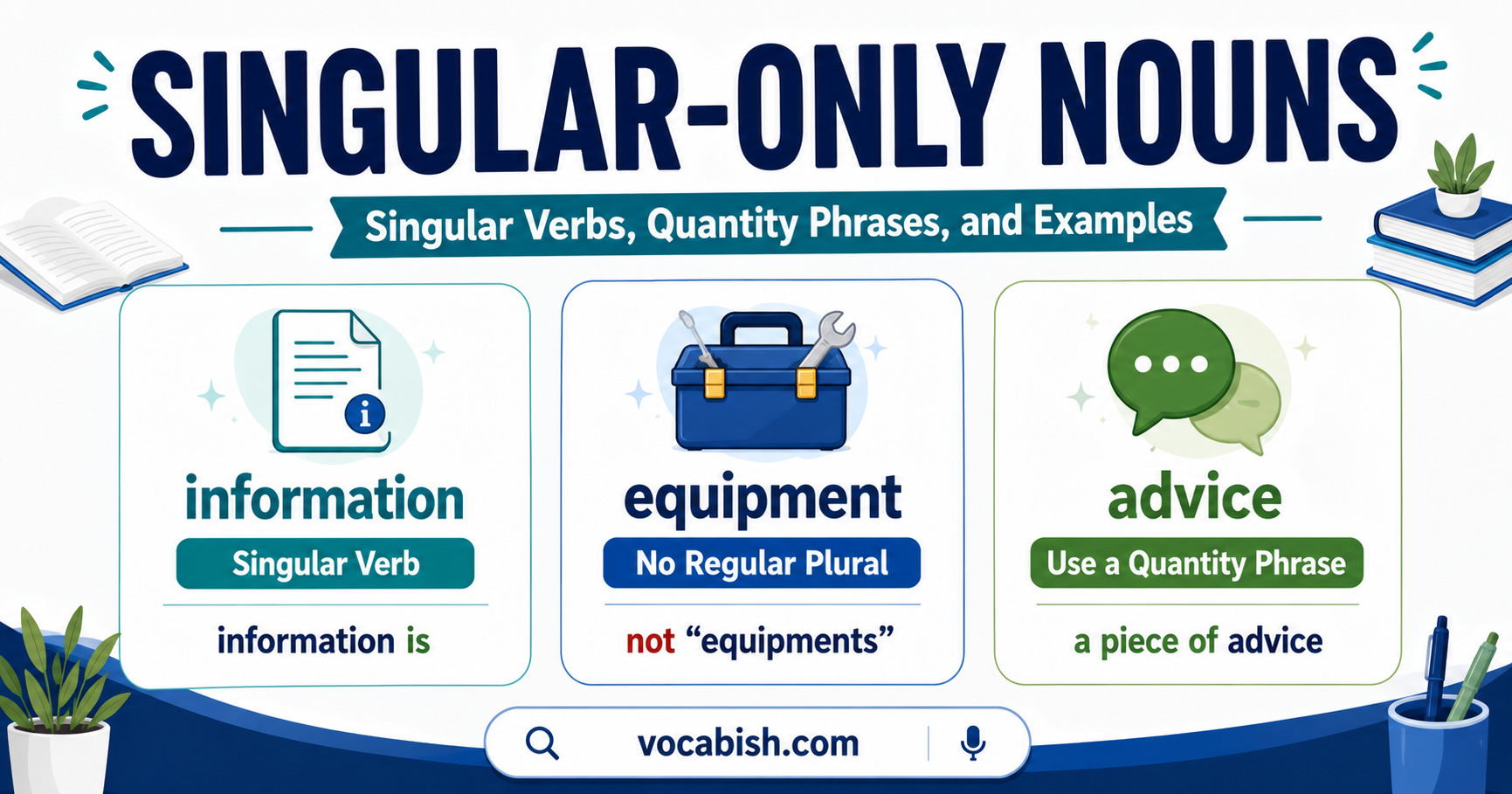
Singular-only nouns are nouns that normally remain singular and take a singular verb in their usual meaning. They do not usually form regular plurals, even when they refer to a large amount of something. For example, we say The...
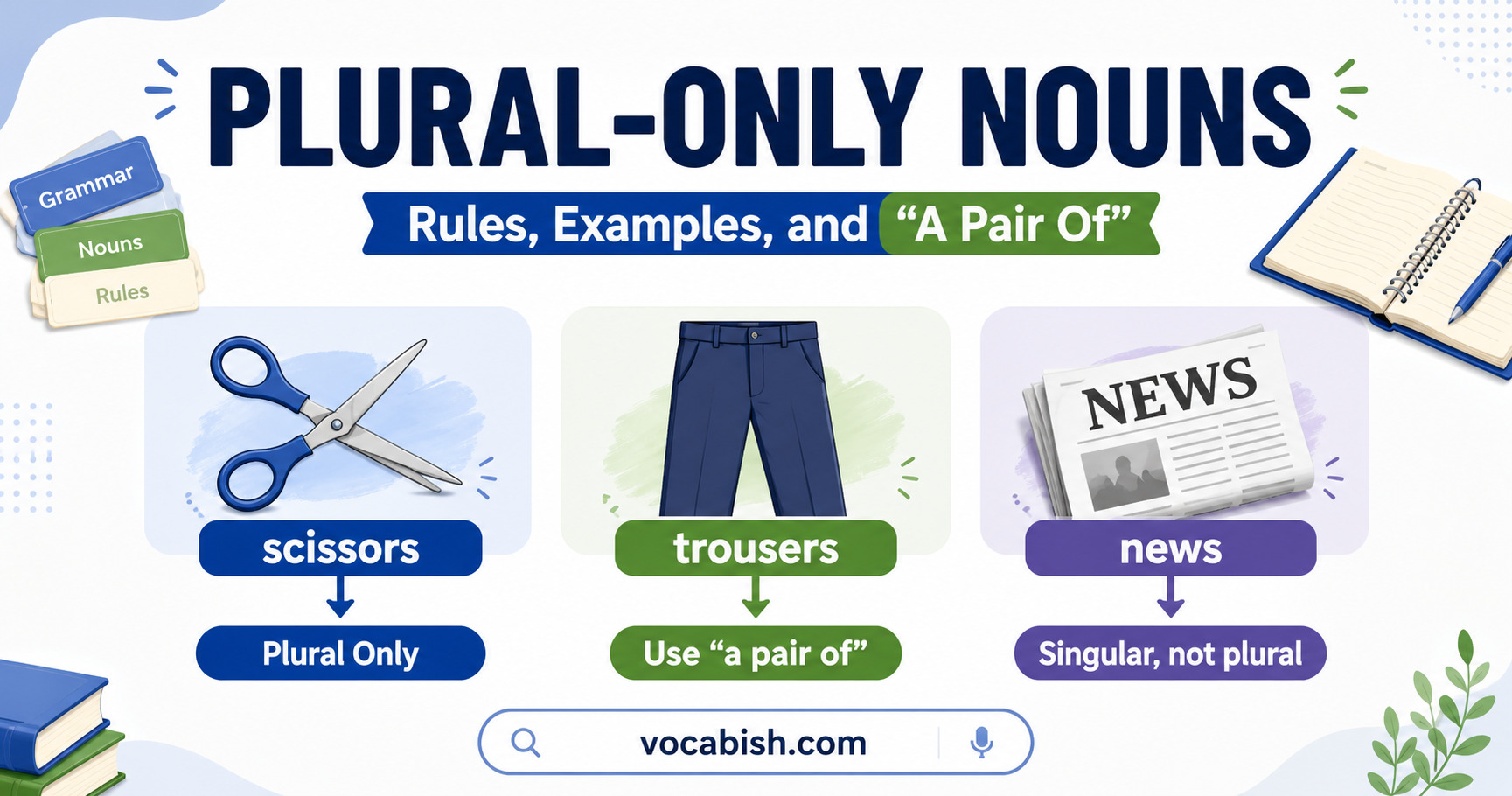
Plural-only nouns are nouns that are normally used only in a plural form, even when they describe one object, group, or idea. They take plural verbs, while two-part objects are often counted with a pair of, as in a pair of...
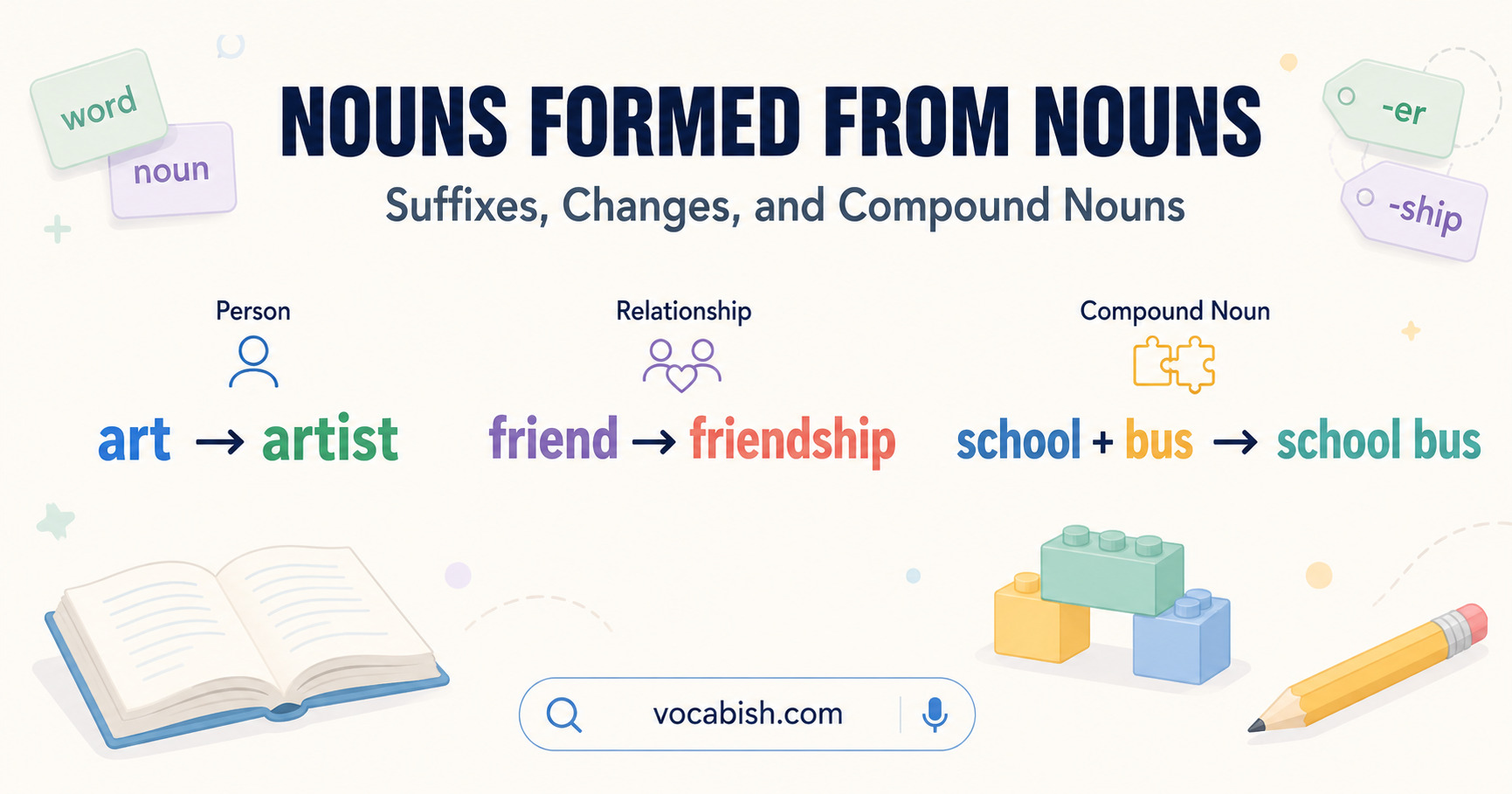
Nouns formed from nouns are new nouns created by adding a suffix, changing the spelling, or combining two existing nouns. These derived nouns often name people, professions, relationships, conditions, groups, periods, places, or...
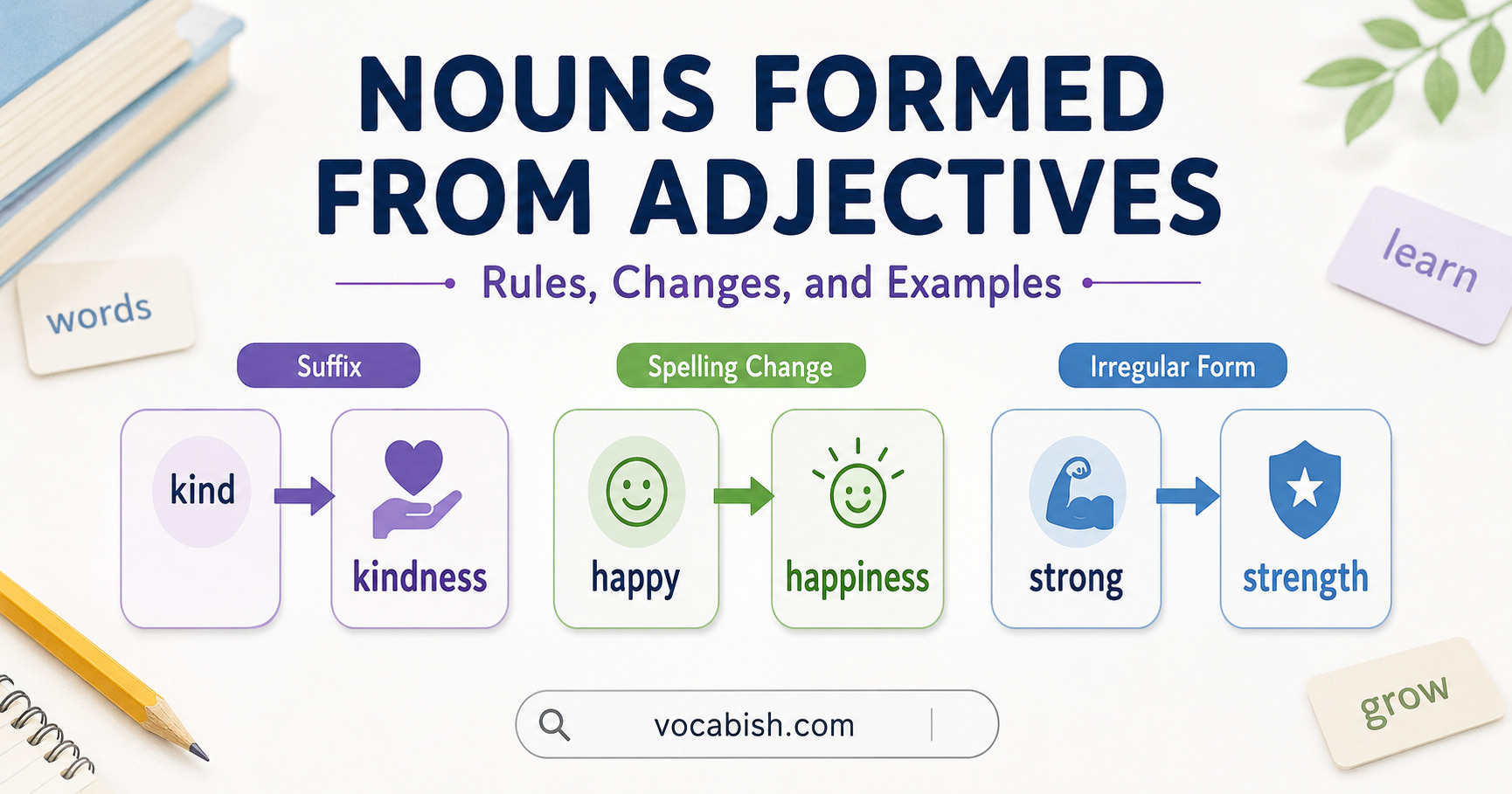
Nouns formed from adjectives name the quality, feeling, state, or condition described by an adjective. For example, kind becomes kindness, happy becomes happiness, and strong becomes strength. These noun forms help us talk about...
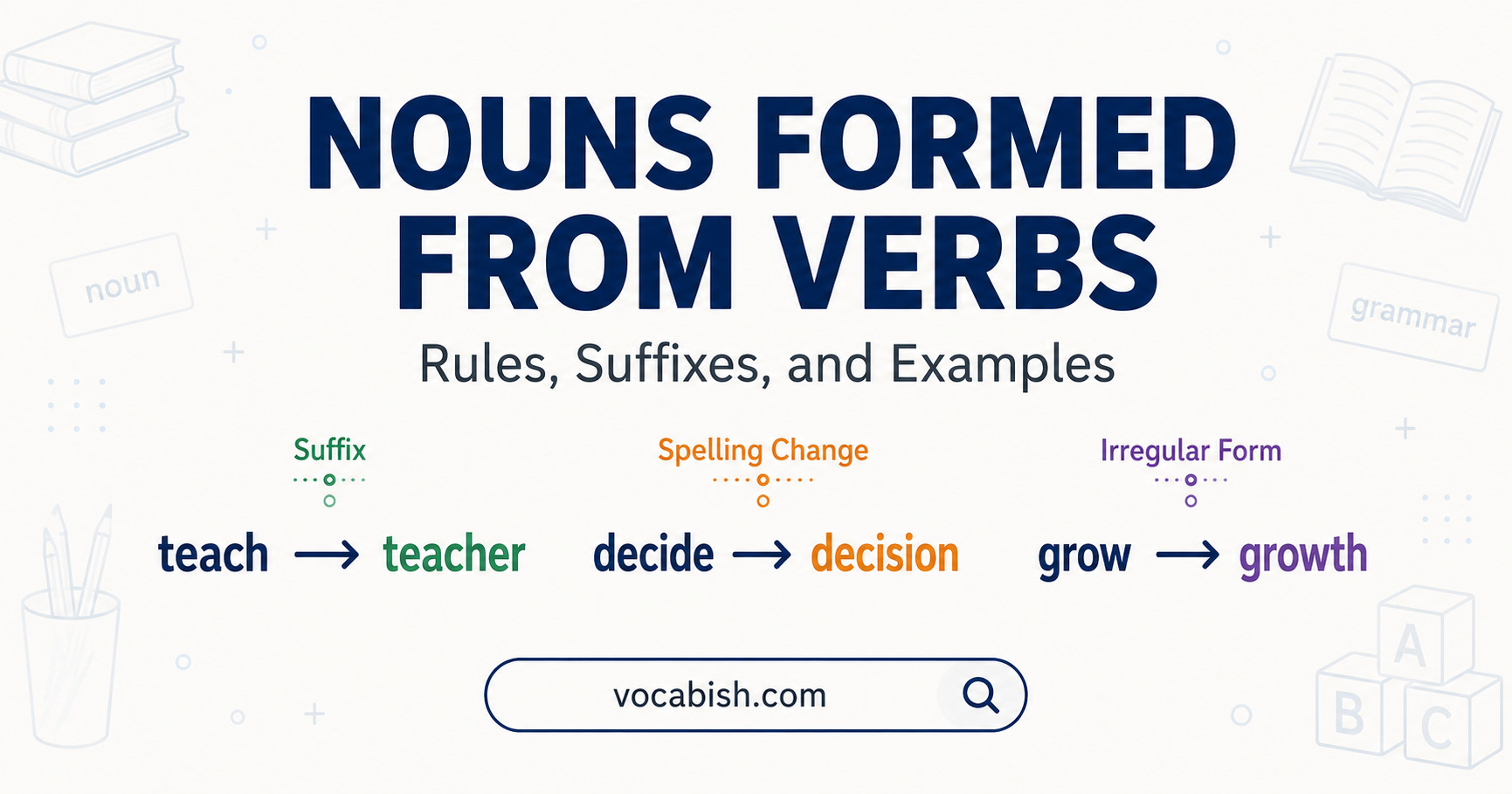
Nouns formed from verbs are words created from verbs to name people, actions, processes, states, or results. For example, “teach” becomes “teacher,” while “decide” becomes “decision...
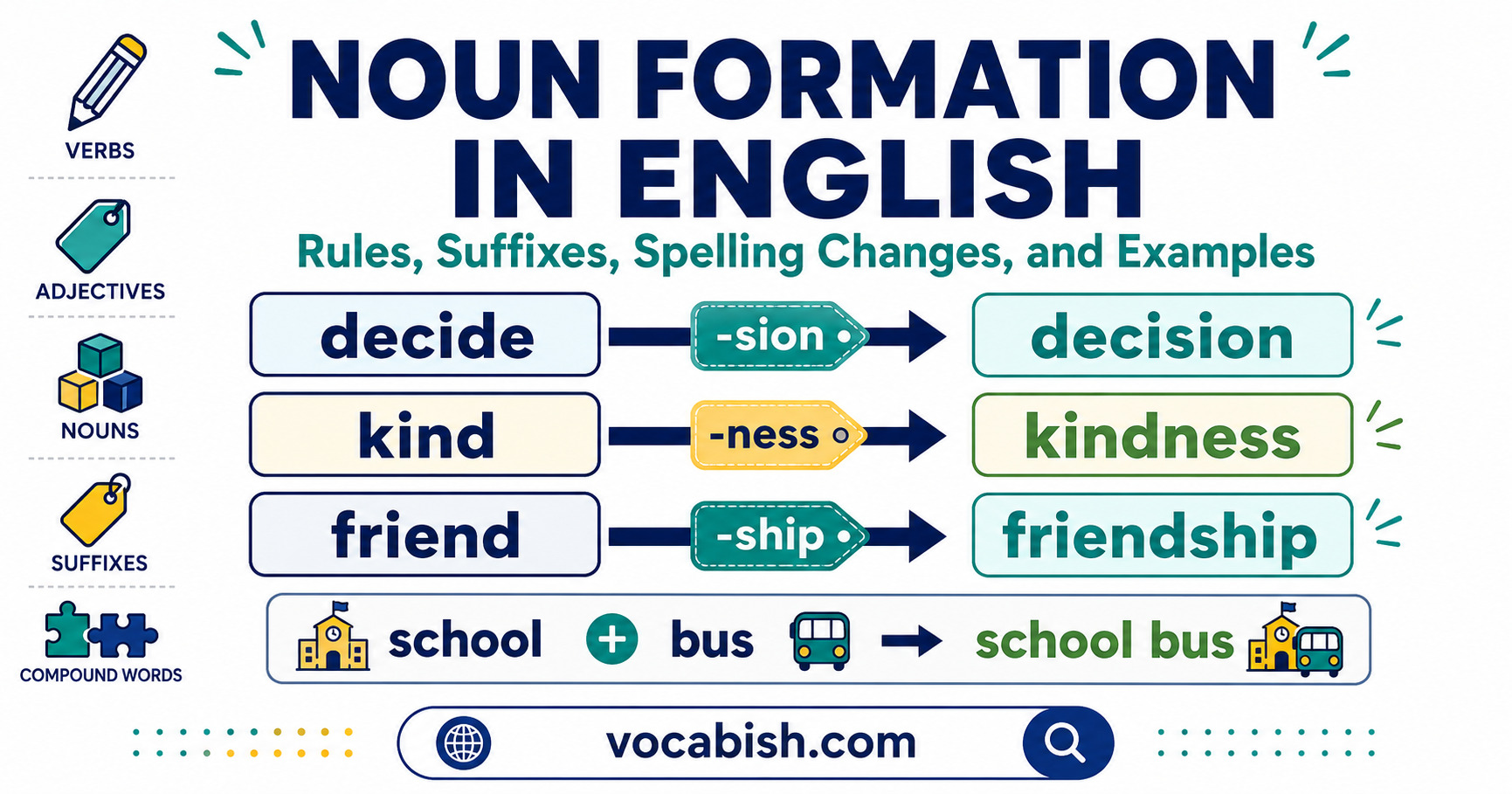
Noun formation in English is the process of creating nouns from verbs, adjectives, and other nouns. It helps learners understand how words such as “decide” become “decision” and “kind” becomes...

A sentence sounds natural when its subject and verb work together correctly. A singular subject normally needs a singular verb, while a plural subject needs a plural verb. In simple terms, noun verb agreement means choosing a...