
What do you say in Spanish when someone loses a loved one? Learning condolences phrases in Spanish helps you express sympathy, kindness, and emotional support respectfully.
These Spanish sympathy phrases are commonly used in conversations, text messages, funerals, cards, and social situations. In this article, you’ll learn comforting Spanish expressions with English meanings, pronunciation tips, and natural examples you can use with confidence.
Why Learn Condolences Phrases in Spanish
When someone is grieving, even a few caring words can mean a lot. Knowing respectful Spanish sympathy expressions helps you communicate compassion naturally.
These phrases are useful for:
- sympathy cards
- funerals
- text messages
- conversations with friends or coworkers
- social support
- cultural understanding
Spanish condolence phrases are often warm, emotional, and supportive.
Common Condolences Phrases in Spanish
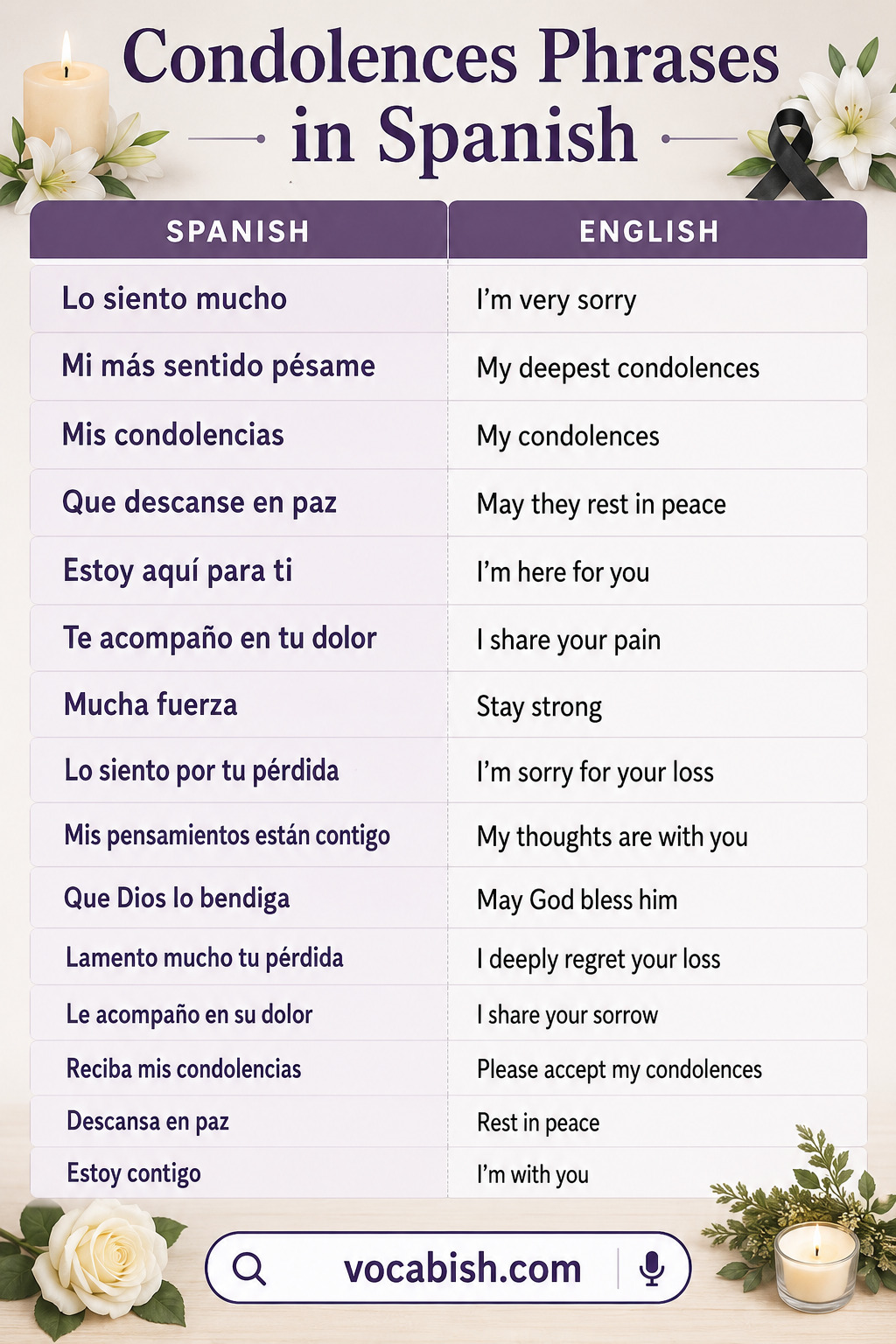
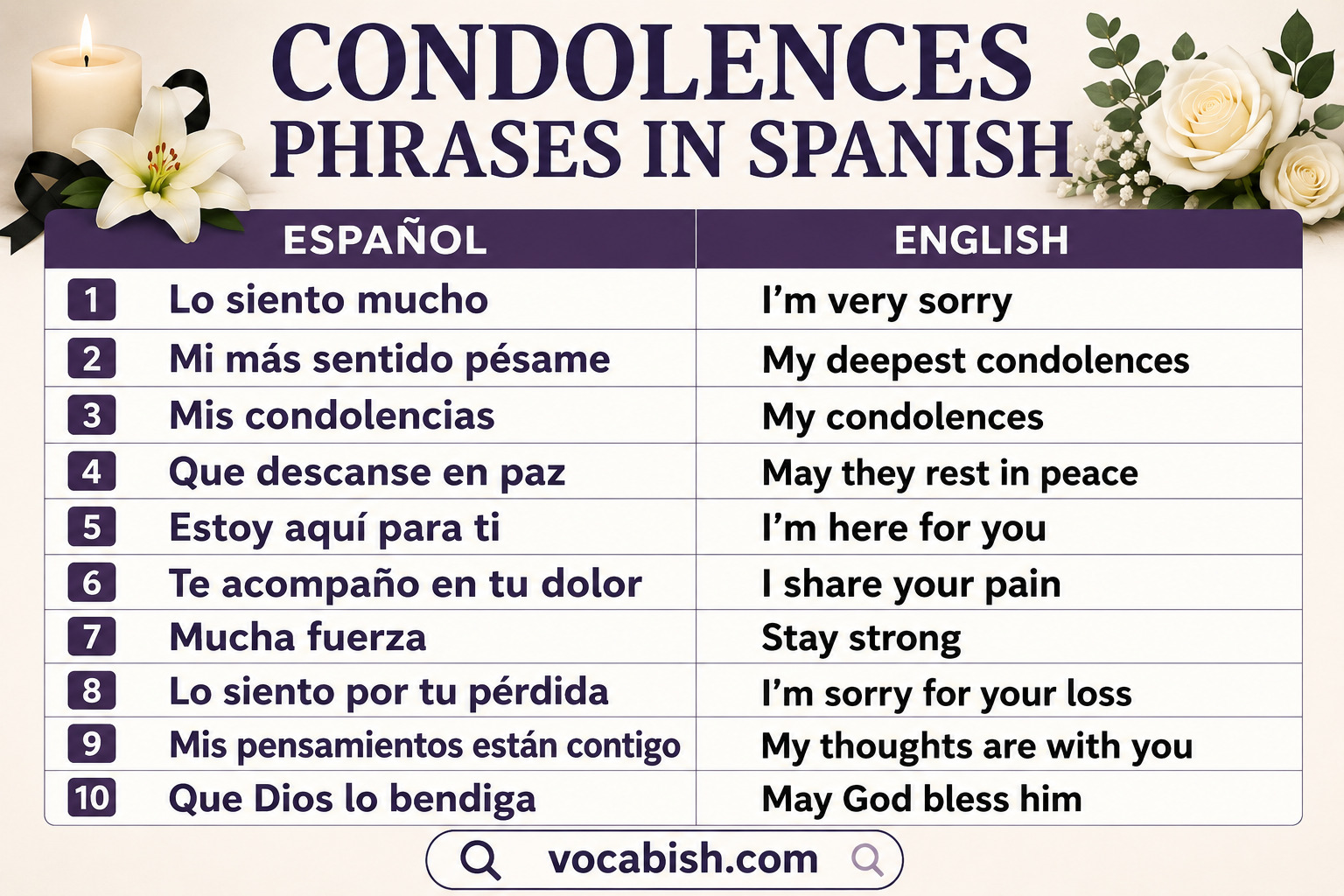
Here are some of the most common Spanish sympathy phrases with English meanings and pronunciation.
Spanish Phrase | English Meaning | Pronunciation |
|---|---|---|
Lo siento mucho | I’m very sorry | lo see-en-to moo-cho |
Mi más sentido pésame | My deepest condolences | mee mas sen-tee-do pe-sa-me |
Mis condolencias | My condolences | mees kon-do-len-see-as |
Que descanse en paz | May they rest in peace | keh des-kan-se en paz |
Estoy aquí para ti | I’m here for you | es-toy ah-kee pa-ra tee |
Te acompaño en tu dolor | I share your pain | te ah-kom-pan-yo en too do-lor |
Mucha fuerza | Stay strong | moo-cha fwer-sa |
Lo siento por tu pérdida | I’m sorry for your loss | lo see-en-to por too per-dee-da |
Mis pensamientos están contigo | My thoughts are with you | mees pen-sa-mee-en-tos es-tan kon-tee-go |
Que Dios lo bendiga | May God bless him | keh dee-os lo ben-dee-ga |
These are among the most respectful and widely used condolence phrases in Spanish.
Short Sympathy Phrases in Spanish
Sometimes short messages feel more natural and comforting. These expressions work well in texts, cards, or quick conversations.
Spanish | English |
|---|---|
Lo siento | I’m sorry |
Mucha fuerza | Stay strong |
Estoy contigo | I’m with you |
Te acompaño | I’m here with you |
Descansa en paz | Rest in peace |
These shorter phrases are commonly used between friends, coworkers, and family members.
Formal Condolence Expressions
Formal condolences are often used in professional situations, funerals, or when speaking to elders.
Spanish Phrase | English Meaning |
|---|---|
Mi más sentido pésame | My deepest condolences |
Le acompaño en su dolor | I share your sorrow |
Lamento mucho su pérdida | I deeply regret your loss |
Reciba mis condolencias | Please accept my condolences |
These expressions sound polite and compassionate without being overly emotional.
Spanish Funeral and Sympathy Vocabulary
Learning related vocabulary helps you understand funeral conversations and sympathy messages more easily.
Spanish Word | English Meaning |
|---|---|
funeral | funeral |
pérdida | loss |
tristeza | sadness |
familia | family |
duelo | grief |
paz | peace |
flores | flowers |
oración | prayer |
recuerdo | memory |
apoyo | support |
These words often appear in sympathy cards and memorial messages.
Example Conversations Using Sympathy Phrases
Reading examples helps you understand how native speakers use these expressions naturally.
Example 1
Spanish
- Lo siento mucho por tu pérdida.
- Gracias por tu apoyo.
English
- I’m very sorry for your loss.
- Thank you for your support.
Example 2
Spanish
- Mi más sentido pésame.
- Muchas gracias.
English
- My deepest condolences.
- Thank you very much.
Example 3
Spanish
- Estoy aquí para ti.
- Lo aprecio mucho.
English
- I’m here for you.
- I really appreciate it.
Cultural Tips for Expressing Condolences in Spanish
Spanish-speaking cultures often express sympathy warmly and personally. Tone and sincerity matter more than complicated vocabulary.
1. Speak Calmly and Respectfully
A gentle tone makes your message feel more supportive.
2. Keep Messages Short
Simple phrases often sound more natural during emotional moments.
3. Religious Expressions Are Common
Many Spanish speakers use phrases like:
- Que descanse en paz
- Que Dios lo bendiga
These expressions are especially common in Latin American countries.
4. Physical Support Matters
In many cultures, hugs and close family support are normal parts of expressing condolences.
You May Also Like:
- 300 Spanish Words Meanings PDF
- Days of the Week in Spanish with Meanings
- Daily Used Spanish Phrases with Meanings
Common Mistakes English Speakers Make
Learners sometimes translate sympathy phrases too directly from English.
Mistake | Better Spanish Expression |
|---|---|
Translating word-for-word | Use natural Spanish phrases |
Using casual slang | Choose respectful language |
Forgetting formal forms | Use “su” in formal settings |
Speaking too much | Short messages often feel kinder |
Mispronouncing pérdida | Stress the correct syllables |
FAQs
“Lo siento mucho” is one of the most common Spanish condolence phrases and means “I’m very sorry.”
You can say “Mis condolencias” or “Mi más sentido pésame” in formal situations.
It means “May they rest in peace” and is commonly used at funerals and memorial messages.
Yes. Many Spanish speakers use religious expressions such as “Que Dios lo bendiga” or “Que en paz descanse.”
You can say “Estoy aquí para ti,” which means “I’m here for you.”
“Lo siento por tu pérdida” is respectful, caring, and widely used in personal conversations.
Yes. Short phrases like “Lo siento” and “Mucha fuerza” are natural and meaningful.
Yes. Formal expressions show respect, especially with elders, coworkers, or professional relationships.