
Learning how to say How are You in Spanish is one of the easiest ways to start speaking naturally with Spanish speakers. The most common expression is ¿Cómo estás? → How are you?, but Spanish offers several other greetings that fit different situations, from casual conversations with friends to more formal interactions. In this article, you’ll discover 6 of the best ways to say “How are you?” in Spanish, along with their English translations, meanings, and examples. By learning these everyday phrases, you can greet people more confidently and make your Spanish conversations sound more natural and fluent.
What Does “How Are You” Mean in Spanish?
When people ask “How are you?” in Spanish, they are usually checking on your well-being or starting a friendly conversation. Just like in English, the question often serves as a greeting rather than a request for detailed information.
How are You in Spanish: ¿Cómo está usted? = How are you? (Formal)
The exact phrase changes depending on the situation, the level of formality, and the country where Spanish is spoken.
Most Common Ways to Say How Are You in Spanish
Spanish has several greetings that all translate to “How are you?” in English.
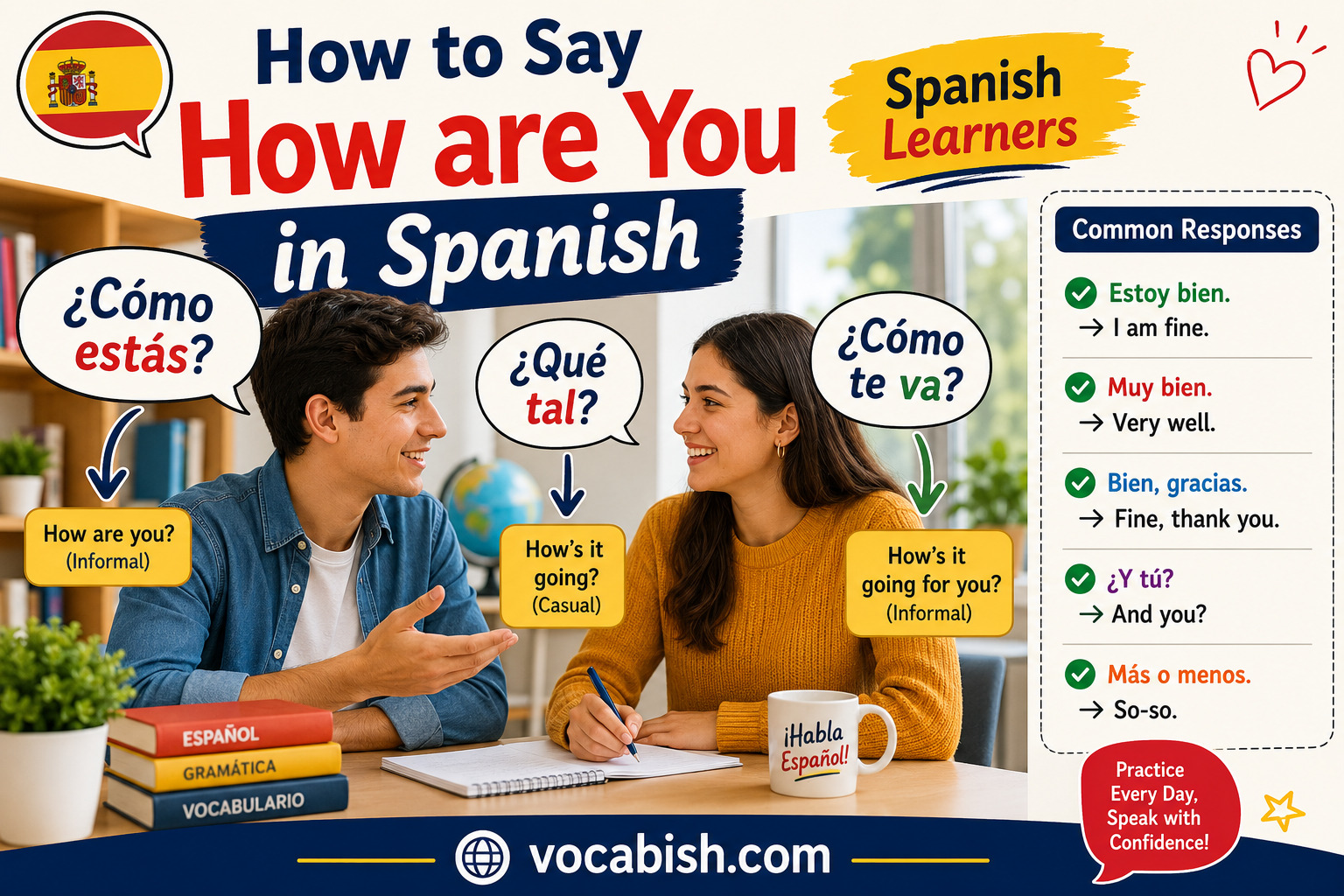
Spanish Phrase | English Meaning | Usage |
|---|---|---|
¿Cómo estás? | How are you? | Informal |
¿Cómo está usted? | How are you? | Formal |
¿Qué tal? | How’s it going? | Casual |
¿Cómo te va? | How’s it going for you? | Informal |
¿Qué pasa? | What’s up? | Very casual |
¿Cómo andas? | How are you doing? | Common in some countries |
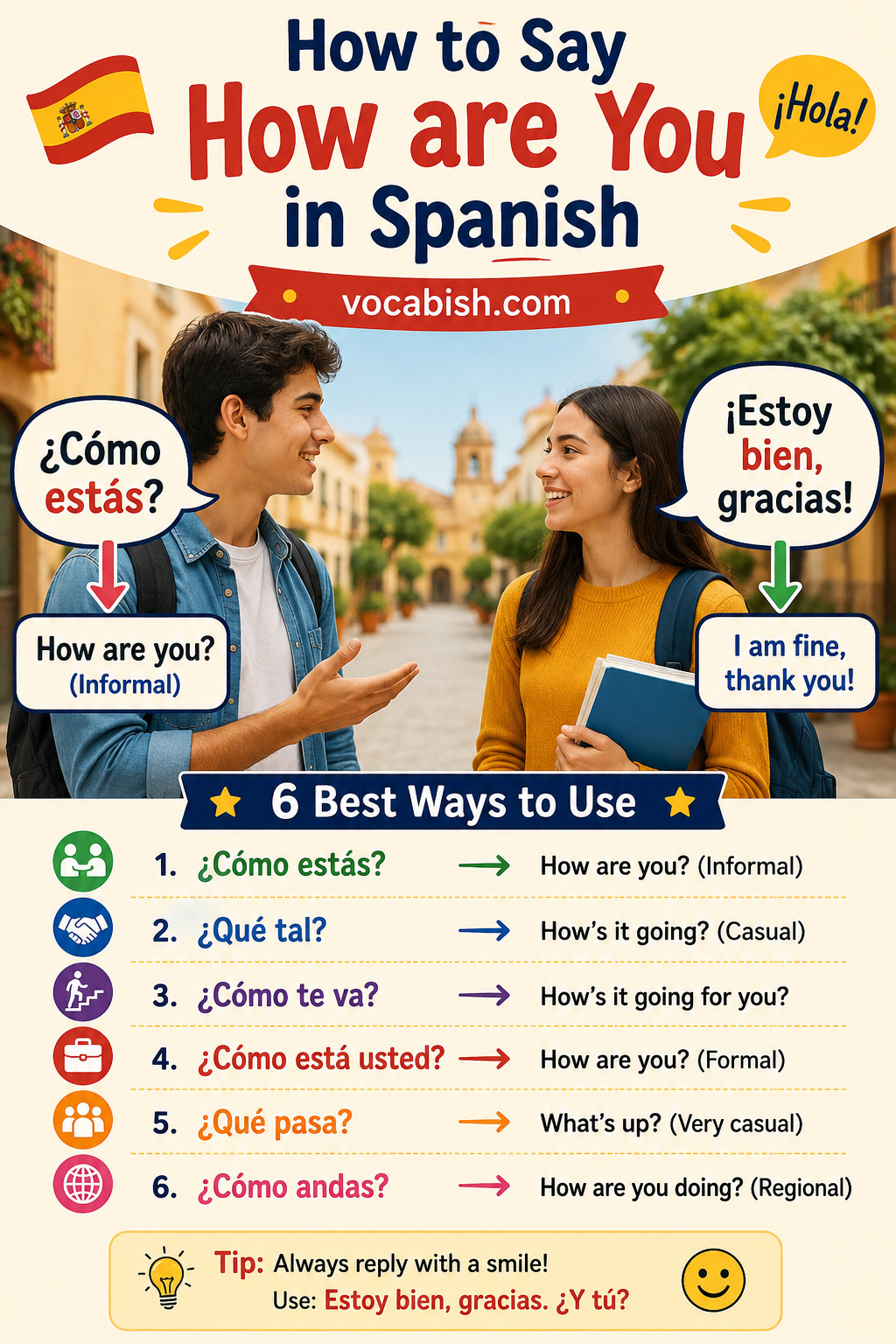
¿Cómo estás? (KOH-moh es-TAHS)
This is the most common phrase learners encounter first.
Example:
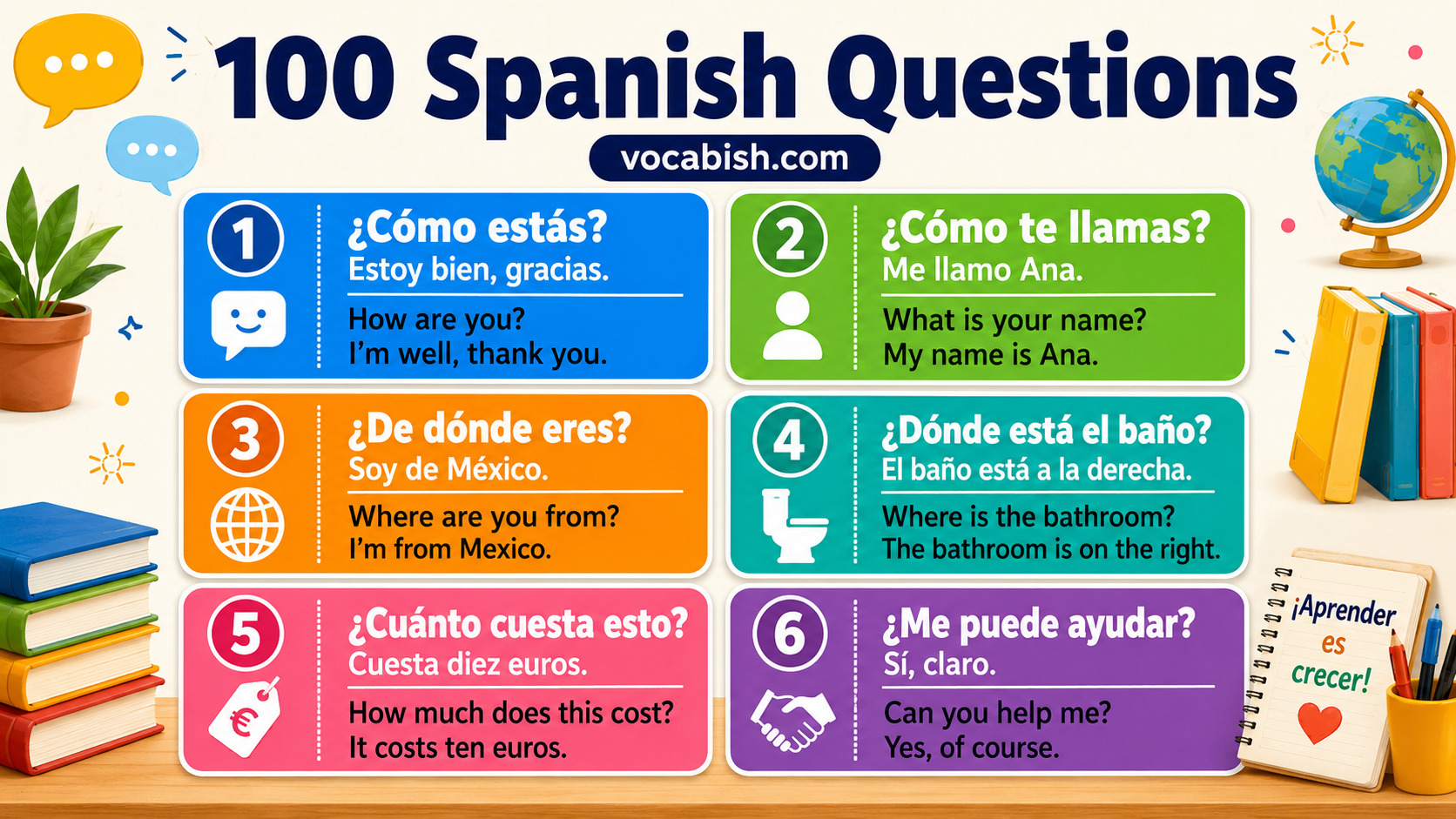
- ¿Cómo estás? → How are you?
- Estoy bien, gracias. → I am fine, thank you.
¿Qué tal? (keh TAHL)
This phrase is widely used among friends and acquaintances.
Example:
- ¡Hola! ¿Qué tal? → Hi! How’s it going?
- Muy bien. → Very well.
¿Cómo te va? (KOH-moh teh BAH)
People often use this when asking about someone’s life, work, studies, or general situation.
Example:
- ¿Cómo te va en la escuela? → How is school going for you? / How are you doing at school?
- Muy bien. → Very well. / Very good.
Formal vs Informal Greetings
Spanish distinguishes between formal and informal speech. Choosing the right form helps you sound polite and natural.
Situation | Recommended Phrase |
|---|---|
Friend | ¿Cómo estás? |
Classmate | ¿Qué tal? |
Family member | ¿Cómo estás? |
Teacher | ¿Cómo está usted? |
Older person | ¿Cómo está usted? |
Business setting | ¿Cómo está usted? |
Informal Situations
Use these with people you know well:
- ¿Cómo estás?
- ¿Qué tal?
- ¿Cómo te va?
- ¿Qué pasa?
Formal Situations
Use these with:
- Teachers
- Employers
- Customers
- Older people
- Professional contacts
Example:
¿Cómo está usted?
How are you? (Formal)
This shows respect and professionalism.
How to Respond to How Are You in Spanish
After someone asks how you are, you’ll need a suitable response.
Here are some common answers.
Spanish Response | English Meaning |
|---|---|
Estoy bien | I am fine |
Muy bien | Very well |
Bien, gracias | Fine, thank you |
Excelente | Excellent |
Más o menos | So-so |
No muy bien | Not very well |
Todo bien | Everything is good |
Positive Responses:
- Estoy muy bien.
- Excelente.
- Todo bien.
- Muy bien, gracias.
Neutral Responses:
- Más o menos.
- Así así. (So-so)
Negative Responses:
- No muy bien.
- Estoy cansado. (I am tired.)
- Estoy enfermo. (I am sick.)
Example Conversations
Understanding greetings in context makes them easier to remember.
1. Conversation between Friends:
- Carlos: Hola, ¿cómo estás?
- Ana: Muy bien, gracias. ¿Y tú?
- Carlos: También bien.
English Translation:
- Carlos: Hi, how are you?
- Ana: Very well, thank you. And you?
- Carlos: Also good.
2. Teacher and Student Conversation:
- Teacher: Buenos días. ¿Cómo está usted?
- Student: Muy bien, gracias.
3. Casual Greeting Conversation Example:
- Luis: ¡Hola! ¿Qué tal?
- María: Todo bien.
Regional Variations Across Spanish-Speaking Countries
Spanish is spoken in more than 20 countries, so greetings may vary.
Country/Region | Common Expression |
|---|---|
Spain | ¿Qué tal? |
Mexico | ¿Cómo estás? |
Argentina | ¿Cómo andás? |
Colombia | ¿Cómo vas? |
Chile | ¿Cómo estás? |
Peru | ¿Qué tal? |
Even though expressions differ, most Spanish speakers understand the common forms listed in this article.
Pronunciation Tips
Correct pronunciation helps your Spanish sound more natural.
Phrase | Pronunciation Guide |
|---|---|
¿Cómo estás? | KOH-moh es-TAHS |
¿Qué tal? | KEH tahl |
¿Cómo te va? | KOH-moh teh vah |
¿Cómo está usted? | KOH-moh es-TAH oo-STED |
Helpful tips:
- Stress the second syllable in estás.
- Pronounce ¿Qué? like “keh.”
- Speak clearly rather than quickly.
- Listen to native speakers whenever possible.
Common Mistakes to Avoid
Many learners make the same greeting mistakes when starting Spanish.
1. Using Formal Speech with Close Friends
Instead of:
- ¿Cómo está usted?
Use:
- ¿Cómo estás?
2. Forgetting to Reply
When someone asks how you are, it is common to answer and return the question.
Example:
- Bien, gracias. ¿Y tú?
3. Translating Word for Word
English and Spanish greetings do not always match exactly. Learn the complete phrase instead of translating each word separately.
Quick Reference Table
English | Spanish |
|---|---|
How are you? | ¿Cómo estás? |
How are you? (formal) | ¿Cómo está usted? |
How’s it going? | ¿Qué tal? |
What’s up? | ¿Qué pasa? |
I am fine | Estoy bien |
Very well | Muy bien |
Fine, thank you | Bien, gracias |
And you? | ¿Y tú? |
You May Also Like:
FAQs
The most common phrase is ¿Cómo estás?, which is used in informal conversations with friends, family members, and people you know well.
Use ¿Cómo está usted? when speaking to teachers, employers, customers, older adults, or people in professional situations.
You can answer with Estoy bien, Muy bien, Bien, gracias, or another response that describes how you feel.
Both are common greetings. ¿Qué tal? is slightly more casual and often translates to “How’s it going?”
¿Cómo estás? is usually the easiest greeting to learn because it is widely understood across Spanish-speaking countries.
It means “How’s it going for you?” and often refers to how things are going in someone’s life, work, or studies.
Not always. Different countries have local expressions, but common phrases like ¿Cómo estás? and ¿Qué tal? are understood almost everywhere.
Yes. A short reply such as Bien, gracias is polite and helps keep the conversation flowing naturally.
Conclusion
Knowing How are You in Spanish can make everyday conversations feel much more comfortable. While ¿Cómo estás? is the most common phrase, expressions like ¿Qué tal?, ¿Cómo te va?, and ¿Cómo está usted? help you communicate naturally in different situations.
Practice these greetings regularly, learn a few responses, and use them whenever you speak Spanish. Small phrases like these often become the foundation for stronger communication and greater confidence in the language.