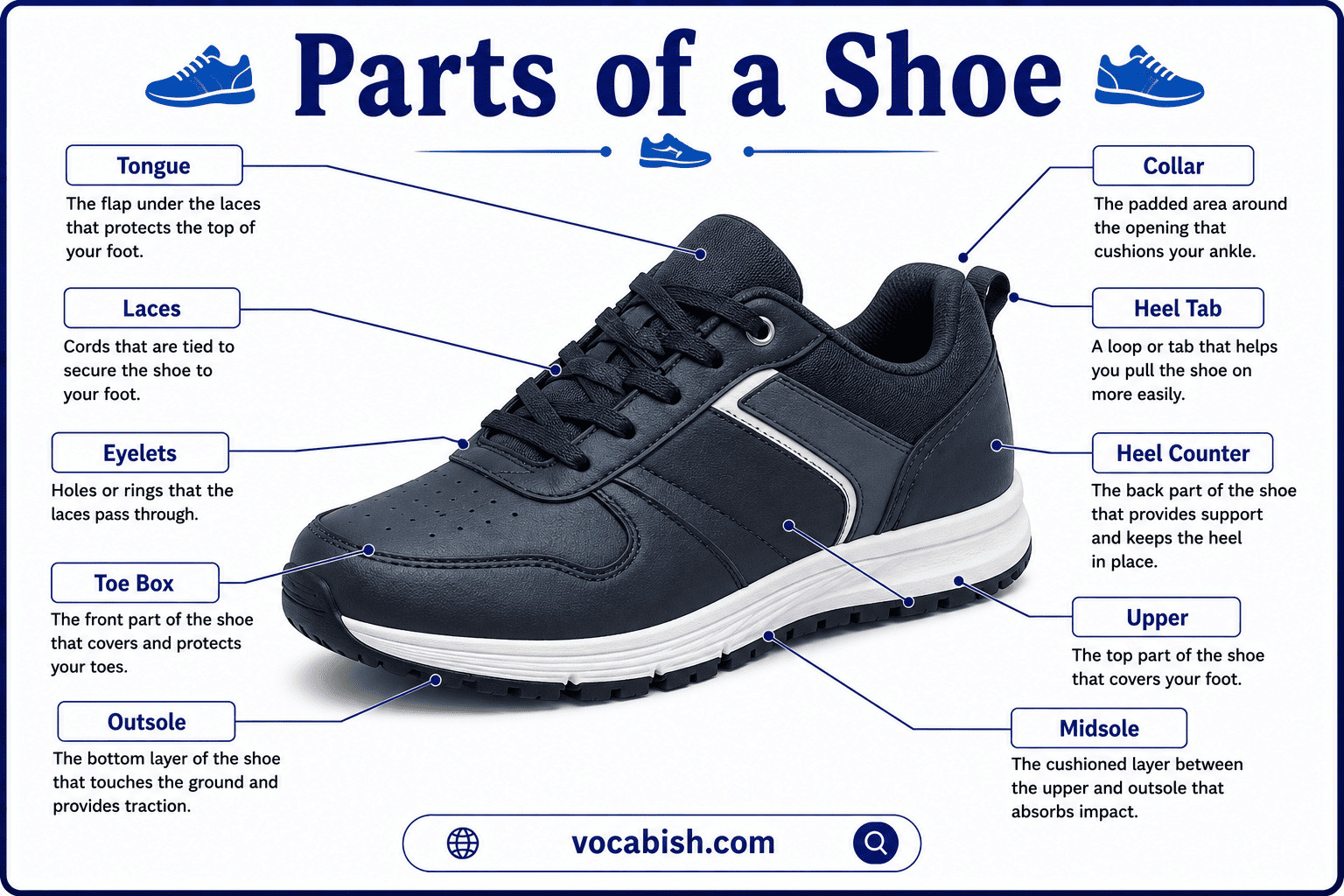

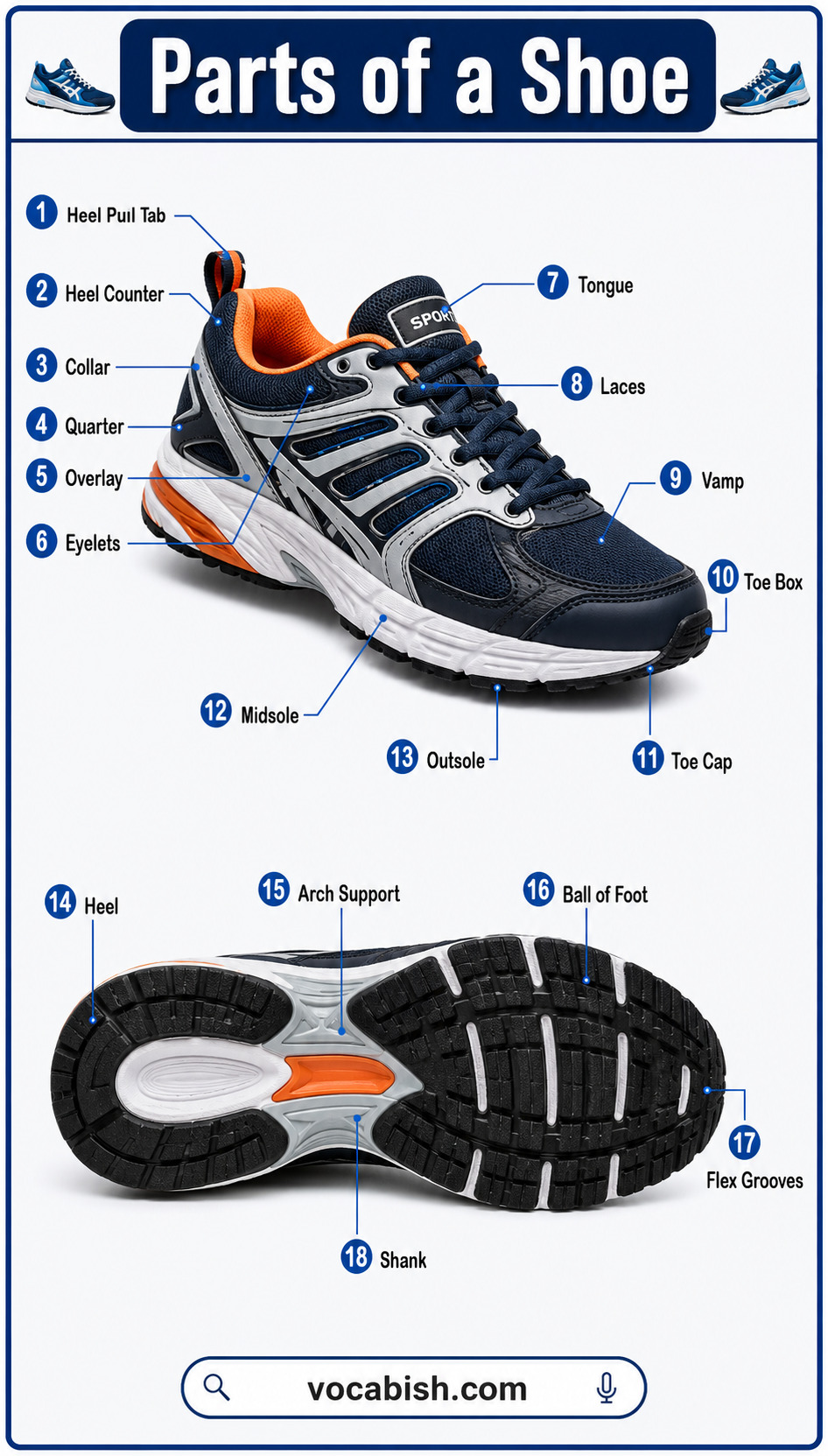
A shoe is a type of footwear made up of different parts that provide comfort, protection, support, and balance while walking, running, or standing. In this blog post, you will learn the parts of a shoe with their names, functions, and diagram to understand how each section of a shoe works. From the sole and heel to the tongue and laces, every part has a specific purpose related to fit, movement, and foot support. Learning the names of shoe parts helps you understand English vocabulary related to footwear, fashion, clothing, and shoe design commonly used in daily life, shopping, and educational learning.
What Are the Parts of a Shoe?
A shoe has different sections that work together to protect and support your feet. Some parts cover the foot, while others help with walking, comfort, and grip.
For example:
- The sole touches the ground.
- The laces keep the shoe tight.
- The heel supports the back of the foot.
Each part has its own name and function.
Why Learning Shoe Vocabulary Is Useful
Learning shoe vocabulary helps English learners in many ways.
You can:
- Describe shoes clearly
- Shop for footwear easily
- Understand fashion and sports terms
- Improve daily English speaking
- Learn practical vocabulary for real life
These words are common in stores, schools, sports, and conversations.
Main Parts of a Shoe and Their Functions
1. Toe Box
Function: Covers and protects the toes.
The toe box is the front part of the shoe. It gives space for your toes to move comfortably.
Example:
“My shoes have a wide toe box.”
2. Upper
Function: Covers the top part of the foot.
The upper is the main outer material of the shoe. It may be leather, fabric, or mesh.
Example:
“The shoe upper feels soft.”
3. Laces
Function: Tighten the shoe.
Laces help keep the shoe secure on the foot.
Example:
“Tie your laces properly.”
4. Tongue
Function: Protects the top of the foot under the laces.
The tongue sits beneath the laces and adds comfort.
Example:
“The tongue moved to one side.”
5. Heel
Function: Supports the back of the foot.
The heel helps with balance and walking.
Example:
“The heel of my shoe is hard.”
6. Sole
Function: Bottom part that touches the ground.
The sole protects the foot while walking.
Example:
“The sole is very strong.”
7. Insole
Function: Provides comfort inside the shoe.
The insole is the soft inner layer where the foot rests.
Example:
“The insole feels comfortable.”
8. Outsole
Function: Gives grip and durability.
The outsole is the outer bottom layer of the shoe.
Example:
“The outsole prevents slipping.”
9. Midsole
Function: Absorbs shock.
This layer sits between the outsole and insole.
Example:
“Running shoes have soft midsoles.”
10. Collar
Function: Wraps around the ankle.
The collar adds comfort near the shoe opening.
Example:
“The collar feels padded.”
11. Eyelets
Function: Hold the shoelaces.
Eyelets are small holes for the laces.
Example:
“One eyelet is broken.”
12. Vamp
Function: Covers the front top of the foot.
The vamp connects the toe area to the laces.
Example:
“The vamp is made of leather.”
13. Quarter
Function: Covers the sides and back of the shoe.
The quarter helps support the foot.
Example:
“The quarter area feels tight.”
14. Toe Cap
Function: Protects the front of the shoe.
Some shoes have a strong toe cap for safety.
Example:
“Safety shoes use steel toe caps.”
15. Heel Counter
Function: Supports the heel shape.
This stiff part keeps the heel stable.
Example:
“The heel counter improves balance.”
16. Arch Support
Function: Supports the middle part of the foot.
Arch support reduces foot pain and improves comfort.
Example:
“These shoes have good arch support.”
17. Cushioning
Function: Makes walking softer and more comfortable.
Sports shoes often include extra cushioning.
Example:
“The cushioning feels soft.”
18. Stitching
Function: Holds shoe parts together.
Strong stitching increases durability.
Example:
“The stitching looks neat.”
Inside Parts of a Shoe
These parts are inside the shoe and improve comfort.
- Insole – Soft layer under the foot
- Lining – Inner fabric material
- Padding – Extra softness
- Arch Support – Supports the foot shape
- Footbed – Area where the foot rests
These parts help prevent pain and improve comfort.
Bottom Parts of a Shoe
The bottom section helps with walking and grip.
- Outsole – Touches the ground
- Midsole – Absorbs shock
- Heel – Supports balance
- Tread – Pattern under the sole for grip
Sports and hiking shoes usually have strong tread patterns.
Common Shoe Vocabulary Words with Meanings
Here are useful shoe-related English words with their meanings.
Word | Meaning |
|---|---|
Sole | Bottom of the shoe |
Lace | String used to tie shoes |
Heel | Back bottom part |
Tongue | Soft flap under laces |
Insole | Soft inside layer |
Outsole | Outer bottom layer |
Toe Box | Front toe area |
Collar | Top edge around ankle |
Eyelet | Hole for laces |
Cushioning | Soft support |
Leather | Animal skin material |
Mesh | Breathable fabric |
Sneaker | Casual sports shoe |
Boot | High shoe covering ankle |
Sandal | Open shoe |
Types of Shoes and Their Features
Sneakers
- Soft and comfortable
- Used for sports and walking
- Have good cushioning
Boots
- Cover the ankle
- Strong and durable
- Good for cold weather
Sandals
- Open design
- Light and cool
- Good for summer
Running Shoes
- Lightweight
- Flexible soles
- Shock-absorbing midsoles
Formal Shoes
- Elegant appearance
- Often made of leather
- Used for offices and events
Sentences Using Shoe Vocabulary
These simple examples help you use shoe-related words in everyday conversation.
- “My shoelaces are too loose.”
- “The sole is dirty.”
- “These running shoes feel light.”
- “The heel is comfortable.”
- “I cleaned the leather upper.”
- “This shoe has soft cushioning.”
- “The outsole gives good grip.”
- “My toe box feels tight.”
Practice these sentences to improve speaking confidence.
Summary on Parts of a Shoe
Learning the parts of a shoe helps English learners build practical vocabulary for everyday life. These words are useful when shopping, describing footwear, or talking about comfort and style.
Start with the basic parts, like:
- Sole
- Heel
- Laces
- Tongue
- Toe Box
Then slowly learn advanced terms such as the following:
- Midsole
- Heel Counter
- Arch Support
Practice the words with real shoes around you. This method makes learning easy, natural, and memorable.
FAQs about Shoe Parts
The main parts of a shoe are the sole, heel, toe box, tongue, laces, upper, insole, and outsole. Each part helps with comfort, support, and protection.
The sole is the bottom part of a shoe that touches the ground. It supports the foot and helps people walk safely and comfortably.
Shoelaces keep the shoe tight and secure on the foot. They help improve comfort, balance, and proper fitting while walking or running.
The toe box is the front area of a shoe where the toes stay. It protects the toes and gives them space to move comfortably.
The insole is the soft inner layer inside the shoe. The outsole is the hard outer bottom layer that provides grip and durability.
The upper is the top outer section of a shoe that covers the foot. It is usually made from leather, mesh, fabric, or synthetic material.
The outsole and tread provide grip while walking. They help prevent slipping and improve stability on different surfaces.
Related Articles: