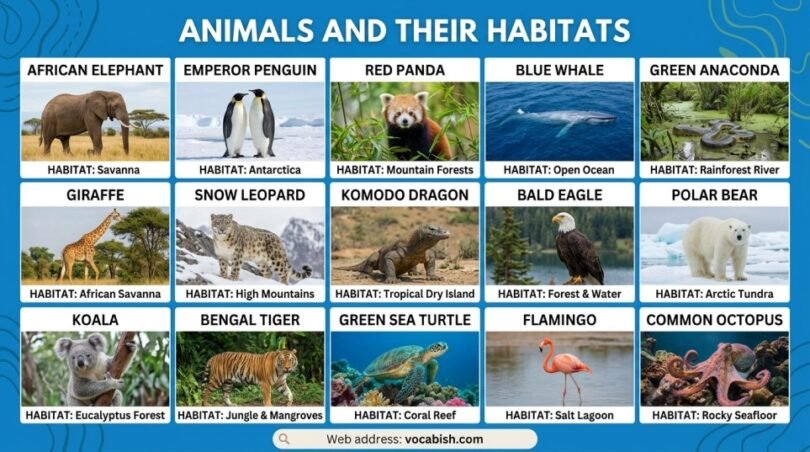

Animal habitats are the natural places where animals live, find food, get water, and stay safe. Forests, deserts, oceans, grasslands, wetlands, and polar regions all provide different living conditions for wildlife. Learning habitat names also helps connect animals with their environments and understand why different species live in different places.
What Is an Animal Habitat?
An animal habitat is the place where an animal normally lives. It provides the conditions and resources the animal needs to survive.
A habitat may provide:
- Food
- Water
- Shelter
- Space
- Suitable temperature
- Places to reproduce
- Protection from predators
For example, a polar bear lives in Arctic habitats, while a camel is adapted to desert habitats. A frog may live around freshwater ponds and wetlands.
Habitat and Ecosystem: What Is the Difference?
A habitat is the place where an animal lives.
An ecosystem includes living organisms and their physical environment, along with the relationships between them.
Term | Meaning | Example |
|---|---|---|
Habitat | Place where an animal lives | A pond |
Ecosystem | Living and non-living parts interacting | A pond ecosystem |
Environment | Surroundings that affect living things | Water, soil, air, climate |
Shelter | A place that protects an animal | A bird nest |
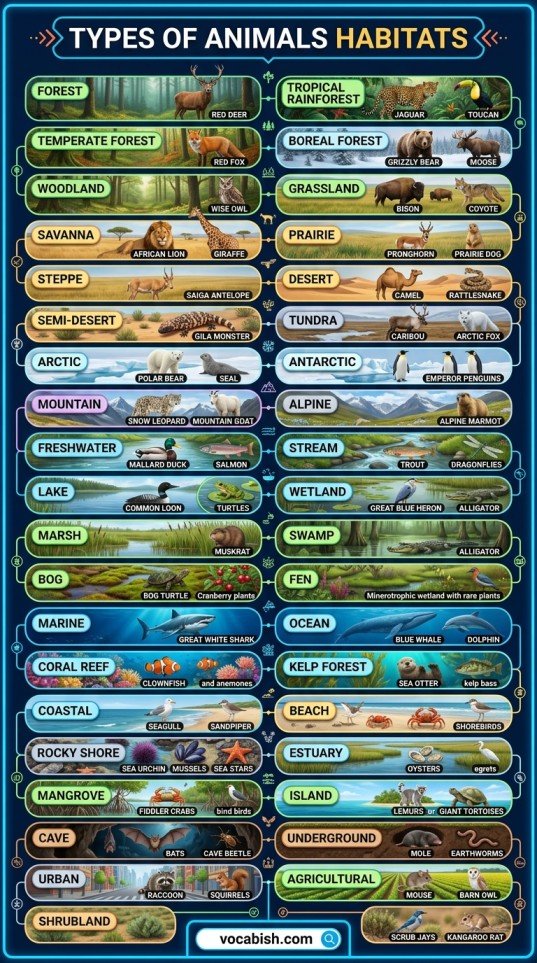
Main Types of Animal Habitats
The major animal habitat types include:
- Forest
- Tropical rainforest
- Temperate forest
- Boreal forest
- Woodland
- Grassland
- Savanna
- Prairie
- Steppe
- Desert
- Semi-desert
- Tundra
- Arctic
- Antarctic
- Mountain
- Alpine
- Freshwater
- River
- Stream
- Lake
- Pond
- Wetland
- Marsh
- Swamp
- Bog
- Fen
- Marine
- Ocean
- Coral reef
- Kelp forest
- Coastal
- Beach
- Rocky shore
- Estuary
- Mangrove
- Island
- Cave
- Underground
- Urban
- Agricultural
- Shrubland
Forest Habitat
Forests are habitats dominated by trees and other plants. They can provide food, nesting places, hiding areas, and shelter for a wide range of animals.
Animals Found in Forest Habitats
Animal | Forest Habitat |
|---|---|
Bear | Forest |
Deer | Forest |
Wolf | Forest |
Fox | Forest |
Squirrel | Forest |
Raccoon | Forest |
Moose | Forest |
Wild Boar | Forest |
Lynx | Forest |
Woodpecker | Forest |
Owl | Forest |
Orangutan | Tropical rainforest |
Gorilla | Tropical rainforest |
Chimpanzee | Tropical rainforest |
Jaguar | Tropical rainforest |
Forest Habitat Types
- Tropical rainforest
- Temperate forest
- Boreal forest
- Coniferous forest
- Deciduous forest
- Mixed forest
- Cloud forest
- Rainforest
- Woodland
Read More: 100+ Forest Animal Names with Facts, Pictures, and Types
Grassland Habitat
Grasslands are open habitats where grasses are the dominant plants. Trees are usually scattered or limited compared with forests.
Grassland Type | Examples of Animals |
|---|---|
Savanna | Lion, zebra, elephant |
Prairie | Bison, prairie dog, coyote |
Steppe | Saiga, wild horse, wolf |
Temperate grassland | Antelope, fox, badger |
Animals Commonly Associated With Grasslands
- Lion
- Zebra
- Giraffe
- Elephant
- Cheetah
- Rhinoceros
- Bison
- Antelope
- Gazelle
- Wildebeest
- Prairie Dog
- Meerkat
- Ostrich
Explore More: Grassland Animal Names in English with Pictures
Desert Habitat
Deserts receive very little precipitation compared with most other habitats. Some are hot, while others can be extremely cold.
Animal | Common Desert Habitat |
|---|---|
Camel | Hot desert |
Fennec Fox | Sahara Desert |
Desert Tortoise | North American desert |
Scorpion | Desert |
Rattlesnake | Desert |
Jerboa | Desert |
Addax | Sahara |
Dromedary | Arabian and other hot deserts |
Desert animals often have adaptations that help them cope with limited water, extreme temperatures, or scarce food.
Related Resources: 150+ Desert Animal Names in English with Pictures
Tundra Habitat
Tundra habitats are cold regions with short growing seasons and limited tree growth.
Common tundra animals include:
- Arctic Fox
- Polar Bear
- Arctic Hare
- Reindeer
- Caribou
- Musk Ox
- Snowy Owl
- Arctic Wolf
- Lemming
- Arctic Ground Squirrel
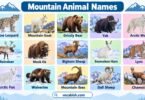
Mountain Habitat
Mountain habitats change with altitude. Temperature, vegetation, oxygen levels, and available food can differ greatly between lower and higher elevations.
Animal | Mountain Habitat |
|---|---|
Mountain Goat | Rocky mountains |
Snow Leopard | High mountains |
Yak | High mountains |
Ibex | Mountain slopes |
Golden Eagle | Mountain regions |
Marmot | Alpine regions |
Andean Condor | Andes Mountains |
Chamois | European mountains |
Read More: 70+ Mountain Animal Names in English with Pictures
Freshwater Habitat
Freshwater habitats contain water with relatively low salt levels. Rivers, lakes, streams, and ponds are common freshwater environments.
Freshwater Habitat Types
- River
- Stream
- Creek
- Lake
- Pond
- Spring
- Freshwater marsh
- Freshwater swamp
Freshwater Animals
- Trout
- Salmon
- Catfish
- Carp
- Pike
- Frog
- Newt
- Freshwater Turtle
- Beaver
- Otter
- Hippopotamus
- Crocodile
- Dragonfly
You may also like: 250+ Freshwater Animal Names in English with Pictures
Marine Habitat
Marine habitats contain salt water and cover most of Earth’s aquatic environment. They include open oceans, deep-sea areas, coral reefs, and other saltwater environments.
Marine Habitat Types
- Open ocean
- Deep sea
- Coral reef
- Kelp forest
- Seagrass meadow
- Ocean floor
- Rocky shore
- Sandy seabed
Marine Animals
- Whale
- Dolphin
- Shark
- Tuna
- Octopus
- Squid
- Seal
- Sea Lion
- Walrus
- Sea Turtle
- Manta Ray
- Stingray
- Seahorse
- Jellyfish
- Starfish
- Crab
- Lobster
Wetland Habitat
Wetlands are areas where water covers or saturates the soil for part or all of the year. They support many birds, amphibians, reptiles, fish, insects, and mammals.
Wetland Types
- Marsh
- Swamp
- Bog
- Fen
- Mangrove
- Floodplain
- Freshwater wetland
- Salt marsh
Wetland Animals
- Frog
- Toad
- Heron
- Egret
- Duck
- Crane
- Alligator
- Crocodile
- Beaver
- Otter
- Muskrat
- Dragonfly
Coastal Habitat
Coastal habitats occur where land meets the sea. These areas can include beaches, rocky shores, mudflats, dunes, mangroves, and estuaries.
Coastal Habitat Types
- Sandy beach
- Rocky shore
- Mudflat
- Coastal dune
- Estuary
- Mangrove
- Salt marsh
- Tidal pool
Coastal Animals
- Seal
- Sea Lion
- Crab
- Sea Turtle
- Pelican
- Seagull
- Oyster
- Clam
- Starfish
- Shorebird
Island Habitat
Islands can contain forests, grasslands, wetlands, mountains, beaches, and other habitats. Many island species have limited geographic ranges.
Examples include:
- Galápagos Penguin
- Galápagos Tortoise
- Kiwi
- Komodo Dragon
- Kakapo
- Tasmanian Devil
- Hawaiian Monk Seal
- Island Fox
Cave Habitat
Caves provide dark, sheltered environments with different conditions from the surface. Some animals spend their entire lives in caves, while others use caves for shelter.
Common cave animals include:
- Cave Salamander
- Cavefish
- Bat
- Cave Cricket
- Cave Spider
- Olm
- Blind Cave Tetra
Urban Habitat
Urban habitats are human-developed areas such as cities, towns, buildings, parks, gardens, and roadsides. Some animals have adapted to living close to people.
Examples include:
- Pigeon
- Sparrow
- Crow
- Rat
- Mouse
- Raccoon
- Fox
- Squirrel
- Bat
- Urban Gull
Animal Habitats and Examples
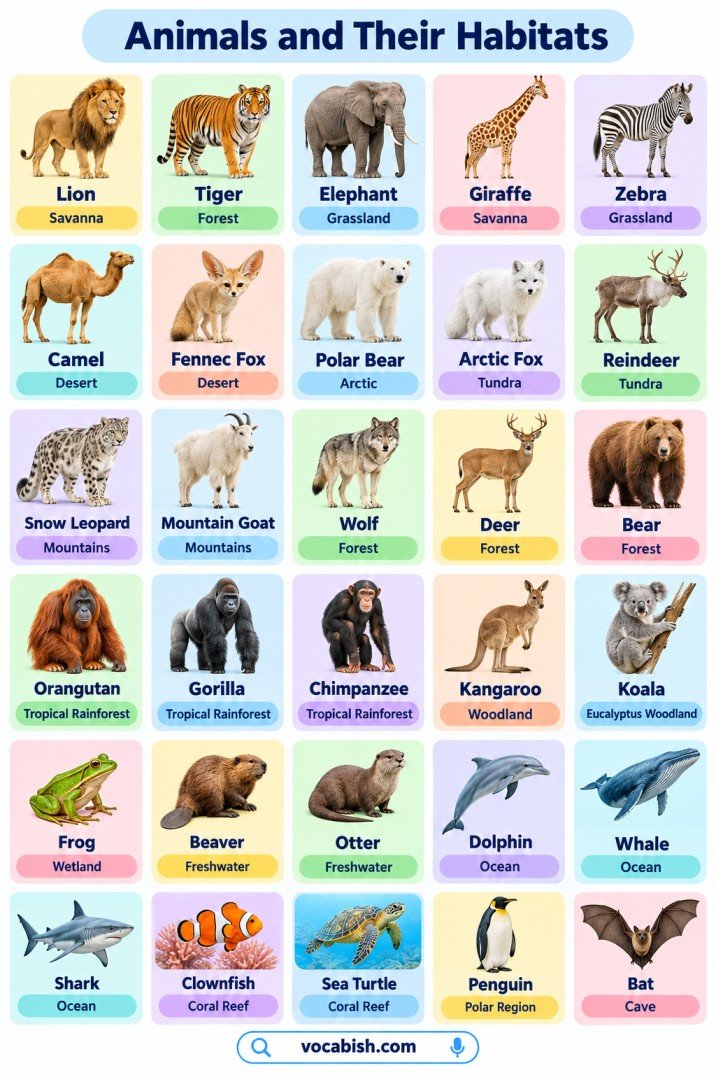
The table below connects common animals with their typical habitats.
Animal | Typical Habitat |
|---|---|
African Elephant | Savanna |
African Lion | Savanna |
Arctic Fox | Tundra |
Bald Eagle | Wetlands and forests |
Beaver | Freshwater |
Camel | Desert |
Cheetah | Grassland and savanna |
Chimpanzee | Tropical rainforest |
Clownfish | Coral reef |
Deer | Forest |
Dolphin | Marine |
Frog | Freshwater and wetlands |
Giraffe | Savanna |
Gorilla | Tropical rainforest |
Hippopotamus | Freshwater wetlands |
Kangaroo | Grassland and woodland |
Koala | Eucalyptus woodland |
Leopard | Forest and grassland |
Meerkat | Desert and semi-desert |
Moose | Boreal forest and wetlands |
Orangutan | Tropical rainforest |
Penguin | Polar and marine |
Polar Bear | Arctic sea ice and coastal areas |
Rabbit | Grassland and woodland |
Reindeer | Tundra and boreal forest |
Rhinoceros | Grassland and savanna |
Shark | Marine |
Snow Leopard | Mountain |
Squirrel | Forest and woodland |
Tiger | Forest and grassland |
Wolf | Forest, tundra, and grassland |
Zebra | Savanna and grassland |
Animal Habitat Vocabulary
These words are useful when talking about where animals live.
Word | Meaning |
|---|---|
Habitat | A place where an animal normally lives |
Shelter | A place that protects an animal |
Burrow | A hole or tunnel used as a home |
Nest | A structure where many birds lay eggs |
Den | A sheltered home used by some mammals |
Hive | A home of bees |
Web | A structure made by a spider |
Nesting site | A place where animals reproduce or raise young |
Territory | An area defended or used by an animal |
Range | The geographic area where a species lives |
Ecosystem | Living organisms and their physical surroundings |
Where Do These Animals Live?
- Lion — Savanna
- Camel — Desert
- Polar Bear — Arctic
- Penguin — Polar and marine regions
- Frog — Freshwater and wetlands
- Shark — Ocean
- Tiger — Forest
- Zebra — Grassland and savanna
- Snow Leopard — Mountains
- Orangutan — Tropical rainforest
Common Animal Habitat Confusions
- Habitat means where an animal lives; home can mean its particular shelter or living place.
- Ocean is a marine habitat; river is a freshwater habitat.
- Savanna is a type of grassland, not a desert.
- Tundra is a cold habitat with limited tree growth, while taiga is a cold forest habitat.
- Ecosystem is broader than a habitat because it includes organisms and their physical surroundings.
Practice Questions
Choose the Correct Answer
1. Where does a camel commonly live?
A. Desert
B. Arctic
C. Coral reef
D. Rainforest
2. Which habitat contains salt water?
A. River
B. Pond
C. Ocean
D. Lake
3. Which animal is strongly associated with the Arctic?
A. Camel
B. Polar bear
C. Giraffe
D. Zebra
4. Which habitat is dominated by grasses?
A. Grassland
B. Cave
C. Coral reef
D. Ocean
5. Where would you commonly find a trout?
A. Desert
B. Freshwater
C. Tundra
D. Tropical rainforest
6. Which animal commonly lives in a tropical rainforest?
A. Orangutan
B. Polar bear
C. Camel
D. Reindeer
7. What is a habitat?
A. A type of animal
B. A place where an animal lives
C. A type of food
D. A body part
8. Which habitat is associated with very cold regions and limited tree growth?
A. Tundra
B. Savanna
C. Tropical rainforest
D. Coral reef
Answers
- A — Desert
- C — Ocean
- B — Polar bear
- A — Grassland
- B — Freshwater
- A — Orangutan
- B — A place where an animal lives
- A — Tundra
FAQs
An animal habitat is the natural place where an animal lives and finds resources such as food, water, shelter, space, and suitable conditions.
The main types include forests, grasslands, deserts, mountains, tundra, freshwater, marine, wetlands, coastal areas, islands, caves, and urban habitats.
A habitat is where an animal lives, while an ecosystem includes living organisms and their physical environment interacting together.
Common desert animals include camels, fennec foxes, desert tortoises, scorpions, rattlesnakes, jerboas, and addaxes.
Freshwater animals include trout, salmon, catfish, frogs, freshwater turtles, beavers, otters, crocodiles, and many aquatic insects.
Forest animals include bears, deer, wolves, foxes, squirrels, moose, woodpeckers, owls, tigers, gorillas, and orangutans.
Marine habitats support whales, dolphins, sharks, seals, sea turtles, octopuses, squid, rays, seahorses, crabs, and many fish.
Animals live in different habitats because their bodies and behaviors are adapted to particular food sources, temperatures, water conditions, shelter, and environmental resources.
Conclusion
Animal habitats range from forests and grasslands to deserts, mountains, freshwater systems, oceans, wetlands, and polar regions. Each habitat provides different conditions and resources for the animals that live there. Learning these habitat names and animal examples makes it easier to understand how wildlife is connected to its environment.