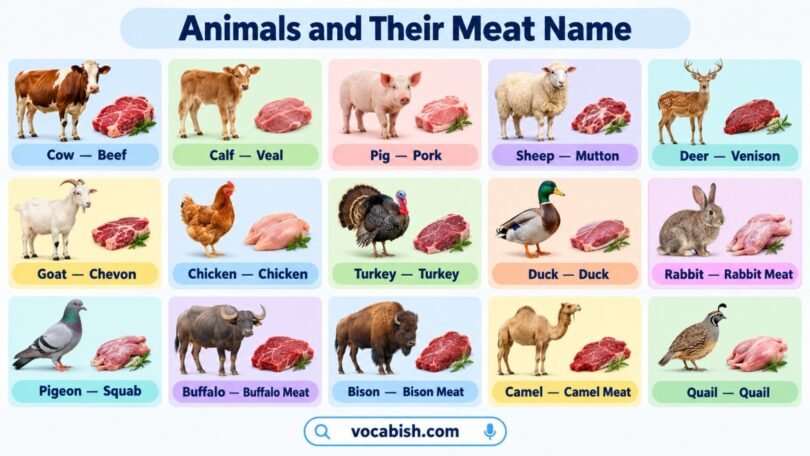

Animals and their meat names are an important part of English food vocabulary. The meat from an animal can have the same name as the animal, or it can have a completely different name. For example, cow gives us beef, while pig gives us pork and sheep gives us mutton. This vocabulary also includes fish, seafood, poultry, farm animals, and game animals. Learning these names helps with cooking, shopping, restaurant menus, food labels, and everyday English.
Common Animals and Their Meat Names
These are some of the most common animal names and meat terms used in English. The short facts also show how each word is normally used.
- Cow — Beef: Cows are raised mainly for beef production.
- Calf — Veal: Veal comes from young cattle calves.
- Pig — Pork: Pork is widely eaten around the world.
- Sheep — Mutton: Mutton usually means meat from adult sheep.
- Lamb — Lamb: Lamb refers to meat from young sheep.
- Goat — Chevon: Chevon is the formal name for goat meat.
- Chicken — Chicken: Chicken is one of the most-consumed meats.
- Turkey — Turkey: Turkey meat commonly appears during holiday meals.
- Duck — Duck: Duck meat has a rich, distinctive flavour.
- Goose — Goose: Goose meat is darker and quite fatty.
- Deer — Venison: Venison usually refers to meat from deer.
- Rabbit — Rabbit: Rabbit meat is lean and mildly flavoured.
- Horse — Horse meat: Horse meat is eaten in some countries.
- Buffalo — Buffalo: Buffalo meat is often called buffalo beef.
- Camel — Camel: Camel meat is traditionally eaten in several regions.
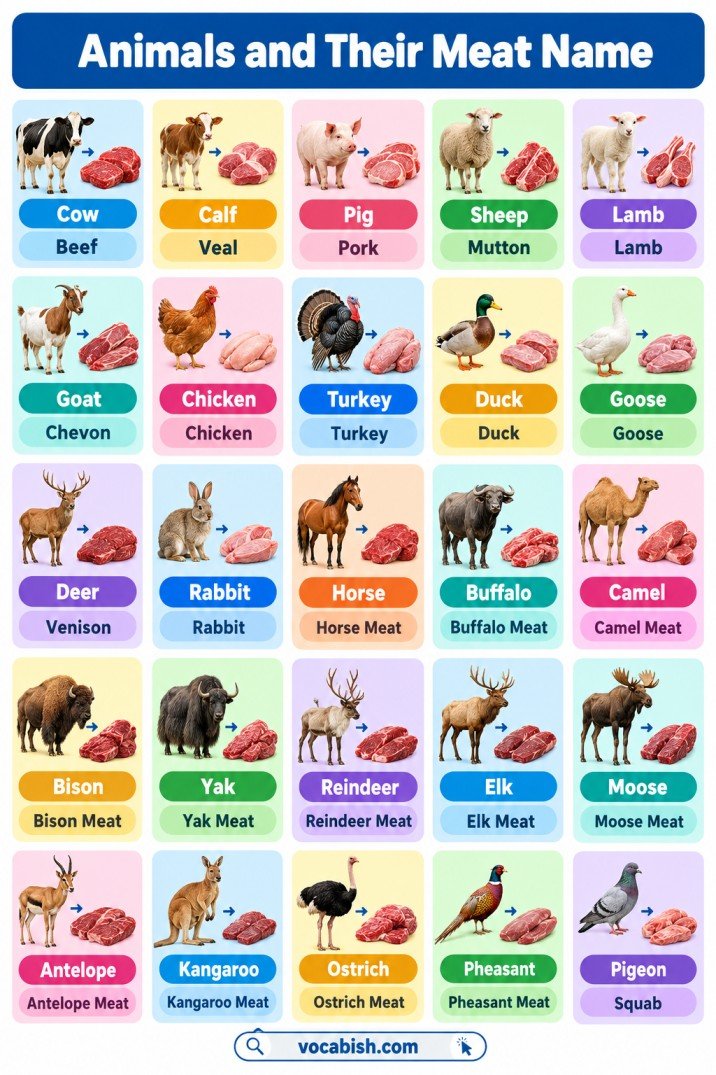
50 Animals and Their Meat Name
Here is the complete list of animals and their meat names, including common livestock, poultry, game animals, and less-common food animals.
# | Animal | Meat Name |
|---|---|---|
1 | Cow | Beef |
2 | Calf | Veal |
3 | Pig | Pork |
4 | Sheep | Mutton |
5 | Lamb | Lamb |
6 | Goat | Chevon |
7 | Chicken | Chicken |
8 | Turkey | Turkey |
9 | Duck | Duck |
10 | Goose | Goose |
11 | Deer | Venison |
12 | Rabbit | Rabbit |
13 | Horse | Horse meat |
14 | Buffalo | Buffalo meat |
15 | Camel | Camel meat |
16 | Bison | Bison meat |
17 | Yak | Yak meat |
18 | Reindeer | Reindeer meat |
19 | Elk | Elk meat |
20 | Moose | Moose meat |
21 | Antelope | Antelope meat |
22 | Kangaroo | Kangaroo meat |
23 | Ostrich | Ostrich meat |
24 | Pheasant | Pheasant meat |
25 | Quail | Quail meat |
26 | Partridge | Partridge meat |
27 | Pigeon | Squab |
28 | Guinea fowl | Guinea fowl meat |
29 | Emu | Emu meat |
30 | Wild boar | Wild boar meat |
31 | Hare | Hare meat |
32 | Alligator | Alligator meat |
33 | Crocodile | Crocodile meat |
34 | Kangaroo rat | Kangaroo rat meat |
35 | Llama | Llama meat |
36 | Alpaca | Alpaca meat |
37 | Water buffalo | Buffalo meat |
38 | Musk ox | Musk ox meat |
39 | Yak calf | Yak meat |
40 | Zebra | Zebra meat |
41 | Guinea pig | Guinea pig meat |
42 | Reindeer calf | Reindeer meat |
43 | Elk calf | Elk meat |
44 | Moose calf | Moose meat |
45 | Wild turkey | Wild turkey meat |
46 | Teal | Teal meat |
47 | Woodcock | Woodcock meat |
48 | Grouse | Grouse meat |
49 | Ptarmigan | Ptarmigan meat |
50 | Capybara | Capybara meat |
Important: Meat terminology varies by country and culinary tradition. Some animals simply use the animal’s name followed by meat, rather than having a separate traditional meat word.
Meat Names by Animal Category
Different animal groups use different vocabulary patterns. Traditional English has special meat terms for several familiar farm animals, while many other animals use their ordinary names.
Farm Animals
- Cow — Beef
- Calf — Veal
- Pig — Pork
- Sheep — Mutton
- Lamb — Lamb
- Goat — Chevon
- Buffalo — Buffalo meat
- Camel — Camel meat
- Yak — Yak meat
- Water buffalo — Buffalo meat
Here’s the list of farm animal names with pictures.
Poultry and Game Birds
- Chicken — Chicken
- Turkey — Turkey
- Duck — Duck
- Goose — Goose
- Pheasant — Pheasant meat
- Quail — Quail meat
- Partridge — Partridge meat
- Pigeon — Squab
- Guinea fowl — Guinea fowl meat
- Ostrich — Ostrich meat
- Emu — Emu meat
- Wild turkey — Wild turkey meat
- Teal — Teal meat
- Woodcock — Woodcock meat
- Grouse — Grouse meat
- Ptarmigan — Ptarmigan meat
Wild and Game Animals
- Deer — Venison
- Rabbit — Rabbit
- Hare — Hare meat
- Bison — Bison meat
- Reindeer — Reindeer meat
- Elk — Elk meat
- Moose — Moose meat
- Antelope — Antelope meat
- Kangaroo — Kangaroo meat
- Wild boar — Wild boar meat
- Zebra — Zebra meat
- Musk ox — Musk ox meat
Related: Wild Animal Names with Pictures
Fish and Seafood
- Salmon — Salmon
- Tuna — Tuna
- Cod — Cod
- Haddock — Haddock
- Herring — Herring
- Mackerel — Mackerel
- Sardine — Sardine
- Anchovy — Anchovy
- Trout — Trout
- Carp — Carp
- Halibut — Halibut
- Swordfish — Swordfish
- Catfish — Catfish
- Bass — Bass
- Snapper — Snapper
- Grouper — Grouper
- Flounder — Flounder
- Sole — Sole
- Eel — Eel
- Pike — Pike
- Shrimp — Shrimp
- Prawn — Prawn
- Crab — Crab
- Lobster — Lobster
- Mussel — Mussel
Other Meat Animals
- Horse — Horse meat
- Llama — Llama meat
- Alpaca — Alpaca meat
- Guinea pig — Guinea pig meat
- Capybara — Capybara meat
- Alligator — Alligator meat
- Crocodile — Crocodile meat
- Kangaroo rat — Kangaroo rat meat
Red Meat, White Meat, and Game Meat
Meat vocabulary is also grouped by culinary and nutritional categories.
- Red meat: Beef, lamb, mutton, goat, venison, bison, and similar meats.
- White meat: Chicken and turkey are common examples.
- Poultry: Meat from domesticated birds such as chicken, turkey, duck, and goose.
- Game meat: Meat from hunted or traditionally wild animals, such as venison, pheasant, grouse, and hare.
- Processed meat: Meat changed through methods such as curing, smoking, salting, or fermentation.
- Organ meat: Edible animal organs, including liver, kidney, heart, and tongue.
Common Meat Vocabulary
Word | Meaning |
|---|---|
Meat | Animal flesh used as food |
Beef | Meat from cattle |
Pork | Meat from pigs |
Mutton | Meat from adult sheep |
Lamb | Meat from young sheep |
Veal | Meat from young cattle |
Venison | Meat traditionally associated with deer |
Poultry | Domestic birds raised for food |
Game | Meat from wild or hunted animals |
Squab | Young pigeon used as food |
Common Mistakes and Confusing Meat Names
- Mutton and lamb are different: Mutton usually comes from adult sheep, while lamb comes from young sheep.
- Beef does not mean cow meat only: Beef generally means meat from cattle.
- Veal is not ordinary beef: Veal specifically comes from young cattle.
- Venison is not only one deer species: The term can refer to meat from deer and, historically, certain other game animals.
Practice: Match the Animal With Its Meat
Choose the correct meat name for each animal.
- Cow →
A. Pork
B. Beef
C. Venison - Pig →
A. Pork
B. Mutton
C. Veal - Sheep →
A. Beef
B. Mutton
C. Squab - Calf →
A. Veal
B. Pork
C. Chevon - Goat →
A. Venison
B. Chevon
C. Beef - Deer →
A. Venison
B. Pork
C. Lamb - Pigeon →
A. Squab
B. Veal
C. Mutton - Young sheep →
A. Lamb
B. Beef
C. Pork
Answers
- B — Beef
- A — Pork
- B — Mutton
- A — Veal
- B — Chevon
- A — Venison
- A — Squab
- A — Lamb
FAQs About Types of Meat
The meat of cattle is called beef. Beef includes many cuts used for steaks, roasts, burgers, and other dishes.
The meat of a pig is called pork. Common pork products include chops, ribs, bacon, ham, and sausages.
Meat from an adult sheep is generally called mutton, while meat from a young sheep is called lamb.
Goat meat is commonly called goat meat, while chevon is the established culinary term for it.
Deer meat is commonly called venison. The word is widely used for meat from deer species.
The meat of a young cattle animal is called veal. Veal is generally lighter and more delicate than beef.
Meat from a young domestic pigeon is called squab. The term is commonly used in culinary contexts.
Historical English developed separate meat terms for familiar livestock, especially cattle, pigs, sheep, and deer.
Conclusion
Learning Animals and Their Meat Name helps build useful English vocabulary for food, restaurants, shopping, cooking, and everyday conversations. The most important terms to remember include beef, pork, mutton, lamb, veal, chevon, and venison. Understanding these differences also makes food-related English much easier to recognize and use correctly.