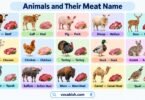
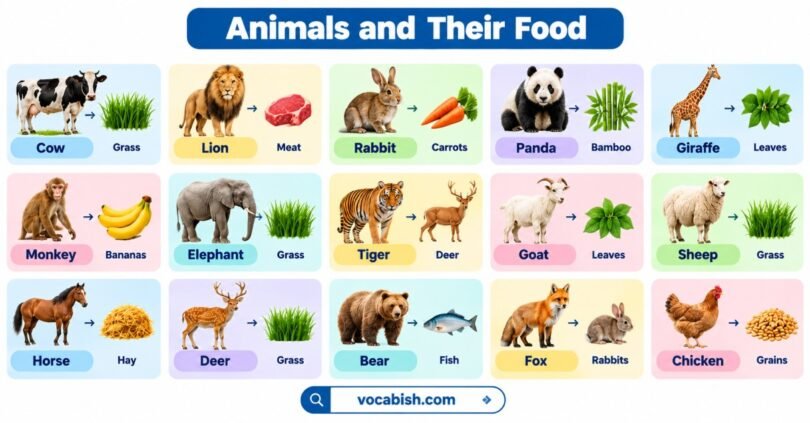

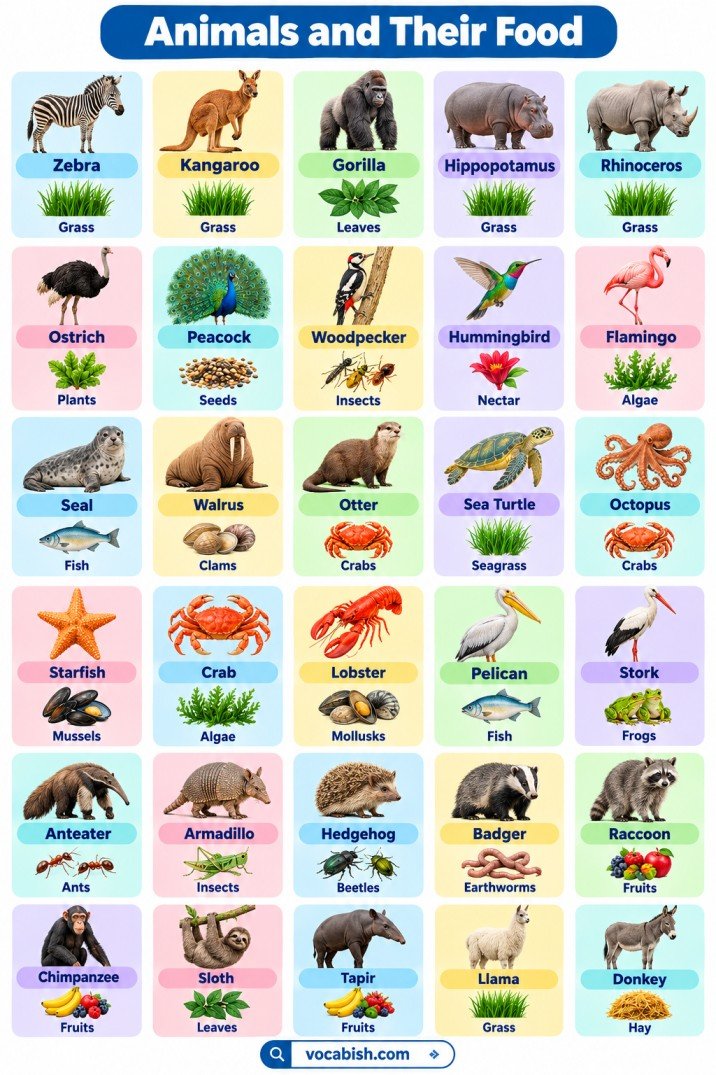
Animals and Their Food helps us learn what different animals eat and how they find food to survive. Some animals eat plants, fruits, and seeds, while others feed on insects, fish, or other animals. Many animals eat both plants and meat. Their diets depend on their species, habitat, and feeding habits. Learning about animal food also helps us understand herbivores, carnivores, omnivores, and food chains.
Common Animals and Their Food Name with Pictures
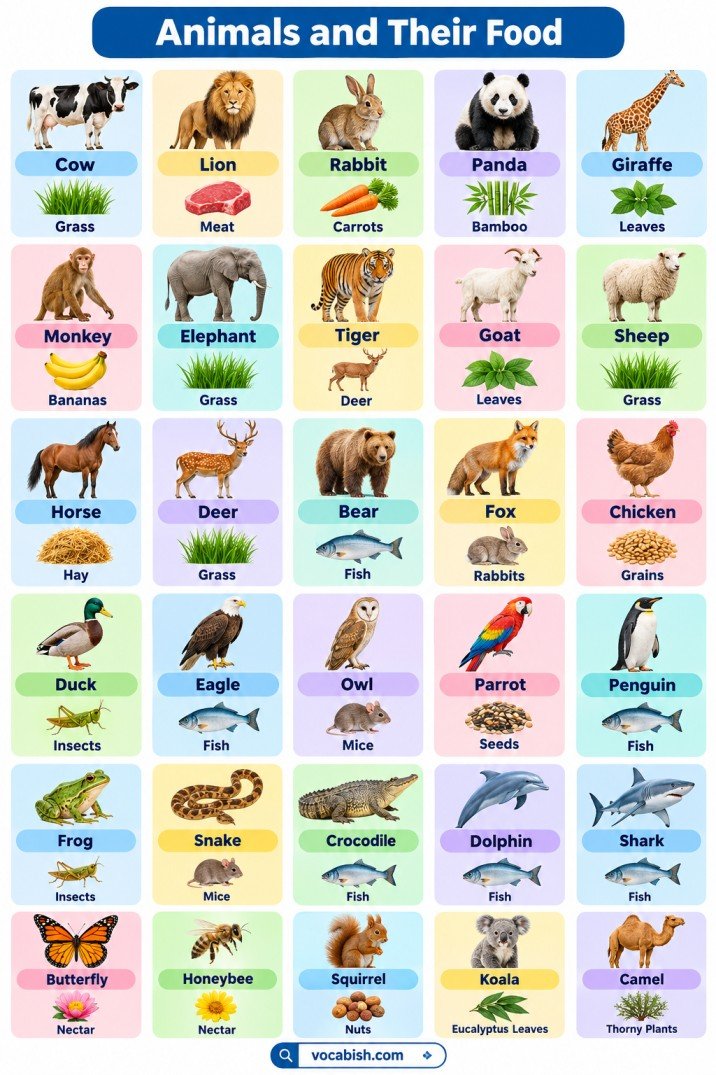
Animals eat different foods to obtain energy, grow, and stay alive. The following list covers common domestic animals, wild animals, and familiar pets with short descriptions of their diets.
- Cow: Cows eat grass, hay, leaves, and other plants.
- Buffalo: Buffaloes graze on grass and eat aquatic plants.
- Goat: Goats eat grass, leaves, shrubs, and plant shoots.
- Sheep: Sheep feed mainly on grass, herbs, and clover.
- Horse: Horses eat grass, hay, and other vegetation.
- Donkey: Donkeys eat grass, hay, leaves, and dry plants.
- Rabbit: Rabbits eat grass, leafy plants, and vegetables.
- Deer: Deer eat leaves, grass, shoots, and fruits.
- Elephant: Elephants eat grass, leaves, bark, roots, and fruit.
- Giraffe: Giraffes browse on leaves, especially from acacia trees.
- Zebra: Zebras mainly eat grasses and other green plants.
- Camel: Camels eat thorny plants, grasses, leaves, and shrubs.
- Panda: Giant pandas mainly eat bamboo shoots and leaves.
- Koala: Koalas mainly eat leaves from eucalyptus trees.
- Monkey: Many monkeys eat fruits, leaves, seeds, and insects.
- Chimpanzee: Chimpanzees eat fruits, leaves, seeds, and insects.
- Gorilla: Gorillas mainly eat leaves, stems, shoots, and fruit.
- Lion: Lions hunt and eat zebras, antelopes, and other prey.
- Tiger: Tigers hunt deer, wild pigs, and other animals.
- Leopard: Leopards eat deer, monkeys, rodents, and other prey.
- Cheetah: Cheetahs mainly hunt gazelles and other small antelopes.
- Wolf: Wolves eat deer, elk, rabbits, and smaller animals.
- Fox: Foxes eat rodents, rabbits, insects, fruits, and birds.
- Bear: Many bears eat berries, plants, fish, insects, and mammals.
- Hyena: Hyenas eat hunted prey, carrion, and sometimes smaller animals.
- Dog: Dogs can eat balanced dog food and suitable animal-based foods.
- Cat: Cats need meat-based food because they are obligate carnivores.
- Mouse: Mice eat seeds, grains, fruits, and small insects.
- Rat: Rats eat grains, fruits, vegetables, and various other foods.
- Squirrel: Squirrels eat nuts, seeds, fruits, and sometimes insects.
- Hedgehog: Hedgehogs mainly eat insects, worms, and other small invertebrates.
- Bat: Many bats eat insects, while others eat fruit or nectar.
- Chicken: Chickens eat grains, seeds, insects, and small invertebrates.
- Duck: Ducks eat aquatic plants, seeds, insects, and small aquatic animals.
- Goose: Geese mainly graze on grass and other vegetation.
- Pigeon: Pigeons mainly eat seeds, grains, and small plant material.
- Parrot: Many parrots eat fruits, nuts, seeds, and flowers.
- Eagle: Eagles hunt fish, birds, mammals, and other prey.
- Owl: Owls mainly hunt mice, voles, and other small animals.
- Crow: Crows eat insects, seeds, fruits, eggs, and small animals.
- Sparrow: Sparrows eat seeds, grains, and insects.
- Peacock: Peacocks eat seeds, grains, insects, and small reptiles.
- Penguin: Penguins eat fish, krill, and squid.
- Flamingo: Flamingos feed on algae and tiny aquatic organisms.
- Frog: Adult frogs usually eat insects, worms, and other small animals.
- Snake: Snakes eat prey such as rodents, birds, eggs, or fish.
- Lizard: Many lizards eat insects, while others eat plants or mixed diets.
- Turtle: Depending on the species, turtles eat plants, insects, fish, or other foods.
- Crocodile: Crocodiles hunt fish, birds, mammals, and other animals.
- Goldfish: Goldfish eat aquatic plants, algae, and small aquatic organisms.
- Shark: Sharks eat fish, squid, crustaceans, or marine mammals, depending on the species.
- Dolphin: Dolphins mainly eat fish and squid.
- Whale: Different whales eat krill, plankton, fish, or squid.
- Octopus: Octopuses eat crabs, shrimp, molluscs, and other small animals.
- Crab: Crabs eat algae, molluscs, small animals, and decaying organic matter.
- Butterfly: Adult butterflies mainly drink nectar from flowers.
- Honeybee: Honeybees collect nectar and pollen from flowers.
- Ant: Ants eat seeds, nectar, insects, and food scraps, depending on the species.
- Grasshopper: Grasshoppers mainly feed on grasses, leaves, and other plants.
- Spider: Spiders catch and eat insects and other small arthropods.
- Earthworm: Earthworms consume decaying organic matter in the soil.
- Snail: Many land snails eat leaves, vegetables, and decaying plant material.
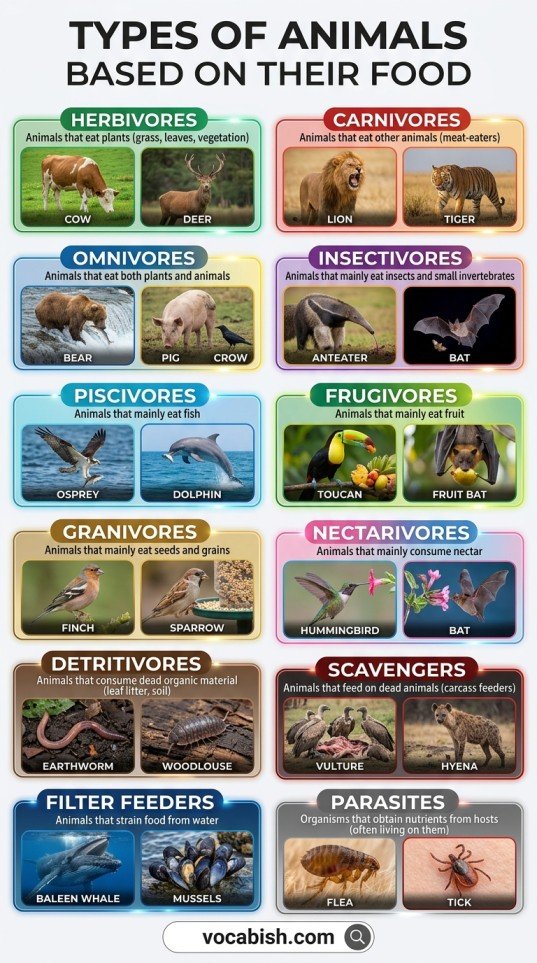
Types of Animals Based on Their Food
Animals can be grouped according to the foods they eat. The three main dietary groups are herbivores, carnivores, and omnivores.
Type | Meaning | Examples |
|---|---|---|
Herbivores | Animals that eat plants | Cow, rabbit, deer |
Carnivores | Animals that eat other animals | Lion, tiger, eagle |
Omnivores | Animals that eat plants and animals | Bear, pig, crow |
Insectivores | Animals that mainly eat insects | Anteater, many bats |
Piscivores | Animals that mainly eat fish | Osprey, many dolphins |
Frugivores | Animals that mainly eat fruit | Fruit bat, toucan |
Granivores | Animals that mainly eat seeds or grains | Finch, many sparrows |
Nectarivores | Animals that mainly consume nectar | Hummingbird, some bats |
Detritivores | Animals that consume dead organic material | Earthworm, woodlouse |
Scavengers | Animals that feed on dead animals | Vulture, some hyenas |
Filter feeders | Animals that strain food from water | Baleen whale, mussel |
Parasites | Organisms that obtain nutrients from hosts | Flea, tick |
An animal may belong to more than one dietary group. For example, a bear may eat fruit, insects, fish, and mammals.
Animals That Eat Plants
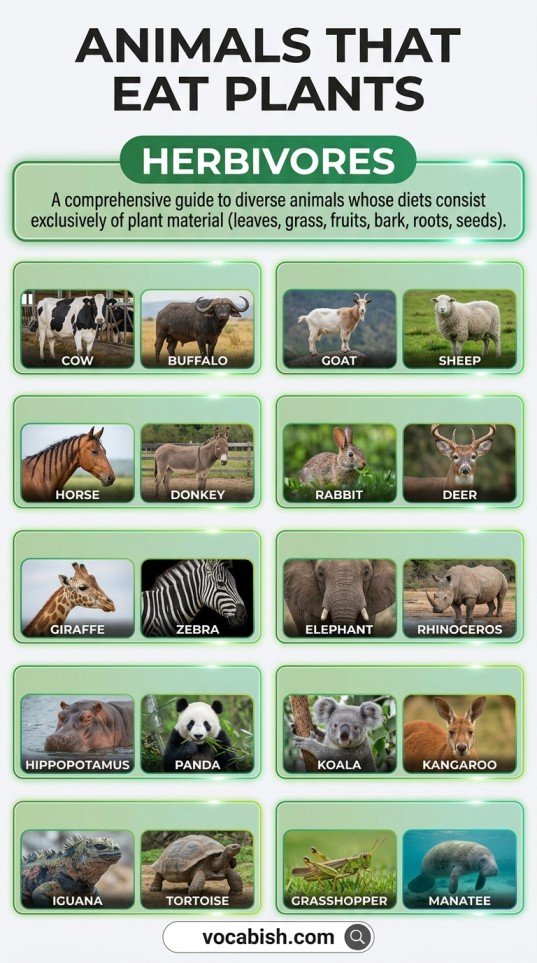
Herbivores obtain their food mainly from plants. They may eat grass, leaves, roots, seeds, fruits, bark, or aquatic vegetation.
Common plant-eating animals include:
- Cow
- Buffalo
- Goat
- Sheep
- Horse
- Donkey
- Rabbit
- Deer
- Giraffe
- Zebra
- Elephant
- Rhinoceros
- Hippopotamus
- Panda
- Koala
- Kangaroo
- Iguana
- Tortoise
- Grasshopper
- Manatee
Types of Plant Food Eaten by Animals
Plant food | Animals that eat it |
|---|---|
Grass | Cow, sheep, horse, zebra |
Leaves | Giraffe, goat, koala |
Fruits | Fruit bat, many monkeys, toucan |
Seeds | Finch, pigeon, squirrel |
Roots | Some rodents, wild pigs |
Bark | Elephant, beaver |
Bamboo | Giant panda |
Nectar | Hummingbird, honeybee |
Algae | Some fish, marine iguanas |
Aquatic plants | Manatee, some turtles |
Animals That Eat Meat
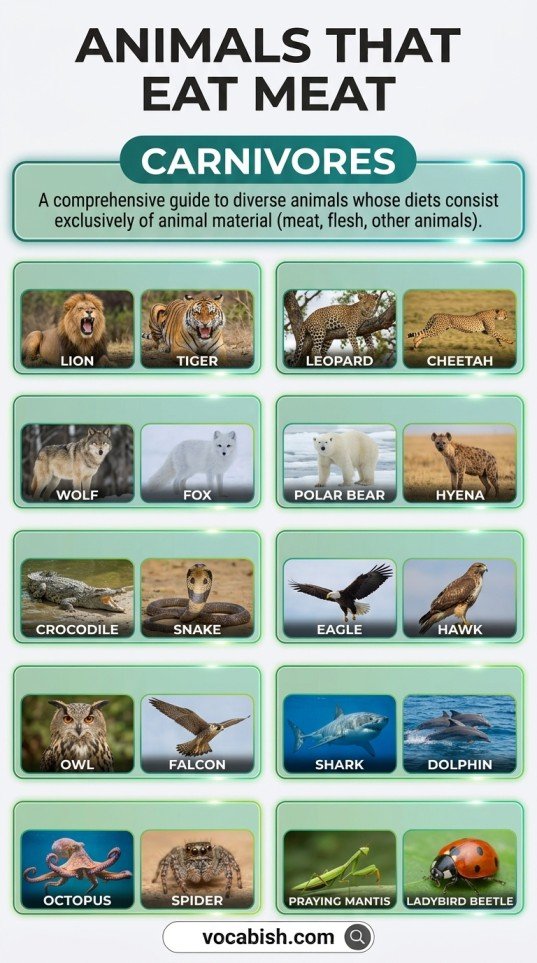
Carnivores obtain most or all of their food from other animals. Some hunt living prey, while others feed on animals that have already died.
Common meat-eating animals include:
- Lion
- Tiger
- Leopard
- Cheetah
- Wolf
- Fox
- Polar bear
- Hyena
- Crocodile
- Snake
- Eagle
- Hawk
- Owl
- Falcon
- Shark
- Dolphin
- Octopus
- Spider
- Praying mantis
- Ladybird beetle
Types of Meat Eaten by Animals
Food source | Animals that eat it |
|---|---|
Rodents | Owls, snakes, foxes |
Deer | Tigers, lions, wolves |
Fish | Eagles, dolphins, sharks |
Insects | Frogs, lizards, spiders |
Crustaceans | Octopuses, some fish |
Birds | Hawks, falcons, snakes |
Carrion | Vultures, some hyenas |
Plankton and krill | Baleen whales, whale sharks |
Animals That Eat Plants and Meat
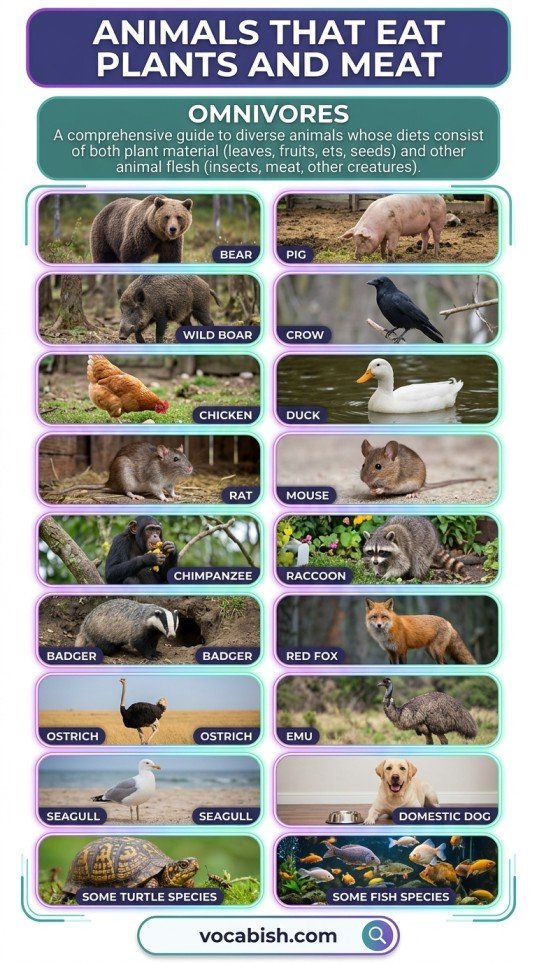
Omnivores eat both plant-based and animal-based foods. Their diets may include fruits, seeds, leaves, insects, eggs, fish, or small mammals.
Common omnivorous animals include:
- Bear
- Pig
- Wild boar
- Crow
- Chicken
- Duck
- Rat
- Mouse
- Chimpanzee
- Raccoon
- Badger
- Red fox
- Ostrich
- Emu
- Seagull
- Domestic dog
- Some turtle species
- Some fish species
Birds and Their Food Name
Birds have different feeding habits. Their beaks, feet, and body shapes often help them find and eat particular foods.
Bird name | Main food |
|---|---|
Eagle | Fish, mammals, and birds |
Owl | Mice, voles, and other prey |
Parrot | Fruits, seeds, nuts, and flowers |
Pigeon | Seeds and grains |
Sparrow | Seeds, grains, and insects |
Duck | Aquatic plants, insects, and small animals |
Chicken | Grains, seeds, and insects |
Peacock | Seeds, insects, and small animals |
Flamingo | Algae and small aquatic organisms |
Penguin | Fish, krill, and squid |
Hummingbird | Nectar and small insects |
Woodpecker | Insects and larvae |
Kingfisher | Fish and aquatic animals |
Vulture | Dead animals |
Heron | Fish, frogs, and other aquatic prey |
Pelican | Mainly fish |
Ostrich | Plants, seeds, and insects |
Crow | Seeds, insects, eggs, and small animals |
Robin | Worms, insects, and fruit |
Toucan | Fruits, insects, and small animals |
Aquatic Animals and Their Food Name
Aquatic animals live in freshwater or marine environments. Their diets range from aquatic plants and algae to tiny plankton, fish, and other animals.
Aquatic animal | Main food |
|---|---|
Dolphin | Fish and squid |
Blue whale | Mainly krill |
Humpback whale | Krill and small fish |
Whale shark | Plankton and small organisms |
Great white shark | Fish and marine mammals |
Octopus | Crabs, shrimp, and molluscs |
Squid | Fish, crustaceans, and other squid |
Sea turtle | Varies by species; seagrass, jellyfish, or other foods |
Manatee | Aquatic plants |
Dugong | Seagrasses |
Seal | Fish, squid, and crustaceans |
Sea lion | Fish and squid |
Walrus | Clams and other seabed animals |
Salmon | Insects, crustaceans, and smaller fish |
Catfish | Insects, worms, and other food organisms |
Goldfish | Algae, plant matter, and small organisms |
Seahorse | Tiny crustaceans |
Starfish | Molluscs and other marine organisms |
Jellyfish | Plankton and small aquatic animals |
Sea urchin | Algae and other organic material |
Lobster | Molluscs, worms, fish, and organic matter |
Shrimp | Algae, plankton, and organic material |
Mussel | Plankton and suspended particles |
Oyster | Plankton and suspended particles |
Piranha | Fish, insects, and other food, depending on species |
Reptiles and Amphibians and Their Food Name
Reptiles and amphibians have varied diets. Many eat insects or other small animals, while some species also consume plants.
Reptiles
- Snake — Rodents, birds, eggs, fish, or other prey
- Crocodile — Fish, birds, mammals, and other animals
- Alligator — Fish, turtles, birds, and mammals
- Gecko — Insects and other small invertebrates
- Chameleon — Insects and other small animals
- Iguana — Mainly plants in many species
- Monitor lizard — Insects, eggs, and small animals
- Tortoise — Plants, grasses, and leafy vegetables
- Sea turtle — Seagrass, jellyfish, algae, or other food, depending on species
- Komodo dragon — Deer, pigs, and other animals
Amphibians
- Frog — Insects, worms, and other small animals
- Toad — Insects, worms, and other invertebrates
- Salamander — Insects, worms, and small aquatic animals
- Newt — Insects, larvae, worms, and small aquatic animals
- Axolotl — Worms, insect larvae, and small aquatic animals
- Caecilian — Earthworms and other soil invertebrates
Insects and Their Food Name
Insects eat many kinds of food. Some feed on plants, while others hunt prey, drink nectar, or consume decaying material.
Insect name | Main food |
|---|---|
Butterfly | Flower nectar |
Honeybee | Nectar and pollen |
Ant | Seeds, nectar, insects, and food scraps |
Grasshopper | Grass and leaves |
Mosquito | Nectar; females of many species also take blood meals |
Housefly | Liquids and decomposing organic matter |
Ladybird beetle | Aphids and other small insects |
Praying mantis | Insects and other small animals |
Dragonfly | Mosquitoes, flies, and other insects |
Termite | Cellulose from wood and plant material |
Beetle | Varies by species: plants, insects, or decaying matter |
Caterpillar | Usually leaves or other plant material |
Flea | Blood from animal hosts |
Louse | Blood, skin debris, or other host material, depending on species |
Moth | Nectar, plant material, or other foods, depending on species |
Wasp | Nectar and other sugary foods; many hunt insects |
Aphid | Plant sap |
Silkworm | Mulberry leaves |
Weevil | Seeds, grains, roots, or other plant material |
Firefly | Varies by species; larvae often eat small invertebrates |
Food Chains and Examples
A food chain shows how energy moves from one organism to another through feeding. Plants often begin the chain because they use sunlight to produce food.
Examples of Food Chains
- Grass → Grasshopper → Frog → Snake → Eagle
- Grass → Rabbit → Fox
- Grass → Zebra → Lion
- Leaves → Caterpillar → Small bird → Hawk
- Algae → Small aquatic animal → Fish → Shark
- Phytoplankton → Krill → Blue whale
- Seeds → Mouse → Owl
- Aquatic plants → Snail → Fish → Heron
Producers, Consumers, and Decomposers
Group | Meaning | Examples |
|---|---|---|
Producers | Make their own food, usually using sunlight | Grass, trees, algae |
Primary consumers | Eat producers | Rabbits, grasshoppers, deer |
Secondary consumers | Eat primary consumers | Frogs, small predatory fish |
Tertiary consumers | Feed on other consumers higher in a food chain | Eagles, large predatory fish |
Decomposers | Break down dead material and waste | Many fungi and bacteria |
Earthworms and many other detritivores consume dead organic material, helping nutrients return to the environment.
How Animals Find and Eat Food
Animals use different physical features and behaviours to obtain food.
- Sharp teeth: Lions and tigers use them to tear meat.
- Flat teeth: Cows and horses grind plant material.
- Beaks: Birds use different beak shapes to gather or catch food.
- Long tongues: Anteaters use them to collect ants and termites.
- Webs: Spiders catch insects in webs.
- Strong claws: Eagles use their talons to catch prey.
- Filter-feeding structures: Baleen whales strain small organisms from water.
- Specialised digestive systems: Ruminants such as cows digest plant material with help from microbes.
FAQs
Animals and their food refers to the different foods animals eat, including plants, meat, insects, fruits, seeds, and aquatic organisms.
The three main dietary groups are herbivores, which eat plants; carnivores, which eat animals; and omnivores, which eat both.
Cows, sheep, horses, zebras, and many deer eat grass. Some other herbivores also consume grass alongside leaves, fruits, and other plants.
Lions, tigers, eagles, snakes, crocodiles, and many sharks eat other animals. Their prey varies according to their species and habitat.
Bears, pigs, crows, chickens, rats, and many foxes eat both plant and animal foods. These animals are called omnivores.
Aquatic animals eat different foods, including algae, aquatic plants, plankton, fish, crustaceans, and molluscs, depending on their species.
No. Animals have different dietary needs and feeding habits. Their food depends on their species, habitat, body structure, and biological adaptations.
Animals need food for energy, growth, tissue repair, movement, and normal body functions. Different foods provide nutrients such as proteins, fats, and carbohydrates.
Conclusion
Animals and Their Food helps learners recognise what different animals eat and how feeding habits vary across species. Herbivores mainly eat plants, carnivores eat other animals, and omnivores consume both. Birds, insects, reptiles, mammals, and aquatic animals all have different dietary needs.
Learning animal names alongside their food builds vocabulary, improves reading comprehension, and helps learners understand food chains and the relationships between animals and their environments.