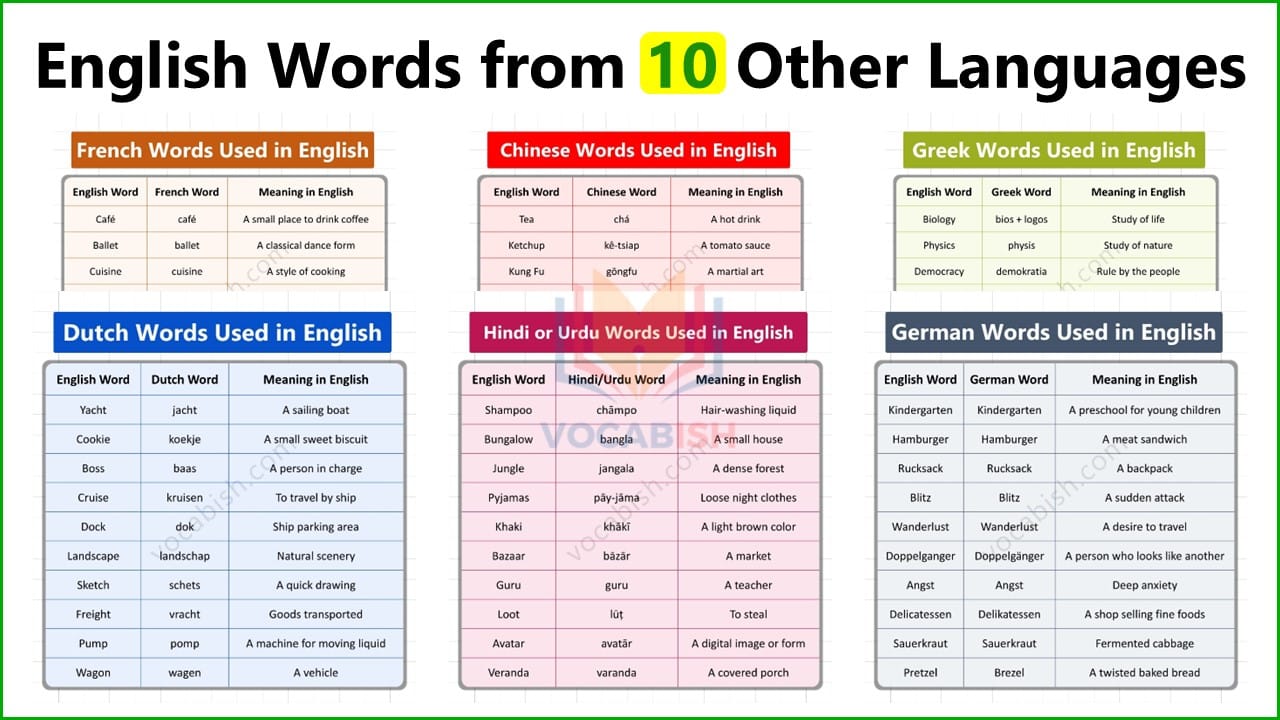

English did not develop on its own. Over time, it borrowed thousands of words from languages such as French, Spanish, German, Arabic, Japanese, Hindi, Greek, Dutch, and Chinese. Many everyday words like café, pizza, shampoo, algebra, sushi, cookie, and tea originally came from other languages. In this article, you’ll learn 100 English words borrowed from other languages, along with their meanings and example sentences to understand how they are used in modern English.
List of English Words Borrowed From Other Languages
English is often called a “borrowing language” because it has adopted words from many cultures and languages. These borrowed words enrich English vocabulary and are commonly used in daily conversations, education, business, food, travel, and technology.
Language | Original Word | English Word | Original Word | English Word |
|---|---|---|---|---|
French | café | cafe | ballet | ballet |
Spanish | taco | taco | plaza | plaza |
German | Kindergarten | kindergarten | Angst | angst |
Italian | pizza | pizza | piano | piano |
Arabic | al-jabr | algebra | sukkar | sugar |
Japanese | sushi | sushi | tsunami | tsunami |
Hindi/Urdu | bangla | bungalow | khaki | khaki |
Greek | demokratia | democracy | drama | drama |
Dutch | koekje | cookie | baas | boss |
Chinese | chá | tea | dòufu | tofu |
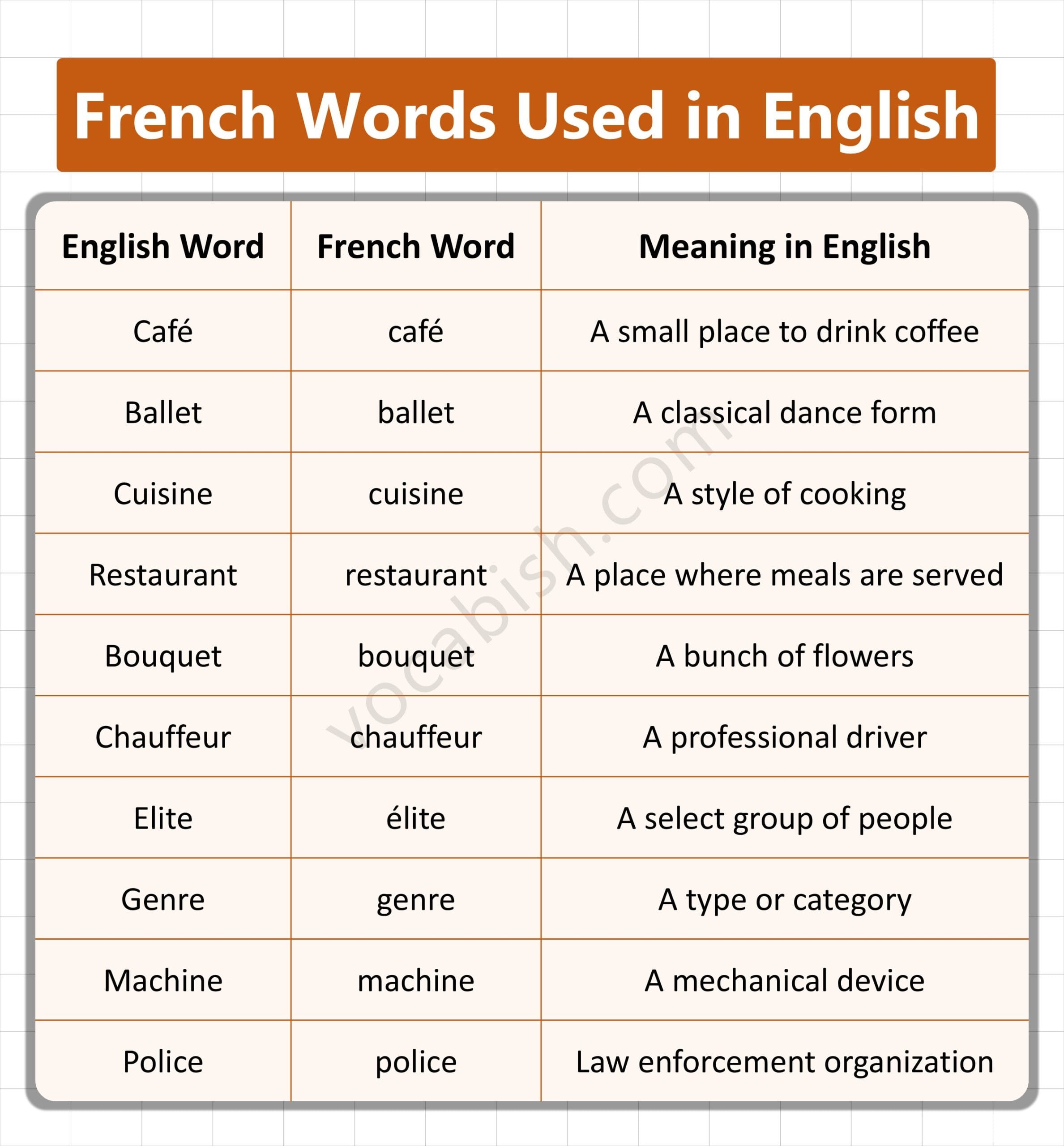
French Words Used in English
Many elegant and commonly used English words come from French. These words are especially common in food, art, fashion, and everyday communication.
- Ballet — A classical style of dance.
Example: She has practiced ballet since childhood. - Café — A small restaurant serving drinks and light meals.
Example: We met at a café after work. - Bouquet — A carefully arranged bunch of flowers.
Example: He gave her a beautiful bouquet of roses. - Cuisine — A style of cooking.
Example: French cuisine is famous around the world. - Fiancé — A man engaged to be married.
Example: Her fiancé is planning the wedding. - Genre — A category of art, music, or literature.
Example: Mystery is my favorite book genre. - Rendezvous — A planned meeting.
Example: They arranged a rendezvous at the park. - Souvenir — An item kept as a reminder of a place or event.
Example: I bought a souvenir from Paris. - Entrepreneur — A person who starts and manages a business.
Example: She became a successful entrepreneur at a young age. - Mousse — A light and airy dessert.
Example: We ordered chocolate mousse after dinner.
Spanish Words Used in English
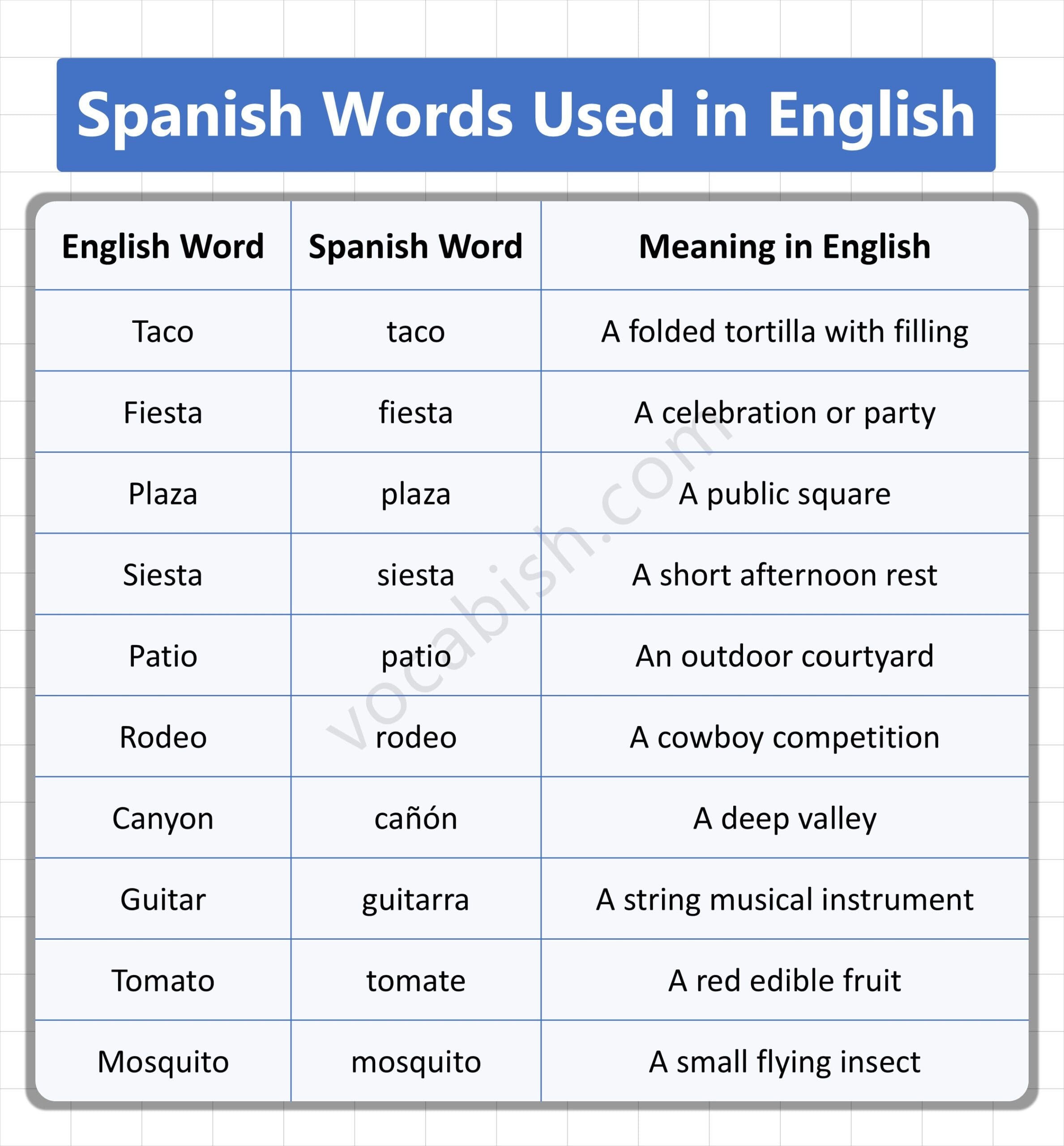
Here’s the list of common Spanish words that have contributed many words related to nature, food, travel, and daily life.
- Patio — An outdoor area next to a house.
Example: We had lunch on the patio. - Mosquito — A small flying insect that bites people.
Example: A mosquito bit my arm last night. - Canyon — A deep valley with steep sides.
Example: The hikers explored a large canyon. - Plaza — A public square in a town or city.
Example: People gathered in the plaza for the festival. - Tornado — A violent rotating column of air.
Example: The tornado caused damage across the area. - Cargo — Goods transported by ship, truck, or plane.
Example: The ship carried cargo across the ocean. - Ranch — A large farm used for raising animals.
Example: He owns a cattle ranch in Texas. - Guerrilla — A member of a small fighting group.
Example: The history book described guerrilla warfare. - Vanilla — A flavoring obtained from tropical plants.
Example: Vanilla is my favorite ice cream flavor. - Fiesta — A celebration or festival.
Example: The town held a fiesta during the holiday.
German Words Used in English
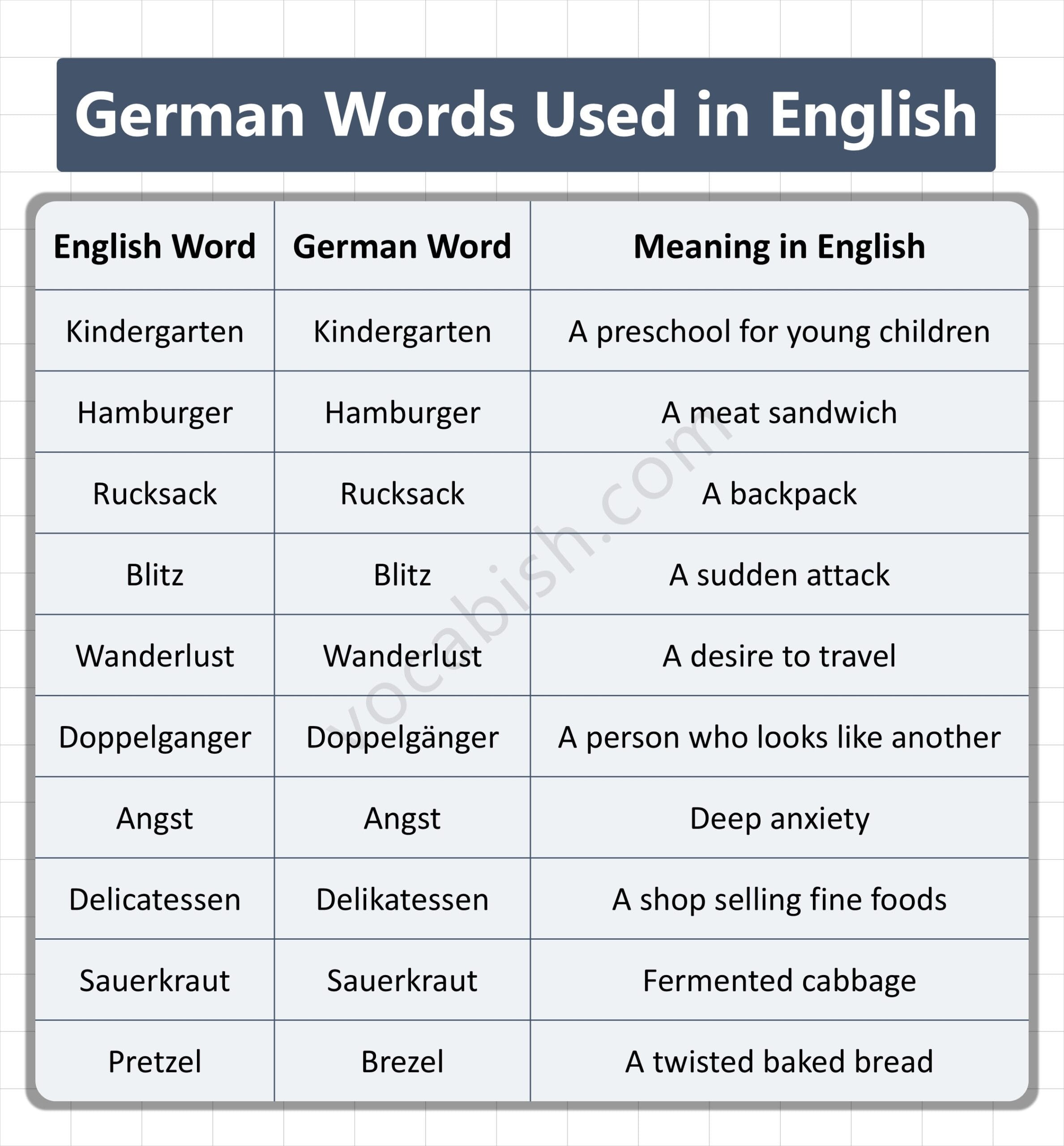
Many German words entered English through culture, food, education, and science.
- Kindergarten — A school for young children.
Example: My daughter started kindergarten this year. - Hamburger — A sandwich containing a cooked meat patty.
Example: He ordered a hamburger for lunch. - Rucksack — A backpack used for carrying items.
Example: She packed her rucksack before the trip. - Waltz — A ballroom dance with three beats.
Example: The couple performed a beautiful waltz. - Doppelganger — A person who closely resembles another.
Example: Many people say he is my doppelganger. - Delicatessen — A shop selling prepared foods.
Example: We bought sandwiches from a local delicatessen. - Blitz — A sudden and intense attack.
Example: The team launched a blitz in the final minutes. - Fest — A gathering or celebration.
Example: The city hosted a music fest. - Poltergeist — A ghost believed to move objects.
Example: The movie featured a frightening poltergeist. - Kaput — Broken or no longer working.
Example: My old laptop is completely kaput.
Italian Words Used in English
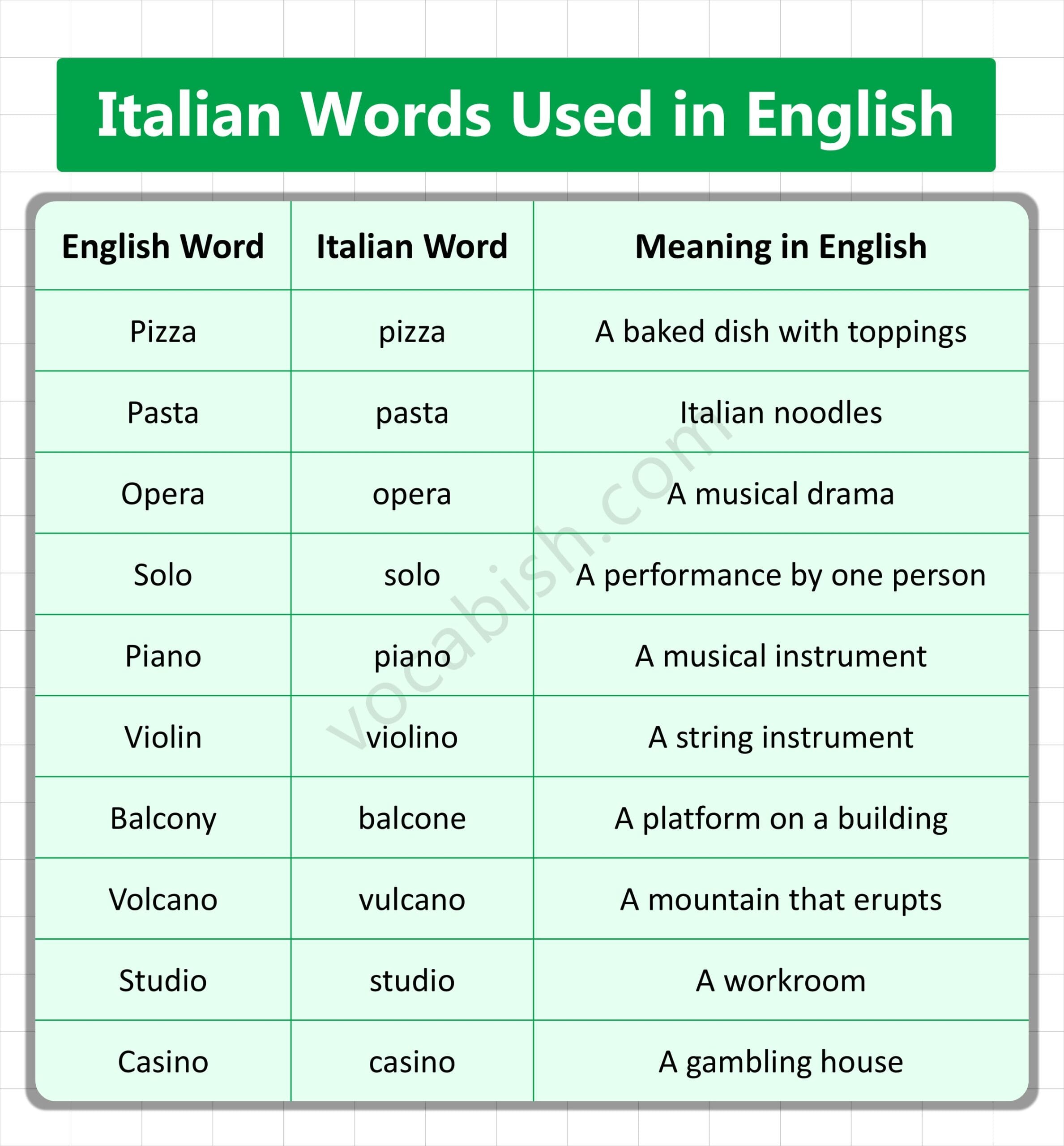
Commonly used Italian words in the English language with their meanings and examples in sentences:
- Pizza — A baked dish topped with cheese and other ingredients.
Example: We ordered pizza for dinner. - Pasta — A food made from dough and boiled in water.
Example: She cooked pasta for the family. - Studio — A room used for creative work.
Example: The artist works in a small studio. - Balcony — A platform attached to a building above ground level.
Example: They stood on the balcony to watch the parade. - Opera — A dramatic performance set to music.
Example: We attended an opera at the theater. - Volcano — A mountain that can erupt with lava.
Example: Scientists monitored the active volcano. - Casino — A place where people gamble.
Example: Tourists visited the casino during their trip. - Soprano — The highest female singing voice.
Example: The soprano impressed the audience. - Fresco — A painting made on fresh plaster.
Example: The church contains an ancient fresco. - Scenario — A possible situation or sequence of events.
Example: Let’s consider the worst-case scenario.
Arabic Words Used in English
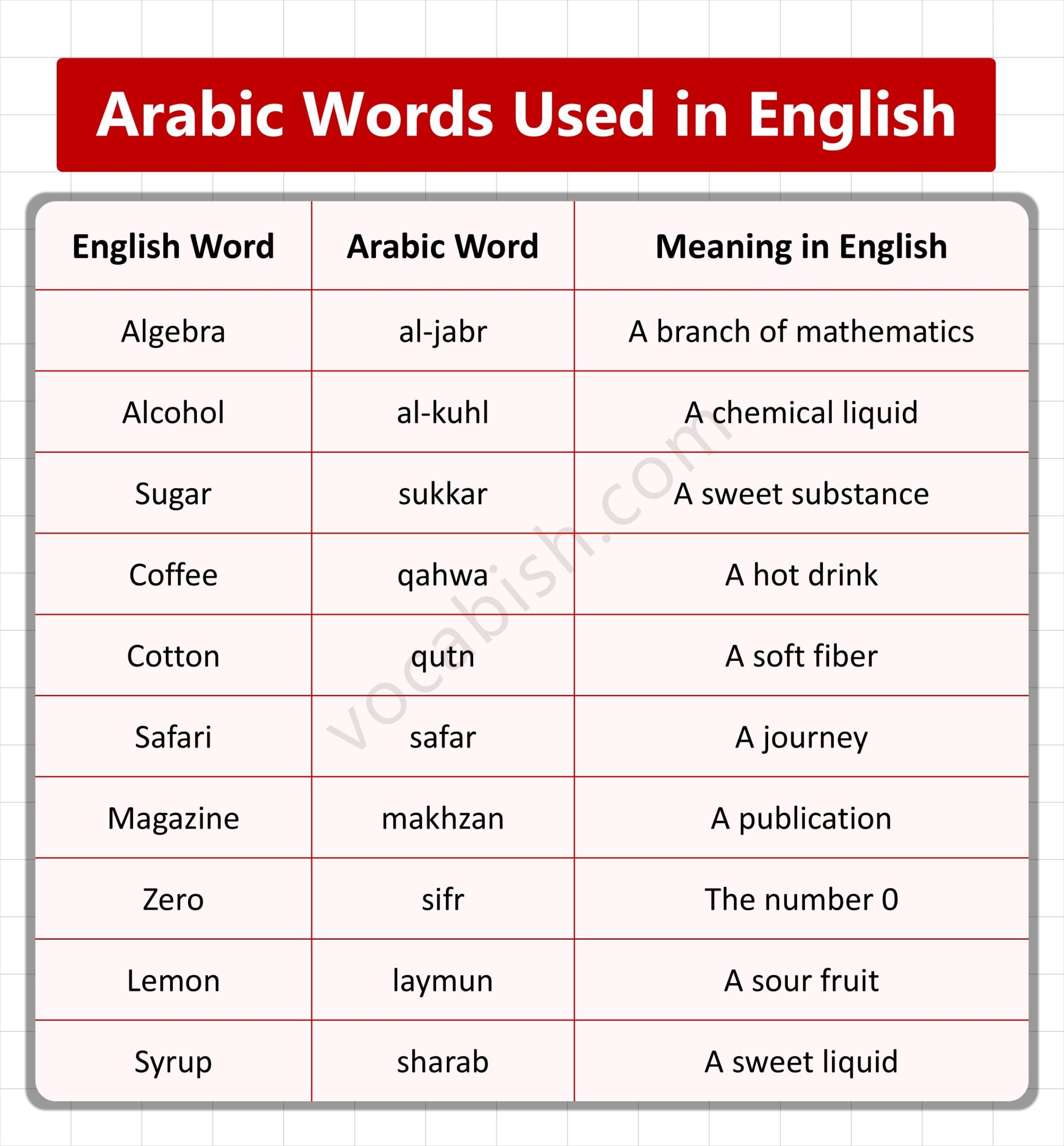
Here’s the list of common Arabic words that frequently used in the English language:
- Algebra — A branch of mathematics that uses symbols and letters.
Example: Students learn algebra in middle school. - Coffee — A popular drink made from roasted beans.
Example: I drink coffee every morning. - Magazine — A publication containing articles and pictures.
Example: She read a travel magazine on the plane. - Sugar — A sweet substance used in food and drinks.
Example: He added sugar to his tea. - Syrup — A thick sweet liquid.
Example: She poured syrup over the pancakes. - Admiral — A high-ranking naval officer.
Example: The admiral commanded the fleet. - Alcohol — A chemical substance found in drinks and products.
Example: This medicine contains alcohol. - Safari — A journey to observe wild animals.
Example: They went on a safari in Kenya. - Cotton — A soft natural fiber used to make fabric.
Example: This shirt is made of cotton. - Jar — A container usually made of glass.
Example: The cookies were stored in a jar.
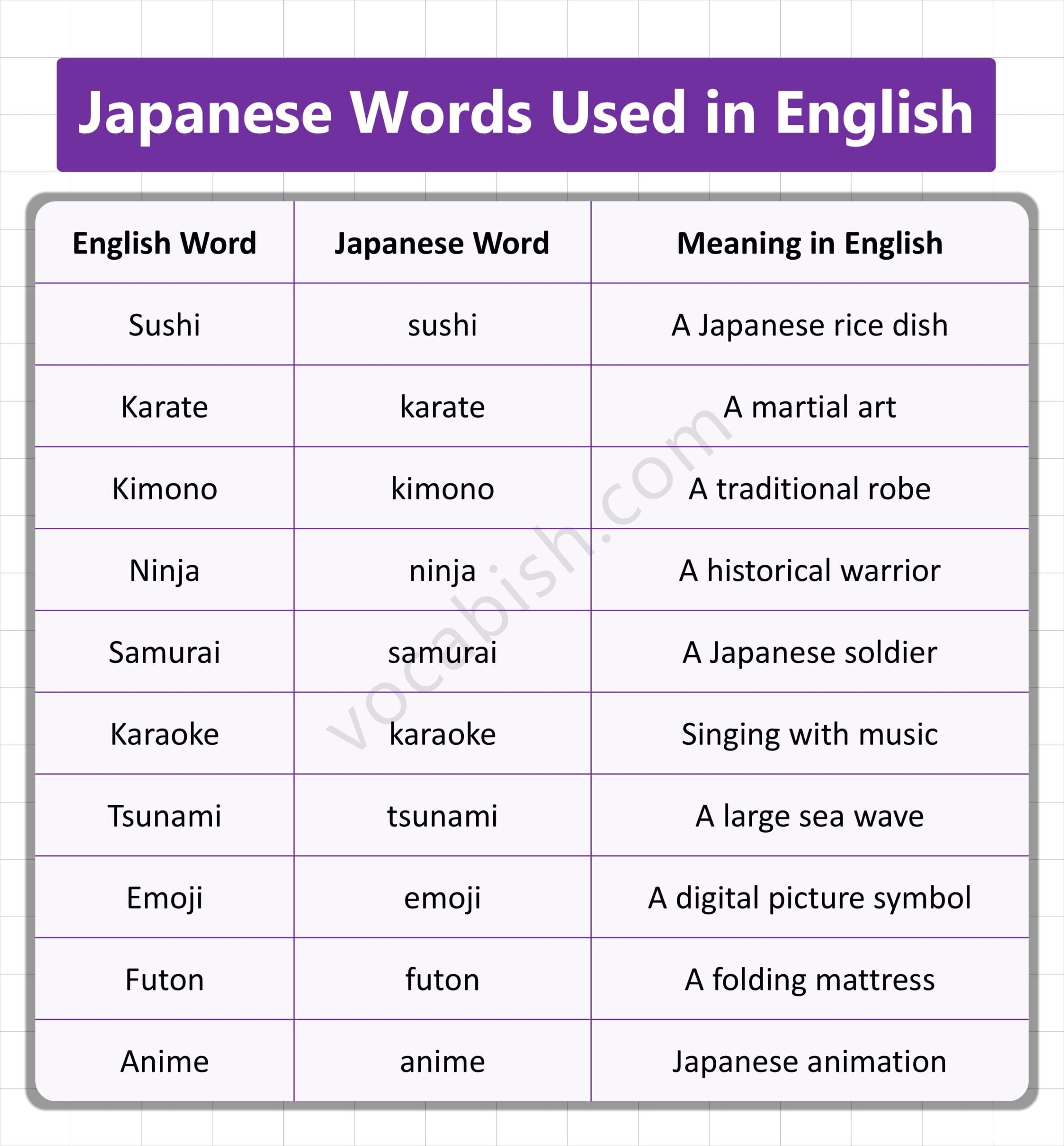
Japanese Words Used in English
- Sushi — A Japanese dish made with rice and seafood.
Example: We ate sushi at a Japanese restaurant. - Karaoke — Entertainment where people sing along to recorded music.
Example: We enjoyed karaoke at the party. - Anime — A style of Japanese animated films and shows.
Example: My brother watches anime every weekend. - Kimono — A traditional Japanese robe.
Example: She wore a beautiful kimono during the ceremony. - Samurai — A member of the warrior class in ancient Japan.
Example: The museum displayed samurai armor. - Tsunami — A large sea wave caused by an underwater disturbance.
Example: The tsunami reached the coastline within hours. - Tycoon — A wealthy and powerful businessperson.
Example: He became a technology tycoon before turning forty. - Origami — The art of folding paper into shapes.
Example: The children learned origami in class. - Judo — A Japanese martial art and sport.
Example: She won a medal in a judo competition. - Emoji — A small digital image used to express emotions.
Example: He added a smiling emoji to his message.
Hindi or Urdu Words Used in English
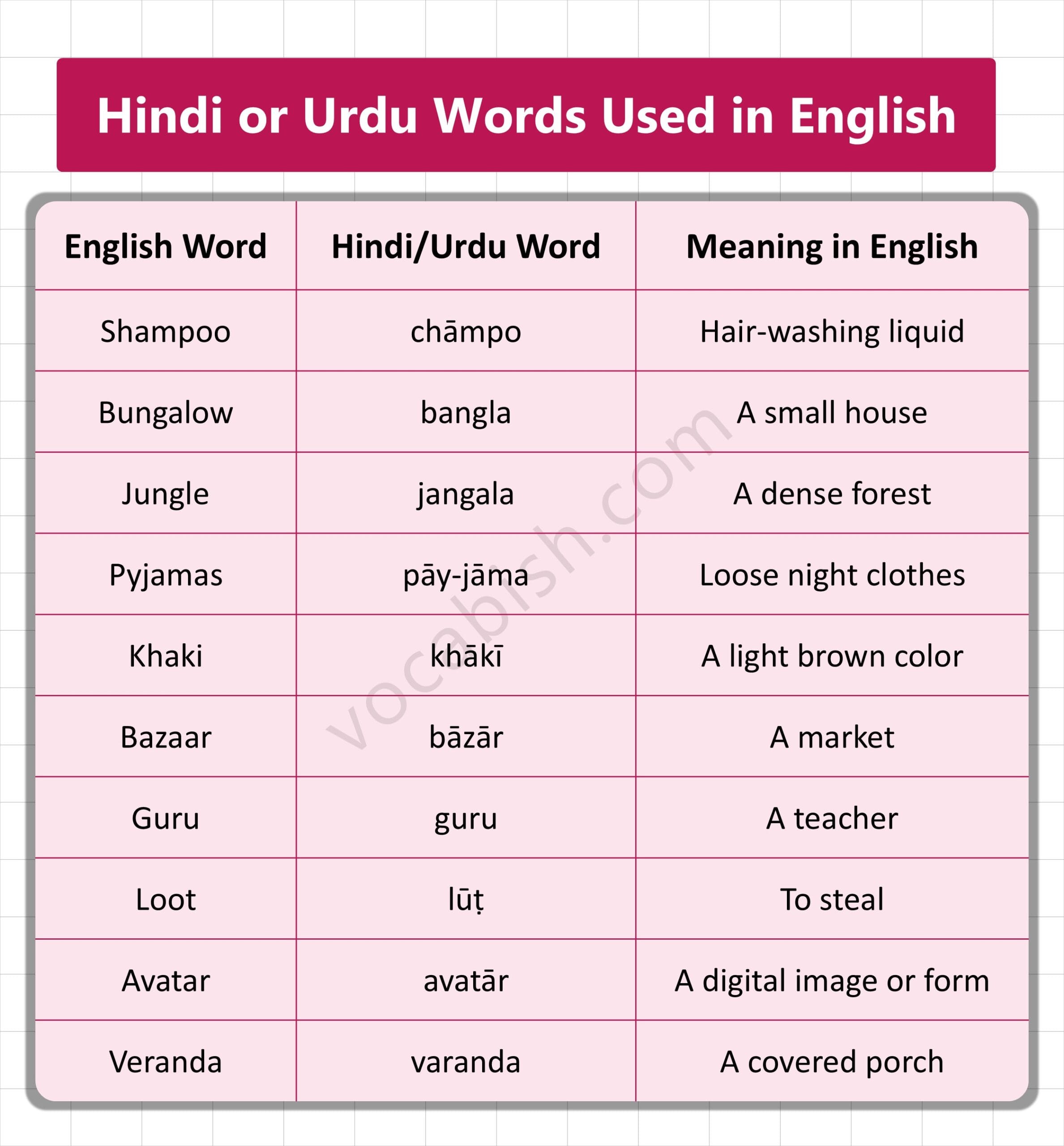
- Shampoo — A liquid used for washing hair.
Example: I bought a new bottle of shampoo. - Pajamas — Loose clothes worn for sleeping.
Example: He changed into his pajamas before bed. - Bungalow — A house with a single floor.
Example: They rented a bungalow near the beach. - Jungle — A dense tropical forest.
Example: The explorers traveled through the jungle. - Khaki — A light brown color often used in clothing.
Example: The soldiers wore khaki uniforms. - Loot — Goods stolen during a robbery or conflict.
Example: The thieves escaped with the loot. - Veranda — A covered platform attached to a building.
Example: We sat on the veranda during the evening. - Thug — A violent criminal or aggressive person.
Example: The police arrested the thug. - Pundit — An expert who gives opinions publicly.
Example: The political pundit appeared on television. - Guru — A trusted teacher or expert.
Example: Many entrepreneurs consider him a marketing guru.
Greek Words Used in English
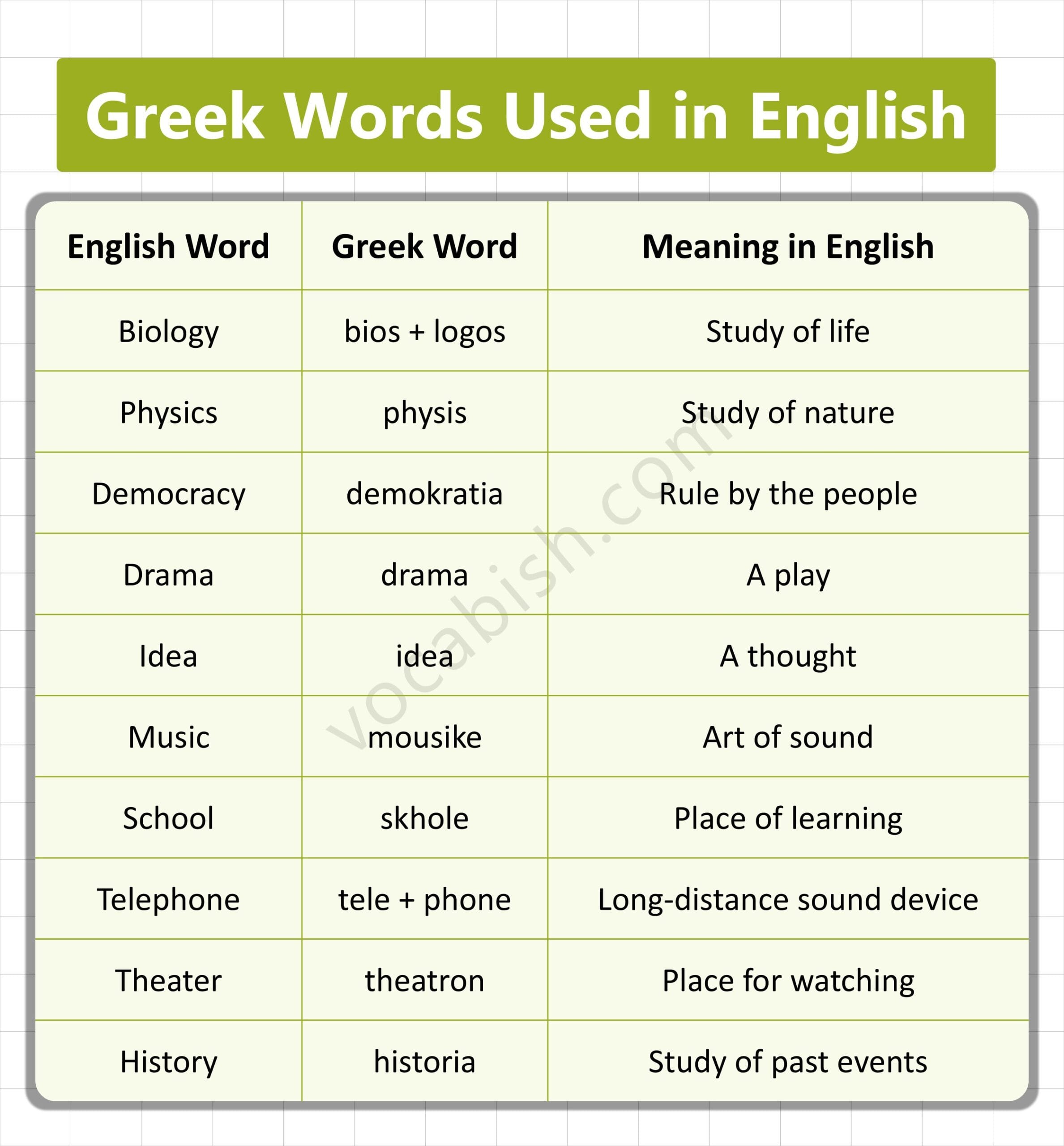
- Alphabet — A set of letters used in a language.
Example: Children learn the alphabet in primary school. - Democracy — A system of government where people vote.
Example: Democracy gives citizens the right to choose leaders. - Theater — A place where plays and performances are presented.
Example: We watched a show at the theater. - Planet — A large object that moves around a star.
Example: Earth is the third planet from the Sun. - Museum — A building where historical or cultural objects are displayed.
Example: The museum attracts thousands of visitors each year. - Physics — The study of matter, energy, and motion.
Example: Physics was his favorite subject in college. - Mathematics — The study of numbers and calculations.
Example: She excels in mathematics. - Biography — A book about someone’s life.
Example: I read a biography of Nelson Mandela. - Telephone — A device used for communication over distance.
Example: The telephone rang during dinner. - Photography — The art of taking pictures.
Example: Photography is one of her hobbies.
Dutch Words Used in English
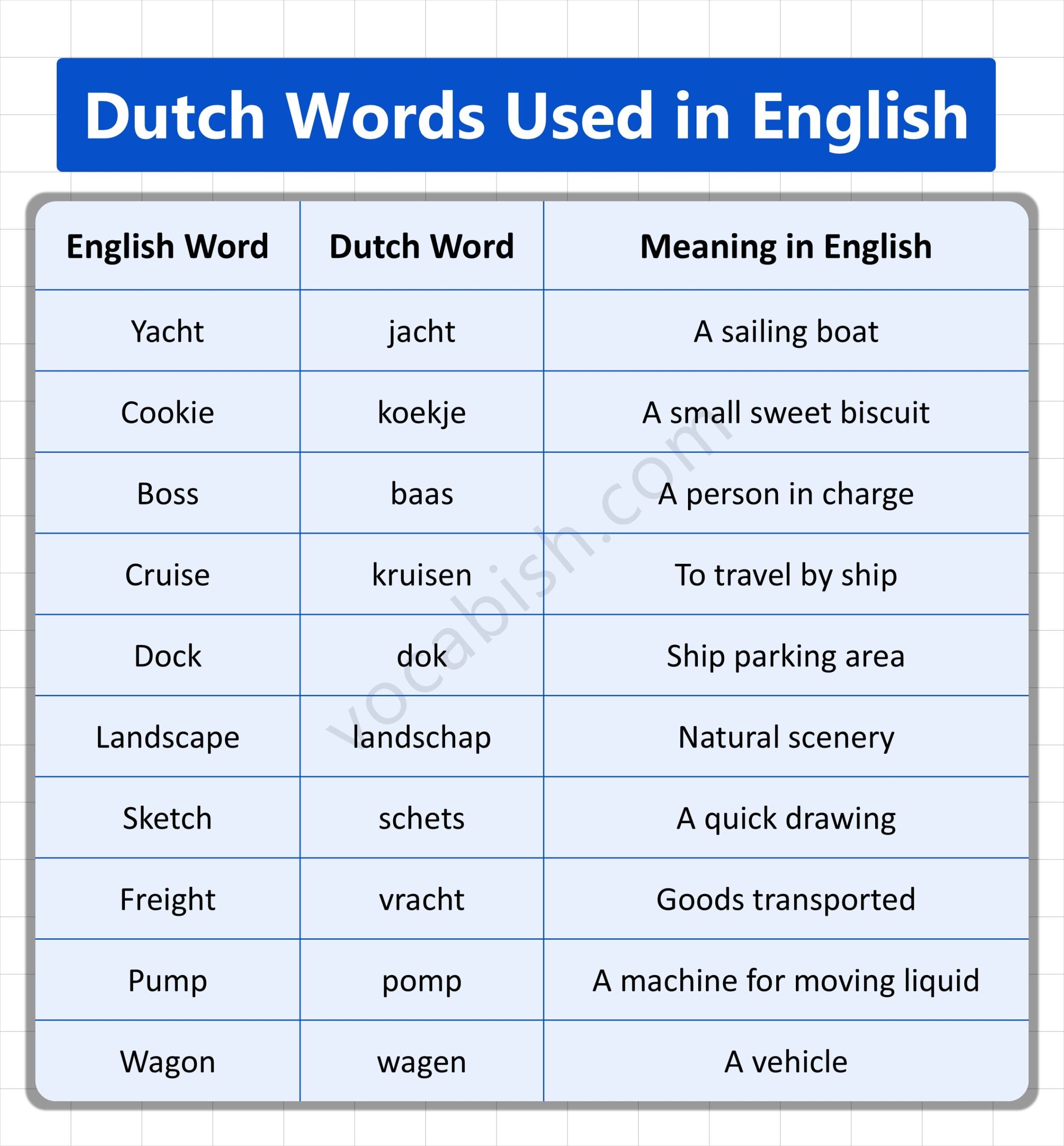
- Yacht — A large recreational boat.
Example: They sailed around the island on a yacht. - Cookie — A small sweet baked snack.
Example: She baked chocolate chip cookies. - Dock — An area where ships load or unload goods.
Example: The ship arrived at the dock early. - Boss — A person in charge of others at work.
Example: My boss approved the project. - Cruise — A vacation journey on a ship.
Example: They booked a cruise for the summer. - Landscape — A view of natural scenery.
Example: The mountain landscape was beautiful. - Sketch — A rough drawing.
Example: The designer made a quick sketch. - Waffle — A cake with a patterned surface.
Example: We had waffles for breakfast. - Spool — A cylinder used for holding thread or wire.
Example: The thread was wrapped around a spool. - Pump — A device used to move liquids or gases.
Example: The pump moved water into the tank.
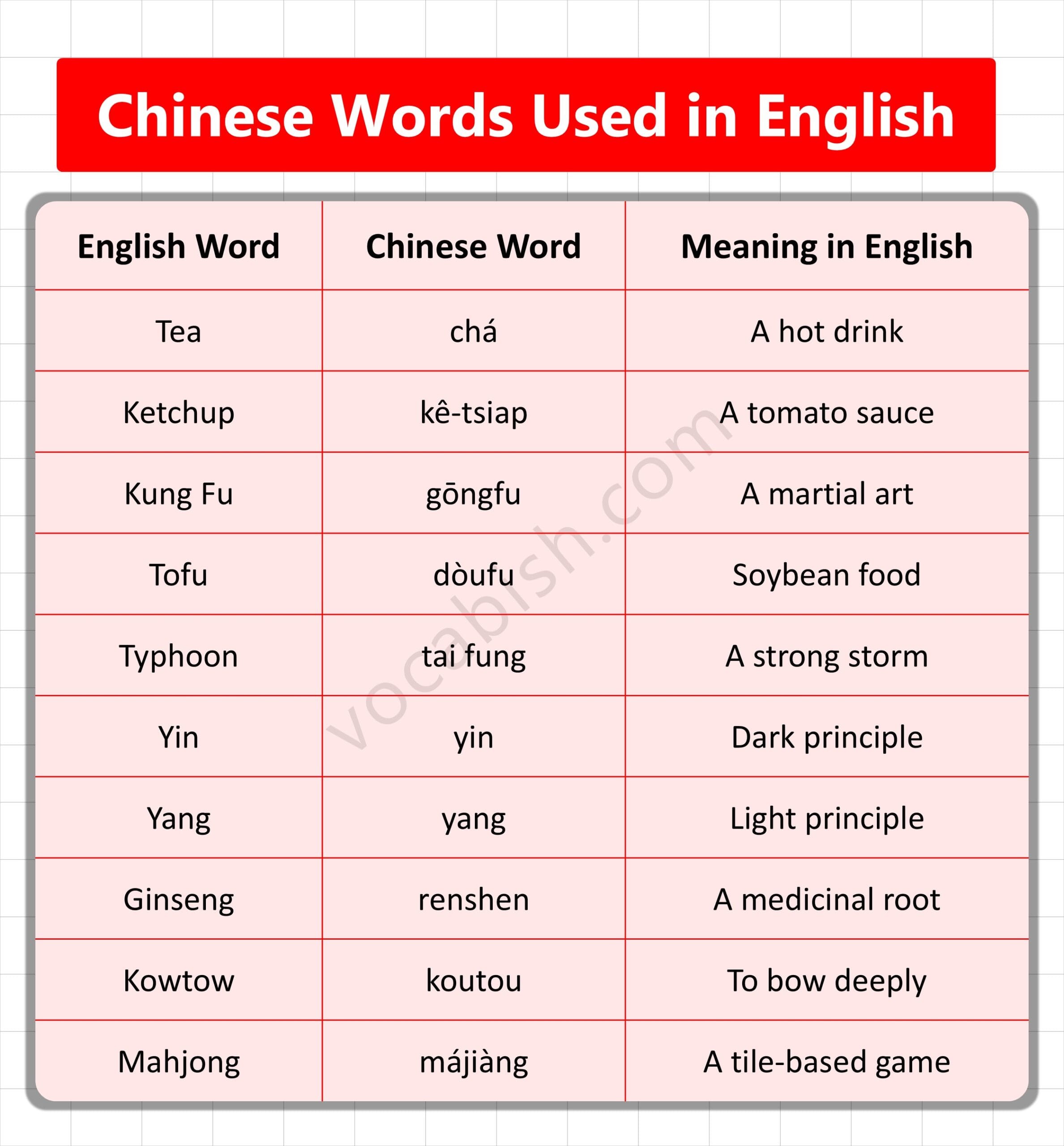
Chinese Words Used in English
- Tea — A popular drink made by steeping dried leaves in hot water.
Example: I drink tea every morning before work. - Ketchup — A thick tomato-based sauce.
Example: He added ketchup to his fries. - Tofu — A soft food made from soybeans.
Example: She cooked tofu with vegetables for dinner. - Typhoon — A powerful tropical storm.
Example: The typhoon caused heavy rain across the region. - Ginseng — A plant used in traditional medicine.
Example: Many people drink ginseng tea for energy. - Chopsticks — A pair of sticks used for eating food.
Example: He learned to use chopsticks while visiting China. - Kowtow — To act with excessive respect or obedience.
Example: Good leaders should not kowtow to public pressure. - Dim Sum — Small dishes traditionally served with tea.
Example: We ordered several dim sum dishes for lunch. - Yin Yang — A concept representing balance between opposite forces.
Example: The symbol of yin yang represents harmony and balance. - Wok — A round-bottomed cooking pan.
Example: She stir-fried vegetables in a wok.
You May Also Like:
- Weather Vocabulary Words with Pictures
- 500 English Vocabulary Words with PDF
- 250 Difficult Words With Meaning and Examples
English Words from Other Languages PDF
100 English Words Borrowed from Other Languages
Conclusion
English has borrowed thousands of words from different languages, making it one of the richest and most diverse languages in the world. Many words we use every day, such as café, shampoo, pizza, algebra, sushi, cookie, and tea, originally came from other languages.
Learning these borrowed words helps you understand the history of English, expand your vocabulary, and recognize how languages influence one another. The more you encounter these words in reading, writing, and conversations, the more naturally they will become part of your everyday English.