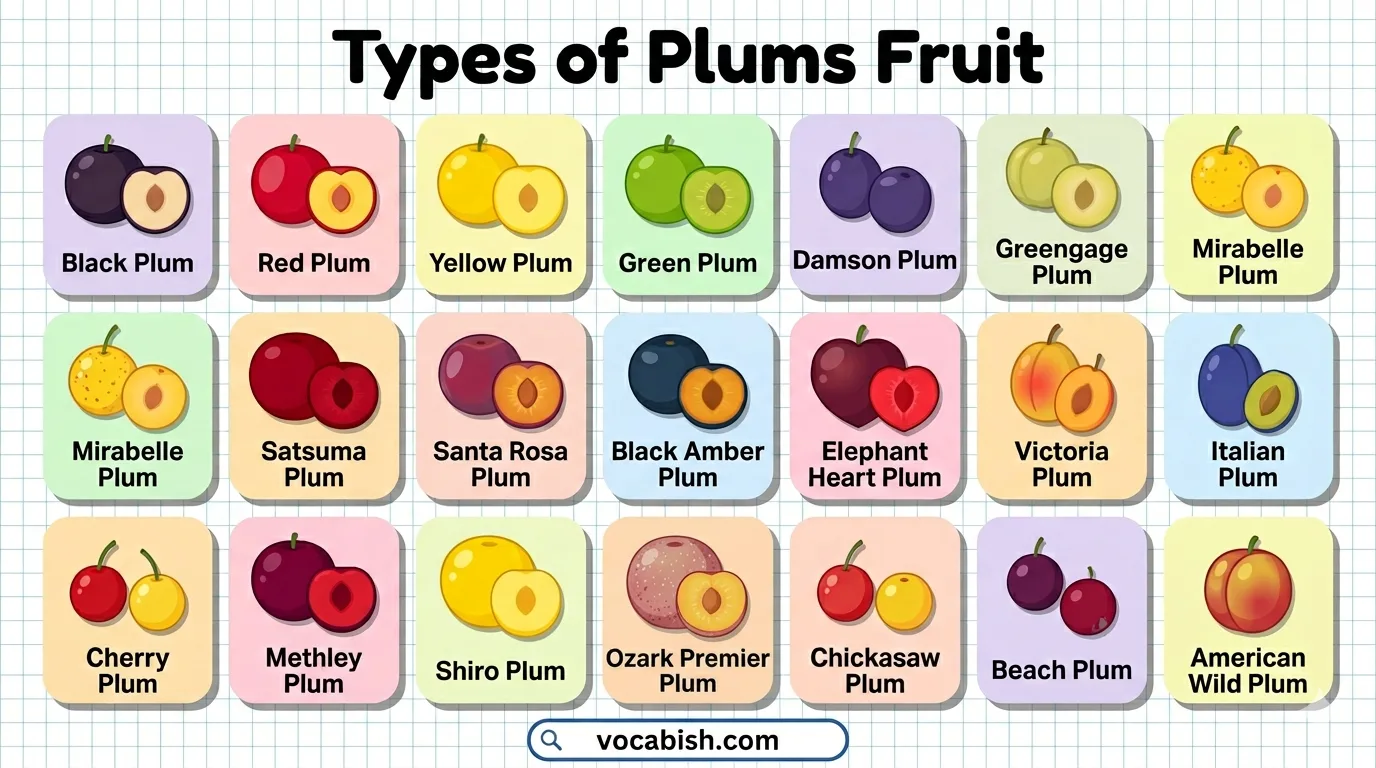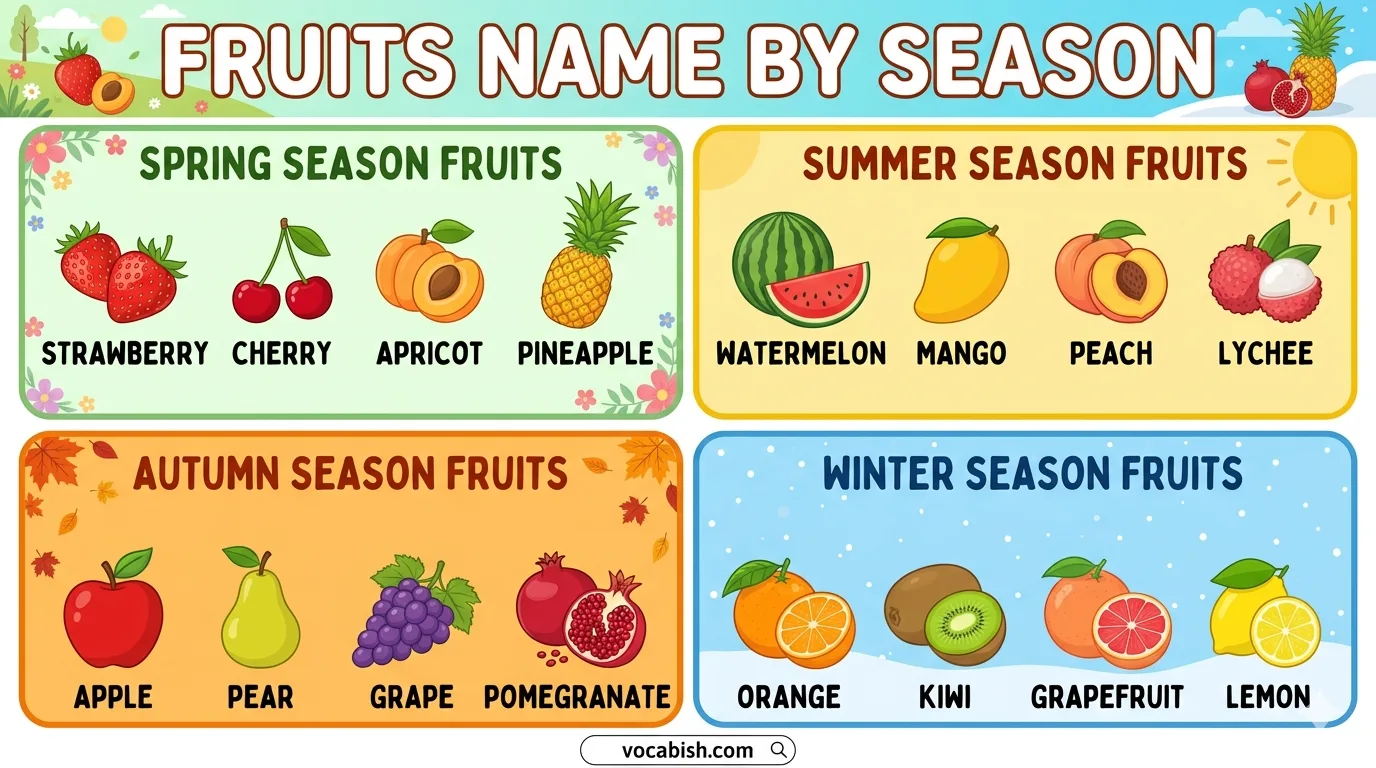
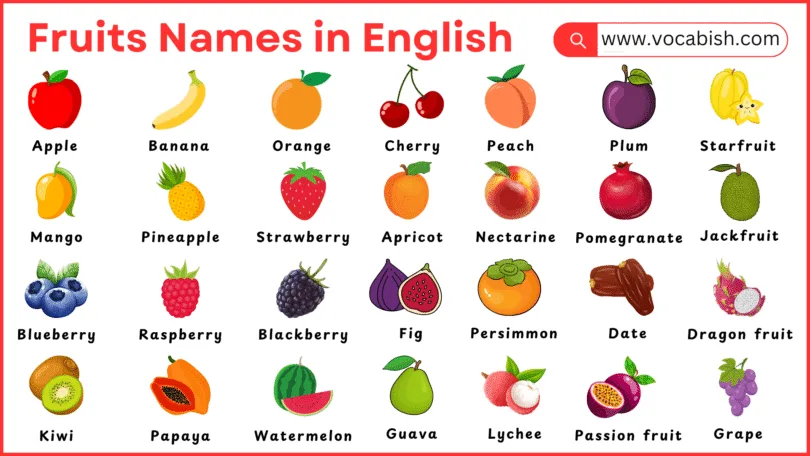

Have you ever known a fruit in your language but struggled to remember its English name during a conversation? Learning Fruits Name in English is a useful way to build everyday vocabulary because fruit names appear in shopping, school lessons, recipes, and daily discussions. From apples and bananas to less familiar fruits from around the world, knowing these words helps you communicate more clearly and understand English with greater confidence. In this article, you’ll discover 150+ fruit names, their types, and pictures that make learning easier. You’ll also expand your fruit vocabulary and become more comfortable using these words in everyday conversations.
What Are Fruits?
Fruits are the edible parts of flowering plants that usually contain seeds. They come in different colors, shapes, and flavors and are an important part of a healthy diet.
Common Fruit Names in English
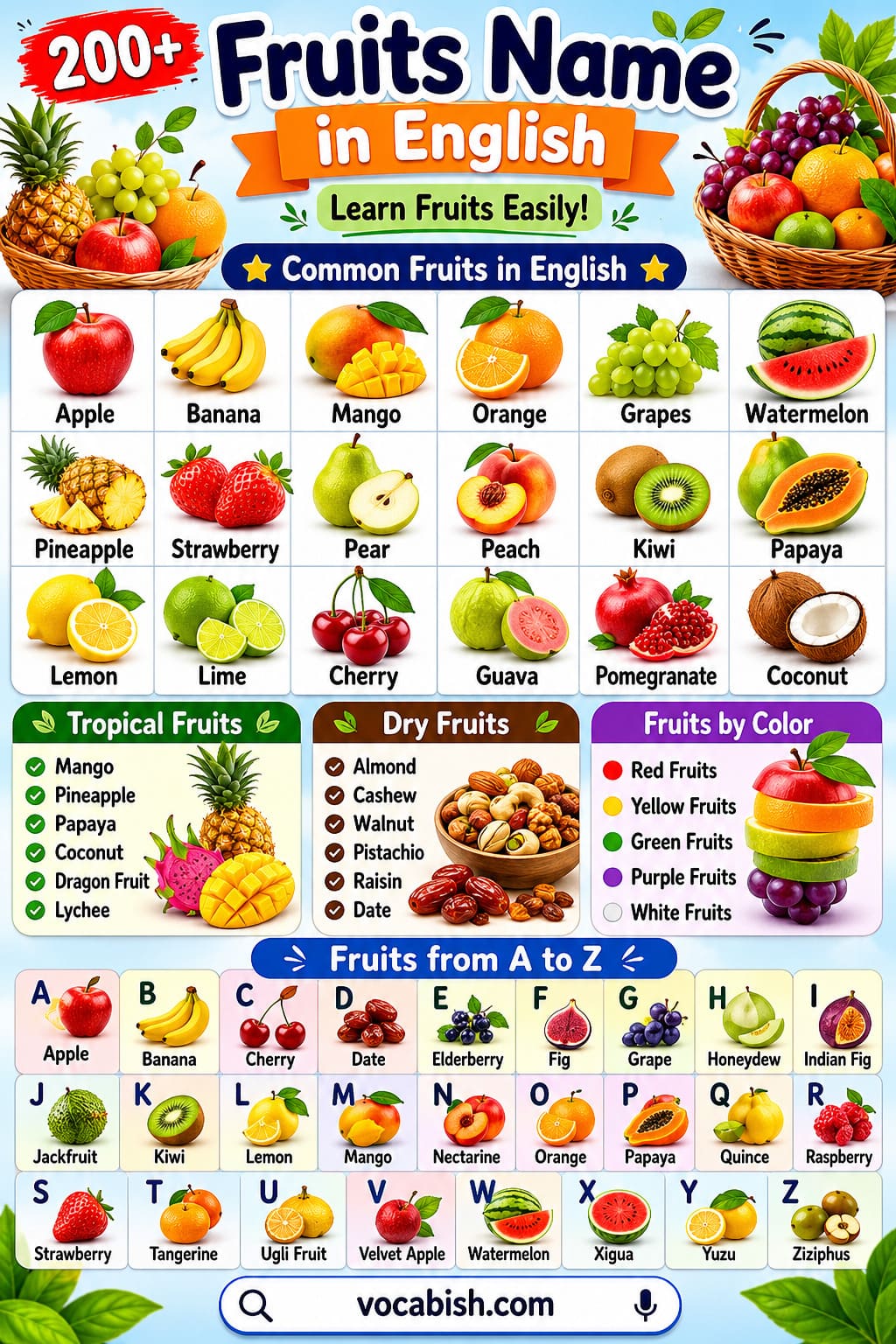
These are some of the most common fruits found in homes, markets, and restaurants around the world. They are often the first fruit names English learners study.
- Apple
- Banana
- Mango
- Orange
- Grapes
- Watermelon
- Pineapple
- Strawberry
- Pear
- Peach
- Kiwi
- Papaya
- Lemon
- Lime
- Cherry
- Guava
- Pomegranate
- Coconut
- Avocado
- Blueberry
Types of Fruits
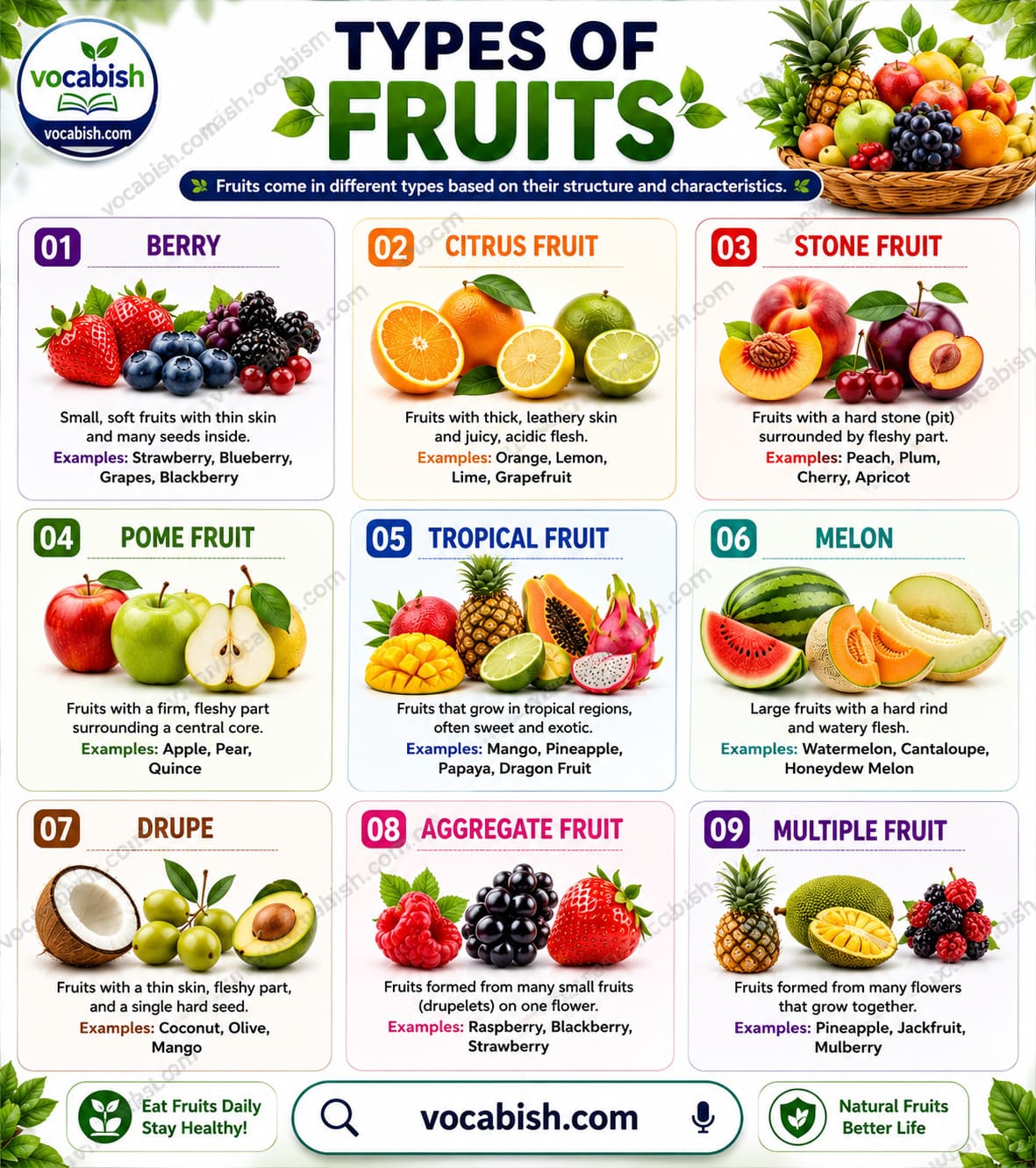
Fruits can be grouped based on their structure, seeds, and growing patterns. Understanding these categories helps expand your fruits vocabulary naturally.
- Berry
Small, fleshy fruits with seeds inside. Examples: Blueberry, Cranberry, Gooseberry. - Citrus Fruit
Known for their juicy segments and tangy taste. Examples: Orange, Lemon, Lime, Grapefruit. - Stone Fruit
Fruits with a hard pit in the center. Examples: Peach, Plum, Cherry, Apricot. - Pome Fruit
Fruits containing seeds in a central core. Examples: Apple, Pear, Quince. - Tropical Fruit
Grow in warm climates. Examples: Mango, Papaya, Pineapple, Coconut. - Melon
Large fruits with watery flesh. Examples: Watermelon, Cantaloupe, Honeydew. - Drupe
Single-seeded fleshy fruits. Examples: Mango, Olive, Coconut. - Aggregate Fruit
Formed from multiple ovaries of one flower. Examples: Raspberry, Blackberry. - Multiple Fruit
Formed from a cluster of flowers. Examples: Pineapple, Mulberry, Jackfruit.
Seasonal Fruit Names in English
Many fruits grow best during certain seasons. Seasonal fruits often taste fresher and are more widely available during their harvest period.
Related: Seasonal Fruits Name
Summer Fruit Names
- Mango
- Watermelon
- Muskmelon
- Lychee
- Peach
- Plum
- Cherry
- Apricot
- Nectarine
- Fig
- Dragon Fruit
- Jamun
- Mulberry
- Papaya
- Pineapple
Winter Fruit Names
- Orange
- Mandarin
- Clementine
- Grapefruit
- Kiwi
- Pear
- Apple
- Pomegranate
- Persimmon
- Guava
- Cranberry
- Starfruit
- Tangerine
- Sweet Lime
- Kumquat
Fruits Available All Year
- Banana
- Apple
- Papaya
- Coconut
- Lemon
- Lime
- Pineapple
- Avocado
- Guava
- Grapes
Tropical Fruits Names
Tropical fruits grow mainly in warm and humid regions. Many are known for their sweet taste and rich aroma.
Juicy Tropical Fruits
- Mango
- Pineapple
- Papaya
- Watermelon
- Lychee
- Passion Fruit
- Guava
- Starfruit
- Dragon Fruit
- Soursop
Unique Fruits in English
These fruits are less common in many countries but popular in their native regions.
- Durian
- Rambutan
- Mangosteen
- Longan
- Salak
- Ackee
- Cherimoya
- Jabuticaba
- Miracle Fruit
- Buddha’s Hand
- Cupuaçu
- Langsat
- Pulasan
- Feijoa
- Horned Melon
Here’s the list of unique fruits and their pictures.
Dry Fruits Names in English
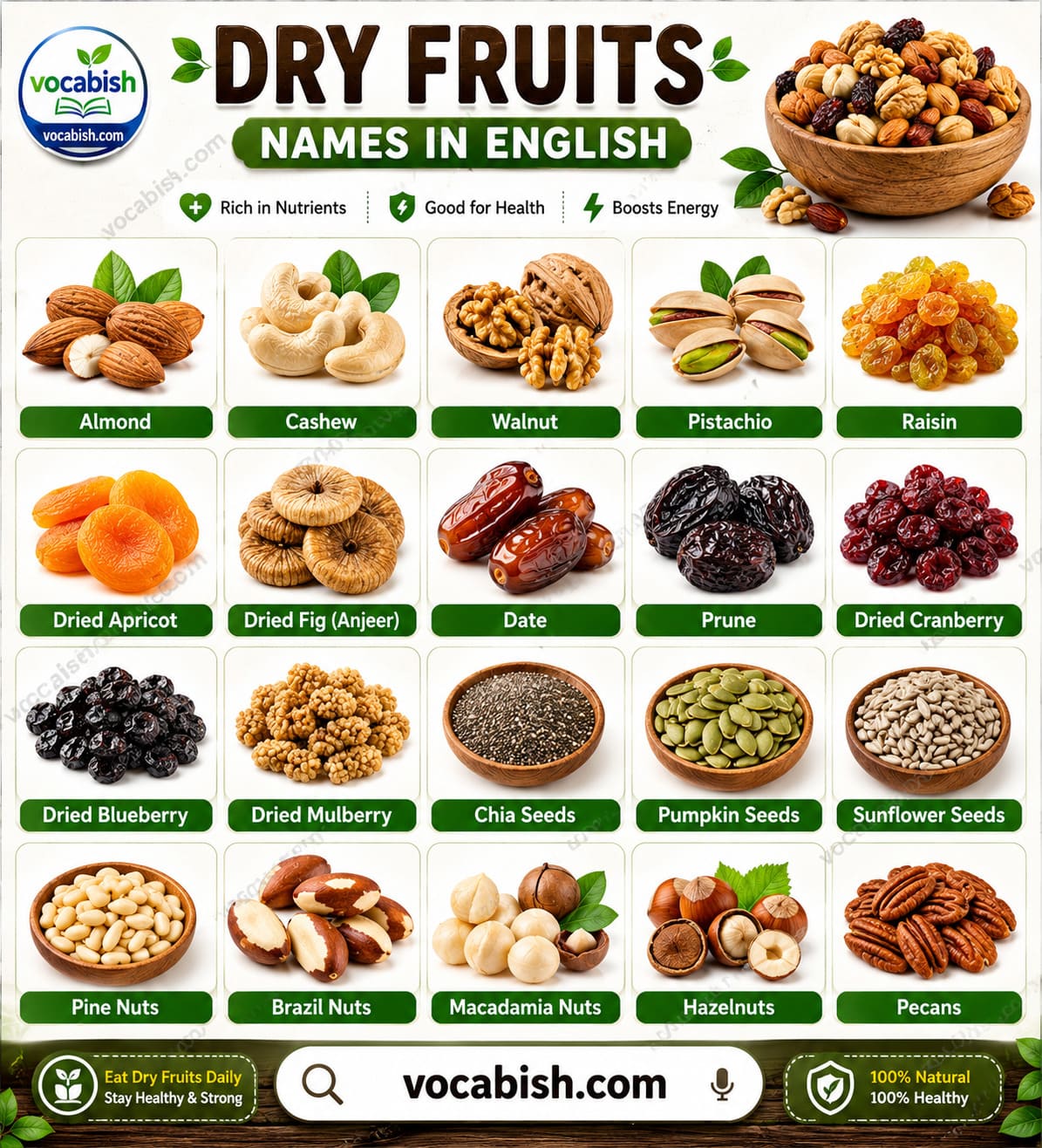
Dry fruits are widely used in snacks, desserts, and healthy diets. Many are rich in vitamins, minerals, and healthy fats.
Most Used Dry Fruits
- Almond
- Cashew
- Walnut
- Pistachio
- Raisin
- Date
- Fig
- Prune
- Apricot (Dried)
- Hazelnut
- Macadamia Nut
- Brazil Nut
- Pine Nut
- Chestnut
- Pecan
Nuts And Seeds Names
- Almond
- Walnut
- Cashew
- Pistachio
- Hazelnut
- Peanut
- Pecan
- Brazil Nut
- Chia Seed
- Flaxseed
- Pumpkin Seed
- Sunflower Seed
- Sesame Seed
- Hemp Seed
- Watermelon Seed
Fruits Names for Kids Learning
Children often learn common fruit names first because they are easy to recognize.
- Apple 🍎
- Banana 🍌
- Orange 🍊
- Mango 🥭
- Watermelon 🍉
- Grapes 🍇
- Strawberry 🍓
- Pineapple 🍍
- Pear 🍐
- Cherry 🍒
Fruit Names by Color in English
Grouping fruits by color helps you remember vocabulary more easily and improves word association.
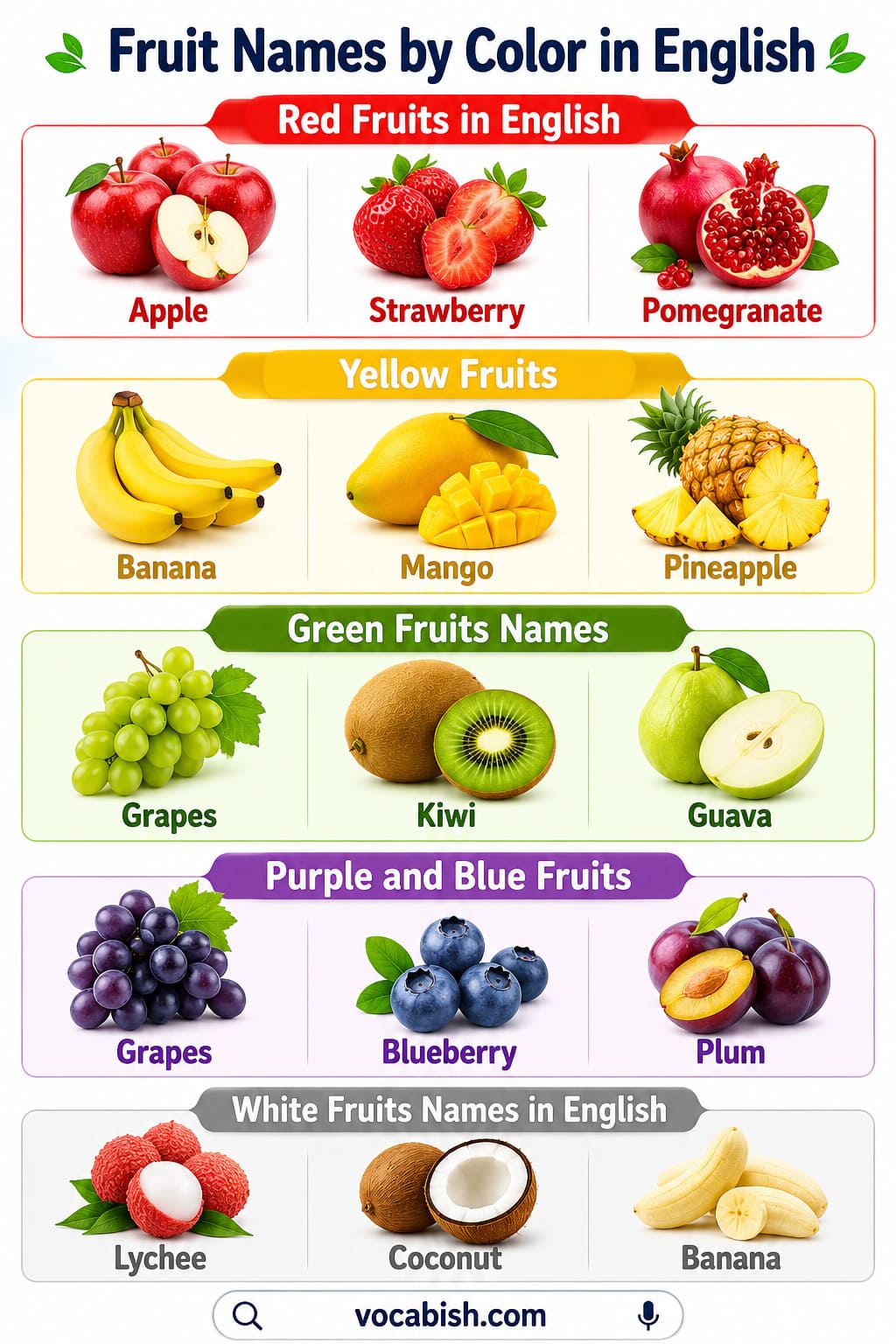
Red Fruits in English
- Apple
- Strawberry
- Cherry
- Raspberry
- Red Grapes
- Cranberry
- Pomegranate
- Red Currant
- Watermelon
- Red Pear
Read more about Red Fruits Name in English.
Yellow Fruits
- Banana
- Lemon
- Pineapple
- Yellow Watermelon
- Starfruit
- Golden Kiwi
- Loquat
- Yellow Passion Fruit
- Yellow Dragon Fruit
- Yellow Pear
Here’s a comprehensive lesson about Yellow Fruits.
Green Fruits Names
- Green Apple
- Kiwi
- Avocado
- Green Grapes
- Lime
- Gooseberry
- Pear
- Breadfruit
- Feijoa
- Green Plum
Learn complete list of Green Fruits with pictures.
Purple and Blue Fruits
- Blueberry
- Blackberry
- Elderberry
- Black Grapes
- Plum
- Mulberry
- Acai Berry
- Damson
- Bilberry
- Concord Grape
Explore more: Purple Fruits Name in English
White Fruits Names in English
- Coconut
- White Peach
- Lychee
- Rambutan
- Longan
- White Mulberry
- Banana
- Pear
- Sapodilla
- White Sapote
Fruit Names By Size
Some fruits are tiny enough to fit on a fingertip, while others can weigh several kilograms.
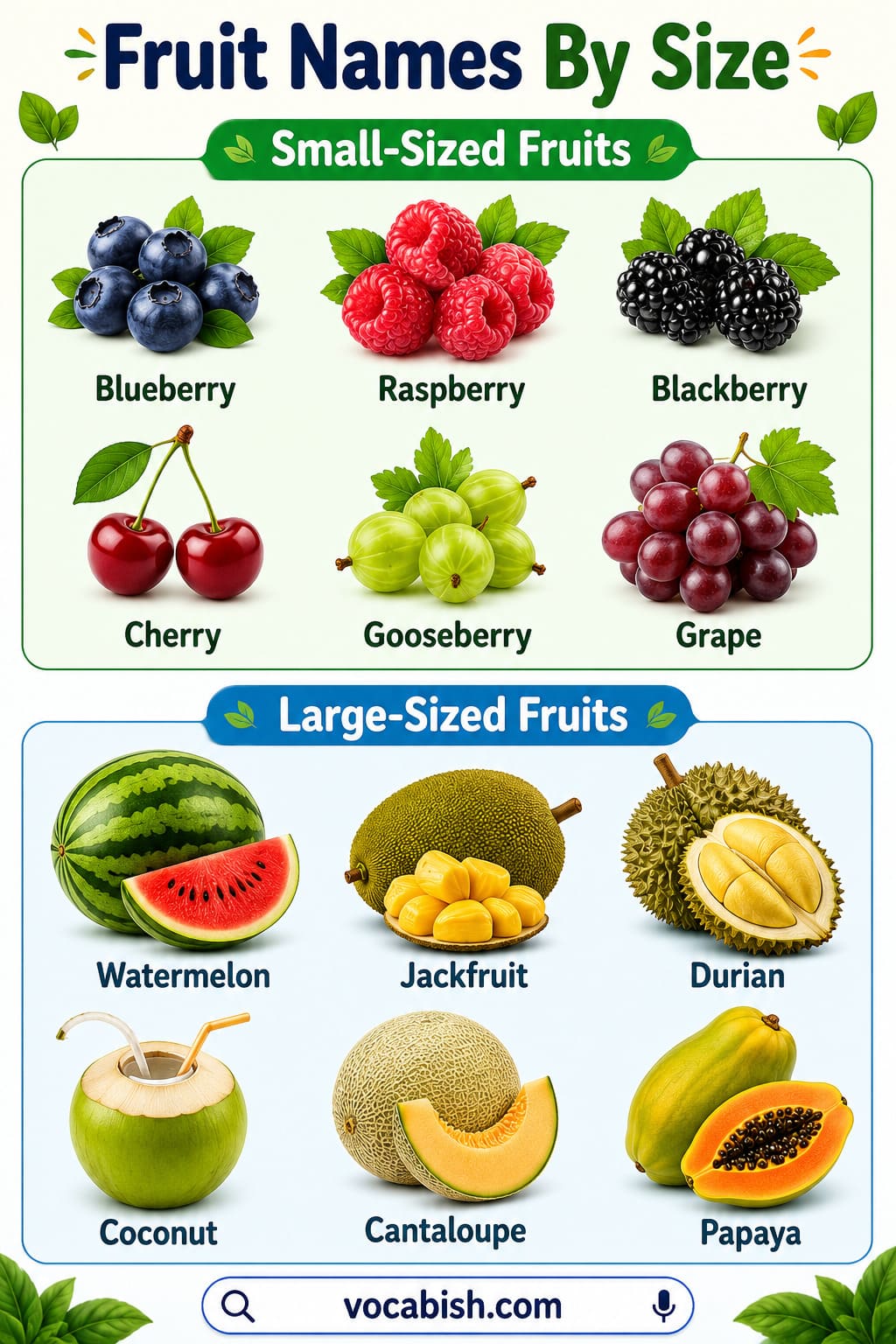
Small-Sized Fruits
- Blueberry
- Raspberry
- Blackberry
- Cranberry
- Cherry
- Currant
- Gooseberry
- Mulberry
- Grape
- Elderberry
Large-Sized Fruits
- Watermelon
- Jackfruit
- Durian
- Coconut
- Pumpkin
- Breadfruit
- Pomelo
- Cantaloupe
- Honeydew
- Giant Papaya
Fruits with High Water Content
These fruits contain a large amount of water, helping the body stay hydrated while providing important nutrients.
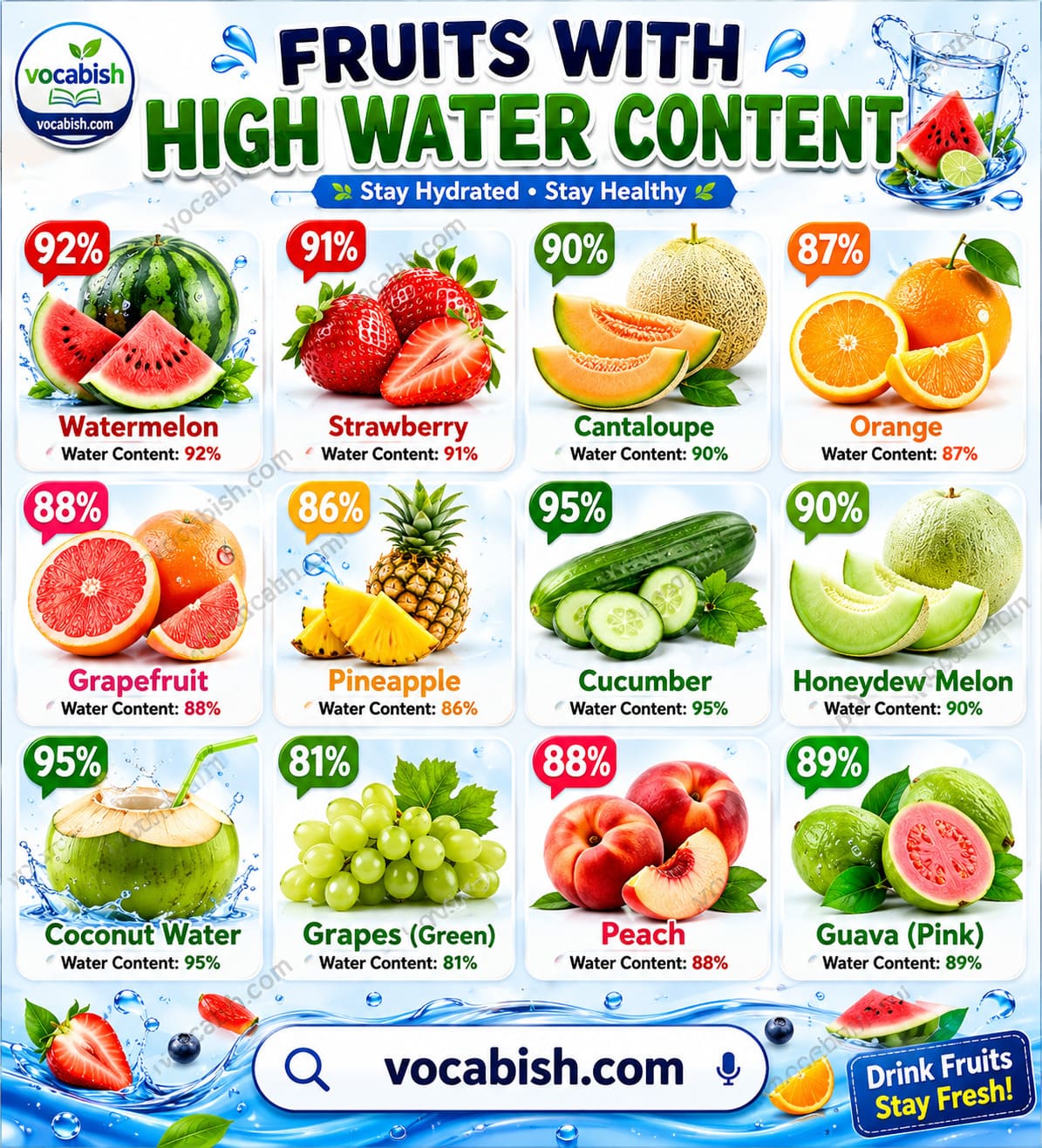
- Watermelon: About 92% water, making it one of the most hydrating fruits.
- Cucumber: Contains around 95% water and has a refreshing, crisp texture.
- Strawberries: Around 91% water and rich in vitamin C.
- Cantaloupe: A juicy melon with about 90% water content.
- Honeydew Melon: Contains nearly 90% water and is naturally sweet.
- Orange: Juicy citrus fruit with about 86% water and plenty of vitamin C.
- Peach: About 88% water with a sweet and soft flesh.
- Pineapple: High in water and known for its tropical, juicy flavor.
- Grapefruit: Contains around 88% water and has a refreshing tangy taste.
- Starfruit: Crisp and juicy fruit with high water content.
- Papaya: Hydrating tropical fruit rich in vitamins and natural enzymes.
- Tomato: About 95% water and packed with antioxidants.
- Coconut Water Fruit: Contains electrolyte-rich coconut water that supports hydration.
- Pear: Juicy fruit with about 84% water and dietary fiber.
- Dragon Fruit: Refreshing fruit with high water content and antioxidants.
A To Z Fruit Names In English
Below is a comprehensive list of fruits from A to Z.
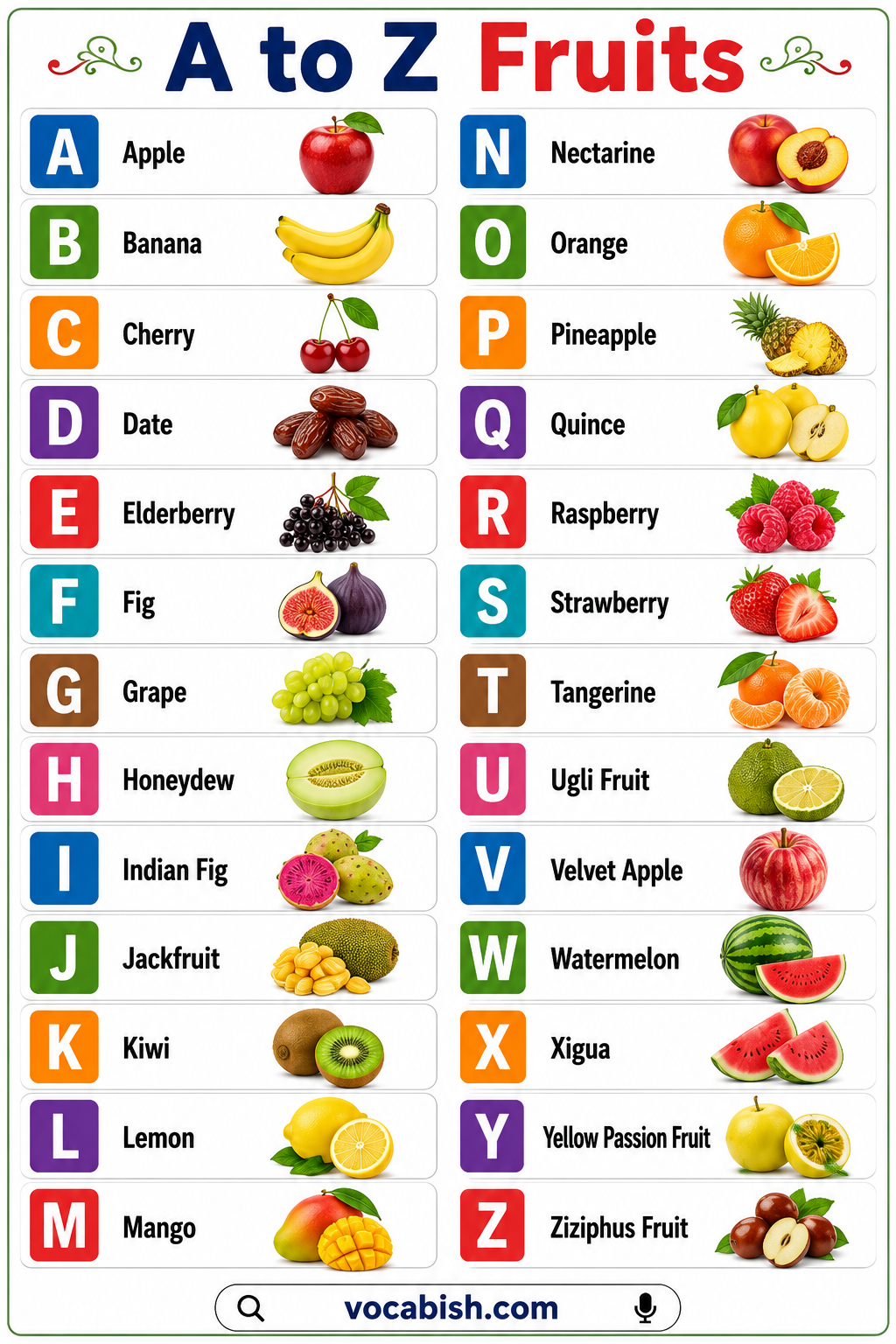
- A: Apple, Apricot, Avocado, Ackee, Amla
- B: Banana, Blackberry, Blueberry, Bilberry, Breadfruit
- C: Cherry, Coconut, Cranberry, Clementine, Currant
- D: Date, Dragon Fruit, Durian, Damson, Dewberry
- E: Elderberry, Eggfruit, Entawak
- F: Fig, Feijoa, Finger Lime
- G: Grape, Grapefruit, Guava, Gooseberry
- H: Honeydew, Huckleberry, Hawthorn Berry
- I: Indian Fig, Imbe, Ice Apple
- J: Jackfruit, Jabuticaba, Jujube
- K: Kiwi, Kumquat, Kaffir Lime
- L: Lemon, Lime, Lychee, Longan, Loquat
- M: Mango, Mangosteen, Mulberry, Muskmelon, Miracle Fruit
- N: Nectarine, Naranjilla
- O: Orange, Olive
- P: Papaya, Pear, Peach, Pineapple, Plum, Pomelo, Passion Fruit, Persimmon, Pomegranate
- Q: Quince
- R: Raspberry, Rambutan, Red Currant
- S: Strawberry, Sapodilla, Soursop, Starfruit, Salak
- T: Tangerine, Tamarind, Tomato
- U: Ugli Fruit
- V: Velvet Apple
- W: Watermelon, White Mulberry
- X: Xigua
- Y: Yellow Passion Fruit, Yuzu
- Z: Ziziphus Fruit
Scientific Names of Common Fruits
Below is a list of common fruits with their scientific (botanical) names.
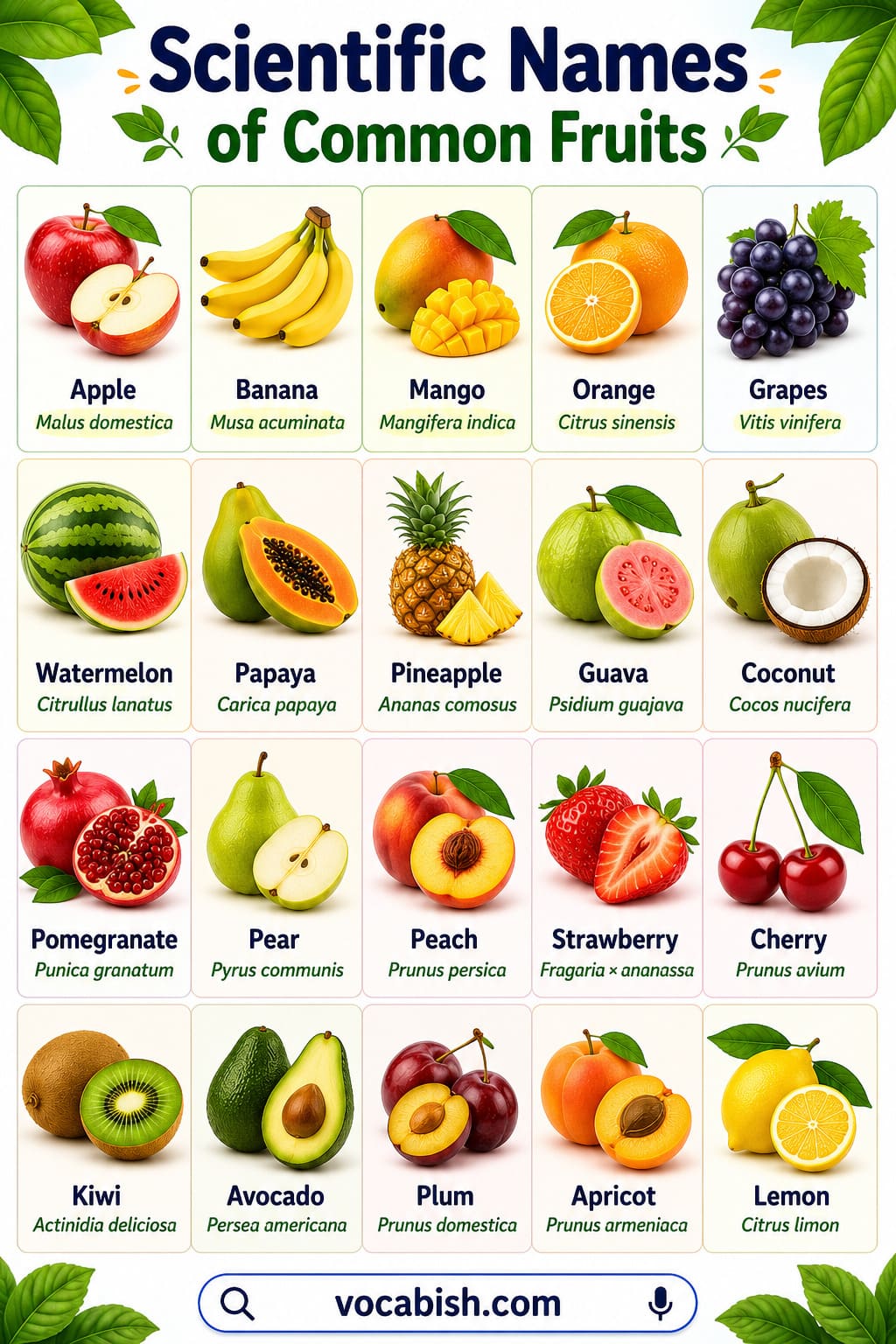
- Apple — Malus domestica
- Banana — Musa acuminata
- Mango — Mangifera indica
- Orange — Citrus sinensis
- Lemon — Citrus limon
- Grapes — Vitis vinifera
- Watermelon — Citrullus lanatus
- Papaya — Carica papaya
- Pineapple — Ananas comosus
- Guava — Psidium guajava
- Coconut — Cocos nucifera
- Pomegranate — Punica granatum
- Pear — Pyrus communis
- Peach — Prunus persica
- Strawberry — Fragaria × ananassa
- Cherry — Prunus avium
- Kiwi — Actinidia deliciosa
- Avocado — Persea americana
- Plum — Prunus domestica
- Apricot — Prunus armeniaca
Download Fruits Vocabulary PDF
Fruits Vocabulary FAQs
Apple, Banana, Orange, Mango, Grapes, Watermelon, Pineapple, Strawberry, Pear, and Peach are among the most common fruit names worldwide.
The most common fruit that starts with is Xiguau, a type of watermelon originally grown in Africa. It has sweet, juicy red flesh and is widely enjoyed in many parts of the world.
Fresh fruits contain natural water and juicy flesh, while dry fruits are dried fruits, nuts, or seeds with lower moisture content.
Tropical fruits are fruits that grow in warm, humid climates near the equator. They are often sweet, colorful, and rich in vitamins. Examples: mango, pineapple, papaya, coconut, guava, dragon fruit, and lychee.
Fruit vocabulary appears in daily conversations, shopping, restaurant menus, school lessons, and many English language activities.
Many fruits are available throughout the year due to global farming and storage methods. Examples: bananas, apples, lemons, limes, papayas, coconuts, pineapples, avocados, grapes, and guavas.
Fruits from A to Z include Apple, Banana, Cherry, Date, Elderberry, Fig, Guava, Honeydew, Kiwi, Mango, Orange, Quince, Watermelon, and more.
Watermelon, Cantaloupe, Strawberries, Orange, Grapefruit, Honeydew Melon, and Peach are known for their high water content.
There is no single healthiest fruit, as different fruits offer different nutrients. However, blueberries are often considered one of the healthiest fruits because they are rich in antioxidants, fiber, and vitamins.
Read More