
Many language learners look for Spanish sentences for beginners because learning complete sentences helps words stay in memory more naturally. Instead of studying vocabulary lists alone, learners can understand how words work together in everyday communication.
This collection focuses on useful Spanish sentences that beginners can read, repeat, and use in daily situations. The examples cover greetings, introductions, common conversations, and everyday expressions that appear frequently in spoken Spanish.
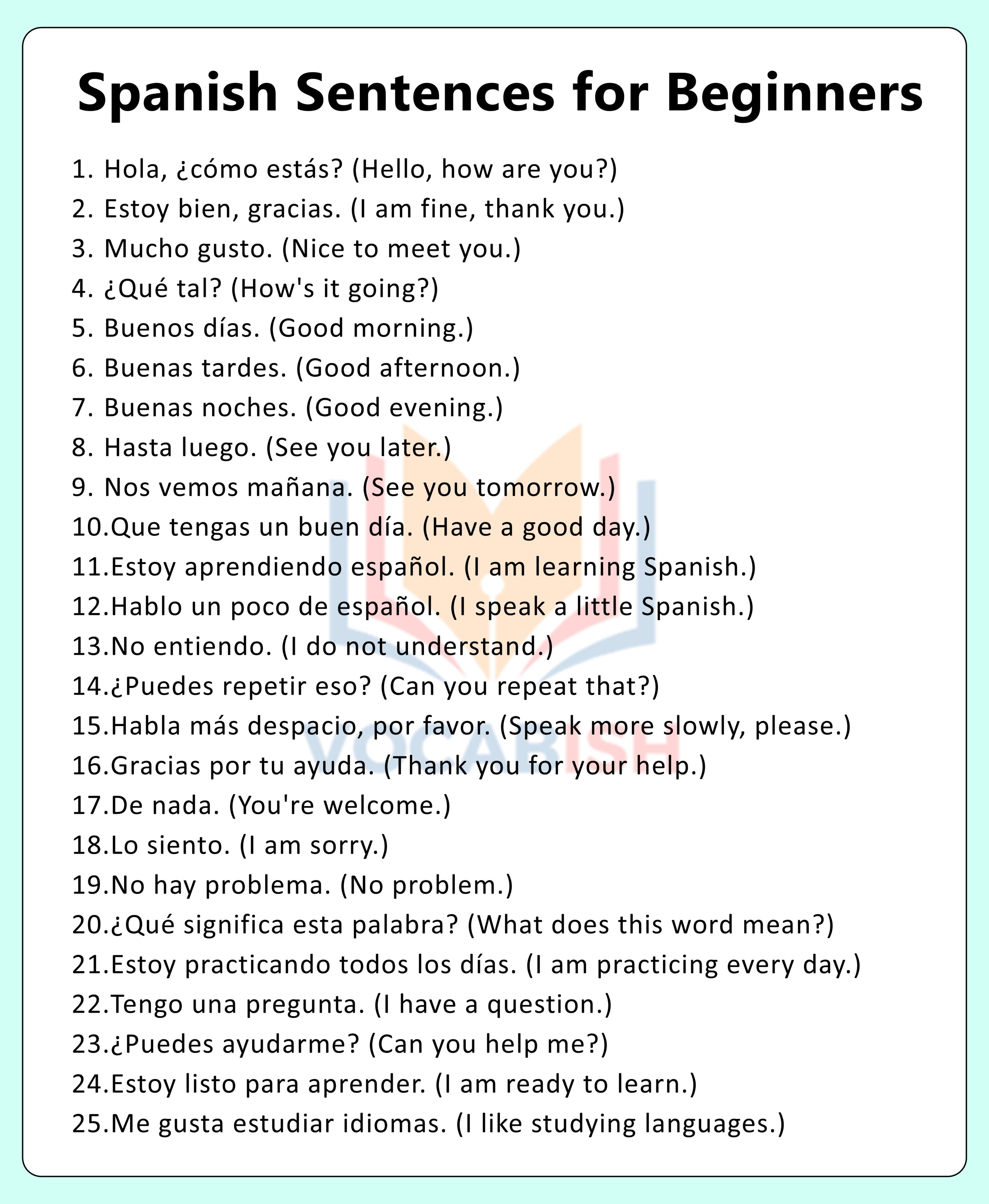
Spanish Sentences for Beginners
These Spanish sentences for beginners are designed to help you recognize common patterns and use them naturally during conversations.
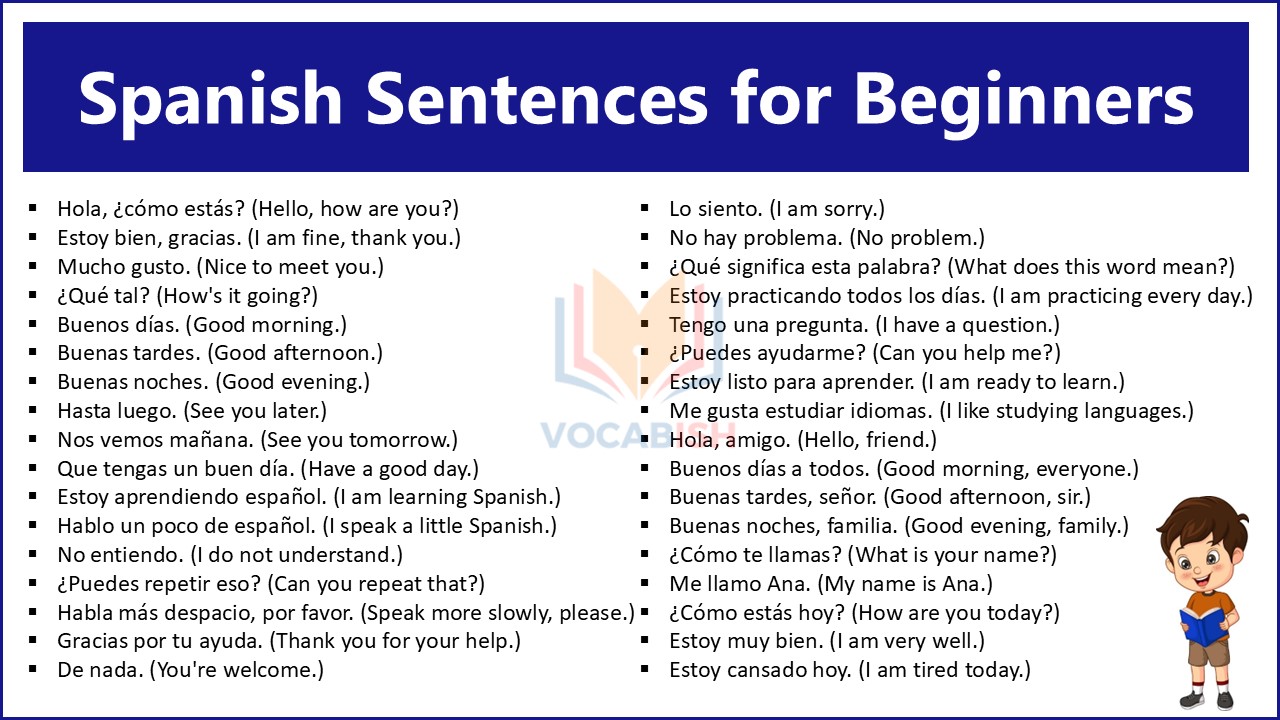
- Hola, ¿cómo estás? (Hello, how are you?)
- Estoy bien, gracias. (I am fine, thank you.)
- Mucho gusto. (Nice to meet you.)
- ¿Qué tal? (How’s it going?)
- Buenos días. (Good morning.)
- Buenas tardes. (Good afternoon.)
- Buenas noches. (Good evening.)
- Hasta luego. (See you later.)
- Nos vemos mañana. (See you tomorrow.)
- Que tengas un buen día. (Have a good day.)
- Estoy aprendiendo español. (I am learning Spanish.)
- Hablo un poco de español. (I speak a little Spanish.)
- No entiendo. (I do not understand.)
- ¿Puedes repetir eso? (Can you repeat that?)
- Habla más despacio, por favor. (Speak more slowly, please.)
- Gracias por tu ayuda. (Thank you for your help.)
- De nada. (You’re welcome.)
- Lo siento. (I am sorry.)
- No hay problema. (No problem.)
- ¿Qué significa esta palabra? (What does this word mean?)
- Estoy practicando todos los días. (I am practicing every day.)
- Tengo una pregunta. (I have a question.)
- ¿Puedes ayudarme? (Can you help me?)
- Estoy listo para aprender. (I am ready to learn.)
- Me gusta estudiar idiomas. (I like studying languages.)
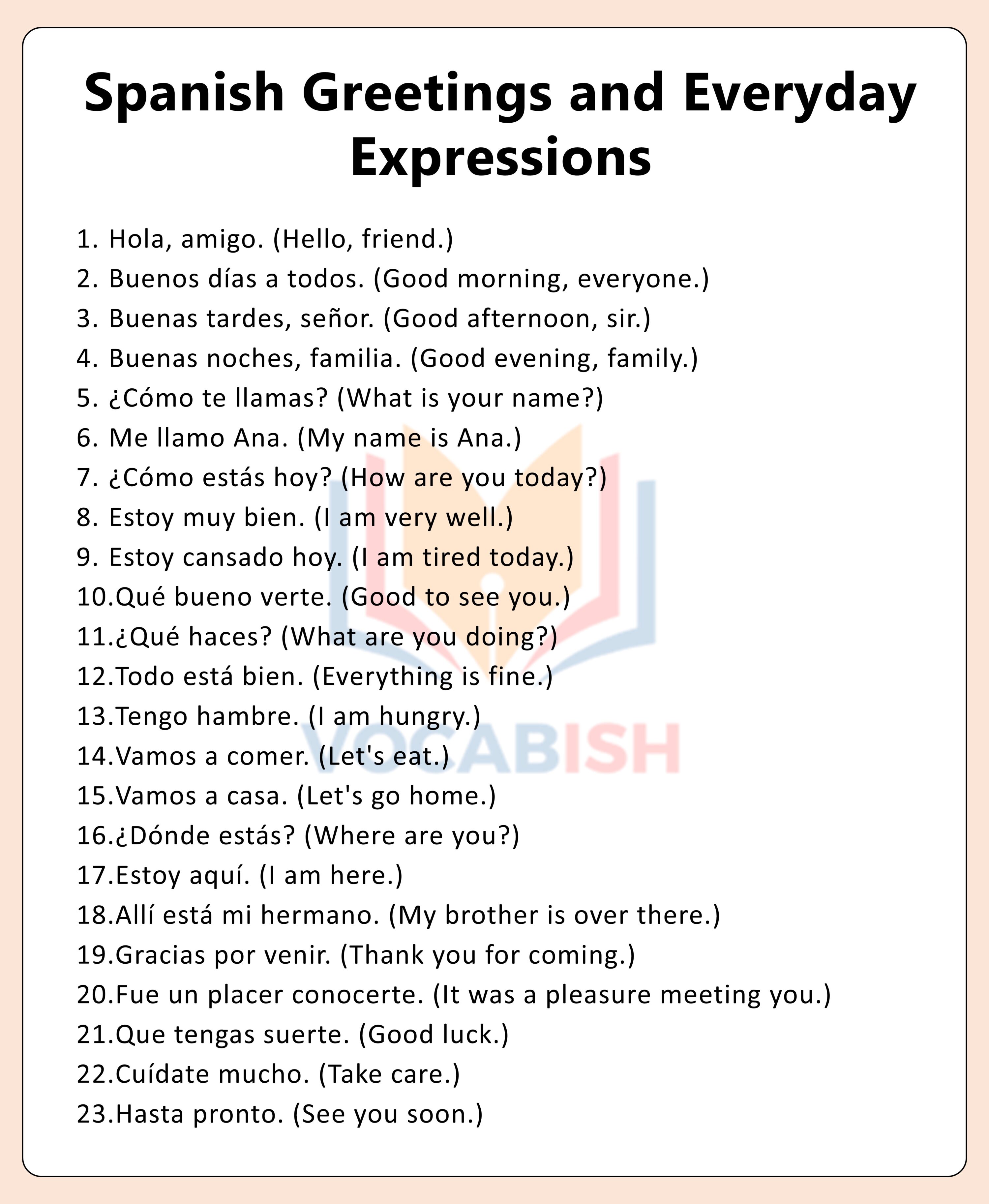
Basic Spanish Greetings and Everyday Expressions
Greetings are often the first sentences you should learn. They appear in schools, workplaces, shops, and casual conversations. Learning these expressions can help you start conversations with confidence.
Practice saying these sentences aloud and notice how they are used in different situations.
- Hola, amigo. (Hello, friend.)
- Buenos días a todos. (Good morning, everyone.)
- Buenas tardes, señor. (Good afternoon, sir.)
- Buenas noches, familia. (Good evening, family.)
- ¿Cómo te llamas? (What is your name?)
- Me llamo Ana. (My name is Ana.)
- ¿Cómo estás hoy? (How are you today?)
- Estoy muy bien. (I am very well.)
- Estoy cansado hoy. (I am tired today.)
- Estoy feliz de verte. (I am happy to see you.)
- Qué bueno verte. (Good to see you.)
- ¿Qué haces? (What are you doing?)
- Todo está bien. (Everything is fine.)
- Tengo hambre. (I am hungry.)
- Tengo sed. (I am thirsty.)
- Vamos a comer. (Let’s eat.)
- Vamos a casa. (Let’s go home.)
- ¿Dónde estás? (Where are you?)
- Estoy aquí. (I am here.)
- Allí está mi hermano. (My brother is over there.)
- Gracias por venir. (Thank you for coming.)
- Fue un placer conocerte. (It was a pleasure meeting you.)
- Que tengas suerte. (Good luck.)
- Cuídate mucho. (Take care.)
- Hasta pronto. (See you soon.)
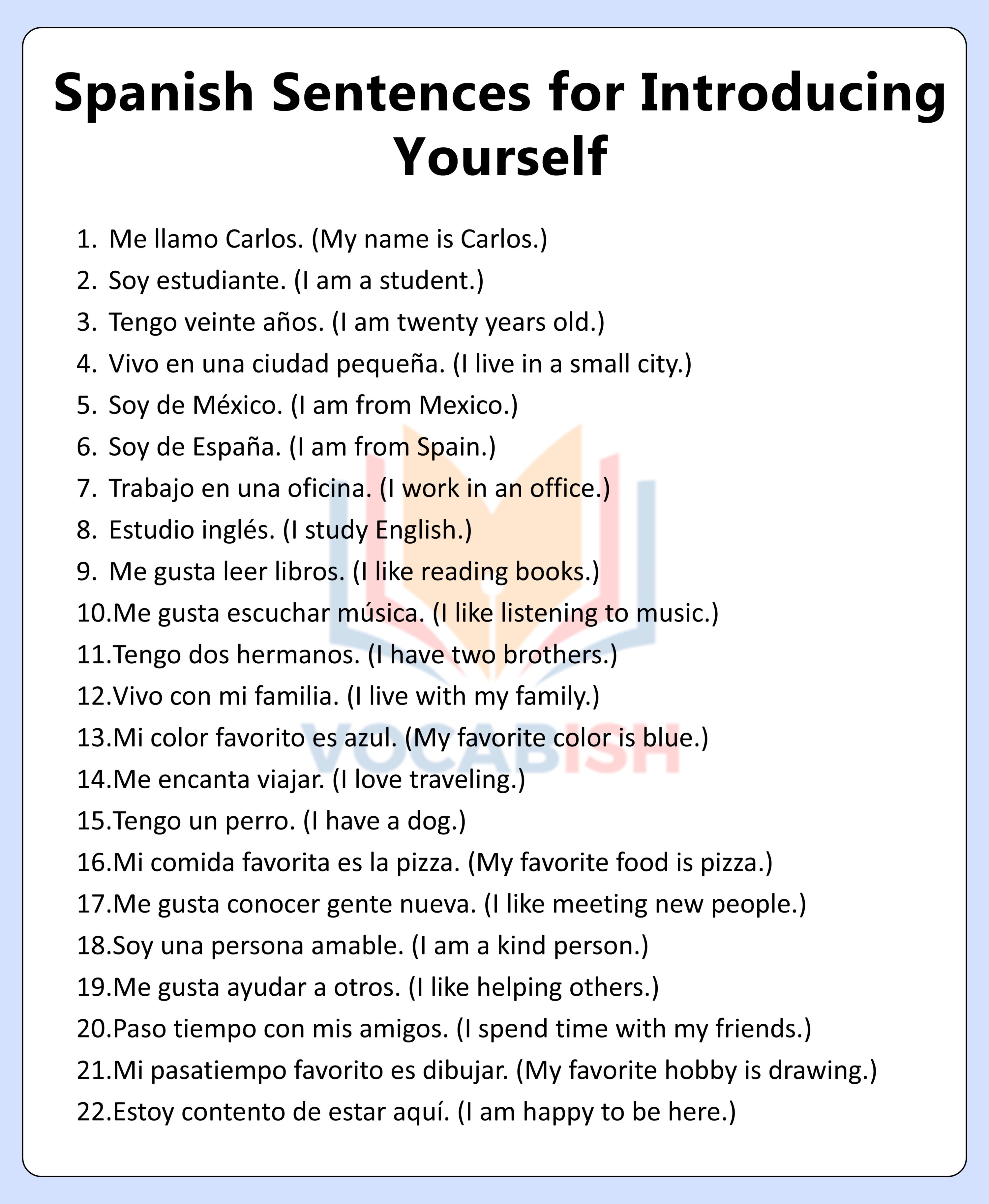
Spanish Sentences for Introducing Yourself
Introducing yourself is one of the most common situations for beginners. These sentences help you talk about your name, age, country, hobbies, and personal information.
Many of these examples can be combined to create a short self-introduction.
- Me llamo Carlos. (My name is Carlos.)
- Soy estudiante. (I am a student.)
- Tengo veinte años. (I am twenty years old.)
- Vivo en una ciudad pequeña. (I live in a small city.)
- Soy de México. (I am from Mexico.)
- Soy de España. (I am from Spain.)
- Trabajo en una oficina. (I work in an office.)
- Estudio inglés. (I study English.)
- Me gusta leer libros. (I like reading books.)
- Me gusta escuchar música. (I like listening to music.)
- Tengo dos hermanos. (I have two brothers.)
- Vivo con mi familia. (I live with my family.)
- Mi color favorito es azul. (My favorite color is blue.)
- Me encanta viajar. (I love traveling.)
- Juego al fútbol los fines de semana. (I play soccer on weekends.)
- Tengo un perro. (I have a dog.)
- Mi comida favorita es la pizza. (My favorite food is pizza.)
- Me gusta conocer gente nueva. (I like meeting new people.)
- Estoy aprendiendo español por diversión. (I am learning Spanish for fun.)
- Quiero hablar español con fluidez. (I want to speak Spanish fluently.)
- Soy una persona amable. (I am a kind person.)
- Me gusta ayudar a otros. (I like helping others.)
- Paso tiempo con mis amigos. (I spend time with my friends.)
- Mi pasatiempo favorito es dibujar. (My favorite hobby is drawing.)
- Estoy contento de estar aquí. (I am happy to be here.)
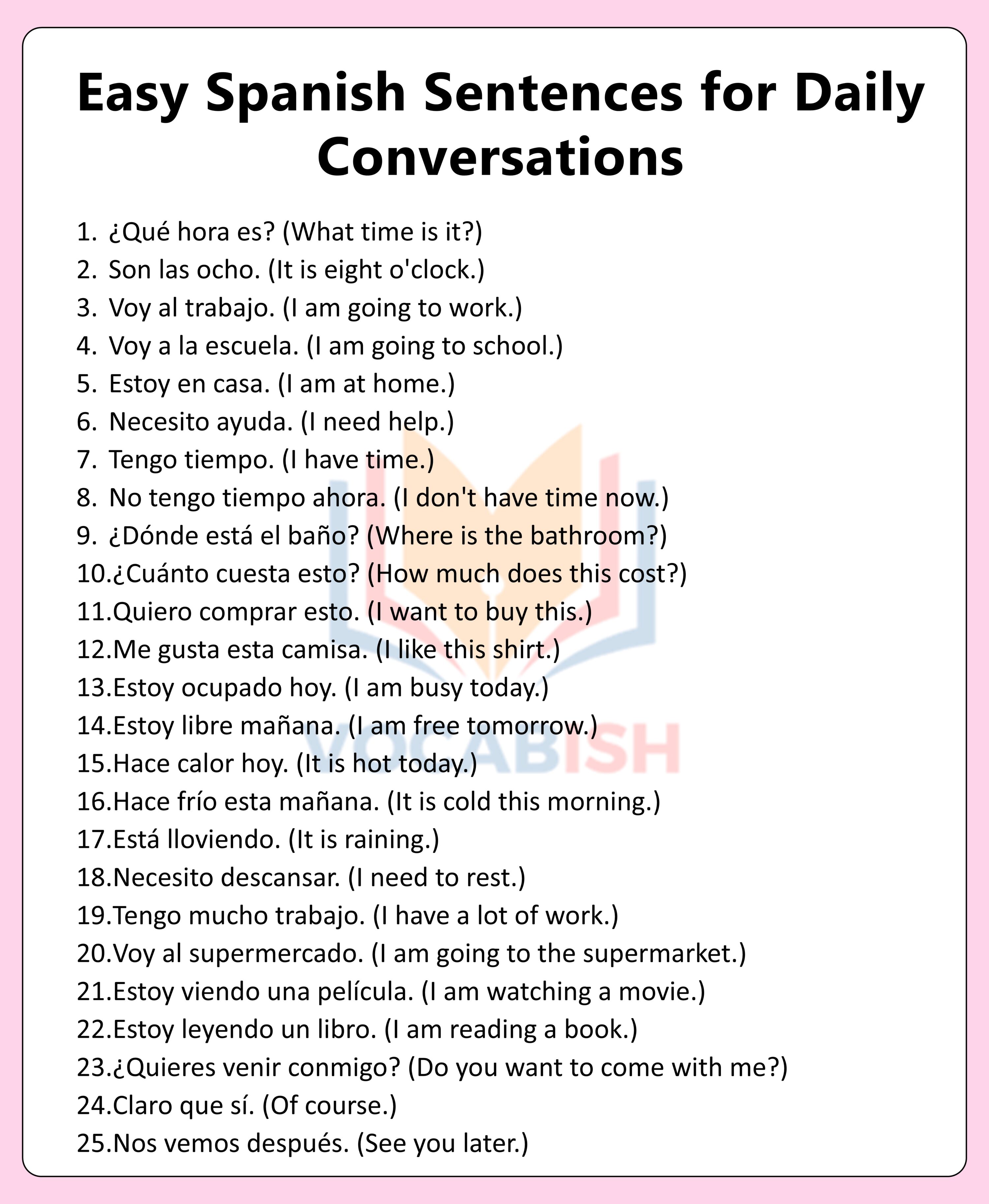
Easy Spanish Sentences for Daily Conversations
Daily conversations often involve routine activities, questions, and short responses. These easy Spanish sentences for beginners can help you understand how everyday communication works.
Try using these examples during practice sessions or language exchanges.
- ¿Qué hora es? (What time is it?)
- Son las ocho. (It is eight o’clock.)
- Voy al trabajo. (I am going to work.)
- Voy a la escuela. (I am going to school.)
- Estoy en casa. (I am at home.)
- Necesito ayuda. (I need help.)
- Tengo tiempo. (I have time.)
- No tengo tiempo ahora. (I don’t have time now.)
- ¿Dónde está el baño? (Where is the bathroom?)
- ¿Cuánto cuesta esto? (How much does this cost?)
- Quiero comprar esto. (I want to buy this.)
- Me gusta esta camisa. (I like this shirt.)
- Estoy ocupado hoy. (I am busy today.)
- Estoy libre mañana. (I am free tomorrow.)
- Hace calor hoy. (It is hot today.)
- Hace frío esta mañana. (It is cold this morning.)
- Está lloviendo. (It is raining.)
- Necesito descansar. (I need to rest.)
- Tengo mucho trabajo. (I have a lot of work.)
- Voy al supermercado. (I am going to the supermarket.)
- Estoy viendo una película. (I am watching a movie.)
- Estoy leyendo un libro. (I am reading a book.)
- ¿Quieres venir conmigo? (Do you want to come with me?)
- Claro que sí. (Of course.)
- Nos vemos después. (See you later.)
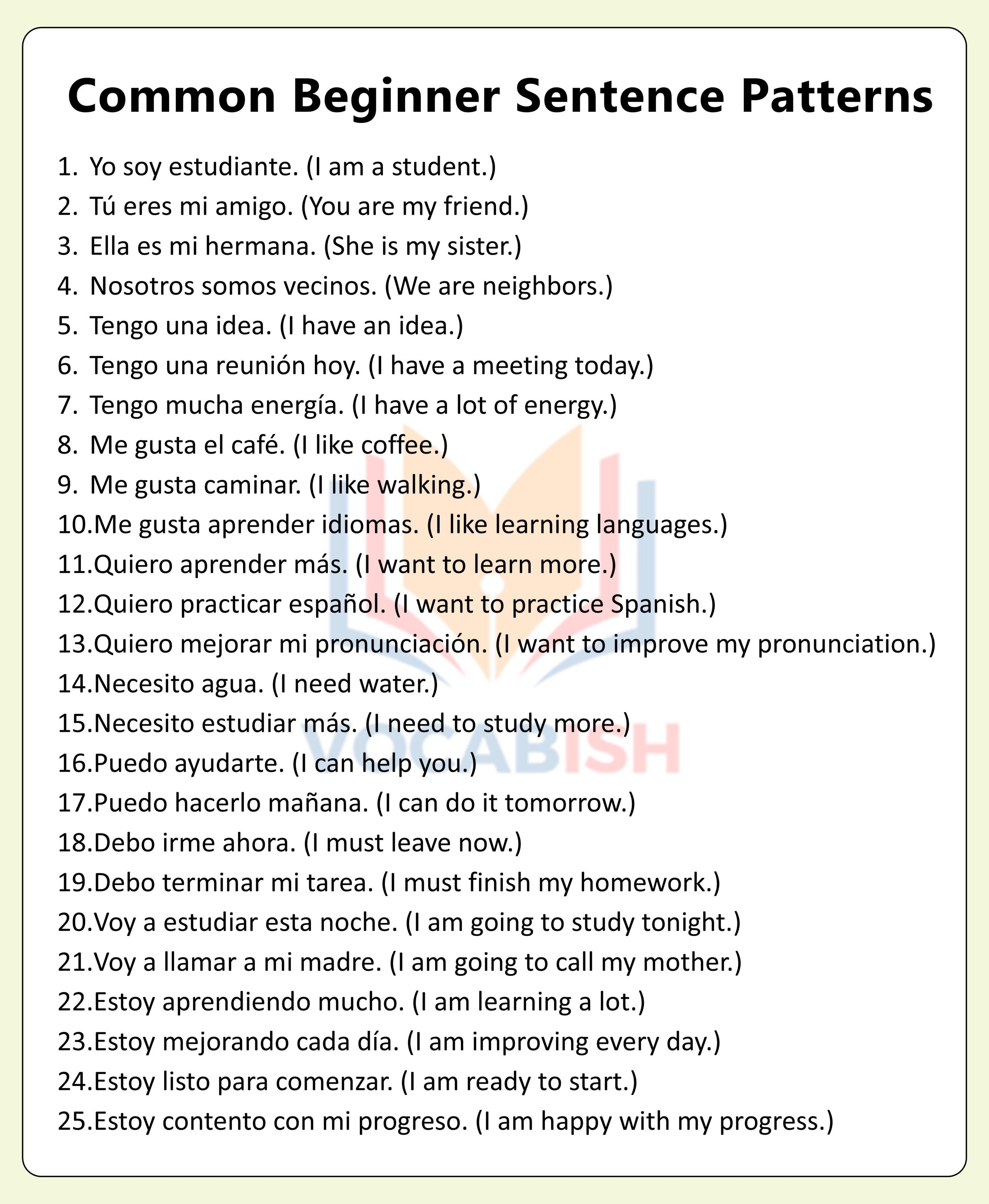
Common Beginner Sentence Patterns
Understanding sentence patterns helps you create your own sentences instead of memorizing every phrase. Many Spanish conversations are built from a few common structures.
Pay attention to how these patterns repeat across different situations.
- Yo soy estudiante. (I am a student.)
- Tú eres mi amigo. (You are my friend.)
- Ella es mi hermana. (She is my sister.)
- Nosotros somos vecinos. (We are neighbors.)
- Tengo una idea. (I have an idea.)
- Tengo una reunión hoy. (I have a meeting today.)
- Tengo mucha energía. (I have a lot of energy.)
- Me gusta el café. (I like coffee.)
- Me gusta caminar. (I like walking.)
- Me gusta aprender idiomas. (I like learning languages.)
- Quiero aprender más. (I want to learn more.)
- Quiero practicar español. (I want to practice Spanish.)
- Quiero mejorar mi pronunciación. (I want to improve my pronunciation.)
- Necesito agua. (I need water.)
- Necesito estudiar más. (I need to study more.)
- Puedo ayudarte. (I can help you.)
- Puedo hacerlo mañana. (I can do it tomorrow.)
- Debo irme ahora. (I must leave now.)
- Debo terminar mi tarea. (I must finish my homework.)
- Voy a estudiar esta noche. (I am going to study tonight.)
- Voy a llamar a mi madre. (I am going to call my mother.)
- Estoy aprendiendo mucho. (I am learning a lot.)
- Estoy mejorando cada día. (I am improving every day.)
- Estoy listo para comenzar. (I am ready to start.)
- Estoy contento con mi progreso. (I am happy with my progress.)
You May Also Like:
- 100+ Basic Sentences in Spanish with PDF
- 50 Color Names in Spanish with Chart
- How to Say How are You in Spanish
Download Spanish Sentences for Practice PDF
Download the PDF for quick and easy Spanish sentence practice.
FAQs about Spanish Sentences for Beginners
The best sentences are short, useful expressions that appear often in daily conversations, such as greetings, introductions, and common questions.
Complete sentences help you understand vocabulary, grammar, and natural communication patterns together.
Many learners benefit from practicing 10 to 20 sentences each day and reviewing older sentences regularly.
Yes. Most examples use everyday vocabulary that children and adult learners can understand.
Memorizing useful sentences can help, especially when combined with listening and speaking practice.
Read them aloud, repeat them frequently, and use them in conversations whenever possible.
No. Many learners begin speaking with basic sentence patterns and improve grammar over time.
Conclusion
Learning Spanish through complete sentences helps you understand vocabulary and communication in a natural way. These Spanish sentences for beginners provide useful examples that can be practiced daily to build confidence and improve speaking skills.