
Learning Sentences in Spanish is one of the fastest ways to build confidence in speaking and understanding the language. Instead of memorizing isolated words, learners can see how vocabulary works naturally inside complete thoughts and everyday conversations.
This collection includes practical expressions that Spanish learners often hear and use in daily life. Each sentence comes with an English translation to help you understand meaning, sentence structure, and common usage patterns.
Common Spanish Sentence Patterns for Beginners
When learning Spanish, it helps to recognize the sentence patterns that native speakers use every day. Instead of memorizing random sentences, you can learn a few common structures and use them to create hundreds of your own sentences.
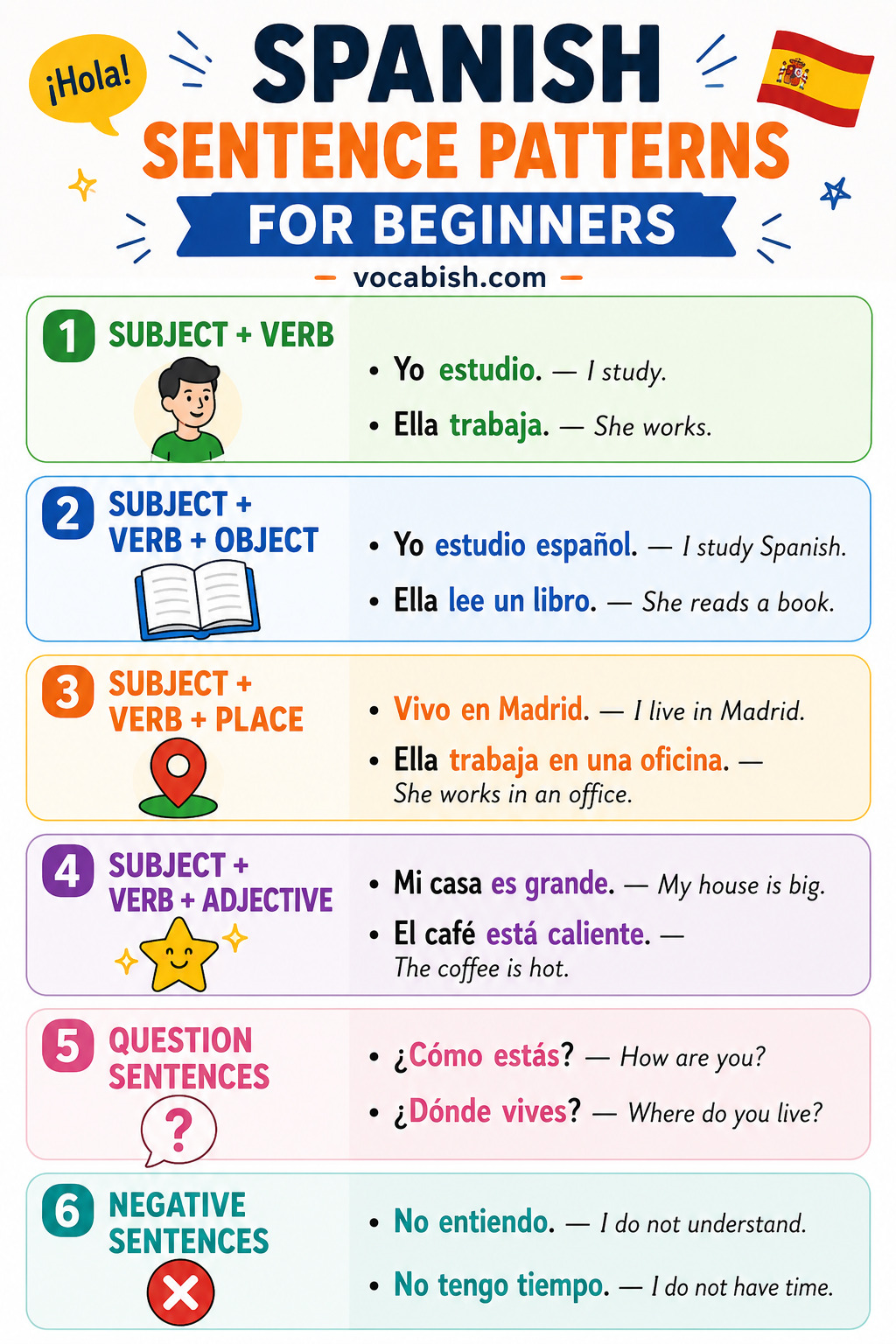
1. Subject + Verb
This is one of the shortest and most common sentence patterns in Spanish. It is often used when the action is clear and direct.
Examples:
- Yo estudio. — I study.
- Ella trabaja. — She works.
2. Subject + Verb + Object
This pattern adds more information by showing what the action affects. It is very common in conversations, writing, and everyday communication.
Examples:
- Yo estudio español. — I study Spanish.
- Ella lee un libro. — She reads a book.
3. Subject + Verb + Place
People often talk about where they are, where they go, or where something happens. This pattern helps describe locations and movement.
Examples:
- Vivo en Madrid. — I live in Madrid.
- Ella trabaja en una oficina. — She works in an office.
4. Subject + Verb + Adjective
This pattern is useful when describing people, places, objects, or feelings.
Examples:
- Mi casa es grande. — My house is big.
- El café está caliente. — The coffee is hot.
5. Question Sentences
Questions are an important part of communication. Learning a few question patterns can help you start and maintain conversations.
Examples:
- ¿Cómo estás? — How are you?
- ¿Dónde vives? — Where do you live?
6. Negative Sentences
To make a sentence negative, Spanish usually places no before the verb.
Examples:
- No entiendo. — I do not understand.
- No tengo tiempo. — I do not have time.
Greetings and Introductions: Basic Sentences in Spanish
Greetings are often the first sentences learners use when meeting new people. These expressions help you start conversations, introduce yourself, and respond politely in social situations.
The examples below are common in everyday Spanish-speaking environments.
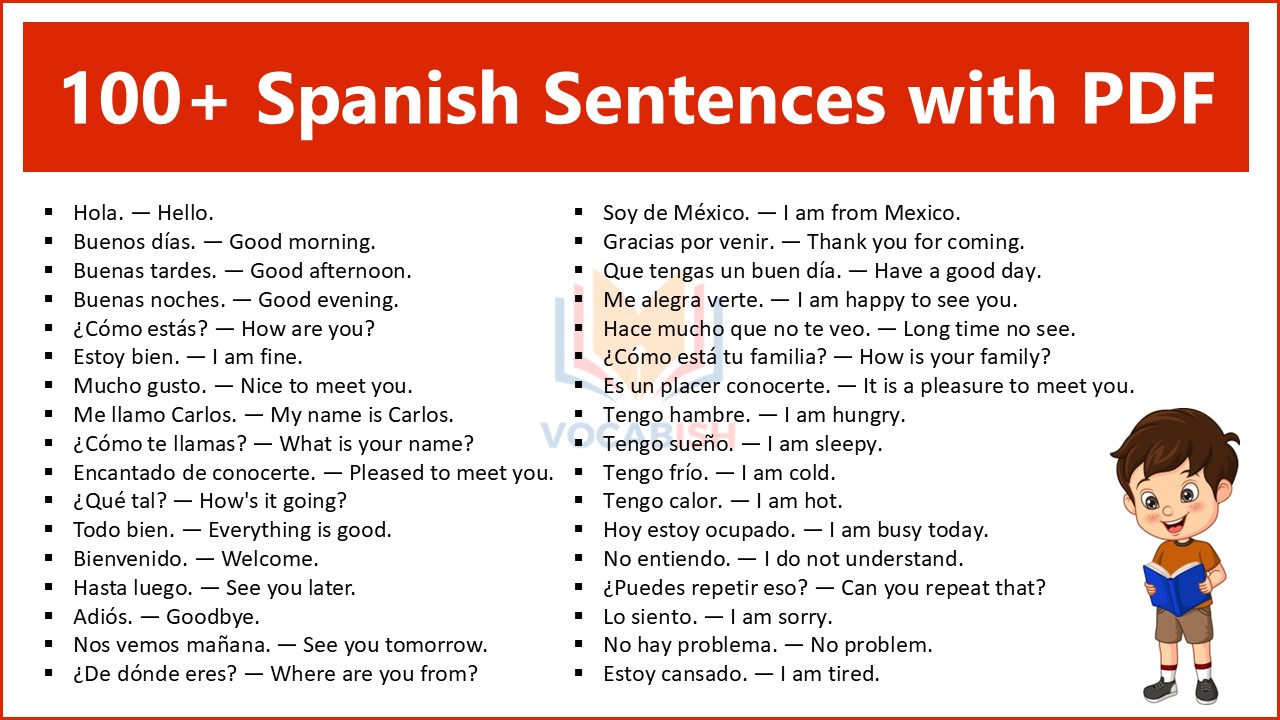
- Hola. — Hello.
- Buenos días. — Good morning.
- Buenas tardes. — Good afternoon.
- Buenas noches. — Good evening.
- ¿Cómo estás? — How are you?
- Estoy bien. — I am fine.
- Mucho gusto. — Nice to meet you.
- Me llamo Carlos. — My name is Carlos.
- ¿Cómo te llamas? — What is your name?
- Encantado de conocerte. — Pleased to meet you.
- ¿Qué tal? — How’s it going?
- Todo bien. — Everything is good.
- Bienvenido. — Welcome.
- Hasta luego. — See you later.
- Adiós. — Goodbye.
- Nos vemos mañana. — See you tomorrow.
- ¿De dónde eres? — Where are you from?
- Soy de México. — I am from Mexico.
- Gracias por venir. — Thank you for coming.
- Que tengas un buen día. — Have a good day.
- Me alegra verte. — I am happy to see you.
- Hace mucho que no te veo. — Long time no see.
- ¿Cómo está tu familia? — How is your family?
- Es un placer conocerte. — It is a pleasure to meet you.
- Espero verte pronto. — I hope to see you soon.
Daily Conversation Sentences in Spanish
Daily conversations include asking about plans, sharing opinions, and talking about everyday activities. These sentences are useful in casual interactions with friends, neighbors, and classmates.
They also help learners become familiar with common Spanish sentence patterns.
- Tengo hambre. — I am hungry.
- Tengo sueño. — I am sleepy.
- Tengo frío. — I am cold.
- Tengo calor. — I am hot.
- Hoy estoy ocupado. — I am busy today.
- No entiendo. — I do not understand.
- ¿Puedes repetir eso? — Can you repeat that?
- Lo siento. — I am sorry.
- No hay problema. — No problem.
- Estoy cansado. — I am tired.
- ¿Qué haces hoy? — What are you doing today?
- Voy al supermercado. — I am going to the supermarket.
- Estoy en casa. — I am at home.
- Llegaré pronto. — I will arrive soon.
- Me gusta esta idea. — I like this idea.
- No estoy seguro. — I am not sure.
- Estoy de acuerdo. — I agree.
- Tal vez mañana. — Maybe tomorrow.
- Eso es interesante. — That is interesting.
- Tengo una pregunta. — I have a question.
- Necesito ayuda. — I need help.
- Estoy aprendiendo español. — I am learning Spanish.
- ¿Qué pasó? — What happened?
- Todo está bien. — Everything is fine.
- Vamos juntos. — Let’s go together.
Family and Home Sentences in Spanish
Family and home are common topics in daily communication. Learning these sentences helps you describe people, routines, and activities around the house.
These examples are useful for both speaking and writing practice.
- Mi familia es grande. — My family is big.
- Tengo dos hermanos. — I have two brothers.
- Vivo con mis padres. — I live with my parents.
- Mi hermana está estudiando. — My sister is studying.
- Mi madre cocina muy bien. — My mother cooks very well.
- Mi padre trabaja mucho. — My father works a lot.
- Estamos en casa. — We are at home.
- La cena está lista. — Dinner is ready.
- Voy a limpiar mi habitación. — I am going to clean my room.
- Necesito lavar la ropa. — I need to wash the clothes.
- La televisión está encendida. — The television is on.
- El bebé está dormido. — The baby is asleep.
- Mi perro está en el jardín. — My dog is in the garden.
- Tenemos una casa pequeña. — We have a small house.
- La puerta está abierta. — The door is open.
- Cierra la ventana, por favor. — Close the window, please.
- Estoy descansando en el sofá. — I am resting on the sofa.
- Mi familia cena junta. — My family eats dinner together.
- Hoy hacemos la limpieza. — We are cleaning today.
- La cocina está limpia. — The kitchen is clean.
- Estoy viendo una película. — I am watching a movie.
- Mi hermano juega videojuegos. — My brother plays video games.
- Necesitamos comprar comida. — We need to buy food.
- El gato está debajo de la mesa. — The cat is under the table.
- Es una casa muy cómoda. — It is a very comfortable house.
School and Study Sentences
Students often need Spanish sentences related to learning, homework, and classroom communication. These examples cover situations that happen regularly at school or while studying.
They also introduce useful education-related vocabulary.
- Tengo clase hoy. — I have class today.
- Llegué temprano a la escuela. — I arrived early at school.
- El examen es mañana. — The exam is tomorrow.
- Necesito estudiar más. — I need to study more.
- ¿Cuál es la tarea? — What is the homework?
- Estoy leyendo un libro. — I am reading a book.
- Mi profesor es amable. — My teacher is kind.
- Tomo notas en clase. — I take notes in class.
- La lección fue interesante. — The lesson was interesting.
- Aprendo algo nuevo cada día. — I learn something new every day.
- ¿Puedes ayudarme con esto? — Can you help me with this?
- Entiendo la respuesta. — I understand the answer.
- No sé la respuesta. — I do not know the answer.
- Necesito un lápiz. — I need a pencil.
- Estoy practicando español. — I am practicing Spanish.
- La biblioteca está abierta. — The library is open.
- Tengo que terminar mi proyecto. — I have to finish my project.
- El aula está llena. — The classroom is full.
- Me gusta aprender idiomas. — I like learning languages.
- Estoy preparando una presentación. — I am preparing a presentation.
- ¿Cuándo es la prueba? — When is the test?
- Mi cuaderno está en mi mochila. — My notebook is in my backpack.
- Hoy aprendimos gramática. — We learned grammar today.
- Estoy haciendo mi tarea. — I am doing my homework.
- La escuela comienza a las ocho. — School starts at eight.
Work and Office Sentences in Spanish
Workplace communication often involves meetings, schedules, tasks, and teamwork. These Spanish sentences can help learners communicate in professional situations.
They are useful for office workers, freelancers, and job seekers.
- Tengo una reunión hoy. — I have a meeting today.
- Llegué al trabajo temprano. — I arrived at work early.
- Estoy ocupado esta mañana. — I am busy this morning.
- Necesito enviar un correo electrónico. — I need to send an email.
- Mi jefe está en la oficina. — My boss is in the office.
- Estamos trabajando en un proyecto. — We are working on a project.
- ¿Puedes revisar este documento? — Can you review this document?
- Terminé mi tarea. — I finished my task.
- Tenemos mucho trabajo hoy. — We have a lot of work today.
- La reunión fue productiva. — The meeting was productive.
- Estoy aprendiendo nuevas habilidades. — I am learning new skills.
- Necesito más tiempo. — I need more time.
- El plazo es mañana. — The deadline is tomorrow.
- Estoy hablando con un cliente. — I am speaking with a client.
- ¿Qué opinas de esta idea? — What do you think of this idea?
- Estoy disponible esta tarde. — I am available this afternoon.
- Tenemos que colaborar. — We need to collaborate.
- El informe está listo. — The report is ready.
- Voy a llamar al cliente. — I am going to call the client.
- Mi computadora es lenta hoy. — My computer is slow today.
- Estoy respondiendo mensajes. — I am replying to messages.
- Necesitamos una solución. — We need a solution.
- El trabajo terminó temprano. — The work finished early.
- Estoy organizando mis archivos. — I am organizing my files.
- Fue un buen día de trabajo. — It was a good workday.
Shopping and Food Sentences in Spanish
Shopping and food conversations happen frequently when traveling or living in a Spanish-speaking country. These examples help you order food, ask about prices, and communicate in stores.
Many of these expressions are heard every day.
- Quiero comprar esto. — I want to buy this.
- ¿Cuánto cuesta? — How much does it cost?
- Es demasiado caro. — It is too expensive.
- Me gusta esta camisa. — I like this shirt.
- Estoy buscando zapatos. — I am looking for shoes.
- ¿Aceptan tarjetas? — Do you accept cards?
- Necesito una bolsa. — I need a bag.
- Voy al mercado. — I am going to the market.
- Tengo hambre. — I am hungry.
- Quiero una pizza. — I want a pizza.
- La comida está deliciosa. — The food is delicious.
- ¿Qué recomiendas? — What do you recommend?
- Quisiera un café, por favor. — I would like a coffee, please.
- Necesito agua. — I need water.
- El restaurante está lleno. — The restaurant is full.
- La cuenta, por favor. — The bill, please.
- Estoy cocinando la cena. — I am cooking dinner.
- Compré frutas frescas. — I bought fresh fruit.
- Me encanta el chocolate. — I love chocolate.
- ¿Hay opciones vegetarianas? — Are there vegetarian options?
- El desayuno está listo. — Breakfast is ready.
- Vamos a almorzar. — Let’s have lunch.
- Esta sopa está caliente. — This soup is hot.
- El pan está fresco. — The bread is fresh.
- Me gustaría probar eso. — I would like to try that.
Travel and Transportation Sentences in Spanish
Travel often requires asking for directions, buying tickets, and understanding transportation information. These Spanish sentences help you handle common situations while moving around.
They are especially useful for vacations and business trips.
- ¿Dónde está la estación? — Where is the station?
- Necesito un taxi. — I need a taxi.
- ¿A qué hora sale el tren? — What time does the train leave?
- Tengo un boleto. — I have a ticket.
- El aeropuerto está lejos. — The airport is far away.
- Estoy de vacaciones. — I am on vacation.
- Vamos al hotel. — We are going to the hotel.
- ¿Puede mostrarme el camino? — Can you show me the way?
- Me perdí. — I got lost.
- Necesito un mapa. — I need a map.
- El autobús ya llegó. — The bus has already arrived.
- ¿Dónde puedo comprar un boleto? — Where can I buy a ticket?
- Nuestro vuelo sale pronto. — Our flight leaves soon.
- Estoy visitando Madrid. — I am visiting Madrid.
- El viaje fue agradable. — The trip was pleasant.
- Quiero reservar una habitación. — I want to book a room.
- ¿Está cerca de aquí? — Is it near here?
- Caminemos un poco. — Let’s walk a little.
- El tráfico está pesado. — The traffic is heavy.
- Llegamos a tiempo. — We arrived on time.
- Estoy esperando el autobús. — I am waiting for the bus.
- Necesito ayuda con mi equipaje. — I need help with my luggage.
- El hotel tiene buena ubicación. — The hotel has a good location.
- ¿Cuál es la mejor ruta? — What is the best route?
- Estoy disfrutando el viaje. — I am enjoying the trip.
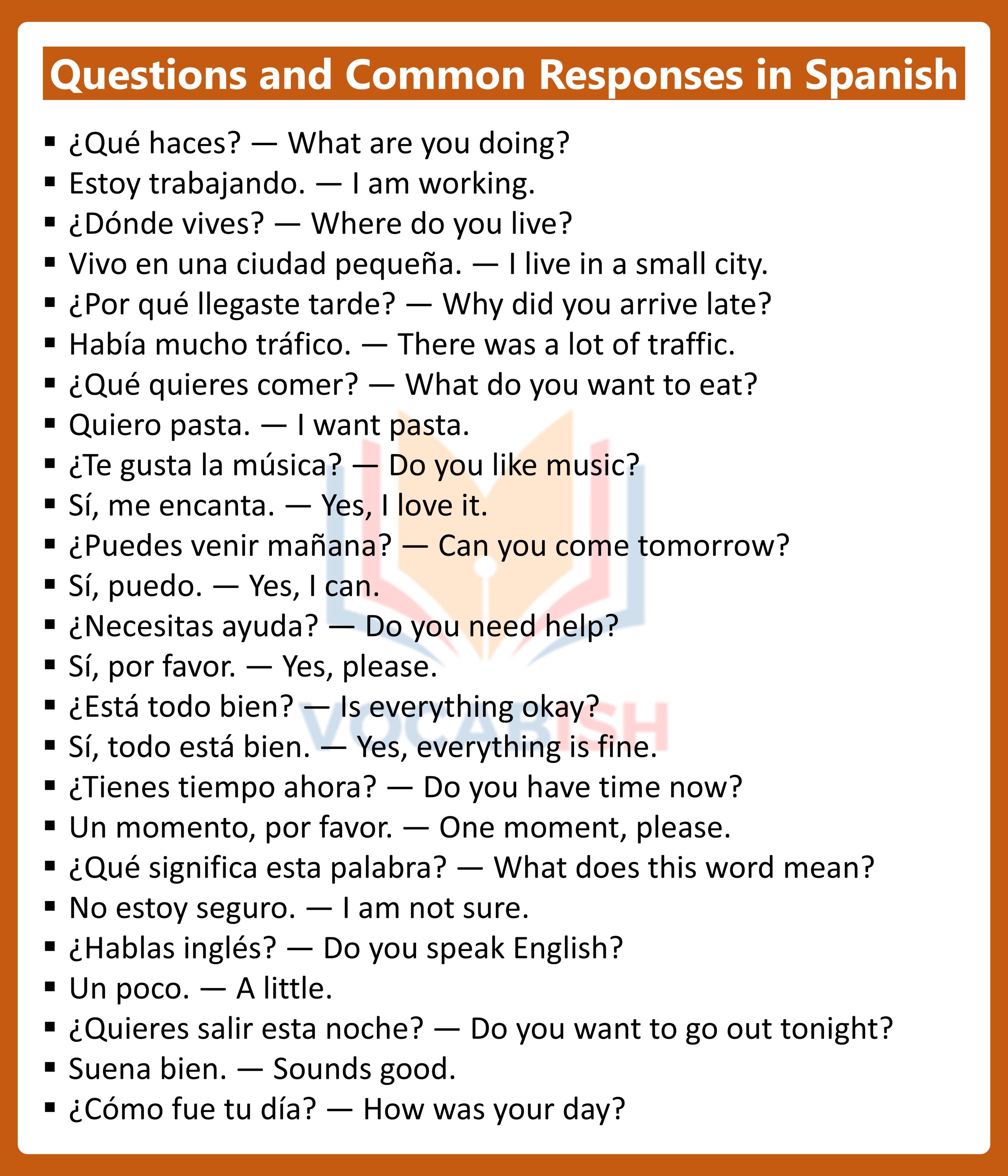
Questions and Common Responses in Spanish
Questions and responses keep conversations moving. Learning these sentence patterns helps you ask for information and react naturally during discussions.
Many beginners use these expressions every day.
- ¿Qué haces? — What are you doing?
- Estoy trabajando. — I am working.
- ¿Dónde vives? — Where do you live?
- Vivo en una ciudad pequeña. — I live in a small city.
- ¿Por qué llegaste tarde? — Why did you arrive late?
- Había mucho tráfico. — There was a lot of traffic.
- ¿Qué quieres comer? — What do you want to eat?
- Quiero pasta. — I want pasta.
- ¿Te gusta la música? — Do you like music?
- Sí, me encanta. — Yes, I love it.
- ¿Puedes venir mañana? — Can you come tomorrow?
- Sí, puedo. — Yes, I can.
- ¿Necesitas ayuda? — Do you need help?
- Sí, por favor. — Yes, please.
- ¿Está todo bien? — Is everything okay?
- Sí, todo está bien. — Yes, everything is fine.
- ¿Tienes tiempo ahora? — Do you have time now?
- Un momento, por favor. — One moment, please.
- ¿Qué significa esta palabra? — What does this word mean?
- No estoy seguro. — I am not sure.
- ¿Hablas inglés? — Do you speak English?
- Un poco. — A little.
- ¿Quieres salir esta noche? — Do you want to go out tonight?
- Suena bien. — Sounds good.
- ¿Cómo fue tu día? — How was your day?
You May Also Like:
- 200+ Spanish Words List and Meanings with PDF
- The 7 Days of The Week in Spanish
- 30 Common Spanish Phrases for Everyday
Download Spanish Sentences PDF
FAQs About Sentences in Spanish
Reading and repeating complete sentences helps you understand vocabulary, grammar, and natural word order at the same time.
Many learners start with 50 to 100 common sentences used in greetings, daily conversations, and everyday situations.
A complete sentence shows how words work together, making it easier to remember and use them correctly.
Yes. Most examples use common vocabulary and everyday situations suitable for new learners.
The word sentence in Spanish is oración. It is commonly used when talking about grammar and complete thoughts in a language.
Most Spanish sentences follow a structure similar to English: subject + verb + object. For example, Yo estudio español means I study Spanish.
Examples include:
Hola. — Hello.
¿Cómo estás? — How are you?
Tengo hambre. — I am hungry.
Gracias. — Thank you.
Conclusion
Learning Sentences in Spanish is one of the most effective ways to build vocabulary, improve speaking confidence, and understand how Spanish is used in everyday situations. These 100 Spanish sentences with English translations cover greetings, family, school, work, shopping, travel, and common conversations.
Review a few sentences each day, say them aloud, and use them whenever possible. Over time, these basic sentences in Spanish will help you communicate more naturally and understand conversations with greater confidence.