
Nouns formed from nouns are new nouns created by adding a suffix, changing the spelling, or combining two existing nouns. These derived nouns often name people, professions, relationships, conditions, groups, periods, places, or...
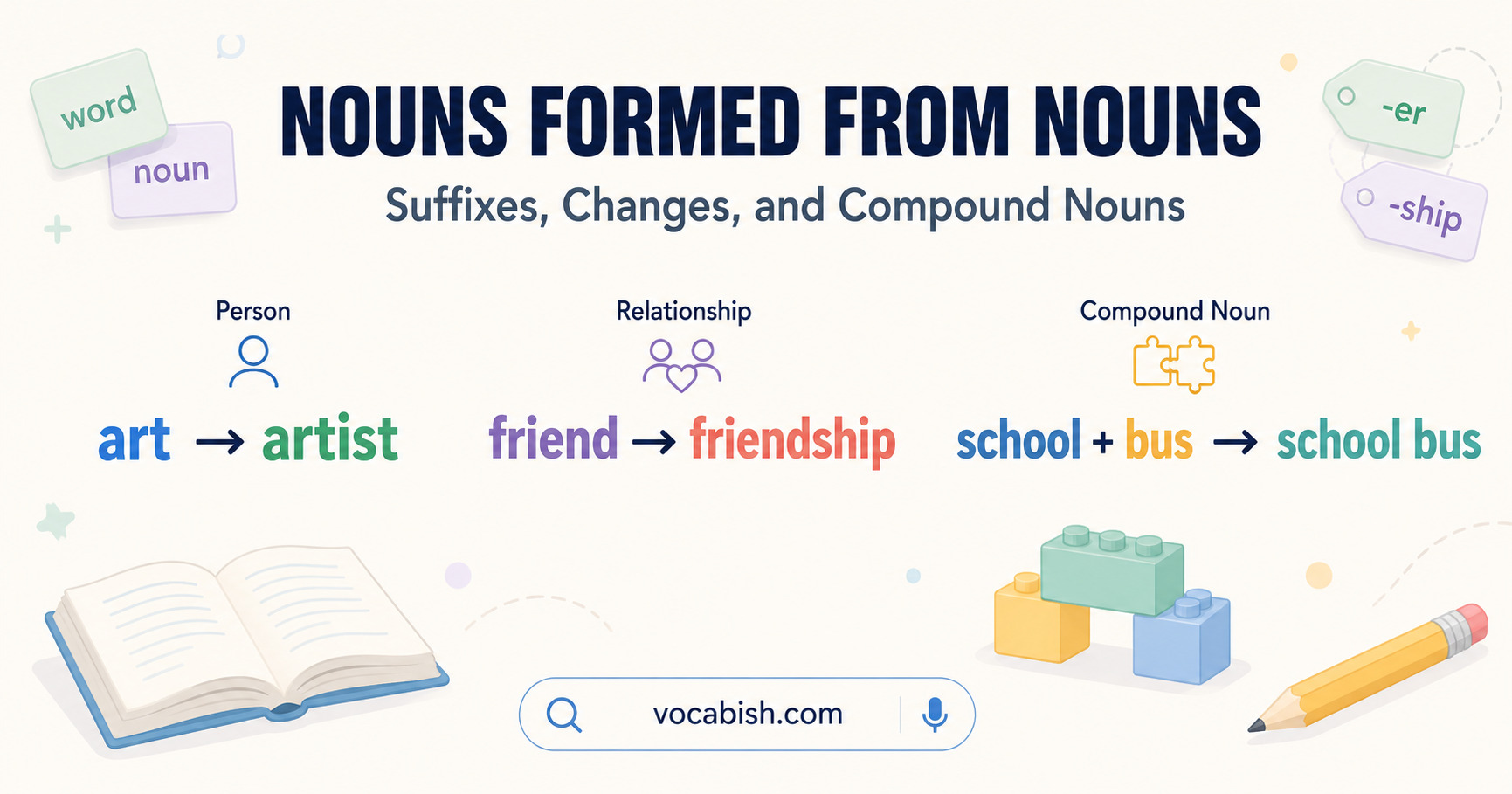
Nouns formed from nouns are new nouns created by adding a suffix, changing the spelling, or combining two existing nouns. These derived nouns often name people, professions, relationships, conditions, groups, periods, places, or...
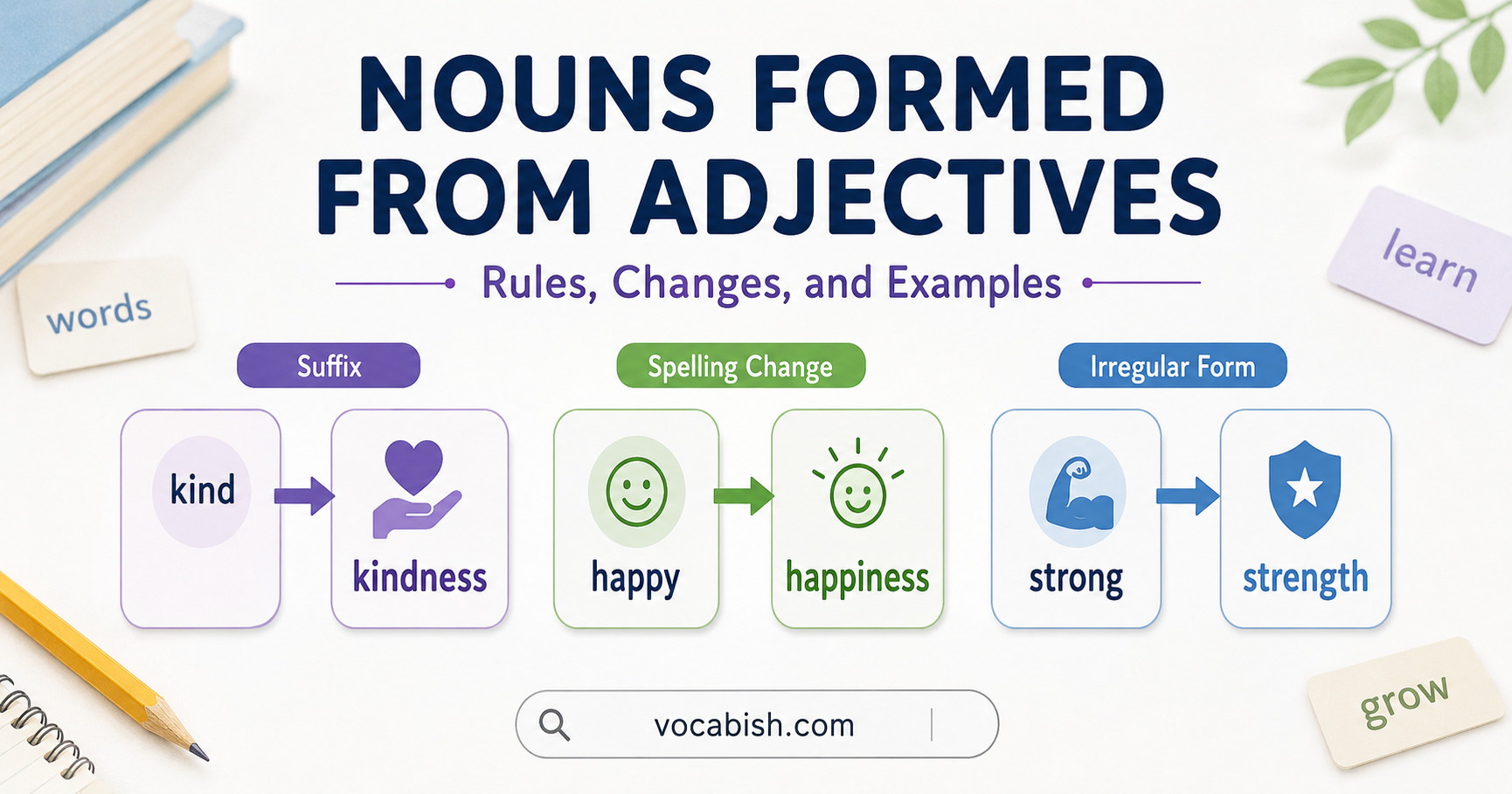
Nouns formed from adjectives name the quality, feeling, state, or condition described by an adjective. For example, kind becomes kindness, happy becomes happiness, and strong becomes strength. These noun forms help us talk about...
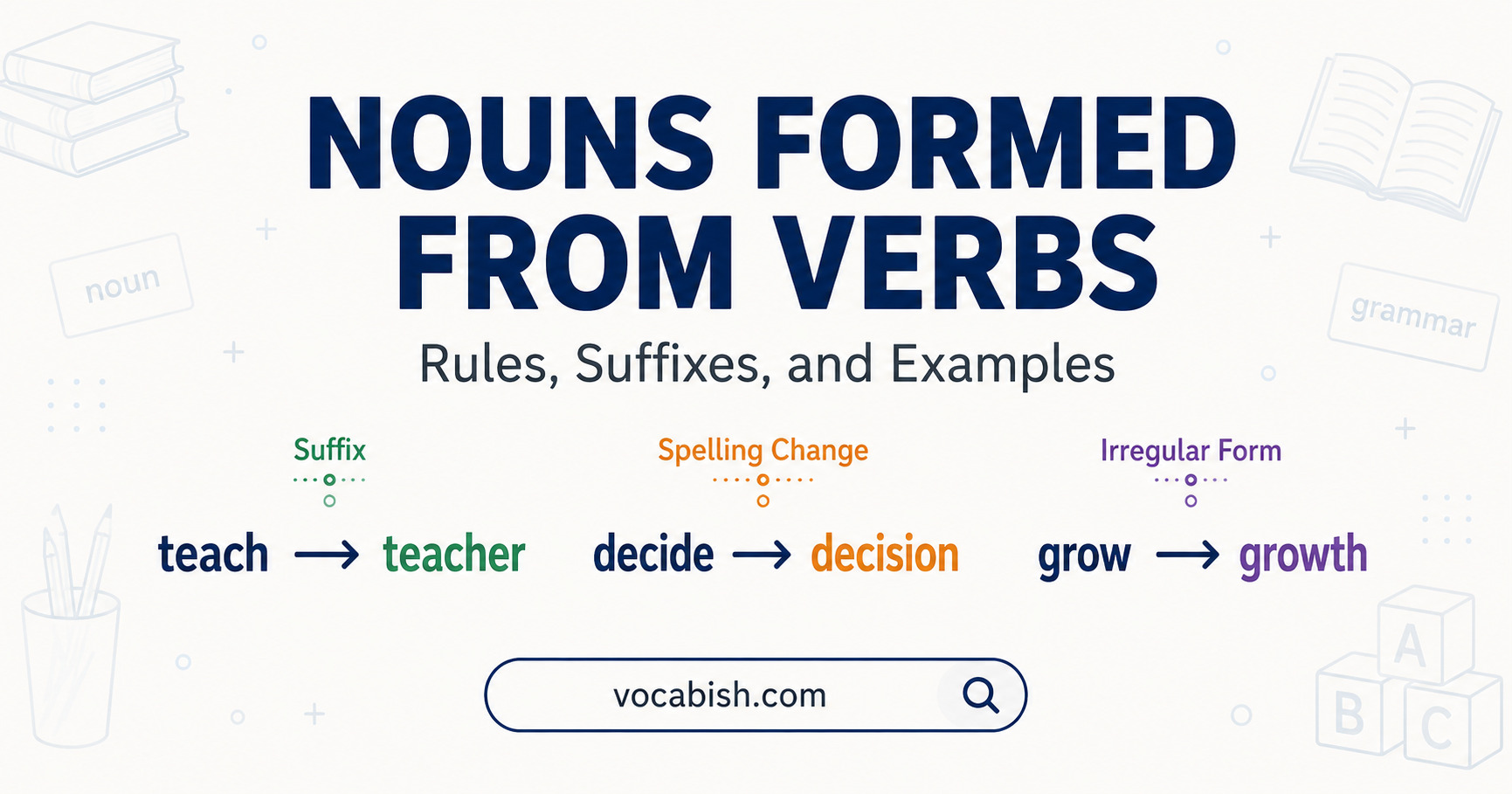
Nouns formed from verbs are words created from verbs to name people, actions, processes, states, or results. For example, “teach” becomes “teacher,” while “decide” becomes “decision...
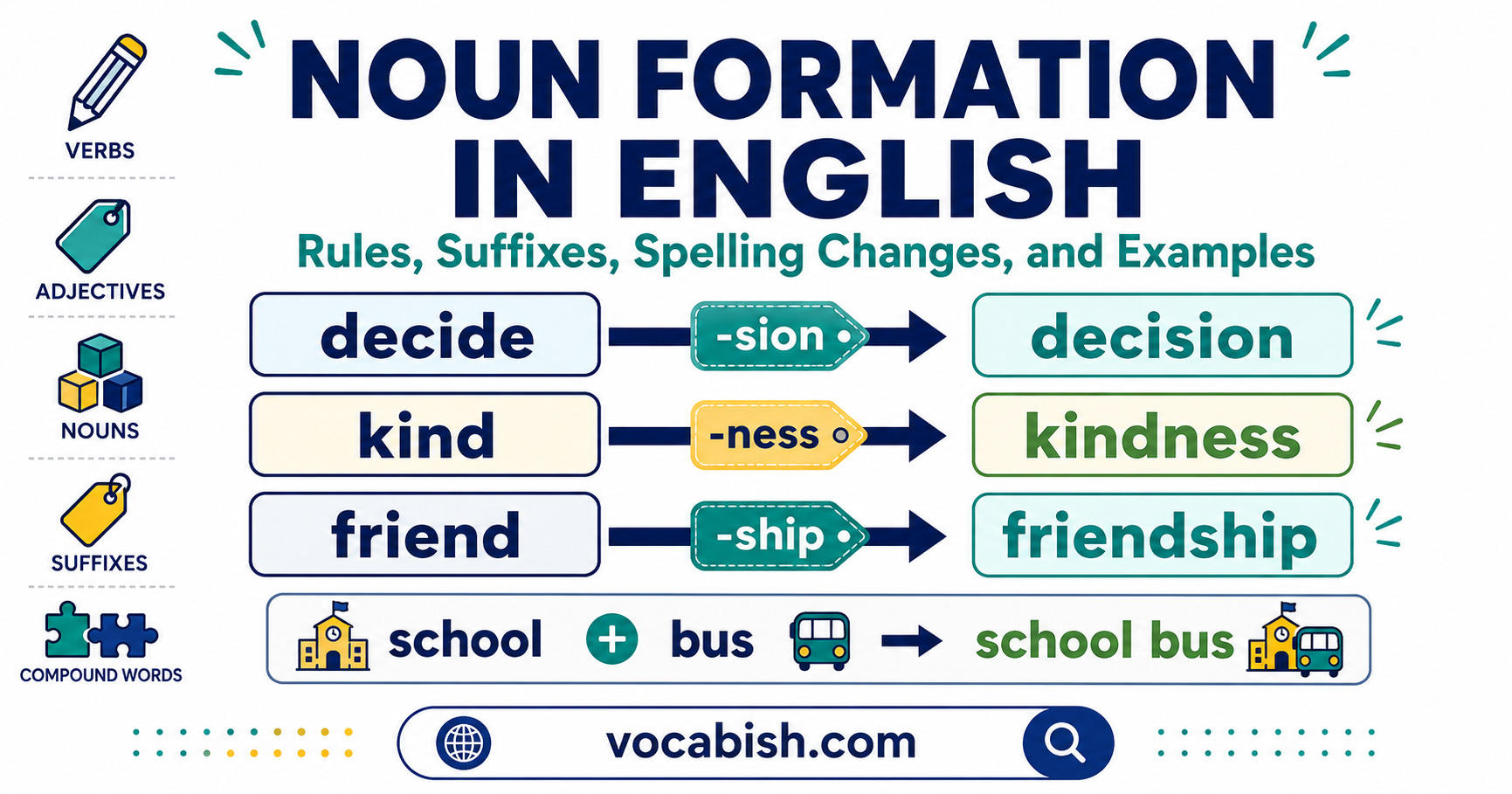
Noun formation in English is the process of creating nouns from verbs, adjectives, and other nouns. It helps learners understand how words such as “decide” become “decision” and “kind” becomes...

A sentence sounds natural when its subject and verb work together correctly. A singular subject normally needs a singular verb, while a plural subject needs a plural verb. In simple terms, noun verb agreement means choosing a...

Some English nouns do not follow the usual singular and plural pattern. Words such as advice, information, and furniture are normally singular, while scissors, trousers, and police are usually plural. Learning which nouns are...
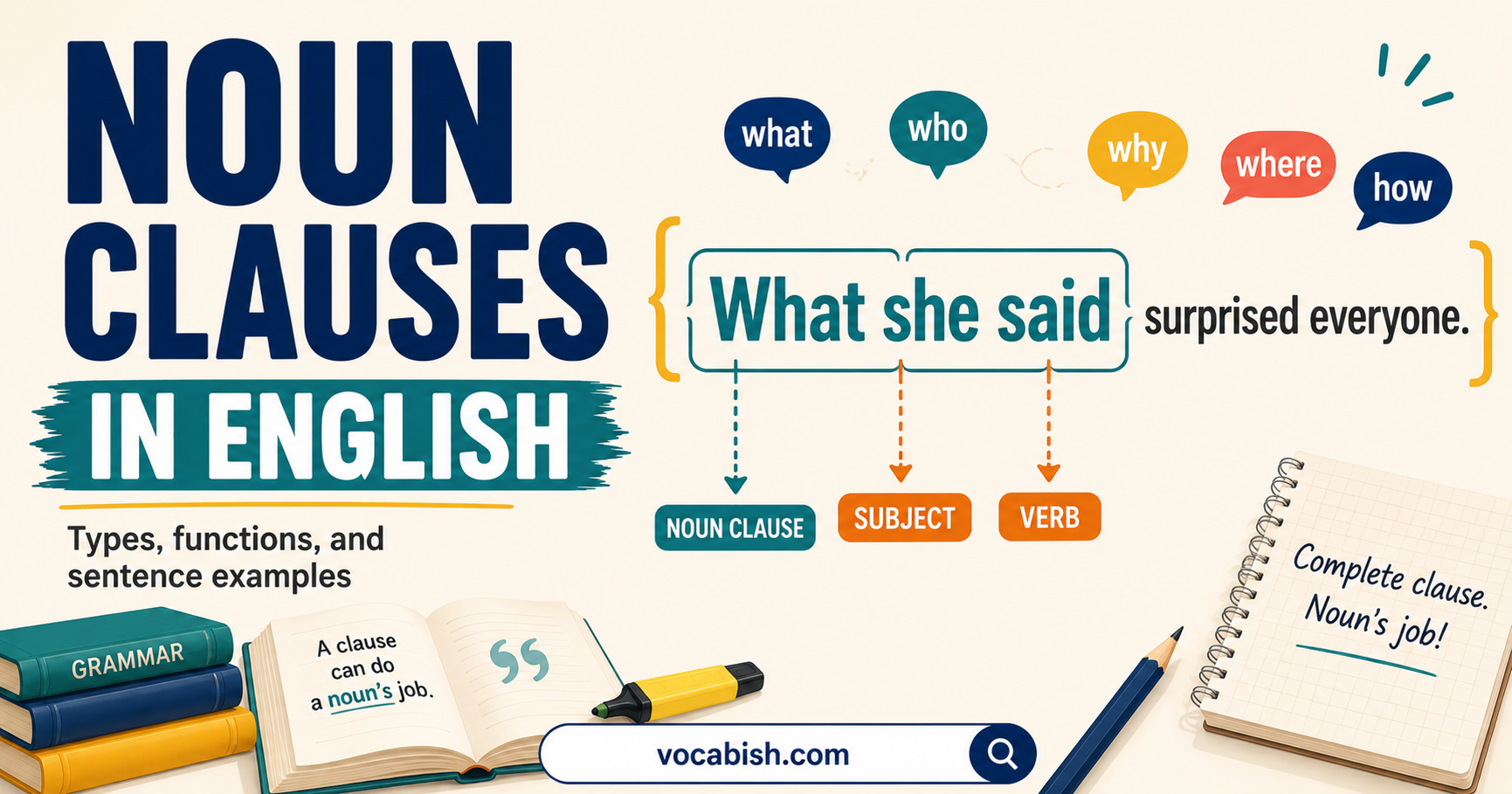
A noun clause is a group of words that contains a subject and a verb but works as a noun within a larger sentence. It can name an idea, fact, question, person, place, or situation. Noun clauses commonly function as subjects...

A sentence often needs more than a single noun to identify a person, place, object, or idea clearly. Instead of saying dog, we might say the friendly dog beside the gate. This complete group of words is a noun phrase. Noun...
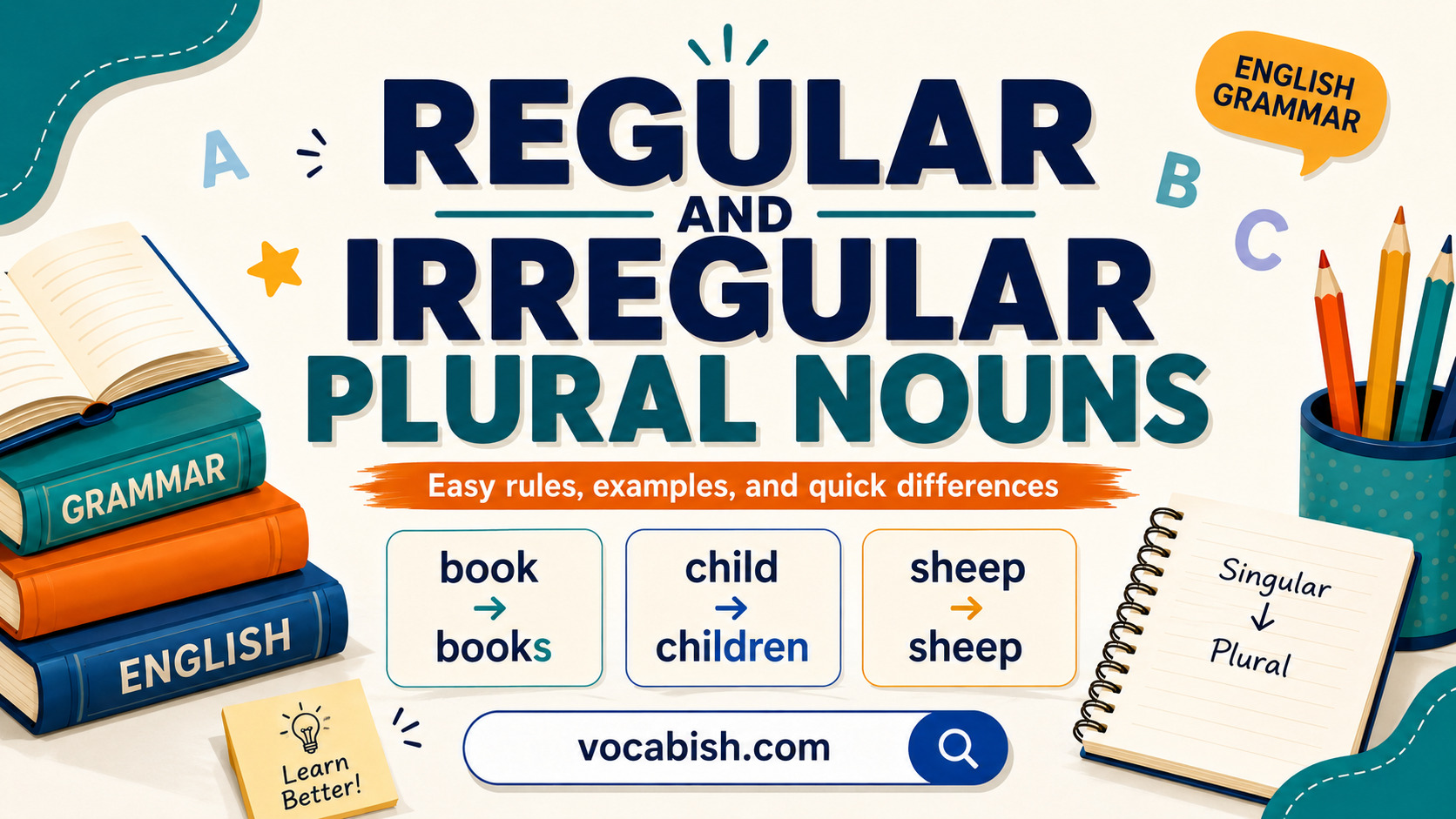
English plurals are usually easy to form: add -s or -es to a singular noun. However, some nouns follow different spelling patterns, change completely, or stay the same. Regular plural: book → books Irregular plural: child →...

Nouns can perform different jobs in a sentence. A noun may act as the subject, receive an action, show ownership, or directly address someone. These grammatical roles are called noun cases in English. Unlike some languages...