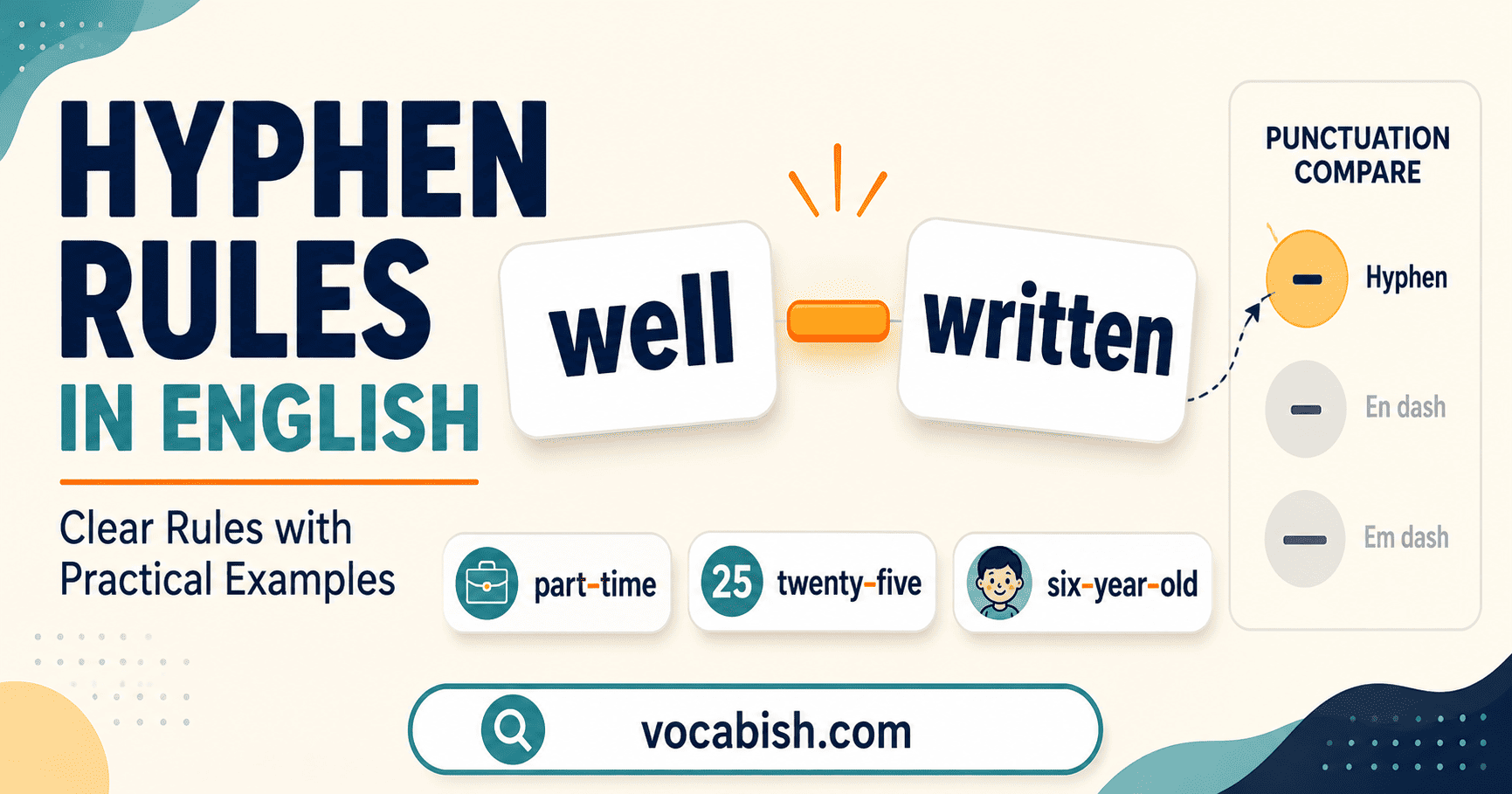
Category - Punctuation
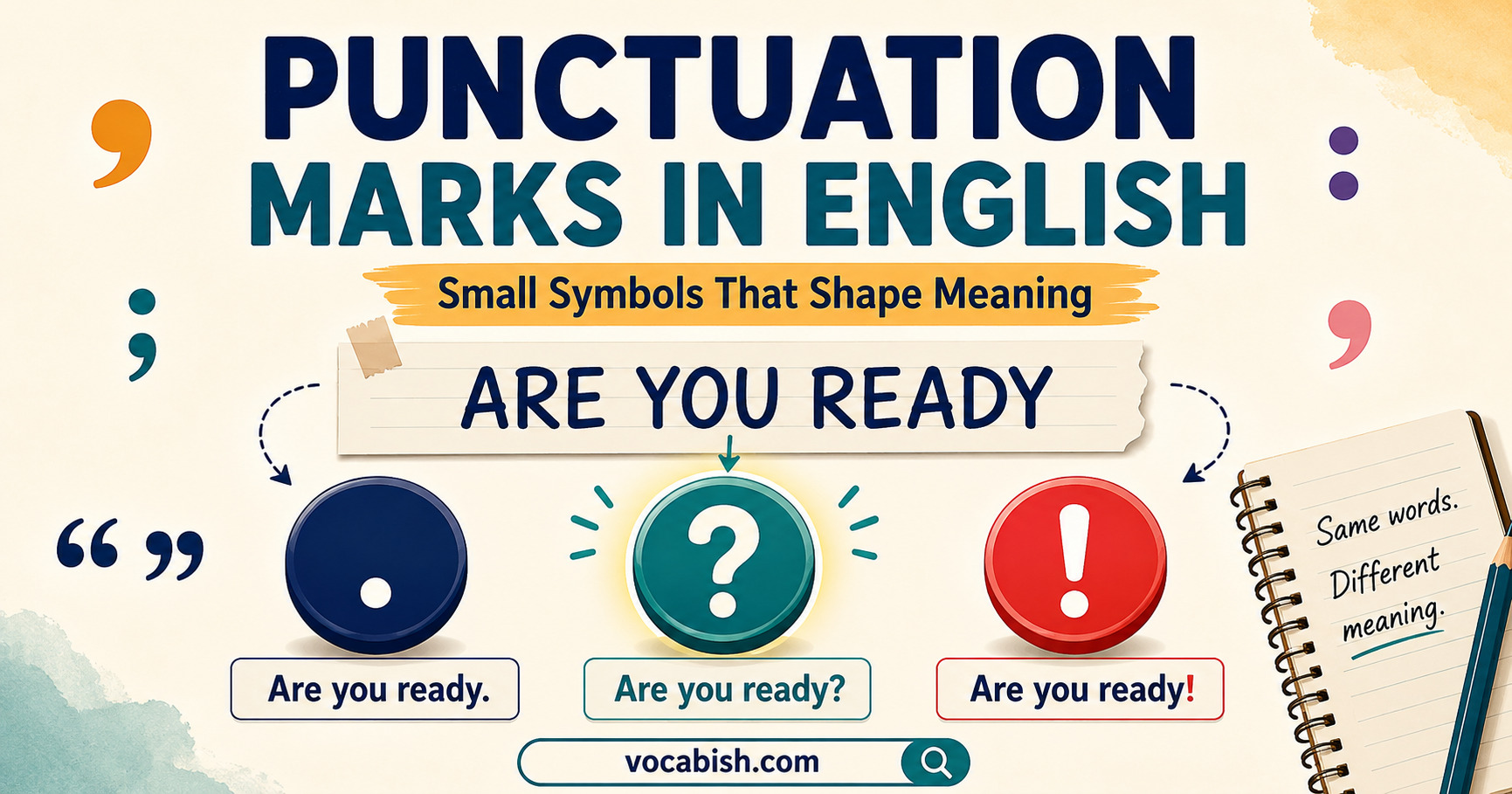
The Punctuation category explains the main punctuation marks and symbols used in English. It covers full stops, commas, question marks, colons, semicolons, apostrophes, quotation marks, dashes, brackets, braces, ellipses, asterisks, and more.
Each topic shows the meaning, rules, uses, and correct place of each mark with clear examples. You can also learn the difference between similar marks, such as comma vs. semicolon and colon vs. semicolon, and many more. This category helps students, teachers, writers, and English learners write clear and correct sentences.
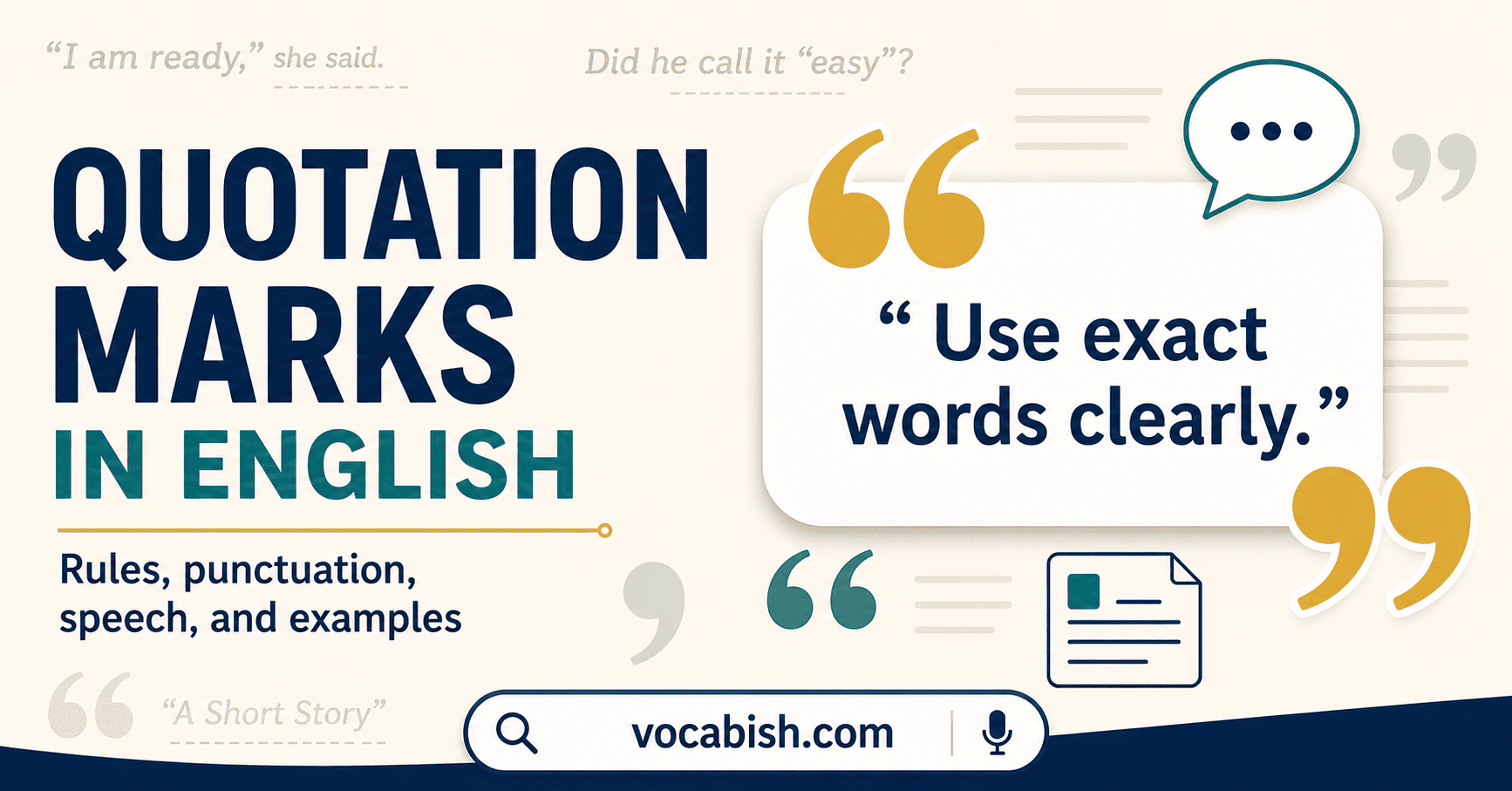
Quotation Marks in English: Rules and Examples
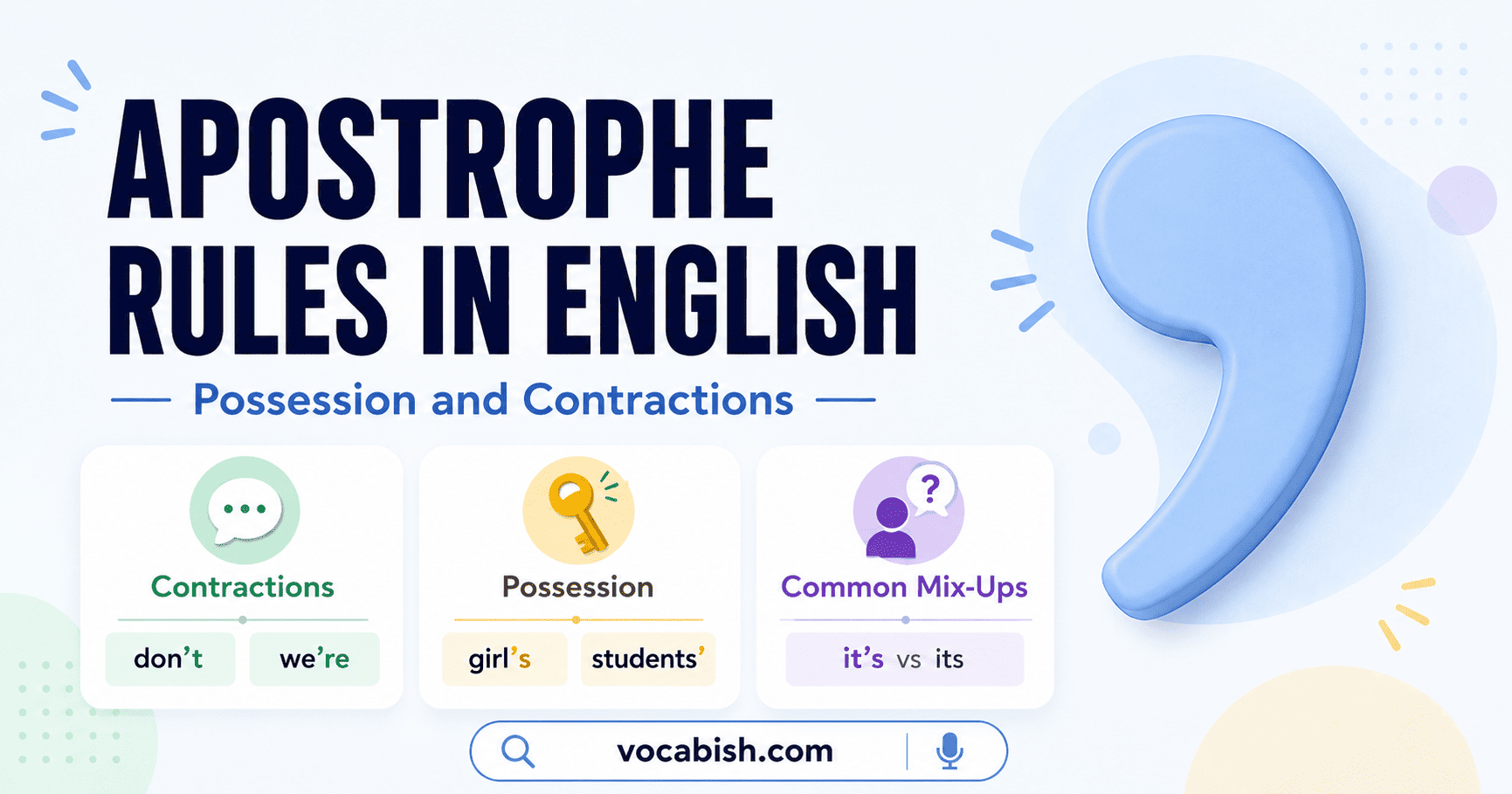
Apostrophe Rules in English: Possession and Contractions
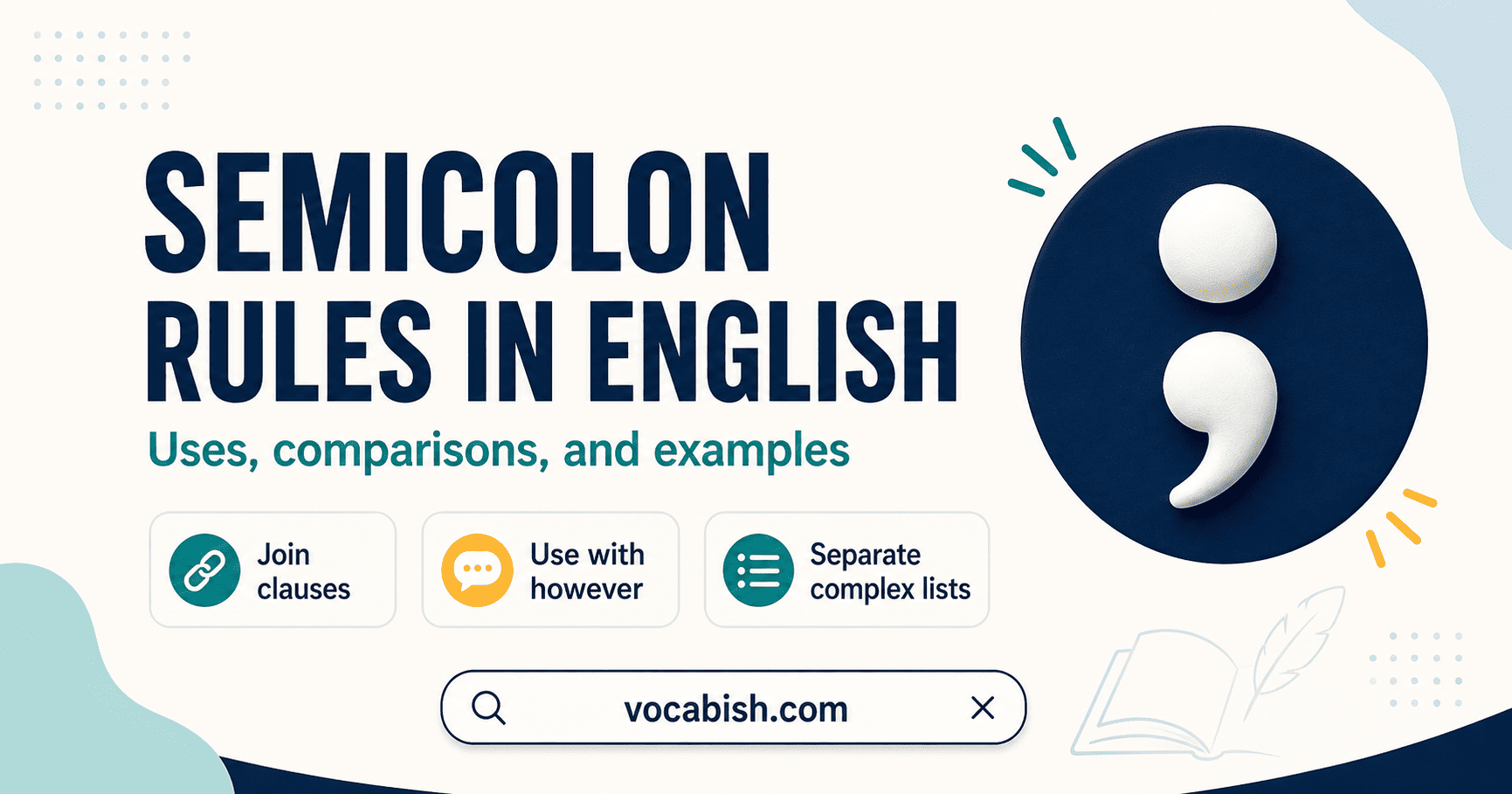
Semicolon Rules in English with Examples
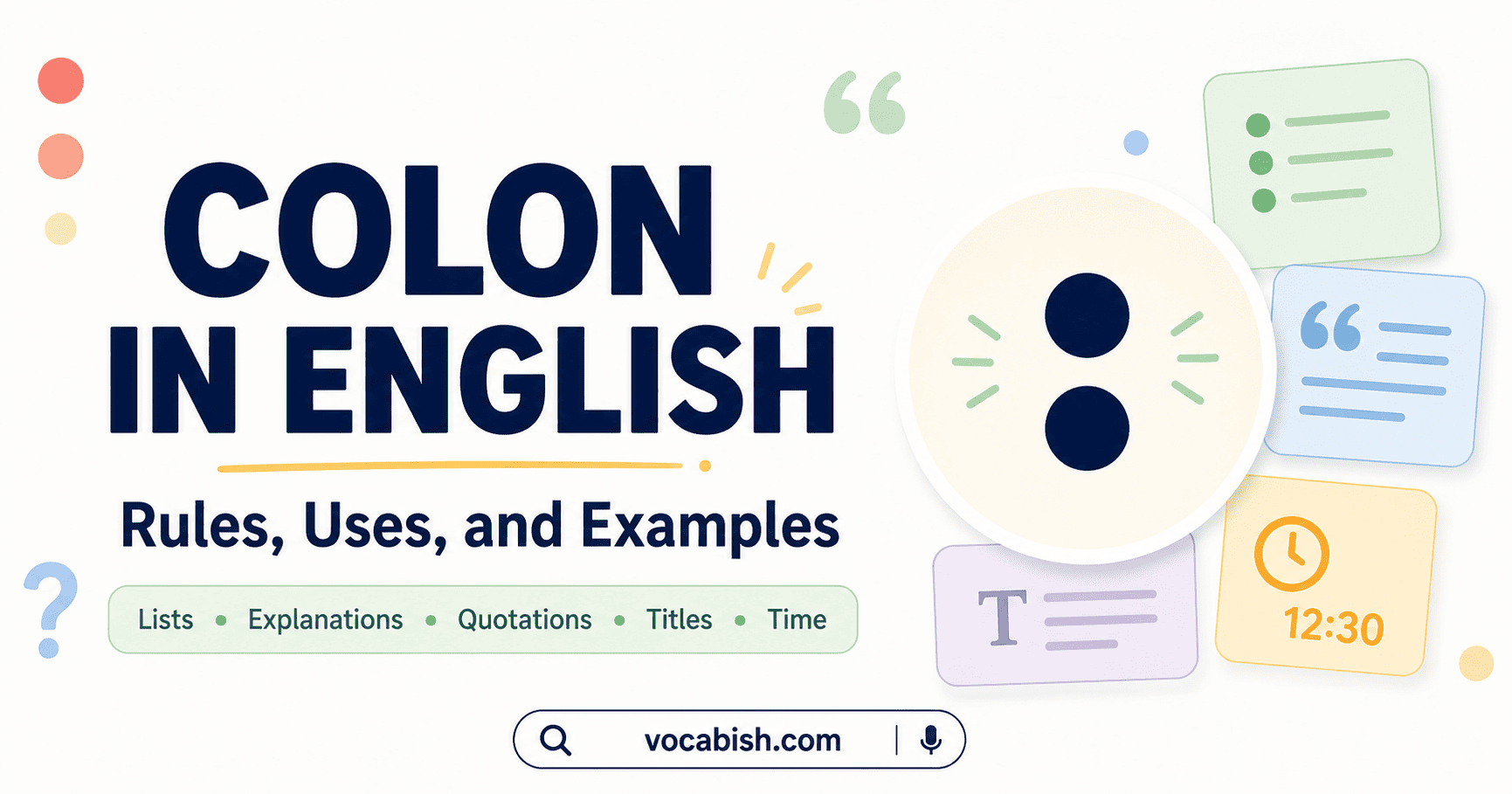
Colon in English: Rules, Uses, and Examples
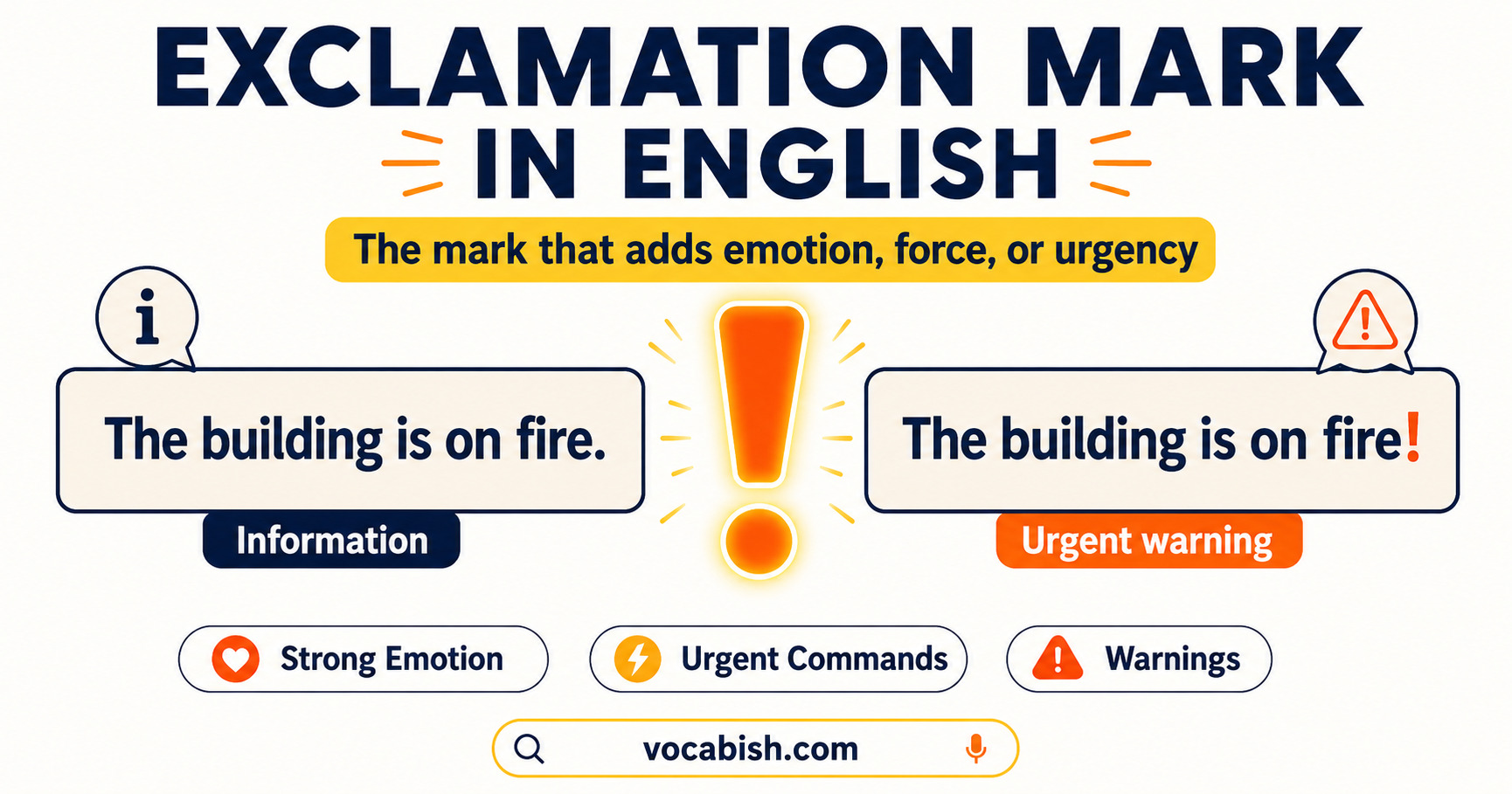
Exclamation Mark: Rules, Meaning, and Examples
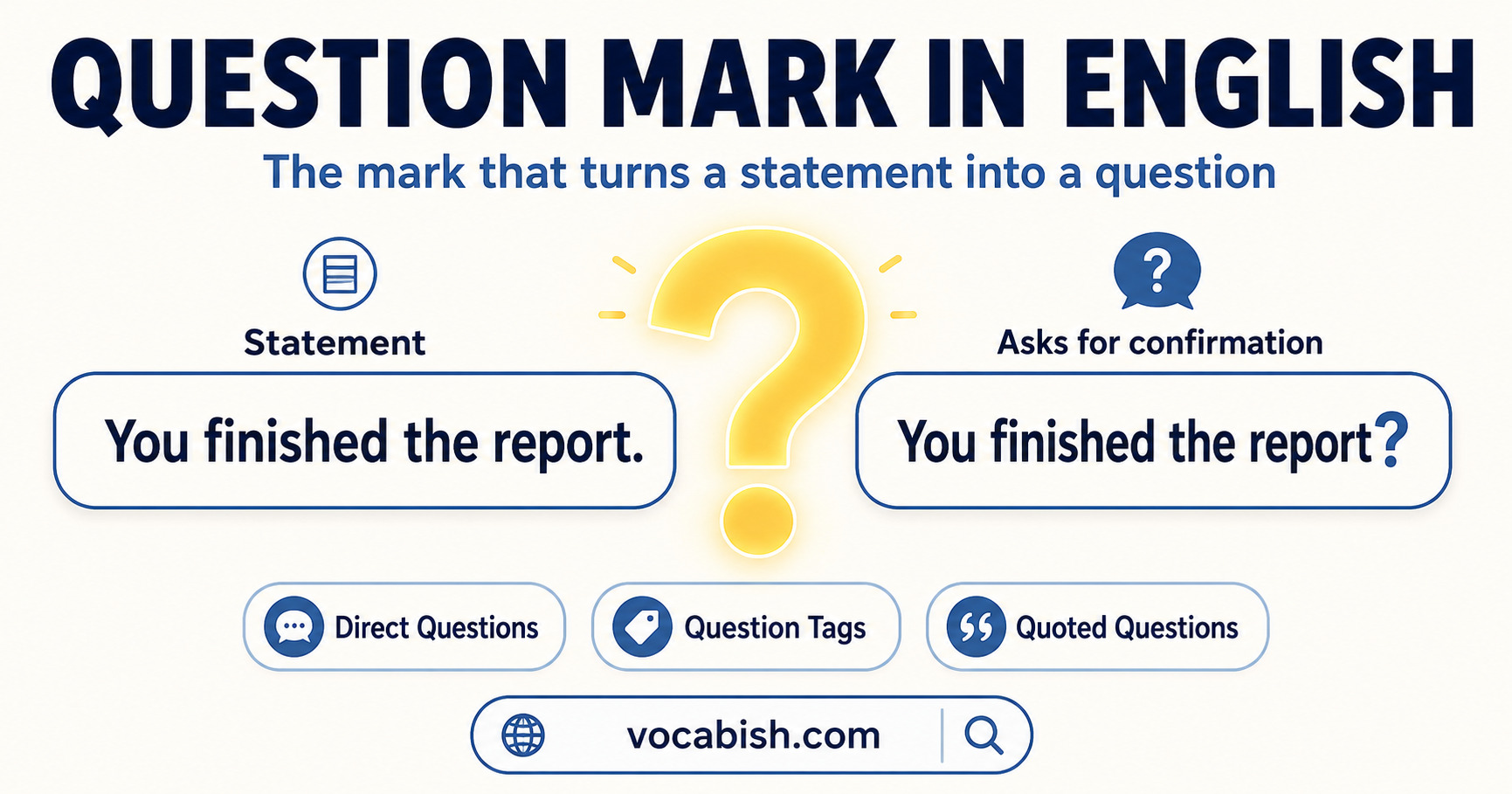
Question Mark in English: Rules and Examples
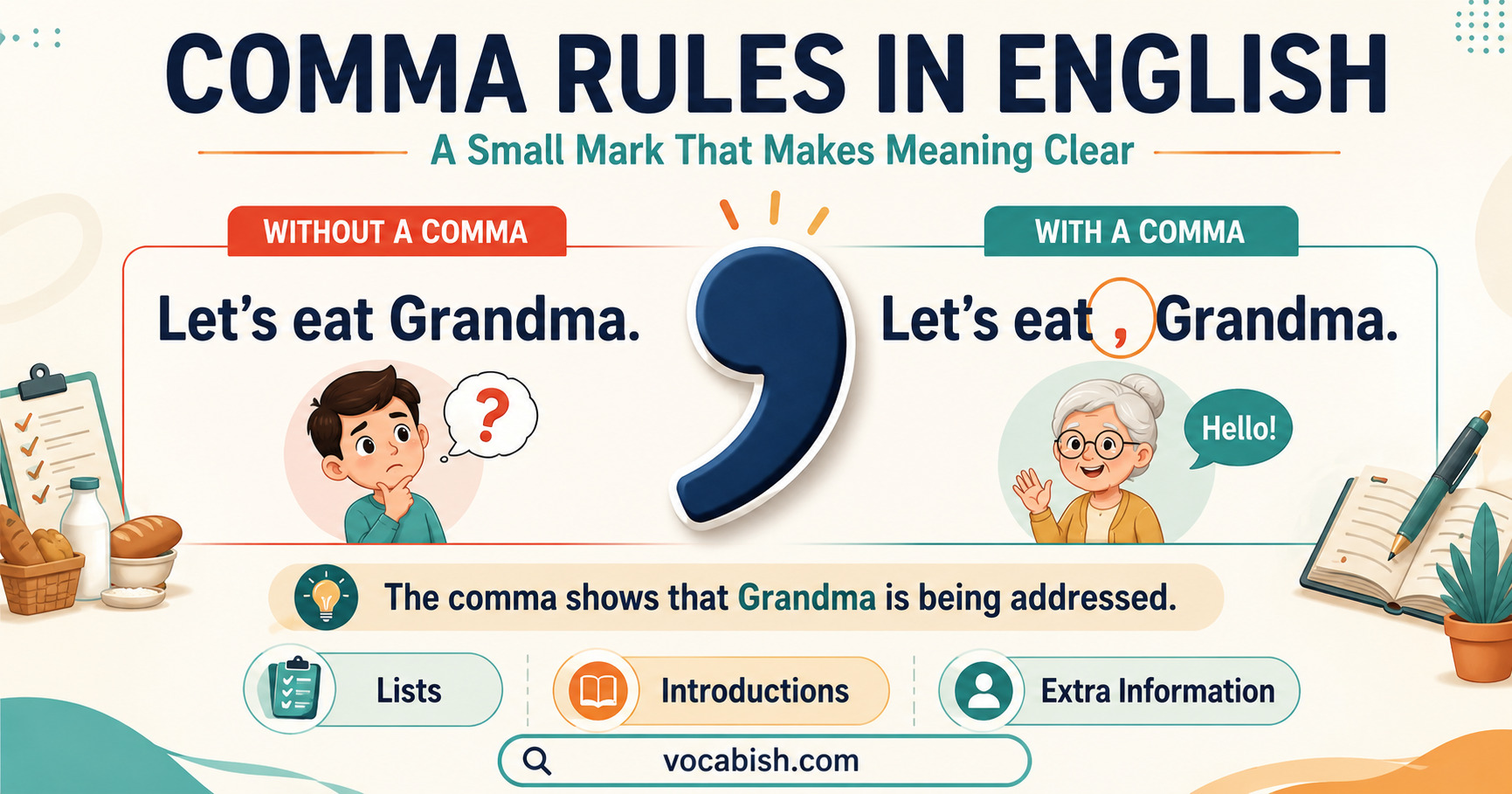
Comma Rules in English with Examples
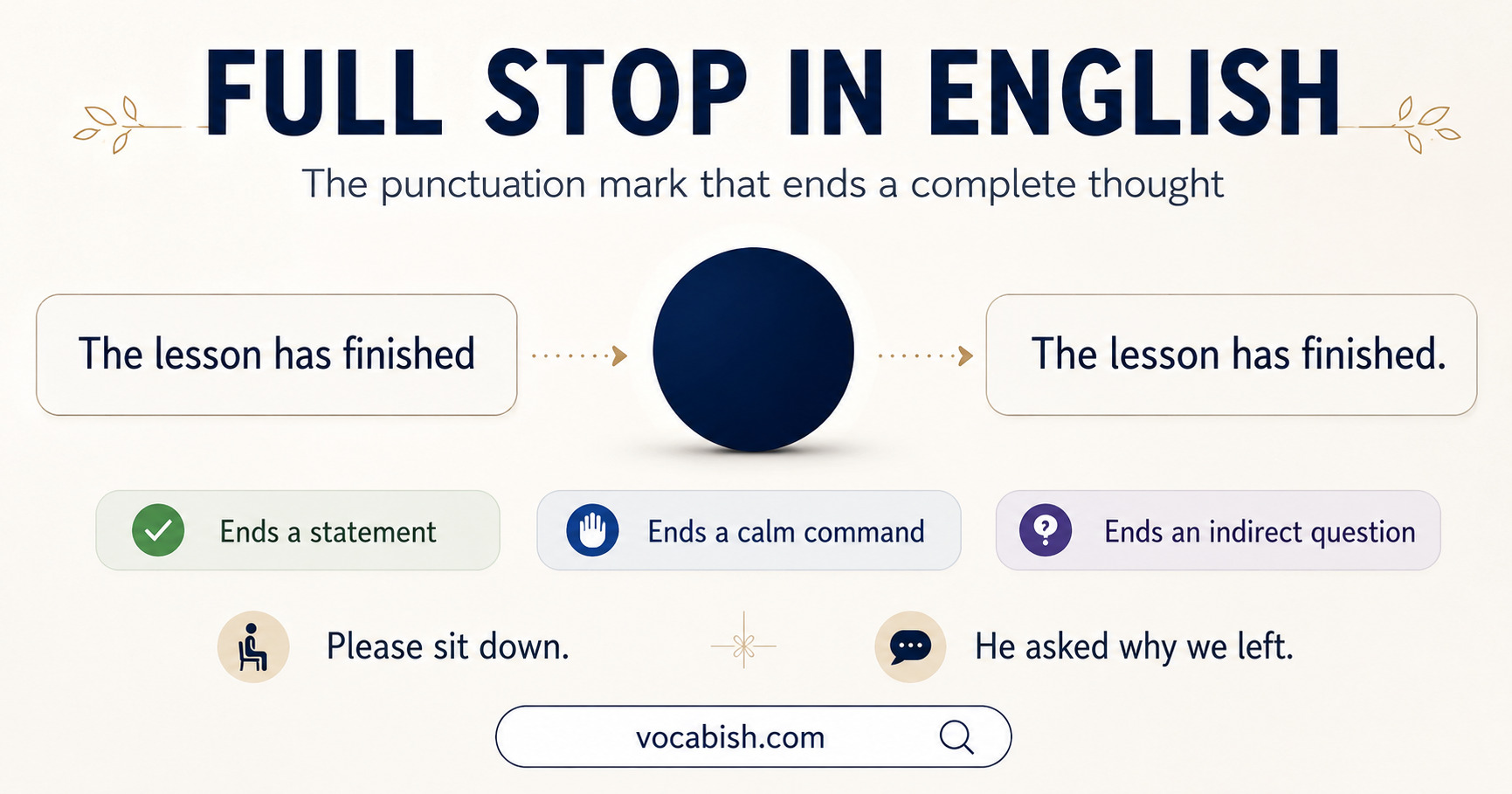
Full Stop (.) in English: Rules, Uses, and Examples