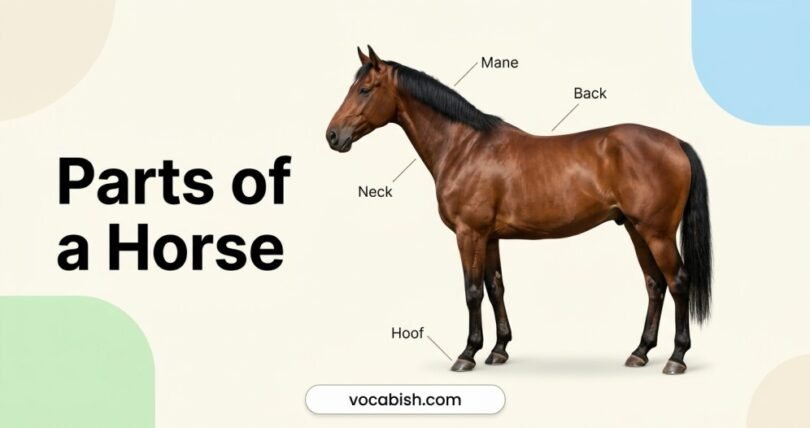

Have you ever wondered what each part of a horse is called and what it does? The parts of a horse include the head, neck, back, legs, hooves, and tail. Each part has a specific function that helps the horse move, eat, breathe, sense its surroundings, and maintain balance. Learning horse parts with names and functions helps you build animal vocabulary and understand basic horse anatomy. From the muzzle and mane to the fetlock and hock, these terms make it easier to identify the different parts of a horse.
Parts of a Horse: Names and Functions
The external parts of a horse have different roles in movement, feeding, protection, and communication. The table below lists the main horse parts with short descriptions of their functions.
Horse Part | Location | Function |
|---|---|---|
Head | Front of the body | Contains the brain, eyes, ears, nose, and mouth. |
Ears | Top of the head | Detect sounds and turn toward their source. |
Forehead | Above the eyes | Forms the front upper area of the head. |
Eyes | Sides of the head | Help the horse see its surroundings. |
Forelock | Between the ears | Hair that falls forward over the forehead. |
Mane | Along the upper neck | Provides some protection and helps repel insects. |
Neck | Between the head and body | Supports the head and helps with balance and movement. |
Crest | Upper edge of the neck | Forms the top line of the neck. |
Withers | Where the neck meets the back | Provides a reference point for measuring horse height. |
Shoulder | Upper front body | Helps move the forelimbs and supports forward motion. |
Chest | Front of the torso | Houses and protects parts of the respiratory and circulatory systems. |
Back | Behind the withers | Supports the trunk and helps transfer movement. |
Loin | Between the back and croup | Connects the back with the hindquarters. |
Croup | Top of the hindquarters | Covers the pelvic region and supports hindquarter movement. |
Hip | Side of the hindquarters | Connects the hind limb to the pelvis. |
Rump | Upper rear part of the body | Contains large muscles that help power movement. |
Barrel | Ribcage area | Houses the lungs, heart, and other internal organs. |
Flank | Between the last ribs and hindquarters | Allows movement as the abdomen expands and contracts. |
Belly | Underside of the body | Covers and supports the abdominal organs. |
Tail | Rear of the body | Helps swat away flies and communicate through movement. |
Dock | Base of the tail | Contains the tail vertebrae and muscles that move the tail. |
Elbow | Upper front leg, near the body | Helps the forelimb bend and move. |
Forearm | Between the elbow and knee | Contains muscles that move the lower front leg. |
Knee | Middle joint of the front leg | Allows the front leg to flex and extend. |
Cannon Bone | Below the knee or hock | Supports the lower leg and bears weight. |
Fetlock | Joint above the hoof | Flexes and absorbs some impact during movement. |
Pastern | Between the fetlock and hoof | Helps cushion impact and allows the hoof to move. |
Hoof | End of each leg | Protects the foot and supports the horse’s weight. |
Stifle | Upper hind leg joint | Helps flex and extend the hind limb. |
Hock | Large joint of the hind leg | Helps the hind leg generate forward propulsion. |
Gaskin | Between the stifle and hock | Contains muscles that help move the hind leg. |
Chestnut | Small, hard growth on the inner leg | A natural callosity with no major role in movement. |
Ergot | Small, hard growth behind the fetlock | A small callosity found on many horses. |
Note: Horse anatomy terms sometimes refer to a region rather than a single structure. The knee and hock, for example, are complex joints made up of several bones and other tissues.
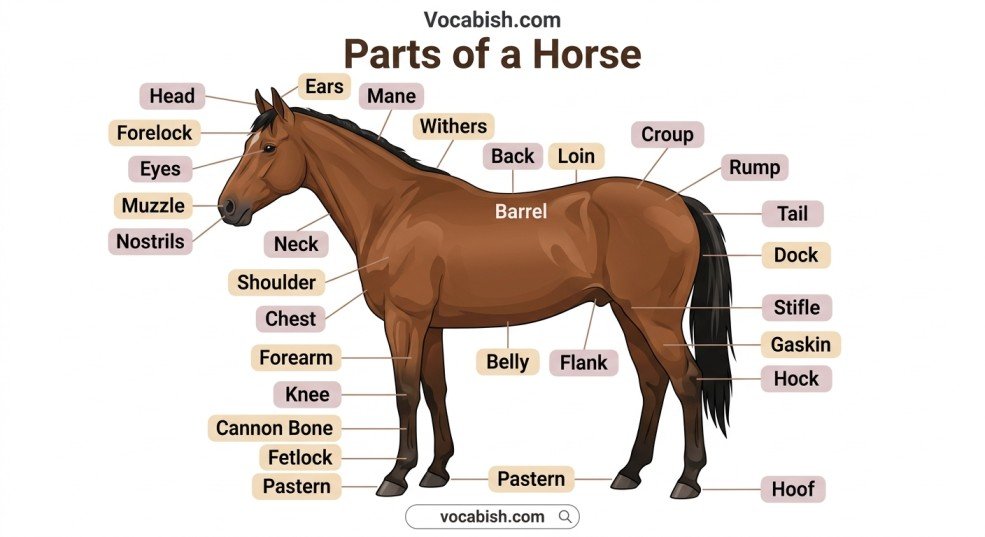
Parts of a Horse Diagram
When studying a diagram, start with the head and neck, move along the back and belly, and then identify the front legs, hind legs, and hooves. This approach helps you remember the names in their correct positions.
Parts of a Horse’s Head
A horse’s head contains the sensory organs and structures needed for eating, breathing, and communicating. Many head-related terms also appear in riding instructions and veterinary care.
Part | Description | Function |
|---|---|---|
Forehead | Area between and above the eyes | Forms the front of the head. |
Eyes | Large eyes on the sides of the head | Provide a wide field of vision. |
Ears | Movable structures on top of the head | Detect sounds and show attention or mood. |
Cheek | Side of the face | Covers the jaw muscles and nearby structures. |
Muzzle | Front part of the nose and mouth | Helps the horse explore, eat, and interact with objects. |
Nostrils | Two openings in the nose | Allow air to enter and leave the respiratory system. |
Lips | Soft edges of the mouth | Help grasp and select food. |
Mouth | Opening at the front of the head | Takes in food and begins digestion. |
Teeth | Structures inside the mouth | Cut and grind food. |
Jaw | Upper and lower bony structures | Supports the teeth and helps with chewing. |
Poll | Area behind the ears | Forms the upper part of the head near the neck joint. |
Throatlatch | Area where the head joins the upper neck | Provides space for structures involved in swallowing and breathing. |
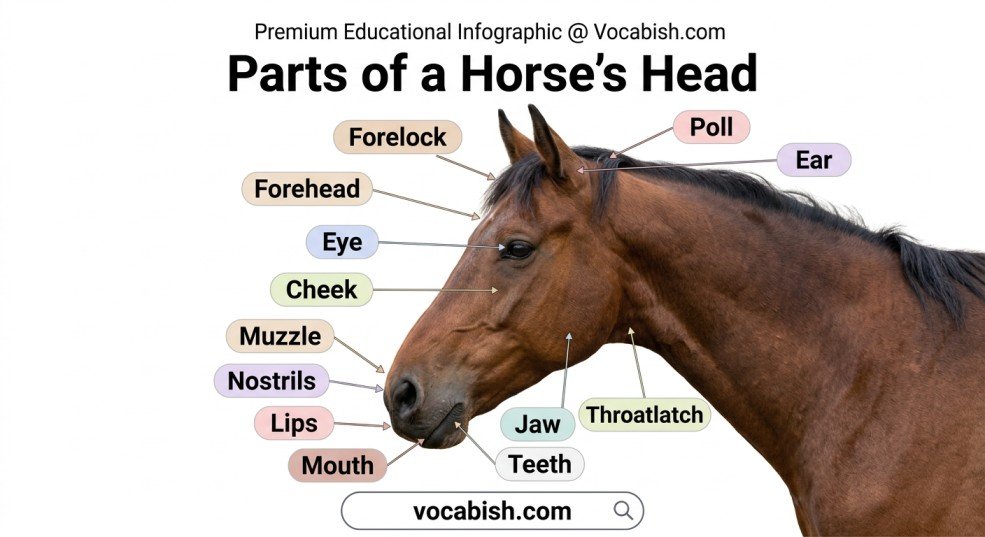
What Is the Difference Between a Muzzle and a Nose?
The muzzle is the front area of the horse’s face, including the nose and mouth region. The nostrils are the openings that allow the horse to breathe. These terms are related, but they do not mean the same thing.
Parts of a Horse’s Legs and Hooves
A horse’s legs support its weight and help it walk, trot, canter, gallop, jump, and stand. The front and hind legs have different structures, so some anatomical names apply only to particular limbs.
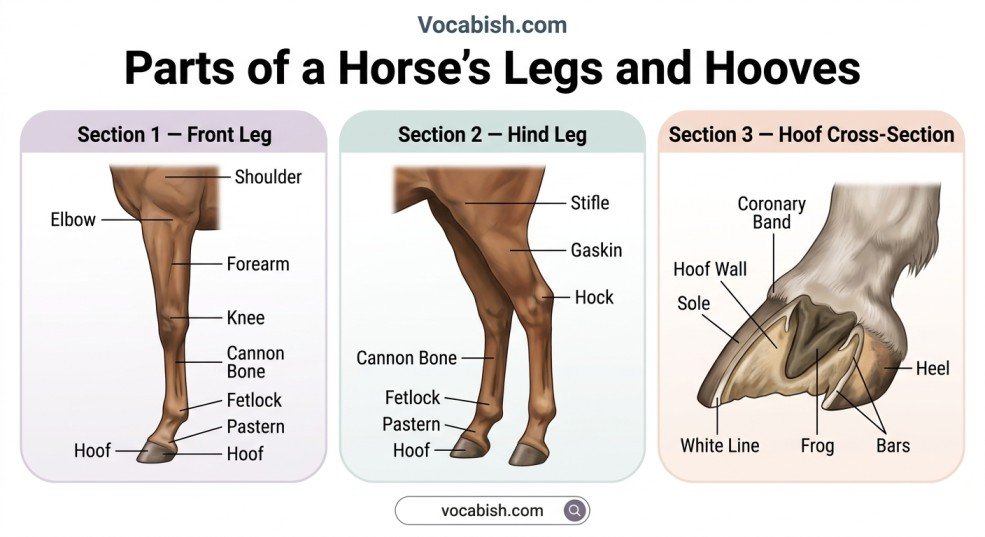
Main Parts of the Front Legs
- Shoulder: Connects the forelimb to the body and helps produce movement.
- Elbow: Joint between the upper forelimb and forearm.
- Forearm: Muscular region between the elbow and knee.
- Knee: Complex joint in the front leg, equivalent in position to the human wrist.
- Cannon bone: Long bone below the knee.
- Fetlock: Joint between the cannon bone and the long pastern bone.
- Pastern: Short sloping region between the fetlock and hoof.
- Hoof: Hard outer covering that protects the foot.
Main Parts of the Hind Legs
- Stifle: Joint in the upper hind leg, broadly comparable in position to the human knee.
- Gaskin: Muscular region between the stifle and hock.
- Hock: Large hind-leg joint that helps the horse push forward.
- Cannon bone: Supports the lower hind leg.
- Fetlock: Joint above the hoof that flexes under load.
- Pastern: Helps the foot absorb impact.
- Hoof: Bears weight and protects the structures inside the foot.
What Are the Parts of a Horse’s Hoof?
The hoof is more than a hard outer shell. It contains several structures that protect the foot and help the horse move comfortably.
Hoof Part | Function |
|---|---|
Hoof Wall | Hard outer layer that protects the foot and bears weight. |
Sole | Bottom surface that protects the underside of the foot. |
Frog | V-shaped structure that helps with traction and shock absorption. |
Heel | Rear part of the hoof that contributes to support and cushioning. |
Coronary Band | Tissue at the top of the hoof wall where new hoof horn grows. |
White Line | Junction between the hoof wall and the sole. |
Bars | Inward folds of the hoof wall that help support the heel region. |
Hoof health affects a horse’s comfort and movement. Cracks, unusual heat, swelling, or persistent lameness may require assessment by a veterinarian or qualified farrier.
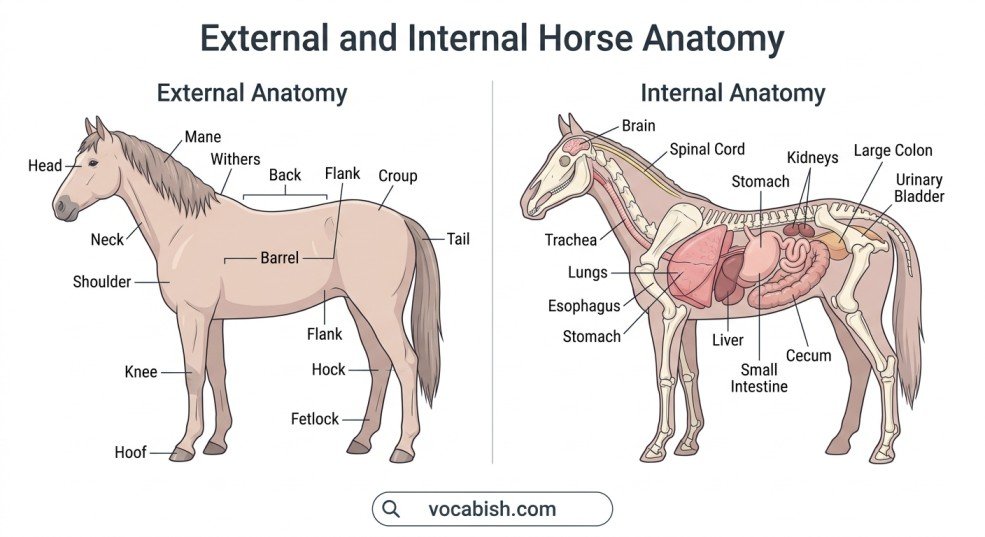
External and Internal Horse Anatomy
External anatomy describes the body parts visible on the outside. Internal anatomy refers to organs and structures inside the body of an horse that support breathing, circulation, digestion, and movement.
Body System | Main Parts | Main Function |
|---|---|---|
Skeletal System | Bones, joints, ligaments | Supports the body and protects internal organs. |
Muscular System | Muscles and tendons | Produces movement and maintains posture. |
Digestive System | Mouth, esophagus, stomach, intestines | Breaks down food and absorbs nutrients. |
Respiratory System | Nostrils, nasal passages, trachea, lungs | Takes in oxygen and removes carbon dioxide. |
Circulatory System | Heart, blood, blood vessels | Transports oxygen, nutrients, and waste products. |
Nervous System | Brain, spinal cord, nerves | Coordinates movement, sensation, and body functions. |
Urinary System | Kidneys, ureters, bladder, urethra | Removes waste products and regulates fluid balance. |
Reproductive System | Reproductive organs | Supports reproduction. |
The horse’s digestive system has a relatively small stomach and a large hindgut, including the cecum and colon. Microorganisms in the hindgut help break down fibrous plant material such as grass and hay.
How Horse Body Parts Help It Move
A horse’s movement depends on several body parts working together. Bones provide support, muscles generate force, tendons transmit that force, and joints allow the limbs to bend.
- Shoulders and forelimbs: Help support the front of the body and control foot placement.
- Back and loin: Transfer movement between the front and hindquarters.
- Hindquarters: Generate much of the force needed for acceleration and jumping.
- Joints: Allow controlled bending and extension.
- Hooves: Provide contact with the ground and help support body weight.
- Tail and neck: Help with balance and communication, although the legs and trunk perform most of the work involved in locomotion.
A horse’s walk has four beats, its trot has two beats, and its canter has three beats. The gallop is a faster gait with a different sequence of footfalls.
Here’s a complete guide on different types of horses and their important information with pictures.
Common Confusions About Horse Parts
Some horse anatomy terms sound similar or refer to nearby areas. Remember these differences when learning the names.
- Mane vs. Forelock: The mane grows along the neck, while the forelock hangs between the ears over the forehead.
- Croup vs. Rump: The croup refers to the upper hindquarter region; the rump is a broader term for the rear body area.
- Fetlock vs. Pastern: The fetlock is a joint, while the pastern is the region between that joint and the hoof.
- Knee vs. Hock: The knee is on the front leg; the hock is on the hind leg.
- Hoof vs. Foot: The hoof is the hard outer structure covering the horse’s foot, not the entire internal foot.
Frequently Asked Questions
The main parts of a horse include the head, neck, mane, back, barrel, belly, hindquarters, legs, hooves, and tail.
The head includes the ears, eyes, forehead, forelock, cheeks, muzzle, nostrils, lips, mouth, teeth, jaw, and poll.
The withers are the raised area where the neck meets the back. They are also used to measure a horse’s height.
The fetlock is the joint immediately above the pastern and hoof. It flexes during movement and helps absorb impact.
The mane grows along the upper neck, while the tail grows from the dock at the rear of the body.
The main hoof parts include the wall, sole, frog, heel, coronary band, white line, and bars. Each contributes to protection or support.
Front legs mainly support and guide the body, while hind legs provide much of the propulsive force for acceleration and jumping.
Internal parts include the heart, lungs, stomach, intestines, liver, kidneys, brain, and other organs that support vital body functions.
Conclusion
Learning the parts of a horse helps you identify its anatomy and understand how each structure works. From the head, neck, and back to the legs, joints, and hooves, every part contributes to movement, feeding, sensation, or protection. Use the labelled diagram and tables to practise the names and functions of the main horse parts and build your English animal vocabulary.