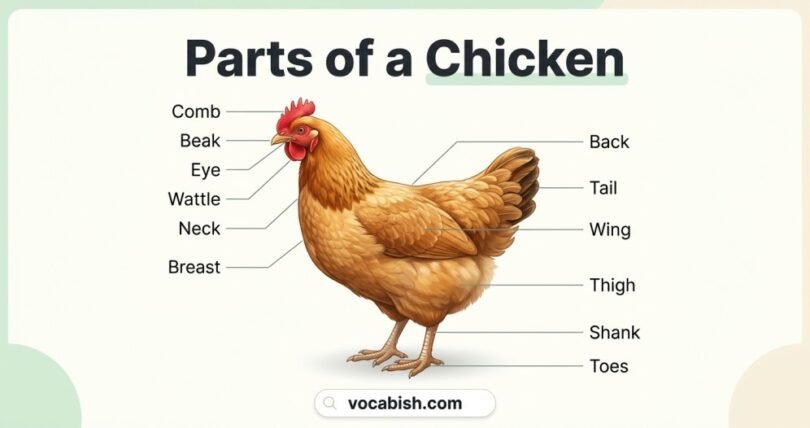

Parts of a Chicken include the head, beak, comb, wattles, neck, wings, breast, back, legs, feet, and tail. Each body part helps a chicken eat, breathe, move, balance, or protect itself. Chickens also have feathers, claws, and other features that support their daily activities. Learning chicken body parts with their names and functions helps you identify different features of hens and roosters. A labelled chicken diagram makes it easier to recognise where each part is located and what it does.
Parts of a Chicken with Names and Functions
A chicken has several external body parts that perform different jobs. Some help it find food and move around, while others protect its body, regulate temperature, or support reproduction.
The following table lists the main chicken parts, their locations, and their functions.
Chicken Part | Location | Function |
|---|---|---|
Head | Top of the neck | Holds the brain and major sense organs. |
Comb | Top of the head | Helps release body heat and serves as a visual signal. |
Beak | Front of the head | Picks up food and helps with drinking and grooming. |
Nostrils | Upper part of the beak | Allow air to enter during breathing. |
Eyes | Sides of the head | Detect movement and help locate food. |
Eyelids | Around the eyes | Protect the eyes from dust and injury. |
Ear Openings | Behind and below the eyes | Allow the chicken to hear sounds. |
Earlobes | Below the ear openings | Form visible patches of skin near the ears. |
Wattles | Below the beak | Help release heat and act as visual signals. |
Neck | Between the head and body | Supports head movement during feeding and grooming. |
Hackle Feathers | Around the neck | Cover and protect the neck. |
Back | Upper body | Supports the body and provides muscle attachment. |
Breast | Front of the body | Contains large muscles that move the wings. |
Wings | Both sides of the body | Help with balance, short flights, and controlled jumps. |
Wing Feathers | Along the wings | Provide lift and control during wing movement. |
Shoulder | Upper wing attachment | Connects each wing to the body. |
Abdomen | Lower body | Contains and protects several internal organs. |
Fluff Feathers | Under outer feathers | Trap air to help retain body heat. |
Tail | Rear of the body | Helps maintain balance and control movement. |
Tail Feathers | End of the tail | Help with balance and visual display. |
Saddle Feathers | Lower back near the tail | Cover the rear back; often long in roosters. |
Thigh | Upper part of each leg | Contains muscles used for walking and running. |
Hock Joint | Between the drumstick and shank | Allows the leg to bend during movement. |
Shank | Lower leg above the toes | Supports body weight during standing and walking. |
Scales | Surface of the shanks and toes | Protect the skin of the lower legs and feet. |
Toes | Ends of the feet | Help grip the ground and maintain balance. |
Claws | Tips of the toes | Help scratch soil and grip surfaces. |
Spur | Back of the lower leg | Used mainly by roosters for defence and fighting. |
Vent | Beneath the tail | Allows waste and eggs to leave the body. |
Skin | Covers the body | Protects tissues and supports feather growth. |
Feathers | Most of the body | Provide insulation, protection, and flight support. |
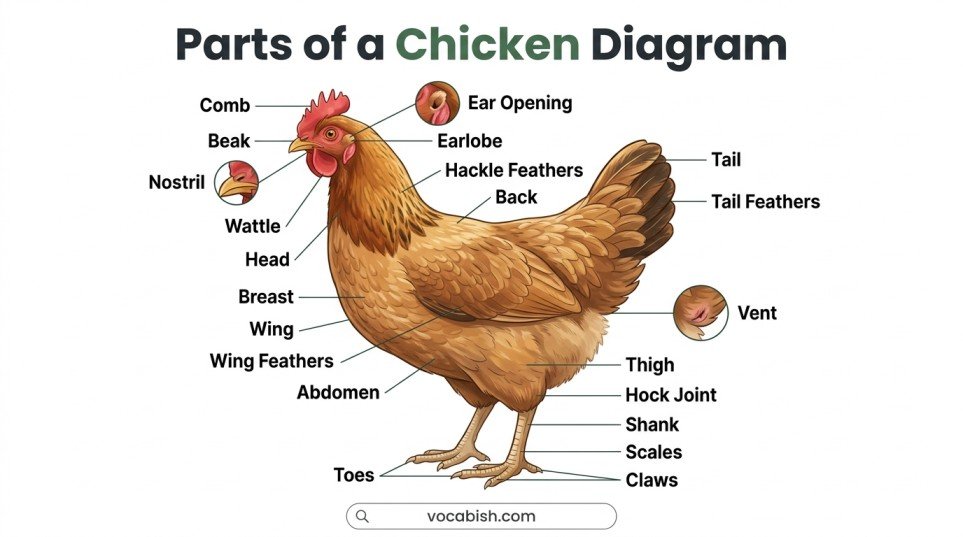
Parts of a Chicken Diagram
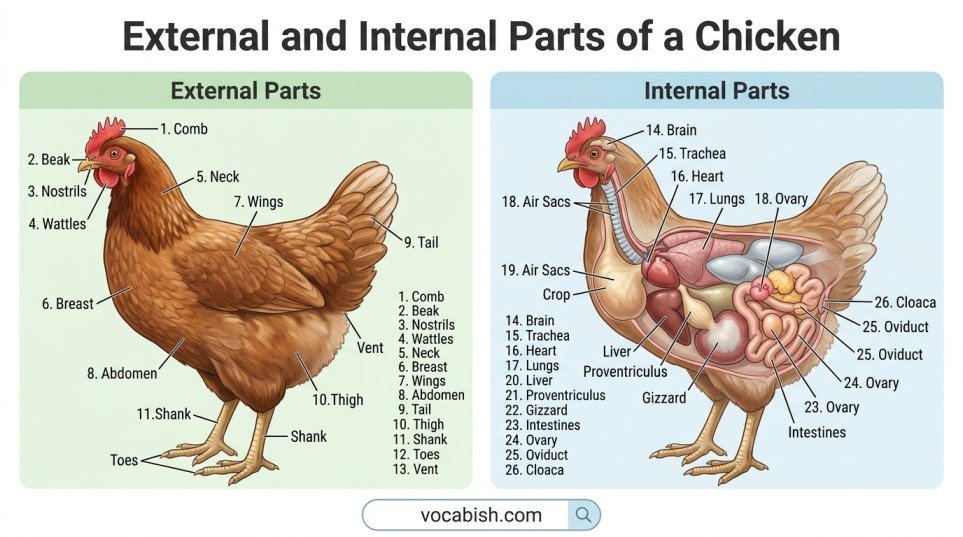
A labelled chicken diagram shows where the external body parts are found. It helps students connect English vocabulary with the physical features of a chicken.
When studying a chicken diagram, identify the comb above the head, the wattles below the beak, the wings along the sides, and the tail at the rear. The shanks, toes, and claws appear below the main body.
External and Internal Parts of a Chicken
Chicken anatomy includes external structures that can be seen and internal organs that work inside the body. Both groups support the bird’s survival and everyday activities.
External Parts | Internal Parts | Main Difference |
|---|---|---|
Beak | Tongue | The beak collects food, while the tongue helps move it for swallowing. |
Comb | Heart | The comb helps release heat, while the heart pumps blood. |
Nostrils | Lungs | Nostrils admit air, while lungs exchange oxygen and carbon dioxide. |
Wings | Air Sacs | Wings support movement, while air sacs help move air through the respiratory system. |
Breast | Pectoral Muscles | The breast is the outer chest region containing muscles that move the wings. |
Abdomen | Intestines | The abdomen is a body region, while the intestines absorb nutrients. |
Tail | Cloaca | The tail supports balance, while the cloaca is a chamber connected to the vent. |
Feathers | Skeleton | Feathers protect and insulate the body, while the skeleton provides support. |
Legs | Leg Muscles | Legs support movement, while their muscles generate the force needed to walk. |
Vent | Oviduct | The vent is an external opening, while the oviduct forms and transports eggs in hens. |
Chickens also have a crop, which temporarily stores food, and a gizzard, which grinds food using strong muscles and swallowed grit.
Differences Between Hen and Rooster Body Parts
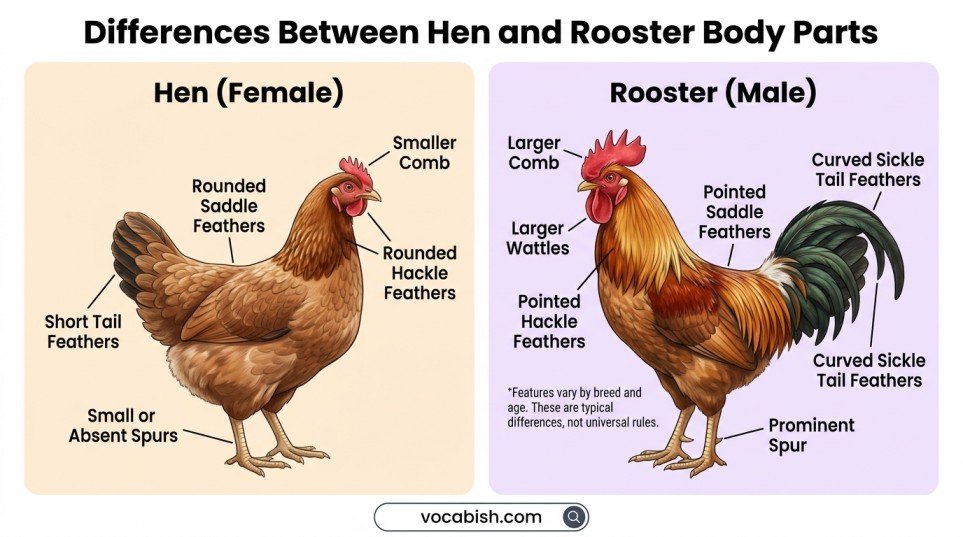
Hens and roosters share the same basic body structure, but adult males and females often differ in appearance. These differences are especially noticeable in the comb, wattles, feathers, and spurs.
Body Feature | Hen | Rooster |
|---|---|---|
Comb | Usually smaller | Often larger and more prominent |
Wattles | Usually smaller | Often larger and longer |
Tail Feathers | Generally shorter and less curved | Often longer with curved sickle feathers |
Hackle Feathers | Usually shorter and rounded | Often longer and pointed |
Saddle Feathers | Shorter and rounded | Often long and pointed |
Spurs | Usually absent or small | Often larger and sharper |
Body Size | Often smaller | Often larger and more muscular |
Reproductive Organs | Has an ovary and oviduct | Has testes |
These differences vary by breed, age, and individual bird. Some hens develop noticeable spurs, and certain chicken breeds have small combs or unusual feather shapes.
Commonly Confused Chicken Parts
Some chicken body parts look similar or have names that learners may confuse. Knowing their positions and functions makes identification easier.
- Comb vs. Wattles: The comb sits on top of the head, while wattles hang below the beak.
- Beak vs. Mouth: The beak is the hard outer structure surrounding the mouth opening.
- Shank vs. Thigh: The shank is the lower leg section, while the thigh is the upper leg section.
- Claws vs. Spurs: Claws grow on the toes, while spurs project from the back of the lower legs.
- Tail vs. Saddle Feathers: Tail feathers extend from the rear, while saddle feathers cover the lower back near the tail.
Frequently Asked Questions
The main parts of a chicken include the head, comb, beak, wattles, neck, breast, back, wings, abdomen, tail, thighs, shanks, toes, and claws.
The red, fleshy structure on top of a chicken’s head is called the comb. It helps regulate body temperature and provides visual signals.
The two fleshy structures hanging beneath a chicken’s beak are called wattles. They help release excess body heat and are often larger in roosters.
Chicken wings help maintain balance, support short flights, and control movement during jumps. Wing feathers provide lift and assist with direction.
The visible lower leg section between the hock joint and toes is called the shank. It supports the chicken while standing and walking.
Claws are pointed structures on the toes used for scratching and gripping. Spurs grow from the lower legs and are mainly used for defence.
Chicken feathers protect the skin, retain body heat, and support movement. Different feather types also help with balance, display, and short flights.
The vent is an opening beneath the chicken’s tail. It allows digestive waste and urinary waste to leave the body and eggs to pass in hens.
Conclusion
Learning the parts of a chicken helps students recognise common poultry anatomy and understand how each body feature works. The beak helps with feeding, wings support movement, feathers protect the body, and legs provide balance. By studying chicken parts with names, functions, and a labelled diagram, English learners can build useful animal vocabulary and identify the physical differences between hens and roosters.