
Turkey anatomy becomes much easier to understand when its body parts are grouped by their names, functions, and locations. Many existing articles cover basic turkey anatomy, but they often focus only on a few visible parts or provide limited explanations.
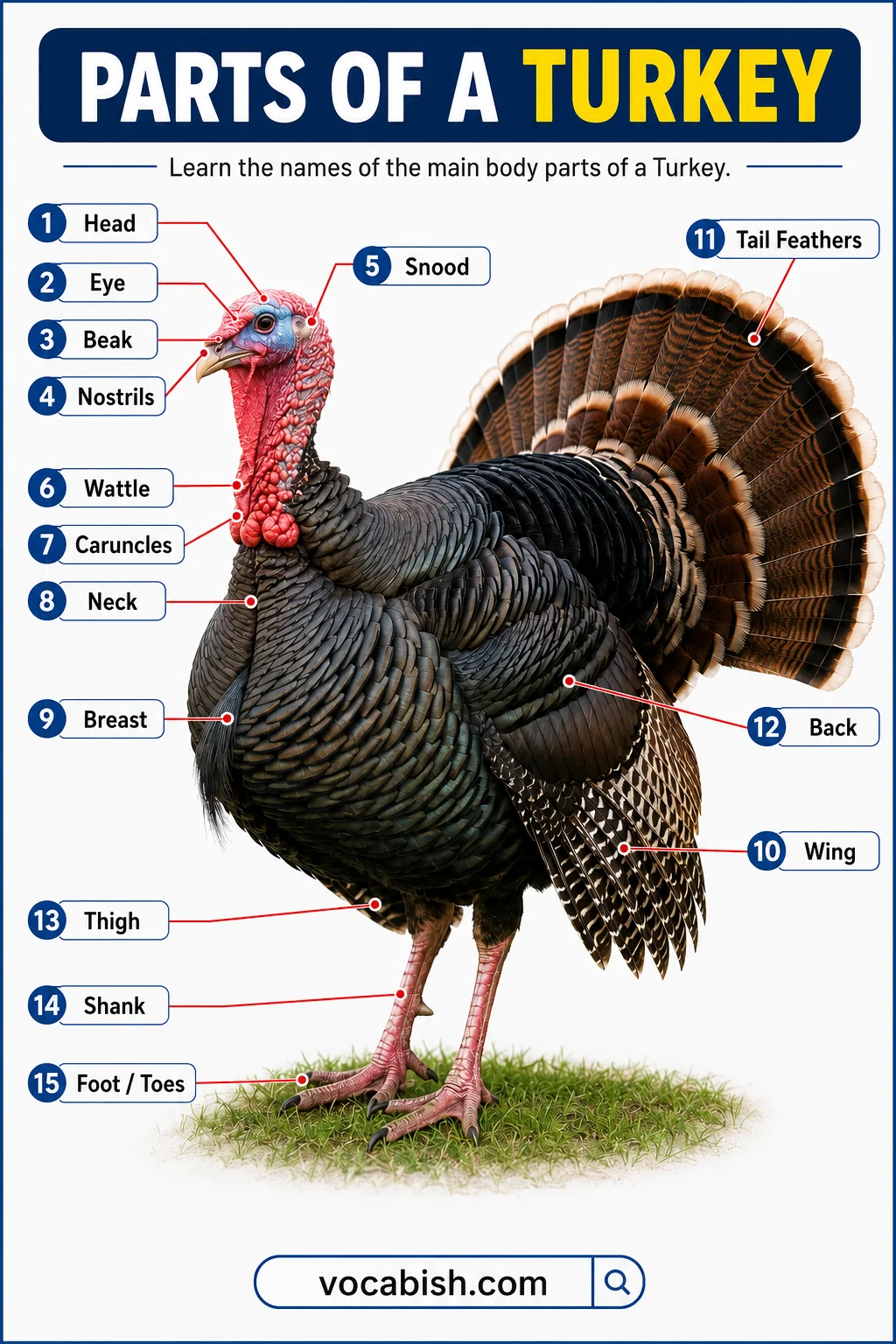
This guide gives a clearer and more complete overview of the parts of a turkey, including the head, beak, wattle, snood, eyes, neck, wings, breast, legs, feet, tail, feathers, and other important body structures. Each part is explained in a simple way with its main function, making the anatomy easy to study, identify, and understand. The included turkey anatomy diagram also helps connect each part name with its exact position on the bird’s body.
What Are the Main Parts of a Turkey?
A turkey has several major body regions: the head, neck, body, wings, tail, legs, and feet. Each region contains smaller structures with specific jobs.
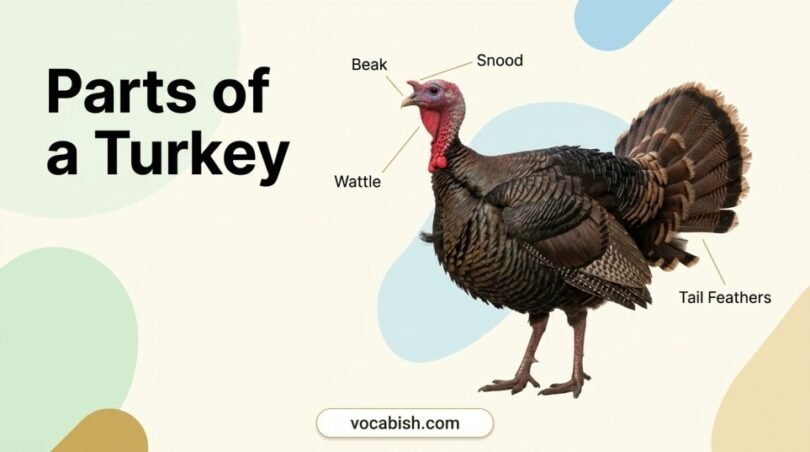
Some turkey parts are especially distinctive. The snood hangs above the beak, while the wattle and caruncles are fleshy structures around the head and neck.
Parts of a Turkey with Names and Functions
The table below gives the most useful parts of a turkey names and their functions.
Turkey Part | Short Description |
|---|---|
Head | Upper body region containing the brain, eyes, ears, beak, snood, and other facial structures. |
Beak | Hard mouthpart used for picking up food, pecking, drinking, and grooming feathers. |
Nostrils | Small openings in the beak area used for breathing and detecting odors. |
Eyes | Vision organs that help the turkey detect movement, find food, and avoid danger. |
Eyelids | Protective coverings that keep the eyes moist and shield them from dust and debris. |
Ear Opening | Small opening behind the eye that allows sound to reach the ear canal. |
Snood | Flexible fleshy structure above the beak that can change size, especially during social and mating displays. |
Wattle | Loose skin hanging beneath the beak and along the upper neck. |
Caruncles | Small fleshy bumps on the head and neck that become more noticeable during displays. |
Neck | Connects the head to the body and allows flexible movement while feeding and watching the surroundings. |
Breast | Large front body area containing strong muscles used mainly for movement and wing activity. |
Keel | Ridge on the breastbone where major flight and wing muscles attach. |
Back | Upper body region supporting the wings and connecting the neck with the tail. |
Wings | Forelimbs covered with feathers that provide balance, display, and limited flight ability. |
Primary Feathers | Long wing feathers that help produce lift and control movement. |
Secondary Feathers | Wing feathers closer to the body that support lift and airflow. |
Tail | Rear body structure with large feathers used for balance and display. |
Tail Feathers | Long feathers that help with balance, steering, and courtship displays. |
Rump | Body area between the back and tail that supports the tail region. |
Abdomen | Lower body area containing several internal digestive and reproductive organs. |
Crop | Enlarged part of the esophagus that temporarily stores food before digestion. |
Esophagus | Tube that carries swallowed food from the mouth toward the crop and stomach. |
Proventriculus | Glandular stomach region where digestive juices begin breaking down food. |
Gizzard | Muscular stomach chamber that grinds food, often with the help of swallowed grit. |
Intestines | Long digestive tubes where nutrients and water are absorbed from food. |
Cloaca | Common opening used for the digestive, urinary, and reproductive systems. |
Liver | Large organ that processes nutrients and performs important metabolic functions. |
Heart | Muscular organ that pumps blood throughout the body. |
Lungs | Organs that exchange oxygen and carbon dioxide during breathing. |
Legs | Strong limbs used for walking, running, standing, and supporting body weight. |
Thigh | Upper leg section containing powerful muscles used for movement. |
Shank | Lower exposed part of the leg between the knee area and ankle. |
Spur | Hard pointed growth found mainly on male turkeys and used in defense and competition. |
Feet | Structures that support movement and provide grip on the ground. |
Toes | Digits used for walking, balancing, scratching, and gripping surfaces. |
Claws | Sharp curved tips on the toes that help with gripping and scratching. |
Feathers | Structures covering the body that provide insulation, protection, communication, and display. |
Down Feathers | Soft feathers close to the body that help keep the turkey warm. |
Coverts | Smaller feathers that cover and protect the bases of larger wing and tail feathers. |
Turkey Head and Facial Parts
The head contains some of the most recognizable parts of the turkey.
Beak
The beak is the turkey’s main feeding tool. It helps the bird pick up seeds, insects, plants, and other food.
Snood
The snood is the fleshy structure above the beak. In males, it can become longer and more prominent during courtship or social displays.
Wattle
The wattle is the loose skin beneath the beak. It is commonly associated with adult turkeys and can change appearance during displays.
Caruncles
Caruncles are fleshy, bumpy areas on the head and neck. They are especially noticeable in male turkeys.
Eyes and Ears
Turkeys have strong vision that helps them detect movement and threats. Their ear openings are located behind the eyes and are not covered by external ear flaps.
Turkey Body, Feathers, and Wings
The turkey’s body is covered with feathers that have several jobs beyond appearance.
Feathers provide insulation, protection, balance, movement, and visual signaling. Different feathers also serve different functions.
Wings
Turkeys have large wings with strong muscles. Wild turkeys can fly, especially for short distances, despite their heavy appearance.
Tail Feathers
Tail feathers are especially important during courtship. Male turkeys can spread the tail into the familiar fan-shaped display.
Breast and Keel
The breast contains large muscles attached to the keel, a ridge on the breastbone. These muscles power wing movements.
Turkey Legs and Feet
Turkeys have strong legs designed for walking and running.
Their legs support the body while the feet help the bird move across different surfaces. The toes and claws can also help with scratching and gripping.
Spur
A spur is a pointed projection found mainly on adult male turkeys. It develops from the lower leg and can be used during fights or defense.
Internal Parts of a Turkey
Understanding parts of the turkey also means knowing about its internal organs.
The digestive system is especially adapted for processing food. Food passes from the mouth through the esophagus, may be held in the crop, and then moves into the stomach and intestines.
The proventriculus produces digestive secretions, while the gizzard mechanically grinds food.
The turkey also has a respiratory system with lungs and air sacs that support efficient breathing. Like other birds, turkeys have a specialized respiratory system that differs from that of mammals.
Male and Female Turkey Parts
Male and female turkeys share most of the same basic anatomy, but some visible features differ.
Male Turkey
A male turkey, called a tom or gobbler, commonly has:
- A more prominent snood
- Larger caruncles
- A more developed wattle
- A larger and more noticeable tail display
- Spurs that are usually more developed
Female Turkey
A female turkey, called a hen, commonly has:
- A smaller snood
- Less prominent head ornamentation
- Smaller or less developed spurs
- A less pronounced tail display
These differences can vary with age, breed, and individual development.
Turkey Anatomy Terms to Know
Learning the correct vocabulary makes it easier to understand diagrams, textbooks, and animal science resources.
Term | Meaning |
|---|---|
Anatomy | The study of body structures and how they are arranged. |
Ornamentation | A visible body feature used mainly for display or communication. |
Keel | A ridge on the breastbone where major flight muscles attach. |
Crop | A temporary food-storage pouch in the digestive tract. |
Gizzard | Muscular stomach chamber that helps grind food. |
Cloaca | Common chamber and external opening for digestive, urinary, and reproductive functions. |
Caruncles | Fleshy growths found on the head and neck. |
Snood | Flexible fleshy structure above the beak. |
Wattle | Loose fleshy skin under the beak and neck area. |
Common Turkey Parts Mistakes and Confusions
- Snood vs. wattle: The snood is above the beak; the wattle hangs below it.
- Crop vs. gizzard: The crop stores food temporarily, while the gizzard grinds it.
- Shank vs. thigh: The shank is the lower exposed leg; the thigh is the upper muscular section.
- Tail vs. rump: The rump is the body area before the tail feathers.
- Spur vs. claw: A spur grows from the leg, while claws are located at the ends of the toes.
FAQs About Parts of a Turkey
The main parts include the head, beak, neck, body, wings, tail, legs, feet, feathers, and internal organs.
The fleshy structure beneath the beak is called the wattle. Other fleshy areas on the head and neck are called caruncles.
The fleshy structure hanging above the beak is called the snood. It is especially noticeable in male turkeys.
A turkey uses its beak to pick up food, peck, drink, groom feathers, and interact with its surroundings.
The crop is an enlarged section of the esophagus that temporarily stores swallowed food before it moves into the stomach.
The keel is a ridge on the breastbone where large muscles attach. These muscles help power the turkey’s wing movements.
Yes. Turkeys have clawed toes that help them grip surfaces, scratch the ground, and move effectively.
A spur is a hard, pointed growth on the lower leg, especially developed in males and used for defense and competition.
Conclusion
The Parts of a Turkey include much more than the beak, wings, and feathers. Distinctive structures such as the snood, wattle, caruncles, crop, gizzard, keel, shank, and spur each have a specific role. Learning these turkey parts and their functions makes turkey anatomy easier to understand and helps students recognize the correct names in diagrams, lessons, and animal science materials.
Explore More Parts of Things