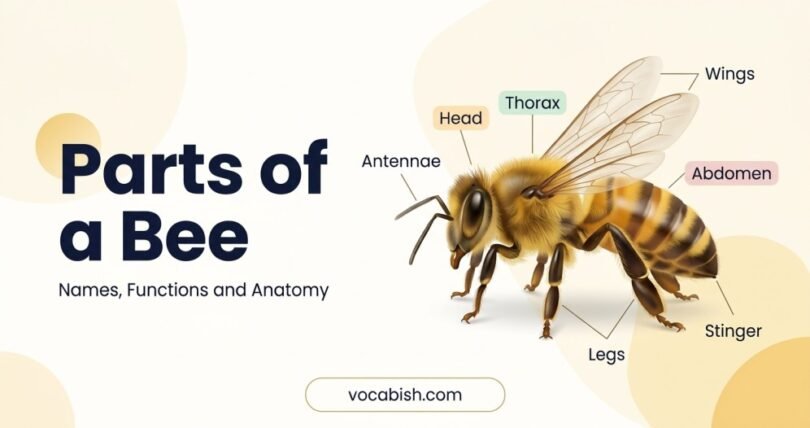

The parts of a bee include the head, thorax, abdomen, antennae, eyes, wings, legs, and mouthparts. Each structure performs a specific function, helping bees find flowers, collect nectar and pollen, fly, and protect themselves. A bee’s body has three main sections, six legs, and two pairs of wings. Some parts, such as pollen baskets and stingers, vary among bee species and sexes. Learning bee anatomy helps students identify the main body structures and understand how they work. This article explores bee parts with names and functions, explains the differences between external and internal structures, and helps learners recognise each part in a labelled bee diagram.
Main Parts of a Bee
A bee has three main body sections: the head, thorax, and abdomen. These sections contain smaller structures that help the insect sense its surroundings, move, feed, and reproduce.
The most recognisable external bee parts are listed below.
No. | Bee Part | Short Description |
|---|---|---|
1 | Head | Front section containing eyes and mouthparts. |
2 | Thorax | Middle section supporting wings and legs. |
3 | Abdomen | Rear section containing major internal organs. |
4 | Antennae | Sensory organs that detect smells and touch. |
5 | Compound Eyes | Large eyes that detect movement and colour. |
6 | Ocelli | Three small eyes that detect light levels. |
7 | Mandibles | Strong jaws used to grip and handle materials. |
8 | Proboscis | Feeding structure used to drink nectar. |
9 | Forewings | Larger front wings used for flight. |
10 | Hindwings | Smaller rear wings that assist flight. |
11 | Forelegs | Front legs used for walking and grooming. |
12 | Middle Legs | Central legs that support movement and grooming. |
13 | Hind Legs | Rear legs that help collect and transport pollen. |
14 | Pollen Basket | Smooth area on certain bees’ hind legs that carries pollen. |
15 | Stinger | Defensive structure found in females of some species. |
16 | Spiracles | Small openings used for breathing. |
17 | Exoskeleton | Hard outer covering that protects the body. |
18 | Body Hairs | Fine hairs that help sense surroundings and collect pollen. |
Chart of Parts of a Bee with Names and Functions
Each bee body part performs a particular job. Some structures support everyday activities, while others help with feeding, reproduction, or defence.
The following table explains the main external and internal parts of a bee and their functions.
Bee Part | Location | Function |
|---|---|---|
Head | Front of body | Holds sensory organs and mouthparts. |
Thorax | Middle of body | Supports walking and flight. |
Abdomen | Rear of body | Contains digestive and reproductive organs. |
Antennae | Head | Detect smells and environmental signals. |
Compound Eyes | Sides of head | Provide a wide field of vision. |
Ocelli | Top of head | Detect changes in light intensity. |
Mandibles | Mouth | Grip objects and manipulate materials. |
Proboscis | Mouth | Draws nectar and other liquids. |
Forewings | Thorax | Generate lift during flight. |
Hindwings | Thorax | Connect with forewings during flight. |
Forelegs | Thorax | Help with walking and antenna cleaning. |
Middle Legs | Thorax | Support walking and grooming. |
Hind Legs | Thorax | Assist movement and pollen transport. |
Pollen Basket | Outer hind tibia of certain bees | Holds collected pollen during flight. |
Stinger | End of female abdomen in stinging species | Delivers venom for defence. |
Spiracles | Thorax and abdomen | Allow air to enter the respiratory system. |
Exoskeleton | Entire body | Provides protection and structural support. |
Body Hairs | Body surface | Collect pollen and detect contact. |
Crop | Inside abdomen | Temporarily stores collected nectar. |
Midgut | Inside abdomen | Digests food and absorbs nutrients. |
Heart | Along upper body | Pumps haemolymph through the body. |
Brain | Inside head | Processes sensory information and controls behaviour. |
Flight Muscles | Inside thorax | Power wing movements. |
Tracheae | Throughout body | Carry air to body tissues. |
Wax Glands | Underside of worker honey bee abdomen | Produce wax for building comb. |
Venom Gland | Abdomen of stinging females | Produces venom used during stinging. |
Reproductive Organs | Mainly inside abdomen | Produce eggs or sperm. |
Parts of a Bee Diagram
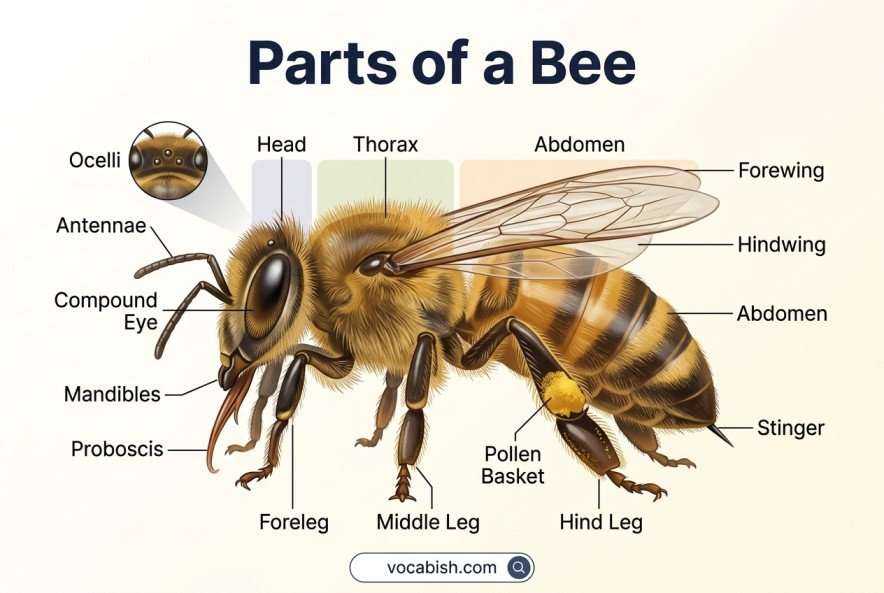
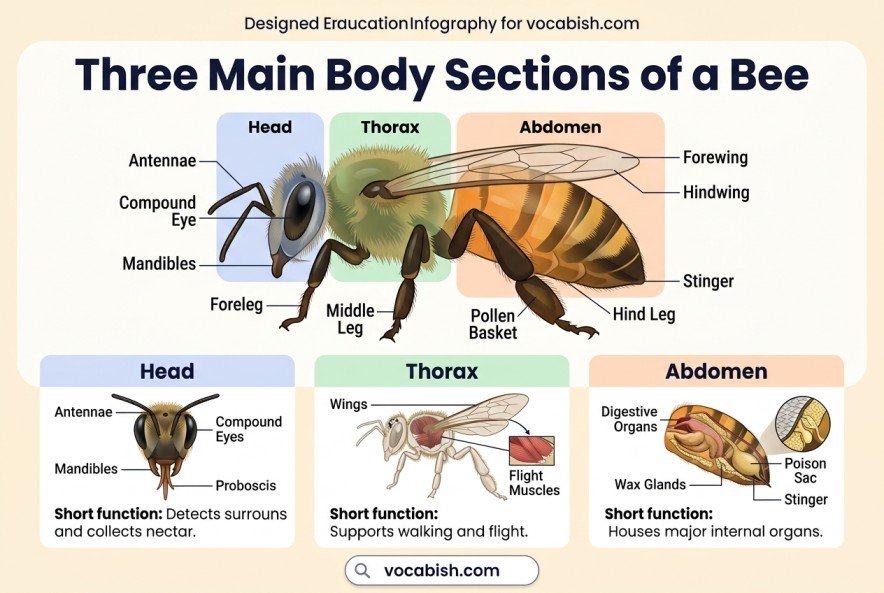
A labelled bee diagram shows where each body part is located. It helps you recognise the head at the front, the thorax in the middle, and the abdomen at the rear.
Three Main Body Sections of a Bee
Like other insects, bees have a body divided into three sections. Each section contains structures that perform different activities.
1. Head
The head contains the bee’s main sensory organs and feeding structures. Its antennae detect chemical signals, while its eyes help it navigate and locate flowers.
The mandibles handle materials, and the proboscis allows the bee to drink nectar.
2. Thorax
The thorax is the middle body section. It holds all six legs and both pairs of wings.
Strong muscles inside the thorax power flight. Bees also use their legs to walk, clean themselves, and handle pollen.
3. Abdomen
The abdomen is the rear body section. It contains much of the digestive system and the reproductive organs.
Female bees of certain species also have a stinger. Worker honey bees have wax-producing glands on the underside of their abdomen.
External and Internal Parts of a Bee
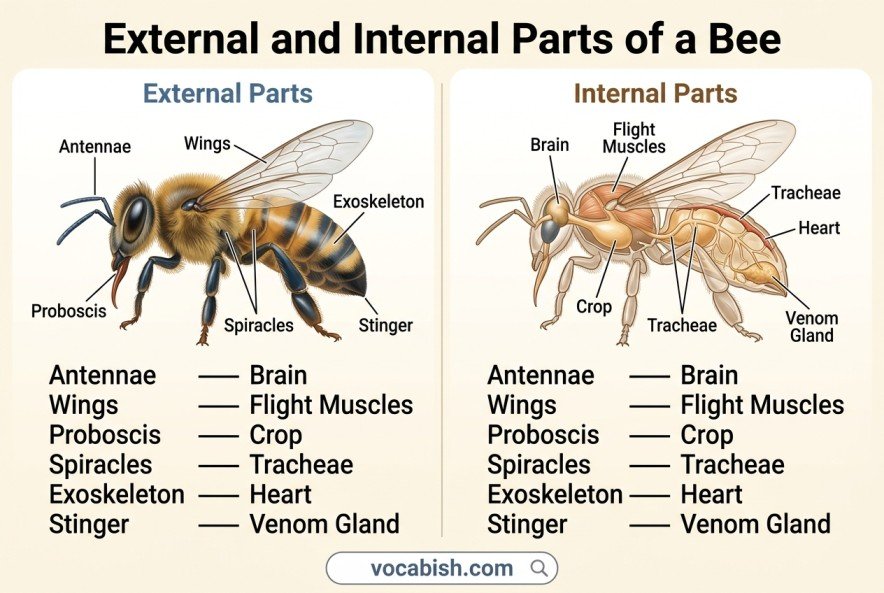
External bee parts are visible on the outside of the body. Internal parts are located beneath the exoskeleton and perform functions such as digestion, breathing, and circulation.
External Parts | Internal Parts | Main Difference |
|---|---|---|
Antennae | Brain | Antennae detect signals; the brain processes information. |
Wings | Flight Muscles | Wings move through the air; muscles power them. |
Proboscis | Crop | The proboscis collects nectar; the crop stores it temporarily. |
Spiracles | Tracheae | Spiracles admit air; tracheae carry it to tissues. |
Exoskeleton | Heart | The exoskeleton protects the body; the heart circulates haemolymph. |
Stinger | Venom Gland | The stinger delivers venom; the gland produces it. |
Bees have an open circulatory system. Their circulating fluid, called haemolymph, does not transport most respiratory oxygen. Instead, air reaches tissues through the tracheal system.
How Bees Use Their Body Parts
Bees use several body structures together to perform everyday tasks. Their eyes, antennae, legs, and mouthparts help them find flowers and gather food.
Collecting Nectar
A bee uses its proboscis to drink nectar from flowers. The nectar passes into its crop, where it can be carried back to the nest.
Collecting Pollen
Many bees collect pollen using branched body hairs. Honey bee workers brush the pollen into baskets on their hind legs.
Other bees may carry pollen on dense hairs beneath the abdomen or along their legs.
Flying Between Flowers
Bees use two pairs of wings powered by thoracic muscles. Small hooks called hamuli connect the hindwings to the forewings during flight.
This arrangement helps both wing pairs work together.
Detecting Flowers
Compound eyes help bees recognise colours, patterns, and movement. Antennae detect floral scents and other chemical signals.
These sensory structures help bees locate food sources.
Protecting Themselves
Female bees of some species use a stinger to defend themselves or their nests. Not every bee has a functional stinger, and male bees do not sting.
Types of Bees and Their Behaviour
There are many bee species, and they do not all live or behave in the same way. Some form large colonies, while others live alone.
These common bee types have different nesting habits and roles in pollination.
Bee Type | Main Function or Behaviour |
|---|---|
Honey Bee | Collects nectar and pollen; some species produce harvestable honey. |
Bumblebee | Pollinates flowers, including some through buzz pollination. |
Carpenter Bee | Builds nests by tunnelling into wood. |
Mason Bee | Uses mud to separate nesting chambers. |
Leafcutter Bee | Uses cut leaf pieces to build nest cells. |
Sweat Bee | Visits flowers for nectar and pollen; some are attracted to sweat. |
Mining Bee | Digs underground tunnels for nesting. |
Stingless Bee | Lives in colonies and pollinates plants without a functional stinger. |
Orchid Bee | Visits tropical flowers; males collect fragrances. |
Squash Bee | Specialises in pollinating squash and related plants. |
Here’s a complete guide on the different types of bees with their important information and images.
Differences Between Worker, Queen, and Drone Bees
In honey bee colonies, workers, queens, and drones have different roles. Their body structures also show differences related to their activities.
Feature | Worker Bee | Queen Bee | Drone Bee |
|---|---|---|---|
Sex | Female | Female | Male |
Main Role | Foraging and colony maintenance | Egg laying | Mating with queens |
Body Size | Usually smallest caste | Usually longer than workers | Generally broader than workers |
Eyes | Moderate-sized compound eyes | Moderate-sized compound eyes | Very large compound eyes |
Pollen Baskets | Present | Absent | Absent |
Stinger | Present | Present | Absent |
Wax Glands | Functional in adult workers | Not functional for comb building | Absent |
Reproductive Function | Usually does not reproduce | Lays eggs | Produces sperm |
These differences apply specifically to honey bees. Solitary bee species do not have the same worker, queen, and drone caste system.
Common Mistakes You Should Know About Bee Body Parts
Several bee anatomy terms are easy to confuse. These distinctions help learners identify structures correctly.
- Wings: Bees have four wings, not two.
- Legs: Bees have six legs, not eight.
- Stinger: Male bees do not have stingers.
- Pollen basket: Not every bee species has pollen baskets.
- Proboscis: It is used for drinking liquids, not stinging.
Frequently Asked Questions About Bee Parts
The three main parts of a bee are the head, thorax, and abdomen. These sections support feeding, sensing, movement, and internal body functions.
A bee has three main body sections and many smaller structures, including antennae, eyes, wings, legs, mouthparts, and internal organs.
A bee has six legs and four wings. All legs attach to the thorax, which also supports the two pairs of wings.
Bee antennae detect smells, touch, and chemical signals. They help bees recognise flowers, communicate with other bees, and navigate their surroundings.
Bees collect pollen with their body hairs. Worker honey bees use pollen baskets on their hind legs to carry pollen back to the hive.
The thorax supports the legs and wings, while the abdomen contains major digestive and reproductive organs and, in some female bees, a stinger.
No. Male bees cannot sting, and some bee species lack functional stingers. Female honey bees and bumblebees have stingers used mainly for defence.
Important internal bee organs include the brain, heart, crop, midgut, reproductive organs, and respiratory tubes. Together, they support survival and body functions.
Conclusion
Learning the Parts of a Bee helps you recognise insect anatomy and understand how bees feed, fly, breathe, and collect pollen. The head contains sensory and feeding structures, the thorax supports movement, and the abdomen houses major internal organs. Studying bee parts with names, functions, and a labelled diagram makes it easier to identify these structures and understand their roles in a bee’s life.