
Learning saltwater animal names helps English learners understand nature vocabulary used in books, documentaries, and daily conversations. Oceans cover most of the Earth, so many English texts include words related to marine life.
This blog post introduces common saltwater animals with explanations and pictures. Each word includes a short description so learners can easily remember the meaning and use it in real life. Studying these words improves reading, speaking, and vocabulary skills at the same time.
What Are Saltwater Animals?
Saltwater animals are animals that live in oceans and seas. These environments contain salty water instead of fresh water from rivers or lakes.
Examples include fish, mammals, and sea creatures such as sharks, dolphins, and octopuses. Many of these animals have special bodies that help them survive in deep or moving ocean water.
Learning these names helps students understand topics in science, geography, and English vocabulary.
Why Learn Saltwater Animal Names?
Learning these words gives several benefits for English learners.
- Expands nature vocabulary
- Improves reading comprehension in science texts
- Helps learners describe animals and environments
- Builds confidence in speaking about ocean life
- Supports school lessons about marine ecosystems
Because many English lessons include nature topics, these words appear often in textbooks, documentaries, and conversations.
Common Saltwater Animals with Names
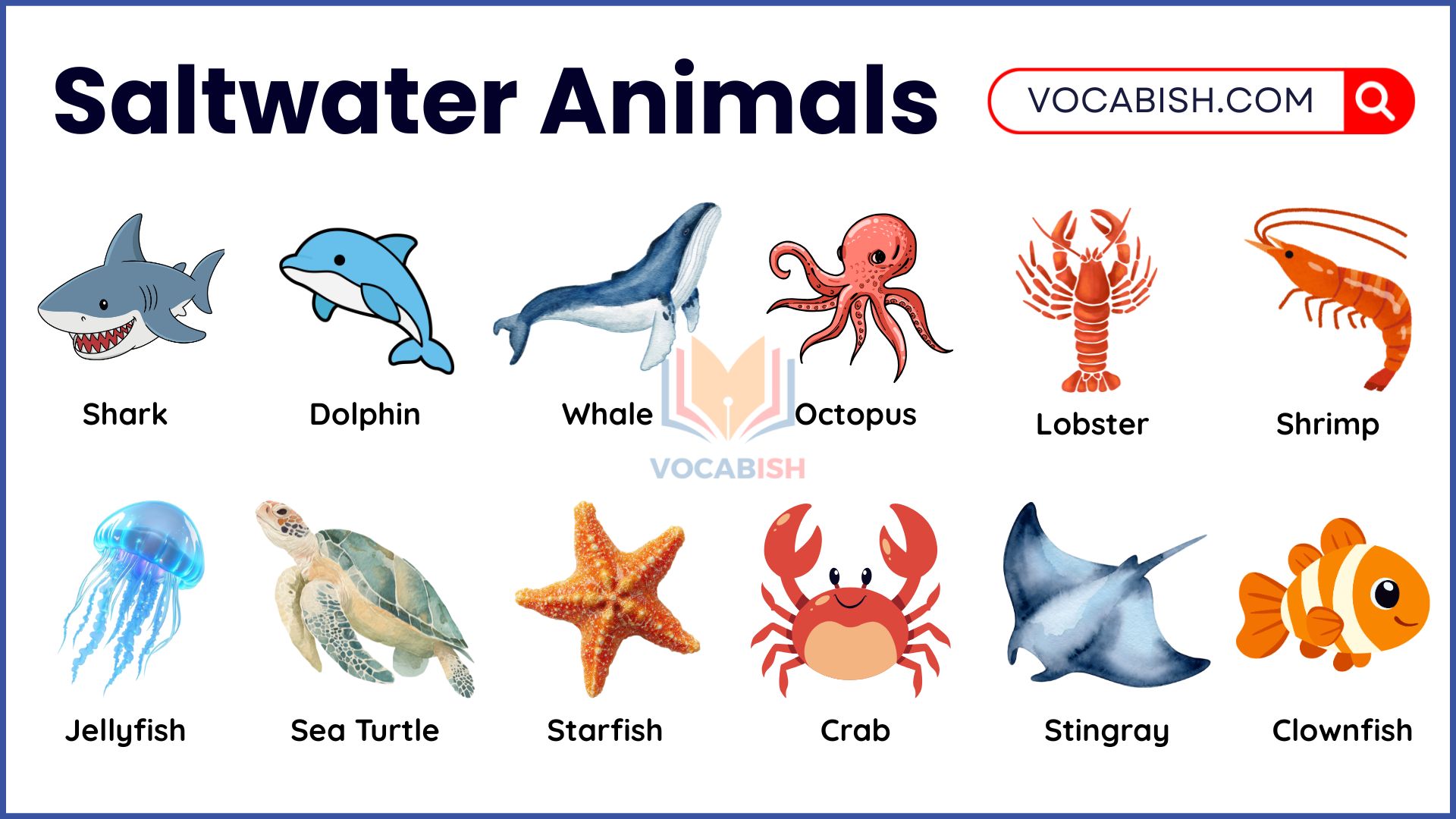
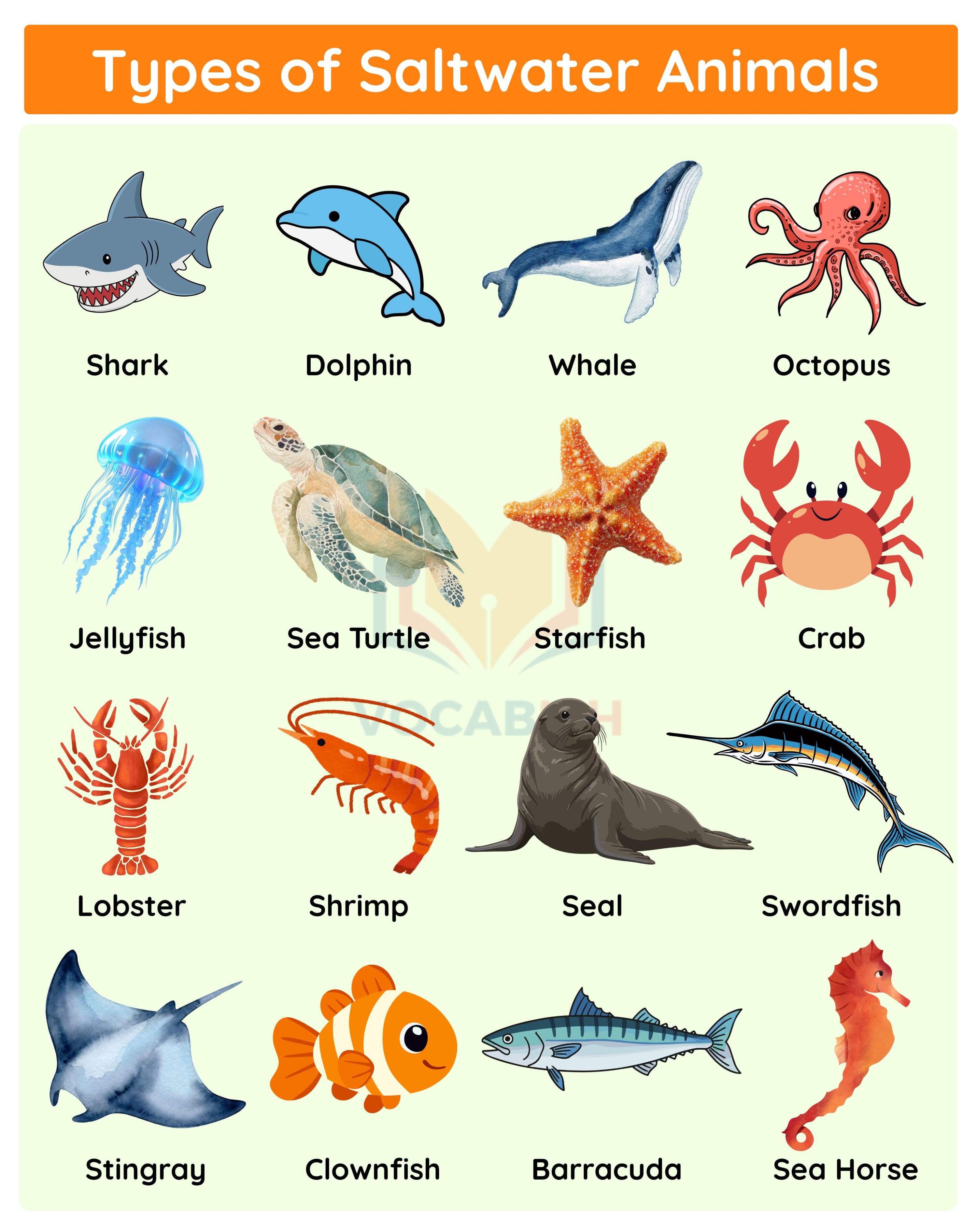
Below is a list of important saltwater animals. Each description explains the word in simple English.
- Shark
A large sea fish with sharp teeth. Sharks are powerful predators in the ocean. - Dolphin
A smart marine mammal known for its friendly behavior and curved smile. - Whale
The largest animal in the ocean. Whales are mammals that breathe air through a blowhole. - Octopus
A soft-bodied sea animal with eight arms and strong suction cups. - Jellyfish
A transparent sea creature with a soft body and long tentacles that can sting. - Sea Turtle
A large turtle that lives in the ocean but lays eggs on beaches. - Starfish (Sea Star)
A sea animal shaped like a star, usually with five arms. - Crab
A hard-shelled sea animal with claws and sideways walking movement. - Lobster
A large shellfish with long claws and a strong body. - Shrimp
A small sea animal with a curved body and thin legs. - Seal
A marine mammal that lives in cold ocean areas and often rests on rocks or ice. - Sea Lion
A marine mammal similar to a seal but with visible ears and loud barking sounds. - Swordfish
A large fish with a long, pointed bill that looks like a sword. - Stingray
A flat sea animal that swims like a flying bird underwater. - Clownfish
A small colorful fish that lives among sea anemones. - Barracuda
A long, fast fish with sharp teeth and a powerful body. - Sea Horse
A tiny fish with a curved body that looks like a horse’s head. - Bluefin Tuna
A large, fast-swimming fish often found in deep ocean waters.
Types of Saltwater Animals with Examples
Saltwater animals belong to different biological groups. Scientists classify them based on their body structure, breathing system, and reproduction. Understanding these types helps English learners connect vocabulary with basic science knowledge.
Below are the main types of saltwater animals with examples.
1. Saltwater Fish
Saltwater fish are animals that live completely in ocean water and breathe through gills. Most fish have fins and scales that help them swim easily.
Examples of Saltwater Fish
- Shark
- Clownfish
- Bluefin Tuna
- Barracuda
- Swordfish
- Mackerel
- Lionfish
- Grouper
Fish are the largest group of ocean animals and appear frequently in English science and nature vocabulary.
2. Marine Mammals
Marine mammals are warm-blooded animals that live in the ocean but breathe air with lungs. Like other mammals, they give birth to live babies and feed them milk.
Examples of Marine Mammals
- Whale
- Dolphin
- Seal
- Sea Lion
- Walrus
- Dugong
These animals often appear in documentaries and educational materials about ocean life.
3. Crustaceans
Crustaceans are saltwater animals with hard outer shells and many legs. Most of them live near the ocean floor.
Examples of Crustaceans
- Crab
- Lobster
- Shrimp
- Krill
- Barnacle
Many crustaceans play an important role in ocean ecosystems and food chains.
4. Mollusks
Mollusks are soft-bodied sea animals. Some have shells for protection, while others do not.
Examples of Mollusks
- Octopus
- Squid
- Clam
- Oyster
- Mussel
- Scallop
These animals are known for their soft bodies and flexible movement in water.
5. Echinoderms
Echinoderms are sea animals with spiny skin and radial body shapes. Most of them live on the ocean floor.
Examples of Echinoderms
- Starfish (Sea Star)
- Sea Urchin
- Sand Dollar
- Sea Cucumber
- Brittle Star
They have a unique body structure that makes them easy to recognize.
6. Cnidarians
Cnidarians are simple sea animals with soft bodies and tentacles. Many of them use tentacles to catch food or protect themselves.
Examples of Cnidarians
- Jellyfish
- Sea Anemone
- Coral
- Portuguese Man-of-War
These animals often drift in ocean currents and are common in warm seas.
Saltwater Animals with Names and Facts
Below is a list of some fascinating saltwater animals found in oceans around the world.
No. | Saltwater Animal | Type | Interesting Fact |
|---|---|---|---|
1 | Dolphin | Marine Mammal | Highly intelligent and social |
2 | Blue Whale | Marine Mammal | Largest animal on Earth |
3 | Great White Shark | Fish | Apex ocean predator |
4 | Clownfish | Fish | Lives among sea anemones |
5 | Octopus | Mollusk | Extremely intelligent |
6 | Giant Squid | Mollusk | Has enormous eyes |
7 | Sea Turtle | Reptile | Migrates thousands of miles |
8 | Saltwater Crocodile | Reptile | Largest living reptile |
9 | Lobster | Crustacean | Can live more than 50 years |
10 | Crab | Crustacean | Walks sideways |
11 | Shrimp | Crustacean | Important in ocean food chains |
12 | Starfish | Echinoderm | Can regenerate arms |
13 | Sea Urchin | Echinoderm | Covered in sharp spines |
14 | Jellyfish | Cnidarian | Some species glow in the dark |
15 | Sea Horse | Fish | Males carry the babies |
16 | Stingray | Fish | Has a venomous tail spine |
17 | Manta Ray | Fish | Large wingspan for swimming |
18 | Barracuda | Fish | Very fast predator |
19 | Moray Eel | Fish | Lives in coral reefs |
20 | Sea Lion | Marine Mammal | Known for loud barking |
21 | Seal | Marine Mammal | Excellent swimmers |
22 | Walrus | Marine Mammal | Large tusks for defense |
23 | Coral | Cnidarian | Builds coral reefs |
24 | Oyster | Mollusk | Can produce pearls |
25 | Sea Cucumber | Echinoderm | Helps clean ocean floors |
Saltwater Fish and Their Unique Adaptations
Saltwater fish have special features that help them survive in the ocean.
Salt Regulation
Fish maintain balance by controlling salt levels in their bodies.
Camouflage
Many fish blend with coral reefs or sandy ocean floors to avoid predators.
Speed and Agility
Predators like tuna and sharks have streamlined bodies that help them swim very fast.
Marine Mammals and Their Ocean Lifestyle
Marine mammals are warm-blooded animals that live mostly in the ocean.
Breathing Air
They must come to the surface to breathe through blowholes or nostrils.
Blubber for Warmth
Many marine mammals have thick layers of fat called blubber to stay warm in cold waters.
Communication
Dolphins and whales communicate using complex sounds and echolocation.
Saltwater Reptiles and Their Survival Skills
Reptiles that live in saltwater have adapted to harsh marine environments.
Salt Glands
Sea turtles have glands that remove excess salt from their bodies.
Strong Swimming Ability
Their flippers help them travel long distances across oceans.
Protection
Hard shells protect sea turtles from predators.
Invertebrates: The Hidden Ocean Creatures
Many saltwater animals do not have backbones. These are called invertebrates.
Jellyfish
These animals drift with ocean currents and use tentacles to catch prey.
Octopus
Octopuses are known for their intelligence and ability to change color instantly.
Coral Polyps
Tiny coral animals build large reefs that provide habitats for thousands of species.
Importance of Saltwater Animals in the Ecosystem
Saltwater animals play a vital role in maintaining healthy oceans.
Food Chain Balance
Small animals like plankton and shrimp feed fish, which feed larger predators.
Coral Reef Protection
Coral reefs support about 25% of all marine life.
Ocean Cleaning
Animals like sea cucumbers help recycle nutrients on the ocean floor.
Threats to Saltwater Animals
Many ocean creatures face serious threats today.
Ocean Pollution
Plastic waste harms fish, turtles, and marine mammals.
Overfishing
Too much fishing reduces fish populations and disrupts ecosystems.
Climate Change
Rising ocean temperatures damage coral reefs and marine habitats.
How Humans Can Protect Saltwater Animals
People can help protect marine life in many ways.
- Reduce plastic use
- Support sustainable seafood
- Protect coral reefs
- Participate in beach cleanups
- Support marine conservation programs
Small actions can make a big difference in protecting ocean animals.
FAQs
Saltwater animals are marine species that live in oceans and seas where the water contains high levels of salt. Examples include fish, whales, crabs, sea turtles, octopuses, and sharks.
Common Types of Saltwater Animals with Names include dolphins, blue whales, sharks, sea turtles, octopuses, crabs, jellyfish, and starfish. These animals live in different ocean habitats such as reefs and deep seas.
Saltwater animals help keep ocean ecosystems balanced. They maintain the food chain, control species populations, recycle nutrients, and support coral reef systems that protect marine biodiversity.
Saltwater animals live in oceans and seas with high salt levels, while freshwater animals live in rivers and lakes. Each group has special body systems that help them survive in their water environment.
The largest saltwater animal is the blue whale. It can grow up to 30 meters long and weigh over 180 tons, making it the biggest animal ever to live on Earth.
Saltwater animals survive by regulating salt levels in their bodies. Fish use gills and kidneys to remove extra salt, while marine reptiles and birds use special salt glands.
Saltwater animals live in many ocean habitats such as coral reefs, open oceans, deep seas, tidal pools, and coastal areas. Each habitat supports different marine species.
Related Articles: