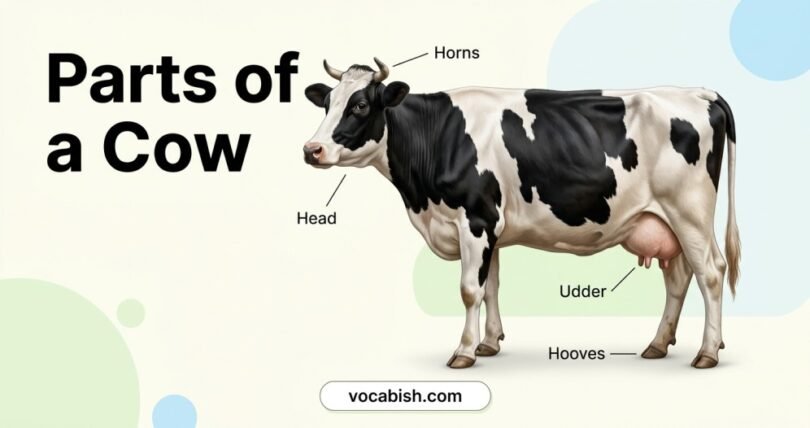

A cow has many body parts that work together for movement, feeding, digestion, breathing, reproduction, and milk production. Learning the parts of a cow makes it easier to understand cow anatomy, external body parts, and internal organs.
This guide covers the main cow parts, their names, functions, and basic anatomy in clear English.
Cow Anatomy at a Glance
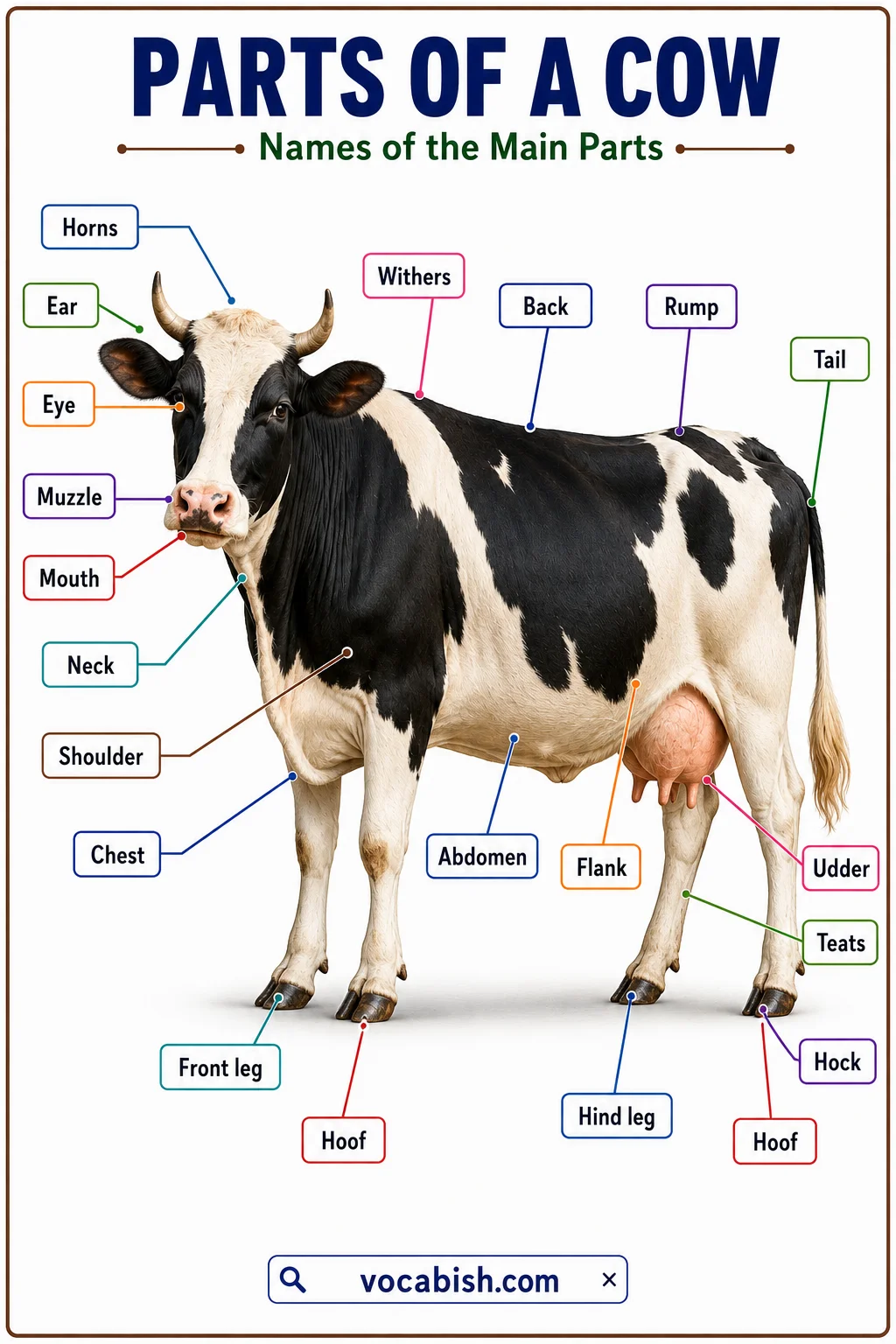
Cow anatomy includes the visible body structures and the organs inside the body. The external parts include the head, ears, eyes, horns, neck, back, udder, legs, tail, and hooves.
The internal anatomy includes the heart, lungs, stomach compartments, intestines, liver, kidneys, reproductive organs, and other organs.
Parts of a Cow: Names and Functions
The following table gives the main parts of a cow with functions. It includes common external body parts and important internal organs.
Cow Part | Short Description / Function |
|---|---|
Head | Contains the brain, eyes, ears, nose, mouth, and other sensory structures. |
Horns | Hard structures on the head used mainly for defense and social behavior. |
Ears | Detect sounds and help the cow respond to its surroundings. |
Eyes | Provide vision and help the cow detect movement and objects. |
Forehead | The upper front part of the head between and above the eyes. |
Muzzle | The front part of the cow’s face containing the nostrils and mouth area. |
Nostrils | Openings used for breathing and detecting smells. |
Mouth | Used to take in grass, hay, feed, and water. |
Lips | Help grasp and move food into the mouth. |
Tongue | Helps grasp grass, move food, and swallow. |
Teeth | Cut and grind food during chewing. |
Neck | Connects the head to the body and supports head movement. |
Withers | The highest part of the back near the base of the neck and shoulders. |
Shoulder | Connects the front limbs to the main body and supports movement. |
Back | Runs from the shoulders toward the hips and supports the trunk. |
Chest | Front body region that contains the heart and lungs. |
Ribs | Form a protective cage around the chest organs. |
Abdomen | Body region containing much of the digestive system and other organs. |
Flank | The side area between the ribs and hindquarters. |
Hip | Connects the pelvis with the hind part of the body. |
Rump | Muscular area over the hindquarters and pelvis. |
Tail | Helps swat flies and other insects away from the body. |
Tail Switch | Hair at the end of the tail that helps remove insects. |
Udder | Milk-producing organ of a female cow located between the hind legs. |
Teats | Openings through which milk leaves the udder. |
Front Legs | Support the body and help the cow walk and stand. |
Hind Legs | Support the rear body and provide power for movement. |
Knee | Joint of the front leg that allows controlled leg movement. |
Hock | Large joint of the hind leg involved in walking and standing. |
Hoof | Hard foot structure that protects the end of the leg. |
Dewclaws | Small secondary digits located above the main hooves. |
Skin | Covers and protects the body and helps regulate temperature. |
Hair | Provides protection and helps with temperature control. |
Brain | Controls movement, senses, behavior, and other body functions. |
Spinal Cord | Carries nerve signals between the brain and the body. |
Heart | Pumps blood throughout the body. |
Lungs | Exchange oxygen and carbon dioxide during breathing. |
Esophagus | Carries swallowed food from the mouth to the stomach. |
Rumen | Large fermentation chamber where microbes break down fibrous feed. |
Reticulum | Helps sort and move partially digested feed and forms part of the cud-chewing system. |
Omasum | Absorbs water and some nutrients from digested material. |
Abomasum | The glandular stomach compartment that uses acid and digestive enzymes. |
Small Intestine | Digests food further and absorbs many nutrients. |
Large Intestine | Absorbs water and processes remaining digestive material. |
Liver | Processes nutrients and produces bile for digestion. |
Pancreas | Produces digestive enzymes and hormones that help regulate blood sugar. |
Kidneys | Filter waste from the blood and produce urine. |
Bladder | Stores urine before it leaves the body. |
Spleen | Supports blood filtration and immune functions. |
Trachea | Air passage that carries air toward and from the lungs. |
Rectum | Holds fecal material before elimination. |
Anus | Opening through which feces leave the digestive tract. |
Reproductive Organs | Produce reproductive cells and support reproduction. |
External Parts of a Cow
External cow parts are the structures visible on the outside of the body. They help with movement, feeding, sensing, protection, temperature control, and reproduction.
Main external parts include the following:
- Head: Contains the main sensory and feeding structures.
- Horns: Hard structures used for defense and social interactions.
- Eyes: Provide vision.
- Ears: Detect sounds.
- Muzzle: Contains the nostrils and mouth area.
- Neck: Supports the head and connects it to the body.
- Back: Supports the trunk and connects the front and rear body regions.
- Tail: Helps remove insects.
- Legs: Support the body and allow movement.
- Hooves: Protect the feet and support weight.
- Udder: Produces and stores milk in female cattle.
- Teats: Allow milk to leave the udder.
Internal Parts of a Cow
The internal parts of a cow include organs and structures located inside the body. These organs control digestion, breathing, circulation, waste removal, nervous activity, and reproduction.
Important internal parts include:
- Brain
- Spinal cord
- Heart
- Lungs
- Esophagus
- Rumen
- Reticulum
- Omasum
- Abomasum
- Small intestine
- Large intestine
- Liver
- Pancreas
- Kidneys
- Bladder
- Spleen
- Reproductive organs
Head Parts of a Cow
The cow’s head contains structures used for feeding, breathing, sensing, and communication.
Eyes
The eyes provide vision and help the cow notice movement, obstacles, and other animals.
Ears
The ears detect sounds and can move toward different sound sources.
Horns
Horns are permanent hard structures made from a bony core covered by a keratin sheath. They can provide protection and are also involved in social behavior.
Nose and Nostrils
The nose contains the nostrils used for breathing and smelling. A cow also relies heavily on its sense of smell when exploring food and its environment.
Mouth
The mouth receives food and water. Cattle use their lips and tongue to gather vegetation before chewing it.
Teeth
Cattle have a specialized set of teeth suited to grazing. Their lower incisors help cut grass, while the cheek teeth grind food.
Tongue
The tongue is strong and flexible. It helps a cow grasp vegetation, move food around the mouth, and swallow.
Body Parts of a Cow
The main body regions include the neck, shoulders, chest, back, abdomen, flank, hips, and rump.
The chest protects the heart and lungs. The abdomen contains much of the digestive tract. The back and rump contain strong muscles that support the body and movement.
The flank is the side region between the ribs and hindquarters. It is often used as a visible reference point when describing the cow’s body.
Leg and Foot Parts
Cow legs carry the animal’s weight and allow walking, standing, turning, and running.
Front Legs
The front legs support much of the cow’s body weight and help control movement.
Hind Legs
The hind legs provide strong muscular force for movement and support the rear part of the body.
Knee
The knee is a major joint in the front limb. It allows the leg to bend and extend.
Hock
The hock is a prominent joint in the hind limb. It helps the cow move and support its body.
Hoof
A cow’s hoof is divided into two main digits. The hard hoof protects the foot and helps support the animal on the ground.
Dewclaws
Dewclaws are smaller digits positioned above the main hooves. They normally do not bear the main body weight during ordinary walking.
Digestive System of a Cow
A cow has a specialized digestive system designed to process fibrous plant material. Cattle are ruminants, meaning they chew food, swallow it, bring it back up as cud, and chew it again.
The cow’s stomach has four compartments:
Stomach Part | Main Function |
|---|---|
Rumen | Ferments fibrous feed with the help of microorganisms. |
Reticulum | Helps move and sort feed and is involved in cud formation. |
Omasum | Absorbs water and some nutrients. |
Abomasum | Uses acid and enzymes to digest feed like a typical glandular stomach. |
After the stomach compartments, digested material moves through the small intestine, where many nutrients are absorbed. The remaining material passes into the large intestine, where additional water is absorbed before waste is eliminated.
Reproductive Parts of a Cow
Female cattle have reproductive organs that support pregnancy, birth, and the production of eggs.
The main female reproductive structures include:
- Ovaries: Produce eggs and reproductive hormones.
- Oviducts: Carry the egg from the ovary toward the uterus.
- Uterus: Where a developing calf grows during pregnancy.
- Cervix: Connects the uterus with the vagina and helps protect the uterus.
- Vagina: Part of the female reproductive tract and the birth canal.
A male cow, commonly called a bull, has different reproductive organs, including the testes, scrotum, penis, and associated reproductive ducts and glands.
Cow Anatomy: Male vs Female
Male and female cattle share most major body structures, but their reproductive anatomy differs.
Feature | Female Cow | Male Cattle |
|---|---|---|
Reproductive organ | Ovaries, uterus, cervix, vagina | Testes, penis, reproductive ducts and glands |
Main reproductive role | Produces eggs and carries pregnancy | Produces sperm |
Udder | Present in females and develops for milk production | Normally absent as a milk-producing organ |
Common adult term | Cow | Bull |
A cow specifically refers to an adult female bovine. The broader term cattle includes both males and females.
Parts of a Cow Diagram
Common Cow Parts and Anatomy Confusions
- Cow vs cattle: A cow is an adult female; cattle is the general plural term for domesticated bovines.
- Rumen vs stomach: The rumen is one of four stomach compartments, not the entire stomach.
- Udder vs teat: The udder produces and stores milk; teats are the outlets for milk.
- Hoof vs foot: The hoof is the hard outer structure protecting the end of the foot.
- Hock vs knee: The hock is a major hind-leg joint, while the knee is located on the front limb.
FAQs About Cow Parts
The main parts include the head, horns, eyes, ears, muzzle, neck, back, chest, abdomen, legs, hooves, udder, and tail.
The four stomach compartments are the rumen, reticulum, omasum, and abomasum. Each performs a different role in digestion.
The udder is the milk-producing organ of a female cow. It contains mammary tissue and four quarters with teats.
External parts include the head, ears, eyes, horns, muzzle, neck, back, legs, hooves, tail, udder, and teats.
Important internal parts include the heart, lungs, liver, kidneys, brain, intestines, stomach compartments, pancreas, and reproductive organs.
A cow is an adult female bovine, while cattle is the general term for domesticated bovines of different sexes and ages.
The hoof protects the end of the foot, supports body weight, and helps the cow stand and move across the ground.
A cow’s tail helps swat away flies and other insects from the body, especially around the hindquarters.
Conclusion
The parts of a cow include visible external structures and important internal organs. The head supports feeding and sensing, the legs and hooves provide movement, the digestive organs process plant material, and the udder produces milk in female cattle.
Understanding cow parts, their names, functions, and anatomy makes it easier to read a cow anatomy diagram and learn the basic structure of cattle.
Explore More Parts of Things