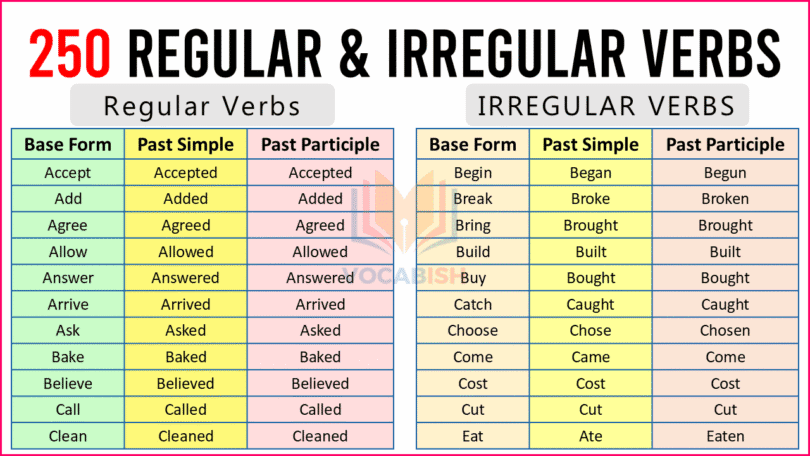

Why do some English verbs become worked, played, and cleaned, while others change to went, saw, and ate? Understanding regular and irregular verbs in English can help you use past tense forms more accurately in speaking and writing.
Verbs are an important part of every sentence. Once you learn the difference between regular and irregular verbs, it becomes much easier to talk about past actions, tell stories, and understand English conversations. This article explains both types of verbs with examples, comparisons, and useful practice tips.
What are Regular and Irregular Verbs?
English verbs fall into two main categories: regular verbs and irregular verbs. The difference is based on how they form their past tense and past participle forms.
Regular verbs follow predictable spelling rules, while irregular verbs change in different ways and often need to be memorized.
Check the main differences in how the verb changes in past actions:
Base Verb | Type | Past Tense |
|---|---|---|
work | Regular | worked |
play | Regular | played |
clean | Regular | cleaned |
go | Irregular | went |
eat | Irregular | ate |
see | Irregular | saw |
Regular Verbs Definition and Examples
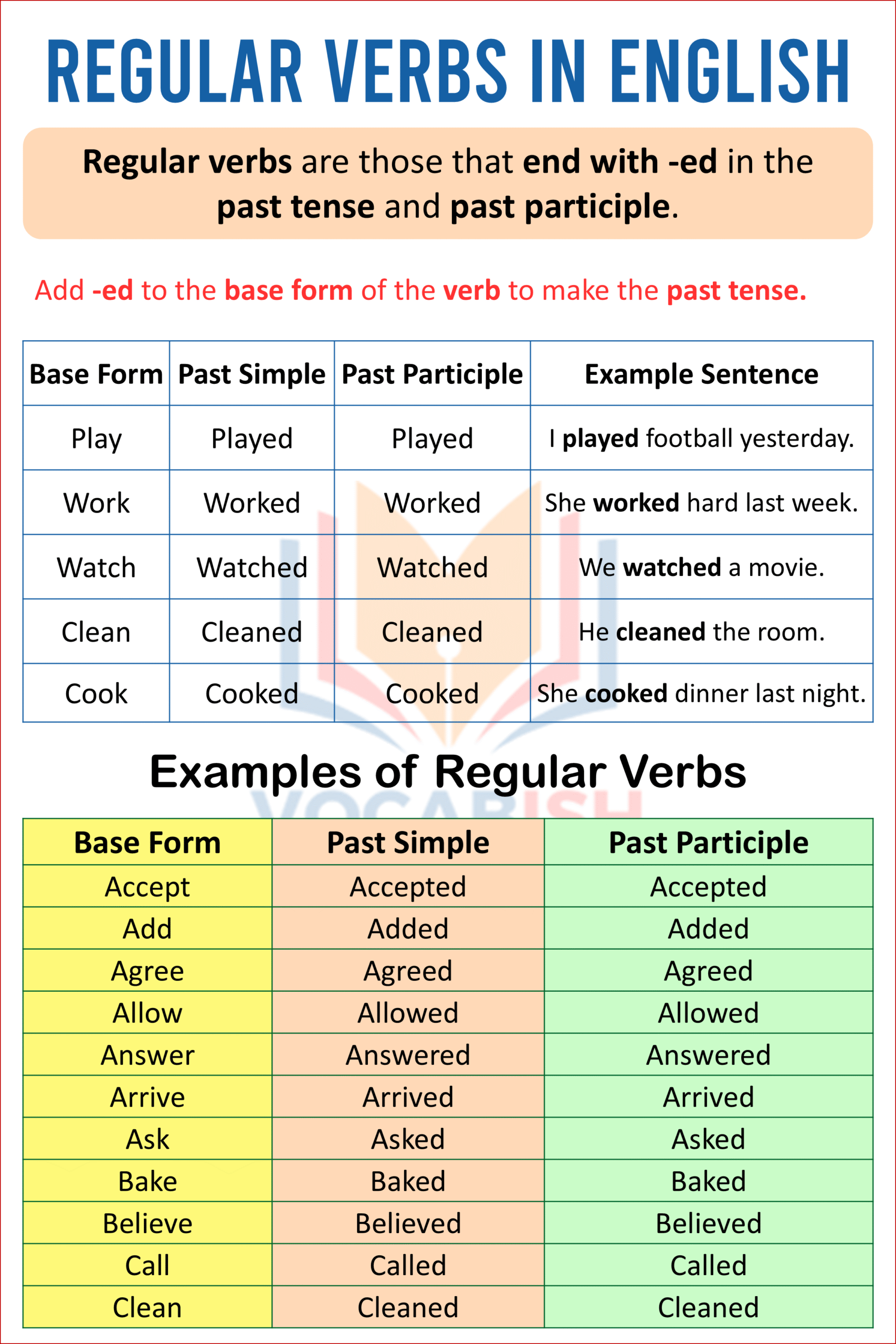
Regular verbs form their past tense and past participle by adding -ed, -d, or -ied to the base form.
Because they follow a consistent pattern, they are generally easier for English learners to use.
Examples of Regular Verbs:
Verb | Past Tense | Example Sentence |
|---|---|---|
walk | walked | She walked home after school. |
play | played | The children played outside. |
clean | cleaned | He cleaned the kitchen. |
help | helped | I helped my sister. |
watch | watched | We watched a movie. |
visit | visited | They visited their grandparents. |
talk | talked | We talked after class. |
study | studied | She studied English daily. |
open | opened | He opened the window. |
work | worked | My father worked late. |
To read more examples of the regular verbs, check our 100 Examples of Regular Verbs Guide.
Irregular Verbs: Definition and Examples
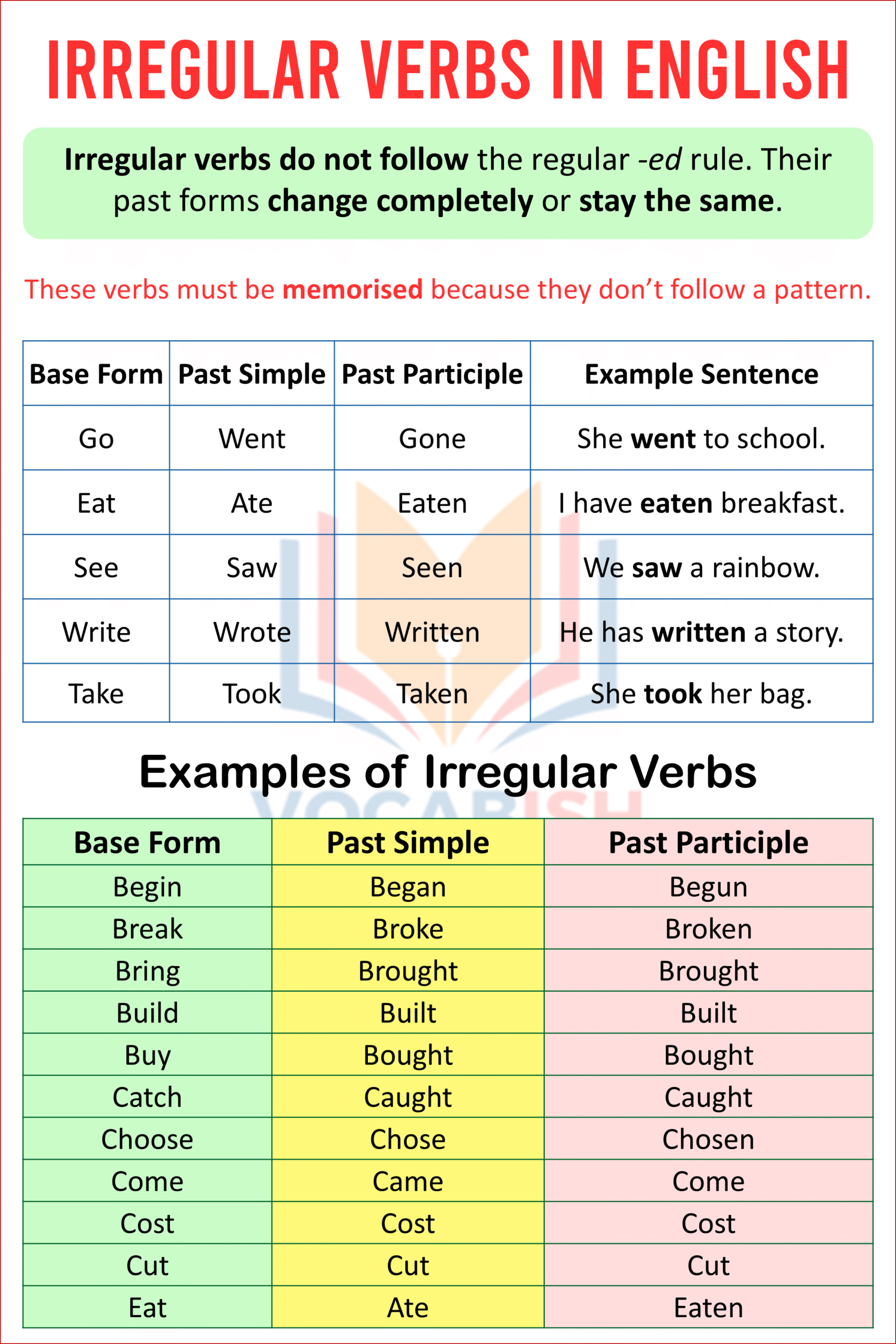
Irregular verbs do not follow a single rule when changing into the past tense. Their forms often change completely.
You need to learn these verb forms individually.
Examples of Irregular Verbs:
Base Verb | Past Tense | Example Sentence |
|---|---|---|
go | went | We went shopping yesterday. |
eat | ate | She ate breakfast early. |
see | saw | I saw a bird in the garden. |
come | came | They came home late. |
write | wrote | He wrote a story for school. |
take | took | She took a photo of the sunset. |
speak | spoke | We spoke with our teacher after class. |
give | gave | He gave me a gift on my birthday. |
drink | drank | They drank water after the game. |
begin | began | The meeting began at nine o’clock. |
Related More: Examples of Irregular Verbs with PDF
Regular vs Irregular Verbs: Key Differences
Understanding the differences between regular and irregular verbs helps you choose the correct verb forms when speaking and writing.
Feature | Regular Verbs | Irregular Verbs |
|---|---|---|
Follow a rule | Yes | No |
Add -ed for past tense | Usually | No |
Easy to predict | Yes | Often No |
Need memorization | Less | More |
Examples | worked, played | went, saw |
Example Comparison:
Present Tense | Regular Past Tense | Present Tense | Irregular Past Tense |
|---|---|---|---|
work | worked | go | went |
play | played | eat | ate |
clean | cleaned | see | saw |
talk | talked | write | wrote |
help | helped | come | came |
Practice Activity: Quiz
Choose the correct past tense form for each sentence.
Easy Tips for Learning these Verbs
Learning verbs becomes easier when you see them in context and use them regularly.
- Read short English stories.
- Practice writing about yesterday’s activities.
- Create your own example sentences.
- Learn irregular verbs in small groups.
- Review verb lists regularly.
- Use flashcards for difficult verb forms.
You May Also Like:
Common Mistakes to Avoid
Many learners make errors when mixing regular and irregular verb forms.
Incorrect | Correct |
|---|---|
goed | went |
eated | ate |
writed | wrote |
studyed | studied |
walkt | walked |
Remember:
- Regular verbs usually add -ed.
- Irregular verbs have unique forms.
- Do not apply regular verb rules to irregular verbs.
- Learn common irregular verbs through practice.
Conclusion
Understanding regular and irregular verbs in English with examples is an important step toward better grammar and communication. Regular verbs follow clear spelling rules, while irregular verbs require extra practice and memorization.
By learning both types and using them in sentences, you’ll become more confident when talking about past events, writing stories, and understanding everyday English. The more often you read, write, and practice these verbs, the more natural they will feel.